
Ever wondered why your textbooks sound so different from how...
 EAPP783 views·Updated Jun 24, 2026·4 pages
EAPP Fundamental Lesson for SHS

Reigh<3@reigh0fsunshine


1 / 4
1
of 4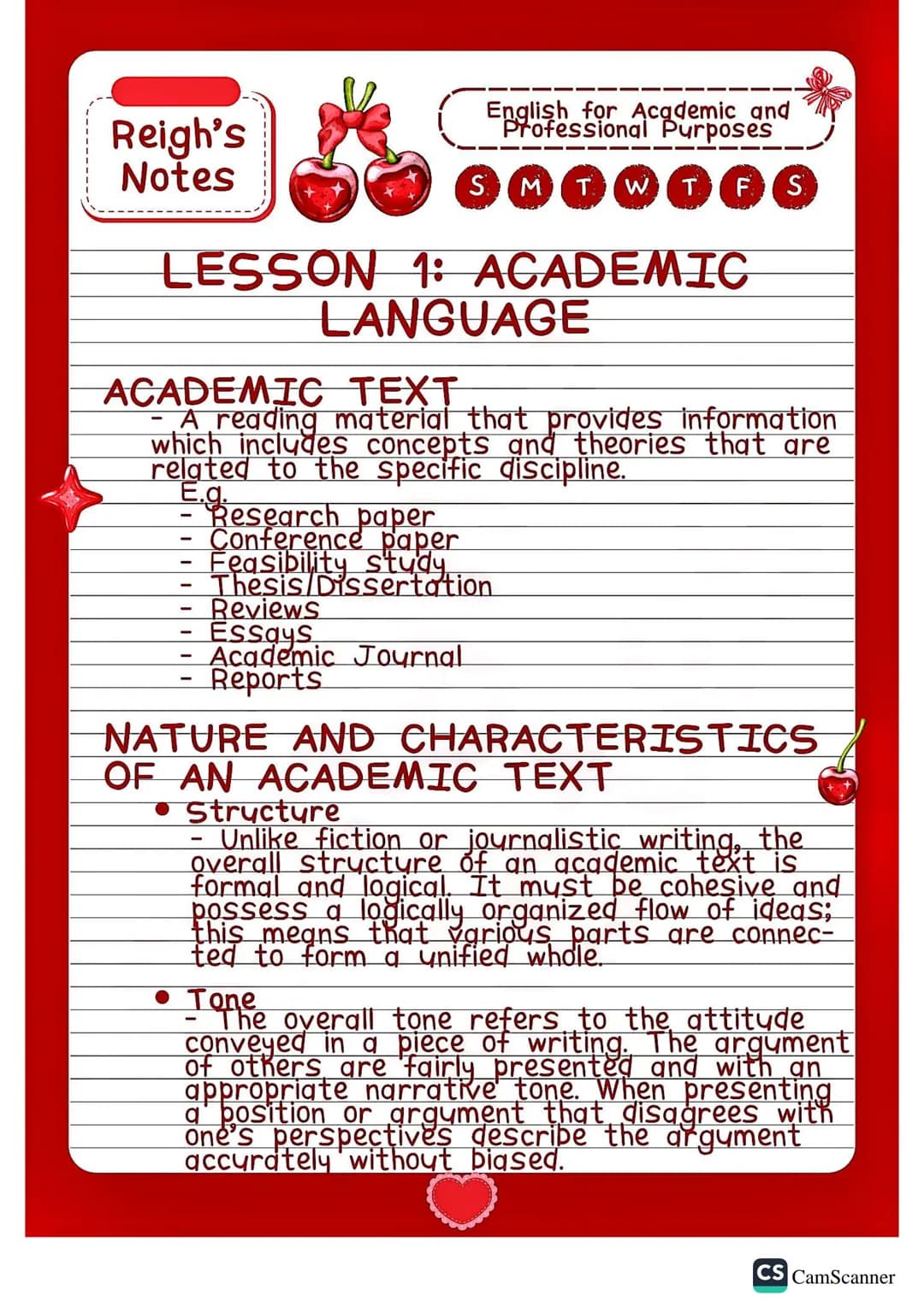
Academic Text Basics
Think of academic texts as the serious, scholarly materials you'll encounter throughout your education and professional life. These aren't your typical social media posts or casual articles – they're information-packed resources that dive deep into specific subjects.
You'll find academic texts everywhere in school: research papers, thesis projects, academic journals, and even those lengthy reports your teachers assign. Each one follows strict rules and standards that make them reliable sources of knowledge.
What makes these texts special is their formal structure and logical organization. Every paragraph connects to the next like puzzle pieces, creating one unified argument or explanation. The tone stays neutral and fair – authors present different viewpoints without letting personal bias creep in, even when they disagree with certain perspectives.
Pro Tip: When you're writing academic papers, imagine you're presenting to a panel of experts who expect clear, logical thinking and respect for all viewpoints.
2
of 4
Key Features of Academic Writing
The language in academic texts follows specific rules that might feel stiff at first, but they serve an important purpose. You'll use third-person point of view (avoiding "I" and "you") and formal vocabulary that precisely expresses complex ideas. Technical terms are totally fine when they're necessary, but don't use big words just to sound smart.
Citation is absolutely crucial – it's like giving credit where credit's due. Every idea, statistic, or quote you borrow from someone else needs proper acknowledgment to avoid plagiarism accusations. Think of citations as your academic insurance policy.
Academic texts tackle complex issues that require serious critical thinking skills. They don't just scratch the surface; they dig deep into problems that need evidence-based arguments. Your opinions need solid backing from research and established academic knowledge.
Remember: Strong academic writing combines your critical thinking with credible sources – it's not just what you think, but how well you can prove it.
3
of 4
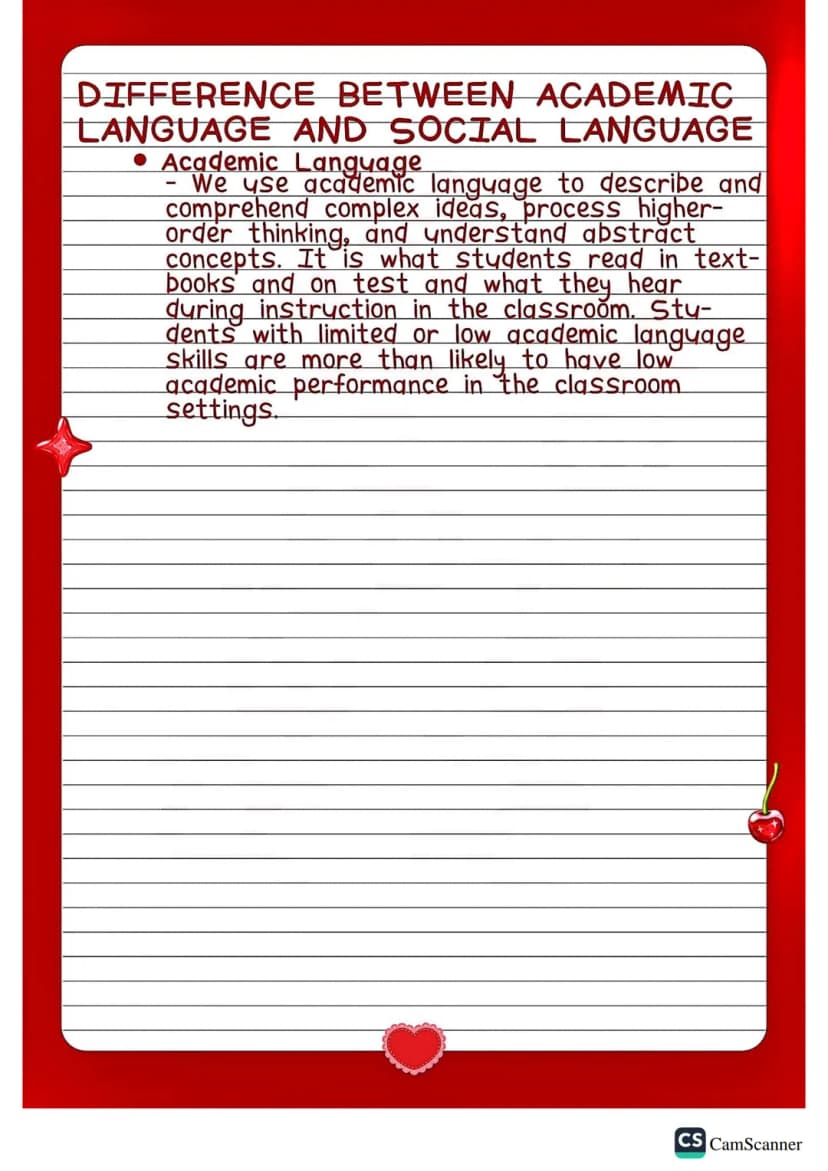
Academic vs. Social Language
Academic texts are thesis-driven, meaning they start with a clear position or argument and work to prove it throughout the entire piece. Every paragraph should support your main thesis like evidence in a court case.
Now let's talk about academic language versus the way you naturally speak. Social language is that comfortable, informal way you chat with family and friends – using slang like "cool" or "awesome," hand gestures, and casual expressions. It covers everyday conversations, text messages, and friendly emails.
Academic language, on the other hand, is your ticket to classroom and workplace success. This is the vocabulary and communication style you need for textbooks, tests, presentations, and professional discussions. It's more formal, precise, and structured than social language.
Key Insight: Think of social and academic language as different tools – you wouldn't use a hammer for surgery, and you wouldn't use casual slang in a research paper.
4
of 4
Mastering Academic Communication
Academic language helps you describe complex ideas, engage in higher-order thinking, and grasp abstract concepts that go beyond simple facts. When you read challenging textbooks or listen to detailed lectures, you're processing academic language.
Here's the reality: students who struggle with academic language often face challenges in their overall academic performance. It's not about being smart or not – it's about learning the specific communication skills that schools and workplaces value.
The good news? Academic language is totally learnable with practice and awareness. Start paying attention to how your textbooks are written, practice using formal vocabulary in your assignments, and gradually build your comfort level with this more sophisticated communication style.
Success Strategy: Don't worry if academic language feels unnatural at first – even native speakers need to learn these formal communication skills through practice and exposure.
We thought you’d never ask...
What is the Knowunity AI companion?
Our AI companion is specifically built for the needs of students. Based on the millions of content pieces we have on the platform we can provide truly meaningful and relevant answers to students. But its not only about answers, the companion is even more about guiding students through their daily learning challenges, with personalised study plans, quizzes or content pieces in the chat and 100% personalisation based on the students skills and developments.
Where can I download the Knowunity app?
You can download the app in the Google Play Store and in the Apple App Store.
Is Knowunity really free of charge?
That's right! Enjoy free access to study content, connect with fellow students, and get instant help – all at your fingertips.
Similar Content
 Otros
Otros Altres
 Diğer
Diğer Science (ACT®)
Most popular content: Key Concepts
6 UCSP
UCSPUnderstanding Culture, Society, and Politics
Complete notes for #UCSP
G121,85526
 Math
MathGRADE 9
This is all for Grade 9 students!
G92,16672
 Econ
EconApplied Economics - 1st Sem
This provides ABM Students complete notes for 1st Semester on Applied Economics.
G111,61828
 GenChem
Atomic Theory and Atomic Structure
grade 11 gen chemistry first topic
G1187117
 GenBio
CELLULAR RESPIRATION - DEEP DIVE
Descriptive and annotated notes about the types of cellular respiration— aerobic, anaerobic, & ETC! Best for Grade 12 Students!
G125078
GenBioGeneral Biology 1
First Semester Notes
G1297321
Most popular content in EAPP
8EAPPEnglish for Academic and Professional Purposes
EAPP Midterm Lessons
G112,89257
EAPPEAPP | Complete Topics
This reviewer covers the whole lessons for EAPP. This contains illustration for better understanding. I got 98% for my grades by making it as a review and using it as my reviewer!
G111,52928
EAPPEAPP 1st Quarter notes
grade 11 notes
G112,56557
EAPPEAPP REVIEWER
How to write manifestos, position paper
G111,39119
EAPPG7 ENGLISH QR 2
Notes
G72,06444
EAPPG11-Oral Com reviewer
This is the reviewer for Oral Com g11 stem
G112,370240
EAPPReading and Writing Skills
Reading and Writing develop speaking and writing skills for academic and professional settings.
G111,69619
EAPP2ND QUARTER NOTES ON EAPP
A second quarter notes on EAPP.
G111,27621
Most popular content
9MathMathematics Grade 10 Quarter 1
Grade 10 Math topics
G1010,223250
 Iba pa
El Filibusterismo (FILIPINO 10)
Kilalanin ang mga karakter at alamin ang mga pangyayari mula Kabanata 1 hanggang 39.
G1011,183240
ScienceScience 9 Quarter 1 Lesson 1
Topics: The Respiratory System and The Circulatory System
G911,075383
 Gen Physics
General Physics 1, First Sem
Units of Measurement, Vectors, and Kinematics. All with formulas
G116,255168
 Filipino
Filipino 8 Reviewer
Filipino Reviewer for 4th Quarter for Grade 8 students
G88,088127
ScienceSCIENCE Grade 9 Quarter 3 Reviewer
All about the lessons in Grade 9 Quarter 3 SCIENCE, all complete, highlighted, printable, and has extra informations.
G914,629303
 Pre-Cal
UPCAT Reviewer: Mathematics
general coverage of the mathematics section for UPCAT
G127,085397
OtherIntroduction to Philosophy - 1st Semester, Grade 12
A summarized notes for Grade 12 students. Easier learning for the 1st semester’s Philosophy subject.
G123,96856
ScienceThe Human Digestive System
Science Grade 8 1st Quarter Lesson
G84,78386
Can't find what you're looking for? Explore other subjects.
Students love us — and so will you.
4.6/5App Store
4.7/5Google Play
The app is very easy to use and well designed. I have found everything I was looking for so far and have been able to learn a lot from the presentations! I will definitely use the app for a class assignment! And of course it also helps a lot as an inspiration.
Stefan SiOS user
This app is really great. There are so many study notes and help [...]. My problem subject is French, for example, and the app has so many options for help. Thanks to this app, I have improved my French. I would recommend it to anyone.
Samantha KlichAndroid user
Wow, I am really amazed. I just tried the app because I've seen it advertised many times and was absolutely stunned. This app is THE HELP you want for school and above all, it offers so many things, such as workouts and fact sheets, which have been VERY helpful to me personally.
AnnaiOS user
EAPP783 views·Updated Jun 24, 2026·4 pagesEAPP Fundamental Lesson for SHS
Reigh<3@reigh0fsunshine
Ever wondered why your textbooks sound so different from how you chat with friends? Academic language is the formal way we communicate in school and professional settings, and mastering it is your key to success in college and your future...
1
of 4
Sign up to see the content. It's free!
- Access to all documents
- Improve your grades
- Join milions of students
Academic Text Basics
Think of academic texts as the serious, scholarly materials you'll encounter throughout your education and professional life. These aren't your typical social media posts or casual articles – they're information-packed resources that dive deep into specific subjects.
You'll find academic texts everywhere in school: research papers, thesis projects, academic journals, and even those lengthy reports your teachers assign. Each one follows strict rules and standards that make them reliable sources of knowledge.
What makes these texts special is their formal structure and logical organization. Every paragraph connects to the next like puzzle pieces, creating one unified argument or explanation. The tone stays neutral and fair – authors present different viewpoints without letting personal bias creep in, even when they disagree with certain perspectives.
Pro Tip: When you're writing academic papers, imagine you're presenting to a panel of experts who expect clear, logical thinking and respect for all viewpoints.
2
of 4Sign up to see the content. It's free!
- Access to all documents
- Improve your grades
- Join milions of students
Key Features of Academic Writing
The language in academic texts follows specific rules that might feel stiff at first, but they serve an important purpose. You'll use third-person point of view (avoiding "I" and "you") and formal vocabulary that precisely expresses complex ideas. Technical terms are totally fine when they're necessary, but don't use big words just to sound smart.
Citation is absolutely crucial – it's like giving credit where credit's due. Every idea, statistic, or quote you borrow from someone else needs proper acknowledgment to avoid plagiarism accusations. Think of citations as your academic insurance policy.
Academic texts tackle complex issues that require serious critical thinking skills. They don't just scratch the surface; they dig deep into problems that need evidence-based arguments. Your opinions need solid backing from research and established academic knowledge.
Remember: Strong academic writing combines your critical thinking with credible sources – it's not just what you think, but how well you can prove it.
3
of 4Sign up to see the content. It's free!
- Access to all documents
- Improve your grades
- Join milions of students
Academic vs. Social Language
Academic texts are thesis-driven, meaning they start with a clear position or argument and work to prove it throughout the entire piece. Every paragraph should support your main thesis like evidence in a court case.
Now let's talk about academic language versus the way you naturally speak. Social language is that comfortable, informal way you chat with family and friends – using slang like "cool" or "awesome," hand gestures, and casual expressions. It covers everyday conversations, text messages, and friendly emails.
Academic language, on the other hand, is your ticket to classroom and workplace success. This is the vocabulary and communication style you need for textbooks, tests, presentations, and professional discussions. It's more formal, precise, and structured than social language.
Key Insight: Think of social and academic language as different tools – you wouldn't use a hammer for surgery, and you wouldn't use casual slang in a research paper.
4
of 4Sign up to see the content. It's free!
- Access to all documents
- Improve your grades
- Join milions of students
Mastering Academic Communication
Academic language helps you describe complex ideas, engage in higher-order thinking, and grasp abstract concepts that go beyond simple facts. When you read challenging textbooks or listen to detailed lectures, you're processing academic language.
Here's the reality: students who struggle with academic language often face challenges in their overall academic performance. It's not about being smart or not – it's about learning the specific communication skills that schools and workplaces value.
The good news? Academic language is totally learnable with practice and awareness. Start paying attention to how your textbooks are written, practice using formal vocabulary in your assignments, and gradually build your comfort level with this more sophisticated communication style.
Success Strategy: Don't worry if academic language feels unnatural at first – even native speakers need to learn these formal communication skills through practice and exposure.
We thought you’d never ask...
What is the Knowunity AI companion?
Our AI companion is specifically built for the needs of students. Based on the millions of content pieces we have on the platform we can provide truly meaningful and relevant answers to students. But its not only about answers, the companion is even more about guiding students through their daily learning challenges, with personalised study plans, quizzes or content pieces in the chat and 100% personalisation based on the students skills and developments.
Where can I download the Knowunity app?
You can download the app in the Google Play Store and in the Apple App Store.
Is Knowunity really free of charge?
That's right! Enjoy free access to study content, connect with fellow students, and get instant help – all at your fingertips.
Similar Content
Most popular content: Key Concepts
6UCSPUnderstanding Culture, Society, and Politics
Complete notes for #UCSP
G121,85526
MathGRADE 9
This is all for Grade 9 students!
G92,16672
EconApplied Economics - 1st Sem
This provides ABM Students complete notes for 1st Semester on Applied Economics.
G111,61828
GenChemAtomic Theory and Atomic Structure
grade 11 gen chemistry first topic
G1187117
GenBioCELLULAR RESPIRATION - DEEP DIVE
Descriptive and annotated notes about the types of cellular respiration— aerobic, anaerobic, & ETC! Best for Grade 12 Students!
G125078
GenBioGeneral Biology 1
First Semester Notes
G1297321
Most popular content in EAPP
8EAPPEnglish for Academic and Professional Purposes
EAPP Midterm Lessons
G112,89257
EAPPEAPP | Complete Topics
This reviewer covers the whole lessons for EAPP. This contains illustration for better understanding. I got 98% for my grades by making it as a review and using it as my reviewer!
G111,52928
EAPPEAPP 1st Quarter notes
grade 11 notes
G112,56557
EAPPEAPP REVIEWER
How to write manifestos, position paper
G111,39119
EAPPG7 ENGLISH QR 2
Notes
G72,06444
EAPPG11-Oral Com reviewer
This is the reviewer for Oral Com g11 stem
G112,370240
EAPPReading and Writing Skills
Reading and Writing develop speaking and writing skills for academic and professional settings.
G111,69619
EAPP2ND QUARTER NOTES ON EAPP
A second quarter notes on EAPP.
G111,27621
Most popular content
9MathMathematics Grade 10 Quarter 1
Grade 10 Math topics
G1010,223250
Iba paEl Filibusterismo (FILIPINO 10)
Kilalanin ang mga karakter at alamin ang mga pangyayari mula Kabanata 1 hanggang 39.
G1011,183240
ScienceScience 9 Quarter 1 Lesson 1
Topics: The Respiratory System and The Circulatory System
G911,075383
Gen PhysicsGeneral Physics 1, First Sem
Units of Measurement, Vectors, and Kinematics. All with formulas
G116,255168
FilipinoFilipino 8 Reviewer
Filipino Reviewer for 4th Quarter for Grade 8 students
G88,088127
ScienceSCIENCE Grade 9 Quarter 3 Reviewer
All about the lessons in Grade 9 Quarter 3 SCIENCE, all complete, highlighted, printable, and has extra informations.
G914,629303
Pre-CalUPCAT Reviewer: Mathematics
general coverage of the mathematics section for UPCAT
G127,085397
OtherIntroduction to Philosophy - 1st Semester, Grade 12
A summarized notes for Grade 12 students. Easier learning for the 1st semester’s Philosophy subject.
G123,96856
ScienceThe Human Digestive System
Science Grade 8 1st Quarter Lesson
G84,78386
Can't find what you're looking for? Explore other subjects.
Students love us — and so will you.
4.6/5App Store
4.7/5Google Play
The app is very easy to use and well designed. I have found everything I was looking for so far and have been able to learn a lot from the presentations! I will definitely use the app for a class assignment! And of course it also helps a lot as an inspiration.
Stefan SiOS user
This app is really great. There are so many study notes and help [...]. My problem subject is French, for example, and the app has so many options for help. Thanks to this app, I have improved my French. I would recommend it to anyone.
Samantha KlichAndroid user
Wow, I am really amazed. I just tried the app because I've seen it advertised many times and was absolutely stunned. This app is THE HELP you want for school and above all, it offers so many things, such as workouts and fact sheets, which have been VERY helpful to me personally.
AnnaiOS user