
Duitse grammatica lijkt ingewikkeld, maar met de juiste basis wordt...
 Duits243 views·Updated Jun 15, 2026·3 pages
Duitse Grammatica Uitleg voor 2 Havo
F
fleur passon @fleurpasson

1 / 3
1
of 3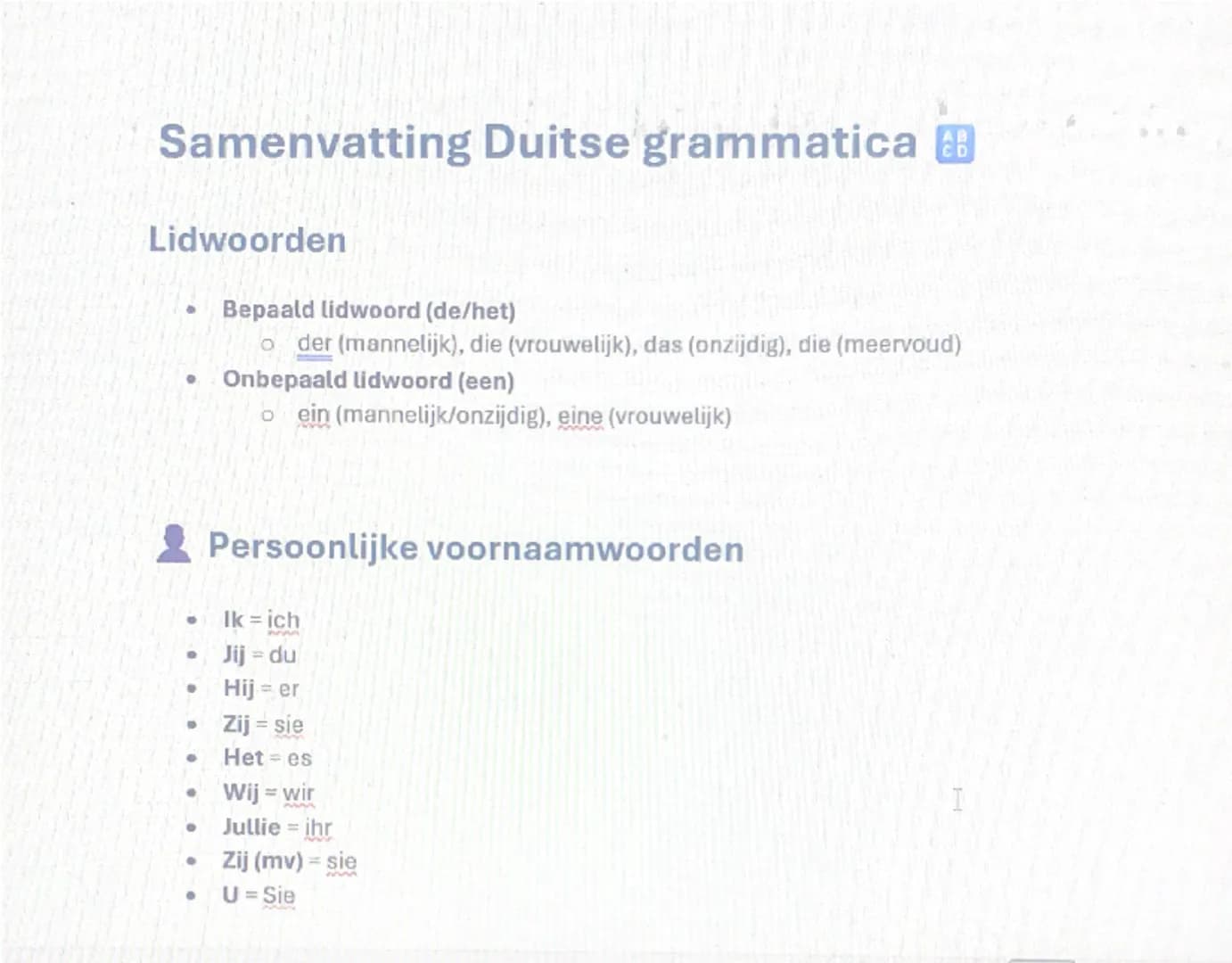
Lidwoorden en Persoonlijke Voornaamwoorden
Lidwoorden zijn cruciaal in het Duits omdat ze veranderen afhankelijk van het geslacht. Het bepaalde lidwoord kent vier vormen: der (mannelijk), die (vrouwelijk), das (onzijdig) en die (meervoud).
Bij onbepaalde lidwoorden gebruik je ein voor mannelijke en onzijdige woorden, en eine voor vrouwelijke woorden. Deze patronen herken je snel na wat oefening.
Persoonlijke voornaamwoorden zijn gelukkig wat eenvoudiger. De belangrijkste zijn: ich (ik), du (jij), er/sie/es , wir (wij), ihr (jullie), en sie/Sie . Let op dat Sie met hoofdletter de beleefdheidsvorm is!
Tip: Leer lidwoorden altijd samen met het zelfstandig naamwoord - dus niet "Hund" maar "der Hund"!
2
of 3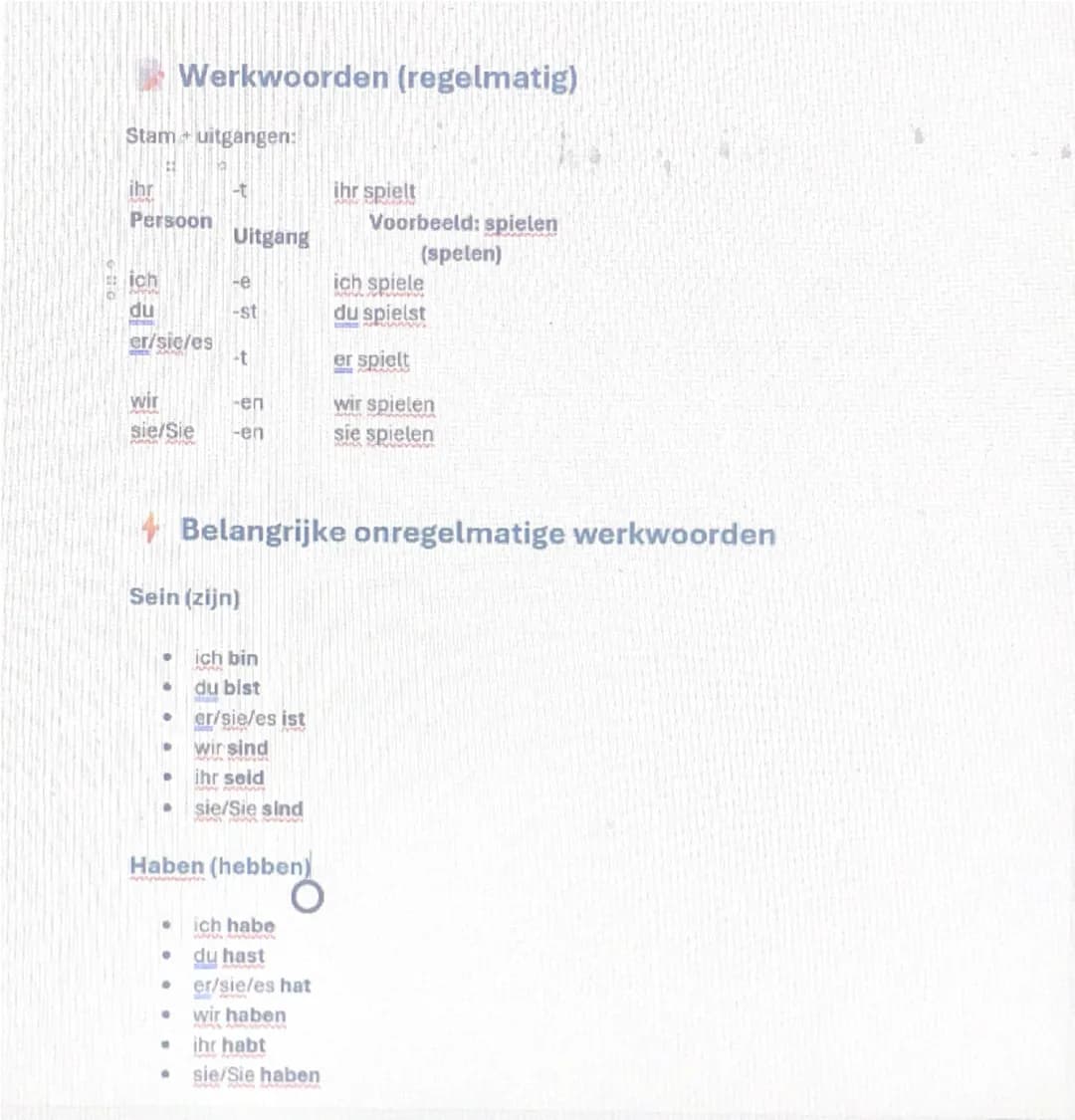
Werkwoorden Vervoegen
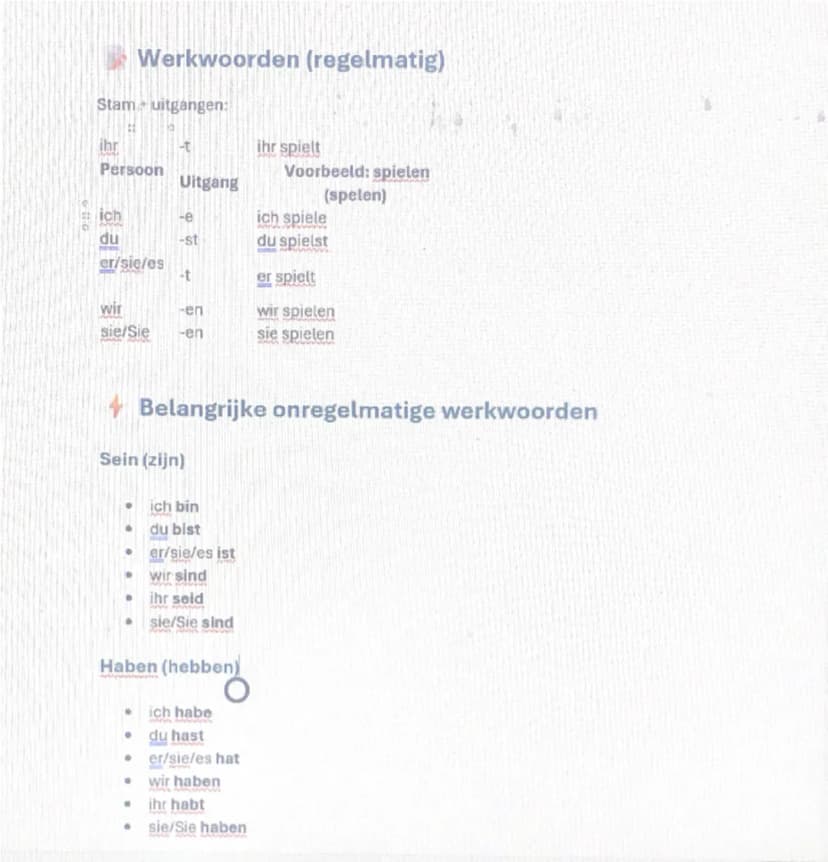
Regelmatige werkwoorden volgen een vast patroon dat je makkelijk kunt onthouden. Je neemt de stam van het werkwoord en voegt de juiste uitgang toe: -e, -st, -t, -en, -t, -en.
Bij het werkwoord "spielen" krijg je dus: ich spiele, du spielst, er spielt, wir spielen, ihr spielt, sie spielen. Deze systematiek werkt voor bijna alle regelmatige werkwoorden.
Onregelmatige werkwoorden zijn lastiger, maar gelukkig zijn de belangrijkste er maar een paar. Sein (zijn) en haben (hebben) moet je uit je hoofd leren omdat je ze constant gebruikt.
Onthoud: "Ich bin, du bist, er ist" en "ich habe, du hast, er hat" - deze komen in elke Duitse tekst voor!
3
of 3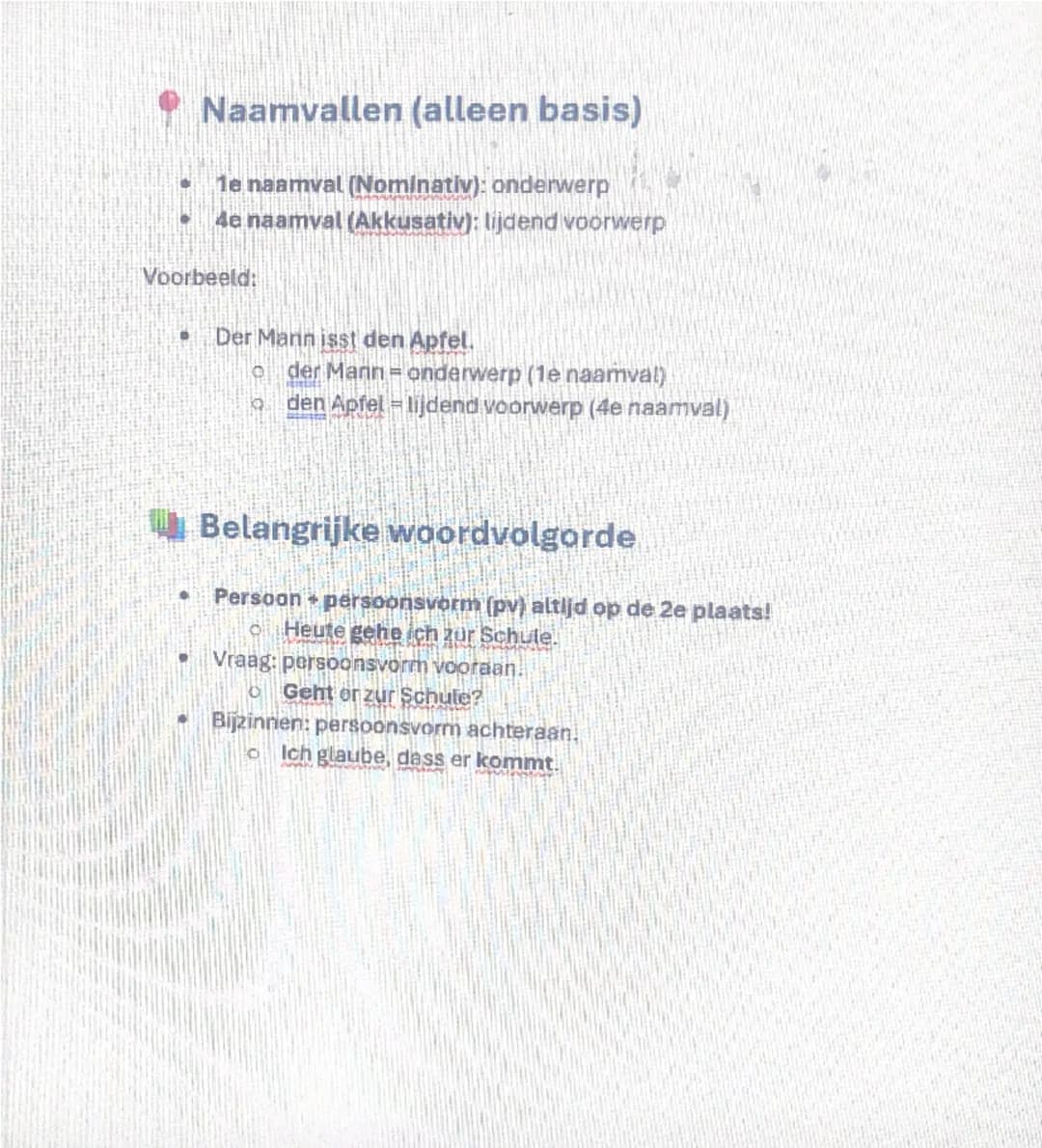
Naamvallen en Woordvolgorde
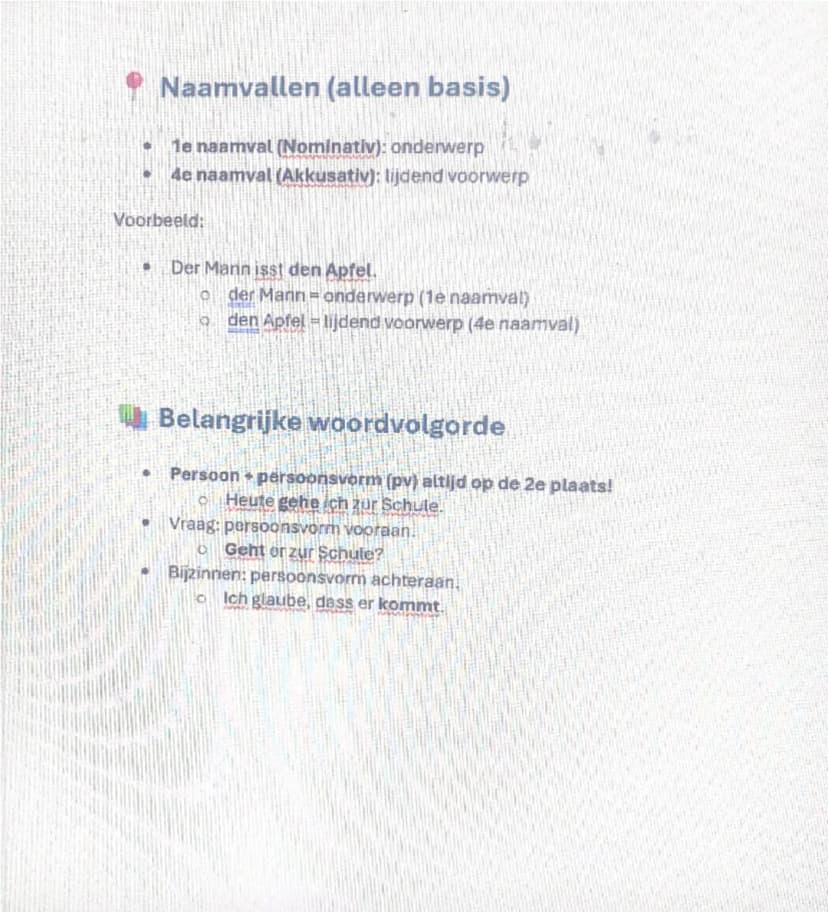
Naamvallen bepalen welke vorm lidwoorden krijgen in een zin. De Nominativ (1e naamval) gebruik je voor het onderwerp, de Akkusativ (4e naamval) voor het lijdend voorwerp. Herken je het verschil tussen "der Mann" en "den Apfel"?
Woordvolgorde in het Duits heeft één gouden regel: de persoonsvorm staat altijd op de tweede plaats! In "Heute gehe ich zur Schule" staat "gehe" op plek twee, ook al begint de zin met "Heute".
Bij vragen komt de persoonsvorm vooraan: "Gehst du zur Schule?" In bijzinnen gebeurt precies het omgekeerde - dan staat de persoonsvorm helemaal achteraan: "Ich glaube, dass er morgen kommt."
Praktische tip: Tel altijd de posities in Duitse zinnen - de persoonsvorm op plek 2 is je houvast!
We thought you’d never ask...
What is the Knowunity AI companion?
Our AI companion is specifically built for the needs of students. Based on the millions of content pieces we have on the platform we can provide truly meaningful and relevant answers to students. But its not only about answers, the companion is even more about guiding students through their daily learning challenges, with personalised study plans, quizzes or content pieces in the chat and 100% personalisation based on the students skills and developments.
Where can I download the Knowunity app?
You can download the app in the Google Play Store and in the Apple App Store.
Is Knowunity really free of charge?
That's right! Enjoy free access to study content, connect with fellow students, and get instant help – all at your fingertips.
Most popular content
9 Biologie
Biologie Havo 4 thema regeling H5
Samenvatting van alle stof van hoofdstuk 5 regeling, boek biologie voor jou 4B
K42956
 Geschiedenis
Geschiedenis Koude oorlog
Alles wat je moet weten over de koude oorlog!
K41410
GeschiedenisSamenvatting koude oorlog
Samenvatting over de Koude oorlog
K31493
 Maatschappijleer
Maatschappijleer samenvatting h4
Maatschappijleer samenvatting h4
K42127
GeschiedenisGeschiedenis tijdvak 5 samenvatting
Geschiedenis tijdvak 5 samenvatting
K456215
GeschiedenisTweede wereldoorlog alles
alles over de tweede wereldoorlog van 3vwo hoofdstuk 3
K31924
BiologieBiologie hoofdstuk 4
Samenvatting over sex en dingetjes
K41778
MaatschappijleerMaatschappijleer hoofdstuk 3
Samenvatting hoofdstuk 3
K41,28127
BiologieKleine&grote bloedsomloop
Bloedsomloop
K32001
Can't find what you're looking for? Explore other subjects.
Students love us — and so will you.
4.6/5App Store
4.7/5Google Play
The app is very easy to use and well designed. I have found everything I was looking for so far and have been able to learn a lot from the presentations! I will definitely use the app for a class assignment! And of course it also helps a lot as an inspiration.
Stefan SiOS user
This app is really great. There are so many study notes and help [...]. My problem subject is French, for example, and the app has so many options for help. Thanks to this app, I have improved my French. I would recommend it to anyone.
Samantha KlichAndroid user
Wow, I am really amazed. I just tried the app because I've seen it advertised many times and was absolutely stunned. This app is THE HELP you want for school and above all, it offers so many things, such as workouts and fact sheets, which have been VERY helpful to me personally.
AnnaiOS user
Duits243 views·Updated Jun 15, 2026·3 pagesDuitse Grammatica Uitleg voor 2 Havo
F
fleur passon @fleurpasson
Duitse grammatica lijkt ingewikkeld, maar met de juiste basis wordt het veel makkelijker! Deze samenvatting behandelt de essentiële grammatica-onderdelen die je nodig hebt om Duitse zinnen te begrijpen en te maken.
1
of 3
Sign up to see the content. It's free!
- Access to all documents
- Improve your grades
- Join milions of students
Lidwoorden en Persoonlijke Voornaamwoorden
Lidwoorden zijn cruciaal in het Duits omdat ze veranderen afhankelijk van het geslacht. Het bepaalde lidwoord kent vier vormen: der (mannelijk), die (vrouwelijk), das (onzijdig) en die (meervoud).
Bij onbepaalde lidwoorden gebruik je ein voor mannelijke en onzijdige woorden, en eine voor vrouwelijke woorden. Deze patronen herken je snel na wat oefening.
Persoonlijke voornaamwoorden zijn gelukkig wat eenvoudiger. De belangrijkste zijn: ich (ik), du (jij), er/sie/es , wir (wij), ihr (jullie), en sie/Sie . Let op dat Sie met hoofdletter de beleefdheidsvorm is!
Tip: Leer lidwoorden altijd samen met het zelfstandig naamwoord - dus niet "Hund" maar "der Hund"!
2
of 3Sign up to see the content. It's free!
- Access to all documents
- Improve your grades
- Join milions of students
Werkwoorden Vervoegen
Regelmatige werkwoorden volgen een vast patroon dat je makkelijk kunt onthouden. Je neemt de stam van het werkwoord en voegt de juiste uitgang toe: -e, -st, -t, -en, -t, -en.
Bij het werkwoord "spielen" krijg je dus: ich spiele, du spielst, er spielt, wir spielen, ihr spielt, sie spielen. Deze systematiek werkt voor bijna alle regelmatige werkwoorden.
Onregelmatige werkwoorden zijn lastiger, maar gelukkig zijn de belangrijkste er maar een paar. Sein (zijn) en haben (hebben) moet je uit je hoofd leren omdat je ze constant gebruikt.
Onthoud: "Ich bin, du bist, er ist" en "ich habe, du hast, er hat" - deze komen in elke Duitse tekst voor!
3
of 3Sign up to see the content. It's free!
- Access to all documents
- Improve your grades
- Join milions of students
Naamvallen en Woordvolgorde
Naamvallen bepalen welke vorm lidwoorden krijgen in een zin. De Nominativ (1e naamval) gebruik je voor het onderwerp, de Akkusativ (4e naamval) voor het lijdend voorwerp. Herken je het verschil tussen "der Mann" en "den Apfel"?
Woordvolgorde in het Duits heeft één gouden regel: de persoonsvorm staat altijd op de tweede plaats! In "Heute gehe ich zur Schule" staat "gehe" op plek twee, ook al begint de zin met "Heute".
Bij vragen komt de persoonsvorm vooraan: "Gehst du zur Schule?" In bijzinnen gebeurt precies het omgekeerde - dan staat de persoonsvorm helemaal achteraan: "Ich glaube, dass er morgen kommt."
Praktische tip: Tel altijd de posities in Duitse zinnen - de persoonsvorm op plek 2 is je houvast!
We thought you’d never ask...
What is the Knowunity AI companion?
Our AI companion is specifically built for the needs of students. Based on the millions of content pieces we have on the platform we can provide truly meaningful and relevant answers to students. But its not only about answers, the companion is even more about guiding students through their daily learning challenges, with personalised study plans, quizzes or content pieces in the chat and 100% personalisation based on the students skills and developments.
Where can I download the Knowunity app?
You can download the app in the Google Play Store and in the Apple App Store.
Is Knowunity really free of charge?
That's right! Enjoy free access to study content, connect with fellow students, and get instant help – all at your fingertips.
Most popular content
9BiologieBiologie Havo 4 thema regeling H5
Samenvatting van alle stof van hoofdstuk 5 regeling, boek biologie voor jou 4B
K42956
GeschiedenisGeschiedenis Koude oorlog
Alles wat je moet weten over de koude oorlog!
K41410
GeschiedenisSamenvatting koude oorlog
Samenvatting over de Koude oorlog
K31493
MaatschappijleerMaatschappijleer samenvatting h4
Maatschappijleer samenvatting h4
K42127
GeschiedenisGeschiedenis tijdvak 5 samenvatting
Geschiedenis tijdvak 5 samenvatting
K456215
GeschiedenisTweede wereldoorlog alles
alles over de tweede wereldoorlog van 3vwo hoofdstuk 3
K31924
BiologieBiologie hoofdstuk 4
Samenvatting over sex en dingetjes
K41778
MaatschappijleerMaatschappijleer hoofdstuk 3
Samenvatting hoofdstuk 3
K41,28127
BiologieKleine&grote bloedsomloop
Bloedsomloop
K32001
Can't find what you're looking for? Explore other subjects.
Students love us — and so will you.
4.6/5App Store
4.7/5Google Play
The app is very easy to use and well designed. I have found everything I was looking for so far and have been able to learn a lot from the presentations! I will definitely use the app for a class assignment! And of course it also helps a lot as an inspiration.
Stefan SiOS user
This app is really great. There are so many study notes and help [...]. My problem subject is French, for example, and the app has so many options for help. Thanks to this app, I have improved my French. I would recommend it to anyone.
Samantha KlichAndroid user
Wow, I am really amazed. I just tried the app because I've seen it advertised many times and was absolutely stunned. This app is THE HELP you want for school and above all, it offers so many things, such as workouts and fact sheets, which have been VERY helpful to me personally.
AnnaiOS user