
Le fonti del Diritto rappresentano la base del nostro sistema...
 Diritto1,249 views·Updated Jun 16, 2026·2 pages
Le Fonti del Diritto: Introduzione e Gerarchia dettagliata
G
Giulia Carletti@giuliacarlettii
1
of 2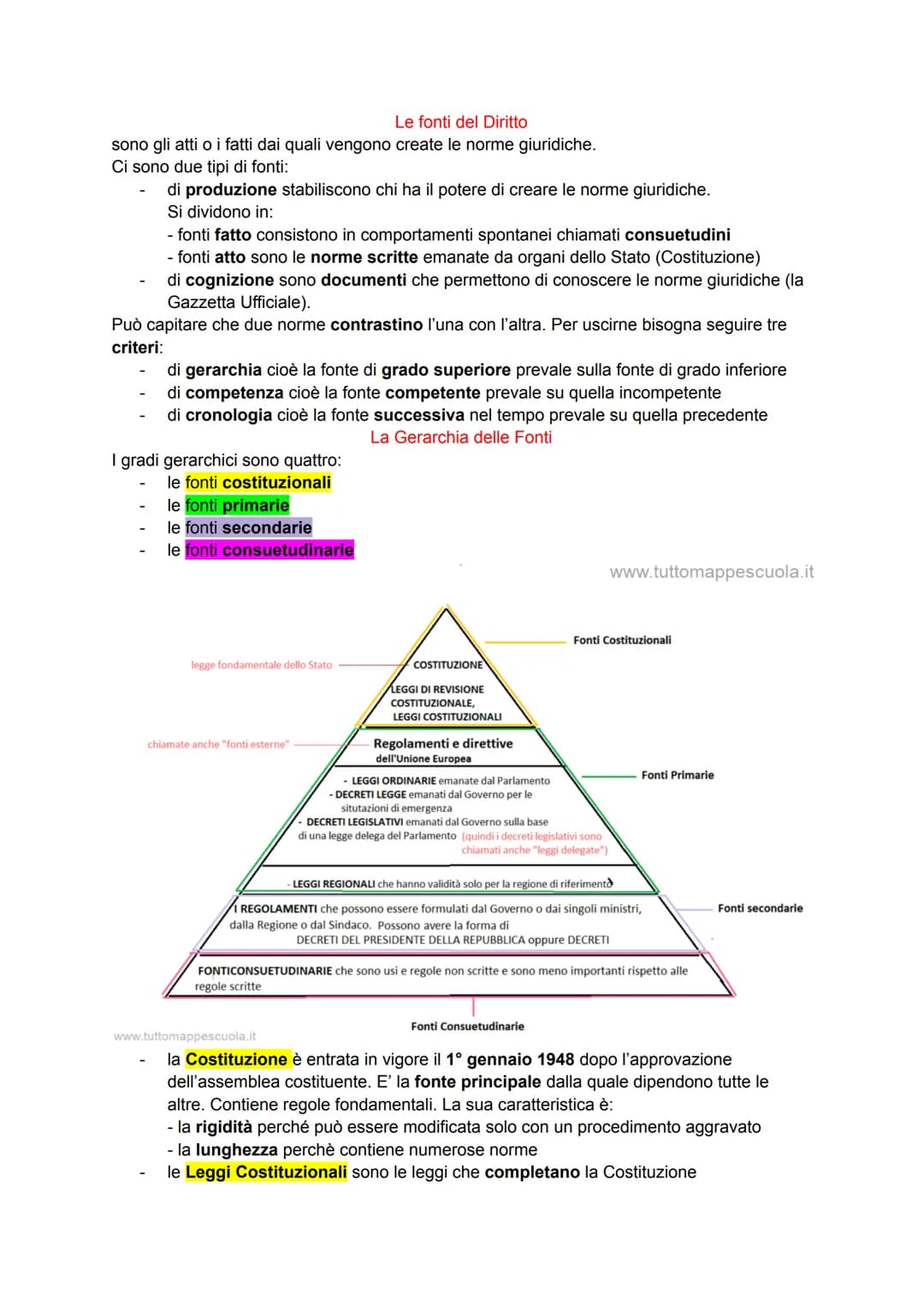
Fonti del Diritto e loro Gerarchia
Le fonti del Diritto sono elementi essenziali che danno origine alle norme giuridiche. Si dividono in fonti di produzione (chi ha il potere di creare le norme) e fonti di cognizione (documenti che permettono di conoscere le norme).
Le fonti di produzione si distinguono in fonti fatto (comportamenti spontanei o consuetudini) e fonti atto (norme scritte emanate dagli organi dello Stato). Quando due norme sono in contrasto, si applicano tre criteri: gerarchia (prevale la fonte di grado superiore), competenza (prevale la fonte competente) e cronologia (prevale la fonte più recente).
La gerarchia delle fonti si struttura in quattro livelli principali:
- Fonti costituzionali: Costituzione, leggi di revisione costituzionale e leggi costituzionali
- Fonti primarie: leggi ordinarie, decreti legge, decreti legislativi e leggi regionali
- Fonti secondarie: regolamenti del Governo, dei ministri, delle Regioni o dei Sindaci
- Fonti consuetudinarie: usi e regole non scritte (meno importanti delle regole scritte)
💡 Ricorda: La Costituzione è la legge fondamentale dello Stato, entrata in vigore il 1° gennaio 1948. È caratterizzata da rigidità (modificabile solo con procedimento aggravato) e lunghezza (contiene numerose norme fondamentali).
2
of 2
Approfondimento sulle Fonti del Diritto
Le leggi ordinarie sono norme approvate dal Parlamento e rappresentano uno strumento legislativo comune. A differenza di queste, gli atti con forza di legge sono emanati dal Governo e comprendono i decreti-legge (per situazioni d'emergenza) e i decreti legislativi (basati su una legge delega del Parlamento).
Le leggi regionali hanno validità limitata al territorio della regione che le ha emanate, mentre i regolamenti servono a completare e specificare le leggi esistenti. Le consuetudini, essendo fonti non scritte, sono comportamenti ripetuti nel tempo che acquisiscono valore giuridico.
Tutte queste fonti formano l'ordinamento giuridico, cioè l'insieme completo delle norme giuridiche in vigore in un determinato Stato. Questo sistema ordinato permette il funzionamento della società secondo regole condivise.
🔍 Approfondimento: I decreti legislativi vengono anche chiamati "leggi delegate" perché il Governo riceve una delega specifica dal Parlamento per emanarli, mentre le fonti dell'Unione Europea (regolamenti e direttive) sono considerate "fonti esterne" ma hanno grande rilevanza nell'ordinamento italiano.
We thought you’d never ask...
What is the Knowunity AI companion?
Our AI companion is specifically built for the needs of students. Based on the millions of content pieces we have on the platform we can provide truly meaningful and relevant answers to students. But its not only about answers, the companion is even more about guiding students through their daily learning challenges, with personalised study plans, quizzes or content pieces in the chat and 100% personalisation based on the students skills and developments.
Where can I download the Knowunity app?
You can download the app in the Google Play Store and in the Apple App Store.
Is Knowunity really free of charge?
That's right! Enjoy free access to study content, connect with fellow students, and get instant help – all at your fingertips.
Similar Content
 Ciencias Sociales
Most popular content: Strutture Sociali
9Dirittoil presidente della repubblica e la corte costituzionale
il presidente della repubblica e la corte costituzionale
2ªl2,27044
DirittoDiritto 5 anno -superiori
TROVERETE TUTTO IL MIO PROGRAMMA DI DIRITTO SVOLTO IL 5 E ULTIMO ANNO DI SUPERIORI
5ªl3,908146
DirittoLo stato e la costituzione
Forme di stato e gli articoli della costituzione
5ªl5276
 Ed. civ.
la costituzione
mappa concettuale sulla costituzione
3ªl2,26131
DirittoAppunti diritto Romano
Appunti presi in classe, integrate con il libro
5ªl1,19125
DirittoDiritto romano completo
Appunti di diritto romano presi a lezione universitaria presso facoltà di giurisprudenza
5,145143
Dirittodiritti reali minori
contiene anche: proprietà, superficie, enfiteusi, usufrutto, uso, abitazione, servitù prediali, comunione e condominio
3ªl1,75229
DirittoDiritto Costituzionale - Le Basi del Diritto Costituzionale
Introduzione e concetti fondamentali del diritto e dell'ordinamento giuridico. Primo anno di Giurisprudenza
5ªl1,03116
DirittoDIFFERENZA TRA LO STATUTO ALBERTINO E LA COSTITUZIONE ITALIANA
DIFFERENZA TRA LO STATUTO ALBERTINO E LA COSTITUZIONE ITALIANA
2ªl5,112161
Most popular content in Diritto
9O
DirittoOrganizzazione dello Stato Italiano
organizzazione dello Stato Italiano
1ªl7021
Q
DirittoQuiz sul parlamento
Breve quiz con questionario a domande multipla per approfondire l'argomento
2ªl8312
L
Dirittolo stato e le forme di stato
.
1ªl1,4923
Dirittoil presidente della repubblica e la corte costituzionale
il presidente della repubblica e la corte costituzionale
2ªl2,27044
DirittoDiritto - Il contratto
Il contratto - elementi essenziali, tipi di contratti, nullità e annullabilità del contratto, scioglimento del contratto, vendita, permuta, donazione
4ªl3,71866
Dirittoparlamento, governo, presidente, magistratura, UE, ONU, enti locali
parlamento, governo, presidente, magistratura, UE, ONU, enti locali
5ªl96423
D
Dirittodiritto-artt.1-12 della costituzione
pre e parte della costituzione (artt.1-12)
1ªl1,1510
L
DirittoLa Magistratura - Superiori
Fai questo quiz per testare le tue conoscenze sulla Magistratura Italiana.
1ªl6563
DirittoIl contratto
Formazione ed effetti del contratto, invalidità e efficacia del contratto
3ªl3,75384
Most popular content
9 Italiano
Riassunto patente B
Riassunto patente B - appunti presi a lezione
5ªl29,228943
 Altro
AltroTeoria patente b
Tutti gli argomenti per la patente
1ªl21,114685
Ed. civ.Teoria patente di guida B: Segnali stradali
Segnali stradali di pericolo, luminosi, di prescrizione, di indicazione, temporanei, complementari, pannelli integrativi, segnaletica orizzontale, segnalazioni agenti del traffico, distanza di visibilità per l‘arresto, minima di sicurezza.
5ªl40,0421,645
 Filosofia
Aristotele
Aristotele: vita, metafisica, fisica, etica e politica, retorica e poetica
3ªl7,623216
ItalianoI promessi sposi
Riassunti completi di tutti i 38 capitoli dei Promessi sposi.
2ªl14,090314
AltroPATENTE
schemi per esame teorico della patente
Università22,067756
S
ItalianoSintesi finale di Analisi logica
Esercitazione completa di analisi logica su frasi articolate per consolidare la conoscenza di tutti i complementi.
3ªm5,5290
P
 Inglese
Present Simple vs Present Continuous
Develop the ability to choose correctly between the Present Simple for habits and the Present Continuous for ongoing actions.
3ªm4,2120
G
ItalianoGabriele D'Annunzio e l'Estetismo
Domande sull'ideale del superuomo, il panismo e la concezione dell'arte come valore assoluto in D'Annunzio.
4ªl2,6740
Can't find what you're looking for? Explore other subjects.
Students love us — and so will you.
4.6/5App Store
4.7/5Google Play
The app is very easy to use and well designed. I have found everything I was looking for so far and have been able to learn a lot from the presentations! I will definitely use the app for a class assignment! And of course it also helps a lot as an inspiration.
Stefan SiOS user
This app is really great. There are so many study notes and help [...]. My problem subject is French, for example, and the app has so many options for help. Thanks to this app, I have improved my French. I would recommend it to anyone.
Samantha KlichAndroid user
Wow, I am really amazed. I just tried the app because I've seen it advertised many times and was absolutely stunned. This app is THE HELP you want for school and above all, it offers so many things, such as workouts and fact sheets, which have been VERY helpful to me personally.
AnnaiOS user
Diritto1,249 views·Updated Jun 16, 2026·2 pagesLe Fonti del Diritto: Introduzione e Gerarchia dettagliata
G
Giulia Carletti@giuliacarlettii
Le fonti del Diritto rappresentano la base del nostro sistema giuridico, essendo gli atti o i fatti che generano le norme legali. Comprendere come funzionano e come sono organizzate gerarchicamente è fondamentale per capire il funzionamento dello Stato italiano.
1
of 2
Sign up to see the content. It's free!
- Access to all documents
- Improve your grades
- Join milions of students
Fonti del Diritto e loro Gerarchia
Le fonti del Diritto sono elementi essenziali che danno origine alle norme giuridiche. Si dividono in fonti di produzione (chi ha il potere di creare le norme) e fonti di cognizione (documenti che permettono di conoscere le norme).
Le fonti di produzione si distinguono in fonti fatto (comportamenti spontanei o consuetudini) e fonti atto (norme scritte emanate dagli organi dello Stato). Quando due norme sono in contrasto, si applicano tre criteri: gerarchia (prevale la fonte di grado superiore), competenza (prevale la fonte competente) e cronologia (prevale la fonte più recente).
La gerarchia delle fonti si struttura in quattro livelli principali:
- Fonti costituzionali: Costituzione, leggi di revisione costituzionale e leggi costituzionali
- Fonti primarie: leggi ordinarie, decreti legge, decreti legislativi e leggi regionali
- Fonti secondarie: regolamenti del Governo, dei ministri, delle Regioni o dei Sindaci
- Fonti consuetudinarie: usi e regole non scritte (meno importanti delle regole scritte)
💡 Ricorda: La Costituzione è la legge fondamentale dello Stato, entrata in vigore il 1° gennaio 1948. È caratterizzata da rigidità (modificabile solo con procedimento aggravato) e lunghezza (contiene numerose norme fondamentali).
2
of 2Sign up to see the content. It's free!
- Access to all documents
- Improve your grades
- Join milions of students
Approfondimento sulle Fonti del Diritto
Le leggi ordinarie sono norme approvate dal Parlamento e rappresentano uno strumento legislativo comune. A differenza di queste, gli atti con forza di legge sono emanati dal Governo e comprendono i decreti-legge (per situazioni d'emergenza) e i decreti legislativi (basati su una legge delega del Parlamento).
Le leggi regionali hanno validità limitata al territorio della regione che le ha emanate, mentre i regolamenti servono a completare e specificare le leggi esistenti. Le consuetudini, essendo fonti non scritte, sono comportamenti ripetuti nel tempo che acquisiscono valore giuridico.
Tutte queste fonti formano l'ordinamento giuridico, cioè l'insieme completo delle norme giuridiche in vigore in un determinato Stato. Questo sistema ordinato permette il funzionamento della società secondo regole condivise.
🔍 Approfondimento: I decreti legislativi vengono anche chiamati "leggi delegate" perché il Governo riceve una delega specifica dal Parlamento per emanarli, mentre le fonti dell'Unione Europea (regolamenti e direttive) sono considerate "fonti esterne" ma hanno grande rilevanza nell'ordinamento italiano.
We thought you’d never ask...
What is the Knowunity AI companion?
Our AI companion is specifically built for the needs of students. Based on the millions of content pieces we have on the platform we can provide truly meaningful and relevant answers to students. But its not only about answers, the companion is even more about guiding students through their daily learning challenges, with personalised study plans, quizzes or content pieces in the chat and 100% personalisation based on the students skills and developments.
Where can I download the Knowunity app?
You can download the app in the Google Play Store and in the Apple App Store.
Is Knowunity really free of charge?
That's right! Enjoy free access to study content, connect with fellow students, and get instant help – all at your fingertips.
Similar Content
Most popular content: Strutture Sociali
9Dirittoil presidente della repubblica e la corte costituzionale
il presidente della repubblica e la corte costituzionale
2ªl2,27044
DirittoDiritto 5 anno -superiori
TROVERETE TUTTO IL MIO PROGRAMMA DI DIRITTO SVOLTO IL 5 E ULTIMO ANNO DI SUPERIORI
5ªl3,908146
DirittoLo stato e la costituzione
Forme di stato e gli articoli della costituzione
5ªl5276
Ed. civ.la costituzione
mappa concettuale sulla costituzione
3ªl2,26131
DirittoAppunti diritto Romano
Appunti presi in classe, integrate con il libro
5ªl1,19125
DirittoDiritto romano completo
Appunti di diritto romano presi a lezione universitaria presso facoltà di giurisprudenza
5,145143
Dirittodiritti reali minori
contiene anche: proprietà, superficie, enfiteusi, usufrutto, uso, abitazione, servitù prediali, comunione e condominio
3ªl1,75229
DirittoDiritto Costituzionale - Le Basi del Diritto Costituzionale
Introduzione e concetti fondamentali del diritto e dell'ordinamento giuridico. Primo anno di Giurisprudenza
5ªl1,03116
DirittoDIFFERENZA TRA LO STATUTO ALBERTINO E LA COSTITUZIONE ITALIANA
DIFFERENZA TRA LO STATUTO ALBERTINO E LA COSTITUZIONE ITALIANA
2ªl5,112161
Most popular content in Diritto
9O
DirittoOrganizzazione dello Stato Italiano
organizzazione dello Stato Italiano
1ªl7021
Q
DirittoQuiz sul parlamento
Breve quiz con questionario a domande multipla per approfondire l'argomento
2ªl8312
L
Dirittolo stato e le forme di stato
.
1ªl1,4923
Dirittoil presidente della repubblica e la corte costituzionale
il presidente della repubblica e la corte costituzionale
2ªl2,27044
DirittoDiritto - Il contratto
Il contratto - elementi essenziali, tipi di contratti, nullità e annullabilità del contratto, scioglimento del contratto, vendita, permuta, donazione
4ªl3,71866
Dirittoparlamento, governo, presidente, magistratura, UE, ONU, enti locali
parlamento, governo, presidente, magistratura, UE, ONU, enti locali
5ªl96423
D
Dirittodiritto-artt.1-12 della costituzione
pre e parte della costituzione (artt.1-12)
1ªl1,1510
L
DirittoLa Magistratura - Superiori
Fai questo quiz per testare le tue conoscenze sulla Magistratura Italiana.
1ªl6563
DirittoIl contratto
Formazione ed effetti del contratto, invalidità e efficacia del contratto
3ªl3,75384
Most popular content
9ItalianoRiassunto patente B
Riassunto patente B - appunti presi a lezione
5ªl29,228943
AltroTeoria patente b
Tutti gli argomenti per la patente
1ªl21,114685
Ed. civ.Teoria patente di guida B: Segnali stradali
Segnali stradali di pericolo, luminosi, di prescrizione, di indicazione, temporanei, complementari, pannelli integrativi, segnaletica orizzontale, segnalazioni agenti del traffico, distanza di visibilità per l‘arresto, minima di sicurezza.
5ªl40,0421,645
FilosofiaAristotele
Aristotele: vita, metafisica, fisica, etica e politica, retorica e poetica
3ªl7,623216
ItalianoI promessi sposi
Riassunti completi di tutti i 38 capitoli dei Promessi sposi.
2ªl14,090314
AltroPATENTE
schemi per esame teorico della patente
Università22,067756
S
ItalianoSintesi finale di Analisi logica
Esercitazione completa di analisi logica su frasi articolate per consolidare la conoscenza di tutti i complementi.
3ªm5,5290
P
InglesePresent Simple vs Present Continuous
Develop the ability to choose correctly between the Present Simple for habits and the Present Continuous for ongoing actions.
3ªm4,2120
G
ItalianoGabriele D'Annunzio e l'Estetismo
Domande sull'ideale del superuomo, il panismo e la concezione dell'arte come valore assoluto in D'Annunzio.
4ªl2,6740
Can't find what you're looking for? Explore other subjects.
Students love us — and so will you.
4.6/5App Store
4.7/5Google Play
The app is very easy to use and well designed. I have found everything I was looking for so far and have been able to learn a lot from the presentations! I will definitely use the app for a class assignment! And of course it also helps a lot as an inspiration.
Stefan SiOS user
This app is really great. There are so many study notes and help [...]. My problem subject is French, for example, and the app has so many options for help. Thanks to this app, I have improved my French. I would recommend it to anyone.
Samantha KlichAndroid user
Wow, I am really amazed. I just tried the app because I've seen it advertised many times and was absolutely stunned. This app is THE HELP you want for school and above all, it offers so many things, such as workouts and fact sheets, which have been VERY helpful to me personally.
AnnaiOS user