

The WJEC Criminology Unit 4focuses on understanding crime and...
 Criminology54,869 views·Updated Jun 24, 2026·46 pages
WJEC Criminology Unit 4 Revision Guide: Notes, Past Papers & Model Answers PDF
1 / 10
1
of 10
Understanding WJEC Criminology Unit 4: Crime & Punishment Overview
The WJEC Criminology Unit 4 focuses on essential concepts of crime and punishment within the criminal justice system. This comprehensive examination explores how laws are created and interpreted through both parliamentary and judicial processes. Students studying this unit will gain deep insights into the complexities of law-making and its practical applications in criminal justice.
Understanding the legislative framework is crucial for analyzing how society addresses crime and implements punishment. The unit covers both traditional and modern approaches to law-making, emphasizing the role of different governmental bodies and their interactions in creating and enforcing laws.
Definition: The criminal justice system (CJS) refers to the network of institutions and processes involved in making and enforcing laws, including parliament, courts, and law enforcement agencies.
The relationship between different branches of government - legislative, executive, and judicial - forms a fundamental part of this unit's content. This interconnected system ensures checks and balances while maintaining democratic principles in law-making processes.
2
of 10
Parliamentary Law-Making Process in Criminal Justice
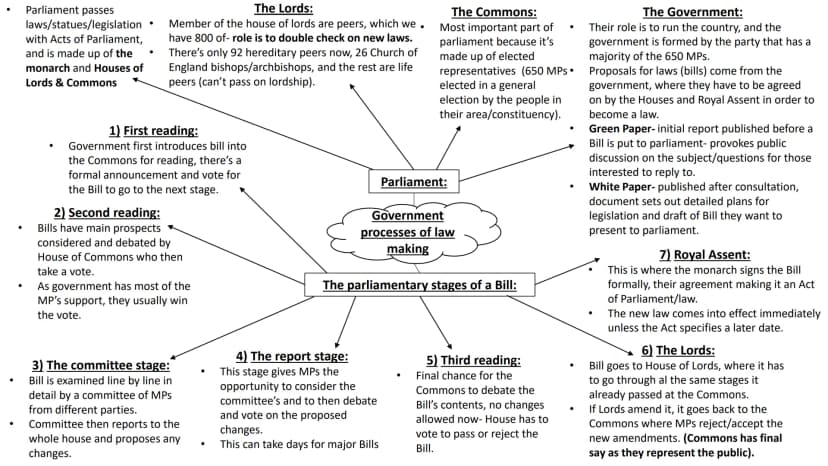
The law making process wjec criminology unit 4 involves multiple stages and institutions. Parliament, consisting of the House of Commons and House of Lords, plays a central role in creating statutory laws. The process begins with the government introducing bills, which must pass through several readings and debates before becoming law.
Highlight: The House of Commons, with 650 elected MPs, holds primary importance as it represents the public's interests in law-making.
The legislative process includes detailed examination of bills through committee stages, report stages, and multiple readings. Each stage serves a specific purpose in refining and scrutinizing proposed laws. The government's role involves initiating legislation through Green Papers (consultation documents) and White Papers (detailed legislative proposals).
Example: A bill addressing cybercrime would go through all parliamentary stages, including committee scrutiny, before receiving Royal Assent to become law.
3
of 10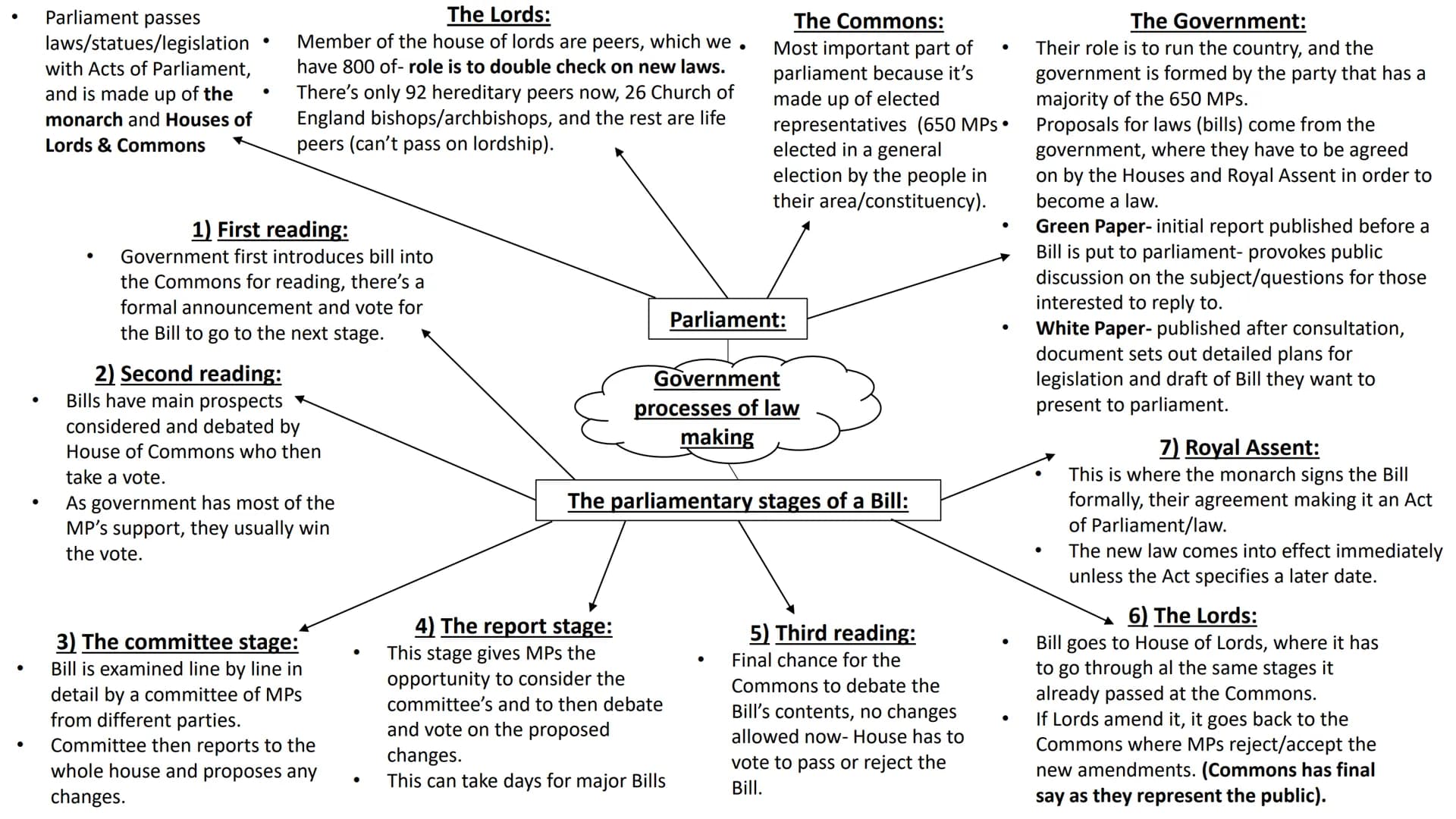
Judicial Law-Making and Legal Interpretation
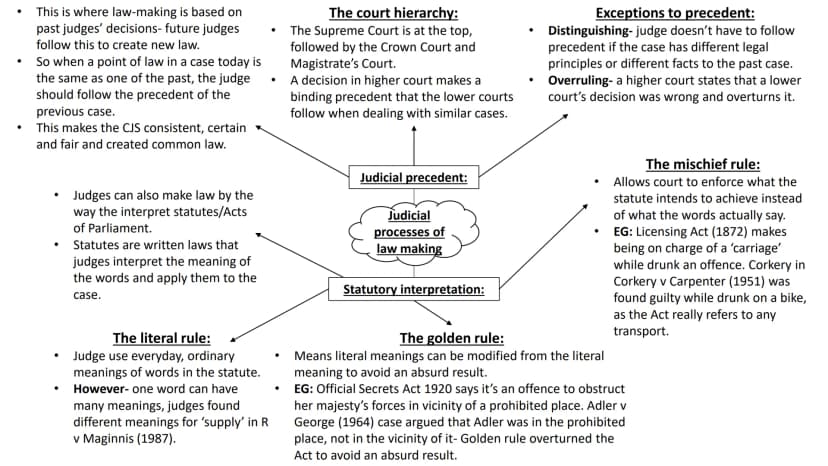
The judicial process of law making criminology operates through precedent and statutory interpretation. Courts play a crucial role in developing law through case decisions and interpreting parliamentary legislation. This process ensures laws remain relevant and applicable to contemporary situations.
Judges utilize various interpretation rules - literal, golden, and mischief - to apply statutes effectively. These rules allow for flexible yet consistent application of laws across different cases and circumstances. The court hierarchy ensures systematic development of legal principles through binding precedents.
Vocabulary: Binding precedent refers to previous court decisions that must be followed by lower courts in similar cases, ensuring consistency in law application.
4
of 10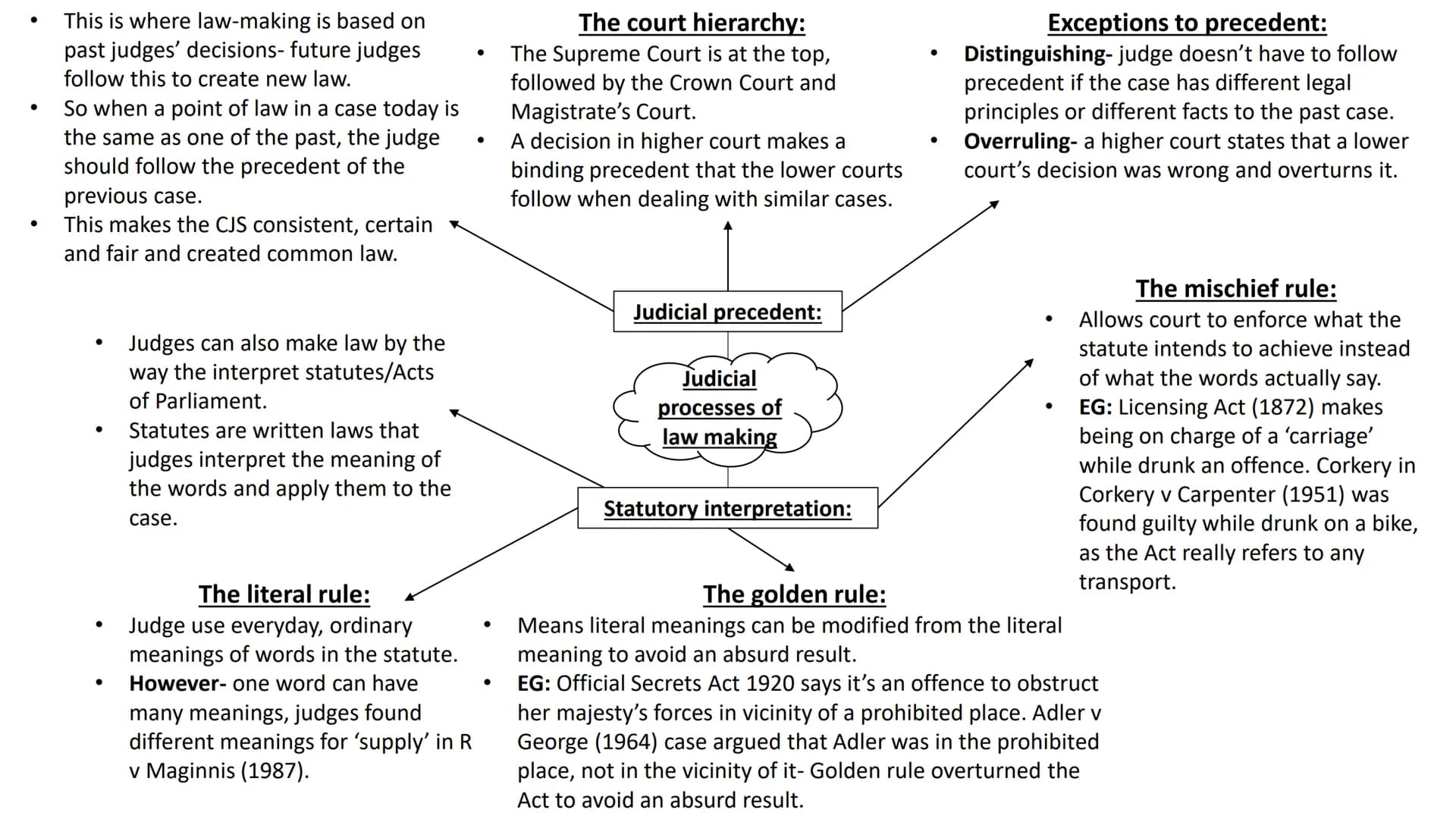
Practical Applications and Modern Developments
Modern WJEC Criminology Unit 4 study materials emphasize practical applications of law-making processes. Students must understand how theoretical frameworks translate into real-world criminal justice scenarios. This includes analyzing recent case studies and legislative developments.
Contemporary challenges in criminal justice often require innovative legal solutions. The unit explores how traditional law-making processes adapt to address modern criminal behavior and societal changes. Understanding these adaptations is crucial for students pursuing careers in criminal justice.
Quote: "The law must be capable of change... as the social, moral and economic needs of society change." - Lord Goff of Chieveley
The interaction between parliamentary and judicial law-making continues to evolve, reflecting society's changing needs and values. This dynamic relationship ensures the criminal justice system remains effective and responsive to contemporary challenges.
5
of 10
Understanding the Criminal Justice System Organization in England and Wales
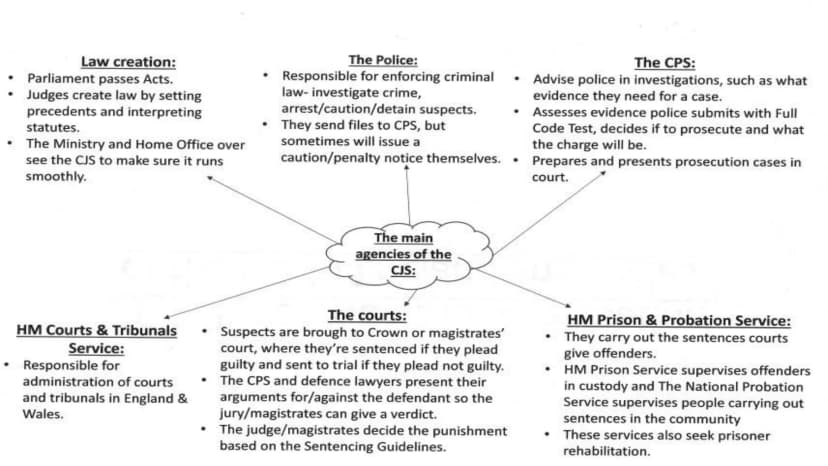
The law making process wjec criminology involves multiple interconnected agencies working together to maintain justice. Parliament creates laws through Acts, while judges establish precedents and interpret statutes. The Ministry of Justice and Home Office provide oversight to ensure smooth operation of the entire system.
The police force serves as the primary law enforcement agency, responsible for criminal investigations, arrests, and suspect detention. They work closely with the Crown Prosecution Service (CPS), though they retain authority to issue cautions or penalty notices independently. This relationship demonstrates the careful balance between independent police authority and prosecutorial oversight.
Definition: The Crown Prosecution Service (CPS) is the principal prosecuting authority for England and Wales, responsible for reviewing police evidence and deciding whether to pursue criminal charges.
The courts system, comprising Crown Courts and Magistrates' Courts, represents the judicial branch where cases are heard and sentences delivered. Defendants entering pleas lead to either immediate sentencing or trial proceedings, where prosecution and defense present their cases before judge and jury. The judicial process of law making criminology shows how courts not only apply laws but help shape them through precedent.
6
of 10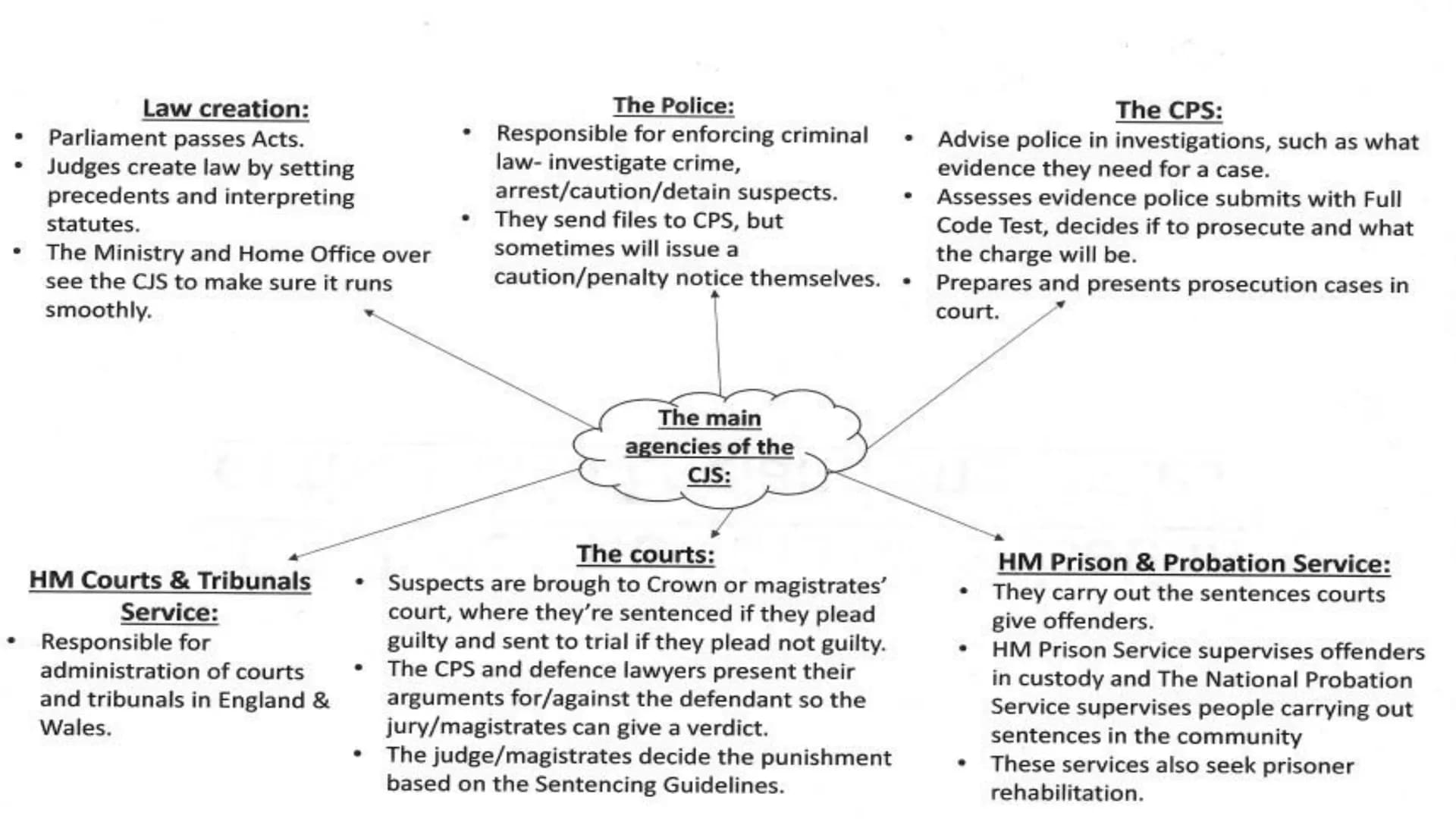
Criminal Justice Agency Relationships and Coordination
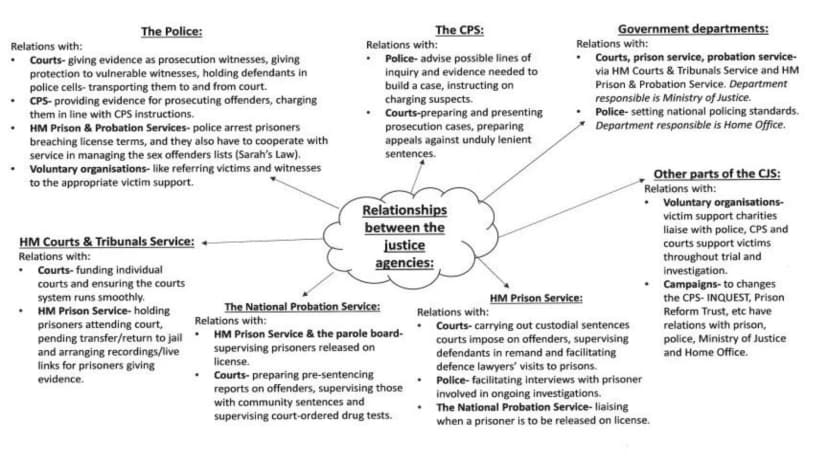
The effectiveness of the WJEC Criminology Unit 4 system depends heavily on inter-agency cooperation. The police maintain crucial relationships with courts by providing evidence and witness protection, while working with the CPS to ensure proper charging decisions and evidence collection.
HM Prison & Probation Service executes court-ordered sentences through two main branches: the Prison Service for custodial sentences and the National Probation Service for community supervision. Their work exemplifies the system's dual focus on punishment and rehabilitation.
Highlight: The relationship between agencies is crucial for effective justice delivery. For example, the CPS advises police on evidence collection while preparing court prosecutions, creating a seamless transition from investigation to trial.
Voluntary organizations play a vital supporting role, particularly in victim support and advocacy for reform. These relationships demonstrate how the justice system extends beyond government agencies to include community participation and oversight.
7
of 10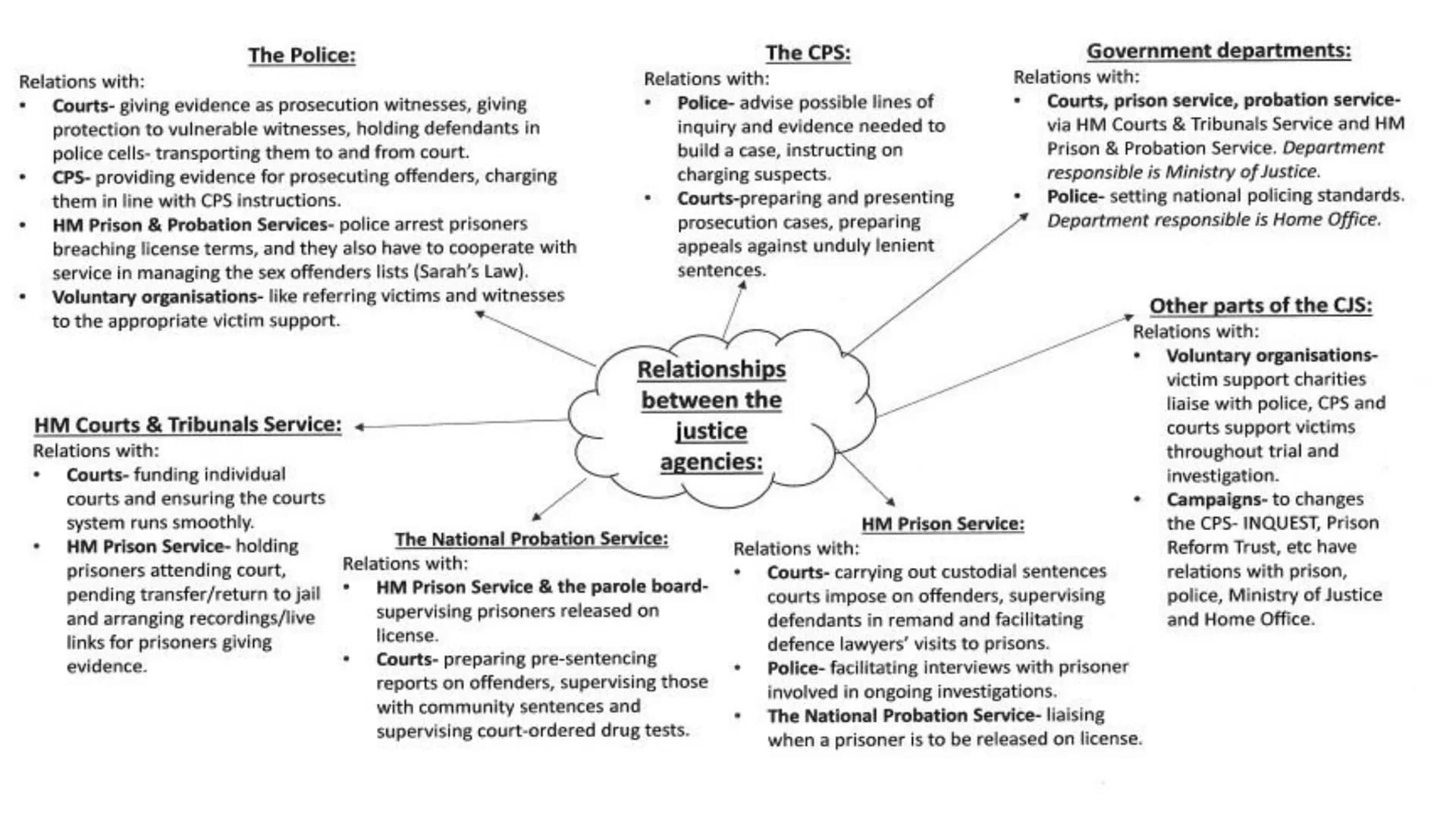
Models of Criminal Justice: Contrasting Approaches
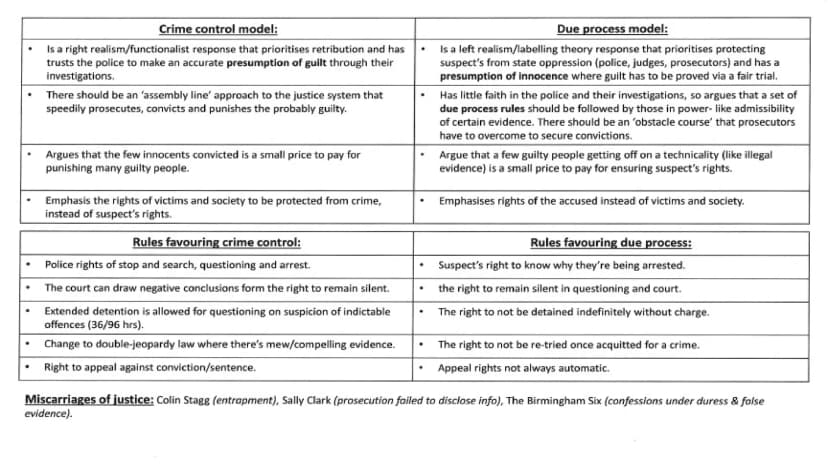
The Law making process wjec criminology unit 4 includes two primary models of justice administration: the Crime Control Model and the Due Process Model. Each represents distinct philosophical approaches to criminal justice.
The Crime Control Model emphasizes swift prosecution and punishment, prioritizing society's protection over individual rights. This approach trusts police judgment and supports expanded law enforcement powers, reflecting a functionalist perspective on crime management.
Example: Under the Crime Control Model, extended detention periods are permitted for questioning suspects in serious crimes, prioritizing investigation efficiency over personal liberty.
The Due Process Model, conversely, stresses protecting suspects' rights against potential state overreach. It requires strict adherence to procedural rules and maintains skepticism toward police investigations, emphasizing fair trials and evidence admissibility standards.
8
of 10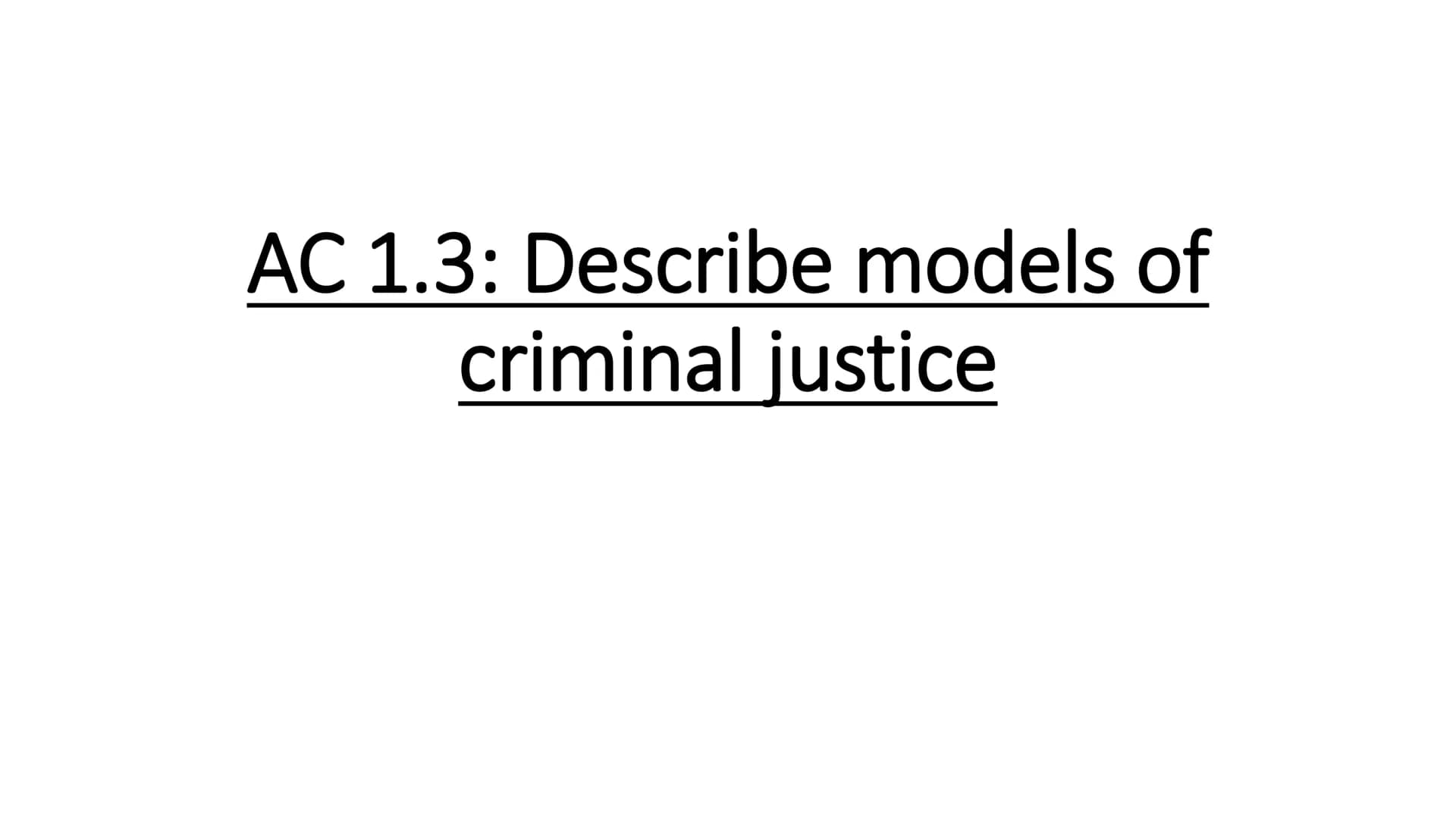
Practical Applications and Case Studies in Criminal Justice
The implementation of WJEC Criminology Unit 4 Knowledge Organiser principles becomes evident through historical cases of justice system failures. Notable examples include the Colin Stagg case, highlighting issues with entrapment, and the Birmingham Six, demonstrating the dangers of coerced confessions.
These cases illustrate the practical importance of balancing efficient crime control with due process protections. They show how procedural safeguards, while sometimes appearing to impede justice, actually protect against wrongful convictions.
Quote: "A few guilty people getting off on technicality is a small price to pay for ensuring suspects' rights" - This fundamental principle of due process emphasizes the importance of protecting individual rights within the justice system.
The evolution of laws like the double-jeopardy rule modification shows how the system adapts to maintain this balance, allowing case reopening only with new and compelling evidence while preserving core protections against state overreach.
9
of 10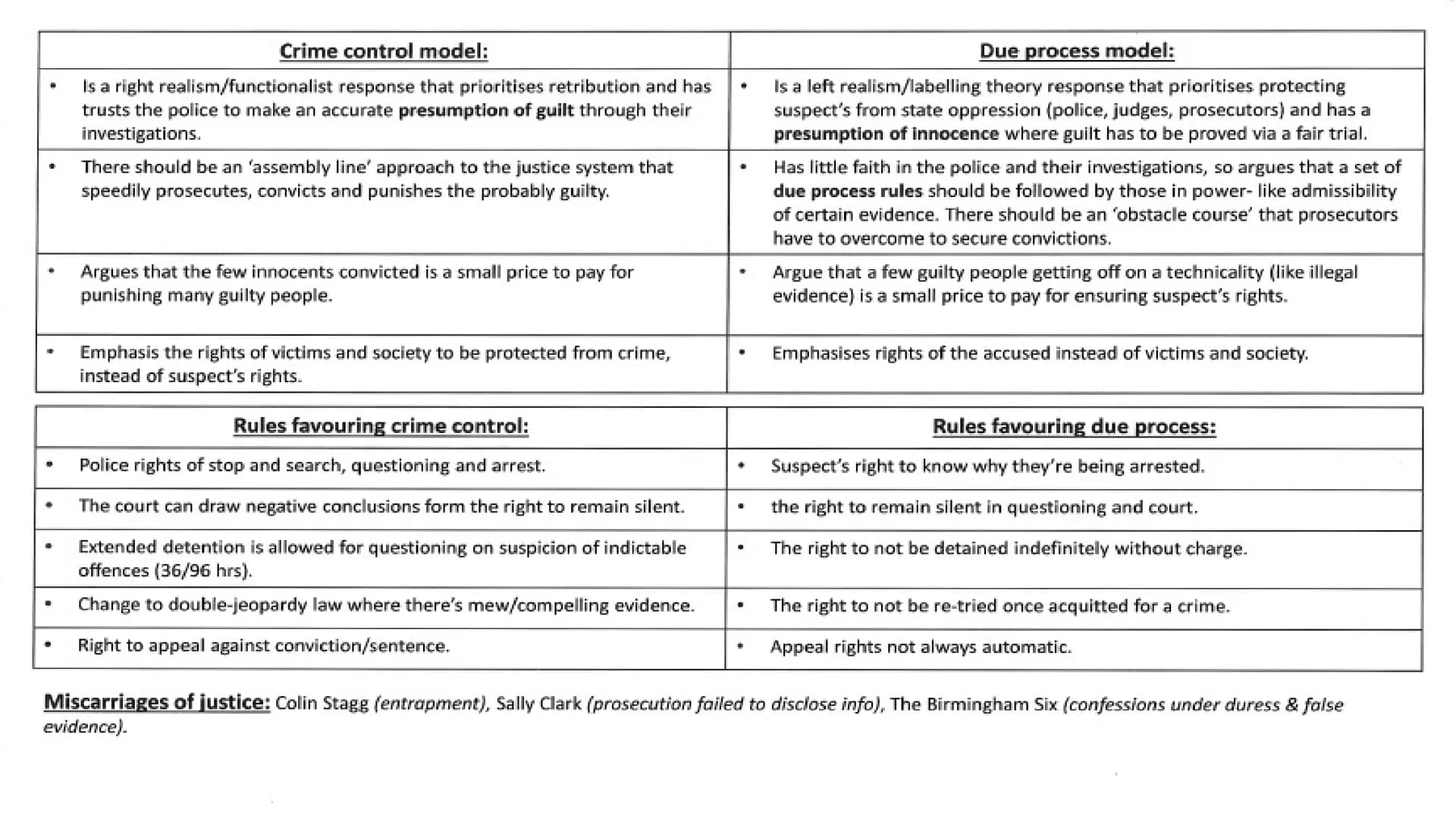
Understanding Forms of Social Control in Criminology
Social control represents the various mechanisms society uses to regulate human behavior and maintain order. In WJEC Criminology Unit 4, understanding social control is crucial for analyzing how societies manage deviance and enforce conformity. The two primary categories - formal and informal social control - work together to shape individual conduct and societal norms.
Formal social control encompasses official institutions and mechanisms enforced by authorized bodies. This includes the criminal justice system, laws, police, courts, and other governmental agencies. The judicial process of law making criminology plays a vital role here, as it establishes the legal framework for formal control. These institutions have explicit powers to impose sanctions and punishments for violations of established rules.
Definition: Formal social control refers to official, institutionalized mechanisms for regulating behavior through laws, rules, and sanctions enforced by authorized bodies.
Informal social control operates through social relationships, cultural norms, and community expectations. This includes family influence, peer pressure, religious beliefs, education, and social customs. Unlike formal mechanisms discussed in Unit 4 Criminology notes, informal control works through subtle pressures like disapproval, shame, or social exclusion. These methods often prove more effective in maintaining day-to-day order than formal sanctions.
The interaction between formal and informal control creates a comprehensive system of behavioral regulation. For example, while laws formally prohibit theft, informal social norms reinforcing honesty and respect for property rights often prevent people from stealing more effectively than fear of legal punishment. Understanding this interplay is essential for criminology students studying the WJEC Criminology Unit 4 spec.
10
of 10
The Role of Social Institutions in Maintaining Order
Social institutions serve as primary agents of both formal and informal control in society. The family unit, often considered the most fundamental institution, plays a crucial role in early socialization and norm internalization. Parents and guardians teach children basic rules, values, and appropriate behavior patterns that form the foundation for understanding and accepting broader social controls.
Educational institutions extend this socialization process while implementing more structured forms of control. Schools combine formal rules and disciplinary procedures with informal peer influence and teacher guidance. This dual approach, as outlined in WJEC Criminology Unit 4 Knowledge Organiser materials, helps students develop self-regulation skills and understand societal expectations.
Example: A student refrains from disruptive behavior not only due to school rules (formal control) but also because of peer disapproval and parental expectations (informal control).
Religious institutions represent another significant source of social control, particularly through moral guidance and community standards. They often provide both formal religious laws and informal ethical guidelines that influence behavior. The effectiveness of religious control varies across societies and individuals, but its historical and contemporary importance in shaping social conduct remains significant, as emphasized in Criminology Unit 4 model answers.
The media, while not traditionally considered a control institution, increasingly influences behavioral norms and social expectations. Through portrayal of acceptable and unacceptable behaviors, media platforms contribute to informal social control mechanisms. This modern dimension of social control deserves particular attention when studying contemporary criminology, as highlighted in WJEC Criminology Unit 4 revision notes PDF.
We thought you’d never ask...
What is the Knowunity AI companion?
Our AI companion is specifically built for the needs of students. Based on the millions of content pieces we have on the platform we can provide truly meaningful and relevant answers to students. But its not only about answers, the companion is even more about guiding students through their daily learning challenges, with personalised study plans, quizzes or content pieces in the chat and 100% personalisation based on the students skills and developments.
Where can I download the Knowunity app?
You can download the app in the Google Play Store and in the Apple App Store.
Is Knowunity really free of charge?
That's right! Enjoy free access to study content, connect with fellow students, and get instant help – all at your fingertips.
Similar Content
 Social Studies
 Diritto
 Psychology
Most popular content: Criminology
9CriminologyCriminology Theories Overview
Explore key criminology theories and their implications on crime and deviance. This comprehensive summary covers biological, psychological, and sociological perspectives, including labelling theory, right realism, and the impact of social campaigns on policy development. Ideal for A-Level criminology students seeking to understand the complexities of criminal behaviour and the factors influencing crime prevention strategies.
129,760210
CriminologyCriminology Theories Overview
Explore key concepts in criminology with this comprehensive summary covering Marxism, deviant behavior, biological theories, and more. Ideal for Year 12 students studying Unit 2, this resource provides textbook-accurate insights into the criminal justice system, individual rights, and various criminological theories. Enhance your understanding of crime and deviance with annotated notes designed for effective learning.
126,838159
CriminologyCriminology Unit 2 Overview
Explore a comprehensive summary of key concepts in criminology for WJEC Level 3 Unit 2. This document covers essential theories of crime, including biological, sociological, and psychological perspectives, as well as the impact of media, labelling theory, and crime types. Ideal for students preparing for exams or seeking a concise reference on crime and deviance.
122,56639
CriminologyCriminological Theories Overview
Explore key criminological theories including Marxism, Strain Theory, Labelling Theory, and Realism. This summary covers the impact of social structures on crime, the role of individual behavior, and the implications for crime policy and prevention. Ideal for WJEC Level 3 students studying criminology, this resource provides concise insights into the complexities of crime and deviance.
1219,976534
 Psychology
Forensic Psychology Overview
Comprehensive revision notes covering key concepts in forensic psychology for AQA A Level Psychology. Explore topics such as offender profiling, criminal personality, behavioral approaches, and the impact of socialization on criminal behavior. Ideal for students preparing for exams and seeking a deeper understanding of the psychological aspects of crime and punishment.
126,941282
SociologyComprehensive Crime Theories Overview
Explore a detailed overview of crime and deviance theories for AQA A-Level Sociology. This resource covers key concepts including biological theories, labelling theory, globalisation impacts, victimology, and the role of media in crime. Ideal for revision, it provides insights into social control, punishment, and the intersection of crime with gender and ethnicity.
124,43993
CriminologyCriminality and Justice Overview
Explore comprehensive insights into criminal behavior, theories of crime, and the evolution of legal frameworks. This study note covers key concepts such as biological and sociological theories, public protection sentencing, and the impact of pressure groups on criminological policy. Ideal for students preparing for exams in criminology and criminal justice.
122,30949
CriminologyEvaluating Criminal Investigation Roles
This study note provides a comprehensive evaluation of the effectiveness of various personnel involved in criminal investigations, including Crime Scene Investigators, Forensic Scientists, Pathologists, and the Crown Prosecution Service. It covers their roles, strengths, limitations, and the impact of their work on the criminal justice system. Ideal for criminology students and those studying law enforcement principles.
139,098202
CriminologyEvaluating Criminal Investigation Roles
This study note evaluates the effectiveness of various personnel involved in criminal investigations, including the National Crime Agency, HM Revenue and Customs, Crime Scene Investigators, and the Crown Prosecution Service. It discusses their strengths, weaknesses, and real-world case studies, providing insights into their impact on the criminal justice system. Ideal for criminology students and those studying law enforcement roles.
131,79837
Most popular content in Criminology
9CriminologyWJEC Unit 4 Criminology
Criminology unit 4 detailed revision note
127,151125
CriminologyCriminology Theories Overview
Explore key criminology theories and their implications on crime and deviance. This comprehensive summary covers biological, psychological, and sociological perspectives, including labelling theory, right realism, and the impact of social campaigns on policy development. Ideal for A-Level criminology students seeking to understand the complexities of criminal behaviour and the factors influencing crime prevention strategies.
129,760210
CriminologyCriminology WJEC unit 2
Unit 2 notes for criminology certificate WJEC
121,41328
CriminologyCriminology Theories Overview
Explore key concepts in criminology with this comprehensive summary covering Marxism, deviant behavior, biological theories, and more. Ideal for Year 12 students studying Unit 2, this resource provides textbook-accurate insights into the criminal justice system, individual rights, and various criminological theories. Enhance your understanding of crime and deviance with annotated notes designed for effective learning.
126,838159
CriminologyCriminology Unit 2 Overview
Explore a comprehensive summary of key concepts in criminology for WJEC Level 3 Unit 2. This document covers essential theories of crime, including biological, sociological, and psychological perspectives, as well as the impact of media, labelling theory, and crime types. Ideal for students preparing for exams or seeking a concise reference on crime and deviance.
122,56639
CriminologyCriminological Theories Overview
Explore key criminological theories including Marxism, Strain Theory, Labelling Theory, and Realism. This summary covers the impact of social structures on crime, the role of individual behavior, and the implications for crime policy and prevention. Ideal for WJEC Level 3 students studying criminology, this resource provides concise insights into the complexities of crime and deviance.
1219,976534
CriminologyCriminology Unit 4 Revision Cards
These were the revision cards I used for my Criminology Unit 4 exam. Feel free to print these out and use them as an exam resource, they have been colour coded for each AC. Good luck!
125,55090
CriminologyCriminology Unit 2
Part 2/2
1296434
CriminologyCriminology Unit 2
.
126999
Most popular content
9SociologySociology of Education Overview
Explore comprehensive A-Level Sociology notes on the education system, covering key theories, policies, and sociological perspectives. This resource includes insights on marketisation, gender roles, cultural deprivation, and educational inequalities, providing a thorough understanding of how education shapes social stratification and individual achievement. Ideal for exam preparation and in-depth study.
12102,8523,040
SociologySociology of Families: Comprehensive Revision
Dive into an extensive overview of family dynamics, perspectives, and patterns in sociology. This resource covers key concepts such as family diversity, gender roles, marriage, and the impact of social policies on family structures. Perfect for A-Level Sociology students preparing for Paper 2.
1273,6612,307
SociologyComprehensive Crime & Deviance Overview
Explore an extensive revision of crime and deviance topics, including theories, types of crime, and the impact of media. This resource covers key concepts such as Marxism, functionalism, gender and crime, and the influence of globalization on criminal behavior. Ideal for students seeking a thorough understanding of criminology and its various theories. Type: Full Topic Revision.
1251,6541,399
C
 Biology
Cell Biology and Cell structure
cell structures
93,2470
 English Literature
An Inspector Calls: Character Insights
Explore in-depth analysis and key quotes for characters in J.B. Priestley's 'An Inspector Calls'. This resource covers Gerald Croft, Inspector Goole, Sheila Birling, Mrs. Birling, Eric Birling, and Eva Smith, focusing on themes of class, gender roles, and social responsibility. Ideal for students aiming for Grade 8 and above.
1025,429907
CriminologyWJEC Unit 4 Criminology
Criminology unit 4 detailed revision note
127,151125
CriminologyCriminology Theories Overview
Explore key criminology theories and their implications on crime and deviance. This comprehensive summary covers biological, psychological, and sociological perspectives, including labelling theory, right realism, and the impact of social campaigns on policy development. Ideal for A-Level criminology students seeking to understand the complexities of criminal behaviour and the factors influencing crime prevention strategies.
129,760210
English LiteratureRomeo and Juliet: Key themes
Key Romeo and Juliet themes and analysed quotes
106,708198
English LiteratureMacbeth: Guilt and Ambition
Explore the complex themes of guilt and ambition in Shakespeare's 'Macbeth'. This analysis covers key characters, including Macbeth and Lady Macbeth, their moral dilemmas, and the tragic consequences of their ambition. Ideal for students studying character motivations, thematic elements, and the psychological impact of power. Includes insights on the natural order, manipulation, and the descent into madness.
919,093397
Can't find what you're looking for? Explore other subjects.
Students love us — and so will you.
4.6/5App Store
4.7/5Google Play
The app is very easy to use and well designed. I have found everything I was looking for so far and have been able to learn a lot from the presentations! I will definitely use the app for a class assignment! And of course it also helps a lot as an inspiration.
Stefan SiOS user
This app is really great. There are so many study notes and help [...]. My problem subject is French, for example, and the app has so many options for help. Thanks to this app, I have improved my French. I would recommend it to anyone.
Samantha KlichAndroid user
Wow, I am really amazed. I just tried the app because I've seen it advertised many times and was absolutely stunned. This app is THE HELP you want for school and above all, it offers so many things, such as workouts and fact sheets, which have been VERY helpful to me personally.
AnnaiOS user
Criminology54,869 views·Updated Jun 24, 2026·46 pagesWJEC Criminology Unit 4 Revision Guide: Notes, Past Papers & Model Answers PDF
The WJEC Criminology Unit 4 focuses on understanding crime and punishment through examination of law-making processes, criminal justice systems, and social control mechanisms.
Key aspects of the unit include studying the law making processin both parliamentary and judicial contexts....
1
of 10
Sign up to see the content. It's free!
- Access to all documents
- Improve your grades
- Join milions of students
Understanding WJEC Criminology Unit 4: Crime & Punishment Overview
The WJEC Criminology Unit 4 focuses on essential concepts of crime and punishment within the criminal justice system. This comprehensive examination explores how laws are created and interpreted through both parliamentary and judicial processes. Students studying this unit will gain deep insights into the complexities of law-making and its practical applications in criminal justice.
Understanding the legislative framework is crucial for analyzing how society addresses crime and implements punishment. The unit covers both traditional and modern approaches to law-making, emphasizing the role of different governmental bodies and their interactions in creating and enforcing laws.
Definition: The criminal justice system (CJS) refers to the network of institutions and processes involved in making and enforcing laws, including parliament, courts, and law enforcement agencies.
The relationship between different branches of government - legislative, executive, and judicial - forms a fundamental part of this unit's content. This interconnected system ensures checks and balances while maintaining democratic principles in law-making processes.
2
of 10Sign up to see the content. It's free!
- Access to all documents
- Improve your grades
- Join milions of students
Parliamentary Law-Making Process in Criminal Justice
The law making process wjec criminology unit 4 involves multiple stages and institutions. Parliament, consisting of the House of Commons and House of Lords, plays a central role in creating statutory laws. The process begins with the government introducing bills, which must pass through several readings and debates before becoming law.
Highlight: The House of Commons, with 650 elected MPs, holds primary importance as it represents the public's interests in law-making.
The legislative process includes detailed examination of bills through committee stages, report stages, and multiple readings. Each stage serves a specific purpose in refining and scrutinizing proposed laws. The government's role involves initiating legislation through Green Papers (consultation documents) and White Papers (detailed legislative proposals).
Example: A bill addressing cybercrime would go through all parliamentary stages, including committee scrutiny, before receiving Royal Assent to become law.
3
of 10Sign up to see the content. It's free!
- Access to all documents
- Improve your grades
- Join milions of students
Judicial Law-Making and Legal Interpretation
The judicial process of law making criminology operates through precedent and statutory interpretation. Courts play a crucial role in developing law through case decisions and interpreting parliamentary legislation. This process ensures laws remain relevant and applicable to contemporary situations.
Judges utilize various interpretation rules - literal, golden, and mischief - to apply statutes effectively. These rules allow for flexible yet consistent application of laws across different cases and circumstances. The court hierarchy ensures systematic development of legal principles through binding precedents.
Vocabulary: Binding precedent refers to previous court decisions that must be followed by lower courts in similar cases, ensuring consistency in law application.
4
of 10Sign up to see the content. It's free!
- Access to all documents
- Improve your grades
- Join milions of students
Practical Applications and Modern Developments
Modern WJEC Criminology Unit 4 study materials emphasize practical applications of law-making processes. Students must understand how theoretical frameworks translate into real-world criminal justice scenarios. This includes analyzing recent case studies and legislative developments.
Contemporary challenges in criminal justice often require innovative legal solutions. The unit explores how traditional law-making processes adapt to address modern criminal behavior and societal changes. Understanding these adaptations is crucial for students pursuing careers in criminal justice.
Quote: "The law must be capable of change... as the social, moral and economic needs of society change." - Lord Goff of Chieveley
The interaction between parliamentary and judicial law-making continues to evolve, reflecting society's changing needs and values. This dynamic relationship ensures the criminal justice system remains effective and responsive to contemporary challenges.
5
of 10Sign up to see the content. It's free!
- Access to all documents
- Improve your grades
- Join milions of students
Understanding the Criminal Justice System Organization in England and Wales
The law making process wjec criminology involves multiple interconnected agencies working together to maintain justice. Parliament creates laws through Acts, while judges establish precedents and interpret statutes. The Ministry of Justice and Home Office provide oversight to ensure smooth operation of the entire system.
The police force serves as the primary law enforcement agency, responsible for criminal investigations, arrests, and suspect detention. They work closely with the Crown Prosecution Service (CPS), though they retain authority to issue cautions or penalty notices independently. This relationship demonstrates the careful balance between independent police authority and prosecutorial oversight.
Definition: The Crown Prosecution Service (CPS) is the principal prosecuting authority for England and Wales, responsible for reviewing police evidence and deciding whether to pursue criminal charges.
The courts system, comprising Crown Courts and Magistrates' Courts, represents the judicial branch where cases are heard and sentences delivered. Defendants entering pleas lead to either immediate sentencing or trial proceedings, where prosecution and defense present their cases before judge and jury. The judicial process of law making criminology shows how courts not only apply laws but help shape them through precedent.
6
of 10Sign up to see the content. It's free!
- Access to all documents
- Improve your grades
- Join milions of students
Criminal Justice Agency Relationships and Coordination
The effectiveness of the WJEC Criminology Unit 4 system depends heavily on inter-agency cooperation. The police maintain crucial relationships with courts by providing evidence and witness protection, while working with the CPS to ensure proper charging decisions and evidence collection.
HM Prison & Probation Service executes court-ordered sentences through two main branches: the Prison Service for custodial sentences and the National Probation Service for community supervision. Their work exemplifies the system's dual focus on punishment and rehabilitation.
Highlight: The relationship between agencies is crucial for effective justice delivery. For example, the CPS advises police on evidence collection while preparing court prosecutions, creating a seamless transition from investigation to trial.
Voluntary organizations play a vital supporting role, particularly in victim support and advocacy for reform. These relationships demonstrate how the justice system extends beyond government agencies to include community participation and oversight.
7
of 10Sign up to see the content. It's free!
- Access to all documents
- Improve your grades
- Join milions of students
Models of Criminal Justice: Contrasting Approaches
The Law making process wjec criminology unit 4 includes two primary models of justice administration: the Crime Control Model and the Due Process Model. Each represents distinct philosophical approaches to criminal justice.
The Crime Control Model emphasizes swift prosecution and punishment, prioritizing society's protection over individual rights. This approach trusts police judgment and supports expanded law enforcement powers, reflecting a functionalist perspective on crime management.
Example: Under the Crime Control Model, extended detention periods are permitted for questioning suspects in serious crimes, prioritizing investigation efficiency over personal liberty.
The Due Process Model, conversely, stresses protecting suspects' rights against potential state overreach. It requires strict adherence to procedural rules and maintains skepticism toward police investigations, emphasizing fair trials and evidence admissibility standards.
8
of 10Sign up to see the content. It's free!
- Access to all documents
- Improve your grades
- Join milions of students
Practical Applications and Case Studies in Criminal Justice
The implementation of WJEC Criminology Unit 4 Knowledge Organiser principles becomes evident through historical cases of justice system failures. Notable examples include the Colin Stagg case, highlighting issues with entrapment, and the Birmingham Six, demonstrating the dangers of coerced confessions.
These cases illustrate the practical importance of balancing efficient crime control with due process protections. They show how procedural safeguards, while sometimes appearing to impede justice, actually protect against wrongful convictions.
Quote: "A few guilty people getting off on technicality is a small price to pay for ensuring suspects' rights" - This fundamental principle of due process emphasizes the importance of protecting individual rights within the justice system.
The evolution of laws like the double-jeopardy rule modification shows how the system adapts to maintain this balance, allowing case reopening only with new and compelling evidence while preserving core protections against state overreach.
9
of 10Sign up to see the content. It's free!
- Access to all documents
- Improve your grades
- Join milions of students
Understanding Forms of Social Control in Criminology
Social control represents the various mechanisms society uses to regulate human behavior and maintain order. In WJEC Criminology Unit 4, understanding social control is crucial for analyzing how societies manage deviance and enforce conformity. The two primary categories - formal and informal social control - work together to shape individual conduct and societal norms.
Formal social control encompasses official institutions and mechanisms enforced by authorized bodies. This includes the criminal justice system, laws, police, courts, and other governmental agencies. The judicial process of law making criminology plays a vital role here, as it establishes the legal framework for formal control. These institutions have explicit powers to impose sanctions and punishments for violations of established rules.
Definition: Formal social control refers to official, institutionalized mechanisms for regulating behavior through laws, rules, and sanctions enforced by authorized bodies.
Informal social control operates through social relationships, cultural norms, and community expectations. This includes family influence, peer pressure, religious beliefs, education, and social customs. Unlike formal mechanisms discussed in Unit 4 Criminology notes, informal control works through subtle pressures like disapproval, shame, or social exclusion. These methods often prove more effective in maintaining day-to-day order than formal sanctions.
The interaction between formal and informal control creates a comprehensive system of behavioral regulation. For example, while laws formally prohibit theft, informal social norms reinforcing honesty and respect for property rights often prevent people from stealing more effectively than fear of legal punishment. Understanding this interplay is essential for criminology students studying the WJEC Criminology Unit 4 spec.
10
of 10Sign up to see the content. It's free!
- Access to all documents
- Improve your grades
- Join milions of students
The Role of Social Institutions in Maintaining Order
Social institutions serve as primary agents of both formal and informal control in society. The family unit, often considered the most fundamental institution, plays a crucial role in early socialization and norm internalization. Parents and guardians teach children basic rules, values, and appropriate behavior patterns that form the foundation for understanding and accepting broader social controls.
Educational institutions extend this socialization process while implementing more structured forms of control. Schools combine formal rules and disciplinary procedures with informal peer influence and teacher guidance. This dual approach, as outlined in WJEC Criminology Unit 4 Knowledge Organiser materials, helps students develop self-regulation skills and understand societal expectations.
Example: A student refrains from disruptive behavior not only due to school rules (formal control) but also because of peer disapproval and parental expectations (informal control).
Religious institutions represent another significant source of social control, particularly through moral guidance and community standards. They often provide both formal religious laws and informal ethical guidelines that influence behavior. The effectiveness of religious control varies across societies and individuals, but its historical and contemporary importance in shaping social conduct remains significant, as emphasized in Criminology Unit 4 model answers.
The media, while not traditionally considered a control institution, increasingly influences behavioral norms and social expectations. Through portrayal of acceptable and unacceptable behaviors, media platforms contribute to informal social control mechanisms. This modern dimension of social control deserves particular attention when studying contemporary criminology, as highlighted in WJEC Criminology Unit 4 revision notes PDF.
We thought you’d never ask...
What is the Knowunity AI companion?
Our AI companion is specifically built for the needs of students. Based on the millions of content pieces we have on the platform we can provide truly meaningful and relevant answers to students. But its not only about answers, the companion is even more about guiding students through their daily learning challenges, with personalised study plans, quizzes or content pieces in the chat and 100% personalisation based on the students skills and developments.
Where can I download the Knowunity app?
You can download the app in the Google Play Store and in the Apple App Store.
Is Knowunity really free of charge?
That's right! Enjoy free access to study content, connect with fellow students, and get instant help – all at your fingertips.
Similar Content
Most popular content: Criminology
9CriminologyCriminology Theories Overview
Explore key criminology theories and their implications on crime and deviance. This comprehensive summary covers biological, psychological, and sociological perspectives, including labelling theory, right realism, and the impact of social campaigns on policy development. Ideal for A-Level criminology students seeking to understand the complexities of criminal behaviour and the factors influencing crime prevention strategies.
129,760210
CriminologyCriminology Theories Overview
Explore key concepts in criminology with this comprehensive summary covering Marxism, deviant behavior, biological theories, and more. Ideal for Year 12 students studying Unit 2, this resource provides textbook-accurate insights into the criminal justice system, individual rights, and various criminological theories. Enhance your understanding of crime and deviance with annotated notes designed for effective learning.
126,838159
CriminologyCriminology Unit 2 Overview
Explore a comprehensive summary of key concepts in criminology for WJEC Level 3 Unit 2. This document covers essential theories of crime, including biological, sociological, and psychological perspectives, as well as the impact of media, labelling theory, and crime types. Ideal for students preparing for exams or seeking a concise reference on crime and deviance.
122,56639
CriminologyCriminological Theories Overview
Explore key criminological theories including Marxism, Strain Theory, Labelling Theory, and Realism. This summary covers the impact of social structures on crime, the role of individual behavior, and the implications for crime policy and prevention. Ideal for WJEC Level 3 students studying criminology, this resource provides concise insights into the complexities of crime and deviance.
1219,976534
PsychologyForensic Psychology Overview
Comprehensive revision notes covering key concepts in forensic psychology for AQA A Level Psychology. Explore topics such as offender profiling, criminal personality, behavioral approaches, and the impact of socialization on criminal behavior. Ideal for students preparing for exams and seeking a deeper understanding of the psychological aspects of crime and punishment.
126,941282
SociologyComprehensive Crime Theories Overview
Explore a detailed overview of crime and deviance theories for AQA A-Level Sociology. This resource covers key concepts including biological theories, labelling theory, globalisation impacts, victimology, and the role of media in crime. Ideal for revision, it provides insights into social control, punishment, and the intersection of crime with gender and ethnicity.
124,43993
CriminologyCriminality and Justice Overview
Explore comprehensive insights into criminal behavior, theories of crime, and the evolution of legal frameworks. This study note covers key concepts such as biological and sociological theories, public protection sentencing, and the impact of pressure groups on criminological policy. Ideal for students preparing for exams in criminology and criminal justice.
122,30949
CriminologyEvaluating Criminal Investigation Roles
This study note provides a comprehensive evaluation of the effectiveness of various personnel involved in criminal investigations, including Crime Scene Investigators, Forensic Scientists, Pathologists, and the Crown Prosecution Service. It covers their roles, strengths, limitations, and the impact of their work on the criminal justice system. Ideal for criminology students and those studying law enforcement principles.
139,098202
CriminologyEvaluating Criminal Investigation Roles
This study note evaluates the effectiveness of various personnel involved in criminal investigations, including the National Crime Agency, HM Revenue and Customs, Crime Scene Investigators, and the Crown Prosecution Service. It discusses their strengths, weaknesses, and real-world case studies, providing insights into their impact on the criminal justice system. Ideal for criminology students and those studying law enforcement roles.
131,79837
Most popular content in Criminology
9CriminologyWJEC Unit 4 Criminology
Criminology unit 4 detailed revision note
127,151125
CriminologyCriminology Theories Overview
Explore key criminology theories and their implications on crime and deviance. This comprehensive summary covers biological, psychological, and sociological perspectives, including labelling theory, right realism, and the impact of social campaigns on policy development. Ideal for A-Level criminology students seeking to understand the complexities of criminal behaviour and the factors influencing crime prevention strategies.
129,760210
CriminologyCriminology WJEC unit 2
Unit 2 notes for criminology certificate WJEC
121,41328
CriminologyCriminology Theories Overview
Explore key concepts in criminology with this comprehensive summary covering Marxism, deviant behavior, biological theories, and more. Ideal for Year 12 students studying Unit 2, this resource provides textbook-accurate insights into the criminal justice system, individual rights, and various criminological theories. Enhance your understanding of crime and deviance with annotated notes designed for effective learning.
126,838159
CriminologyCriminology Unit 2 Overview
Explore a comprehensive summary of key concepts in criminology for WJEC Level 3 Unit 2. This document covers essential theories of crime, including biological, sociological, and psychological perspectives, as well as the impact of media, labelling theory, and crime types. Ideal for students preparing for exams or seeking a concise reference on crime and deviance.
122,56639
CriminologyCriminological Theories Overview
Explore key criminological theories including Marxism, Strain Theory, Labelling Theory, and Realism. This summary covers the impact of social structures on crime, the role of individual behavior, and the implications for crime policy and prevention. Ideal for WJEC Level 3 students studying criminology, this resource provides concise insights into the complexities of crime and deviance.
1219,976534
CriminologyCriminology Unit 4 Revision Cards
These were the revision cards I used for my Criminology Unit 4 exam. Feel free to print these out and use them as an exam resource, they have been colour coded for each AC. Good luck!
125,55090
CriminologyCriminology Unit 2
Part 2/2
1296434
CriminologyCriminology Unit 2
.
126999
Most popular content
9SociologySociology of Education Overview
Explore comprehensive A-Level Sociology notes on the education system, covering key theories, policies, and sociological perspectives. This resource includes insights on marketisation, gender roles, cultural deprivation, and educational inequalities, providing a thorough understanding of how education shapes social stratification and individual achievement. Ideal for exam preparation and in-depth study.
12102,8523,040
SociologySociology of Families: Comprehensive Revision
Dive into an extensive overview of family dynamics, perspectives, and patterns in sociology. This resource covers key concepts such as family diversity, gender roles, marriage, and the impact of social policies on family structures. Perfect for A-Level Sociology students preparing for Paper 2.
1273,6612,307
SociologyComprehensive Crime & Deviance Overview
Explore an extensive revision of crime and deviance topics, including theories, types of crime, and the impact of media. This resource covers key concepts such as Marxism, functionalism, gender and crime, and the influence of globalization on criminal behavior. Ideal for students seeking a thorough understanding of criminology and its various theories. Type: Full Topic Revision.
1251,6541,399
C
BiologyCell Biology and Cell structure
cell structures
93,2470
English LiteratureAn Inspector Calls: Character Insights
Explore in-depth analysis and key quotes for characters in J.B. Priestley's 'An Inspector Calls'. This resource covers Gerald Croft, Inspector Goole, Sheila Birling, Mrs. Birling, Eric Birling, and Eva Smith, focusing on themes of class, gender roles, and social responsibility. Ideal for students aiming for Grade 8 and above.
1025,429907
CriminologyWJEC Unit 4 Criminology
Criminology unit 4 detailed revision note
127,151125
CriminologyCriminology Theories Overview
Explore key criminology theories and their implications on crime and deviance. This comprehensive summary covers biological, psychological, and sociological perspectives, including labelling theory, right realism, and the impact of social campaigns on policy development. Ideal for A-Level criminology students seeking to understand the complexities of criminal behaviour and the factors influencing crime prevention strategies.
129,760210
English LiteratureRomeo and Juliet: Key themes
Key Romeo and Juliet themes and analysed quotes
106,708198
English LiteratureMacbeth: Guilt and Ambition
Explore the complex themes of guilt and ambition in Shakespeare's 'Macbeth'. This analysis covers key characters, including Macbeth and Lady Macbeth, their moral dilemmas, and the tragic consequences of their ambition. Ideal for students studying character motivations, thematic elements, and the psychological impact of power. Includes insights on the natural order, manipulation, and the descent into madness.
919,093397
Can't find what you're looking for? Explore other subjects.
Students love us — and so will you.
4.6/5App Store
4.7/5Google Play
The app is very easy to use and well designed. I have found everything I was looking for so far and have been able to learn a lot from the presentations! I will definitely use the app for a class assignment! And of course it also helps a lot as an inspiration.
Stefan SiOS user
This app is really great. There are so many study notes and help [...]. My problem subject is French, for example, and the app has so many options for help. Thanks to this app, I have improved my French. I would recommend it to anyone.
Samantha KlichAndroid user
Wow, I am really amazed. I just tried the app because I've seen it advertised many times and was absolutely stunned. This app is THE HELP you want for school and above all, it offers so many things, such as workouts and fact sheets, which have been VERY helpful to me personally.
AnnaiOS user