

Chemistry can be tough, but understanding the basics makes it...
 Chemistry396 views·Updated Jun 17, 2026·6 pages
Comprehensive General Chemistry Study Guide

1 / 6
1
of 6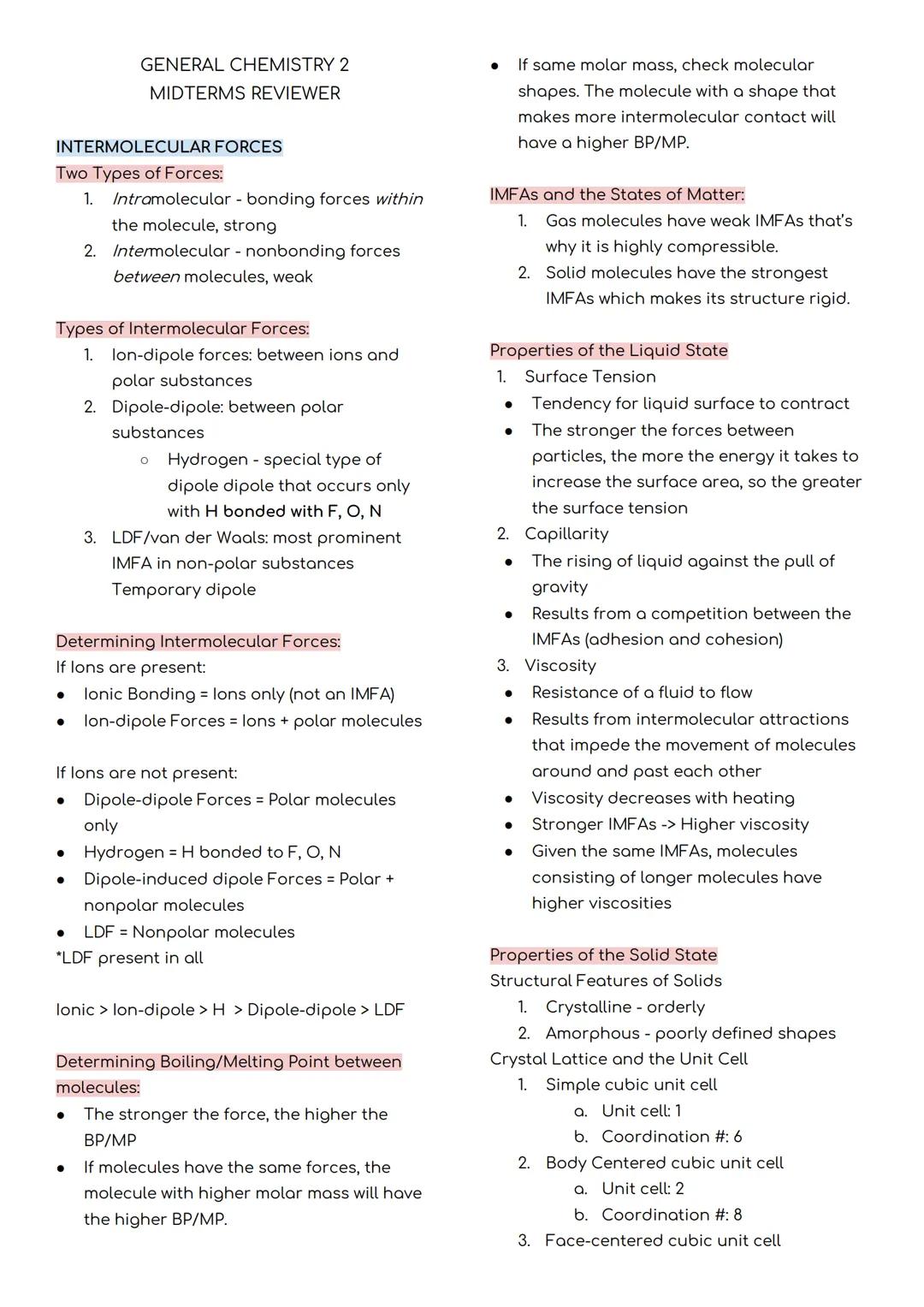
Intermolecular Forces and States of Matter
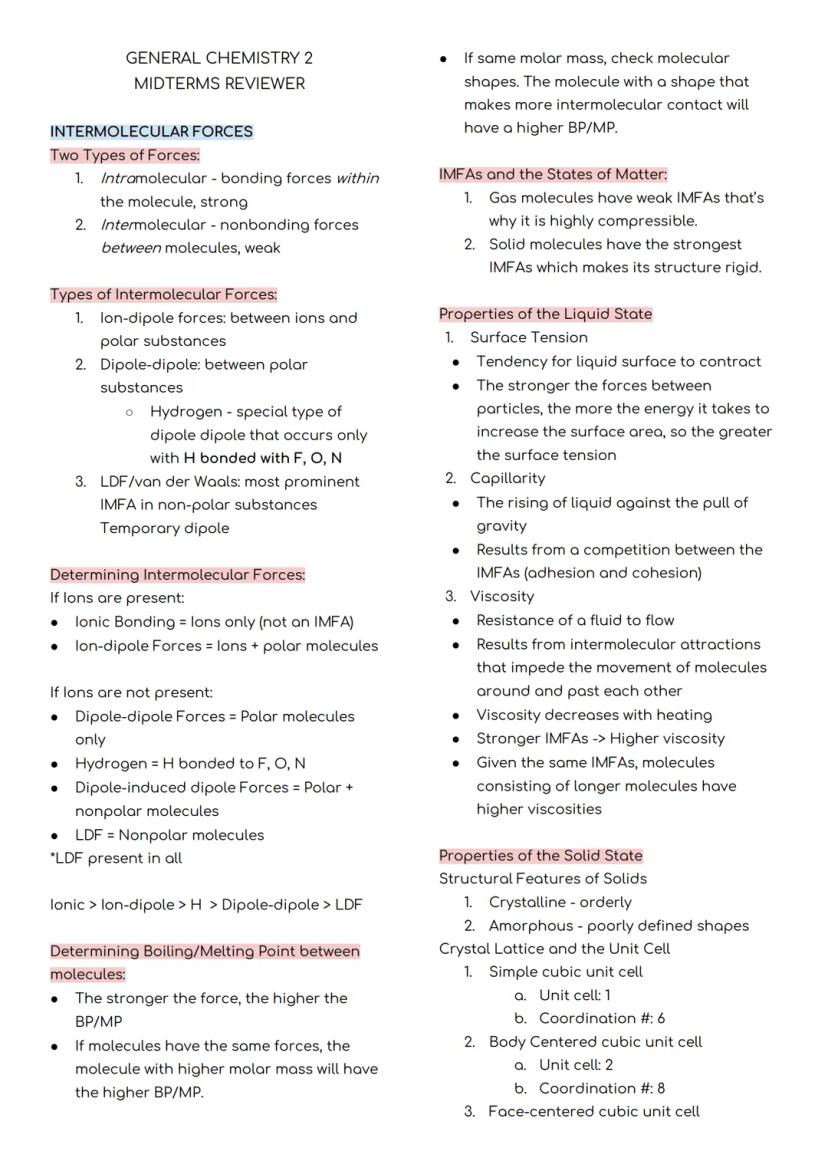
Ever wonder why some substances are solid while others are gas at room temperature? The answer lies in intermolecular forces! These are the attractions between molecules that determine physical properties.
The main types of intermolecular forces, from strongest to weakest, are: ionic > ion-dipole > hydrogen bonding > dipole-dipole > London dispersion forces (LDF). Remember that LDF exists in all molecules, while the others depend on the molecule type.
When comparing boiling or melting points between substances, stronger forces mean higher temperatures are needed to overcome them. If molecules have the same forces, the one with higher molar mass will have higher boiling/melting points.
Quick Tip: When answering questions about physical properties of substances, always identify the intermolecular forces first - this is the key to understanding everything from boiling points to viscosity!
These forces also explain important liquid properties like surface tension (why water beads up), capillarity (how liquids rise in narrow spaces), and viscosity (resistance to flow). In solids, molecules arrange in ordered structures called crystal lattices, with different patterns depending on the substance type.
2
of 6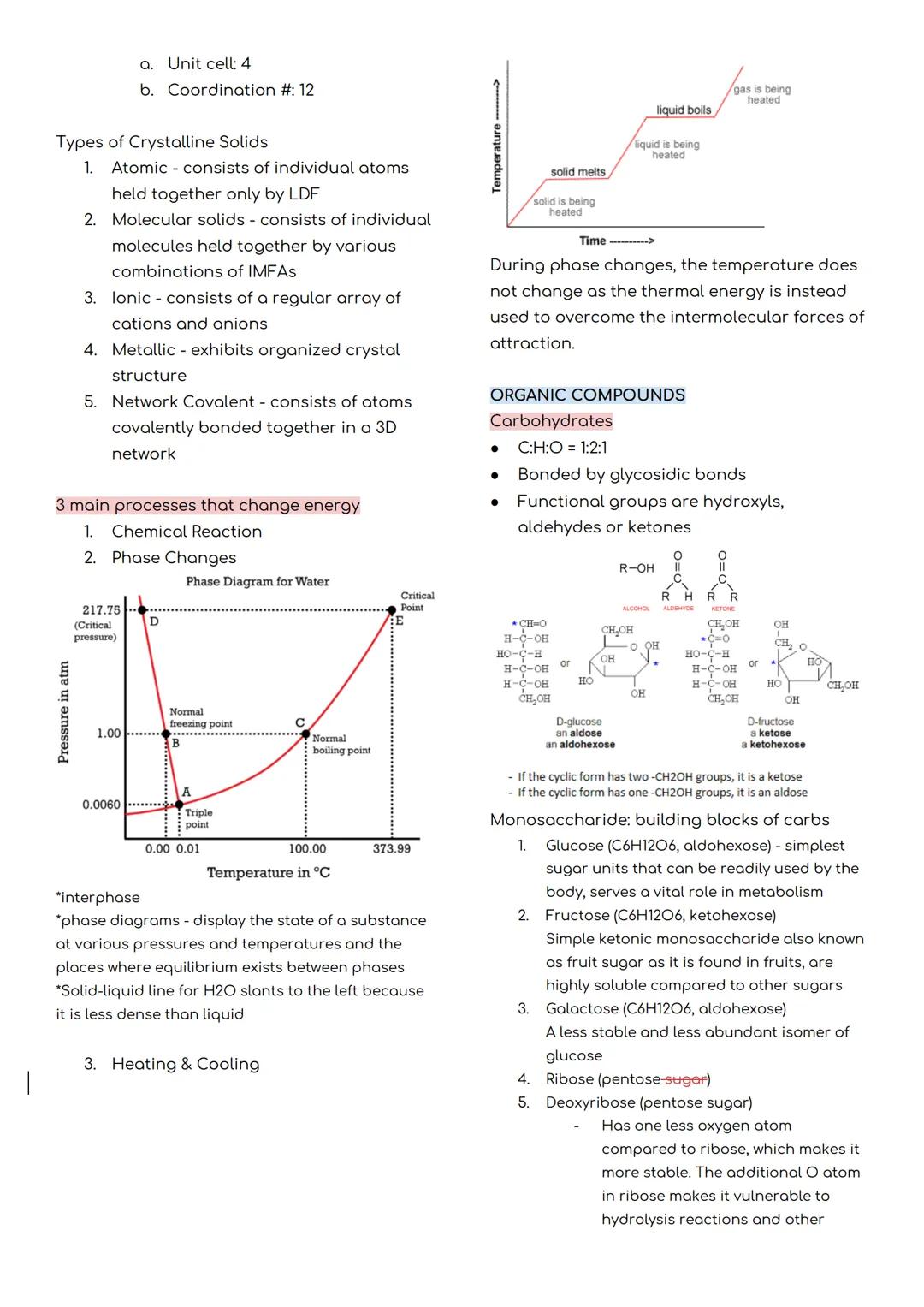
Phase Changes and Organic Compounds
Phase changes happen when matter shifts between solid, liquid, and gas states. During these transitions, temperature stays constant as energy is used to overcome intermolecular forces. You can see this on a heating curve as flat plateaus.
Phase diagrams show what state a substance will be in at different temperatures and pressures. The lines represent equilibrium between phases. For water, the solid-liquid line slants left because ice is less dense than liquid water (which is why ice floats!).
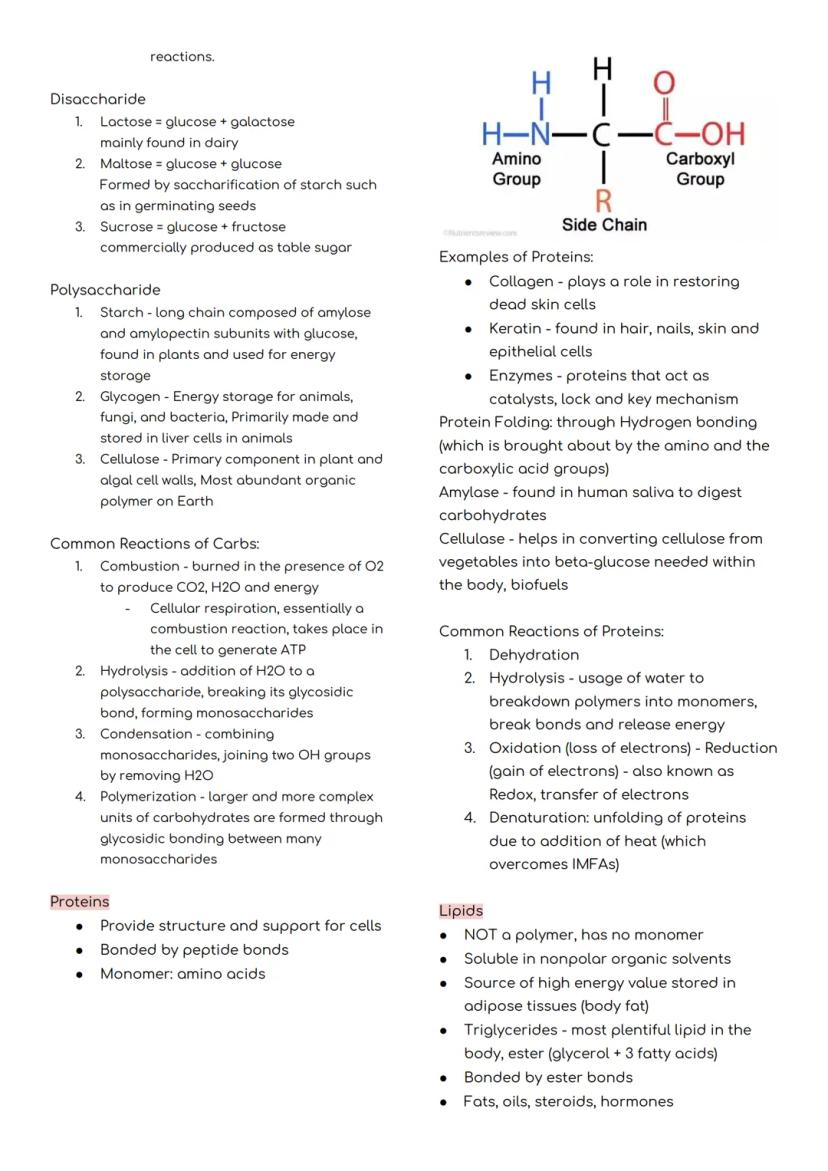
Carbohydrates are essential organic compounds with a C:H:O ratio of 1:2:1. They're classified as:
- Monosaccharides (like glucose and fructose) - simple sugar building blocks
- Disaccharides (like sucrose and lactose) - formed by joining two monosaccharides
- Polysaccharides (like starch and cellulose) - complex chains of many sugar units
Remember This: The glycosidic bond connects sugar molecules in more complex carbohydrates, while hydrolysis breaks these bonds apart - this process is key to how your body digests carbs!
Common reactions of carbohydrates include combustion (burning to release energy), hydrolysis (breaking bonds with water), condensation (joining units by removing water), and polymerization (forming larger structures).
3
of 6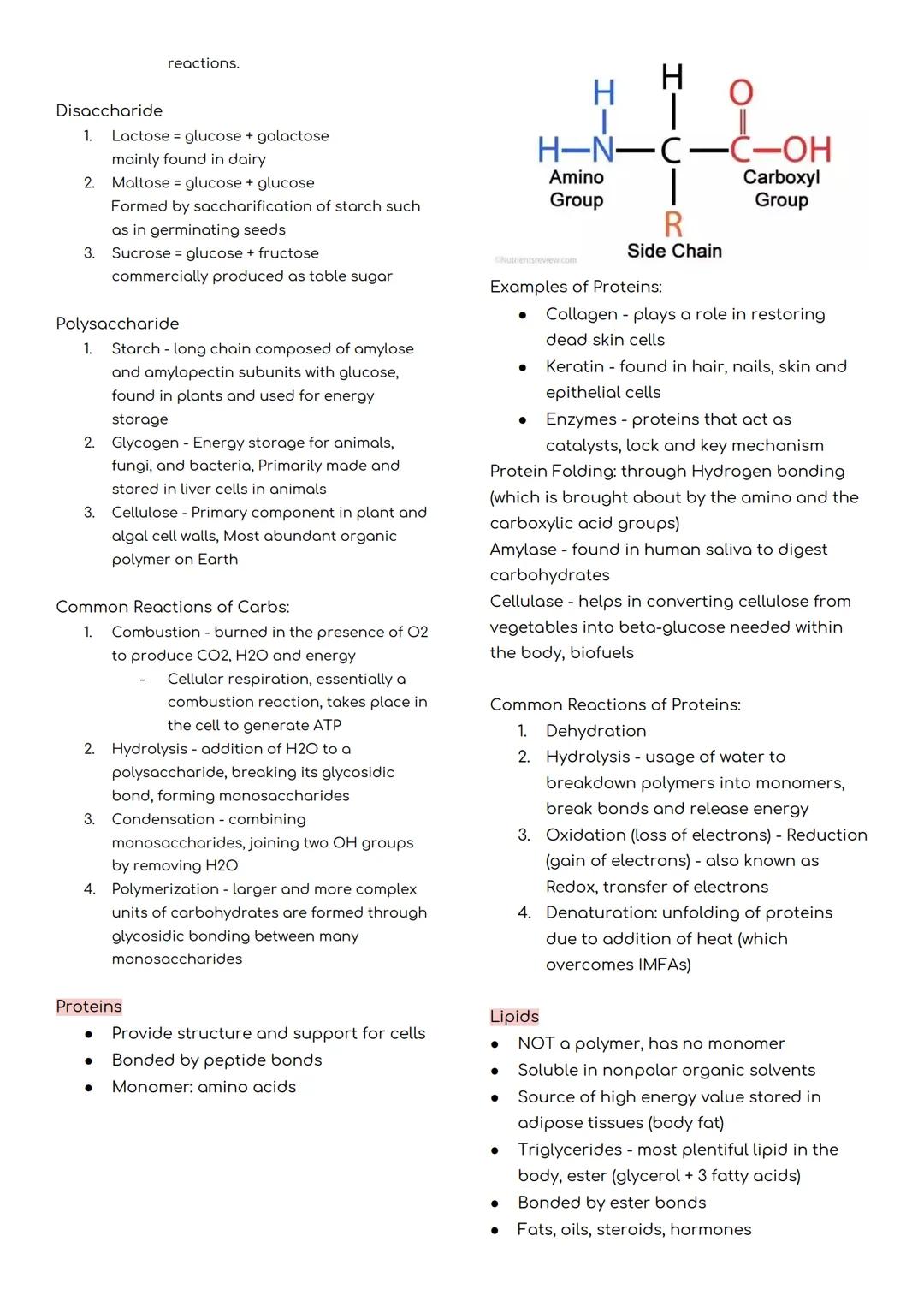
Proteins and Lipids
Proteins are complex molecules that provide structure and support for your cells. They're made of amino acid building blocks connected by peptide bonds in long chains. The arrangement of amino acids determines the protein's function.
Proteins fold into specific shapes through hydrogen bonding between amino and carboxylic acid groups. This folding is crucial for their function! Examples include collagen (in skin), keratin (in hair and nails), and enzymes (biological catalysts that speed up reactions).
Common protein reactions include hydrolysis (breaking down with water), condensation (building up by removing water), and denaturation (unfolding due to heat or chemicals). When proteins denature, they lose their function - that's why cooking an egg changes it permanently!
Lipids are energy-rich molecules that aren't polymers like proteins. They're soluble in nonpolar solvents (like oil) but not in water. The most common type is triglycerides, which consist of glycerol bonded to three fatty acids by ester bonds.
Real-World Application: Your body stores energy as triglycerides in adipose tissue. When you need energy between meals, these lipids are broken down to release their stored energy!
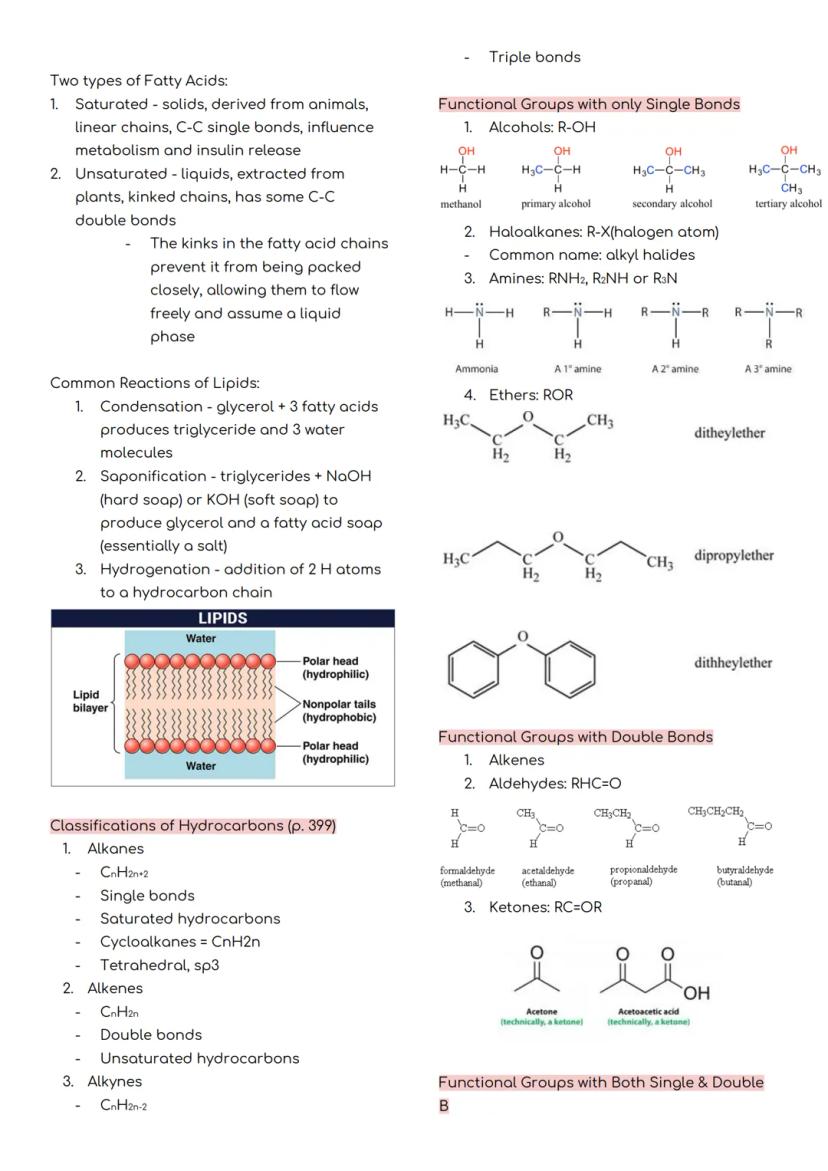
Fatty acids come in two types: saturated (solid at room temperature, from animals) with straight chains, and unsaturated (liquid, from plants) with kinked chains due to double bonds.
4
of 6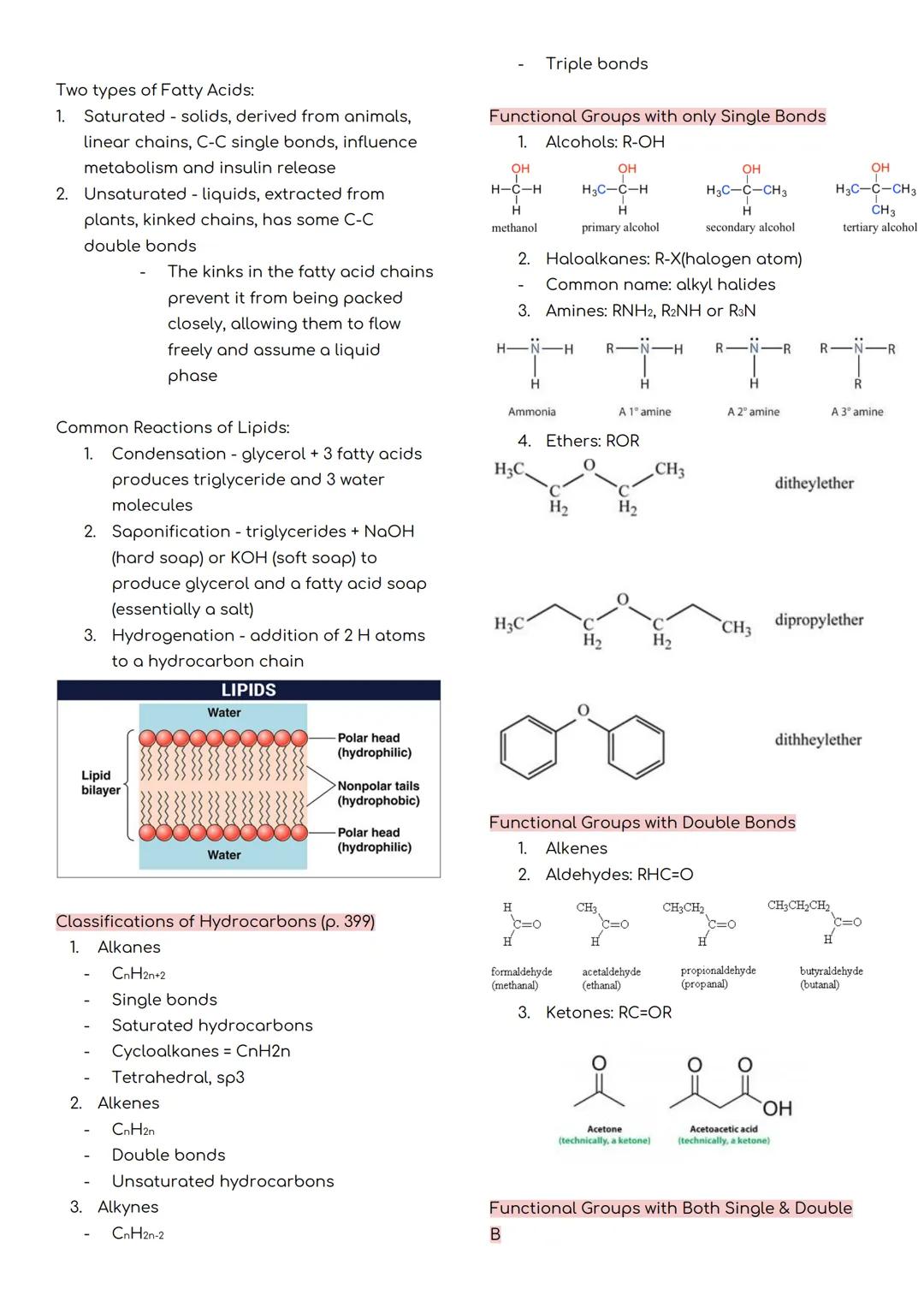
Hydrocarbons and Functional Groups
Hydrocarbons are compounds containing only carbon and hydrogen atoms. They're classified by their bonds:
- Alkanes : single bonds only, saturated, tetrahedral structure
- Alkenes (CnH2n): contain double bonds, unsaturated
- Alkynes : contain triple bonds, unsaturated
Functional groups are specific arrangements of atoms that give organic molecules their chemical properties. Single-bonded functional groups include:
- Alcohols : found in beverages and sanitizers
- Haloalkanes : containing halogen atoms
- Amines : important in biological molecules
- Ethers : used as solvents and anesthetics
Double-bonded functional groups include aldehydes and ketones , which contribute to flavors and fragrances in foods. Carboxylic acids and esters are responsible for many fruit flavors and scents.
Fun Fact: The specific scents of fruits like pears and raspberries come from ester compounds. When you smell artificial fruit flavors, you're detecting these ester molecules!
The lipid bilayer in your cell membranes demonstrates a perfect example of how molecular structure relates to function. The hydrophilic heads face outward toward water, while the hydrophobic tails face inward, creating a protective barrier.
5
of 6
Solubility and Solution Concentrations
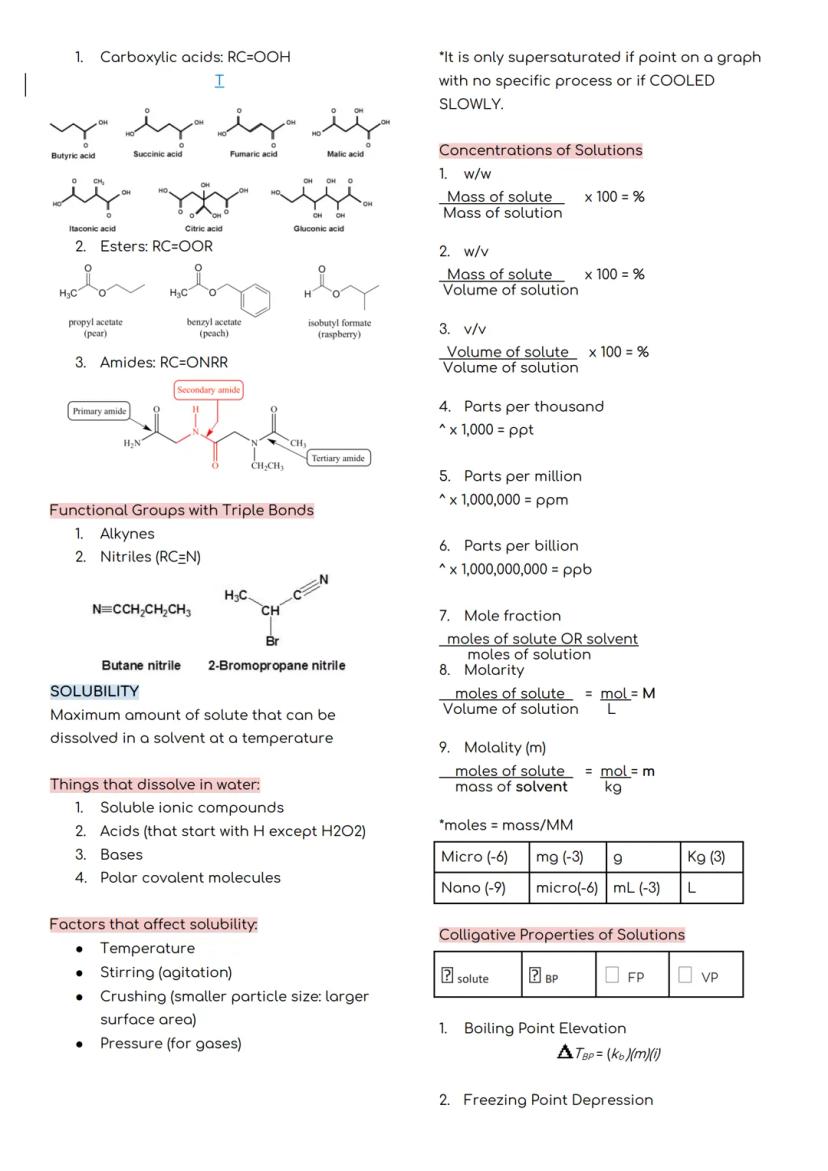
Solubility refers to how much of a substance (solute) can dissolve in a solvent at a given temperature. Water-soluble substances include most ionic compounds, acids (that begin with H except H2O2), bases, and polar molecules.
Several factors affect solubility:
- Higher temperature typically increases solubility of solids
- Stirring helps distribute the solute
- Crushing solids increases surface area for faster dissolving
- Higher pressure increases gas solubility
Solution concentrations can be expressed in different ways:
- Mass percent : (mass of solute ÷ mass of solution) × 100%
- Volume percent : (volume of solute ÷ volume of solution) × 100%
- Molarity (M): moles of solute per liter of solution
- Molality (m): moles of solute per kilogram of solvent
Test Tip: Know the difference between molarity and molality! Molarity uses volume of solution (practical for lab work), while molality uses mass of solvent (useful for calculations involving temperature changes).
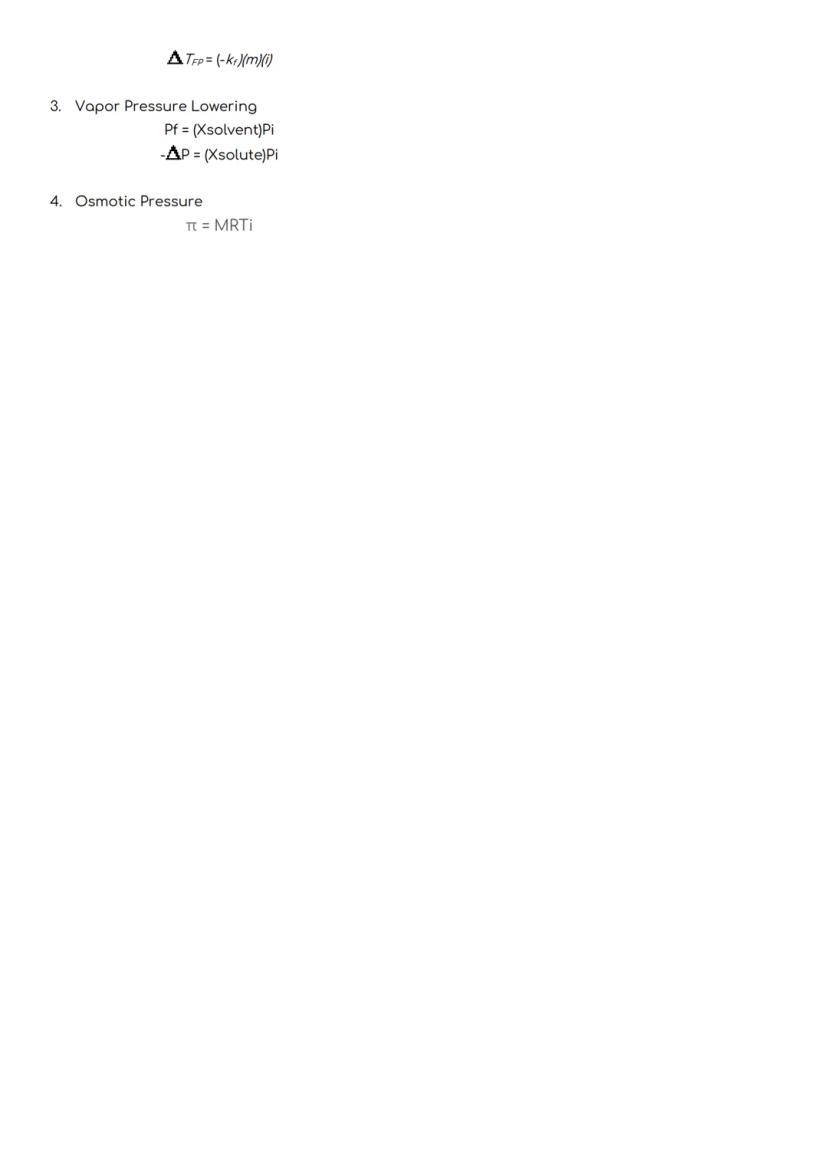
Solutions exhibit colligative properties that depend on the concentration of solute particles, not their identity. These include boiling point elevation, freezing point depression, vapor pressure lowering, and osmotic pressure.
6
of 6
Colligative Properties
Colligative properties are characteristics that change based on the number of dissolved particles, not the type. These properties are crucial for understanding how solutions behave differently from pure solvents.
Freezing Point Depression occurs when a solute lowers the freezing point of a solution. The equation ΔTFP = (m)(i) shows that the temperature change depends on the molality (m), the freezing point constant (kf), and the van't Hoff factor (i) which accounts for dissociation.
Boiling Point Elevation works similarly, with dissolved solutes causing the solution to boil at a higher temperature than the pure solvent. This is why we add salt to pasta water - it raises the boiling point!
Vapor Pressure Lowering happens because solute particles interfere with solvent molecules escaping to the gas phase. The more solute present (higher Xsolute), the lower the vapor pressure compared to the pure solvent.
Osmotic Pressure is the pressure needed to prevent solvent flow through a semipermeable membrane. This principle is vital in biological systems and processes like water purification.
Application Alert: Understanding osmotic pressure helps explain why plants wilt in salty soil and why drinking seawater dehydrates you - water moves from areas of lower solute concentration to higher concentration!
We thought you’d never ask...
What is the Knowunity AI companion?
Our AI companion is specifically built for the needs of students. Based on the millions of content pieces we have on the platform we can provide truly meaningful and relevant answers to students. But its not only about answers, the companion is even more about guiding students through their daily learning challenges, with personalised study plans, quizzes or content pieces in the chat and 100% personalisation based on the students skills and developments.
Where can I download the Knowunity app?
You can download the app in the Google Play Store and in the Apple App Store.
Is Knowunity really free of charge?
That's right! Enjoy free access to study content, connect with fellow students, and get instant help – all at your fingertips.
Similar Content
Most popular content in Chemistry
9ChemistryMass-to-Mass Stoichiometry: Calculating Grams to Grams
Learn how to perform mass-to-mass stoichiometric calculations. This guide covers the steps to convert grams of a reactant or product to grams of another substance using mole ratios and molar mass.
9th1993
I
ChemistryIntro to Chem - Test Review
Identifying elements, compounds, heterogeneous/homogeneous mixtures and chemical/physical change test review.
11th1973
ChemistryUnderstanding Atomic and Mass Numbers (Z and A)
Learn the definitions of atomic number (Z) and mass number (A). Understand how these numbers relate to protons, neutrons, and isotopes in an atom's nucleus.
9th522
ChemistryMolecular Geometry
Chemistry notes
10th1410
ChemistryPOGIL Stoichiometry
mole to mole, mole to mass, mass to mass, and volume conversions
10th4682
ChemistryThermochemistry Notes 🥵🔥
Unit 10 of Chemistry Honors (Inorganic)
10th87352
ChemistryChemistry: Atoms, Molecules, Ions
This is about atoms, molecules and ions.
9th1348
ChemistryAcids and Bases
This tackles the general properties of acids and bases, their examples and pH concept.
2611
ChemistryIsomerism
Structural and sterioisomers (geometric and optical)
11th821
Most popular content
9O
 AP US History
Origins and Dynamics of the Columbian Exchange
Analyze the ecological and economic motivations behind the initial transfer of goods, people, and diseases between the Old and New Worlds.
9th3,1280
I
AP US HistoryIntroduction to Early Cultural Interactions
Analyze the initial social and religious encounters between Europeans, Africans, and Indigenous peoples in the colonial Americas.
9th2,7730
O
 AP World History
Origins of Ancient River Civilizations
Analyze the environmental factors and technological innovations that led to the rise of early states in Mesopotamia, Egypt, and the Indus Valley.
9th3,1870
M
AP US HistoryMotivations for European Exploration
Analyze the economic, religious, and political factors that drove European powers to the Americas during the 15th and 16th centuries.
9th1,7780
F
 AP Psychology
Foundations of Ethical Guidelines in Research
Practice the core principles of the APA ethical code including informed consent, debriefing, and the role of Institutional Review Boards.
9th1,3360
I
AP US HistoryIntroduction to Native American Societies
Examine the diverse social, political, and economic structures of North American indigenous groups prior to European contact.
9th1,1100
I
 AP Biology
Introduction to Biological Elements of Life
Practice identifying the essential elements including carbon, nitrogen, phosphorus, and sulfur that compose biological macromolecules.
9th1,7390
I
AP US HistoryIntroduction to the Spanish Encomienda System
Explore the fundamental economic and social structures of the Spanish colonial system, focusing on the encomienda and the casta social hierarchy.
9th8890
O
AP World HistoryOrigins and Continuity of the Byzantine Empire
Analyze the political and cultural transitions from the Roman Empire to the Byzantine Empire, focusing on the reign of Justinian I and his code.
9th1,6320
Can't find what you're looking for? Explore other subjects.
Students love us — and so will you.
4.6/5App Store
4.7/5Google Play
The app is very easy to use and well designed. I have found everything I was looking for so far and have been able to learn a lot from the presentations! I will definitely use the app for a class assignment! And of course it also helps a lot as an inspiration.
Stefan SiOS user
This app is really great. There are so many study notes and help [...]. My problem subject is French, for example, and the app has so many options for help. Thanks to this app, I have improved my French. I would recommend it to anyone.
Samantha KlichAndroid user
Wow, I am really amazed. I just tried the app because I've seen it advertised many times and was absolutely stunned. This app is THE HELP you want for school and above all, it offers so many things, such as workouts and fact sheets, which have been VERY helpful to me personally.
AnnaiOS user
Chemistry396 views·Updated Jun 17, 2026·6 pagesComprehensive General Chemistry Study Guide
Chemistry can be tough, but understanding the basics makes it much easier! This guide will cover important concepts from General Chemistry 2, focusing on intermolecular forces, states of matter, organic compounds, and solution properties that you'll need for tests and...
1
of 6
Sign up to see the content. It's free!
- Access to all documents
- Improve your grades
- Join milions of students
Intermolecular Forces and States of Matter
Ever wonder why some substances are solid while others are gas at room temperature? The answer lies in intermolecular forces! These are the attractions between molecules that determine physical properties.
The main types of intermolecular forces, from strongest to weakest, are: ionic > ion-dipole > hydrogen bonding > dipole-dipole > London dispersion forces (LDF). Remember that LDF exists in all molecules, while the others depend on the molecule type.
When comparing boiling or melting points between substances, stronger forces mean higher temperatures are needed to overcome them. If molecules have the same forces, the one with higher molar mass will have higher boiling/melting points.
Quick Tip: When answering questions about physical properties of substances, always identify the intermolecular forces first - this is the key to understanding everything from boiling points to viscosity!
These forces also explain important liquid properties like surface tension (why water beads up), capillarity (how liquids rise in narrow spaces), and viscosity (resistance to flow). In solids, molecules arrange in ordered structures called crystal lattices, with different patterns depending on the substance type.
2
of 6Sign up to see the content. It's free!
- Access to all documents
- Improve your grades
- Join milions of students
Phase Changes and Organic Compounds
Phase changes happen when matter shifts between solid, liquid, and gas states. During these transitions, temperature stays constant as energy is used to overcome intermolecular forces. You can see this on a heating curve as flat plateaus.
Phase diagrams show what state a substance will be in at different temperatures and pressures. The lines represent equilibrium between phases. For water, the solid-liquid line slants left because ice is less dense than liquid water (which is why ice floats!).
Carbohydrates are essential organic compounds with a C:H:O ratio of 1:2:1. They're classified as:
- Monosaccharides (like glucose and fructose) - simple sugar building blocks
- Disaccharides (like sucrose and lactose) - formed by joining two monosaccharides
- Polysaccharides (like starch and cellulose) - complex chains of many sugar units
Remember This: The glycosidic bond connects sugar molecules in more complex carbohydrates, while hydrolysis breaks these bonds apart - this process is key to how your body digests carbs!
Common reactions of carbohydrates include combustion (burning to release energy), hydrolysis (breaking bonds with water), condensation (joining units by removing water), and polymerization (forming larger structures).
3
of 6Sign up to see the content. It's free!
- Access to all documents
- Improve your grades
- Join milions of students
Proteins and Lipids
Proteins are complex molecules that provide structure and support for your cells. They're made of amino acid building blocks connected by peptide bonds in long chains. The arrangement of amino acids determines the protein's function.
Proteins fold into specific shapes through hydrogen bonding between amino and carboxylic acid groups. This folding is crucial for their function! Examples include collagen (in skin), keratin (in hair and nails), and enzymes (biological catalysts that speed up reactions).
Common protein reactions include hydrolysis (breaking down with water), condensation (building up by removing water), and denaturation (unfolding due to heat or chemicals). When proteins denature, they lose their function - that's why cooking an egg changes it permanently!
Lipids are energy-rich molecules that aren't polymers like proteins. They're soluble in nonpolar solvents (like oil) but not in water. The most common type is triglycerides, which consist of glycerol bonded to three fatty acids by ester bonds.
Real-World Application: Your body stores energy as triglycerides in adipose tissue. When you need energy between meals, these lipids are broken down to release their stored energy!
Fatty acids come in two types: saturated (solid at room temperature, from animals) with straight chains, and unsaturated (liquid, from plants) with kinked chains due to double bonds.
4
of 6Sign up to see the content. It's free!
- Access to all documents
- Improve your grades
- Join milions of students
Hydrocarbons and Functional Groups
Hydrocarbons are compounds containing only carbon and hydrogen atoms. They're classified by their bonds:
- Alkanes : single bonds only, saturated, tetrahedral structure
- Alkenes (CnH2n): contain double bonds, unsaturated
- Alkynes : contain triple bonds, unsaturated
Functional groups are specific arrangements of atoms that give organic molecules their chemical properties. Single-bonded functional groups include:
- Alcohols : found in beverages and sanitizers
- Haloalkanes : containing halogen atoms
- Amines : important in biological molecules
- Ethers : used as solvents and anesthetics
Double-bonded functional groups include aldehydes and ketones , which contribute to flavors and fragrances in foods. Carboxylic acids and esters are responsible for many fruit flavors and scents.
Fun Fact: The specific scents of fruits like pears and raspberries come from ester compounds. When you smell artificial fruit flavors, you're detecting these ester molecules!
The lipid bilayer in your cell membranes demonstrates a perfect example of how molecular structure relates to function. The hydrophilic heads face outward toward water, while the hydrophobic tails face inward, creating a protective barrier.
5
of 6Sign up to see the content. It's free!
- Access to all documents
- Improve your grades
- Join milions of students
Solubility and Solution Concentrations
Solubility refers to how much of a substance (solute) can dissolve in a solvent at a given temperature. Water-soluble substances include most ionic compounds, acids (that begin with H except H2O2), bases, and polar molecules.
Several factors affect solubility:
- Higher temperature typically increases solubility of solids
- Stirring helps distribute the solute
- Crushing solids increases surface area for faster dissolving
- Higher pressure increases gas solubility
Solution concentrations can be expressed in different ways:
- Mass percent : (mass of solute ÷ mass of solution) × 100%
- Volume percent : (volume of solute ÷ volume of solution) × 100%
- Molarity (M): moles of solute per liter of solution
- Molality (m): moles of solute per kilogram of solvent
Test Tip: Know the difference between molarity and molality! Molarity uses volume of solution (practical for lab work), while molality uses mass of solvent (useful for calculations involving temperature changes).
Solutions exhibit colligative properties that depend on the concentration of solute particles, not their identity. These include boiling point elevation, freezing point depression, vapor pressure lowering, and osmotic pressure.
6
of 6Sign up to see the content. It's free!
- Access to all documents
- Improve your grades
- Join milions of students
Colligative Properties
Colligative properties are characteristics that change based on the number of dissolved particles, not the type. These properties are crucial for understanding how solutions behave differently from pure solvents.
Freezing Point Depression occurs when a solute lowers the freezing point of a solution. The equation ΔTFP = (m)(i) shows that the temperature change depends on the molality (m), the freezing point constant (kf), and the van't Hoff factor (i) which accounts for dissociation.
Boiling Point Elevation works similarly, with dissolved solutes causing the solution to boil at a higher temperature than the pure solvent. This is why we add salt to pasta water - it raises the boiling point!
Vapor Pressure Lowering happens because solute particles interfere with solvent molecules escaping to the gas phase. The more solute present (higher Xsolute), the lower the vapor pressure compared to the pure solvent.
Osmotic Pressure is the pressure needed to prevent solvent flow through a semipermeable membrane. This principle is vital in biological systems and processes like water purification.
Application Alert: Understanding osmotic pressure helps explain why plants wilt in salty soil and why drinking seawater dehydrates you - water moves from areas of lower solute concentration to higher concentration!
We thought you’d never ask...
What is the Knowunity AI companion?
Our AI companion is specifically built for the needs of students. Based on the millions of content pieces we have on the platform we can provide truly meaningful and relevant answers to students. But its not only about answers, the companion is even more about guiding students through their daily learning challenges, with personalised study plans, quizzes or content pieces in the chat and 100% personalisation based on the students skills and developments.
Where can I download the Knowunity app?
You can download the app in the Google Play Store and in the Apple App Store.
Is Knowunity really free of charge?
That's right! Enjoy free access to study content, connect with fellow students, and get instant help – all at your fingertips.
Similar Content
Most popular content in Chemistry
9ChemistryMass-to-Mass Stoichiometry: Calculating Grams to Grams
Learn how to perform mass-to-mass stoichiometric calculations. This guide covers the steps to convert grams of a reactant or product to grams of another substance using mole ratios and molar mass.
9th1993
I
ChemistryIntro to Chem - Test Review
Identifying elements, compounds, heterogeneous/homogeneous mixtures and chemical/physical change test review.
11th1973
ChemistryUnderstanding Atomic and Mass Numbers (Z and A)
Learn the definitions of atomic number (Z) and mass number (A). Understand how these numbers relate to protons, neutrons, and isotopes in an atom's nucleus.
9th522
ChemistryMolecular Geometry
Chemistry notes
10th1410
ChemistryPOGIL Stoichiometry
mole to mole, mole to mass, mass to mass, and volume conversions
10th4682
ChemistryThermochemistry Notes 🥵🔥
Unit 10 of Chemistry Honors (Inorganic)
10th87352
ChemistryChemistry: Atoms, Molecules, Ions
This is about atoms, molecules and ions.
9th1348
ChemistryAcids and Bases
This tackles the general properties of acids and bases, their examples and pH concept.
2611
ChemistryIsomerism
Structural and sterioisomers (geometric and optical)
11th821
Most popular content
9O
AP US HistoryOrigins and Dynamics of the Columbian Exchange
Analyze the ecological and economic motivations behind the initial transfer of goods, people, and diseases between the Old and New Worlds.
9th3,1280
I
AP US HistoryIntroduction to Early Cultural Interactions
Analyze the initial social and religious encounters between Europeans, Africans, and Indigenous peoples in the colonial Americas.
9th2,7730
O
AP World HistoryOrigins of Ancient River Civilizations
Analyze the environmental factors and technological innovations that led to the rise of early states in Mesopotamia, Egypt, and the Indus Valley.
9th3,1870
M
AP US HistoryMotivations for European Exploration
Analyze the economic, religious, and political factors that drove European powers to the Americas during the 15th and 16th centuries.
9th1,7780
F
AP PsychologyFoundations of Ethical Guidelines in Research
Practice the core principles of the APA ethical code including informed consent, debriefing, and the role of Institutional Review Boards.
9th1,3360
I
AP US HistoryIntroduction to Native American Societies
Examine the diverse social, political, and economic structures of North American indigenous groups prior to European contact.
9th1,1100
I
AP BiologyIntroduction to Biological Elements of Life
Practice identifying the essential elements including carbon, nitrogen, phosphorus, and sulfur that compose biological macromolecules.
9th1,7390
I
AP US HistoryIntroduction to the Spanish Encomienda System
Explore the fundamental economic and social structures of the Spanish colonial system, focusing on the encomienda and the casta social hierarchy.
9th8890
O
AP World HistoryOrigins and Continuity of the Byzantine Empire
Analyze the political and cultural transitions from the Roman Empire to the Byzantine Empire, focusing on the reign of Justinian I and his code.
9th1,6320
Can't find what you're looking for? Explore other subjects.
Students love us — and so will you.
4.6/5App Store
4.7/5Google Play
The app is very easy to use and well designed. I have found everything I was looking for so far and have been able to learn a lot from the presentations! I will definitely use the app for a class assignment! And of course it also helps a lot as an inspiration.
Stefan SiOS user
This app is really great. There are so many study notes and help [...]. My problem subject is French, for example, and the app has so many options for help. Thanks to this app, I have improved my French. I would recommend it to anyone.
Samantha KlichAndroid user
Wow, I am really amazed. I just tried the app because I've seen it advertised many times and was absolutely stunned. This app is THE HELP you want for school and above all, it offers so many things, such as workouts and fact sheets, which have been VERY helpful to me personally.
AnnaiOS user