
Dive into the amazing world of living things! Scientists organize...
 Earth and Space Science40 views·Updated Jun 5, 2026·7 pages
Understanding the Six Kingdoms of Life
L
Luke Wilson@lukewilson_toho
1 / 7
1
of 7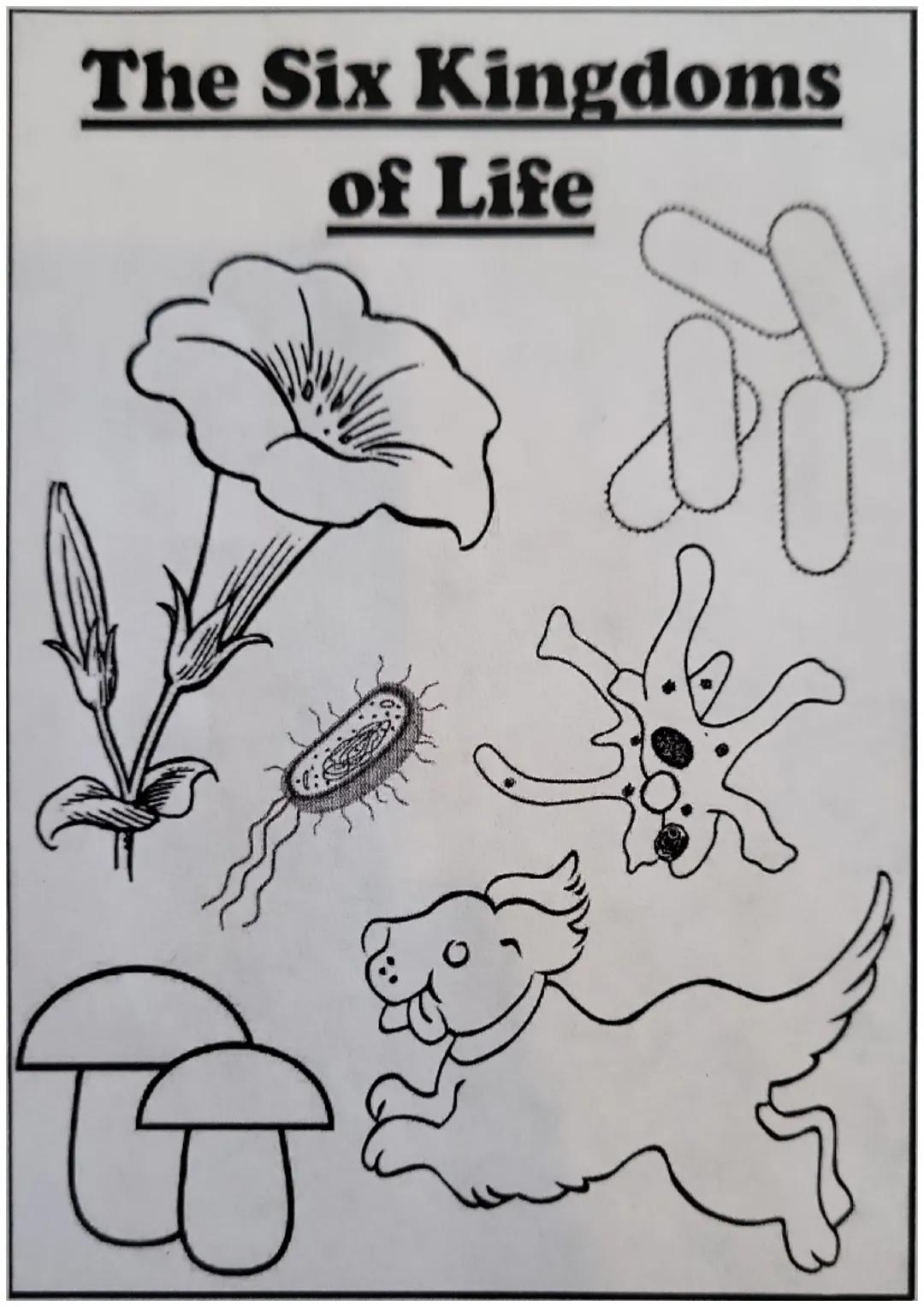
The Six Kingdoms of Life
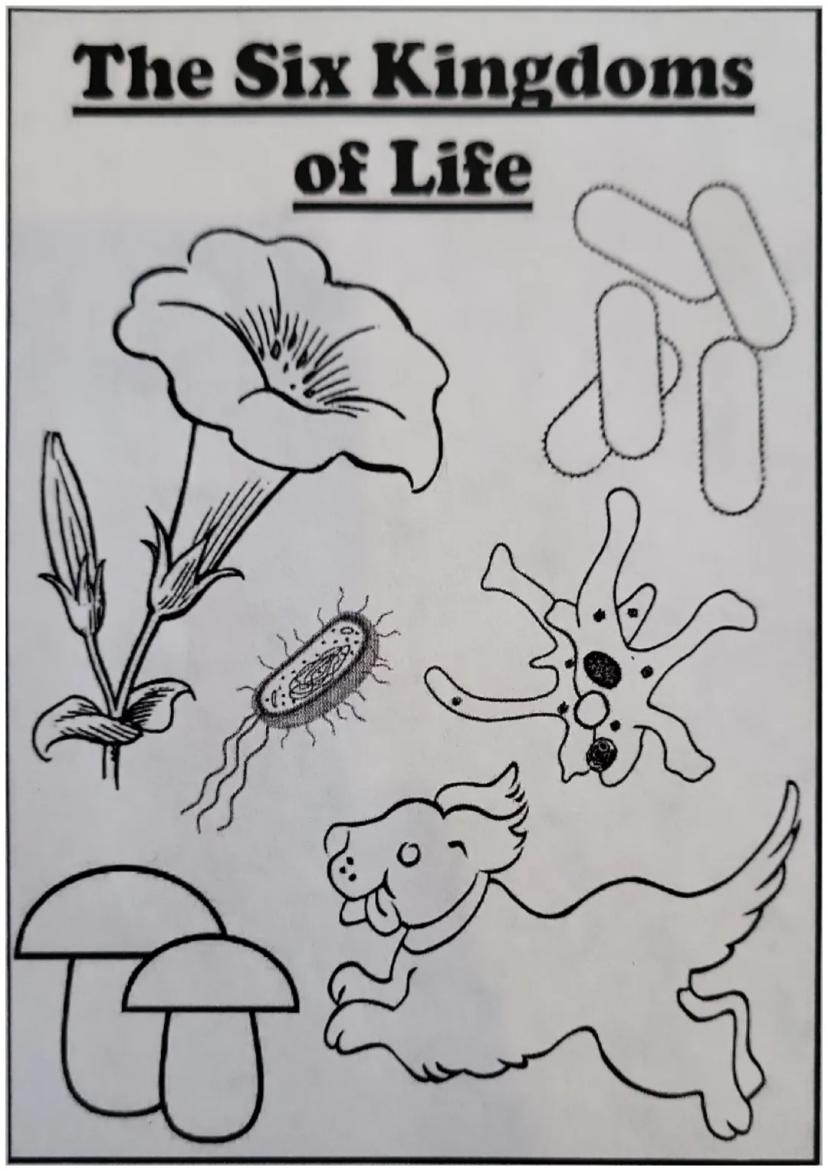
Ever wondered how scientists organize all the different types of life on our planet? There are millions of different species, but they can be sorted into six major kingdoms based on how they're built, how they get food, and other characteristics.
Each kingdom represents a branch on the tree of life with its own special features. From tiny single-celled organisms to giant redwood trees, all living things fit somewhere in these six categories.
You'll soon discover that some kingdoms contain organisms that live in extreme places, while others include creatures you see every day. Learning about these kingdoms helps us understand how all life on Earth is connected!
Fun Fact: While we now recognize six kingdoms, scientists used to group all life into just two kingdoms: plants and animals!
2
of 7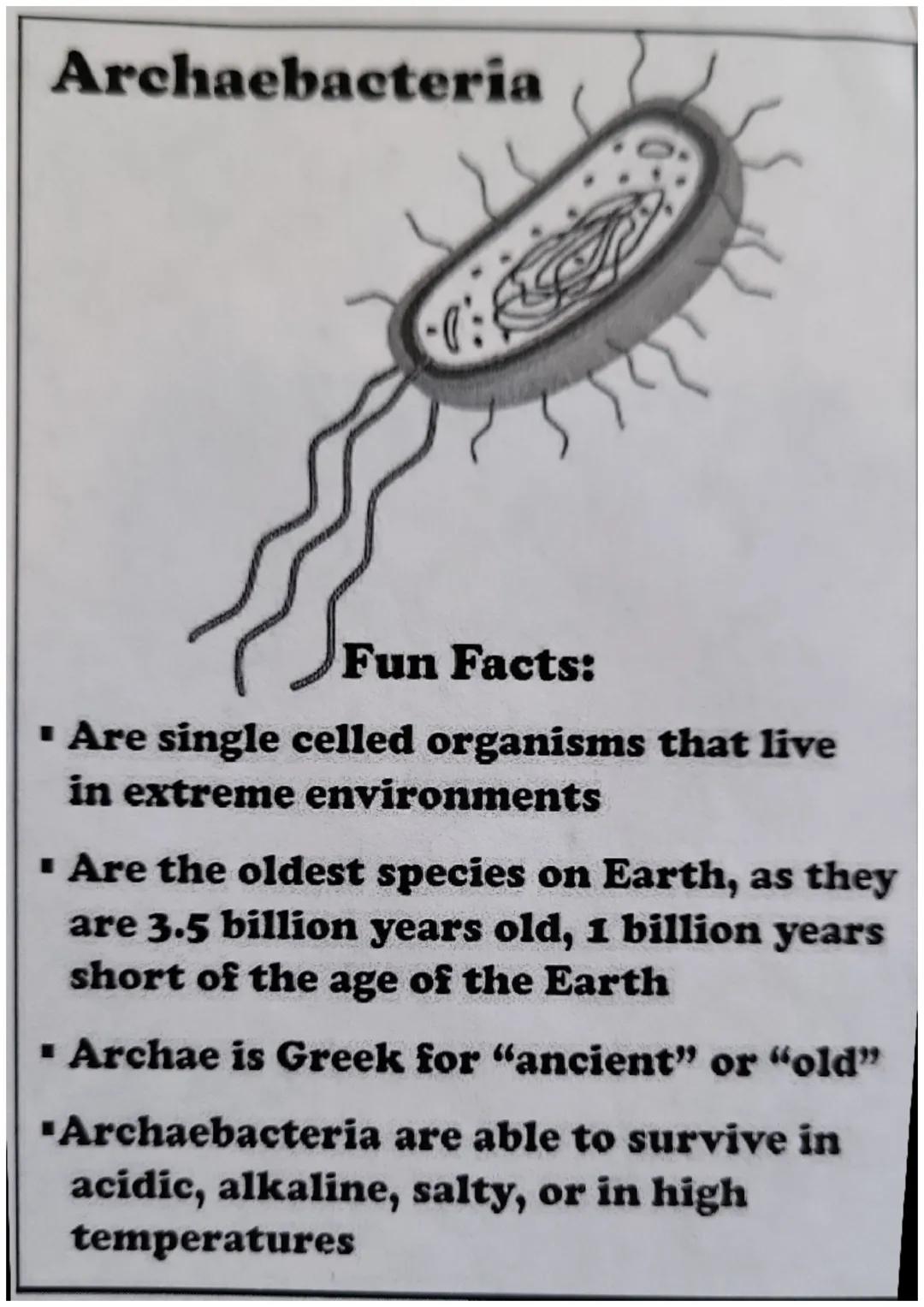
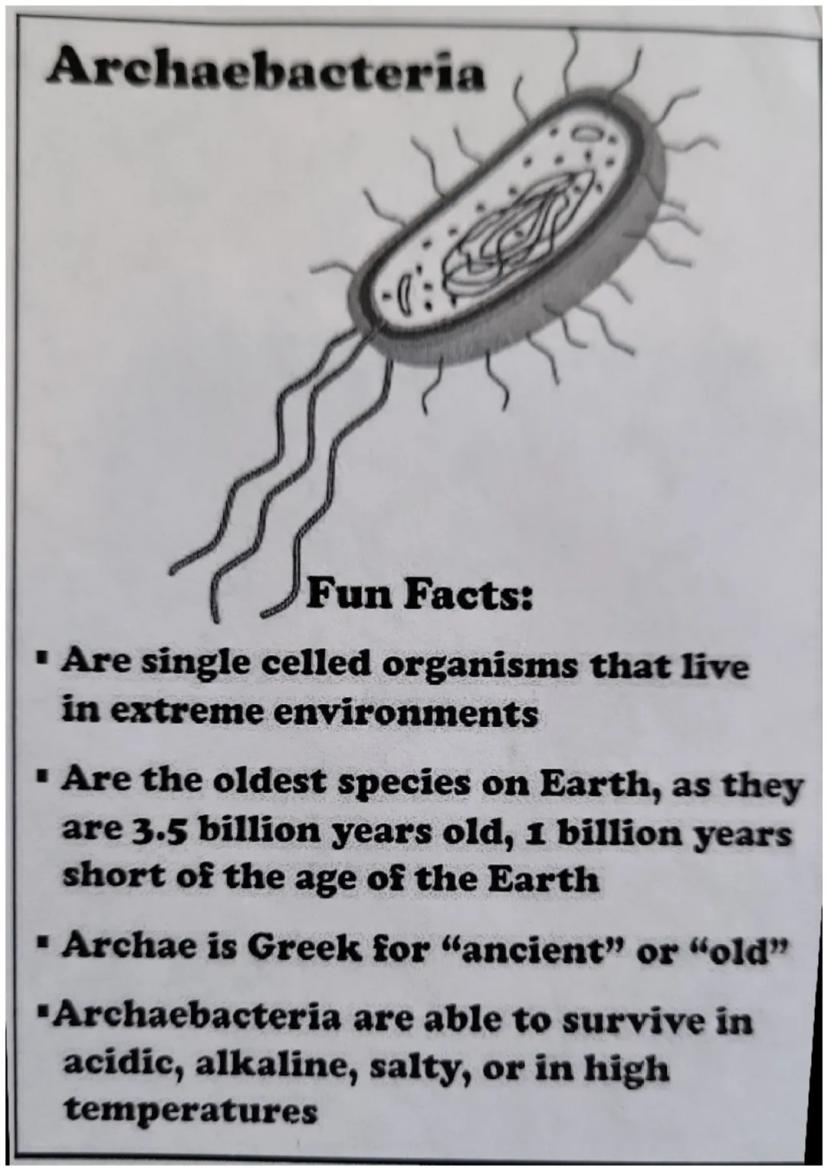
Archaebacteria Kingdom
Archaebacteria are the ultimate survivors of the living world! These tiny, single-celled organisms thrive in places where almost nothing else can live - like super hot springs, extremely salty lakes, and even acidic environments that would kill most other organisms.
These microscopic life forms are Earth's oldest inhabitants, dating back 3.5 billion years. That's almost as old as the planet itself! The name "archae" actually comes from Greek, meaning "ancient" or "old," which perfectly describes these primitive organisms.
Despite their simple structure, archaebacteria have incredible adaptations that let them survive in extreme conditions. Some can live in water near boiling temperatures, while others thrive in environments as acidic as battery acid!
Amazing Discovery: Some archaebacteria live in the digestive systems of cows and help them break down tough plant materials that would otherwise be indigestible!
3
of 7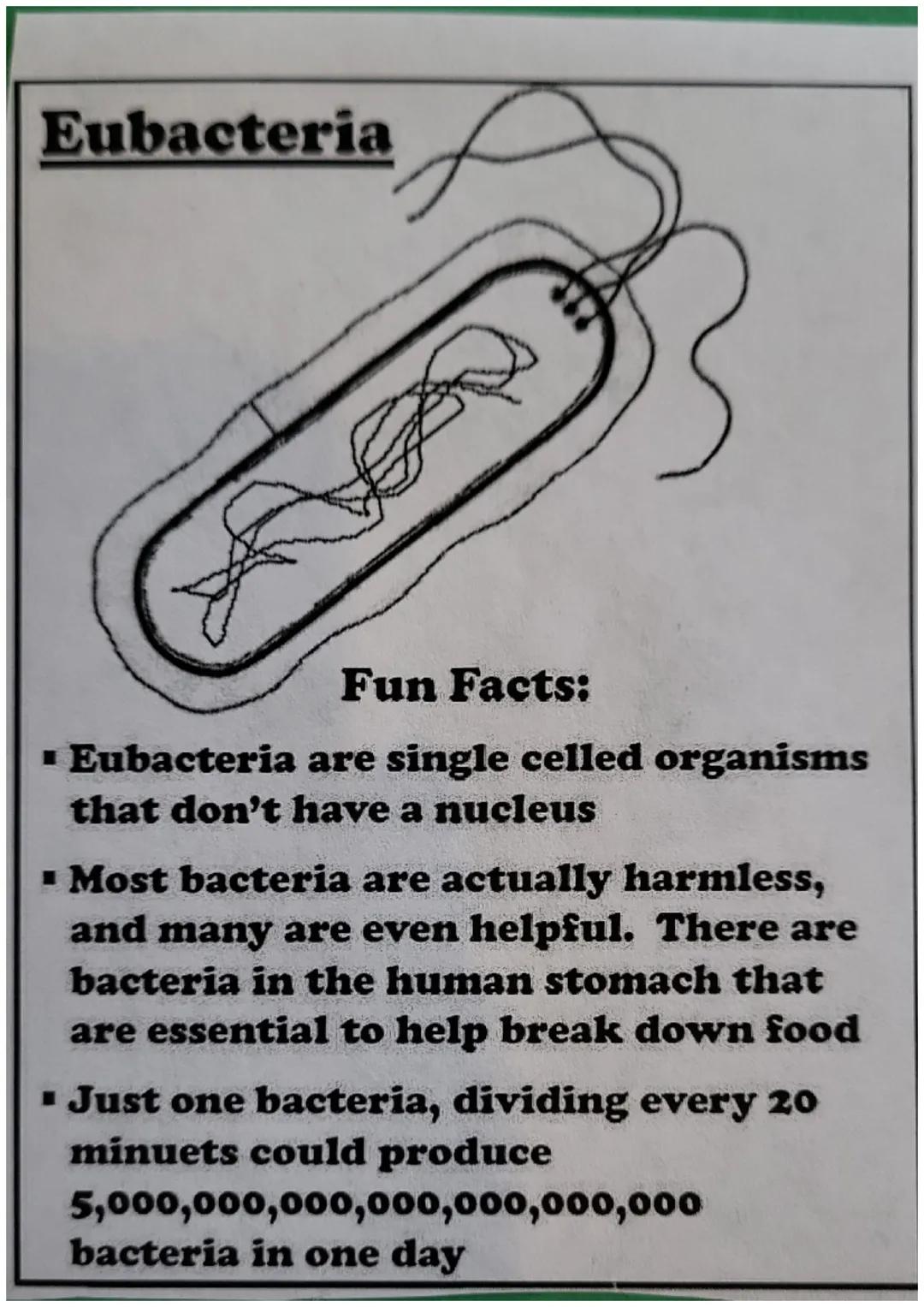
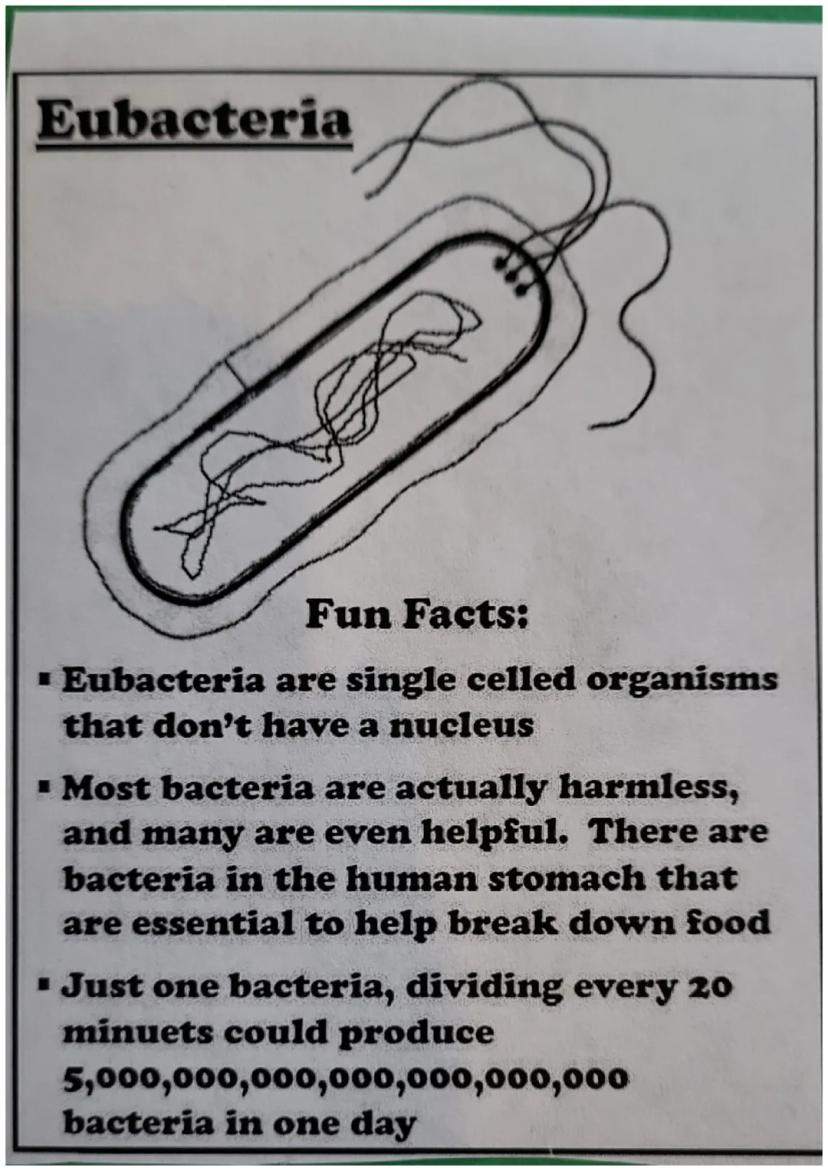
Eubacteria Kingdom
Bacteria are everywhere - on your skin, in your food, and even inside your body! These single-celled organisms don't have a nucleus, which makes them different from most other cells you'll study.
Don't worry though - most bacteria are actually harmless or even helpful! The bacteria living in your stomach right now are essential for breaking down your food and keeping you healthy. Without these tiny helpers, you wouldn't be able to digest properly.
Bacteria reproduce incredibly fast by simply dividing in two. Just one bacterium dividing every 20 minutes could theoretically produce 5 quintillion bacteria (that's 5 followed by 18 zeros!) in a single day. No wonder infections can spread so quickly!
Did You Know? There are more bacteria in your body than human cells! Don't panic though - they're mostly working to keep you healthy.
4
of 7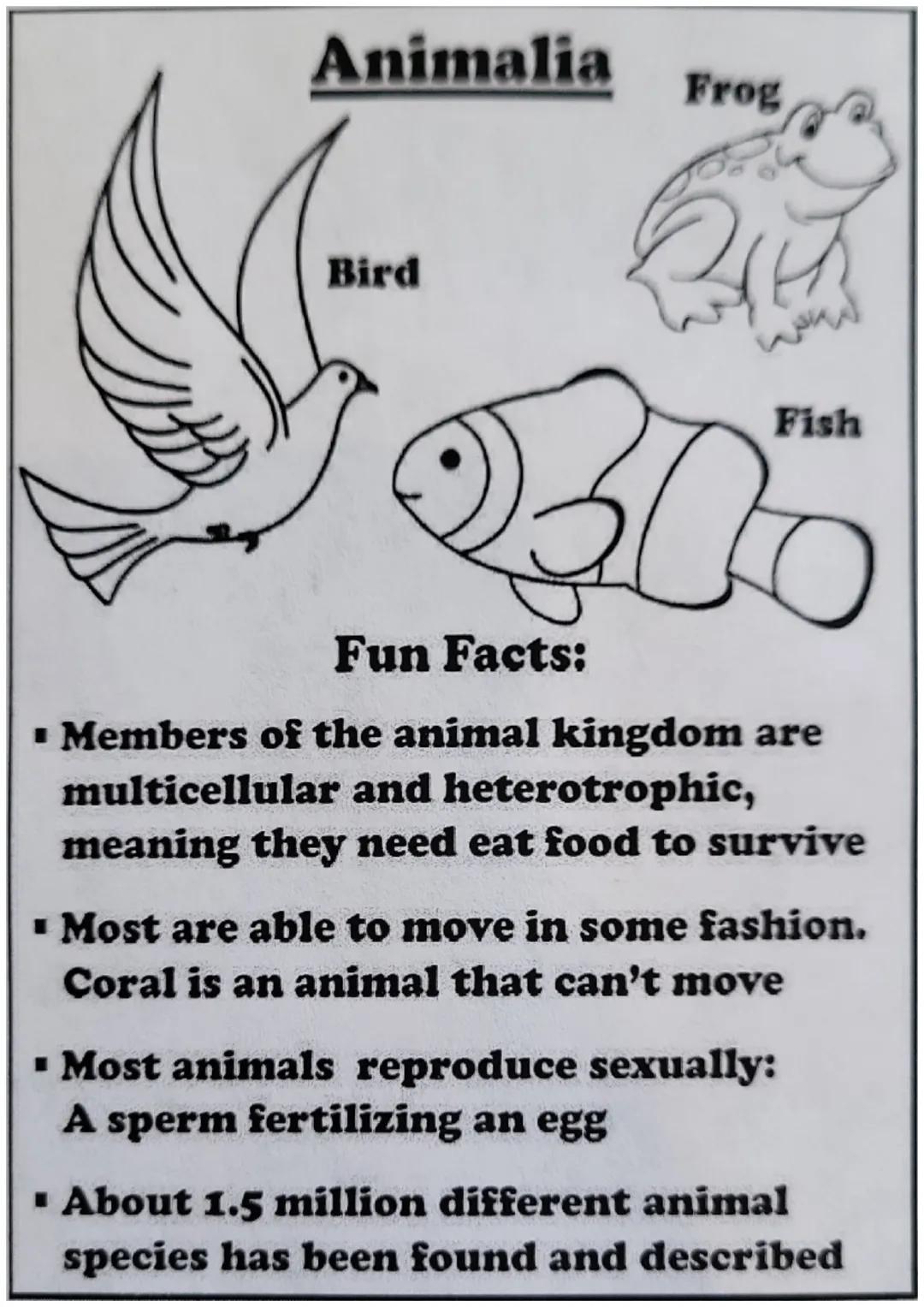
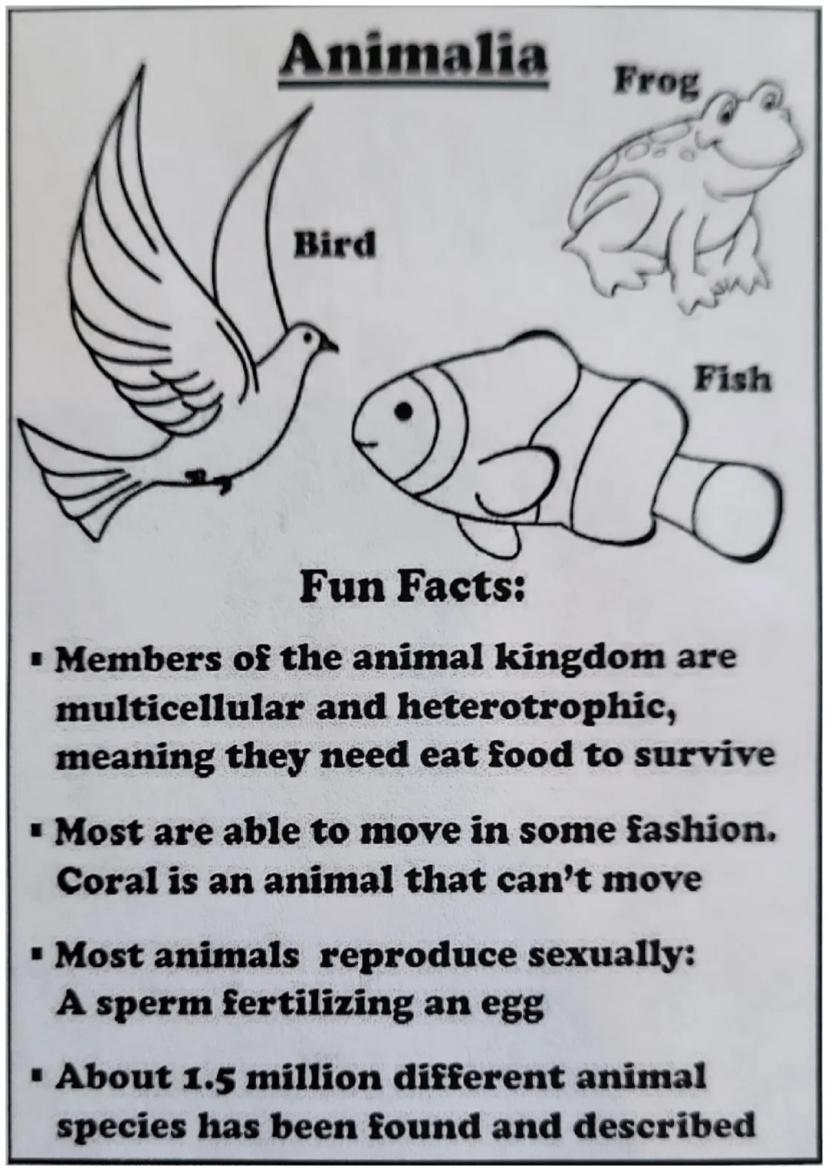
Animalia Kingdom
The animal kingdom includes creatures of all shapes and sizes - from tiny insects to massive blue whales! Animals are multicellular organisms that need to eat food to survive, which makes them heterotrophs .
One key feature of most animals is their ability to move around. While plants stay rooted in one spot, animals can usually swim, crawl, walk, or fly to find food and escape danger. Some exceptions exist though - coral animals build colonies that stay fixed in place!
Scientists have identified about 1.5 million different animal species so far, but they believe millions more are still waiting to be discovered. Most animals reproduce sexually, with sperm fertilizing eggs to create offspring with genetic material from both parents.
Cool Connection: You're part of the animal kingdom too! Humans belong to the mammal group within the animal kingdom.
5
of 7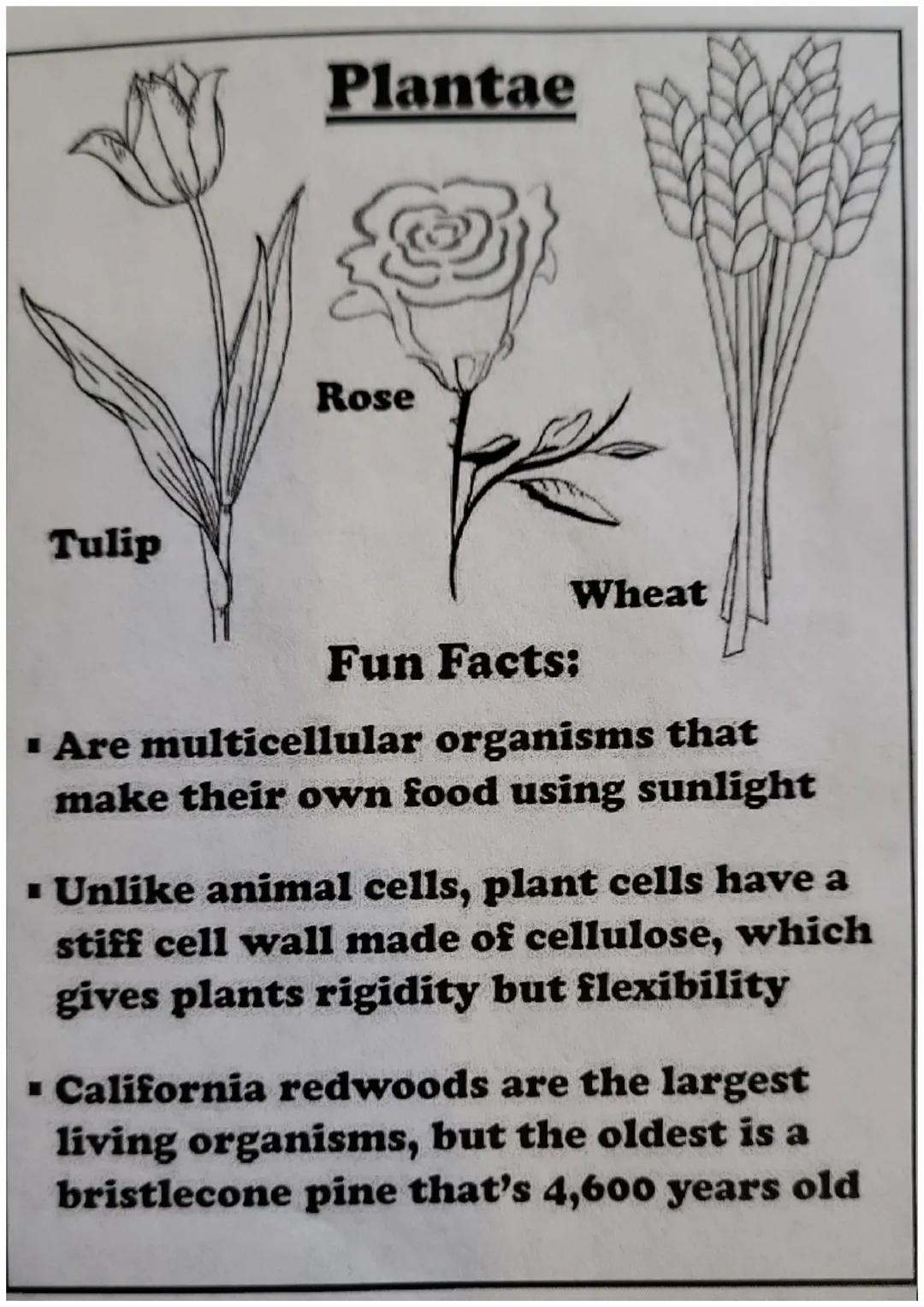
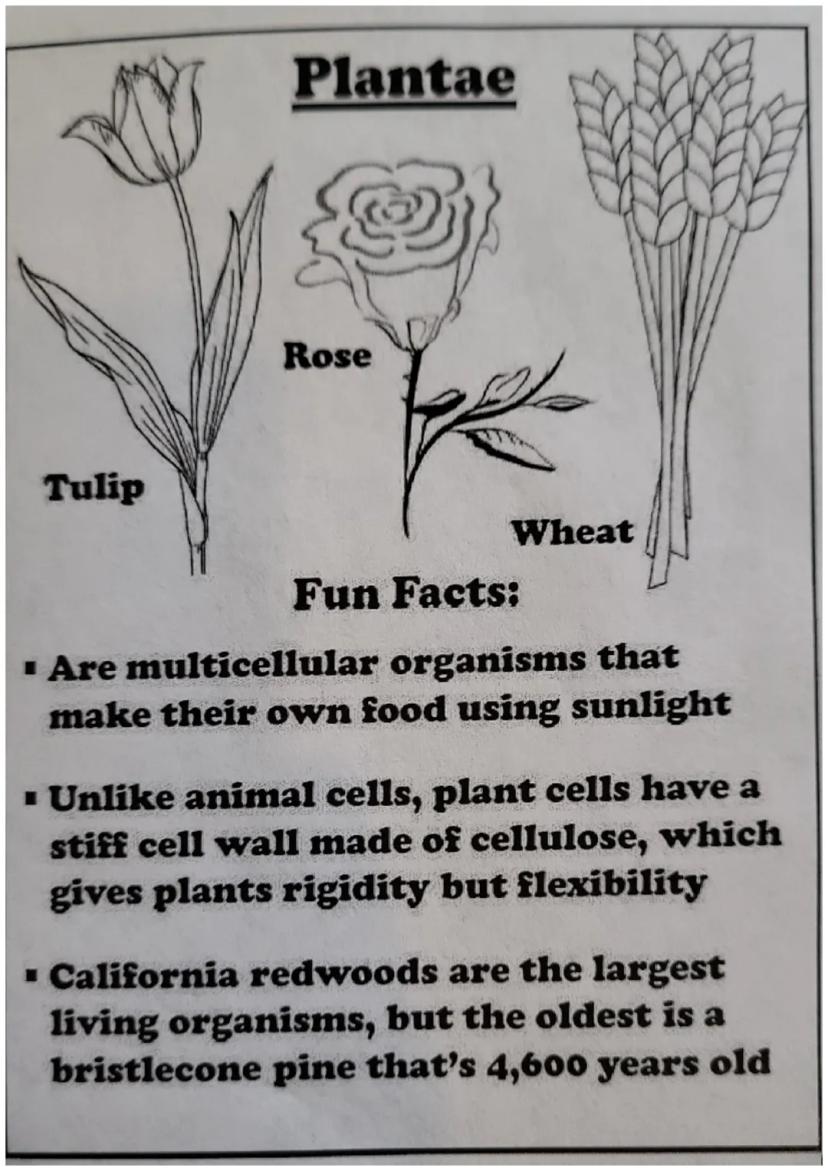
Plantae Kingdom
Plants are the green machines that power life on Earth! These multicellular organisms can make their own food using sunlight, water, and carbon dioxide through a process called photosynthesis. This ability makes them autotrophs .
Unlike animal cells, plant cells have stiff cell walls made of cellulose. These walls give plants both strength and flexibility, allowing them to stand tall while still being able to bend in the wind. The cell walls also help plants maintain their shape.
Some plants reach incredible sizes and ages! California redwood trees are the largest living organisms on Earth, towering over 350 feet tall. Even more impressive is a bristlecone pine tree that's been alive for 4,600 years - it was already ancient when the pyramids were built!
Think About It: Without plants producing oxygen through photosynthesis, most other life on Earth couldn't exist. Plants literally help us breathe!
6
of 7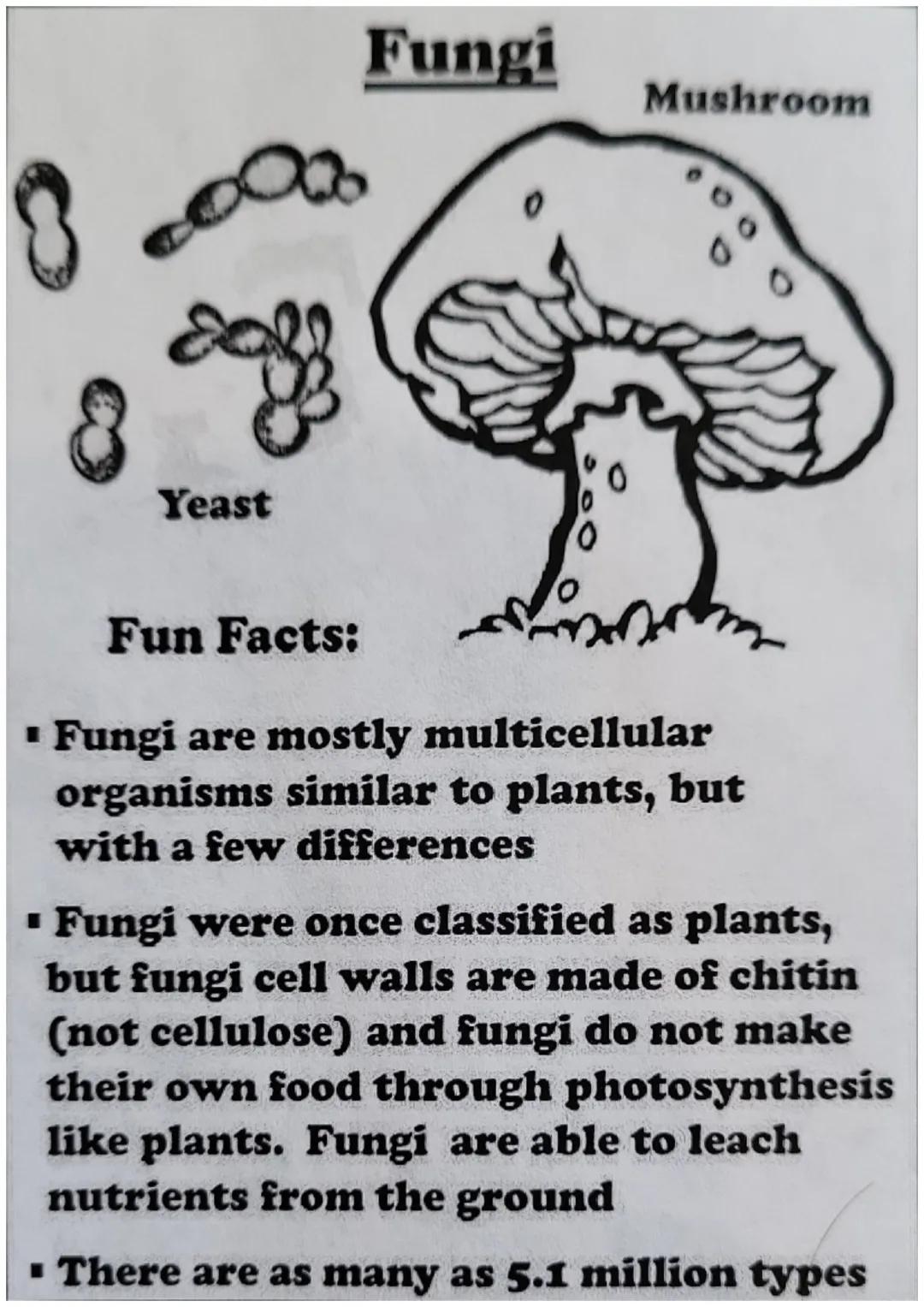
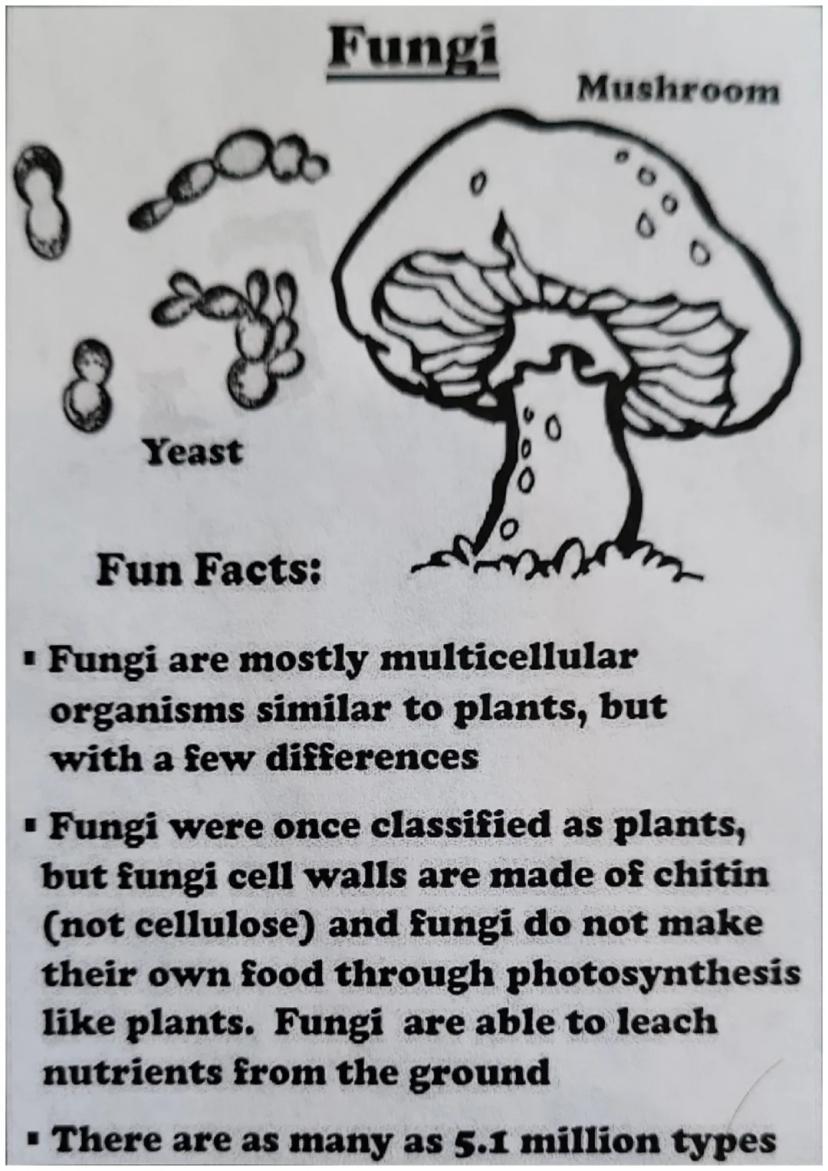
Fungi Kingdom
Mushrooms, molds, and yeasts might look like plants, but they belong to their own kingdom - Fungi! These fascinating organisms were once classified as plants, but scientists discovered they're actually quite different.
While plant cell walls contain cellulose, fungi cell walls are made of chitin (the same material in insect exoskeletons). Another big difference is how they get food - fungi can't make their own food through photosynthesis like plants do. Instead, they absorb nutrients from their surroundings, often helping decompose dead organisms.
Scientists estimate there may be as many as 5.1 million different types of fungi, but we've only identified a small fraction so far! Fungi play crucial roles in our world - from decomposing dead material to helping make bread rise and creating medicines like penicillin.
Fascinating Fact: The largest living organism on Earth might actually be a honey fungus in Oregon that spreads underground across 2.4 miles (3.8 km)!
7
of 7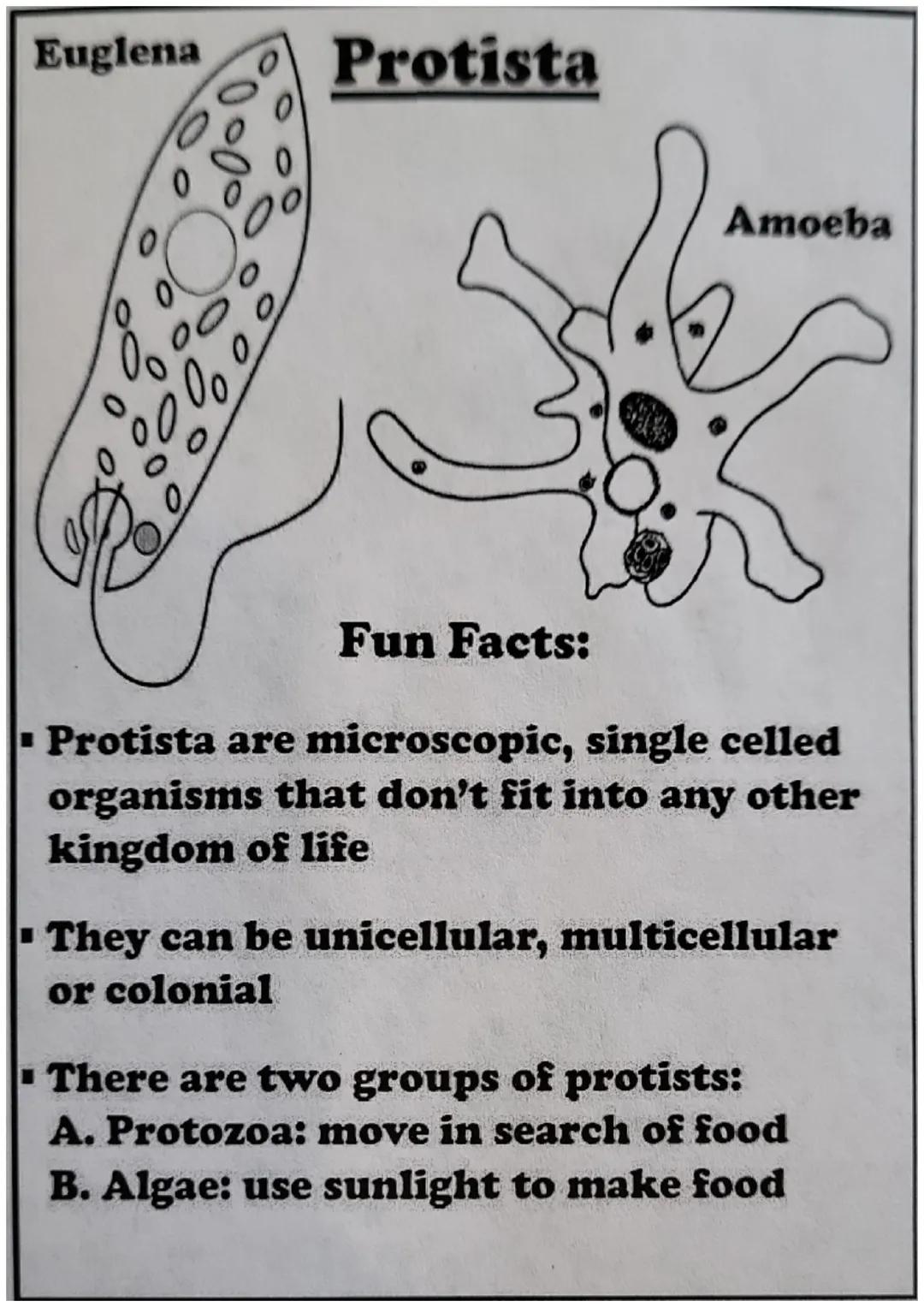
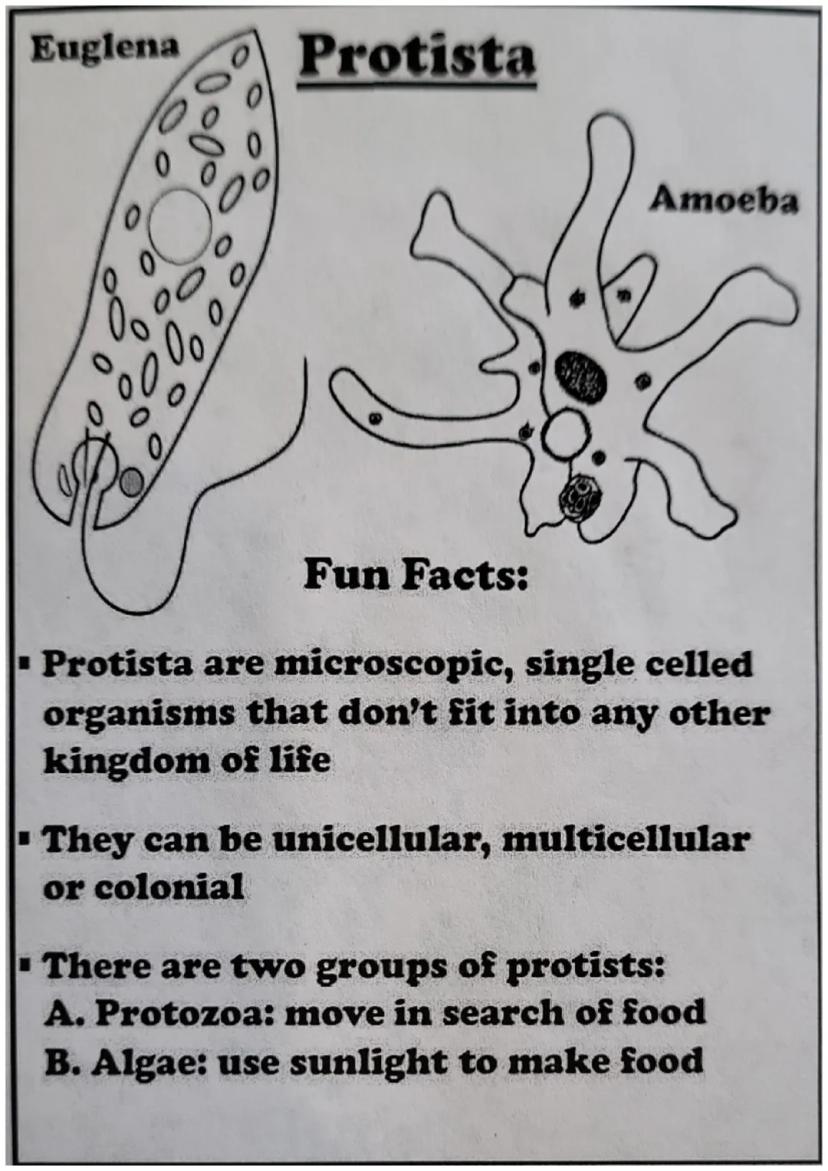
Protista Kingdom
The Protista kingdom is like nature's "miscellaneous" file - it contains single-celled organisms that don't fit neatly into any other kingdom! These microscopic creatures show incredible diversity in how they look and function.
Protists can be unicellular (one cell), multicellular (many cells), or colonial (groups of cells living together). They're divided into two main groups based on how they get food. Protozoa are mobile protists that move around searching for food, while algae use sunlight to make their own food like plants do.
Some famous protists include amoebas, which change shape as they move, and euglenas, which have both plant-like and animal-like characteristics. These fascinating organisms can be found almost everywhere there's water - from puddles to ponds to oceans!
Mind-Blowing Fact: Some protists, like slime molds, can join together to form a larger organism that moves and acts as a single unit when food is scarce!
We thought you’d never ask...
What is the Knowunity AI companion?
Our AI companion is specifically built for the needs of students. Based on the millions of content pieces we have on the platform we can provide truly meaningful and relevant answers to students. But its not only about answers, the companion is even more about guiding students through their daily learning challenges, with personalised study plans, quizzes or content pieces in the chat and 100% personalisation based on the students skills and developments.
Where can I download the Knowunity app?
You can download the app in the Google Play Store and in the Apple App Store.
Is Knowunity really free of charge?
That's right! Enjoy free access to study content, connect with fellow students, and get instant help – all at your fingertips.
Similar Content
Most popular content in Earth and Space Science
9P
Earth and Space Scienceplate tectonics
This quiz can help you study for simple plate tectonics tests.
6th2180
O
Earth and Space ScienceOur Solar System, and Beyond
Just a quiz on space science to get to know a little more
6th1600
E
Earth and Space ScienceEarth systems
How much do you know about you earth systems?
6th2210
S
Earth and Space ScienceScience
Use this to jog your memory
6th2230
W
Earth and Space ScienceWorld Oceans - Sixth Grade
Can you guess all the oceans? This will test your knowledge on the location of each ocean, describing bordering countries, seas, lands, and other oceans.
6th1390
Earth and Space ScienceEvidences of Plate Tectonics
This tackles the continental drift theory and the Evidences for continental drift theory.
99821
Earth and Space ScienceAtmospheric Layers and Their Characteristics
Learn about the distinct features and characteristics of the four main atmospheric layers: troposphere, stratosphere, mesosphere, and thermosphere.
6th642
Earth and Space ScienceEarth layer
Earth layer
953
Earth and Space SciencePhilsca EarthScience
For entrance exam review
12th912
Most popular content
9O
 AP US History
Origins and Dynamics of the Columbian Exchange
Analyze the ecological and economic motivations behind the initial transfer of goods, people, and diseases between the Old and New Worlds.
9th3,1280
I
AP US HistoryIntroduction to Early Cultural Interactions
Analyze the initial social and religious encounters between Europeans, Africans, and Indigenous peoples in the colonial Americas.
9th2,7730
O
AP World HistoryOrigins of Ancient River Civilizations
Analyze the environmental factors and technological innovations that led to the rise of early states in Mesopotamia, Egypt, and the Indus Valley.
9th3,1870
M
AP US HistoryMotivations for European Exploration
Analyze the economic, religious, and political factors that drove European powers to the Americas during the 15th and 16th centuries.
9th1,7780
F
 AP Psychology
Foundations of Ethical Guidelines in Research
Practice the core principles of the APA ethical code including informed consent, debriefing, and the role of Institutional Review Boards.
9th1,3360
I
AP US HistoryIntroduction to Native American Societies
Examine the diverse social, political, and economic structures of North American indigenous groups prior to European contact.
9th1,1100
I
 AP Biology
Introduction to Biological Elements of Life
Practice identifying the essential elements including carbon, nitrogen, phosphorus, and sulfur that compose biological macromolecules.
9th1,7390
I
AP US HistoryIntroduction to the Spanish Encomienda System
Explore the fundamental economic and social structures of the Spanish colonial system, focusing on the encomienda and the casta social hierarchy.
9th8890
O
AP World HistoryOrigins and Continuity of the Byzantine Empire
Analyze the political and cultural transitions from the Roman Empire to the Byzantine Empire, focusing on the reign of Justinian I and his code.
9th1,6320
Can't find what you're looking for? Explore other subjects.
Students love us — and so will you.
4.6/5App Store
4.7/5Google Play
The app is very easy to use and well designed. I have found everything I was looking for so far and have been able to learn a lot from the presentations! I will definitely use the app for a class assignment! And of course it also helps a lot as an inspiration.
Stefan SiOS user
This app is really great. There are so many study notes and help [...]. My problem subject is French, for example, and the app has so many options for help. Thanks to this app, I have improved my French. I would recommend it to anyone.
Samantha KlichAndroid user
Wow, I am really amazed. I just tried the app because I've seen it advertised many times and was absolutely stunned. This app is THE HELP you want for school and above all, it offers so many things, such as workouts and fact sheets, which have been VERY helpful to me personally.
AnnaiOS user
Earth and Space Science40 views·Updated Jun 5, 2026·7 pagesUnderstanding the Six Kingdoms of Life
L
Luke Wilson@lukewilson_toho
Dive into the amazing world of living things! Scientists organize all life on Earth into six main kingdoms, each with their own unique characteristics. Let's explore what makes each kingdom special and discover some cool facts about the different types...
1
of 7
Sign up to see the content. It's free!
- Access to all documents
- Improve your grades
- Join milions of students
The Six Kingdoms of Life
Ever wondered how scientists organize all the different types of life on our planet? There are millions of different species, but they can be sorted into six major kingdoms based on how they're built, how they get food, and other characteristics.
Each kingdom represents a branch on the tree of life with its own special features. From tiny single-celled organisms to giant redwood trees, all living things fit somewhere in these six categories.
You'll soon discover that some kingdoms contain organisms that live in extreme places, while others include creatures you see every day. Learning about these kingdoms helps us understand how all life on Earth is connected!
Fun Fact: While we now recognize six kingdoms, scientists used to group all life into just two kingdoms: plants and animals!
2
of 7Sign up to see the content. It's free!
- Access to all documents
- Improve your grades
- Join milions of students
Archaebacteria Kingdom
Archaebacteria are the ultimate survivors of the living world! These tiny, single-celled organisms thrive in places where almost nothing else can live - like super hot springs, extremely salty lakes, and even acidic environments that would kill most other organisms.
These microscopic life forms are Earth's oldest inhabitants, dating back 3.5 billion years. That's almost as old as the planet itself! The name "archae" actually comes from Greek, meaning "ancient" or "old," which perfectly describes these primitive organisms.
Despite their simple structure, archaebacteria have incredible adaptations that let them survive in extreme conditions. Some can live in water near boiling temperatures, while others thrive in environments as acidic as battery acid!
Amazing Discovery: Some archaebacteria live in the digestive systems of cows and help them break down tough plant materials that would otherwise be indigestible!
3
of 7Sign up to see the content. It's free!
- Access to all documents
- Improve your grades
- Join milions of students
Eubacteria Kingdom
Bacteria are everywhere - on your skin, in your food, and even inside your body! These single-celled organisms don't have a nucleus, which makes them different from most other cells you'll study.
Don't worry though - most bacteria are actually harmless or even helpful! The bacteria living in your stomach right now are essential for breaking down your food and keeping you healthy. Without these tiny helpers, you wouldn't be able to digest properly.
Bacteria reproduce incredibly fast by simply dividing in two. Just one bacterium dividing every 20 minutes could theoretically produce 5 quintillion bacteria (that's 5 followed by 18 zeros!) in a single day. No wonder infections can spread so quickly!
Did You Know? There are more bacteria in your body than human cells! Don't panic though - they're mostly working to keep you healthy.
4
of 7Sign up to see the content. It's free!
- Access to all documents
- Improve your grades
- Join milions of students
Animalia Kingdom
The animal kingdom includes creatures of all shapes and sizes - from tiny insects to massive blue whales! Animals are multicellular organisms that need to eat food to survive, which makes them heterotrophs .
One key feature of most animals is their ability to move around. While plants stay rooted in one spot, animals can usually swim, crawl, walk, or fly to find food and escape danger. Some exceptions exist though - coral animals build colonies that stay fixed in place!
Scientists have identified about 1.5 million different animal species so far, but they believe millions more are still waiting to be discovered. Most animals reproduce sexually, with sperm fertilizing eggs to create offspring with genetic material from both parents.
Cool Connection: You're part of the animal kingdom too! Humans belong to the mammal group within the animal kingdom.
5
of 7Sign up to see the content. It's free!
- Access to all documents
- Improve your grades
- Join milions of students
Plantae Kingdom
Plants are the green machines that power life on Earth! These multicellular organisms can make their own food using sunlight, water, and carbon dioxide through a process called photosynthesis. This ability makes them autotrophs .
Unlike animal cells, plant cells have stiff cell walls made of cellulose. These walls give plants both strength and flexibility, allowing them to stand tall while still being able to bend in the wind. The cell walls also help plants maintain their shape.
Some plants reach incredible sizes and ages! California redwood trees are the largest living organisms on Earth, towering over 350 feet tall. Even more impressive is a bristlecone pine tree that's been alive for 4,600 years - it was already ancient when the pyramids were built!
Think About It: Without plants producing oxygen through photosynthesis, most other life on Earth couldn't exist. Plants literally help us breathe!
6
of 7Sign up to see the content. It's free!
- Access to all documents
- Improve your grades
- Join milions of students
Fungi Kingdom
Mushrooms, molds, and yeasts might look like plants, but they belong to their own kingdom - Fungi! These fascinating organisms were once classified as plants, but scientists discovered they're actually quite different.
While plant cell walls contain cellulose, fungi cell walls are made of chitin (the same material in insect exoskeletons). Another big difference is how they get food - fungi can't make their own food through photosynthesis like plants do. Instead, they absorb nutrients from their surroundings, often helping decompose dead organisms.
Scientists estimate there may be as many as 5.1 million different types of fungi, but we've only identified a small fraction so far! Fungi play crucial roles in our world - from decomposing dead material to helping make bread rise and creating medicines like penicillin.
Fascinating Fact: The largest living organism on Earth might actually be a honey fungus in Oregon that spreads underground across 2.4 miles (3.8 km)!
7
of 7Sign up to see the content. It's free!
- Access to all documents
- Improve your grades
- Join milions of students
Protista Kingdom
The Protista kingdom is like nature's "miscellaneous" file - it contains single-celled organisms that don't fit neatly into any other kingdom! These microscopic creatures show incredible diversity in how they look and function.
Protists can be unicellular (one cell), multicellular (many cells), or colonial (groups of cells living together). They're divided into two main groups based on how they get food. Protozoa are mobile protists that move around searching for food, while algae use sunlight to make their own food like plants do.
Some famous protists include amoebas, which change shape as they move, and euglenas, which have both plant-like and animal-like characteristics. These fascinating organisms can be found almost everywhere there's water - from puddles to ponds to oceans!
Mind-Blowing Fact: Some protists, like slime molds, can join together to form a larger organism that moves and acts as a single unit when food is scarce!
We thought you’d never ask...
What is the Knowunity AI companion?
Our AI companion is specifically built for the needs of students. Based on the millions of content pieces we have on the platform we can provide truly meaningful and relevant answers to students. But its not only about answers, the companion is even more about guiding students through their daily learning challenges, with personalised study plans, quizzes or content pieces in the chat and 100% personalisation based on the students skills and developments.
Where can I download the Knowunity app?
You can download the app in the Google Play Store and in the Apple App Store.
Is Knowunity really free of charge?
That's right! Enjoy free access to study content, connect with fellow students, and get instant help – all at your fingertips.
Similar Content
Most popular content in Earth and Space Science
9P
Earth and Space Scienceplate tectonics
This quiz can help you study for simple plate tectonics tests.
6th2180
O
Earth and Space ScienceOur Solar System, and Beyond
Just a quiz on space science to get to know a little more
6th1600
E
Earth and Space ScienceEarth systems
How much do you know about you earth systems?
6th2210
S
Earth and Space ScienceScience
Use this to jog your memory
6th2230
W
Earth and Space ScienceWorld Oceans - Sixth Grade
Can you guess all the oceans? This will test your knowledge on the location of each ocean, describing bordering countries, seas, lands, and other oceans.
6th1390
Earth and Space ScienceEvidences of Plate Tectonics
This tackles the continental drift theory and the Evidences for continental drift theory.
99821
Earth and Space ScienceAtmospheric Layers and Their Characteristics
Learn about the distinct features and characteristics of the four main atmospheric layers: troposphere, stratosphere, mesosphere, and thermosphere.
6th642
Earth and Space ScienceEarth layer
Earth layer
953
Earth and Space SciencePhilsca EarthScience
For entrance exam review
12th912
Most popular content
9O
AP US HistoryOrigins and Dynamics of the Columbian Exchange
Analyze the ecological and economic motivations behind the initial transfer of goods, people, and diseases between the Old and New Worlds.
9th3,1280
I
AP US HistoryIntroduction to Early Cultural Interactions
Analyze the initial social and religious encounters between Europeans, Africans, and Indigenous peoples in the colonial Americas.
9th2,7730
O
AP World HistoryOrigins of Ancient River Civilizations
Analyze the environmental factors and technological innovations that led to the rise of early states in Mesopotamia, Egypt, and the Indus Valley.
9th3,1870
M
AP US HistoryMotivations for European Exploration
Analyze the economic, religious, and political factors that drove European powers to the Americas during the 15th and 16th centuries.
9th1,7780
F
AP PsychologyFoundations of Ethical Guidelines in Research
Practice the core principles of the APA ethical code including informed consent, debriefing, and the role of Institutional Review Boards.
9th1,3360
I
AP US HistoryIntroduction to Native American Societies
Examine the diverse social, political, and economic structures of North American indigenous groups prior to European contact.
9th1,1100
I
AP BiologyIntroduction to Biological Elements of Life
Practice identifying the essential elements including carbon, nitrogen, phosphorus, and sulfur that compose biological macromolecules.
9th1,7390
I
AP US HistoryIntroduction to the Spanish Encomienda System
Explore the fundamental economic and social structures of the Spanish colonial system, focusing on the encomienda and the casta social hierarchy.
9th8890
O
AP World HistoryOrigins and Continuity of the Byzantine Empire
Analyze the political and cultural transitions from the Roman Empire to the Byzantine Empire, focusing on the reign of Justinian I and his code.
9th1,6320
Can't find what you're looking for? Explore other subjects.
Students love us — and so will you.
4.6/5App Store
4.7/5Google Play
The app is very easy to use and well designed. I have found everything I was looking for so far and have been able to learn a lot from the presentations! I will definitely use the app for a class assignment! And of course it also helps a lot as an inspiration.
Stefan SiOS user
This app is really great. There are so many study notes and help [...]. My problem subject is French, for example, and the app has so many options for help. Thanks to this app, I have improved my French. I would recommend it to anyone.
Samantha KlichAndroid user
Wow, I am really amazed. I just tried the app because I've seen it advertised many times and was absolutely stunned. This app is THE HELP you want for school and above all, it offers so many things, such as workouts and fact sheets, which have been VERY helpful to me personally.
AnnaiOS user