
The nervous system is your body's command center, controlling everything...
 Biology151 views·Updated Jun 16, 2026·75 pages
Understanding the Nervous System in Invertebrates

Jasy Rodriguez@jasyrodriguez_fpij




1 / 10
1
of 10
Introduction to the Nervous System
The nervous system is the body's control and communication network. It processes sensory information, coordinates responses, and regulates bodily functions.
This complex system varies greatly between different animal groups. As we explore both vertebrate and invertebrate nervous systems, we'll discover how these structures evolved to meet different survival needs.
Understanding nervous system abnormalities and disorders helps us appreciate the importance of proper neural functioning for overall health.
Did you know? Your nervous system processes millions of bits of information every second, most of which never reaches your conscious awareness!
2
of 10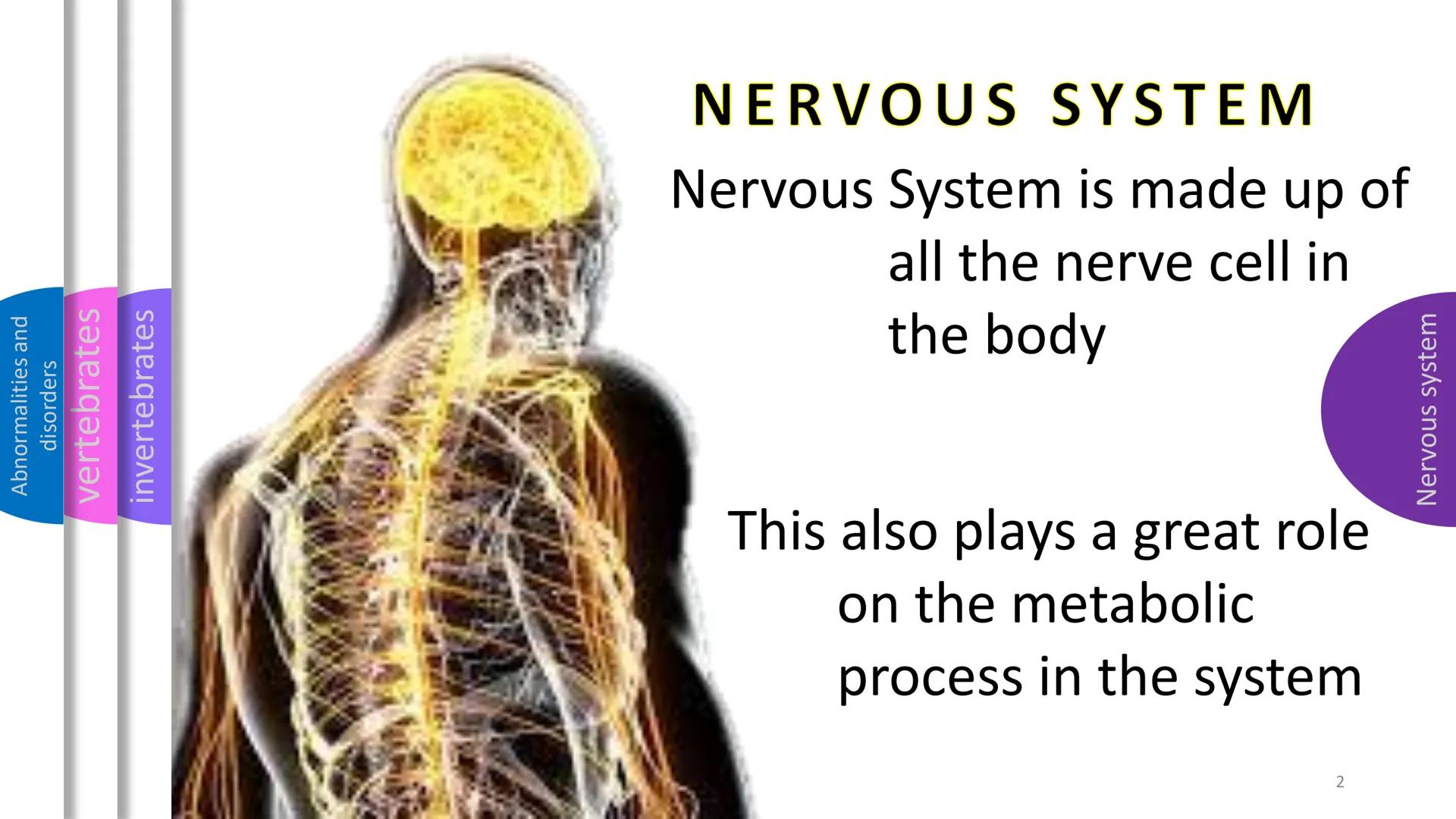
Basics of the Nervous System
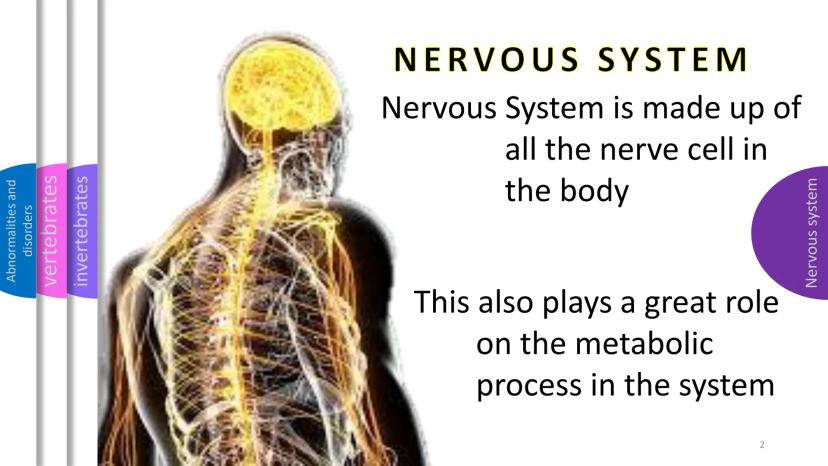
The nervous system consists of all nerve cells in the body. These specialized cells communicate through electrical and chemical signals to coordinate bodily functions.
Beyond just processing sensory information, the nervous system plays a crucial role in metabolism. It helps regulate energy production, storage, and use throughout the body.
The complexity of this system varies across species, but its fundamental role remains the same: to detect environmental changes and produce appropriate responses.
Neurons are the basic building blocks of the nervous system, working together in intricate networks to process information and control bodily functions.
3
of 10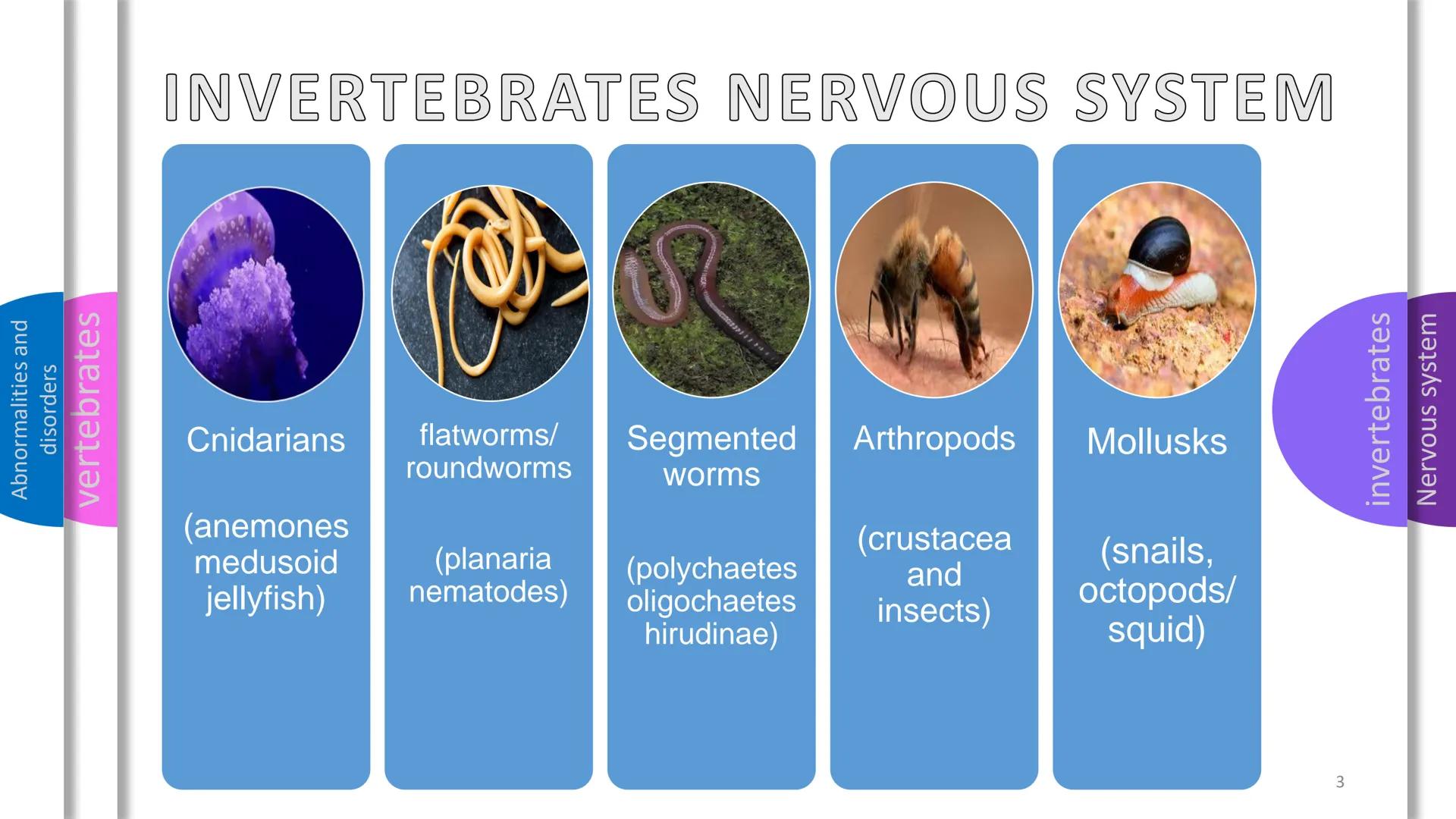
Invertebrate Nervous Systems
Invertebrates display fascinating diversity in their nervous systems, ranging from simple nerve nets to complex centralized brains.
Different invertebrate groups have developed unique nervous system structures:
- Cnidarians (jellyfish, anemones) have simple nerve nets
- Flatworms have primitive brains with nerve cords
- Segmented worms possess segmental ganglia
- Arthropods (insects, crustaceans) feature complex brains with specialized ganglia
- Mollusks (snails, octopuses) range from simple to highly advanced nervous systems
The complexity of these systems often correlates with the animal's mobility and behavioral capabilities.
Cool fact: Despite having completely different evolutionary origins, octopuses evolved camera-like eyes similar to vertebrates—a remarkable case of convergent evolution!
4
of 10
Cnidarian Nervous System
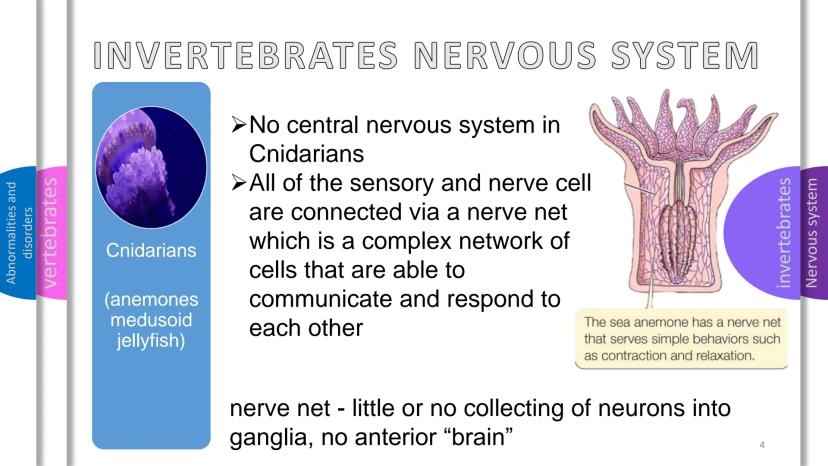
Cnidarians like sea anemones and jellyfish have no central nervous system. Instead, they possess a nerve net, which is a simple network of interconnected nerve cells.
This nerve net allows cnidarians to respond to environmental stimuli through basic behaviors like contraction and relaxation. When one part of the animal is stimulated, the signal can spread in multiple directions through the network.
Unlike more complex animals, cnidarians lack a brain or centralized control center. Their nerve cells form a diffuse network without concentrated ganglia (clusters of nerve cells).
The simplicity of this system is perfectly adapted to their relatively simple body structure and lifestyle, allowing them to capture prey and avoid danger despite lacking a brain.
5
of 10
Flatworm Nervous System
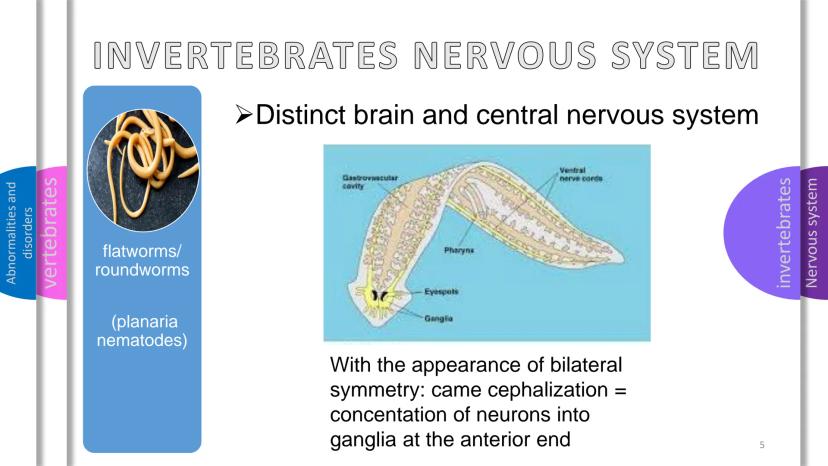
Flatworms like planaria represent an important evolutionary step with the development of bilateral symmetry and cephalization - the concentration of neurons into ganglia at the head end.
Their nervous system consists of:
- A primitive brain made of ganglia at the anterior end
- Two ventral nerve cords running the length of the body
- Eyespots that can detect light but not form images
This arrangement marks a significant advancement over the cnidarian nerve net, providing these animals with more coordinated movement and directional sense.
The concentration of neurons in the head allows flatworms to process sensory information more efficiently as they move forward through their environment.
6
of 10
Segmented Worm Nervous System
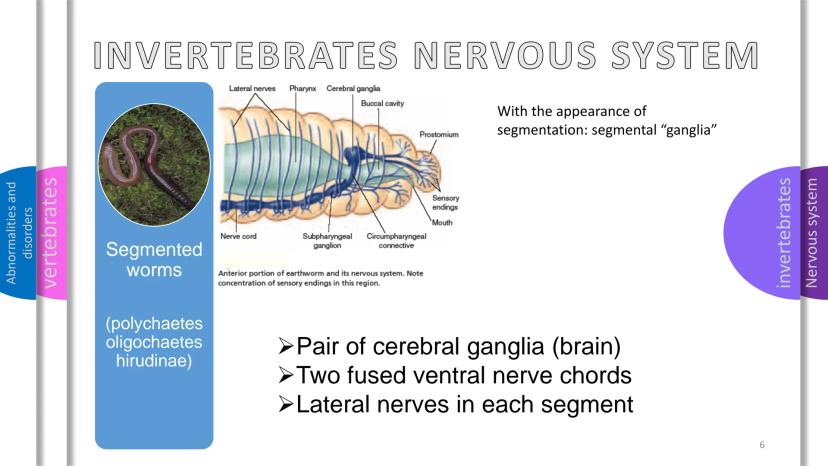
Segmented worms like earthworms have a more organized nervous system that reflects their segmented body plan.
Their nervous system features:
- A pair of cerebral ganglia functioning as a simple brain
- Two fused ventral nerve cords running along the body's length
- Segmental ganglia in each body segment
- Lateral nerves branching from each segment
This arrangement creates a ladder-like structure with a distinct anterior brain. The concentration of sensory endings near the front helps the worm navigate through soil.
Interesting fact: Each segment of an earthworm contains its own mini-processing center (ganglion), allowing parts of the worm to respond independently to local stimuli!
7
of 10
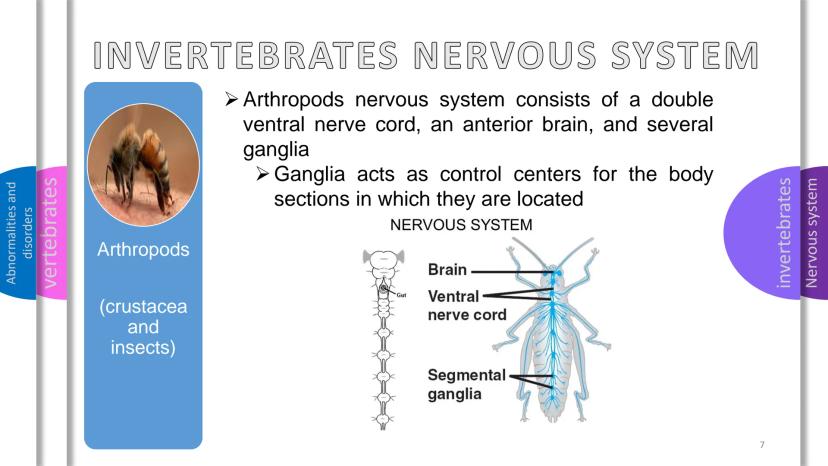
Arthropod Nervous System
Arthropods (insects, crustaceans) possess a sophisticated nervous system that supports their complex behaviors and movements.
Their nervous system consists of:
- An anterior brain divided into specialized regions
- A double ventral nerve cord running along the body's length
- Segmental ganglia acting as control centers for different body segments
This organization allows for remarkable coordination of multiple legs, wings, and sensory appendages. Each ganglion can process information and control its body segment semi-independently.
The brain integrates sensory information and coordinates complex behaviors like flying, web-building, or social interactions, making arthropods capable of sophisticated responses despite their small size.
8
of 10
Mollusk Nervous System
Mollusks display an impressive range of nervous system complexity, from simple systems in clams to highly advanced brains in octopuses and squids.
Most mollusks have paired ganglia connected by nerve cords, creating a distributed control system throughout the body. The cerebral ganglia serve as the primary control center.
Cephalopods (octopuses and squids) have the most complex nervous systems among invertebrates, with large brains capable of learning, memory, and problem-solving.
Many mollusks possess paired eyes ranging from simple light-detecting cups to complex camera-like eyes in cephalopods that have irises, pupils, and retinas similar to human eyes.
Amazing fact: Octopuses have about 500 million neurons, with two-thirds distributed in their arms, giving each arm a degree of independent "thinking" ability!
9
of 10
Diversity in Nervous Systems
The animal kingdom displays remarkable diversity in nervous system organization, reflecting different evolutionary paths and survival strategies.
Simple animals like hydra have basic nerve nets with no central control. Sea stars possess a radial nerve ring with branches extending into each arm.
More complex invertebrates show increasing centralization:
- Planarians have a primitive brain with two nerve cords
- Leeches and other annelids have segmental ganglia along a ventral nerve cord
- Insects feature a brain connected to a chain of ventral ganglia
- Squids have a complex brain with giant axons for rapid escape responses
Vertebrates like salamanders represent the most centralized design with a dorsal nerve cord protected by the spine and an enlarged brain at the anterior end.
10
of 10
Neuron Function
Despite their structural diversity across species, all neurons perform three basic functions:
- Receive and integrate incoming signals from other cells
- Conduct these signals through the cell body and along the axon
- Transmit signals to other cells through specialized junctions
These fundamental capabilities allow nervous systems to process information and coordinate responses regardless of their complexity. Whether in a jellyfish or a human, neurons follow these same principles of operation.
The remarkable versatility of neurons enables them to perform countless specialized roles within different nervous systems, from simple reflexes to complex cognition.
We thought you’d never ask...
What is the Knowunity AI companion?
Our AI companion is specifically built for the needs of students. Based on the millions of content pieces we have on the platform we can provide truly meaningful and relevant answers to students. But its not only about answers, the companion is even more about guiding students through their daily learning challenges, with personalised study plans, quizzes or content pieces in the chat and 100% personalisation based on the students skills and developments.
Where can I download the Knowunity app?
You can download the app in the Google Play Store and in the Apple App Store.
Is Knowunity really free of charge?
That's right! Enjoy free access to study content, connect with fellow students, and get instant help – all at your fingertips.
Similar Content
Most popular content: Invertebrates
3Most popular content in Biology
9C
BiologyCell Organelles
This Quiz Is To Test Your Knowledge Of Cell Organelles And Their Functions Inside The Cell. It Can Also Be A Study Guide To Remember Them Better.
6th6710
B
Biologybiology cell organelles and functions
Do you know the cell organelles and their functions?
9th4410
M
BiologyMitosis and Cell Division Flashcards
These flashcards cover the basics of mitosis and why cell division occurs in the first place.
9th3390
D
BiologyDNA and RNA
Uncover the secrets of life with this comprehensive Biology flashcard set. Perfect for grade 10 students studying Living Environment.
10th1,0782
D
BiologyDiscover the Fascinating World of Living Organisms
Uncover the secrets of biology and explore the diverse and amazing life forms that inhabit our planet with this captivating flashcard set.
7th4380
A
BiologyAnimal and plant cell structure
Quiz on animal and plant cell structures
9th3240
D
BiologyDiscover Punnet Squares
Uncover the secrets of life with this comprehensive Biology flashcard set. Perfect for grade 10 students studying Living Environment.
10th3961
D
BiologyDNA
Parts of DNA
9th2970
S
BiologySteps of Cellular Respiration
3 basic steps and Molecule Vocab
9th2660
Most popular content
9O
 AP US History
Origins and Dynamics of the Columbian Exchange
Analyze the ecological and economic motivations behind the initial transfer of goods, people, and diseases between the Old and New Worlds.
9th3,1280
I
AP US HistoryIntroduction to Early Cultural Interactions
Analyze the initial social and religious encounters between Europeans, Africans, and Indigenous peoples in the colonial Americas.
9th2,7730
O
 AP World History
Origins of Ancient River Civilizations
Analyze the environmental factors and technological innovations that led to the rise of early states in Mesopotamia, Egypt, and the Indus Valley.
9th3,1870
M
AP US HistoryMotivations for European Exploration
Analyze the economic, religious, and political factors that drove European powers to the Americas during the 15th and 16th centuries.
9th1,7780
F
 AP Psychology
Foundations of Ethical Guidelines in Research
Practice the core principles of the APA ethical code including informed consent, debriefing, and the role of Institutional Review Boards.
9th1,3360
I
AP US HistoryIntroduction to Native American Societies
Examine the diverse social, political, and economic structures of North American indigenous groups prior to European contact.
9th1,1100
I
AP BiologyIntroduction to Biological Elements of Life
Practice identifying the essential elements including carbon, nitrogen, phosphorus, and sulfur that compose biological macromolecules.
9th1,7390
I
AP US HistoryIntroduction to the Spanish Encomienda System
Explore the fundamental economic and social structures of the Spanish colonial system, focusing on the encomienda and the casta social hierarchy.
9th8890
O
AP World HistoryOrigins and Continuity of the Byzantine Empire
Analyze the political and cultural transitions from the Roman Empire to the Byzantine Empire, focusing on the reign of Justinian I and his code.
9th1,6320
Can't find what you're looking for? Explore other subjects.
Students love us — and so will you.
4.6/5App Store
4.7/5Google Play
The app is very easy to use and well designed. I have found everything I was looking for so far and have been able to learn a lot from the presentations! I will definitely use the app for a class assignment! And of course it also helps a lot as an inspiration.
Stefan SiOS user
This app is really great. There are so many study notes and help [...]. My problem subject is French, for example, and the app has so many options for help. Thanks to this app, I have improved my French. I would recommend it to anyone.
Samantha KlichAndroid user
Wow, I am really amazed. I just tried the app because I've seen it advertised many times and was absolutely stunned. This app is THE HELP you want for school and above all, it offers so many things, such as workouts and fact sheets, which have been VERY helpful to me personally.
AnnaiOS user
Biology151 views·Updated Jun 16, 2026·75 pagesUnderstanding the Nervous System in Invertebrates
Jasy Rodriguez@jasyrodriguez_fpij
The nervous system is your body's command center, controlling everything from your thoughts to your movements. It's made up of complex networks of nerves and specialized cells that transmit signals between different parts of the body. In vertebrates and invertebrates,...
1
of 10
Sign up to see the content. It's free!
- Access to all documents
- Improve your grades
- Join milions of students
Introduction to the Nervous System
The nervous system is the body's control and communication network. It processes sensory information, coordinates responses, and regulates bodily functions.
This complex system varies greatly between different animal groups. As we explore both vertebrate and invertebrate nervous systems, we'll discover how these structures evolved to meet different survival needs.
Understanding nervous system abnormalities and disorders helps us appreciate the importance of proper neural functioning for overall health.
Did you know? Your nervous system processes millions of bits of information every second, most of which never reaches your conscious awareness!
2
of 10Sign up to see the content. It's free!
- Access to all documents
- Improve your grades
- Join milions of students
Basics of the Nervous System
The nervous system consists of all nerve cells in the body. These specialized cells communicate through electrical and chemical signals to coordinate bodily functions.
Beyond just processing sensory information, the nervous system plays a crucial role in metabolism. It helps regulate energy production, storage, and use throughout the body.
The complexity of this system varies across species, but its fundamental role remains the same: to detect environmental changes and produce appropriate responses.
Neurons are the basic building blocks of the nervous system, working together in intricate networks to process information and control bodily functions.
3
of 10Sign up to see the content. It's free!
- Access to all documents
- Improve your grades
- Join milions of students
Invertebrate Nervous Systems
Invertebrates display fascinating diversity in their nervous systems, ranging from simple nerve nets to complex centralized brains.
Different invertebrate groups have developed unique nervous system structures:
- Cnidarians (jellyfish, anemones) have simple nerve nets
- Flatworms have primitive brains with nerve cords
- Segmented worms possess segmental ganglia
- Arthropods (insects, crustaceans) feature complex brains with specialized ganglia
- Mollusks (snails, octopuses) range from simple to highly advanced nervous systems
The complexity of these systems often correlates with the animal's mobility and behavioral capabilities.
Cool fact: Despite having completely different evolutionary origins, octopuses evolved camera-like eyes similar to vertebrates—a remarkable case of convergent evolution!
4
of 10Sign up to see the content. It's free!
- Access to all documents
- Improve your grades
- Join milions of students
Cnidarian Nervous System
Cnidarians like sea anemones and jellyfish have no central nervous system. Instead, they possess a nerve net, which is a simple network of interconnected nerve cells.
This nerve net allows cnidarians to respond to environmental stimuli through basic behaviors like contraction and relaxation. When one part of the animal is stimulated, the signal can spread in multiple directions through the network.
Unlike more complex animals, cnidarians lack a brain or centralized control center. Their nerve cells form a diffuse network without concentrated ganglia (clusters of nerve cells).
The simplicity of this system is perfectly adapted to their relatively simple body structure and lifestyle, allowing them to capture prey and avoid danger despite lacking a brain.
5
of 10Sign up to see the content. It's free!
- Access to all documents
- Improve your grades
- Join milions of students
Flatworm Nervous System
Flatworms like planaria represent an important evolutionary step with the development of bilateral symmetry and cephalization - the concentration of neurons into ganglia at the head end.
Their nervous system consists of:
- A primitive brain made of ganglia at the anterior end
- Two ventral nerve cords running the length of the body
- Eyespots that can detect light but not form images
This arrangement marks a significant advancement over the cnidarian nerve net, providing these animals with more coordinated movement and directional sense.
The concentration of neurons in the head allows flatworms to process sensory information more efficiently as they move forward through their environment.
6
of 10Sign up to see the content. It's free!
- Access to all documents
- Improve your grades
- Join milions of students
Segmented Worm Nervous System
Segmented worms like earthworms have a more organized nervous system that reflects their segmented body plan.
Their nervous system features:
- A pair of cerebral ganglia functioning as a simple brain
- Two fused ventral nerve cords running along the body's length
- Segmental ganglia in each body segment
- Lateral nerves branching from each segment
This arrangement creates a ladder-like structure with a distinct anterior brain. The concentration of sensory endings near the front helps the worm navigate through soil.
Interesting fact: Each segment of an earthworm contains its own mini-processing center (ganglion), allowing parts of the worm to respond independently to local stimuli!
7
of 10Sign up to see the content. It's free!
- Access to all documents
- Improve your grades
- Join milions of students
Arthropod Nervous System
Arthropods (insects, crustaceans) possess a sophisticated nervous system that supports their complex behaviors and movements.
Their nervous system consists of:
- An anterior brain divided into specialized regions
- A double ventral nerve cord running along the body's length
- Segmental ganglia acting as control centers for different body segments
This organization allows for remarkable coordination of multiple legs, wings, and sensory appendages. Each ganglion can process information and control its body segment semi-independently.
The brain integrates sensory information and coordinates complex behaviors like flying, web-building, or social interactions, making arthropods capable of sophisticated responses despite their small size.
8
of 10Sign up to see the content. It's free!
- Access to all documents
- Improve your grades
- Join milions of students
Mollusk Nervous System
Mollusks display an impressive range of nervous system complexity, from simple systems in clams to highly advanced brains in octopuses and squids.
Most mollusks have paired ganglia connected by nerve cords, creating a distributed control system throughout the body. The cerebral ganglia serve as the primary control center.
Cephalopods (octopuses and squids) have the most complex nervous systems among invertebrates, with large brains capable of learning, memory, and problem-solving.
Many mollusks possess paired eyes ranging from simple light-detecting cups to complex camera-like eyes in cephalopods that have irises, pupils, and retinas similar to human eyes.
Amazing fact: Octopuses have about 500 million neurons, with two-thirds distributed in their arms, giving each arm a degree of independent "thinking" ability!
9
of 10Sign up to see the content. It's free!
- Access to all documents
- Improve your grades
- Join milions of students
Diversity in Nervous Systems
The animal kingdom displays remarkable diversity in nervous system organization, reflecting different evolutionary paths and survival strategies.
Simple animals like hydra have basic nerve nets with no central control. Sea stars possess a radial nerve ring with branches extending into each arm.
More complex invertebrates show increasing centralization:
- Planarians have a primitive brain with two nerve cords
- Leeches and other annelids have segmental ganglia along a ventral nerve cord
- Insects feature a brain connected to a chain of ventral ganglia
- Squids have a complex brain with giant axons for rapid escape responses
Vertebrates like salamanders represent the most centralized design with a dorsal nerve cord protected by the spine and an enlarged brain at the anterior end.
10
of 10Sign up to see the content. It's free!
- Access to all documents
- Improve your grades
- Join milions of students
Neuron Function
Despite their structural diversity across species, all neurons perform three basic functions:
- Receive and integrate incoming signals from other cells
- Conduct these signals through the cell body and along the axon
- Transmit signals to other cells through specialized junctions
These fundamental capabilities allow nervous systems to process information and coordinate responses regardless of their complexity. Whether in a jellyfish or a human, neurons follow these same principles of operation.
The remarkable versatility of neurons enables them to perform countless specialized roles within different nervous systems, from simple reflexes to complex cognition.
We thought you’d never ask...
What is the Knowunity AI companion?
Our AI companion is specifically built for the needs of students. Based on the millions of content pieces we have on the platform we can provide truly meaningful and relevant answers to students. But its not only about answers, the companion is even more about guiding students through their daily learning challenges, with personalised study plans, quizzes or content pieces in the chat and 100% personalisation based on the students skills and developments.
Where can I download the Knowunity app?
You can download the app in the Google Play Store and in the Apple App Store.
Is Knowunity really free of charge?
That's right! Enjoy free access to study content, connect with fellow students, and get instant help – all at your fingertips.
Similar Content
Most popular content: Invertebrates
3Most popular content in Biology
9C
BiologyCell Organelles
This Quiz Is To Test Your Knowledge Of Cell Organelles And Their Functions Inside The Cell. It Can Also Be A Study Guide To Remember Them Better.
6th6710
B
Biologybiology cell organelles and functions
Do you know the cell organelles and their functions?
9th4410
M
BiologyMitosis and Cell Division Flashcards
These flashcards cover the basics of mitosis and why cell division occurs in the first place.
9th3390
D
BiologyDNA and RNA
Uncover the secrets of life with this comprehensive Biology flashcard set. Perfect for grade 10 students studying Living Environment.
10th1,0782
D
BiologyDiscover the Fascinating World of Living Organisms
Uncover the secrets of biology and explore the diverse and amazing life forms that inhabit our planet with this captivating flashcard set.
7th4380
A
BiologyAnimal and plant cell structure
Quiz on animal and plant cell structures
9th3240
D
BiologyDiscover Punnet Squares
Uncover the secrets of life with this comprehensive Biology flashcard set. Perfect for grade 10 students studying Living Environment.
10th3961
D
BiologyDNA
Parts of DNA
9th2970
S
BiologySteps of Cellular Respiration
3 basic steps and Molecule Vocab
9th2660
Most popular content
9O
AP US HistoryOrigins and Dynamics of the Columbian Exchange
Analyze the ecological and economic motivations behind the initial transfer of goods, people, and diseases between the Old and New Worlds.
9th3,1280
I
AP US HistoryIntroduction to Early Cultural Interactions
Analyze the initial social and religious encounters between Europeans, Africans, and Indigenous peoples in the colonial Americas.
9th2,7730
O
AP World HistoryOrigins of Ancient River Civilizations
Analyze the environmental factors and technological innovations that led to the rise of early states in Mesopotamia, Egypt, and the Indus Valley.
9th3,1870
M
AP US HistoryMotivations for European Exploration
Analyze the economic, religious, and political factors that drove European powers to the Americas during the 15th and 16th centuries.
9th1,7780
F
AP PsychologyFoundations of Ethical Guidelines in Research
Practice the core principles of the APA ethical code including informed consent, debriefing, and the role of Institutional Review Boards.
9th1,3360
I
AP US HistoryIntroduction to Native American Societies
Examine the diverse social, political, and economic structures of North American indigenous groups prior to European contact.
9th1,1100
I
AP BiologyIntroduction to Biological Elements of Life
Practice identifying the essential elements including carbon, nitrogen, phosphorus, and sulfur that compose biological macromolecules.
9th1,7390
I
AP US HistoryIntroduction to the Spanish Encomienda System
Explore the fundamental economic and social structures of the Spanish colonial system, focusing on the encomienda and the casta social hierarchy.
9th8890
O
AP World HistoryOrigins and Continuity of the Byzantine Empire
Analyze the political and cultural transitions from the Roman Empire to the Byzantine Empire, focusing on the reign of Justinian I and his code.
9th1,6320
Can't find what you're looking for? Explore other subjects.
Students love us — and so will you.
4.6/5App Store
4.7/5Google Play
The app is very easy to use and well designed. I have found everything I was looking for so far and have been able to learn a lot from the presentations! I will definitely use the app for a class assignment! And of course it also helps a lot as an inspiration.
Stefan SiOS user
This app is really great. There are so many study notes and help [...]. My problem subject is French, for example, and the app has so many options for help. Thanks to this app, I have improved my French. I would recommend it to anyone.
Samantha KlichAndroid user
Wow, I am really amazed. I just tried the app because I've seen it advertised many times and was absolutely stunned. This app is THE HELP you want for school and above all, it offers so many things, such as workouts and fact sheets, which have been VERY helpful to me personally.
AnnaiOS user