
The integumentary system is your body's protective outer layer, comprising...
 Health & Medicine142 views·Updated Jun 9, 2026·6 pages
Detailed Integumentary System Study Notes
M
Mikenzy Davis@mikenzydavis_uvfl
1 / 6
1
of 6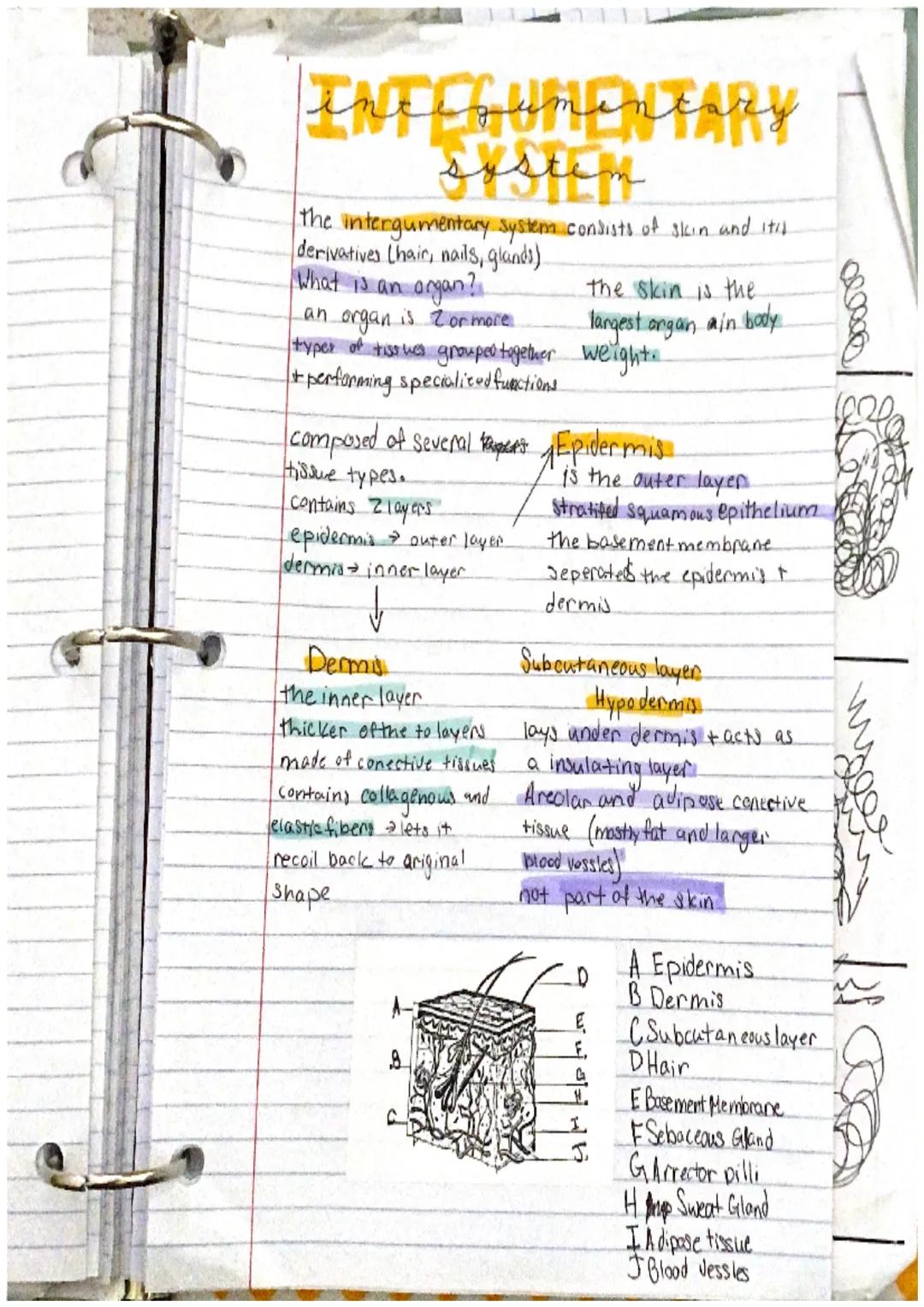
Structure of the Integumentary System
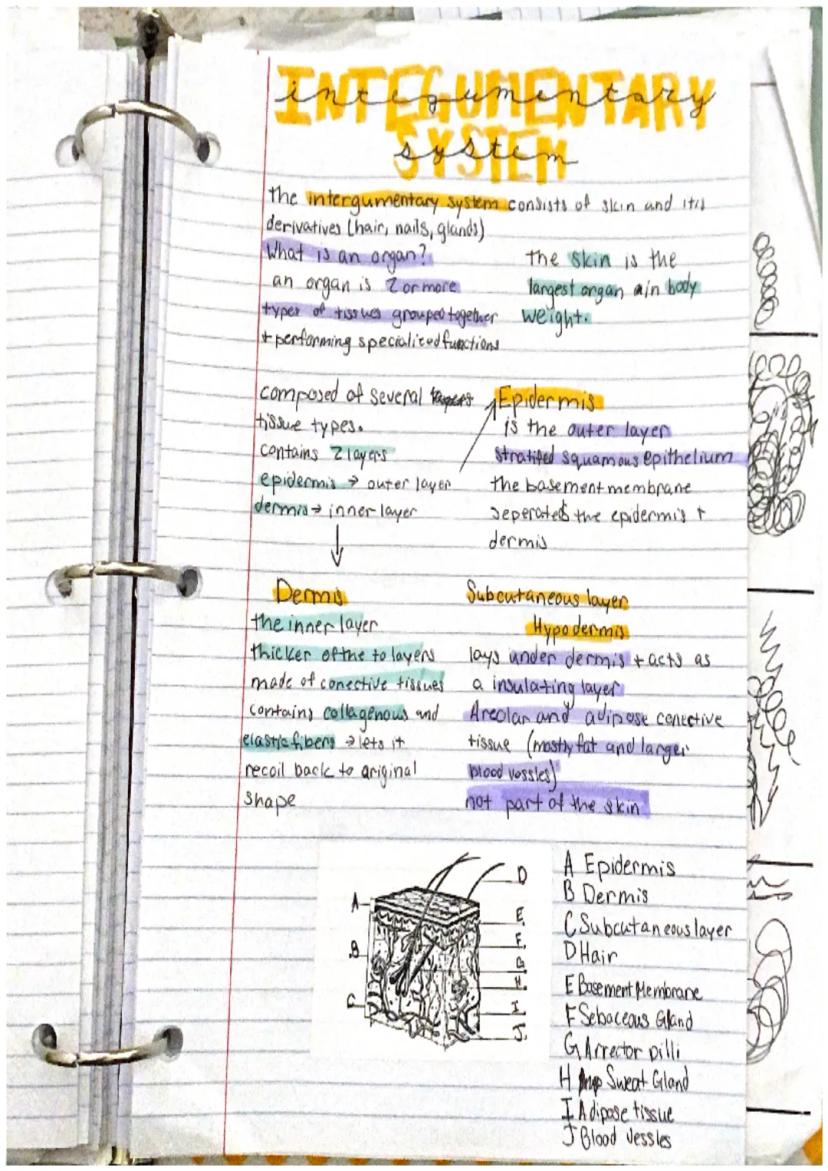
The skin consists of two main layers with distinct functions. The epidermis forms the outer layer, made of stratified squamous epithelium, while the thicker dermis beneath contains connective tissues with collagenous and elastic fibers that allow the skin to stretch and recoil.
Below the dermis lies the subcutaneous layer (hypodermis), which isn't technically part of the skin. This layer consists primarily of adipose tissue that provides insulation and houses larger blood vessels.
The basement membrane creates an important boundary between the epidermis and dermis, controlling what passes between these layers. Various structures populate these layers, including hair follicles, sebaceous glands, sweat glands, and specialized nerve endings.
Did you know? Despite being just a few millimeters thick, your skin accounts for about 15% of your total body weight and contains over 1,000 nerve endings per square inch!
2
of 6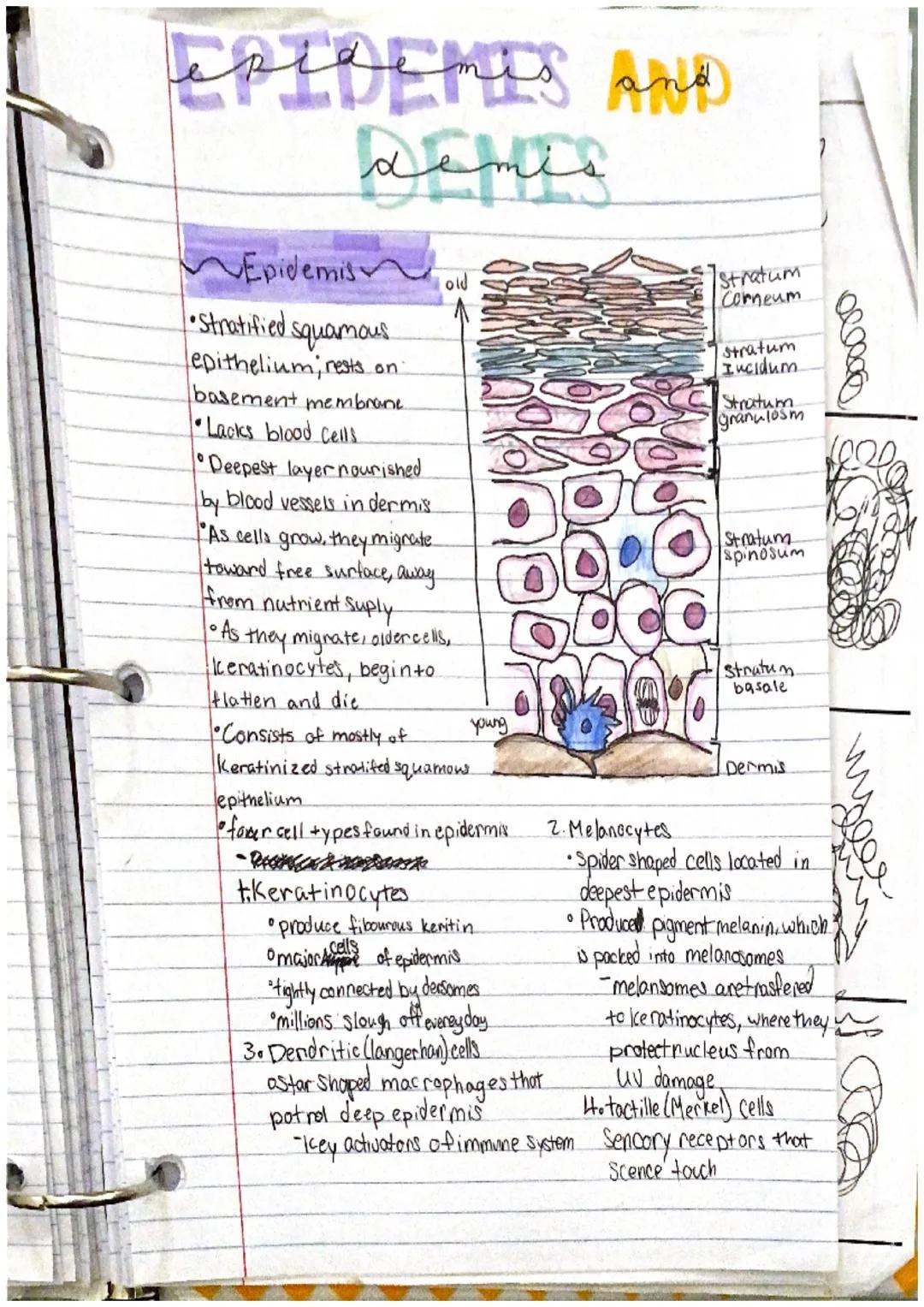
The Epidermis
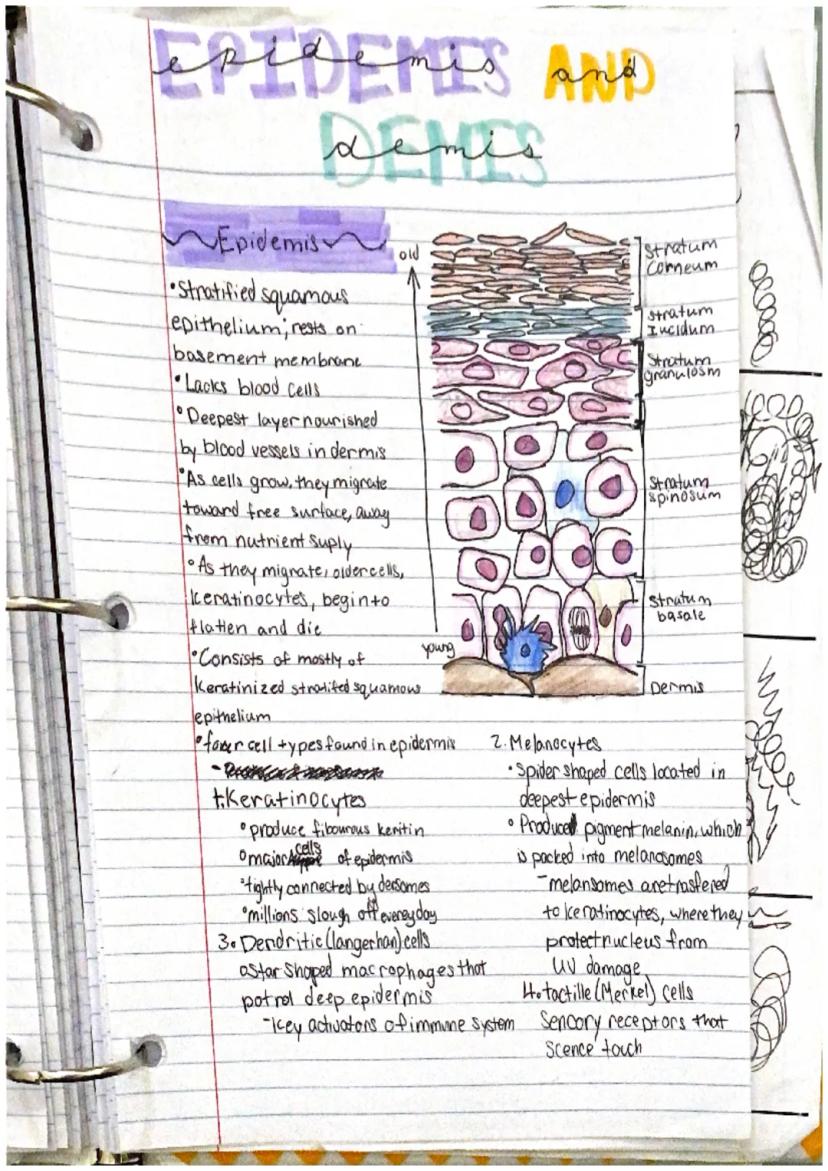
The epidermis consists primarily of keratinocytes that produce fibrous keratin. These cells are tightly connected by desmosomes and continuously migrate upward as they age, with millions sloughing off every day. As they move away from nutrient supplies at the base, they begin to flatten and die.
Four specialized cell types inhabit the epidermis. Melanocytes are spider-shaped cells located in the deepest epidermis that produce the pigment melanin. Melanosomes transfer this pigment to keratinocytes, protecting cell nuclei from UV damage. Dendritic (Langerhans) cells are star-shaped macrophages that patrol the epidermis and activate immune responses. Tactile (Merkel) cells function as sensory receptors that detect touch.
The epidermis lacks blood vessels, so its deepest layers must be nourished by blood vessels in the dermis. This relationship highlights how the skin layers work together despite their structural differences.
Remember: The epidermis is constantly renewing itself! A keratinocyte takes about 27 days to journey from the deepest layer to being shed from the surface.
3
of 6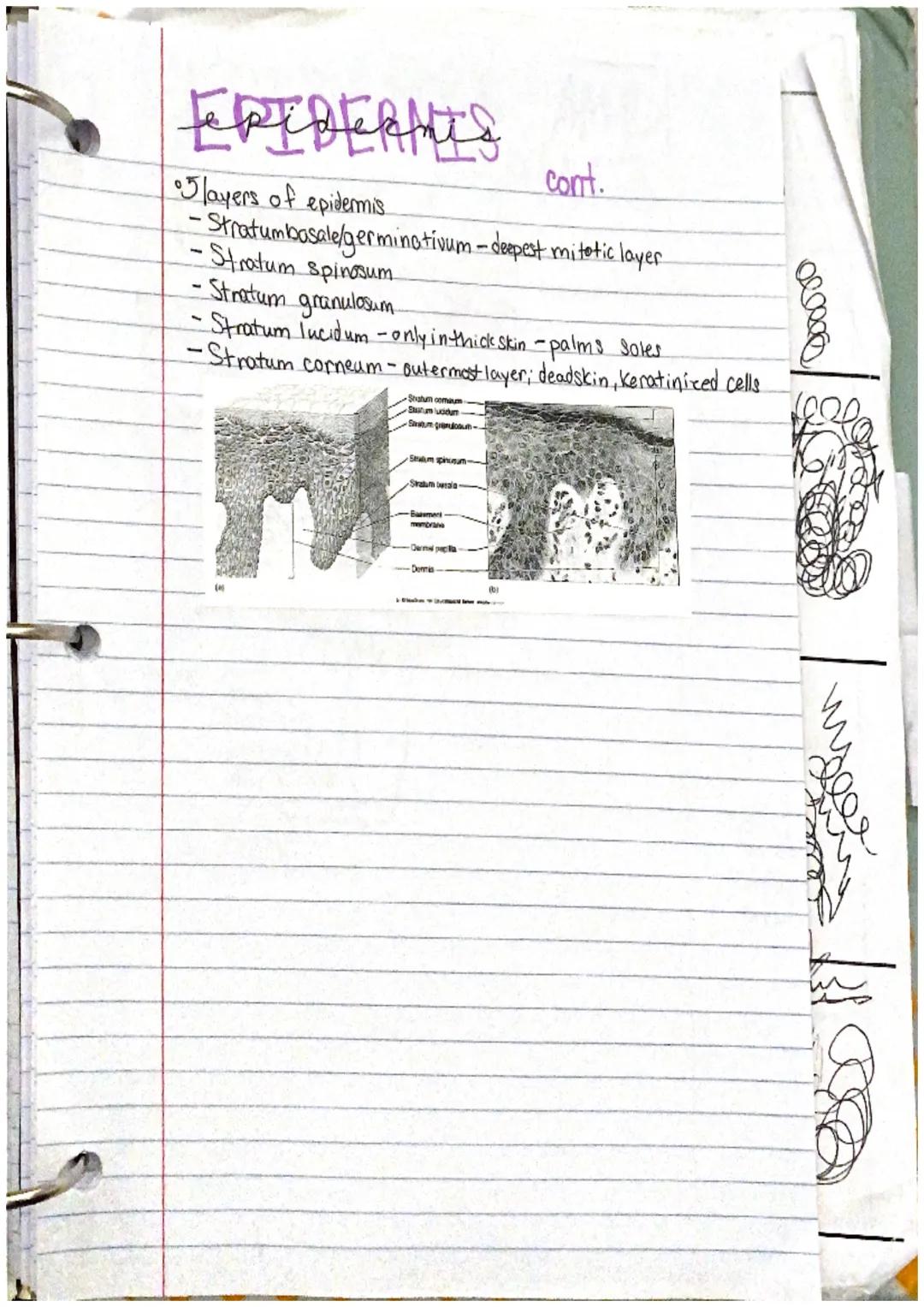
Layers of the Epidermis
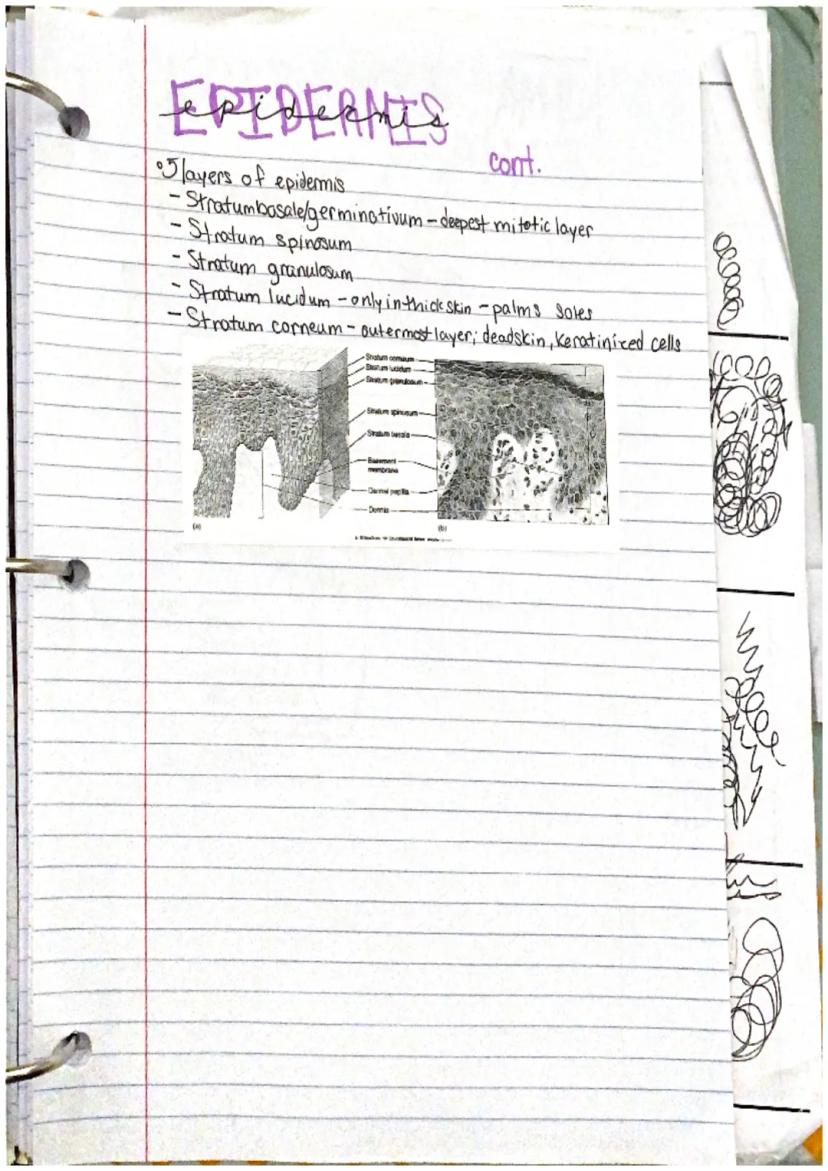
The epidermis consists of multiple distinct layers, each with specific functions. The stratum basale (or germinativum) forms the deepest layer where cell division occurs. This mitotic layer continuously produces new keratinocytes that begin their journey upward.
Moving outward, we find the stratum spinosum, followed by the stratum granulosum where cells begin to die and fill with keratin granules. The stratum lucidum appears only in thick skin areas like palms and soles, providing extra protection where needed.
The outermost layer, the stratum corneum, consists entirely of dead, keratinized cells that form a protective barrier against environmental threats. This layered structure creates a gradual transition from living, dividing cells to the tough protective shield at the surface.
Fascinating fact: The thickness of your epidermis varies dramatically across your body - from just 0.05mm on your eyelids to 1.5mm on the soles of your feet!
4
of 6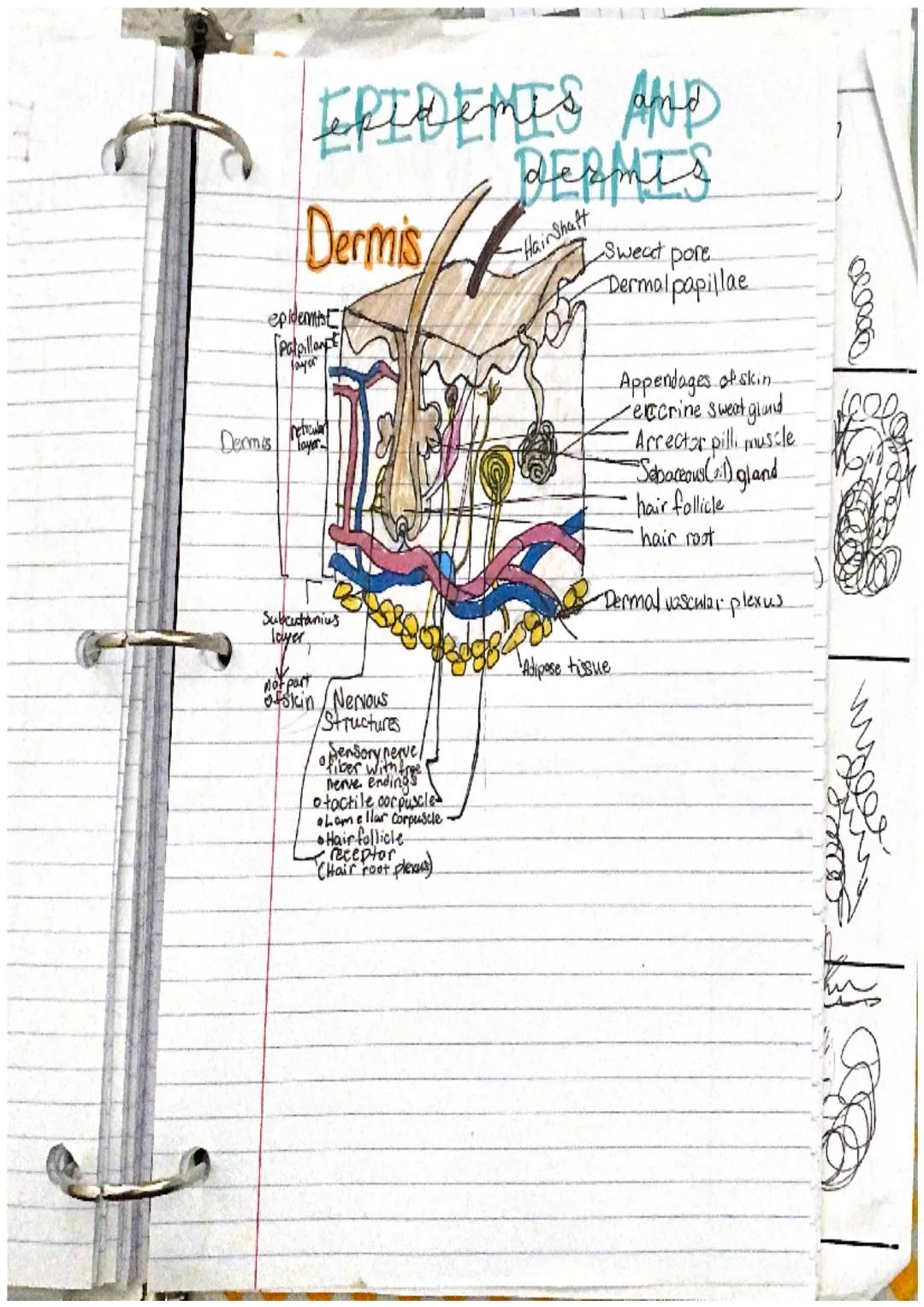
The Dermis and Its Components
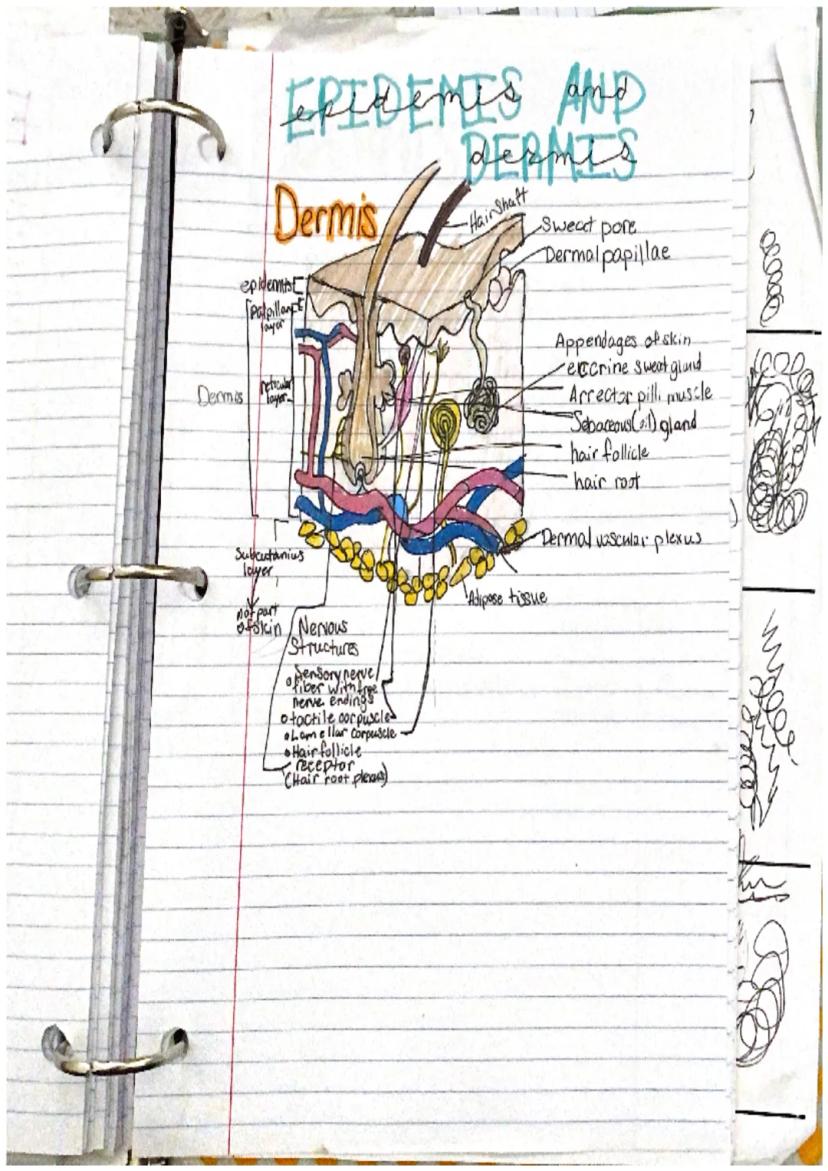
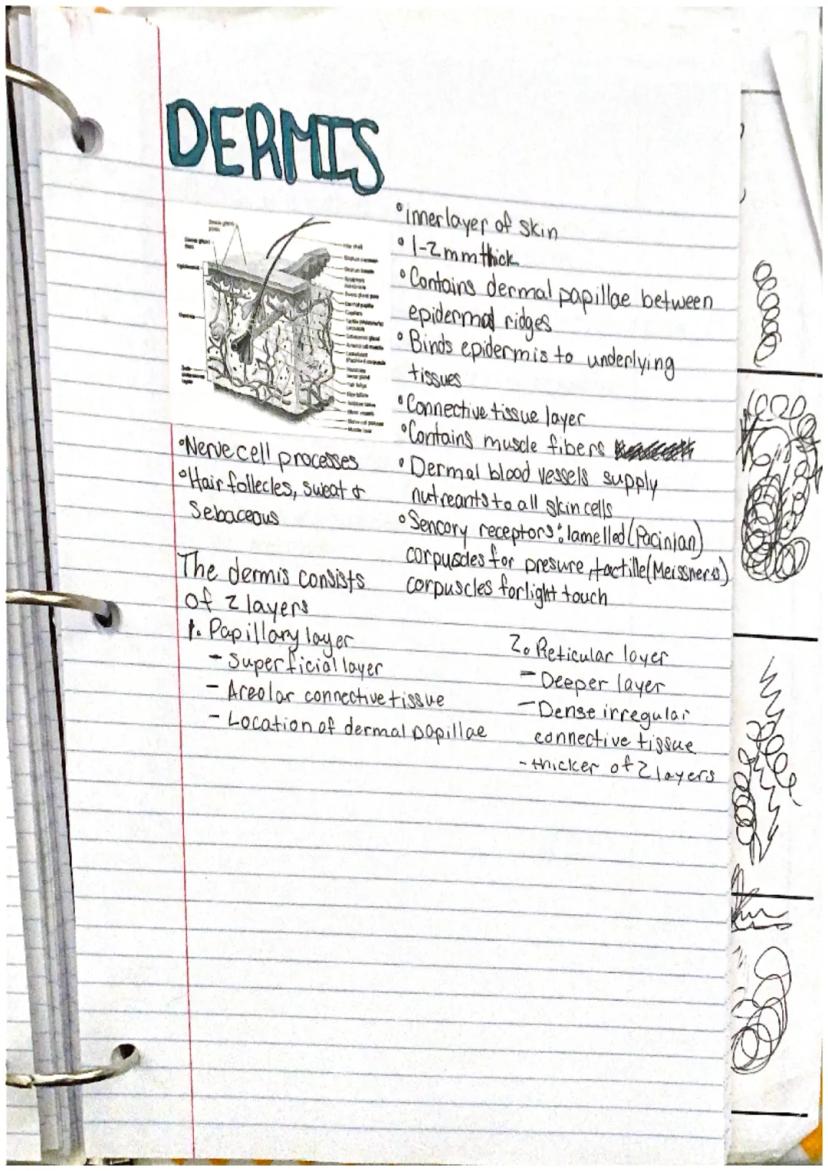
The dermis contains numerous specialized structures that contribute to skin function. Hair follicles anchor hairs to the skin, while attached arrector pili muscles can make hair stand on end when contracted. Sebaceous glands produce oil that waterproofs hair and skin, and sweat glands help regulate body temperature.
Various nervous structures populate the dermis, including sensory nerve fibers with specialized endings. Tactile corpuscles detect light touch, while lamellar corpuscles respond to pressure and vibration. The hair root plexus senses movement of hair shafts.
The dermal vascular plexus provides essential blood supply to all skin structures. This network of blood vessels not only nourishes the skin but also plays a key role in temperature regulation by dilating or constricting to control heat loss.
Think about it: Every time you feel a gentle breeze on your skin or the warmth of the sun, it's these specialized dermis structures sending signals to your brain!
5
of 6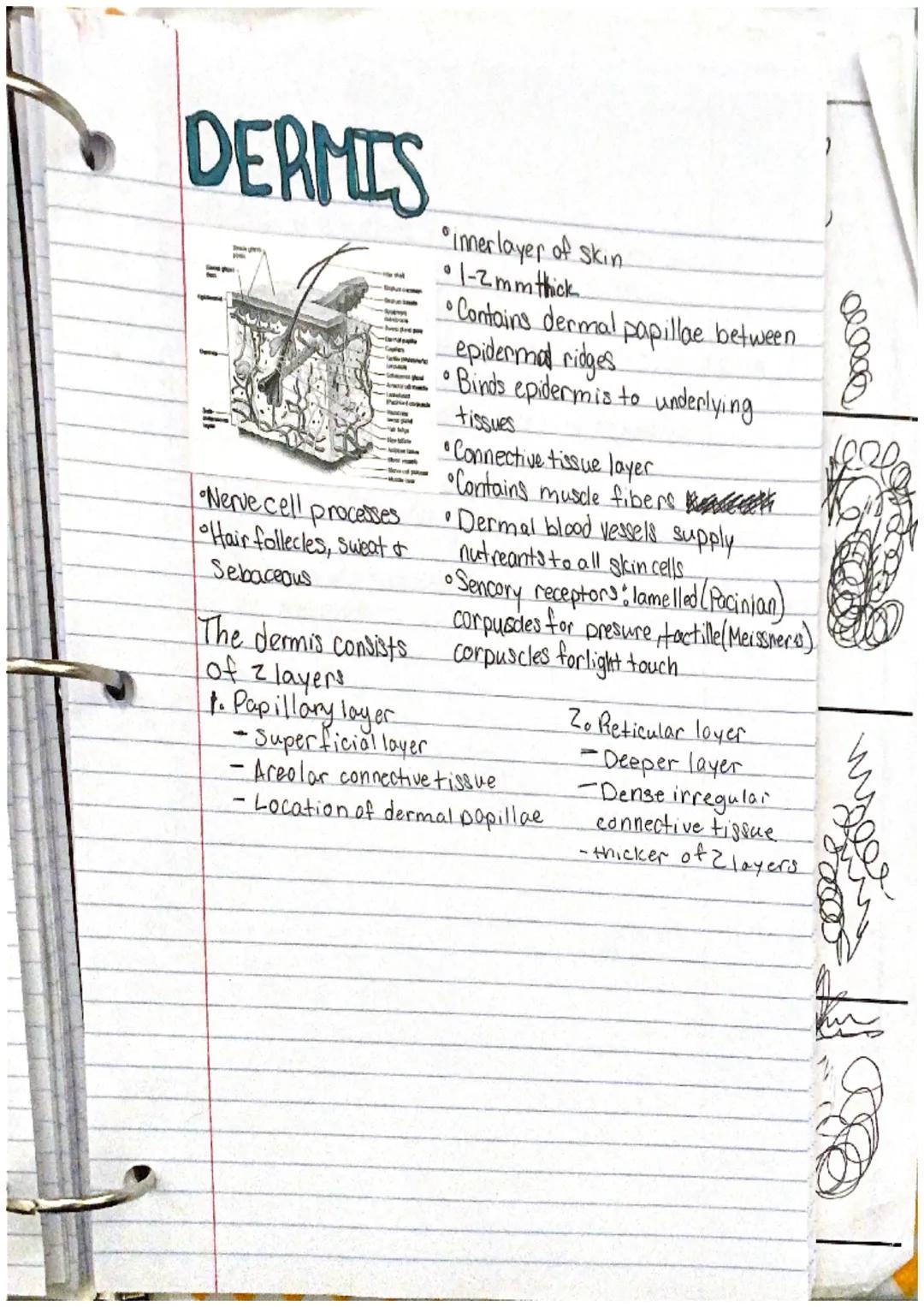
Detailed Dermis Structure
The dermis, measuring 1-2mm thick, serves as the skin's foundation, binding the epidermis to underlying tissues and housing most skin appendages. This connective tissue layer contains muscle fibers, nerve processes, hair follicles, and various glands, making it functionally complex.
Importantly, the dermis contains dermal blood vessels that supply nutrients to all skin cells, including the avascular epidermis above it. Specialized sensory receptors in the dermis include lamellated (Pacinian) corpuscles that detect pressure and tactile (Meissner's) corpuscles that sense light touch.
The dermis consists of two distinct layers with different characteristics. The superficial papillary layer contains areolar connective tissue and forms dermal papillae that interdigitate with epidermal ridges, increasing the surface area between layers. The deeper reticular layer contains dense irregular connective tissue and provides most of the dermis's thickness and strength.
Pro tip: When studying the dermis, think of it as the skin's "engine room" - while the epidermis forms the protective barrier, the dermis handles most of the skin's active functions!
6
of 6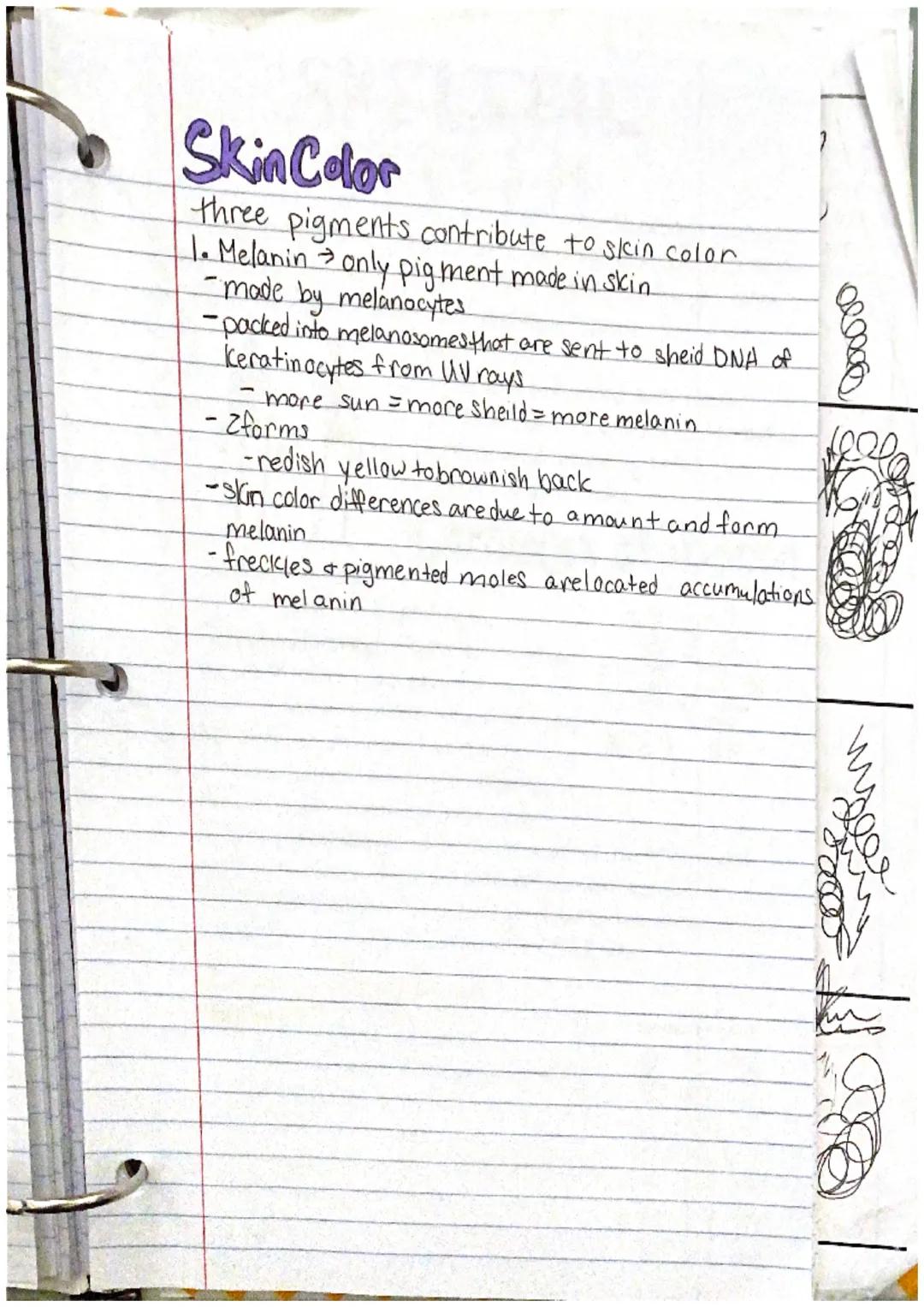
Skin Color and Pigmentation
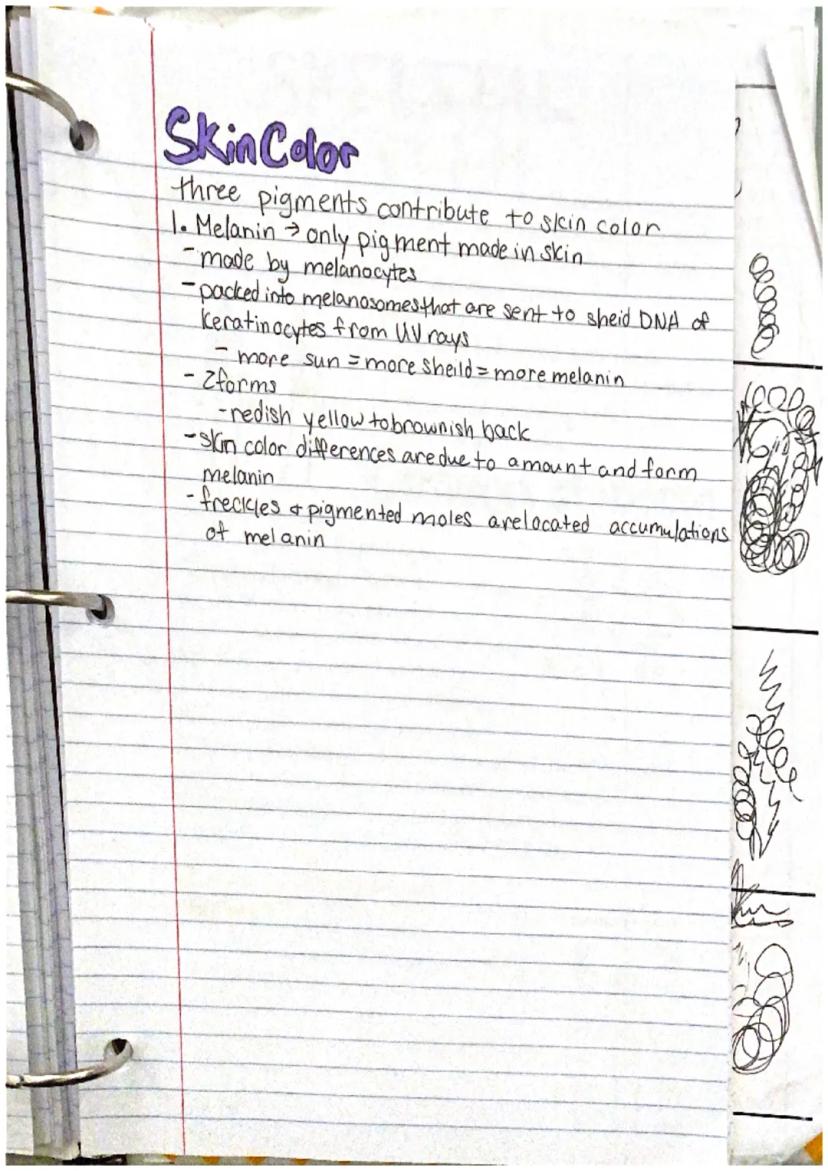
Skin color results from three different pigments, but melanin is the only pigment actually produced within the skin. Specialized cells called melanocytes manufacture melanin and package it into melanosomes that are transferred to keratinocytes, where they shield DNA from damaging UV radiation.
Melanin exists in two main forms ranging from reddish-yellow to brownish-black. The differences in skin color among individuals primarily result from variations in the amount and type of melanin rather than the number of melanocytes, which remains relatively constant across all skin tones.
Sun exposure triggers increased melanin production as a protective mechanism, resulting in tanning. Localized accumulations of melanin appear as freckles or pigmented moles on the skin's surface, representing areas of concentrated pigmentation.
Consider this: Melanin is your body's natural sunscreen! When you tan, your skin is actually trying to protect you by creating a shield against harmful UV radiation.
We thought you’d never ask...
What is the Knowunity AI companion?
Our AI companion is specifically built for the needs of students. Based on the millions of content pieces we have on the platform we can provide truly meaningful and relevant answers to students. But its not only about answers, the companion is even more about guiding students through their daily learning challenges, with personalised study plans, quizzes or content pieces in the chat and 100% personalisation based on the students skills and developments.
Where can I download the Knowunity app?
You can download the app in the Google Play Store and in the Apple App Store.
Is Knowunity really free of charge?
That's right! Enjoy free access to study content, connect with fellow students, and get instant help – all at your fingertips.
Similar Content
Most popular content: Integumentary System
6 Biology
Integumentary System
This article provides an overview of the different layers of the skin and their functions, including protection, temperature regulation, and sensory reception.
College572
BiologyThe Integumentary System
Notes on the integumentary system (includes the skin, sweat glands, oil glands, hair, nails) for anatomy and physiology classes.
10th1057
AP BiologyBody Systems Notes for AP Bio
Notes of the Human Organ Systems with diagrams, functions, main organs, and explanations. Includes 10 human organ systems
50521
Health & MedicineAnatomy and Physiology Notes
The integumentary system notes
1082
Health & MedicineIntegumentary Organs Functions
Description of the structure and function of the organs in the integumentary system
9th1573
BiologyANATOMY Unit 2: Integumentary System(Skin)
CONTAINS: skin layers (epidermis, dermis, hypodermis) with in depth descriptions, melanin, melanocytes, keratin. ADDITIONAL: diseases, harmful factors, effects of tattoos, accessory organs of the skin & diagram
10th25446
Most popular content in Health & Medicine
9M
Health & MedicineMedical Terminology Quiz
key concepts in med terminology
11th2030
Health & MedicineMark Klimek Nclex Review
Comphrensive Nclex Review
College781
 Fun Stuff
Anatomy and Physiology Chapter 1
Chpater 1 : The orientation of the body / College Level Anatomy and Physiology
84538
Health & MedicineHow to give CPR
How to give CPR
956
Health & MedicinePharmacology - Descriptions and Terms
Medical Terminology - Learn about descriptions of things related to pharmacology and additional terms about medications.
College1087
Health & MedicineCOVID-19 Informational Slideshow
COVID-19 slideshow about the disease.
1012
Health & MedicineMale Reproductive System
Health PDF
9th441
Health & MedicineMental & Emotional Problems Anxiety & Depression
PDF Health
9th692
Health & MedicineNHA module 1 study guide
Nia module I study guide
11th1532
Most popular content
9O
 AP US History
Origins and Dynamics of the Columbian Exchange
Analyze the ecological and economic motivations behind the initial transfer of goods, people, and diseases between the Old and New Worlds.
9th3,1280
I
AP US HistoryIntroduction to Early Cultural Interactions
Analyze the initial social and religious encounters between Europeans, Africans, and Indigenous peoples in the colonial Americas.
9th2,7730
O
 AP World History
Origins of Ancient River Civilizations
Analyze the environmental factors and technological innovations that led to the rise of early states in Mesopotamia, Egypt, and the Indus Valley.
9th3,1870
M
AP US HistoryMotivations for European Exploration
Analyze the economic, religious, and political factors that drove European powers to the Americas during the 15th and 16th centuries.
9th1,7780
F
 AP Psychology
Foundations of Ethical Guidelines in Research
Practice the core principles of the APA ethical code including informed consent, debriefing, and the role of Institutional Review Boards.
9th1,3360
I
AP US HistoryIntroduction to Native American Societies
Examine the diverse social, political, and economic structures of North American indigenous groups prior to European contact.
9th1,1100
I
AP BiologyIntroduction to Biological Elements of Life
Practice identifying the essential elements including carbon, nitrogen, phosphorus, and sulfur that compose biological macromolecules.
9th1,7390
I
AP US HistoryIntroduction to the Spanish Encomienda System
Explore the fundamental economic and social structures of the Spanish colonial system, focusing on the encomienda and the casta social hierarchy.
9th8890
O
AP World HistoryOrigins and Continuity of the Byzantine Empire
Analyze the political and cultural transitions from the Roman Empire to the Byzantine Empire, focusing on the reign of Justinian I and his code.
9th1,6320
Can't find what you're looking for? Explore other subjects.
Students love us — and so will you.
4.6/5App Store
4.7/5Google Play
The app is very easy to use and well designed. I have found everything I was looking for so far and have been able to learn a lot from the presentations! I will definitely use the app for a class assignment! And of course it also helps a lot as an inspiration.
Stefan SiOS user
This app is really great. There are so many study notes and help [...]. My problem subject is French, for example, and the app has so many options for help. Thanks to this app, I have improved my French. I would recommend it to anyone.
Samantha KlichAndroid user
Wow, I am really amazed. I just tried the app because I've seen it advertised many times and was absolutely stunned. This app is THE HELP you want for school and above all, it offers so many things, such as workouts and fact sheets, which have been VERY helpful to me personally.
AnnaiOS user
Health & Medicine142 views·Updated Jun 9, 2026·6 pagesDetailed Integumentary System Study Notes
M
Mikenzy Davis@mikenzydavis_uvfl
The integumentary system is your body's protective outer layer, comprising the skin and its derivatives like hair, nails, and glands. As the largest organ by weight, the skin plays crucial roles in protection, sensation, and temperature regulation. Understanding its structure...
1
of 6
Sign up to see the content. It's free!
- Access to all documents
- Improve your grades
- Join milions of students
Structure of the Integumentary System
The skin consists of two main layers with distinct functions. The epidermis forms the outer layer, made of stratified squamous epithelium, while the thicker dermis beneath contains connective tissues with collagenous and elastic fibers that allow the skin to stretch and recoil.
Below the dermis lies the subcutaneous layer (hypodermis), which isn't technically part of the skin. This layer consists primarily of adipose tissue that provides insulation and houses larger blood vessels.
The basement membrane creates an important boundary between the epidermis and dermis, controlling what passes between these layers. Various structures populate these layers, including hair follicles, sebaceous glands, sweat glands, and specialized nerve endings.
Did you know? Despite being just a few millimeters thick, your skin accounts for about 15% of your total body weight and contains over 1,000 nerve endings per square inch!
2
of 6Sign up to see the content. It's free!
- Access to all documents
- Improve your grades
- Join milions of students
The Epidermis
The epidermis consists primarily of keratinocytes that produce fibrous keratin. These cells are tightly connected by desmosomes and continuously migrate upward as they age, with millions sloughing off every day. As they move away from nutrient supplies at the base, they begin to flatten and die.
Four specialized cell types inhabit the epidermis. Melanocytes are spider-shaped cells located in the deepest epidermis that produce the pigment melanin. Melanosomes transfer this pigment to keratinocytes, protecting cell nuclei from UV damage. Dendritic (Langerhans) cells are star-shaped macrophages that patrol the epidermis and activate immune responses. Tactile (Merkel) cells function as sensory receptors that detect touch.
The epidermis lacks blood vessels, so its deepest layers must be nourished by blood vessels in the dermis. This relationship highlights how the skin layers work together despite their structural differences.
Remember: The epidermis is constantly renewing itself! A keratinocyte takes about 27 days to journey from the deepest layer to being shed from the surface.
3
of 6Sign up to see the content. It's free!
- Access to all documents
- Improve your grades
- Join milions of students
Layers of the Epidermis
The epidermis consists of multiple distinct layers, each with specific functions. The stratum basale (or germinativum) forms the deepest layer where cell division occurs. This mitotic layer continuously produces new keratinocytes that begin their journey upward.
Moving outward, we find the stratum spinosum, followed by the stratum granulosum where cells begin to die and fill with keratin granules. The stratum lucidum appears only in thick skin areas like palms and soles, providing extra protection where needed.
The outermost layer, the stratum corneum, consists entirely of dead, keratinized cells that form a protective barrier against environmental threats. This layered structure creates a gradual transition from living, dividing cells to the tough protective shield at the surface.
Fascinating fact: The thickness of your epidermis varies dramatically across your body - from just 0.05mm on your eyelids to 1.5mm on the soles of your feet!
4
of 6Sign up to see the content. It's free!
- Access to all documents
- Improve your grades
- Join milions of students
The Dermis and Its Components
The dermis contains numerous specialized structures that contribute to skin function. Hair follicles anchor hairs to the skin, while attached arrector pili muscles can make hair stand on end when contracted. Sebaceous glands produce oil that waterproofs hair and skin, and sweat glands help regulate body temperature.
Various nervous structures populate the dermis, including sensory nerve fibers with specialized endings. Tactile corpuscles detect light touch, while lamellar corpuscles respond to pressure and vibration. The hair root plexus senses movement of hair shafts.
The dermal vascular plexus provides essential blood supply to all skin structures. This network of blood vessels not only nourishes the skin but also plays a key role in temperature regulation by dilating or constricting to control heat loss.
Think about it: Every time you feel a gentle breeze on your skin or the warmth of the sun, it's these specialized dermis structures sending signals to your brain!
5
of 6Sign up to see the content. It's free!
- Access to all documents
- Improve your grades
- Join milions of students
Detailed Dermis Structure
The dermis, measuring 1-2mm thick, serves as the skin's foundation, binding the epidermis to underlying tissues and housing most skin appendages. This connective tissue layer contains muscle fibers, nerve processes, hair follicles, and various glands, making it functionally complex.
Importantly, the dermis contains dermal blood vessels that supply nutrients to all skin cells, including the avascular epidermis above it. Specialized sensory receptors in the dermis include lamellated (Pacinian) corpuscles that detect pressure and tactile (Meissner's) corpuscles that sense light touch.
The dermis consists of two distinct layers with different characteristics. The superficial papillary layer contains areolar connective tissue and forms dermal papillae that interdigitate with epidermal ridges, increasing the surface area between layers. The deeper reticular layer contains dense irregular connective tissue and provides most of the dermis's thickness and strength.
Pro tip: When studying the dermis, think of it as the skin's "engine room" - while the epidermis forms the protective barrier, the dermis handles most of the skin's active functions!
6
of 6Sign up to see the content. It's free!
- Access to all documents
- Improve your grades
- Join milions of students
Skin Color and Pigmentation
Skin color results from three different pigments, but melanin is the only pigment actually produced within the skin. Specialized cells called melanocytes manufacture melanin and package it into melanosomes that are transferred to keratinocytes, where they shield DNA from damaging UV radiation.
Melanin exists in two main forms ranging from reddish-yellow to brownish-black. The differences in skin color among individuals primarily result from variations in the amount and type of melanin rather than the number of melanocytes, which remains relatively constant across all skin tones.
Sun exposure triggers increased melanin production as a protective mechanism, resulting in tanning. Localized accumulations of melanin appear as freckles or pigmented moles on the skin's surface, representing areas of concentrated pigmentation.
Consider this: Melanin is your body's natural sunscreen! When you tan, your skin is actually trying to protect you by creating a shield against harmful UV radiation.
We thought you’d never ask...
What is the Knowunity AI companion?
Our AI companion is specifically built for the needs of students. Based on the millions of content pieces we have on the platform we can provide truly meaningful and relevant answers to students. But its not only about answers, the companion is even more about guiding students through their daily learning challenges, with personalised study plans, quizzes or content pieces in the chat and 100% personalisation based on the students skills and developments.
Where can I download the Knowunity app?
You can download the app in the Google Play Store and in the Apple App Store.
Is Knowunity really free of charge?
That's right! Enjoy free access to study content, connect with fellow students, and get instant help – all at your fingertips.
Similar Content
Most popular content: Integumentary System
6BiologyIntegumentary System
This article provides an overview of the different layers of the skin and their functions, including protection, temperature regulation, and sensory reception.
College572
BiologyThe Integumentary System
Notes on the integumentary system (includes the skin, sweat glands, oil glands, hair, nails) for anatomy and physiology classes.
10th1057
AP BiologyBody Systems Notes for AP Bio
Notes of the Human Organ Systems with diagrams, functions, main organs, and explanations. Includes 10 human organ systems
50521
Health & MedicineAnatomy and Physiology Notes
The integumentary system notes
1082
Health & MedicineIntegumentary Organs Functions
Description of the structure and function of the organs in the integumentary system
9th1573
BiologyANATOMY Unit 2: Integumentary System(Skin)
CONTAINS: skin layers (epidermis, dermis, hypodermis) with in depth descriptions, melanin, melanocytes, keratin. ADDITIONAL: diseases, harmful factors, effects of tattoos, accessory organs of the skin & diagram
10th25446
Most popular content in Health & Medicine
9M
Health & MedicineMedical Terminology Quiz
key concepts in med terminology
11th2030
Health & MedicineMark Klimek Nclex Review
Comphrensive Nclex Review
College781
Fun StuffAnatomy and Physiology Chapter 1
Chpater 1 : The orientation of the body / College Level Anatomy and Physiology
84538
Health & MedicineHow to give CPR
How to give CPR
956
Health & MedicinePharmacology - Descriptions and Terms
Medical Terminology - Learn about descriptions of things related to pharmacology and additional terms about medications.
College1087
Health & MedicineCOVID-19 Informational Slideshow
COVID-19 slideshow about the disease.
1012
Health & MedicineMale Reproductive System
Health PDF
9th441
Health & MedicineMental & Emotional Problems Anxiety & Depression
PDF Health
9th692
Health & MedicineNHA module 1 study guide
Nia module I study guide
11th1532
Most popular content
9O
AP US HistoryOrigins and Dynamics of the Columbian Exchange
Analyze the ecological and economic motivations behind the initial transfer of goods, people, and diseases between the Old and New Worlds.
9th3,1280
I
AP US HistoryIntroduction to Early Cultural Interactions
Analyze the initial social and religious encounters between Europeans, Africans, and Indigenous peoples in the colonial Americas.
9th2,7730
O
AP World HistoryOrigins of Ancient River Civilizations
Analyze the environmental factors and technological innovations that led to the rise of early states in Mesopotamia, Egypt, and the Indus Valley.
9th3,1870
M
AP US HistoryMotivations for European Exploration
Analyze the economic, religious, and political factors that drove European powers to the Americas during the 15th and 16th centuries.
9th1,7780
F
AP PsychologyFoundations of Ethical Guidelines in Research
Practice the core principles of the APA ethical code including informed consent, debriefing, and the role of Institutional Review Boards.
9th1,3360
I
AP US HistoryIntroduction to Native American Societies
Examine the diverse social, political, and economic structures of North American indigenous groups prior to European contact.
9th1,1100
I
AP BiologyIntroduction to Biological Elements of Life
Practice identifying the essential elements including carbon, nitrogen, phosphorus, and sulfur that compose biological macromolecules.
9th1,7390
I
AP US HistoryIntroduction to the Spanish Encomienda System
Explore the fundamental economic and social structures of the Spanish colonial system, focusing on the encomienda and the casta social hierarchy.
9th8890
O
AP World HistoryOrigins and Continuity of the Byzantine Empire
Analyze the political and cultural transitions from the Roman Empire to the Byzantine Empire, focusing on the reign of Justinian I and his code.
9th1,6320
Can't find what you're looking for? Explore other subjects.
Students love us — and so will you.
4.6/5App Store
4.7/5Google Play
The app is very easy to use and well designed. I have found everything I was looking for so far and have been able to learn a lot from the presentations! I will definitely use the app for a class assignment! And of course it also helps a lot as an inspiration.
Stefan SiOS user
This app is really great. There are so many study notes and help [...]. My problem subject is French, for example, and the app has so many options for help. Thanks to this app, I have improved my French. I would recommend it to anyone.
Samantha KlichAndroid user
Wow, I am really amazed. I just tried the app because I've seen it advertised many times and was absolutely stunned. This app is THE HELP you want for school and above all, it offers so many things, such as workouts and fact sheets, which have been VERY helpful to me personally.
AnnaiOS user