
Understanding inheritance, variation and evolution is crucial for success in ...
 Biology4,171 views·Updated Jun 14, 2026·16 pages
Awesome GCSE Biology Study Guide: Inheritance, Variation, and Evolution

Zainab@zainab_02839
1 / 10
1
of 10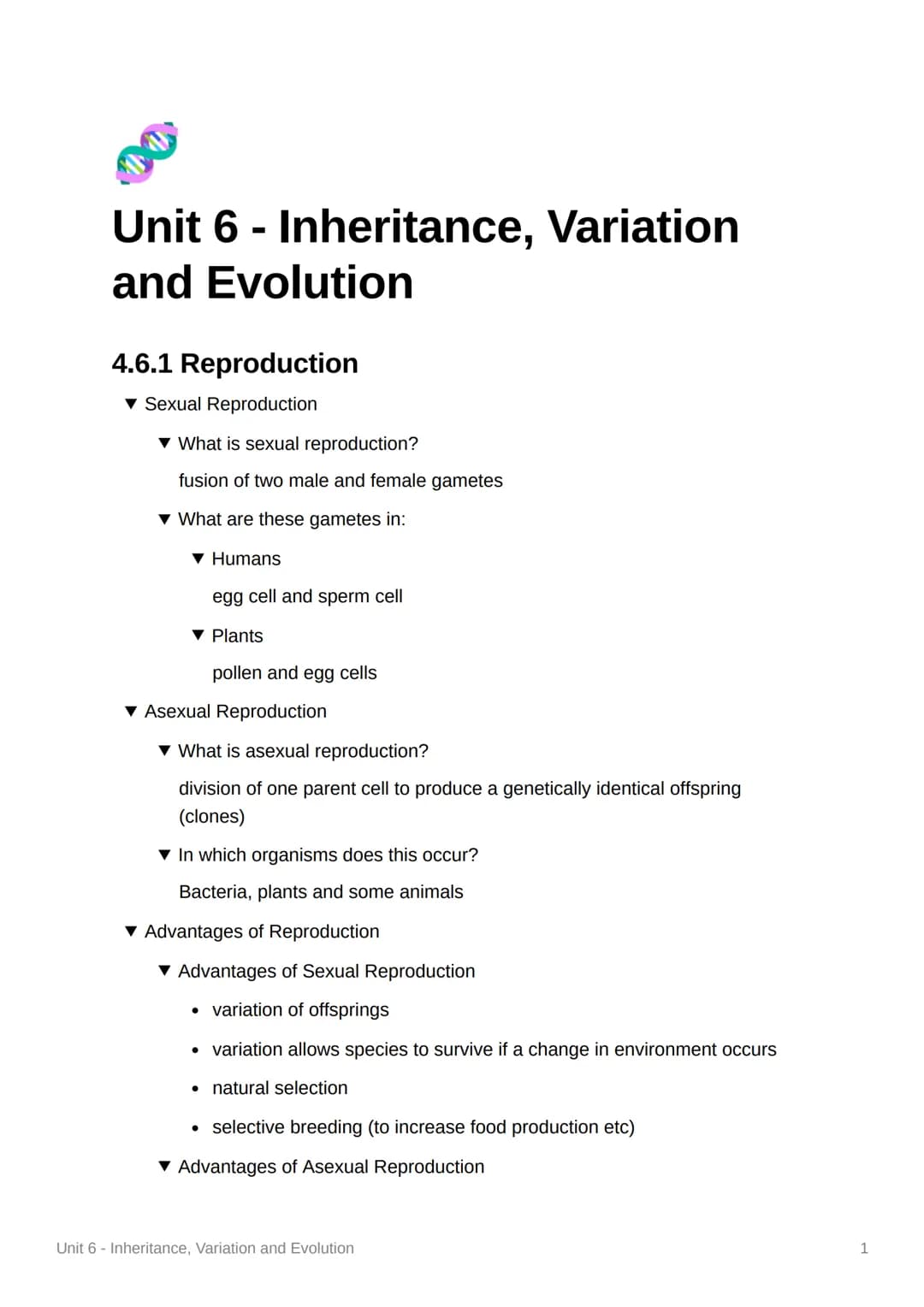
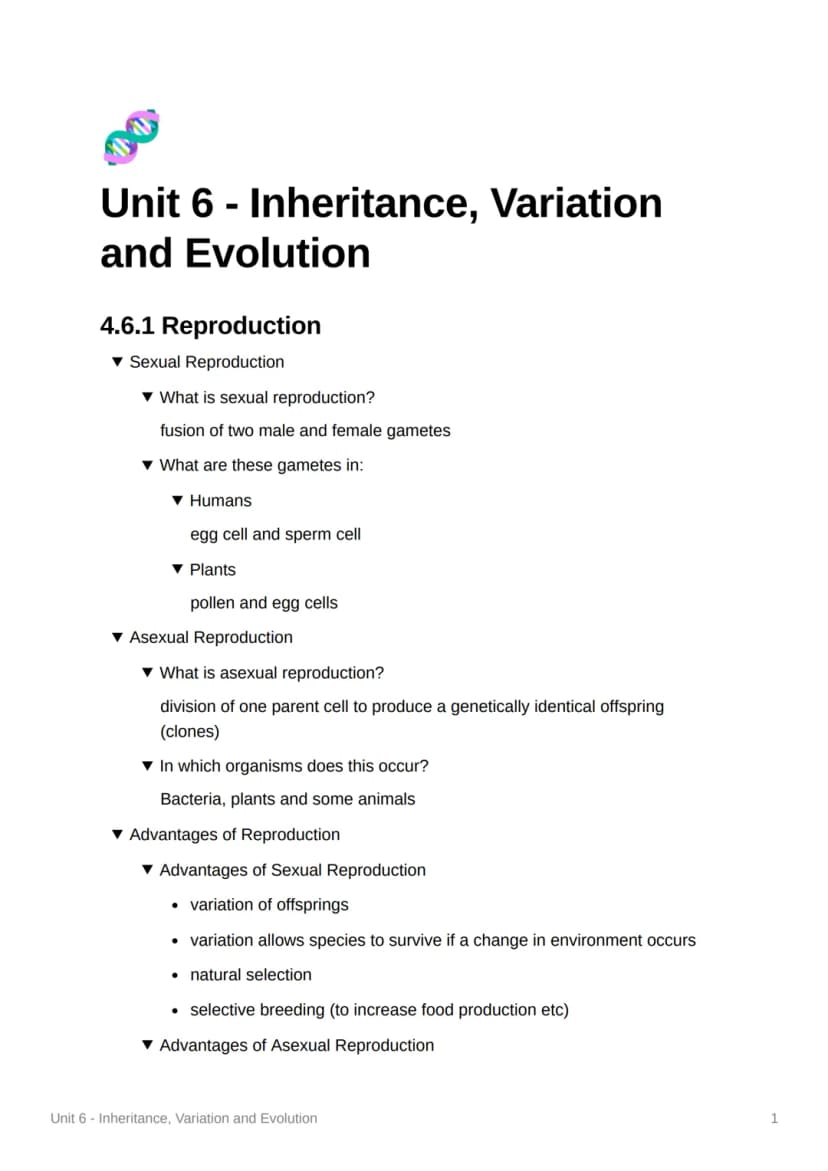
Understanding Sexual and Asexual Reproduction in Biology
Inheritance, variation and evolution GCSE Biology fundamentals begin with understanding reproduction methods. Sexual reproduction involves the fusion of male and female gametes, creating genetic diversity essential for species survival. In humans, this occurs through the joining of sperm and egg cells, while plants utilize pollen and egg cells for reproduction.
The process of sexual reproduction contributes significantly to variation in evolution, as offspring inherit different combinations of genes from both parents. This genetic diversity proves crucial for species adaptation and survival when environmental conditions change, supporting natural selection processes.
Definition: Sexual reproduction is the fusion of male and female gametes to produce offspring with genetic material from both parents, resulting in variation within species.
Asexual reproduction presents a contrasting method where a single parent produces genetically identical offspring (clones). This process occurs in bacteria, some plants, and certain animals. Understanding the advantages of sexual and asexual reproduction GCSE content reveals how different organisms optimize their survival strategies.
2
of 10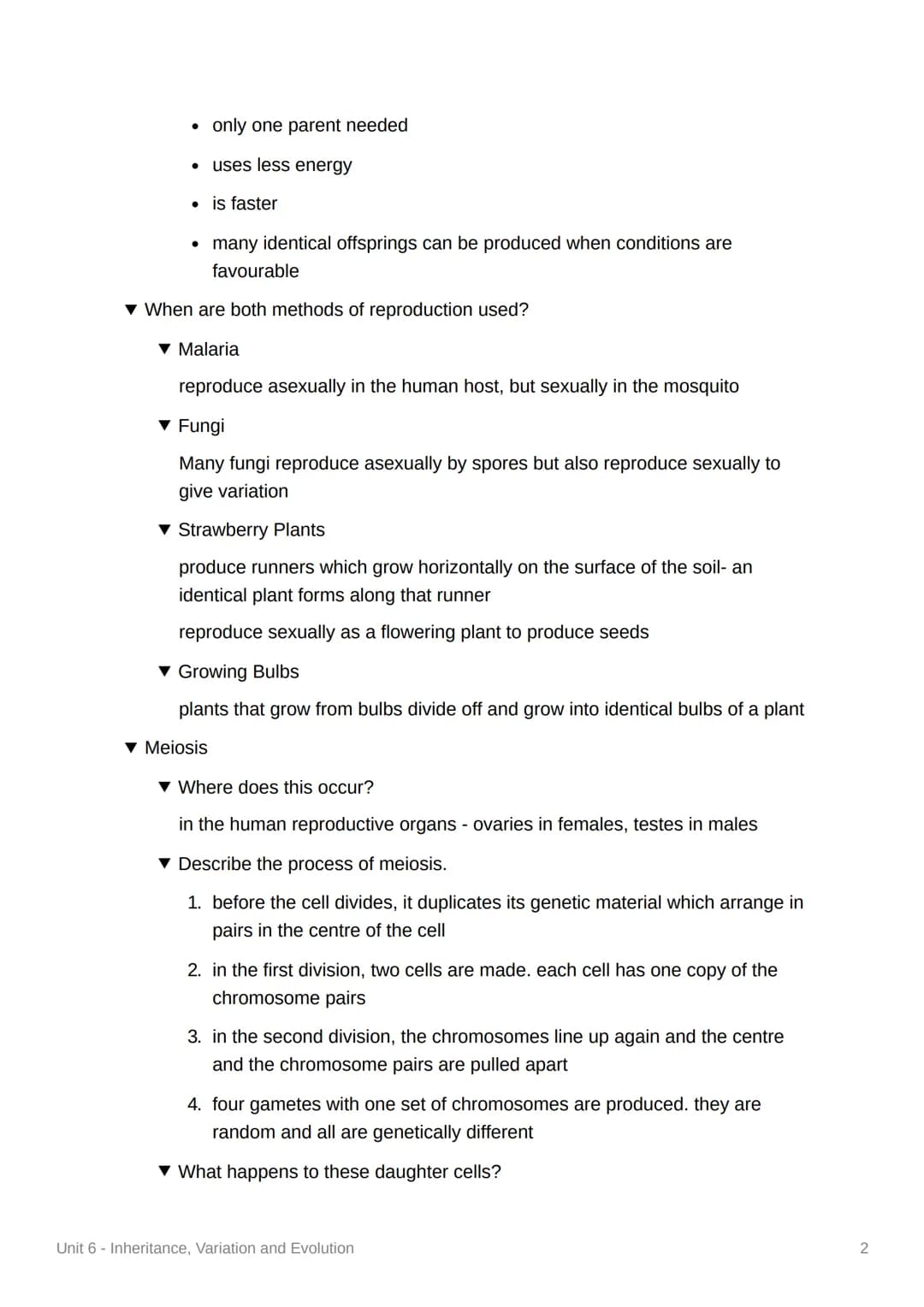
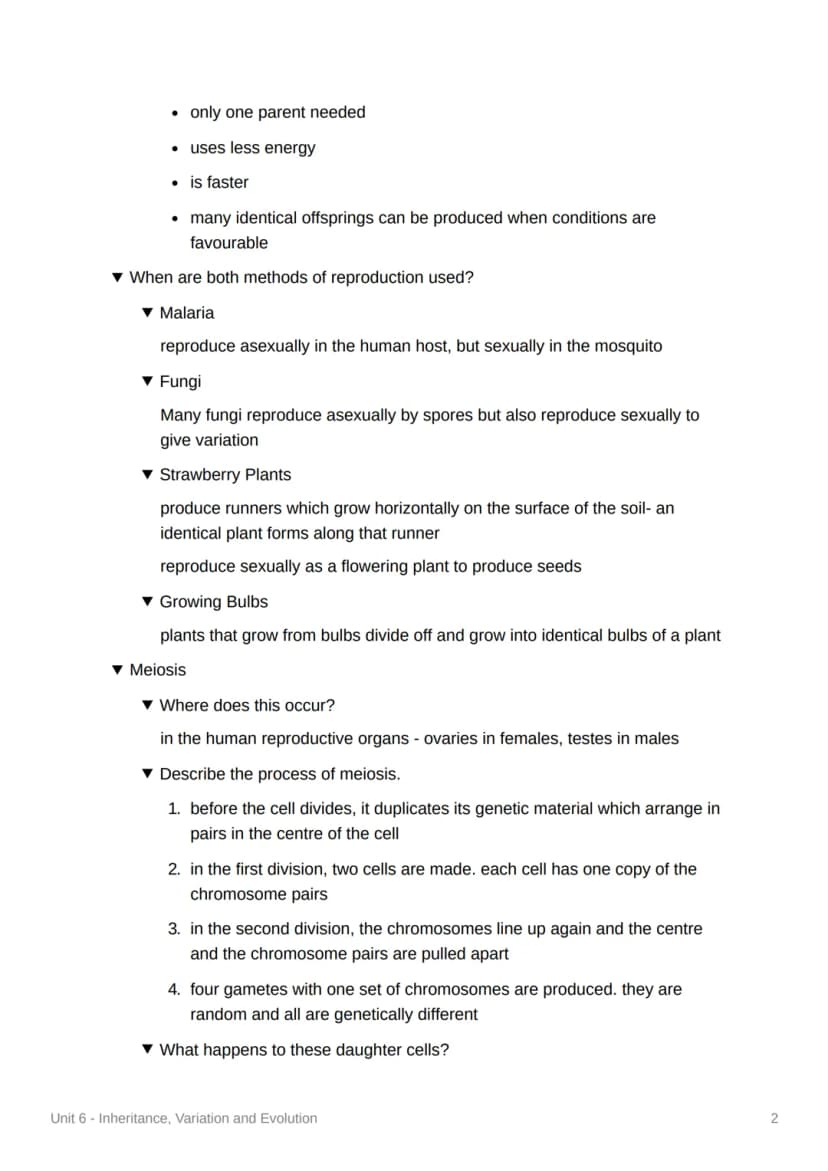
Reproductive Advantages and Specialized Cases
The advantages and disadvantages of sexual reproduction include increased genetic variation, which enhances species survival during environmental changes. This variation also enables selective breeding for desired traits, particularly important in agriculture and animal husbandry.
Highlight: Asexual reproduction requires less energy and produces numerous identical offspring quickly when conditions are favorable.
Some organisms utilize both reproductive methods depending on circumstances. For example, malaria parasites reproduce asexually within human hosts but sexually in mosquitoes. Similarly, fungi can reproduce through both asexual spores and sexual methods, maximizing their survival chances.
Plants like strawberries demonstrate both methods, producing runners for asexual reproduction while also flowering to create seeds through sexual reproduction. This dual approach showcases the evolutionary advantages of maintaining both reproductive capabilities.
3
of 10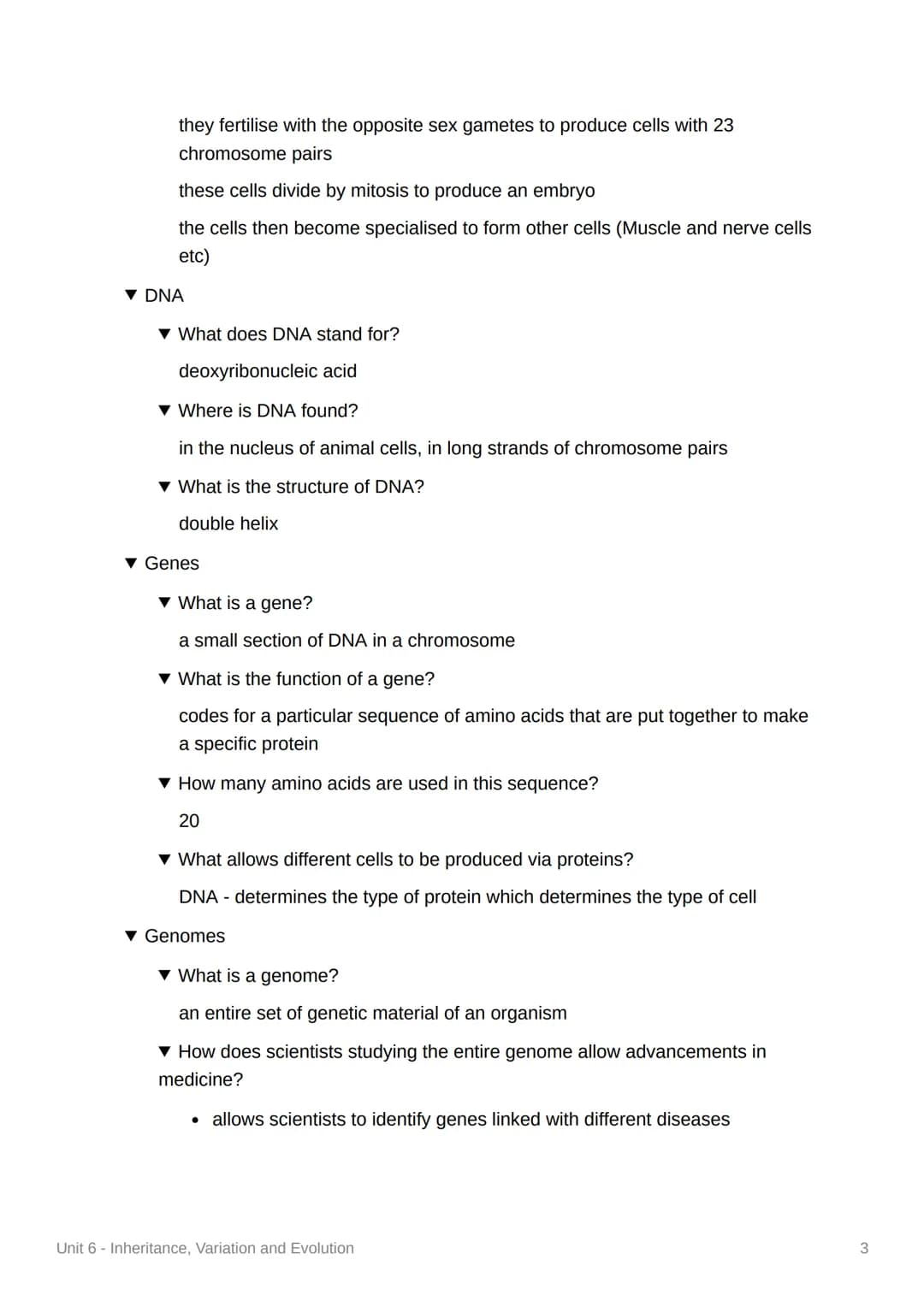
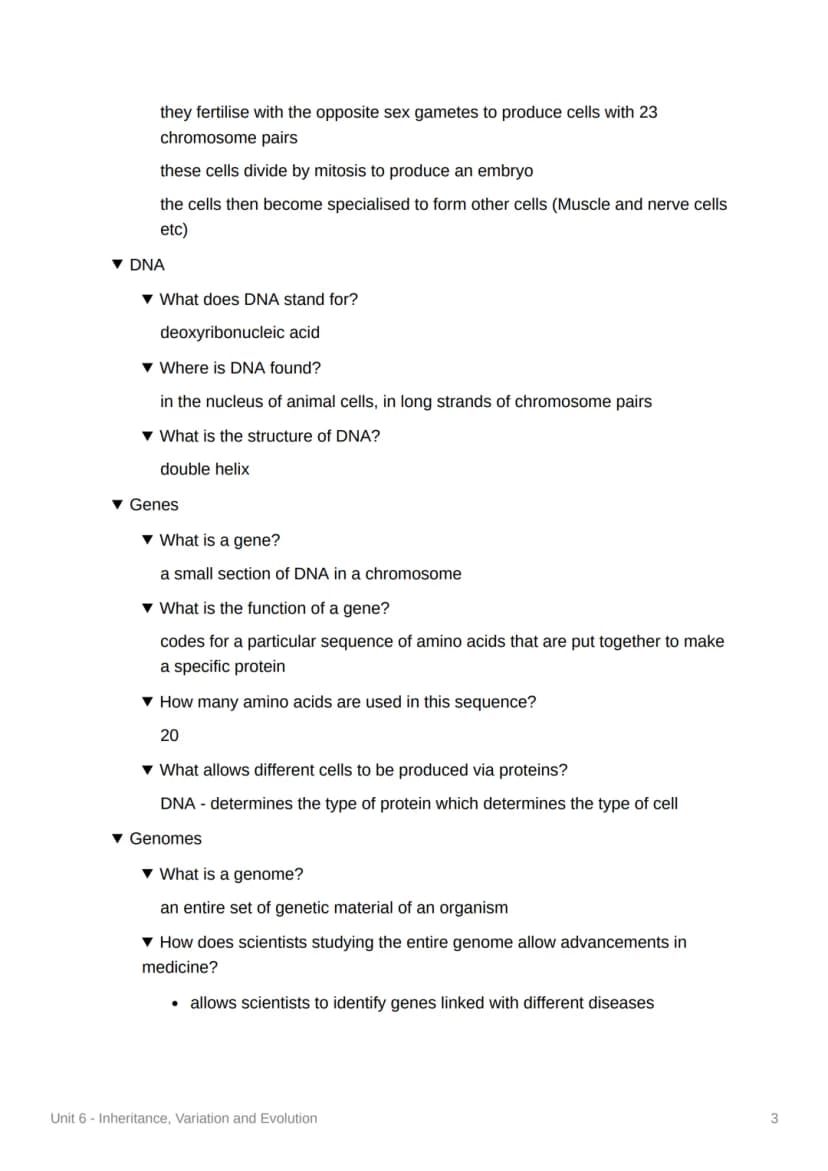
DNA Structure and Genetic Information
The study of inheritance, variation and evolution exam questions often focuses on DNA (deoxyribonucleic acid), located in cell nuclei as chromosome pairs. DNA's distinctive double helix structure contains genes, which are specific sequences coding for protein production.
Vocabulary: A genome represents an organism's complete set of genetic material, including all genes and DNA sequences.
Understanding genomes has revolutionized medicine by helping scientists identify disease-linked genes and develop targeted treatments. The structure of DNA consists of nucleotide units, each containing a phosphate group, sugar, and one of four bases (A, T, C, G).
Base pairing follows specific rules, with A always pairing with T, and C with G. This complementary base pairing ensures accurate genetic information transfer during cell division and reproduction.
4
of 10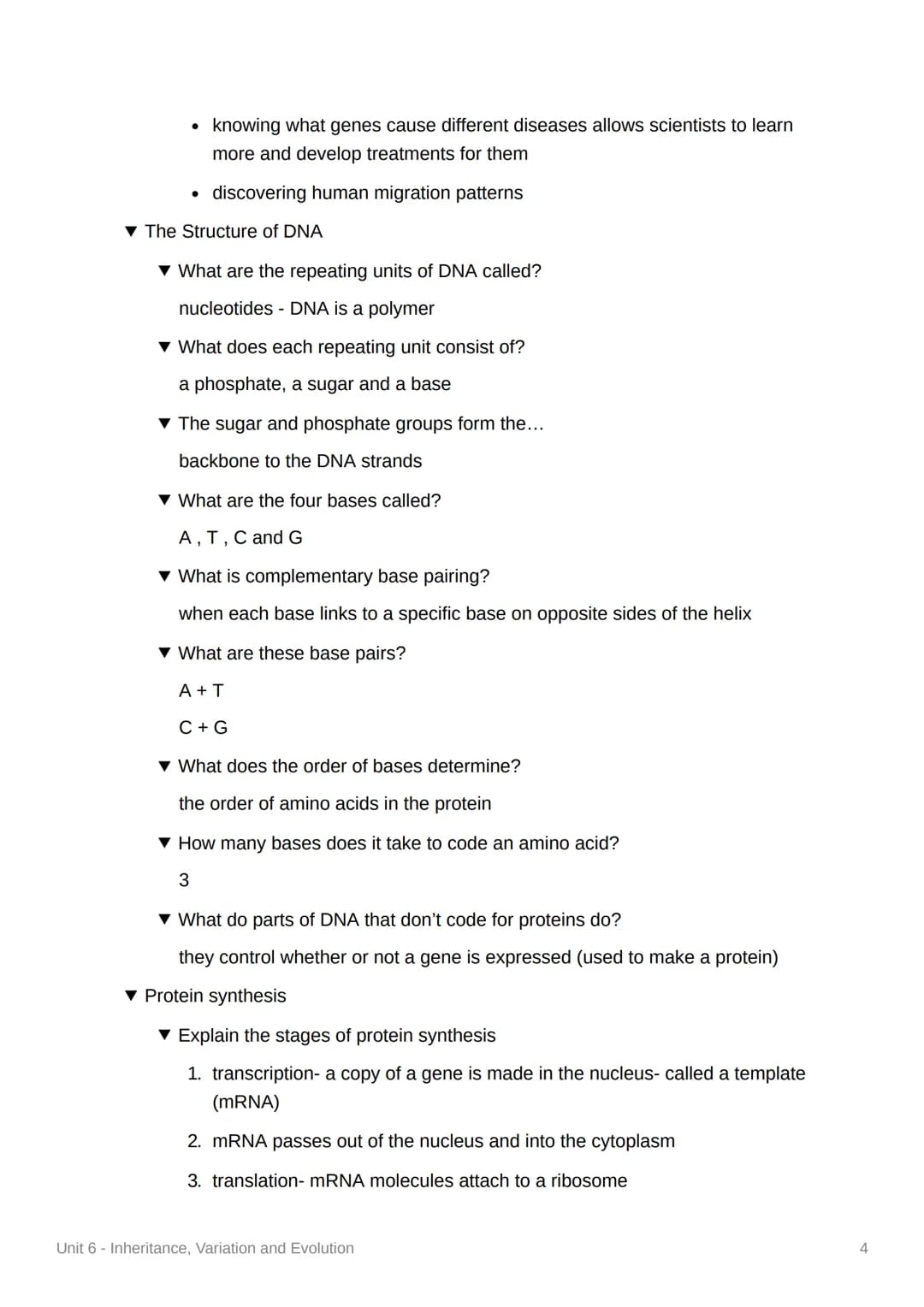
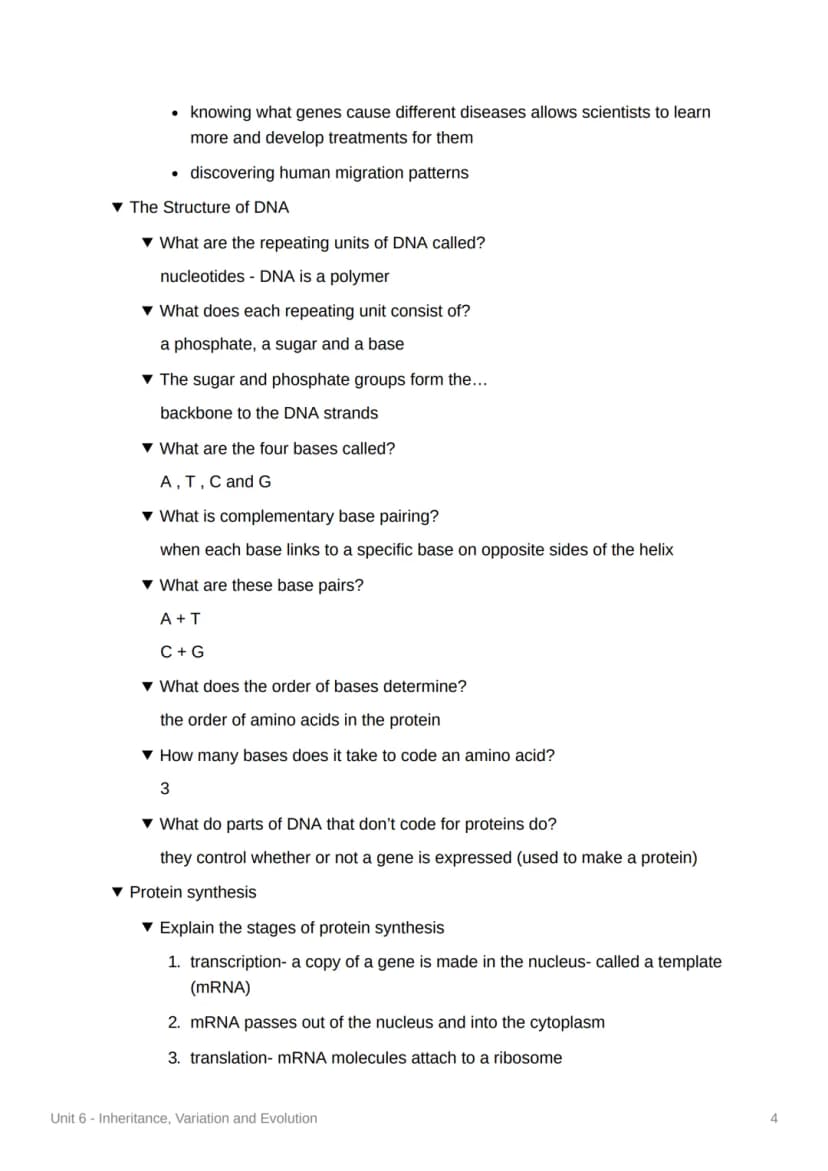
Protein Synthesis and Gene Expression
The relationship between DNA and protein synthesis forms a crucial part of GCSE Biology inheritance exam questions. Protein synthesis occurs through transcription and translation processes, where genetic information flows from DNA to RNA to proteins.
Example: Protein synthesis begins with transcription in the nucleus, where DNA information is copied to mRNA, followed by translation at ribosomes in the cytoplasm.
Three bases code for each amino acid in protein synthesis, with 20 different amino acids available for protein construction. Some DNA sections don't code for proteins but instead regulate gene expression, controlling when and how genes are used.
Understanding these processes helps explain how different cell types develop despite containing identical DNA, as protein production determines cell specialization and function. This knowledge is fundamental to modern genetic research and medical advances.
5
of 10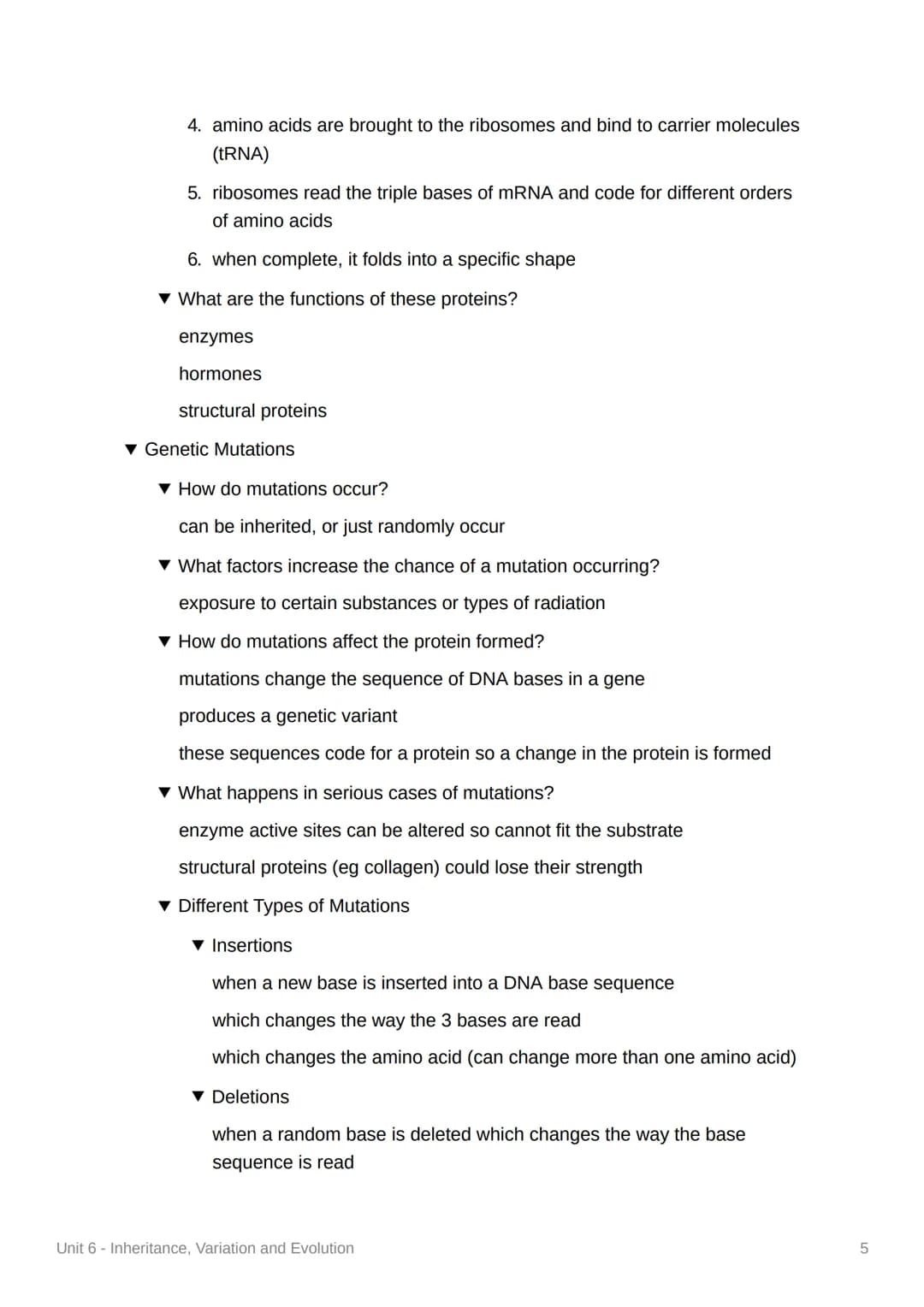
Understanding Protein Synthesis and Genetic Mutations in Biology
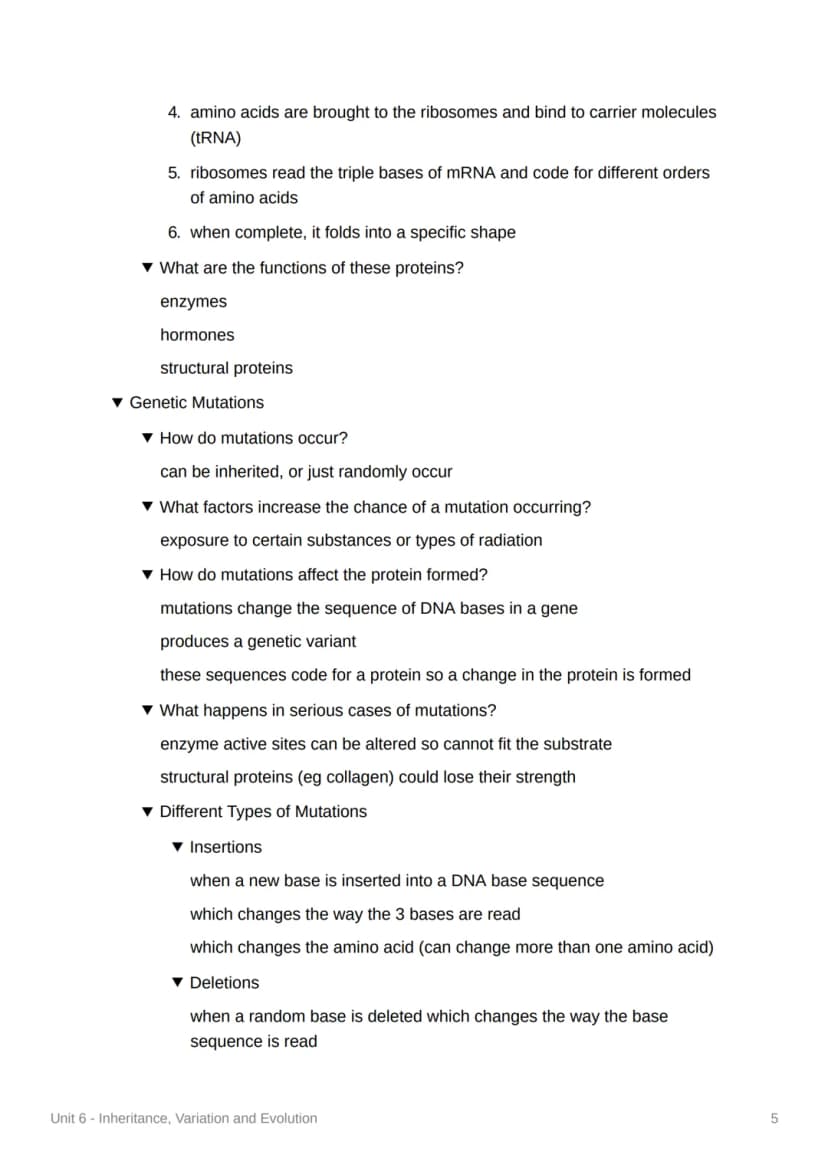
The complex process of protein synthesis involves precise molecular mechanisms that are fundamental to inheritance, variation and evolution GCSE Biology. At ribosomes, amino acids attach to carrier molecules called tRNA. The ribosomes systematically read mRNA's triple bases, determining specific amino acid sequences that ultimately fold into functional proteins.
Definition: Proteins formed through this process serve critical functions as enzymes, hormones, and structural proteins that maintain cellular operations and body systems.
Genetic mutations represent key mechanisms driving inheritance variation in evolution. These changes can occur spontaneously or through inheritance, with environmental factors like radiation or certain chemicals increasing mutation probability. When mutations alter DNA base sequences, they produce genetic variants that may modify protein structure and function.
Highlight: Serious mutations can have significant impacts:
- Enzyme active sites may become dysfunctional
- Structural proteins like collagen can lose integrity
- Multiple amino acid codes may be affected
Different types of mutations contribute to genetic variation:
- Insertions: New bases added to DNA sequences
- Deletions: Removal of bases from sequences
- Substitutions: Base pair changes (e.g., T becoming A)
6
of 10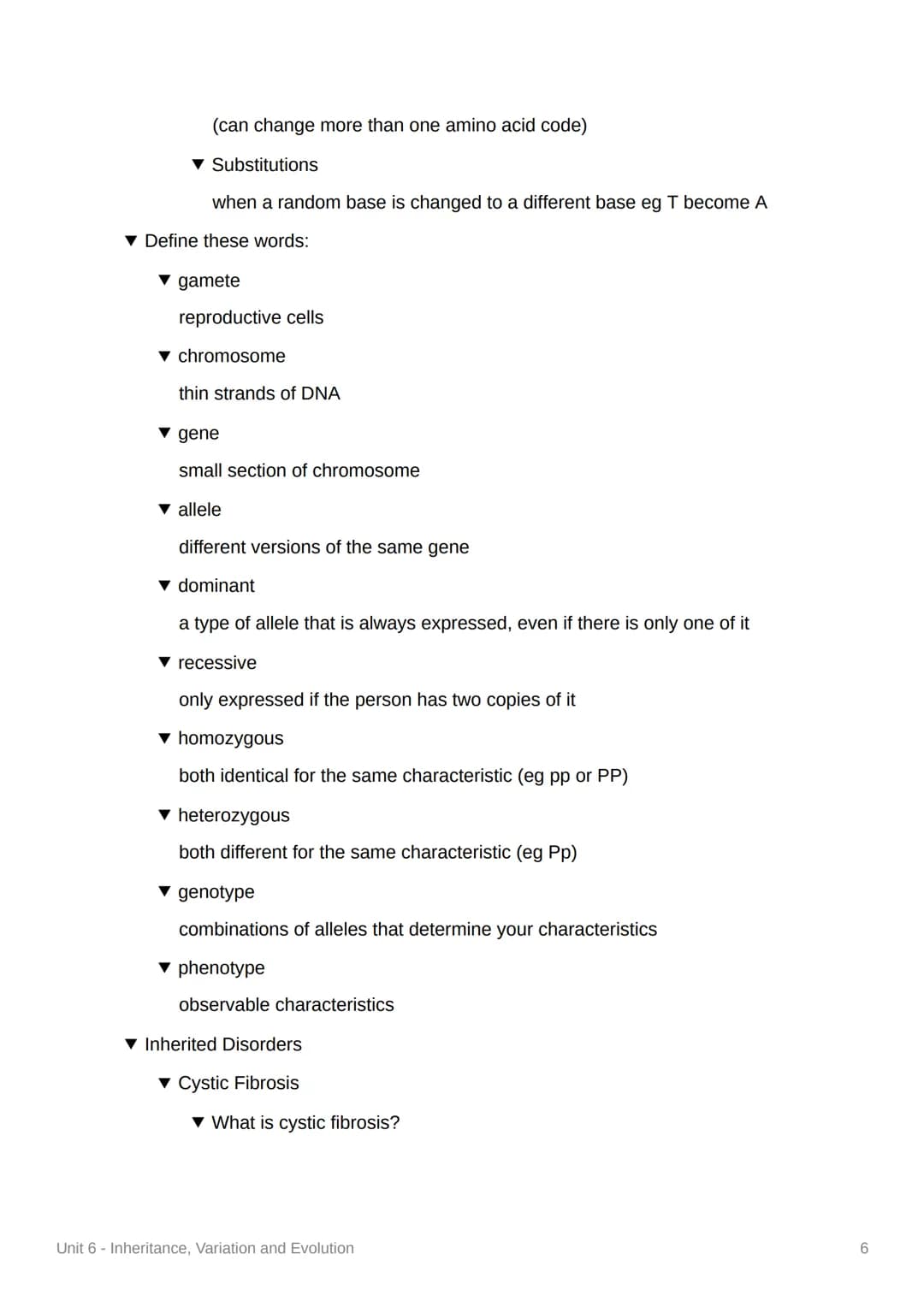
Essential Genetic Concepts and Inherited Disorders
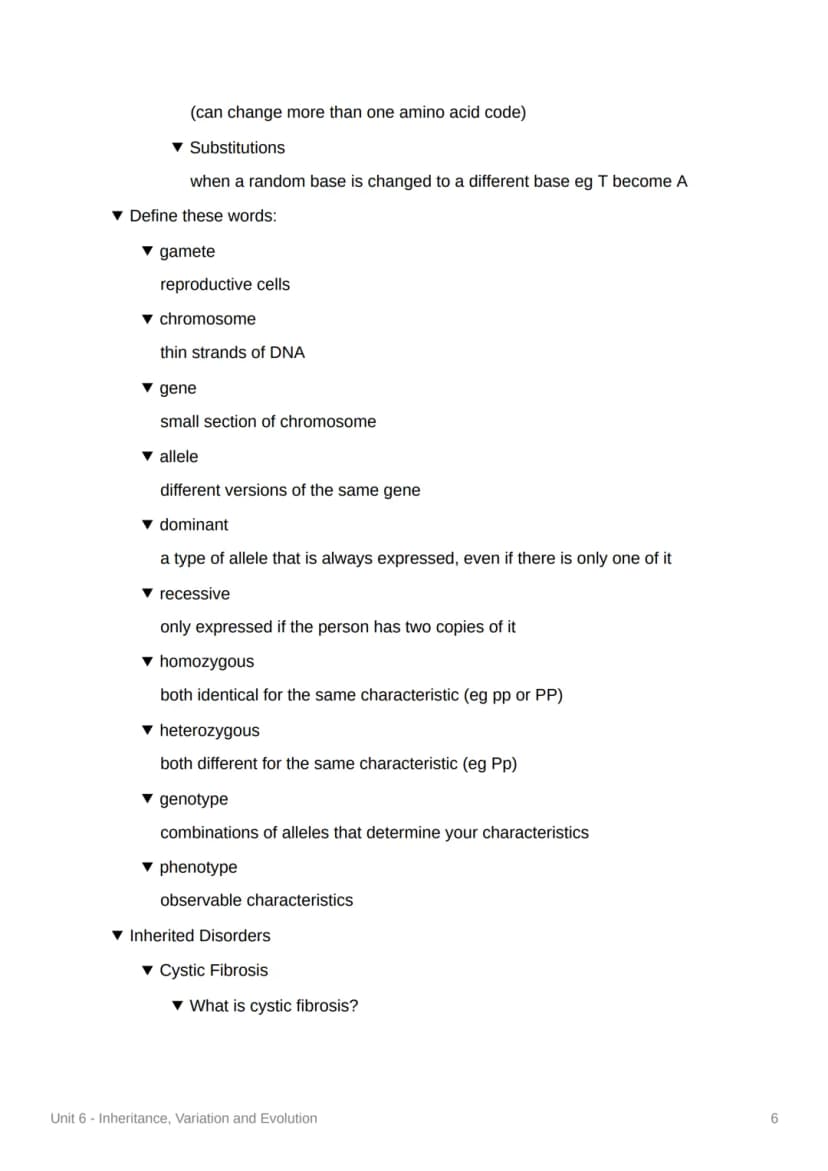
Understanding key genetic terminology is crucial for mastering GCSE Biology inheritance exam questions.
Vocabulary: Core genetic terms:
- Gametes: Reproductive cells
- Chromosomes: DNA strands
- Genes: Chromosome sections
- Alleles: Gene variants
- Dominant/Recessive: Allele expression patterns
- Homozygous/Heterozygous: Identical vs different allele pairs
- Genotype: Allele combinations
- Phenotype: Observable traits
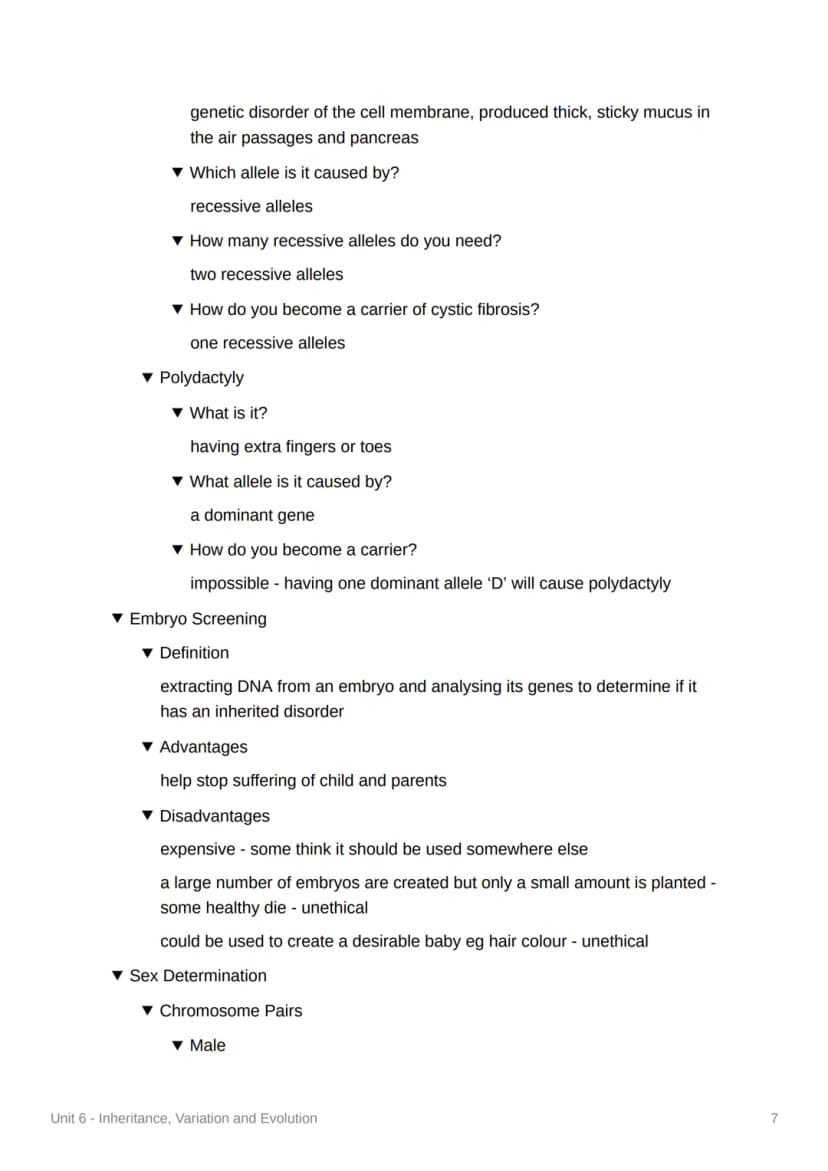
Inherited disorders demonstrate how genetic variations impact health. Cystic fibrosis, caused by recessive alleles, affects cell membranes and produces thick mucus in airways and pancreas. Carriers have one recessive allele, while those with the condition have two. Polydactyly, characterized by extra digits, results from a dominant allele.
Embryo screening allows genetic analysis to identify inherited disorders, though this raises ethical considerations. While it can prevent suffering, concerns include cost allocation, embryo waste, and potential misuse for selecting cosmetic traits.
7
of 10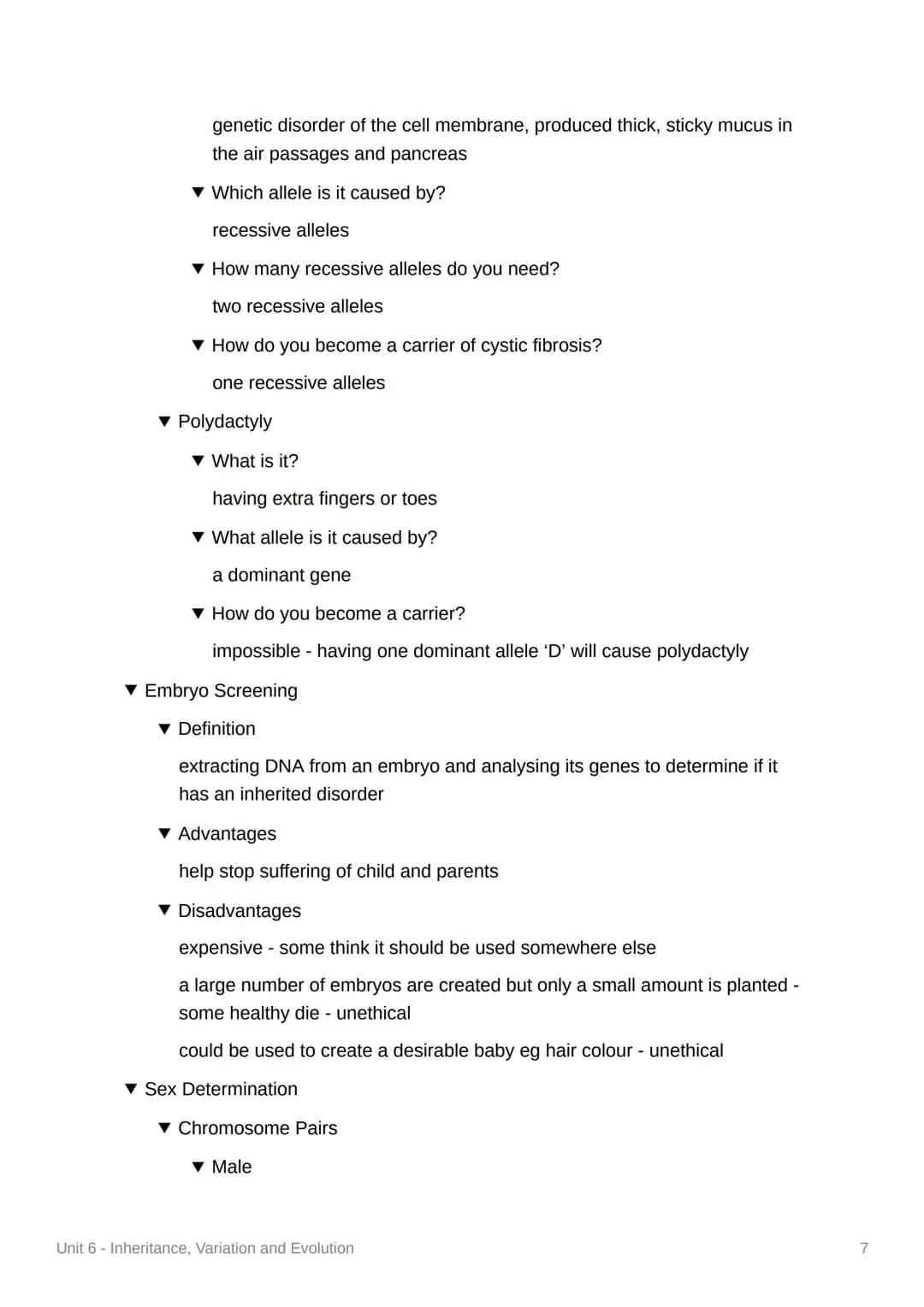
Variation and Evolution in Biology
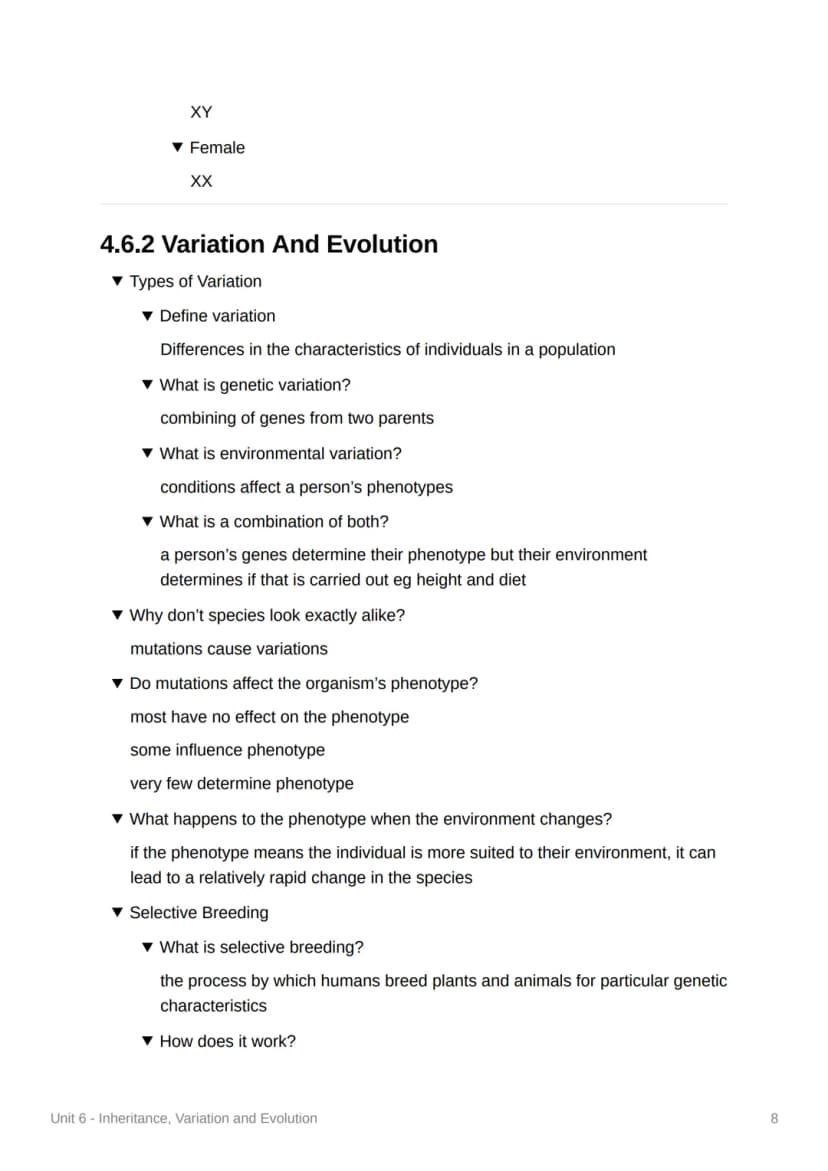
Inheritance, variation and evolution GCSE Biology AQA emphasizes understanding how differences arise within populations. Variation stems from multiple sources:
Definition: Variation refers to differences in characteristics among individuals within a population, arising from:
- Genetic variation through parental gene combination
- Environmental variation from external conditions
- Combined effects of genes and environment
Mutations play a crucial role in creating variation, though their effects vary:
- Most have no phenotypic impact
- Some influence observable traits
- Few directly determine characteristics
Environmental changes can drive rapid species adaptation when certain phenotypes provide survival advantages. This process underlies evolutionary mechanisms and natural selection.
8
of 10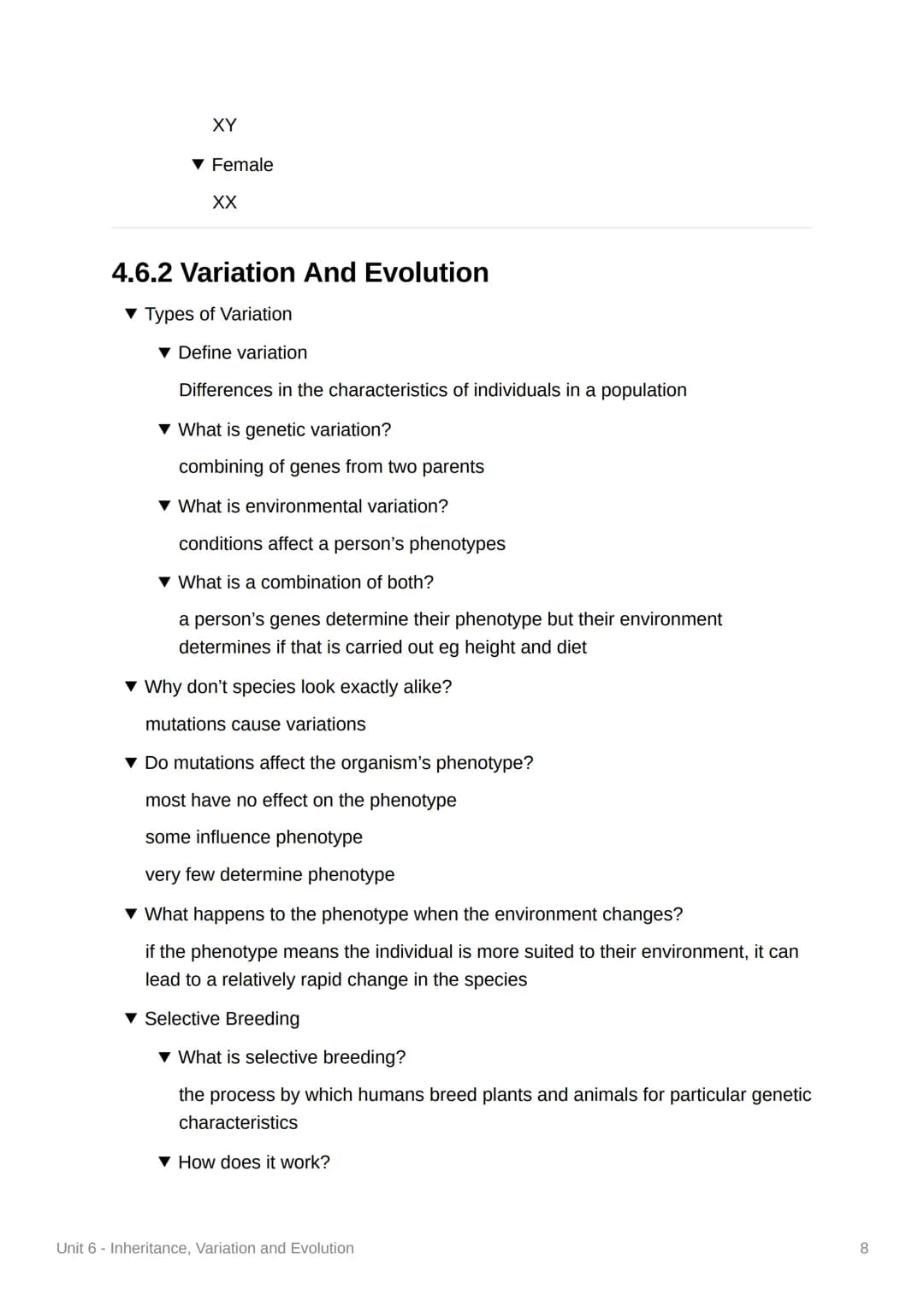
Selective Breeding and Genetic Engineering
Modern biological techniques have revolutionized how we understand and apply advantages of sexual and asexual reproduction. Selective breeding involves choosing parents with desired traits and breeding them to produce offspring with specific characteristics.
Applications include:
- Disease-resistant crops
- Higher-yielding livestock
- Specialized pet breeds
- Enhanced ornamental plants
Example: While selective breeding has produced valuable traits, it can lead to inbreeding problems due to reduced genetic diversity.
Genetic engineering represents an advanced approach to trait modification. This process involves:
- Extracting genes using enzymes
- Inserting genes via vectors
- Early-stage cell modification
Highlight: Applications include:
- Insulin production in bacteria
- Enhanced crop characteristics
- Gene therapy treatments
These technologies raise important ethical considerations about modifying genetic material and potential unintended consequences for future generations.
9
of 10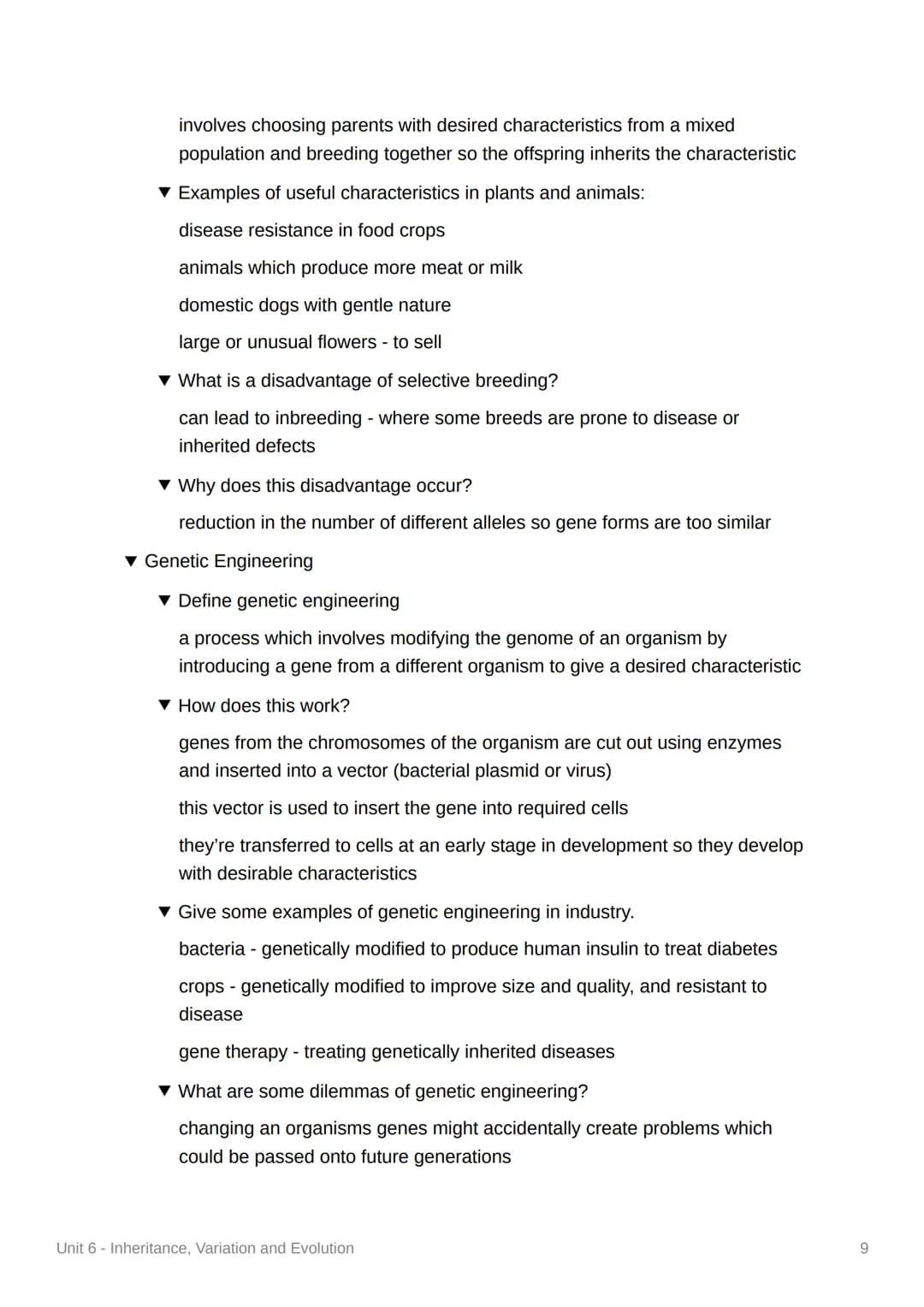
Understanding Plant Cloning and Genetic Engineering in Biology
Inheritance, variation and evolution GCSE Biology encompasses crucial concepts about how organisms pass on traits and can be modified. This comprehensive exploration covers both natural and artificial methods of reproduction, with a focus on plant cloning and genetic engineering.
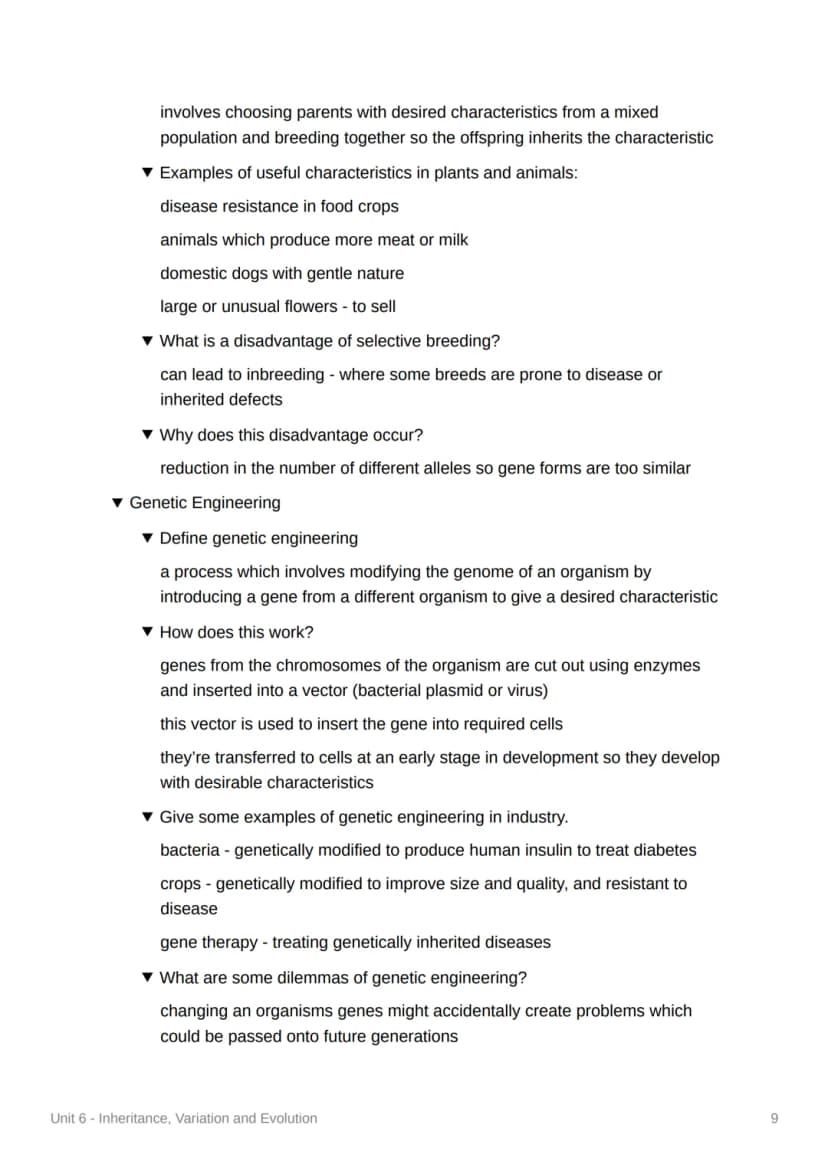
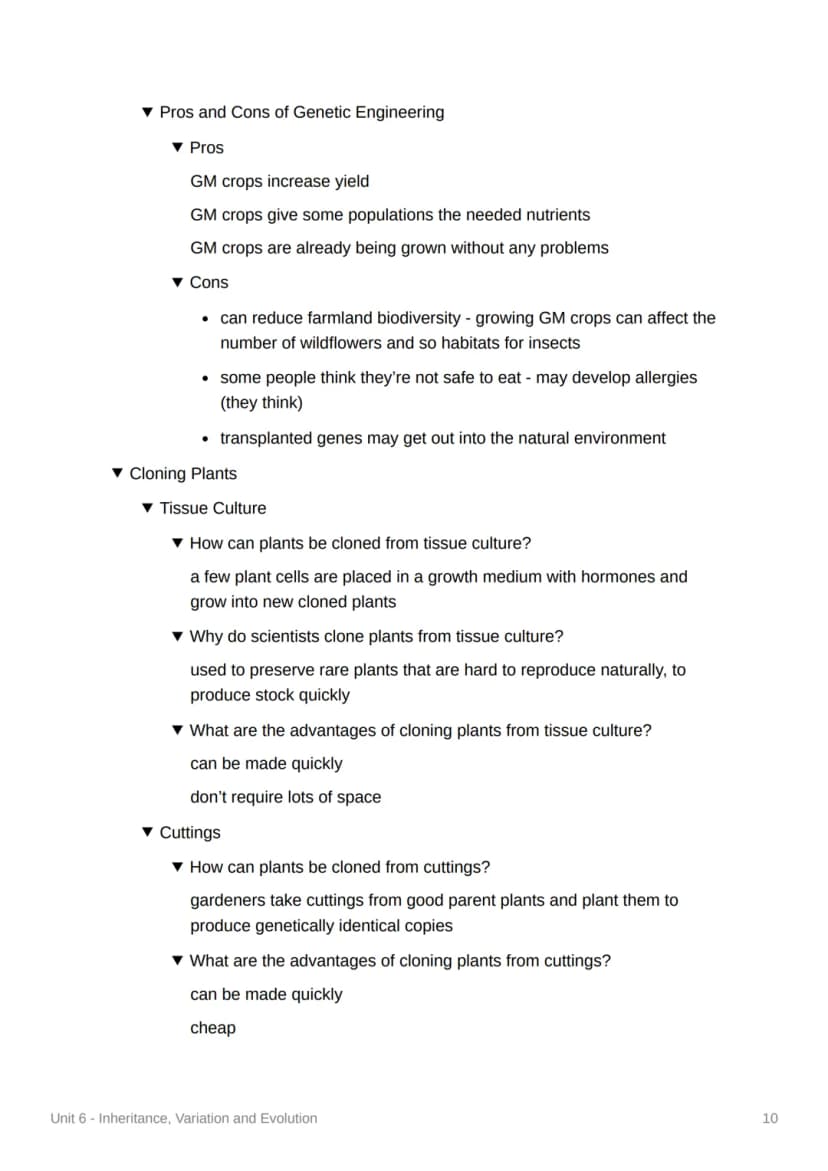
Plant cloning represents a fascinating aspect of inheritance and reproduction in biology. Two primary methods - tissue culture and cuttings - allow scientists and gardeners to create genetically identical copies of plants. Tissue culture involves placing a few plant cells in a specialized growth medium containing hormones, which then develop into complete cloned plants. This sophisticated technique proves especially valuable for preserving rare plant species and rapidly producing stock for agriculture or conservation.
Definition: Tissue culture is a method of producing identical plants by growing isolated plant cells in a nutrient medium under controlled conditions.
The genetic modification of crops represents another significant advancement in agricultural biotechnology. Inheritance, variation and evolution exam questions often focus on the benefits and drawbacks of GM crops. These modified organisms can offer increased crop yields and enhanced nutritional content, potentially addressing food security challenges in various populations. However, concerns exist regarding their impact on biodiversity and potential unforeseen consequences in natural ecosystems.
Highlight: While GM crops provide solutions to agricultural challenges, their implementation requires careful consideration of both benefits and potential environmental impacts.
10
of 10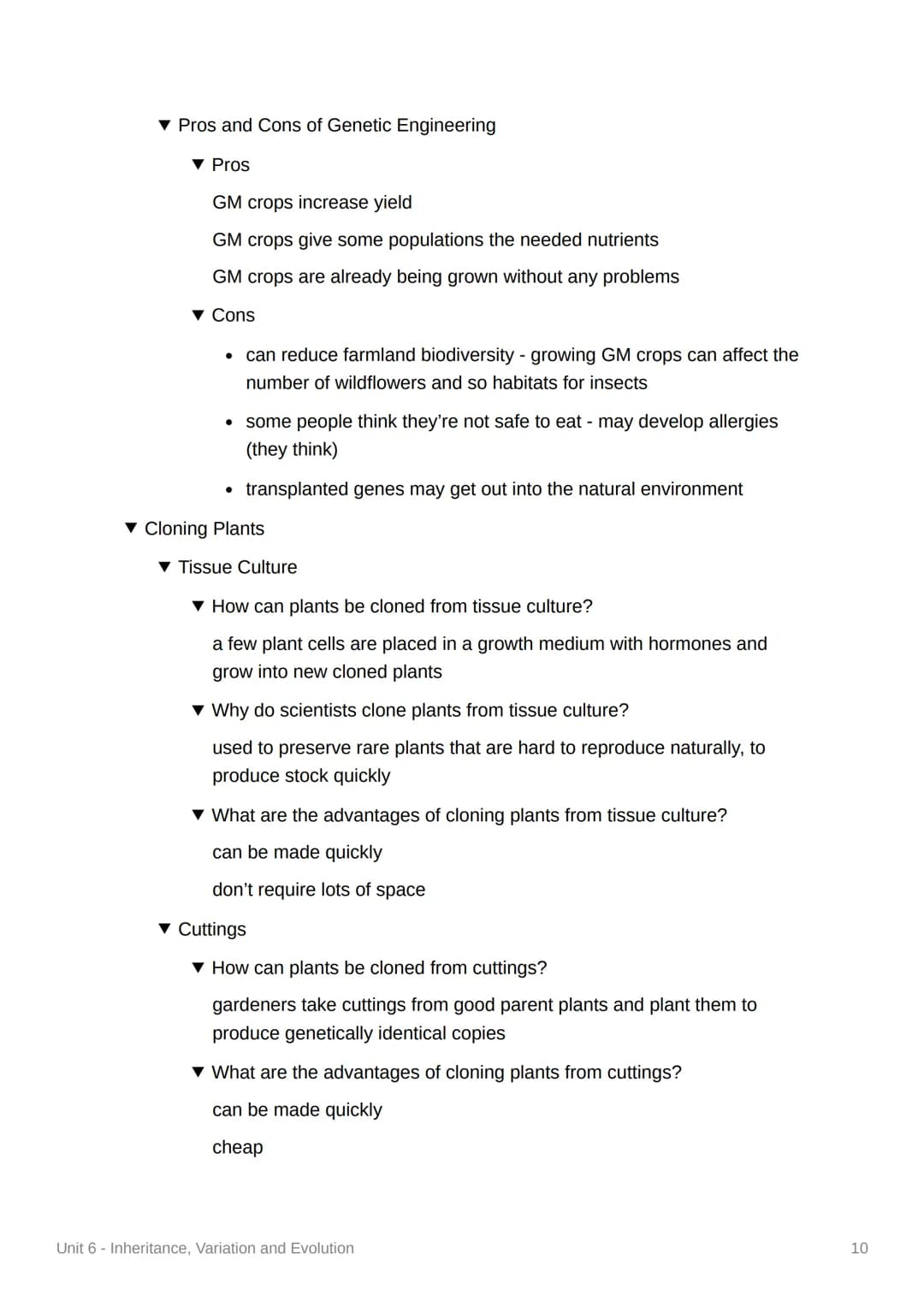
Plant Reproduction Methods and Their Applications
Understanding the advantages and disadvantages of different reproduction methods is crucial for GCSE Biology inheritance exam questions. Cloning through cuttings represents a traditional yet effective method where gardeners propagate plants by taking segments from parent plants. This technique proves particularly valuable in horticulture and agriculture due to its cost-effectiveness and reliability.
Example: A gardener might take stem cuttings from a healthy rose bush to produce multiple identical plants, ensuring consistent flower quality and characteristics.
The advantages of sexual and asexual reproduction GCSE material highlights how different reproduction strategies serve various purposes in nature and agriculture. While asexual reproduction through cloning ensures genetic consistency and rapid multiplication, sexual reproduction introduces genetic variation crucial for species adaptation and evolution.
When considering the disadvantages of asexual reproduction, it's important to note that cloned organisms lack genetic diversity, potentially making them vulnerable to environmental changes or diseases. However, in controlled agricultural settings, this genetic uniformity can be advantageous for producing consistent crop yields and maintaining desired traits.
Vocabulary: Genetic uniformity refers to the identical genetic makeup of organisms produced through asexual reproduction or cloning.
We thought you’d never ask...
What is the Knowunity AI companion?
Our AI companion is specifically built for the needs of students. Based on the millions of content pieces we have on the platform we can provide truly meaningful and relevant answers to students. But its not only about answers, the companion is even more about guiding students through their daily learning challenges, with personalised study plans, quizzes or content pieces in the chat and 100% personalisation based on the students skills and developments.
Where can I download the Knowunity app?
You can download the app in the Google Play Store and in the Apple App Store.
Is Knowunity really free of charge?
That's right! Enjoy free access to study content, connect with fellow students, and get instant help – all at your fingertips.
Similar Content
Most popular content: Genetic Variation
4BiologyAQA Biology: Key Concepts
Explore essential AQA Biology topics including Photosynthesis, Respiration, Homeostasis, Genetics, and Ecology. This comprehensive knowledge organizer covers key concepts such as energy transfer, hormonal control, and genetic variation, providing a solid foundation for your studies. Ideal for exam preparation and understanding biological processes.
108,793306
BiologyGCSE AQA Biology Triple Topic 6 : Inheritance, Variation and Evolution
Full notes on topic 6, except punnet squares
113887
BiologyGenetic Engineering & Evolution
Explore the principles of genetic engineering, including the creation of genetically modified organisms (GMOs), therapeutic cloning, and the impact of natural selection on evolution. This summary covers key concepts such as genetic variation, artificial selection, and the role of environmental factors in phenotype expression. Ideal for AQA GCSE Biology students preparing for exams.
1142718
BiologyAQA Biology: Genetic Variation & Evolution
Explore key concepts in AQA Biology Module 4, focusing on genetic variation, evolution, and biodiversity. This summary covers essential topics such as natural selection, mutation types, meiosis, and the processes of transcription and translation. Ideal for exam preparation and understanding biological classification and species diversity.
1259022
Most popular content in Biology
9C
BiologyCell Biology and Cell structure
cell structures
93,2470
1
Biology1.cells Gcse biology question cards
combined science higher biology
92,3534
BiologyAQA Biology: Key Concepts
Explore essential AQA Biology topics including Photosynthesis, Respiration, Homeostasis, Genetics, and Ecology. This comprehensive knowledge organizer covers key concepts such as energy transfer, hormonal control, and genetic variation, providing a solid foundation for your studies. Ideal for exam preparation and understanding biological processes.
108,793306
T
BiologyThe functions of subcellular structures - B1 Biology
Flashcards on the different functions of subcellular structures: cell membrane, nucleus, mitochondria, ribosomes, cytoplasm, permant vacuole, chloroplasts and cell wall.
102,7885
BiologyA-Level Biology Year 1 Overview
Comprehensive summary of AQA A-Level Biology Year 1, covering key topics such as cellular structure, protein synthesis, immune response, gas exchange, and more. Ideal for exam preparation and understanding biological concepts. Includes detailed insights into cellular processes, biological classification, and the circulatory system.
1214,891694
T
BiologyTypes of cells
biology
101,2090
B
BiologyBiology Paper 1 quiz
this is a simple quiz on key knowledge needed for paper 1
112,7745
BiologyBiology paper 1 Summary
Notes for Biology paper 1 contains the full course for AQA higher combined!
104,130106
C
BiologyCells part 1 function of cells.
About cells and function of cells etc.
119861
Most popular content
9 Sociology
Sociology of Education Overview
Explore comprehensive A-Level Sociology notes on the education system, covering key theories, policies, and sociological perspectives. This resource includes insights on marketisation, gender roles, cultural deprivation, and educational inequalities, providing a thorough understanding of how education shapes social stratification and individual achievement. Ideal for exam preparation and in-depth study.
12102,8693,040
SociologySociology of Families: Comprehensive Revision
Dive into an extensive overview of family dynamics, perspectives, and patterns in sociology. This resource covers key concepts such as family diversity, gender roles, marriage, and the impact of social policies on family structures. Perfect for A-Level Sociology students preparing for Paper 2.
1273,6612,307
CriminologyCriminology: Crime & Punishment Overview
Comprehensive mindmaps covering key concepts in the Crime and Punishment topic for WJEC Criminology Unit 4. This resource includes detailed insights into the Criminal Justice System, crime prevention strategies, sentencing models, and the roles of various agencies. Ideal for A-Level revision, ensuring you grasp essential theories and legislative processes to excel in your exams.
1254,8691,059
SociologyComprehensive Crime & Deviance Overview
Explore an extensive revision of crime and deviance topics, including theories, types of crime, and the impact of media. This resource covers key concepts such as Marxism, functionalism, gender and crime, and the influence of globalization on criminal behavior. Ideal for students seeking a thorough understanding of criminology and its various theories. Type: Full Topic Revision.
1251,6541,399
C
BiologyCell Biology and Cell structure
cell structures
93,2470
 English Literature
An Inspector Calls: Character Insights
Explore in-depth analysis and key quotes for characters in J.B. Priestley's 'An Inspector Calls'. This resource covers Gerald Croft, Inspector Goole, Sheila Birling, Mrs. Birling, Eric Birling, and Eva Smith, focusing on themes of class, gender roles, and social responsibility. Ideal for students aiming for Grade 8 and above.
1025,429907
CriminologyWJEC Unit 4 Criminology
Criminology unit 4 detailed revision note
127,151125
CriminologyCriminology Theories Overview
Explore key criminology theories and their implications on crime and deviance. This comprehensive summary covers biological, psychological, and sociological perspectives, including labelling theory, right realism, and the impact of social campaigns on policy development. Ideal for A-Level criminology students seeking to understand the complexities of criminal behaviour and the factors influencing crime prevention strategies.
129,760210
English LiteratureRomeo and Juliet: Key themes
Key Romeo and Juliet themes and analysed quotes
106,708198
Can't find what you're looking for? Explore other subjects.
Students love us — and so will you.
4.6/5App Store
4.7/5Google Play
The app is very easy to use and well designed. I have found everything I was looking for so far and have been able to learn a lot from the presentations! I will definitely use the app for a class assignment! And of course it also helps a lot as an inspiration.
Stefan SiOS user
This app is really great. There are so many study notes and help [...]. My problem subject is French, for example, and the app has so many options for help. Thanks to this app, I have improved my French. I would recommend it to anyone.
Samantha KlichAndroid user
Wow, I am really amazed. I just tried the app because I've seen it advertised many times and was absolutely stunned. This app is THE HELP you want for school and above all, it offers so many things, such as workouts and fact sheets, which have been VERY helpful to me personally.
AnnaiOS user
Biology4,171 views·Updated Jun 14, 2026·16 pagesAwesome GCSE Biology Study Guide: Inheritance, Variation, and Evolution
Zainab@zainab_02839
Understanding inheritance, variation and evolution is crucial for success in GCSE Biology.
Inheritanceinvolves the passing of genetic characteristics from parents to offspring through DNA and genes. This process occurs through two main types of reproduction: sexual and asexual....
1
of 10
Sign up to see the content. It's free!
- Access to all documents
- Improve your grades
- Join milions of students
Understanding Sexual and Asexual Reproduction in Biology
Inheritance, variation and evolution GCSE Biology fundamentals begin with understanding reproduction methods. Sexual reproduction involves the fusion of male and female gametes, creating genetic diversity essential for species survival. In humans, this occurs through the joining of sperm and egg cells, while plants utilize pollen and egg cells for reproduction.
The process of sexual reproduction contributes significantly to variation in evolution, as offspring inherit different combinations of genes from both parents. This genetic diversity proves crucial for species adaptation and survival when environmental conditions change, supporting natural selection processes.
Definition: Sexual reproduction is the fusion of male and female gametes to produce offspring with genetic material from both parents, resulting in variation within species.
Asexual reproduction presents a contrasting method where a single parent produces genetically identical offspring (clones). This process occurs in bacteria, some plants, and certain animals. Understanding the advantages of sexual and asexual reproduction GCSE content reveals how different organisms optimize their survival strategies.
2
of 10Sign up to see the content. It's free!
- Access to all documents
- Improve your grades
- Join milions of students
Reproductive Advantages and Specialized Cases
The advantages and disadvantages of sexual reproduction include increased genetic variation, which enhances species survival during environmental changes. This variation also enables selective breeding for desired traits, particularly important in agriculture and animal husbandry.
Highlight: Asexual reproduction requires less energy and produces numerous identical offspring quickly when conditions are favorable.
Some organisms utilize both reproductive methods depending on circumstances. For example, malaria parasites reproduce asexually within human hosts but sexually in mosquitoes. Similarly, fungi can reproduce through both asexual spores and sexual methods, maximizing their survival chances.
Plants like strawberries demonstrate both methods, producing runners for asexual reproduction while also flowering to create seeds through sexual reproduction. This dual approach showcases the evolutionary advantages of maintaining both reproductive capabilities.
3
of 10Sign up to see the content. It's free!
- Access to all documents
- Improve your grades
- Join milions of students
DNA Structure and Genetic Information
The study of inheritance, variation and evolution exam questions often focuses on DNA (deoxyribonucleic acid), located in cell nuclei as chromosome pairs. DNA's distinctive double helix structure contains genes, which are specific sequences coding for protein production.
Vocabulary: A genome represents an organism's complete set of genetic material, including all genes and DNA sequences.
Understanding genomes has revolutionized medicine by helping scientists identify disease-linked genes and develop targeted treatments. The structure of DNA consists of nucleotide units, each containing a phosphate group, sugar, and one of four bases (A, T, C, G).
Base pairing follows specific rules, with A always pairing with T, and C with G. This complementary base pairing ensures accurate genetic information transfer during cell division and reproduction.
4
of 10Sign up to see the content. It's free!
- Access to all documents
- Improve your grades
- Join milions of students
Protein Synthesis and Gene Expression
The relationship between DNA and protein synthesis forms a crucial part of GCSE Biology inheritance exam questions. Protein synthesis occurs through transcription and translation processes, where genetic information flows from DNA to RNA to proteins.
Example: Protein synthesis begins with transcription in the nucleus, where DNA information is copied to mRNA, followed by translation at ribosomes in the cytoplasm.
Three bases code for each amino acid in protein synthesis, with 20 different amino acids available for protein construction. Some DNA sections don't code for proteins but instead regulate gene expression, controlling when and how genes are used.
Understanding these processes helps explain how different cell types develop despite containing identical DNA, as protein production determines cell specialization and function. This knowledge is fundamental to modern genetic research and medical advances.
5
of 10Sign up to see the content. It's free!
- Access to all documents
- Improve your grades
- Join milions of students
Understanding Protein Synthesis and Genetic Mutations in Biology
The complex process of protein synthesis involves precise molecular mechanisms that are fundamental to inheritance, variation and evolution GCSE Biology. At ribosomes, amino acids attach to carrier molecules called tRNA. The ribosomes systematically read mRNA's triple bases, determining specific amino acid sequences that ultimately fold into functional proteins.
Definition: Proteins formed through this process serve critical functions as enzymes, hormones, and structural proteins that maintain cellular operations and body systems.
Genetic mutations represent key mechanisms driving inheritance variation in evolution. These changes can occur spontaneously or through inheritance, with environmental factors like radiation or certain chemicals increasing mutation probability. When mutations alter DNA base sequences, they produce genetic variants that may modify protein structure and function.
Highlight: Serious mutations can have significant impacts:
- Enzyme active sites may become dysfunctional
- Structural proteins like collagen can lose integrity
- Multiple amino acid codes may be affected
Different types of mutations contribute to genetic variation:
- Insertions: New bases added to DNA sequences
- Deletions: Removal of bases from sequences
- Substitutions: Base pair changes (e.g., T becoming A)
6
of 10Sign up to see the content. It's free!
- Access to all documents
- Improve your grades
- Join milions of students
Essential Genetic Concepts and Inherited Disorders
Understanding key genetic terminology is crucial for mastering GCSE Biology inheritance exam questions.
Vocabulary: Core genetic terms:
- Gametes: Reproductive cells
- Chromosomes: DNA strands
- Genes: Chromosome sections
- Alleles: Gene variants
- Dominant/Recessive: Allele expression patterns
- Homozygous/Heterozygous: Identical vs different allele pairs
- Genotype: Allele combinations
- Phenotype: Observable traits
Inherited disorders demonstrate how genetic variations impact health. Cystic fibrosis, caused by recessive alleles, affects cell membranes and produces thick mucus in airways and pancreas. Carriers have one recessive allele, while those with the condition have two. Polydactyly, characterized by extra digits, results from a dominant allele.
Embryo screening allows genetic analysis to identify inherited disorders, though this raises ethical considerations. While it can prevent suffering, concerns include cost allocation, embryo waste, and potential misuse for selecting cosmetic traits.
7
of 10Sign up to see the content. It's free!
- Access to all documents
- Improve your grades
- Join milions of students
Variation and Evolution in Biology
Inheritance, variation and evolution GCSE Biology AQA emphasizes understanding how differences arise within populations. Variation stems from multiple sources:
Definition: Variation refers to differences in characteristics among individuals within a population, arising from:
- Genetic variation through parental gene combination
- Environmental variation from external conditions
- Combined effects of genes and environment
Mutations play a crucial role in creating variation, though their effects vary:
- Most have no phenotypic impact
- Some influence observable traits
- Few directly determine characteristics
Environmental changes can drive rapid species adaptation when certain phenotypes provide survival advantages. This process underlies evolutionary mechanisms and natural selection.
8
of 10Sign up to see the content. It's free!
- Access to all documents
- Improve your grades
- Join milions of students
Selective Breeding and Genetic Engineering
Modern biological techniques have revolutionized how we understand and apply advantages of sexual and asexual reproduction. Selective breeding involves choosing parents with desired traits and breeding them to produce offspring with specific characteristics.
Applications include:
- Disease-resistant crops
- Higher-yielding livestock
- Specialized pet breeds
- Enhanced ornamental plants
Example: While selective breeding has produced valuable traits, it can lead to inbreeding problems due to reduced genetic diversity.
Genetic engineering represents an advanced approach to trait modification. This process involves:
- Extracting genes using enzymes
- Inserting genes via vectors
- Early-stage cell modification
Highlight: Applications include:
- Insulin production in bacteria
- Enhanced crop characteristics
- Gene therapy treatments
These technologies raise important ethical considerations about modifying genetic material and potential unintended consequences for future generations.
9
of 10Sign up to see the content. It's free!
- Access to all documents
- Improve your grades
- Join milions of students
Understanding Plant Cloning and Genetic Engineering in Biology
Inheritance, variation and evolution GCSE Biology encompasses crucial concepts about how organisms pass on traits and can be modified. This comprehensive exploration covers both natural and artificial methods of reproduction, with a focus on plant cloning and genetic engineering.
Plant cloning represents a fascinating aspect of inheritance and reproduction in biology. Two primary methods - tissue culture and cuttings - allow scientists and gardeners to create genetically identical copies of plants. Tissue culture involves placing a few plant cells in a specialized growth medium containing hormones, which then develop into complete cloned plants. This sophisticated technique proves especially valuable for preserving rare plant species and rapidly producing stock for agriculture or conservation.
Definition: Tissue culture is a method of producing identical plants by growing isolated plant cells in a nutrient medium under controlled conditions.
The genetic modification of crops represents another significant advancement in agricultural biotechnology. Inheritance, variation and evolution exam questions often focus on the benefits and drawbacks of GM crops. These modified organisms can offer increased crop yields and enhanced nutritional content, potentially addressing food security challenges in various populations. However, concerns exist regarding their impact on biodiversity and potential unforeseen consequences in natural ecosystems.
Highlight: While GM crops provide solutions to agricultural challenges, their implementation requires careful consideration of both benefits and potential environmental impacts.
10
of 10Sign up to see the content. It's free!
- Access to all documents
- Improve your grades
- Join milions of students
Plant Reproduction Methods and Their Applications
Understanding the advantages and disadvantages of different reproduction methods is crucial for GCSE Biology inheritance exam questions. Cloning through cuttings represents a traditional yet effective method where gardeners propagate plants by taking segments from parent plants. This technique proves particularly valuable in horticulture and agriculture due to its cost-effectiveness and reliability.
Example: A gardener might take stem cuttings from a healthy rose bush to produce multiple identical plants, ensuring consistent flower quality and characteristics.
The advantages of sexual and asexual reproduction GCSE material highlights how different reproduction strategies serve various purposes in nature and agriculture. While asexual reproduction through cloning ensures genetic consistency and rapid multiplication, sexual reproduction introduces genetic variation crucial for species adaptation and evolution.
When considering the disadvantages of asexual reproduction, it's important to note that cloned organisms lack genetic diversity, potentially making them vulnerable to environmental changes or diseases. However, in controlled agricultural settings, this genetic uniformity can be advantageous for producing consistent crop yields and maintaining desired traits.
Vocabulary: Genetic uniformity refers to the identical genetic makeup of organisms produced through asexual reproduction or cloning.
We thought you’d never ask...
What is the Knowunity AI companion?
Our AI companion is specifically built for the needs of students. Based on the millions of content pieces we have on the platform we can provide truly meaningful and relevant answers to students. But its not only about answers, the companion is even more about guiding students through their daily learning challenges, with personalised study plans, quizzes or content pieces in the chat and 100% personalisation based on the students skills and developments.
Where can I download the Knowunity app?
You can download the app in the Google Play Store and in the Apple App Store.
Is Knowunity really free of charge?
That's right! Enjoy free access to study content, connect with fellow students, and get instant help – all at your fingertips.
Similar Content
Most popular content: Genetic Variation
4BiologyAQA Biology: Key Concepts
Explore essential AQA Biology topics including Photosynthesis, Respiration, Homeostasis, Genetics, and Ecology. This comprehensive knowledge organizer covers key concepts such as energy transfer, hormonal control, and genetic variation, providing a solid foundation for your studies. Ideal for exam preparation and understanding biological processes.
108,793306
BiologyGCSE AQA Biology Triple Topic 6 : Inheritance, Variation and Evolution
Full notes on topic 6, except punnet squares
113887
BiologyGenetic Engineering & Evolution
Explore the principles of genetic engineering, including the creation of genetically modified organisms (GMOs), therapeutic cloning, and the impact of natural selection on evolution. This summary covers key concepts such as genetic variation, artificial selection, and the role of environmental factors in phenotype expression. Ideal for AQA GCSE Biology students preparing for exams.
1142718
BiologyAQA Biology: Genetic Variation & Evolution
Explore key concepts in AQA Biology Module 4, focusing on genetic variation, evolution, and biodiversity. This summary covers essential topics such as natural selection, mutation types, meiosis, and the processes of transcription and translation. Ideal for exam preparation and understanding biological classification and species diversity.
1259022
Most popular content in Biology
9C
BiologyCell Biology and Cell structure
cell structures
93,2470
1
Biology1.cells Gcse biology question cards
combined science higher biology
92,3534
BiologyAQA Biology: Key Concepts
Explore essential AQA Biology topics including Photosynthesis, Respiration, Homeostasis, Genetics, and Ecology. This comprehensive knowledge organizer covers key concepts such as energy transfer, hormonal control, and genetic variation, providing a solid foundation for your studies. Ideal for exam preparation and understanding biological processes.
108,793306
T
BiologyThe functions of subcellular structures - B1 Biology
Flashcards on the different functions of subcellular structures: cell membrane, nucleus, mitochondria, ribosomes, cytoplasm, permant vacuole, chloroplasts and cell wall.
102,7885
BiologyA-Level Biology Year 1 Overview
Comprehensive summary of AQA A-Level Biology Year 1, covering key topics such as cellular structure, protein synthesis, immune response, gas exchange, and more. Ideal for exam preparation and understanding biological concepts. Includes detailed insights into cellular processes, biological classification, and the circulatory system.
1214,891694
T
BiologyTypes of cells
biology
101,2090
B
BiologyBiology Paper 1 quiz
this is a simple quiz on key knowledge needed for paper 1
112,7745
BiologyBiology paper 1 Summary
Notes for Biology paper 1 contains the full course for AQA higher combined!
104,130106
C
BiologyCells part 1 function of cells.
About cells and function of cells etc.
119861
Most popular content
9SociologySociology of Education Overview
Explore comprehensive A-Level Sociology notes on the education system, covering key theories, policies, and sociological perspectives. This resource includes insights on marketisation, gender roles, cultural deprivation, and educational inequalities, providing a thorough understanding of how education shapes social stratification and individual achievement. Ideal for exam preparation and in-depth study.
12102,8693,040
SociologySociology of Families: Comprehensive Revision
Dive into an extensive overview of family dynamics, perspectives, and patterns in sociology. This resource covers key concepts such as family diversity, gender roles, marriage, and the impact of social policies on family structures. Perfect for A-Level Sociology students preparing for Paper 2.
1273,6612,307
CriminologyCriminology: Crime & Punishment Overview
Comprehensive mindmaps covering key concepts in the Crime and Punishment topic for WJEC Criminology Unit 4. This resource includes detailed insights into the Criminal Justice System, crime prevention strategies, sentencing models, and the roles of various agencies. Ideal for A-Level revision, ensuring you grasp essential theories and legislative processes to excel in your exams.
1254,8691,059
SociologyComprehensive Crime & Deviance Overview
Explore an extensive revision of crime and deviance topics, including theories, types of crime, and the impact of media. This resource covers key concepts such as Marxism, functionalism, gender and crime, and the influence of globalization on criminal behavior. Ideal for students seeking a thorough understanding of criminology and its various theories. Type: Full Topic Revision.
1251,6541,399
C
BiologyCell Biology and Cell structure
cell structures
93,2470
English LiteratureAn Inspector Calls: Character Insights
Explore in-depth analysis and key quotes for characters in J.B. Priestley's 'An Inspector Calls'. This resource covers Gerald Croft, Inspector Goole, Sheila Birling, Mrs. Birling, Eric Birling, and Eva Smith, focusing on themes of class, gender roles, and social responsibility. Ideal for students aiming for Grade 8 and above.
1025,429907
CriminologyWJEC Unit 4 Criminology
Criminology unit 4 detailed revision note
127,151125
CriminologyCriminology Theories Overview
Explore key criminology theories and their implications on crime and deviance. This comprehensive summary covers biological, psychological, and sociological perspectives, including labelling theory, right realism, and the impact of social campaigns on policy development. Ideal for A-Level criminology students seeking to understand the complexities of criminal behaviour and the factors influencing crime prevention strategies.
129,760210
English LiteratureRomeo and Juliet: Key themes
Key Romeo and Juliet themes and analysed quotes
106,708198
Can't find what you're looking for? Explore other subjects.
Students love us — and so will you.
4.6/5App Store
4.7/5Google Play
The app is very easy to use and well designed. I have found everything I was looking for so far and have been able to learn a lot from the presentations! I will definitely use the app for a class assignment! And of course it also helps a lot as an inspiration.
Stefan SiOS user
This app is really great. There are so many study notes and help [...]. My problem subject is French, for example, and the app has so many options for help. Thanks to this app, I have improved my French. I would recommend it to anyone.
Samantha KlichAndroid user
Wow, I am really amazed. I just tried the app because I've seen it advertised many times and was absolutely stunned. This app is THE HELP you want for school and above all, it offers so many things, such as workouts and fact sheets, which have been VERY helpful to me personally.
AnnaiOS user