
Ecology is all about how living things interact with each...
 Biology1,807 views·Updated Jun 20, 2026·8 pages
GCSE Ecology Revision Questions

Zainab@zainab_02839




1 / 8
1
of 8
Ecosystems, Competition and Adaptations
Every ecosystem is like a massive community where living things interact with their surroundings. Abiotic factors are the non-living parts of the environment - things like temperature, light intensity, and soil pH that affect where organisms can survive.
Biotic factors are all the living components that influence each other. These include food availability, new predators showing up, or diseases spreading through populations. Plants compete for light, space, water, and minerals from the soil, whilst animals fight over territory, food, water, and mates.
Interdependence means species rely on each other for survival - remove one species and it creates a domino effect throughout the entire community. Organisms have developed three types of adaptations: structural (body features like shape or colour), behavioural (like migration patterns), and functional (internal processes like metabolism).
Key Point: Environmental changes from seasonal shifts, geographical factors, or human activity can dramatically affect where species can live and thrive.
2
of 8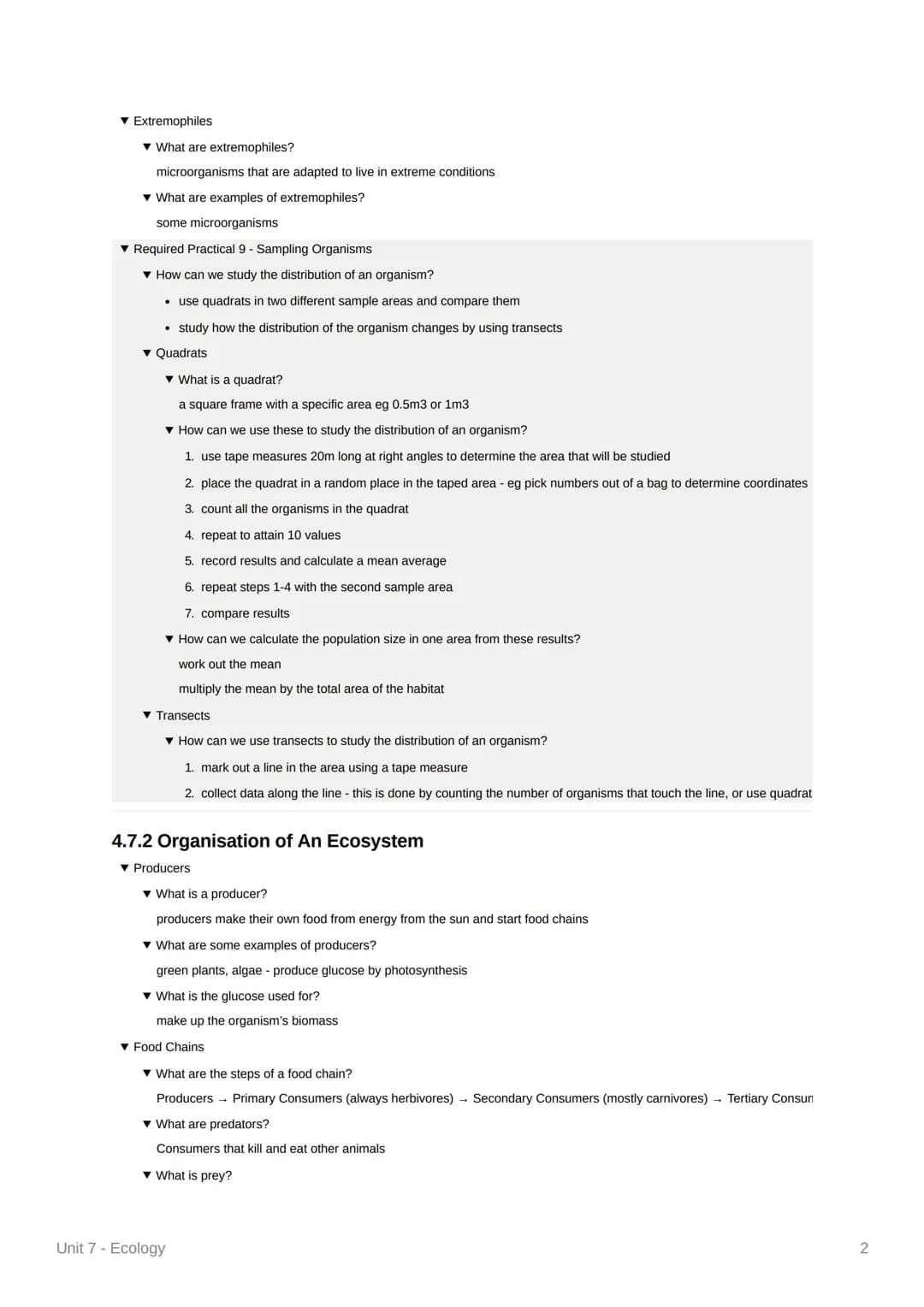
Studying Organisms and Food Chains
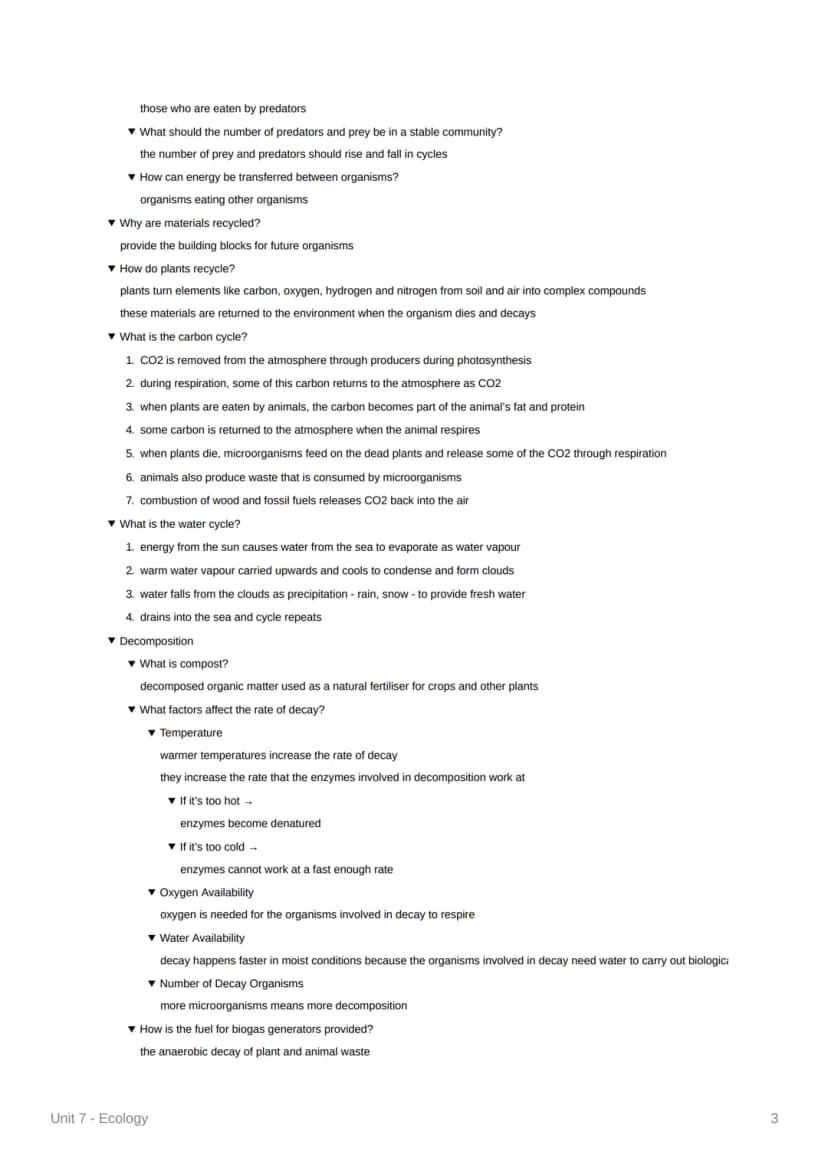
Extremophiles are tough microorganisms that live in extreme conditions where most life couldn't survive. Scientists study organism distribution using quadrats (square frames) and transects (straight lines across habitats) to count and compare populations in different areas.
Producers like green plants and algae kick off every food chain by making glucose through photosynthesis. This glucose becomes their biomass - the building blocks of life. Food chains follow a simple pattern: Producers → Primary Consumers (herbivores) → Secondary Consumers (carnivores) → Tertiary Consumers.
Predator-prey relationships create natural cycles where populations rise and fall together. When there's lots of prey, predator numbers increase. As predators eat more prey, prey numbers drop, which then causes predator numbers to fall too.
Remember: Energy transfers between organisms when they eat each other, but materials like carbon and nitrogen get recycled through the environment to be used again and again.
3
of 8
Cycles and Decomposition
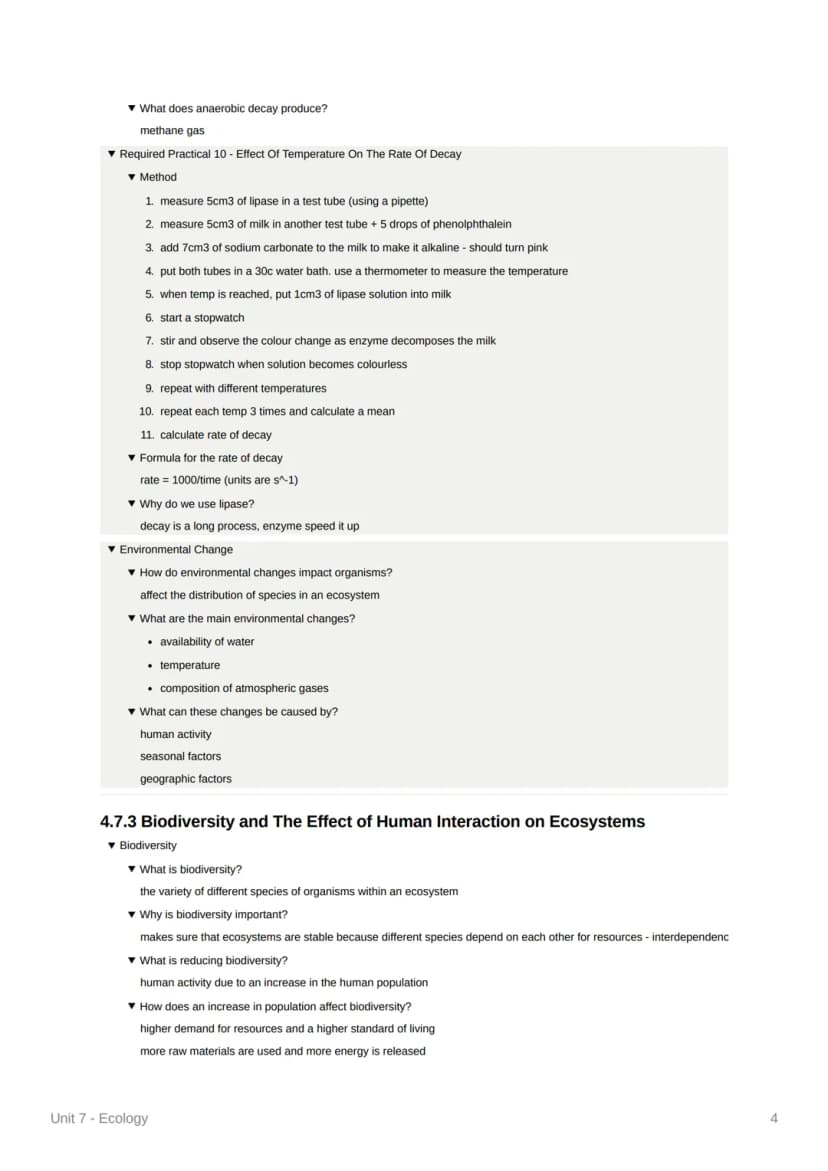
The carbon cycle keeps carbon moving between the atmosphere, living things, and the environment. Plants remove CO₂ during photosynthesis, animals release it through respiration, and decomposers break down dead organisms to return carbon to the soil and air.
The water cycle uses the sun's energy to evaporate water from seas, which condenses into clouds and falls as rain to provide fresh water for all life. It's a continuous loop that's been running for billions of years.
Decomposition breaks down dead organisms and waste, creating compost that acts as natural fertiliser. The rate of decay depends on temperature (warmer speeds it up), oxygen availability, water levels, and the number of decomposer organisms present.
Practical Tip: In the decay rate experiment, you'll use lipase enzyme to speed up the decomposition process and measure how temperature affects the rate using the formula: rate = 1000/time.
4
of 8
Environmental Changes and Biodiversity
Biodiversity - the variety of species in an ecosystem - keeps environments stable because different species depend on each other. However, human population growth is reducing biodiversity as we demand more resources and energy, taking materials from the environment faster than they can be replaced.
Human waste pollutes water, land, and air in different ways. Landfills leak toxic chemicals into waterways, pesticides damage soil and organisms, and industrial emissions create acid rain. Deforestation in tropical areas worsens climate change by reducing photosynthesis and releasing stored carbon when trees are burned.
Global warming results from increasing greenhouse gases like CO₂ and methane. This causes rising sea levels, flooding, habitat loss, and forces species to change their migration patterns or face extinction.
Action Point: Scientists create conservation programmes including breeding endangered species, protecting rare habitats, and encouraging recycling to minimise ecosystem damage - though these efforts face challenges from cost and economic pressures.
5
of 8
Trophic Levels and Energy Transfer
Trophic levels represent the different stages of food chains, with four main levels. Level one contains producers (plants and algae), level two has primary consumers (herbivores), level three includes secondary consumers (carnivores), and level four features tertiary consumers - the apex predators at the top.
Pyramids of biomass show how much living material exists at each trophic level. Producers only capture about 1% of available light energy, and approximately 10% of biomass transfers to each higher level. The rest gets lost through incomplete eating, excretion, and respiration.
Decomposers like bacteria and fungi break down dead organisms by secreting enzymes that turn complex materials into simple molecules they can absorb. This recycling process is essential for returning nutrients to the ecosystem.
Calculation Key: Biomass transfer efficiency = (biomass transferred to next level ÷ biomass at previous level) × 100
6
of 8
Food Security and Production
Food security means having enough food to feed everyone, but it's threatened by growing populations, changing diets in developed countries, new pests and diseases, environmental changes, and conflicts over resources.
Overfishing has caused fish stock declines, but solutions include fishing quotas (limits on catches) and using bigger mesh nets so young fish can escape to reach breeding age. Food production efficiency improves by restricting animal movement, controlling temperatures, and feeding high-protein diets - though these intensive methods raise disease spread and animal welfare concerns.
Biotechnology uses living organisms to create useful products. Mycoprotein from Fusarium fungus provides high-protein meat substitutes for vegetarians. Human insulin production involves inserting human genes into bacteria using restriction enzymes and plasmids.
Ethics Check: Genetic modification can create pest-resistant crops and improve nutrition , but critics argue we should tackle poverty and soil quality issues first rather than just modifying crops.
7
of 8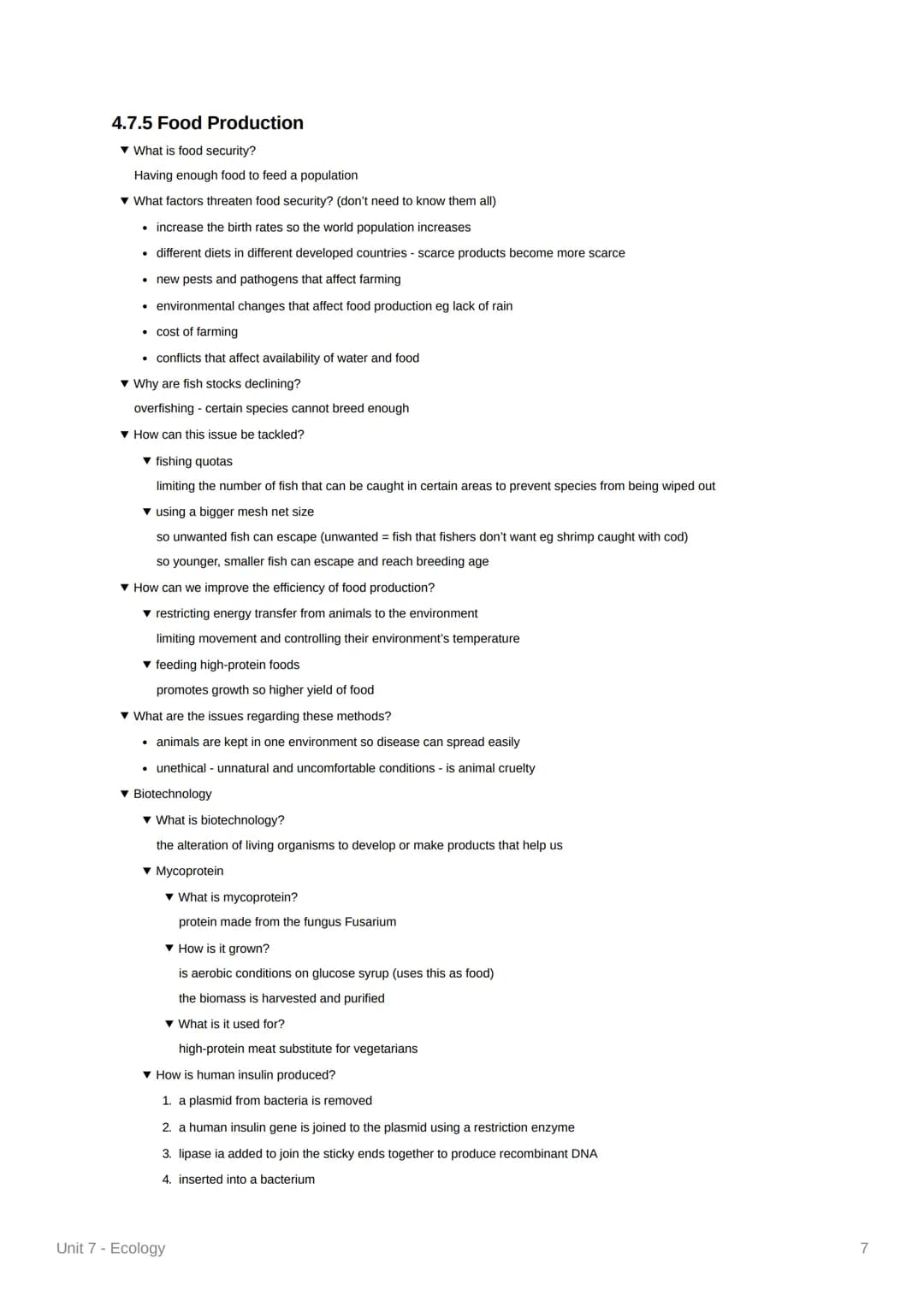
8
of 8
We thought you’d never ask...
What is the Knowunity AI companion?
Our AI companion is specifically built for the needs of students. Based on the millions of content pieces we have on the platform we can provide truly meaningful and relevant answers to students. But its not only about answers, the companion is even more about guiding students through their daily learning challenges, with personalised study plans, quizzes or content pieces in the chat and 100% personalisation based on the students skills and developments.
Where can I download the Knowunity app?
You can download the app in the Google Play Store and in the Apple App Store.
Is Knowunity really free of charge?
That's right! Enjoy free access to study content, connect with fellow students, and get instant help – all at your fingertips.
Similar Content
Most popular content: Ecology
3BiologyEcology and Biodiversity Overview
Explore key concepts in ecology, including food chains, biodiversity, and the impact of human activities on ecosystems. This comprehensive summary covers essential topics such as GMOs, climate change, and conservation strategies, providing a clear understanding of ecological principles and their relevance to environmental science. Ideal for AQA Biology Paper 2 preparation.
116,026202
BiologyEcology: Sampling Techniques
Explore essential sampling methods in ecology, focusing on quadrats and transects for measuring population density and distribution. This practical guide covers step-by-step procedures for effective data collection and analysis, tailored for AQA Biology students.
112973
BiologyEcological Interactions Overview
Explore key concepts in ecology, including adaptations, food chains, biogeochemical cycles, and the roles of biotic and abiotic factors. This summary covers essential topics such as competition, interdependence, and decomposition processes, providing a comprehensive understanding for GCSE AQA students.
9912
Most popular content in Biology
9C
BiologyCell Biology and Cell structure
cell structures
93,2470
1
Biology1.cells Gcse biology question cards
combined science higher biology
92,3534
BiologyAQA Biology: Key Concepts
Explore essential AQA Biology topics including Photosynthesis, Respiration, Homeostasis, Genetics, and Ecology. This comprehensive knowledge organizer covers key concepts such as energy transfer, hormonal control, and genetic variation, providing a solid foundation for your studies. Ideal for exam preparation and understanding biological processes.
108,793306
T
BiologyThe functions of subcellular structures - B1 Biology
Flashcards on the different functions of subcellular structures: cell membrane, nucleus, mitochondria, ribosomes, cytoplasm, permant vacuole, chloroplasts and cell wall.
102,7885
BiologyA-Level Biology Year 1 Overview
Comprehensive summary of AQA A-Level Biology Year 1, covering key topics such as cellular structure, protein synthesis, immune response, gas exchange, and more. Ideal for exam preparation and understanding biological concepts. Includes detailed insights into cellular processes, biological classification, and the circulatory system.
1214,891694
T
BiologyTypes of cells
biology
101,2090
B
BiologyBiology Paper 1 quiz
this is a simple quiz on key knowledge needed for paper 1
112,7745
BiologyBiology paper 1 Summary
Notes for Biology paper 1 contains the full course for AQA higher combined!
104,130106
C
BiologyCells part 1 function of cells.
About cells and function of cells etc.
119861
Most popular content
9 Sociology
Sociology of Education Overview
Explore comprehensive A-Level Sociology notes on the education system, covering key theories, policies, and sociological perspectives. This resource includes insights on marketisation, gender roles, cultural deprivation, and educational inequalities, providing a thorough understanding of how education shapes social stratification and individual achievement. Ideal for exam preparation and in-depth study.
12102,8693,040
SociologySociology of Families: Comprehensive Revision
Dive into an extensive overview of family dynamics, perspectives, and patterns in sociology. This resource covers key concepts such as family diversity, gender roles, marriage, and the impact of social policies on family structures. Perfect for A-Level Sociology students preparing for Paper 2.
1273,6612,307
CriminologyCriminology: Crime & Punishment Overview
Comprehensive mindmaps covering key concepts in the Crime and Punishment topic for WJEC Criminology Unit 4. This resource includes detailed insights into the Criminal Justice System, crime prevention strategies, sentencing models, and the roles of various agencies. Ideal for A-Level revision, ensuring you grasp essential theories and legislative processes to excel in your exams.
1254,8691,059
SociologyComprehensive Crime & Deviance Overview
Explore an extensive revision of crime and deviance topics, including theories, types of crime, and the impact of media. This resource covers key concepts such as Marxism, functionalism, gender and crime, and the influence of globalization on criminal behavior. Ideal for students seeking a thorough understanding of criminology and its various theories. Type: Full Topic Revision.
1251,6541,399
C
BiologyCell Biology and Cell structure
cell structures
93,2470
 English Literature
An Inspector Calls: Character Insights
Explore in-depth analysis and key quotes for characters in J.B. Priestley's 'An Inspector Calls'. This resource covers Gerald Croft, Inspector Goole, Sheila Birling, Mrs. Birling, Eric Birling, and Eva Smith, focusing on themes of class, gender roles, and social responsibility. Ideal for students aiming for Grade 8 and above.
1025,429907
CriminologyWJEC Unit 4 Criminology
Criminology unit 4 detailed revision note
127,151125
CriminologyCriminology Theories Overview
Explore key criminology theories and their implications on crime and deviance. This comprehensive summary covers biological, psychological, and sociological perspectives, including labelling theory, right realism, and the impact of social campaigns on policy development. Ideal for A-Level criminology students seeking to understand the complexities of criminal behaviour and the factors influencing crime prevention strategies.
129,760210
English LiteratureRomeo and Juliet: Key themes
Key Romeo and Juliet themes and analysed quotes
106,708198
Can't find what you're looking for? Explore other subjects.
Students love us — and so will you.
4.6/5App Store
4.7/5Google Play
The app is very easy to use and well designed. I have found everything I was looking for so far and have been able to learn a lot from the presentations! I will definitely use the app for a class assignment! And of course it also helps a lot as an inspiration.
Stefan SiOS user
This app is really great. There are so many study notes and help [...]. My problem subject is French, for example, and the app has so many options for help. Thanks to this app, I have improved my French. I would recommend it to anyone.
Samantha KlichAndroid user
Wow, I am really amazed. I just tried the app because I've seen it advertised many times and was absolutely stunned. This app is THE HELP you want for school and above all, it offers so many things, such as workouts and fact sheets, which have been VERY helpful to me personally.
AnnaiOS user
Biology1,807 views·Updated Jun 20, 2026·8 pagesGCSE Ecology Revision Questions
Zainab@zainab_02839
Ecology is all about how living things interact with each other and their environment - think of it as nature's big web of connections. You'll discover how organisms compete, adapt, and depend on each other, plus learn about the impact...
1
of 8
Sign up to see the content. It's free!
- Access to all documents
- Improve your grades
- Join milions of students
Ecosystems, Competition and Adaptations
Every ecosystem is like a massive community where living things interact with their surroundings. Abiotic factors are the non-living parts of the environment - things like temperature, light intensity, and soil pH that affect where organisms can survive.
Biotic factors are all the living components that influence each other. These include food availability, new predators showing up, or diseases spreading through populations. Plants compete for light, space, water, and minerals from the soil, whilst animals fight over territory, food, water, and mates.
Interdependence means species rely on each other for survival - remove one species and it creates a domino effect throughout the entire community. Organisms have developed three types of adaptations: structural (body features like shape or colour), behavioural (like migration patterns), and functional (internal processes like metabolism).
Key Point: Environmental changes from seasonal shifts, geographical factors, or human activity can dramatically affect where species can live and thrive.
2
of 8Sign up to see the content. It's free!
- Access to all documents
- Improve your grades
- Join milions of students
Studying Organisms and Food Chains
Extremophiles are tough microorganisms that live in extreme conditions where most life couldn't survive. Scientists study organism distribution using quadrats (square frames) and transects (straight lines across habitats) to count and compare populations in different areas.
Producers like green plants and algae kick off every food chain by making glucose through photosynthesis. This glucose becomes their biomass - the building blocks of life. Food chains follow a simple pattern: Producers → Primary Consumers (herbivores) → Secondary Consumers (carnivores) → Tertiary Consumers.
Predator-prey relationships create natural cycles where populations rise and fall together. When there's lots of prey, predator numbers increase. As predators eat more prey, prey numbers drop, which then causes predator numbers to fall too.
Remember: Energy transfers between organisms when they eat each other, but materials like carbon and nitrogen get recycled through the environment to be used again and again.
3
of 8Sign up to see the content. It's free!
- Access to all documents
- Improve your grades
- Join milions of students
Cycles and Decomposition
The carbon cycle keeps carbon moving between the atmosphere, living things, and the environment. Plants remove CO₂ during photosynthesis, animals release it through respiration, and decomposers break down dead organisms to return carbon to the soil and air.
The water cycle uses the sun's energy to evaporate water from seas, which condenses into clouds and falls as rain to provide fresh water for all life. It's a continuous loop that's been running for billions of years.
Decomposition breaks down dead organisms and waste, creating compost that acts as natural fertiliser. The rate of decay depends on temperature (warmer speeds it up), oxygen availability, water levels, and the number of decomposer organisms present.
Practical Tip: In the decay rate experiment, you'll use lipase enzyme to speed up the decomposition process and measure how temperature affects the rate using the formula: rate = 1000/time.
4
of 8Sign up to see the content. It's free!
- Access to all documents
- Improve your grades
- Join milions of students
Environmental Changes and Biodiversity
Biodiversity - the variety of species in an ecosystem - keeps environments stable because different species depend on each other. However, human population growth is reducing biodiversity as we demand more resources and energy, taking materials from the environment faster than they can be replaced.
Human waste pollutes water, land, and air in different ways. Landfills leak toxic chemicals into waterways, pesticides damage soil and organisms, and industrial emissions create acid rain. Deforestation in tropical areas worsens climate change by reducing photosynthesis and releasing stored carbon when trees are burned.
Global warming results from increasing greenhouse gases like CO₂ and methane. This causes rising sea levels, flooding, habitat loss, and forces species to change their migration patterns or face extinction.
Action Point: Scientists create conservation programmes including breeding endangered species, protecting rare habitats, and encouraging recycling to minimise ecosystem damage - though these efforts face challenges from cost and economic pressures.
5
of 8Sign up to see the content. It's free!
- Access to all documents
- Improve your grades
- Join milions of students
Trophic Levels and Energy Transfer
Trophic levels represent the different stages of food chains, with four main levels. Level one contains producers (plants and algae), level two has primary consumers (herbivores), level three includes secondary consumers (carnivores), and level four features tertiary consumers - the apex predators at the top.
Pyramids of biomass show how much living material exists at each trophic level. Producers only capture about 1% of available light energy, and approximately 10% of biomass transfers to each higher level. The rest gets lost through incomplete eating, excretion, and respiration.
Decomposers like bacteria and fungi break down dead organisms by secreting enzymes that turn complex materials into simple molecules they can absorb. This recycling process is essential for returning nutrients to the ecosystem.
Calculation Key: Biomass transfer efficiency = (biomass transferred to next level ÷ biomass at previous level) × 100
6
of 8Sign up to see the content. It's free!
- Access to all documents
- Improve your grades
- Join milions of students
Food Security and Production
Food security means having enough food to feed everyone, but it's threatened by growing populations, changing diets in developed countries, new pests and diseases, environmental changes, and conflicts over resources.
Overfishing has caused fish stock declines, but solutions include fishing quotas (limits on catches) and using bigger mesh nets so young fish can escape to reach breeding age. Food production efficiency improves by restricting animal movement, controlling temperatures, and feeding high-protein diets - though these intensive methods raise disease spread and animal welfare concerns.
Biotechnology uses living organisms to create useful products. Mycoprotein from Fusarium fungus provides high-protein meat substitutes for vegetarians. Human insulin production involves inserting human genes into bacteria using restriction enzymes and plasmids.
Ethics Check: Genetic modification can create pest-resistant crops and improve nutrition , but critics argue we should tackle poverty and soil quality issues first rather than just modifying crops.
7
of 8Sign up to see the content. It's free!
- Access to all documents
- Improve your grades
- Join milions of students
8
of 8Sign up to see the content. It's free!
- Access to all documents
- Improve your grades
- Join milions of students
We thought you’d never ask...
What is the Knowunity AI companion?
Our AI companion is specifically built for the needs of students. Based on the millions of content pieces we have on the platform we can provide truly meaningful and relevant answers to students. But its not only about answers, the companion is even more about guiding students through their daily learning challenges, with personalised study plans, quizzes or content pieces in the chat and 100% personalisation based on the students skills and developments.
Where can I download the Knowunity app?
You can download the app in the Google Play Store and in the Apple App Store.
Is Knowunity really free of charge?
That's right! Enjoy free access to study content, connect with fellow students, and get instant help – all at your fingertips.
Similar Content
Most popular content: Ecology
3BiologyEcology and Biodiversity Overview
Explore key concepts in ecology, including food chains, biodiversity, and the impact of human activities on ecosystems. This comprehensive summary covers essential topics such as GMOs, climate change, and conservation strategies, providing a clear understanding of ecological principles and their relevance to environmental science. Ideal for AQA Biology Paper 2 preparation.
116,026202
BiologyEcology: Sampling Techniques
Explore essential sampling methods in ecology, focusing on quadrats and transects for measuring population density and distribution. This practical guide covers step-by-step procedures for effective data collection and analysis, tailored for AQA Biology students.
112973
BiologyEcological Interactions Overview
Explore key concepts in ecology, including adaptations, food chains, biogeochemical cycles, and the roles of biotic and abiotic factors. This summary covers essential topics such as competition, interdependence, and decomposition processes, providing a comprehensive understanding for GCSE AQA students.
9912
Most popular content in Biology
9C
BiologyCell Biology and Cell structure
cell structures
93,2470
1
Biology1.cells Gcse biology question cards
combined science higher biology
92,3534
BiologyAQA Biology: Key Concepts
Explore essential AQA Biology topics including Photosynthesis, Respiration, Homeostasis, Genetics, and Ecology. This comprehensive knowledge organizer covers key concepts such as energy transfer, hormonal control, and genetic variation, providing a solid foundation for your studies. Ideal for exam preparation and understanding biological processes.
108,793306
T
BiologyThe functions of subcellular structures - B1 Biology
Flashcards on the different functions of subcellular structures: cell membrane, nucleus, mitochondria, ribosomes, cytoplasm, permant vacuole, chloroplasts and cell wall.
102,7885
BiologyA-Level Biology Year 1 Overview
Comprehensive summary of AQA A-Level Biology Year 1, covering key topics such as cellular structure, protein synthesis, immune response, gas exchange, and more. Ideal for exam preparation and understanding biological concepts. Includes detailed insights into cellular processes, biological classification, and the circulatory system.
1214,891694
T
BiologyTypes of cells
biology
101,2090
B
BiologyBiology Paper 1 quiz
this is a simple quiz on key knowledge needed for paper 1
112,7745
BiologyBiology paper 1 Summary
Notes for Biology paper 1 contains the full course for AQA higher combined!
104,130106
C
BiologyCells part 1 function of cells.
About cells and function of cells etc.
119861
Most popular content
9SociologySociology of Education Overview
Explore comprehensive A-Level Sociology notes on the education system, covering key theories, policies, and sociological perspectives. This resource includes insights on marketisation, gender roles, cultural deprivation, and educational inequalities, providing a thorough understanding of how education shapes social stratification and individual achievement. Ideal for exam preparation and in-depth study.
12102,8693,040
SociologySociology of Families: Comprehensive Revision
Dive into an extensive overview of family dynamics, perspectives, and patterns in sociology. This resource covers key concepts such as family diversity, gender roles, marriage, and the impact of social policies on family structures. Perfect for A-Level Sociology students preparing for Paper 2.
1273,6612,307
CriminologyCriminology: Crime & Punishment Overview
Comprehensive mindmaps covering key concepts in the Crime and Punishment topic for WJEC Criminology Unit 4. This resource includes detailed insights into the Criminal Justice System, crime prevention strategies, sentencing models, and the roles of various agencies. Ideal for A-Level revision, ensuring you grasp essential theories and legislative processes to excel in your exams.
1254,8691,059
SociologyComprehensive Crime & Deviance Overview
Explore an extensive revision of crime and deviance topics, including theories, types of crime, and the impact of media. This resource covers key concepts such as Marxism, functionalism, gender and crime, and the influence of globalization on criminal behavior. Ideal for students seeking a thorough understanding of criminology and its various theories. Type: Full Topic Revision.
1251,6541,399
C
BiologyCell Biology and Cell structure
cell structures
93,2470
English LiteratureAn Inspector Calls: Character Insights
Explore in-depth analysis and key quotes for characters in J.B. Priestley's 'An Inspector Calls'. This resource covers Gerald Croft, Inspector Goole, Sheila Birling, Mrs. Birling, Eric Birling, and Eva Smith, focusing on themes of class, gender roles, and social responsibility. Ideal for students aiming for Grade 8 and above.
1025,429907
CriminologyWJEC Unit 4 Criminology
Criminology unit 4 detailed revision note
127,151125
CriminologyCriminology Theories Overview
Explore key criminology theories and their implications on crime and deviance. This comprehensive summary covers biological, psychological, and sociological perspectives, including labelling theory, right realism, and the impact of social campaigns on policy development. Ideal for A-Level criminology students seeking to understand the complexities of criminal behaviour and the factors influencing crime prevention strategies.
129,760210
English LiteratureRomeo and Juliet: Key themes
Key Romeo and Juliet themes and analysed quotes
106,708198
Can't find what you're looking for? Explore other subjects.
Students love us — and so will you.
4.6/5App Store
4.7/5Google Play
The app is very easy to use and well designed. I have found everything I was looking for so far and have been able to learn a lot from the presentations! I will definitely use the app for a class assignment! And of course it also helps a lot as an inspiration.
Stefan SiOS user
This app is really great. There are so many study notes and help [...]. My problem subject is French, for example, and the app has so many options for help. Thanks to this app, I have improved my French. I would recommend it to anyone.
Samantha KlichAndroid user
Wow, I am really amazed. I just tried the app because I've seen it advertised many times and was absolutely stunned. This app is THE HELP you want for school and above all, it offers so many things, such as workouts and fact sheets, which have been VERY helpful to me personally.
AnnaiOS user