
Ever wonder how your cells work and what makes them...
 Biology783 views·Updated Jun 15, 2026·8 pages
Comprehensive GCSE Biology Mind Maps with Key Diagrams

mel@mel.jane84
1 / 8
1
of 8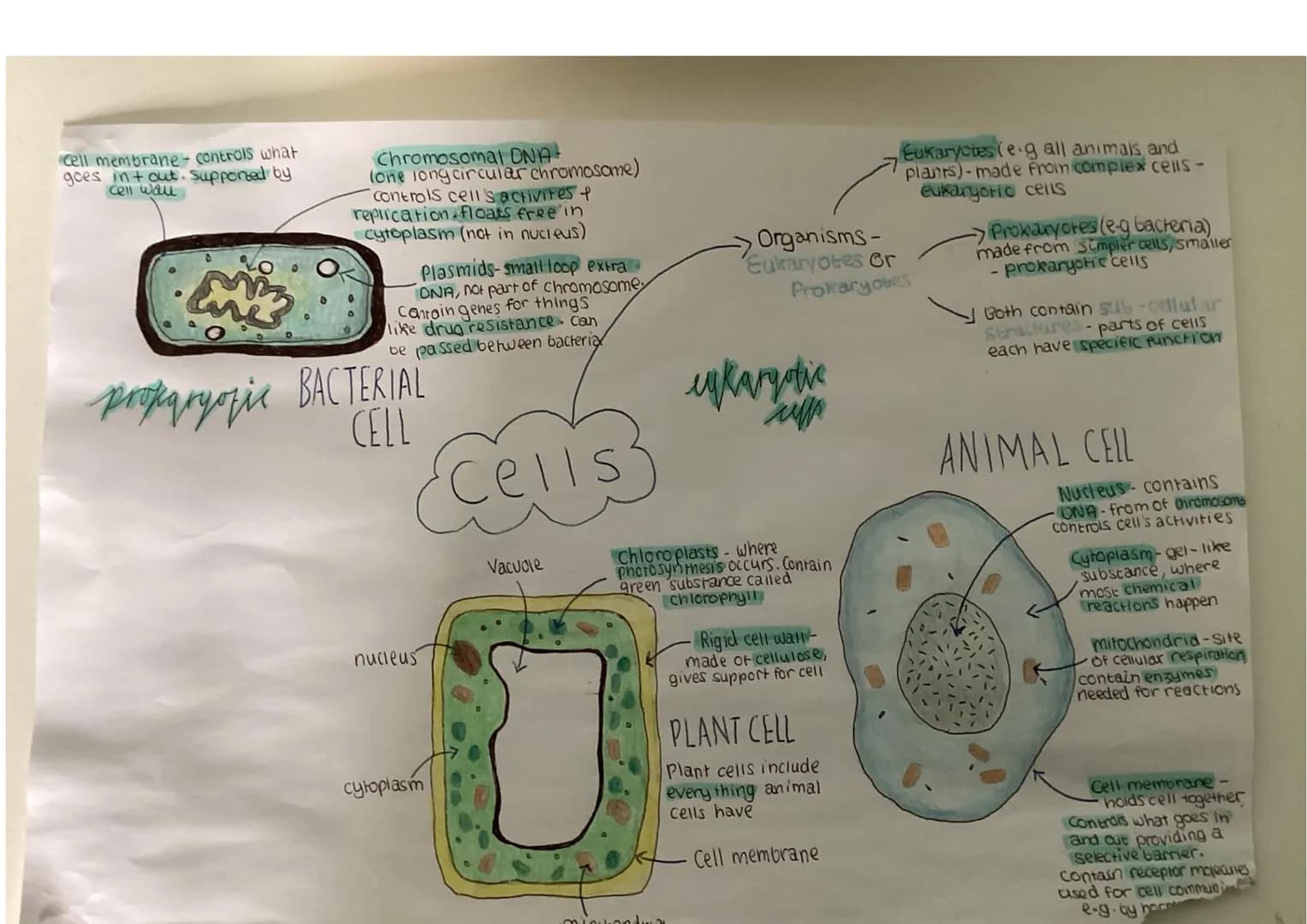
Cell Types and Structure
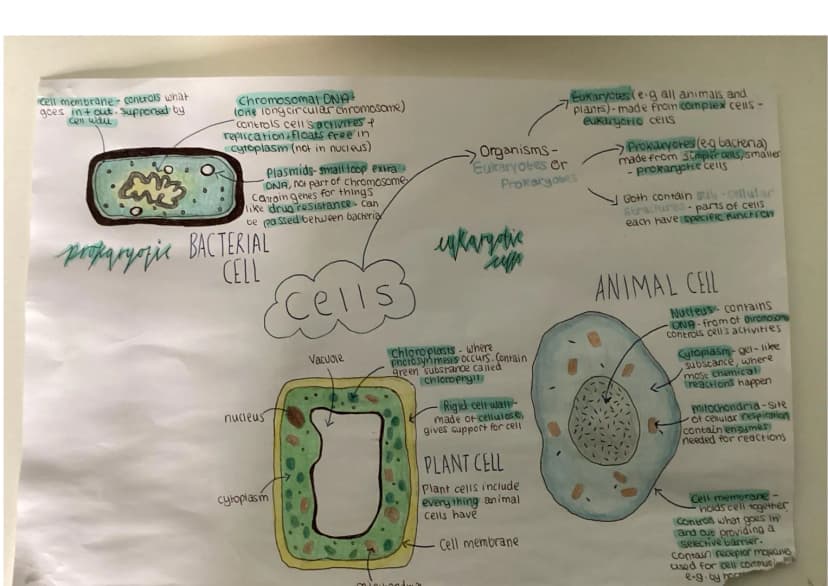
Prokaryotic cells (like bacteria) are the simpler ones - they're basically just floating their DNA around without a proper nucleus! Their chromosomal DNA forms one long circular loop that controls everything the cell does. They also have bonus DNA called plasmids - these little loops can carry handy genes like drug resistance and get passed between bacteria like trading cards.
Eukaryotic cells (animals and plants) are the complex ones with a proper nucleus that houses their DNA. Animal cells have a cell membrane that acts like a bouncer, deciding what gets in and out, plus mitochondria (the powerhouses) where cellular respiration happens. The cytoplasm is like a gel where most chemical reactions occur.
Plant cells have everything animal cells have, plus some extras. They've got a rigid cell wall made of cellulose for support, and chloroplasts containing chlorophyll for photosynthesis. Think of plant cells as animal cells with added superpowers!
💡 Remember: Prokaryotes = no nucleus (bacteria), Eukaryotes = nucleus present (plants and animals)
2
of 8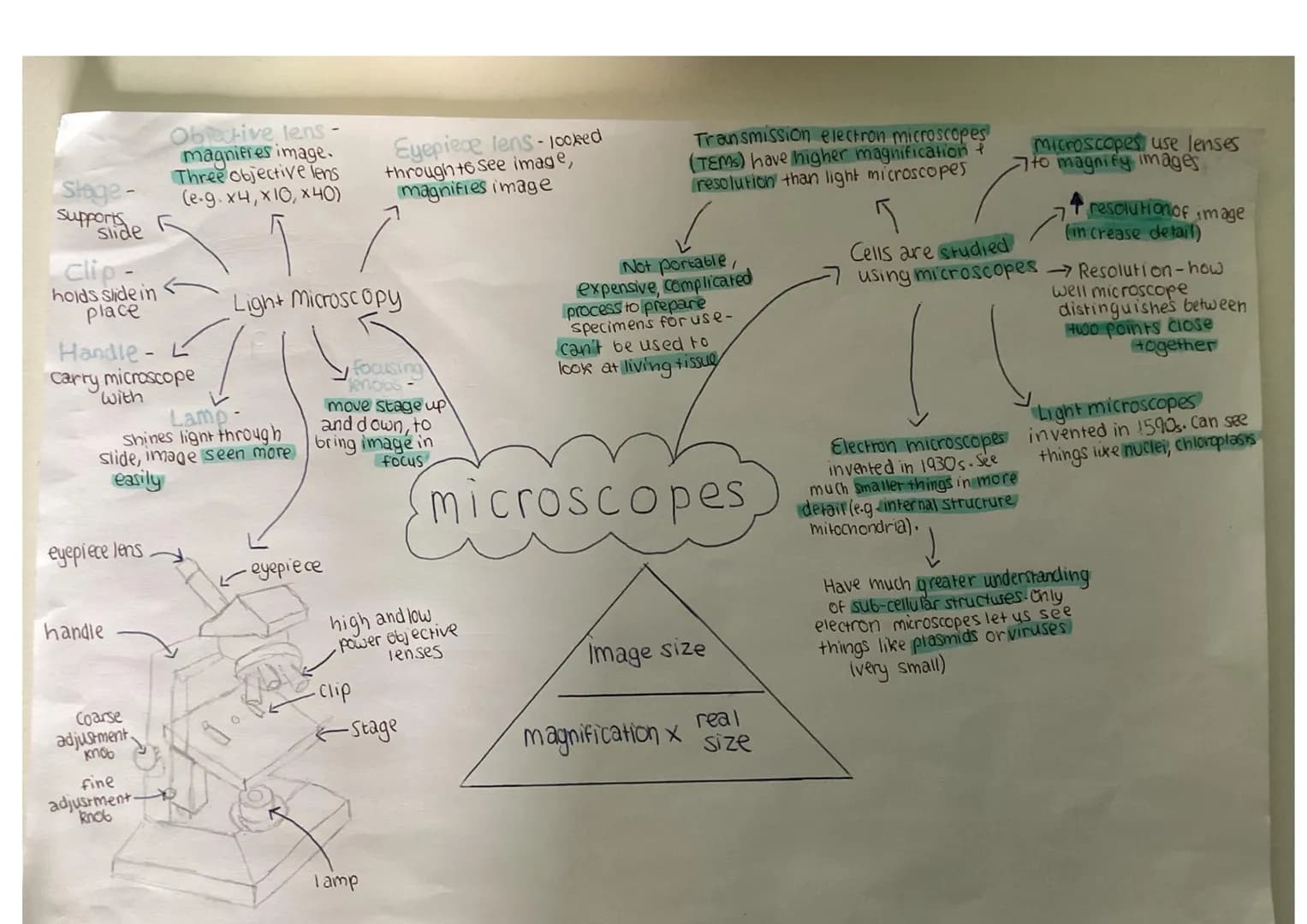
Light Microscopy
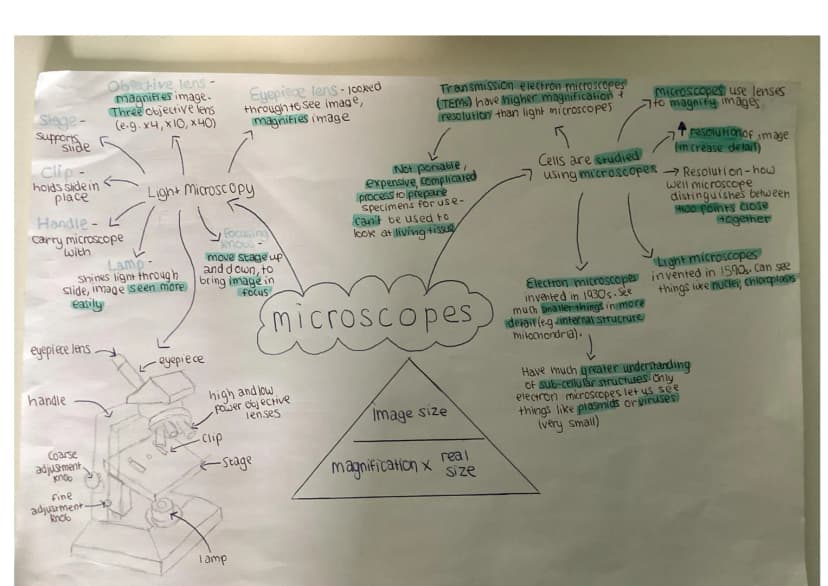
Light microscopes have been helping scientists since the 1590s, and they're still brilliant for viewing things like nuclei and chloroplasts. The total magnification equals eyepiece lens magnification × objective lens magnification - simple maths that'll definitely come up in exams!
Electron microscopes (invented in the 1930s) are the heavy hitters with much higher magnification and resolution. While light microscopes are portable and can view living tissue, electron microscopes can reveal tiny details like plasmids and viruses that light microscopes simply can't see.
Resolution is crucial - it's how well a microscope can distinguish between two points close together. Higher magnification isn't always better though; if your specimen is quite big, you might not see the whole thing and focusing becomes trickier.
The key formula you need: Image size = Magnification × Real size. Master this and you'll ace those calculation questions!
💡 Top tip: Start with the lowest magnification first, then work your way up for detailed views
3
of 8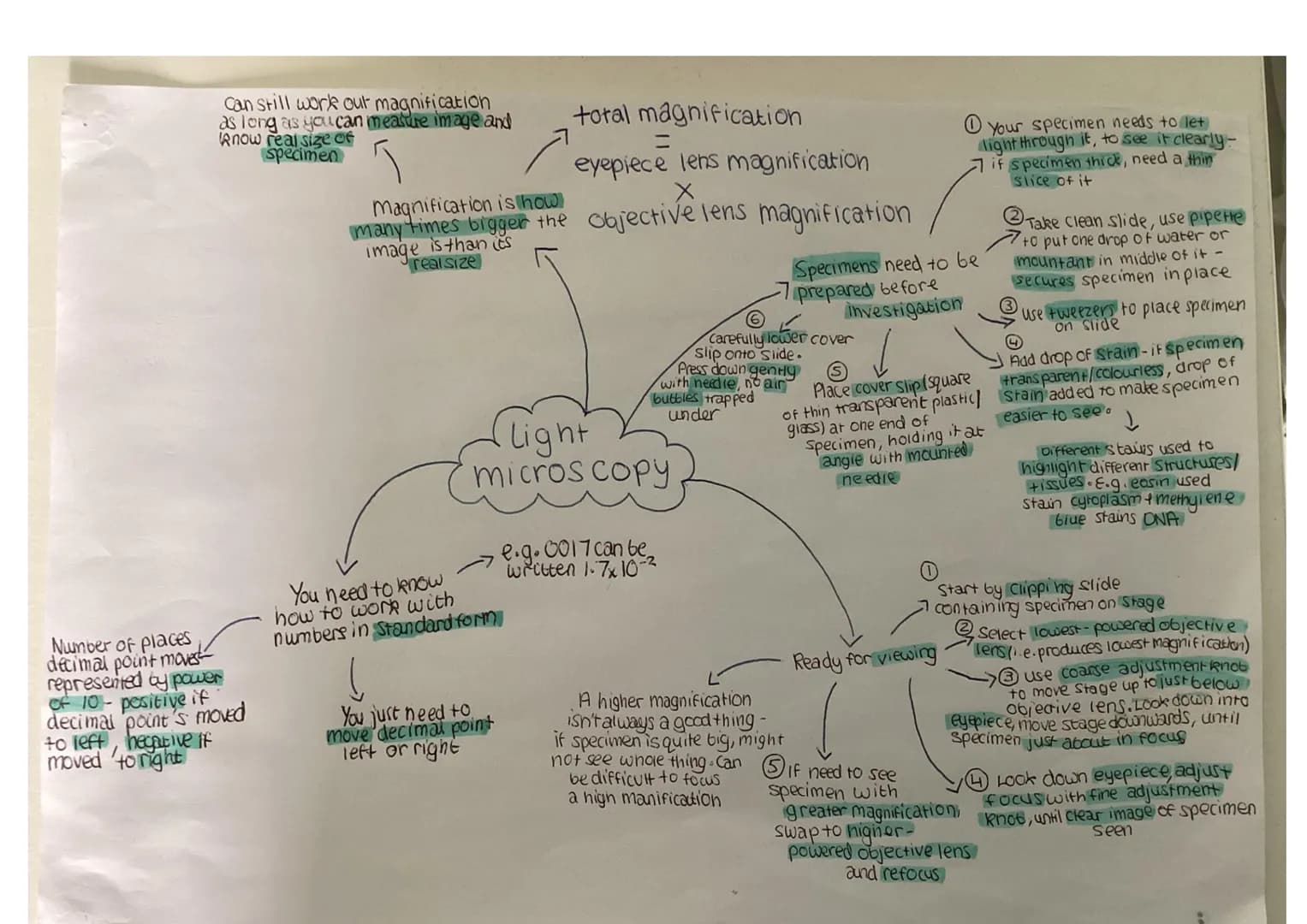
Using Microscopes and Standard Form
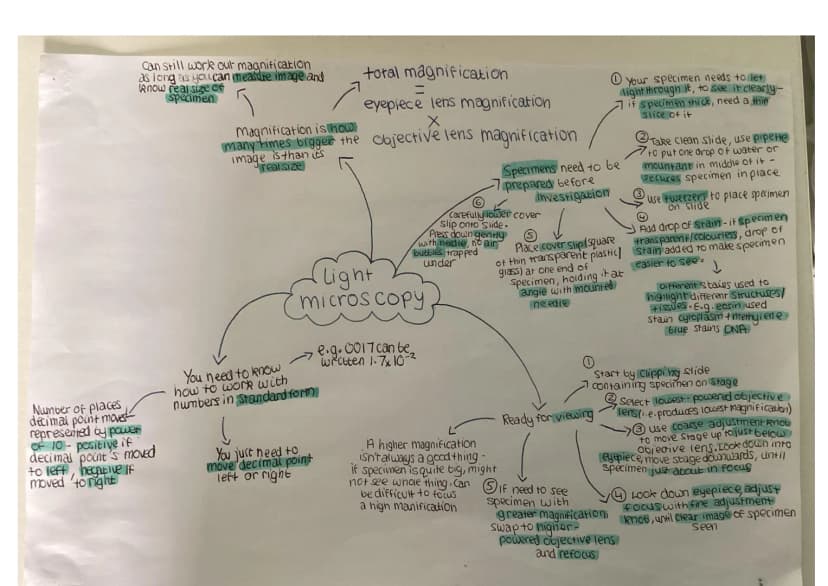
Preparing specimens properly is half the battle! Place a drop of water on a clean slide, add your specimen with tweezers, then add a stain if needed. Iodine stains cytoplasm whilst methylene blue stains DNA - different stains highlight different structures.
When using the microscope, always start with the lowest-powered objective lens. Use the coarse adjustment knob to get roughly in focus, then fine-tune with the fine adjustment knob. This step-by-step approach prevents you from crashing the lens into your slide!
Standard form makes those tiny measurements manageable. Remember: if the decimal point moves left, the power of 10 is positive; if it moves right, it's negative. So 0.017 becomes 1.7 × 10⁻².
You can still work out magnification as long as you can measure the image and know the real size of the specimen. This flexibility is handy when dealing with photographs or drawings in exams.
💡 Memory trick: Think "left = positive, right = negative" for standard form powers
4
of 8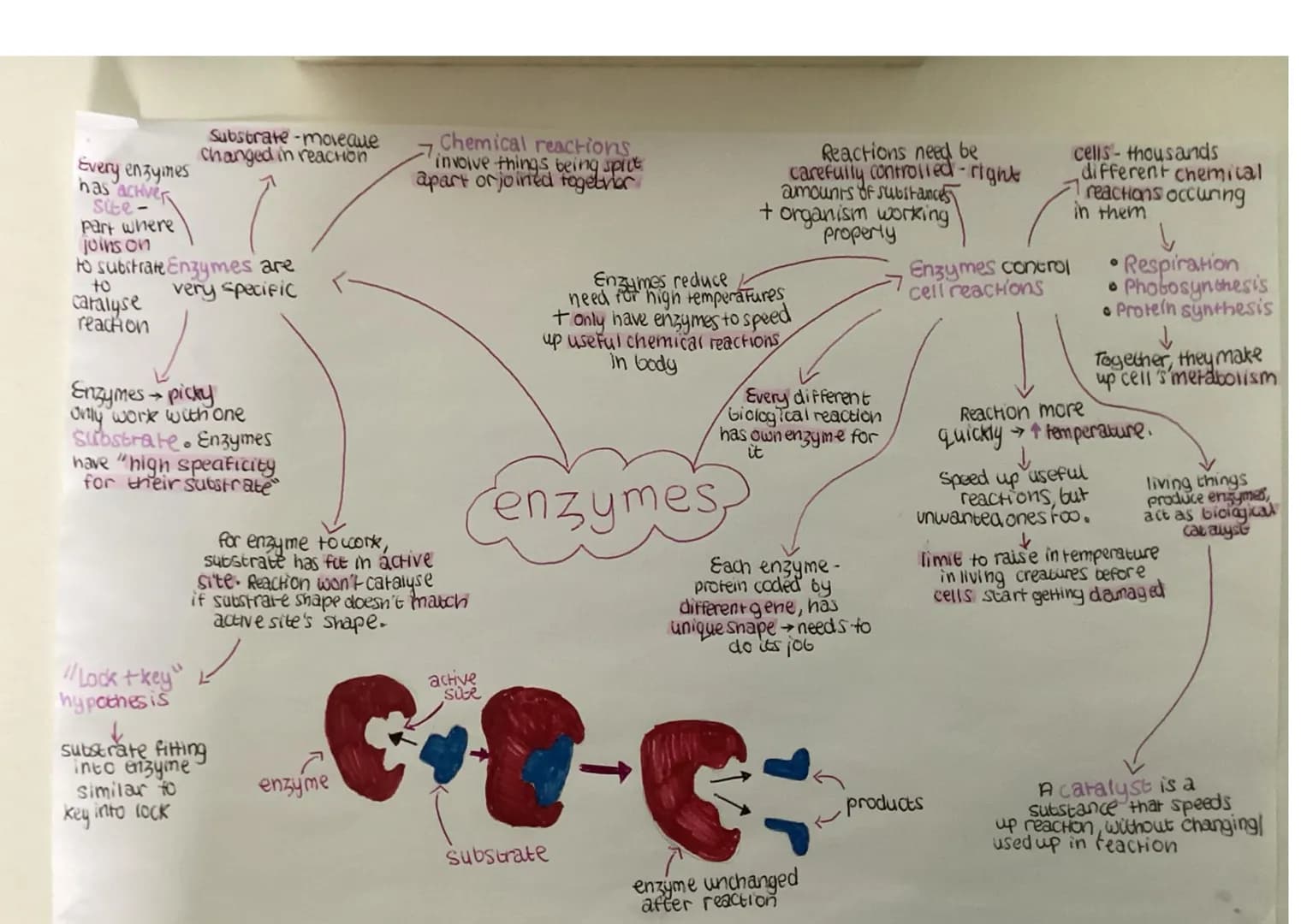
Enzymes and Reactions
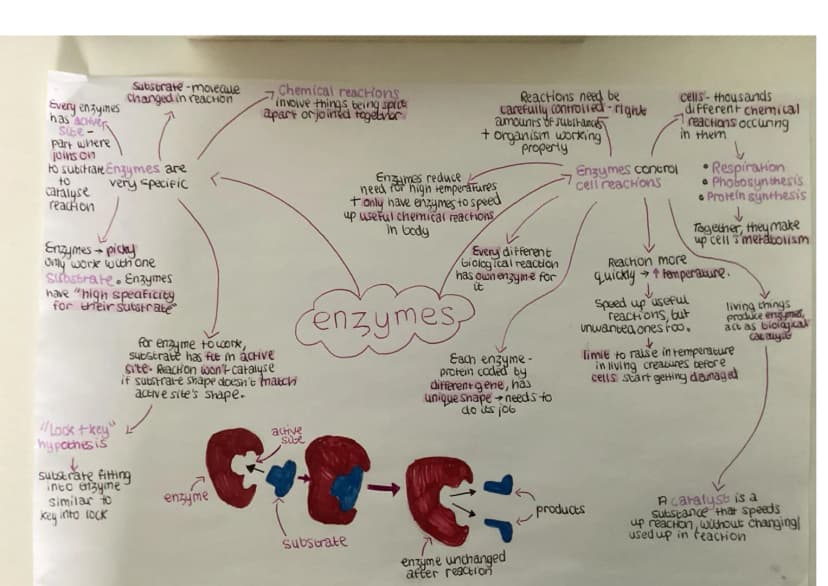
Enzymes are biological catalysts that speed up reactions without getting used up themselves. They're incredibly picky - each enzyme only works with one specific substrate because of their unique active site shape. Think of it like a lock and key system.
The 'lock and key' hypothesis explains enzyme specificity perfectly. If the substrate doesn't fit the active site's shape exactly, no reaction happens. This is why enzymes have "high specificity" for their substrate - they're basically biological perfectionists!
Every different biological reaction has its own enzyme. Respiration, photosynthesis, and protein synthesis all depend on specific enzymes to work properly. Together, these reactions make up your cell's metabolism.
Enzymes solve a major problem for living things. Chemical reactions usually need high temperatures to speed up, but enzymes let cells control reactions at body temperature without damaging themselves.
💡 Key point: Each enzyme is a protein coded by a different gene - that's why they all have unique shapes
5
of 8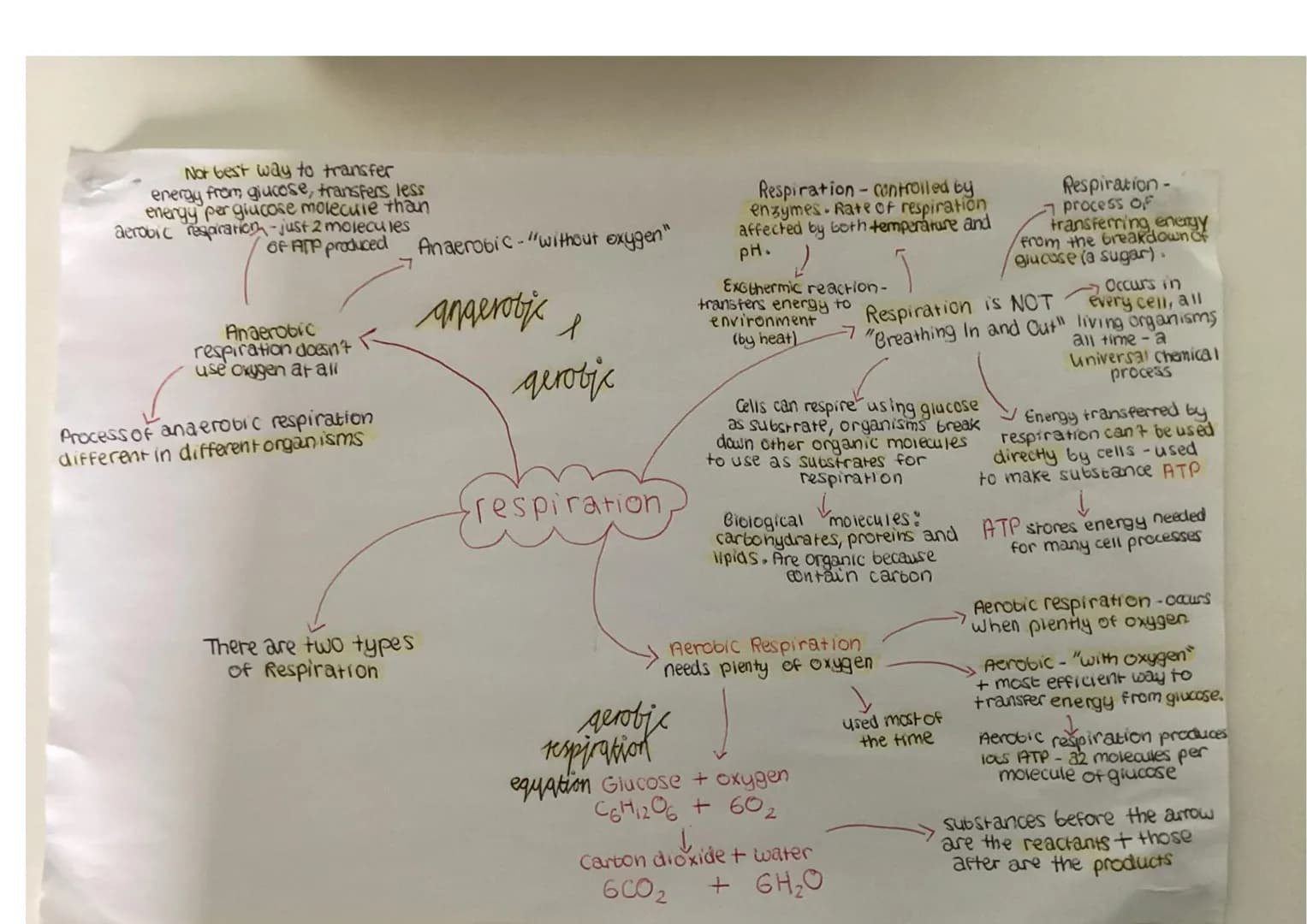
Cellular Respiration
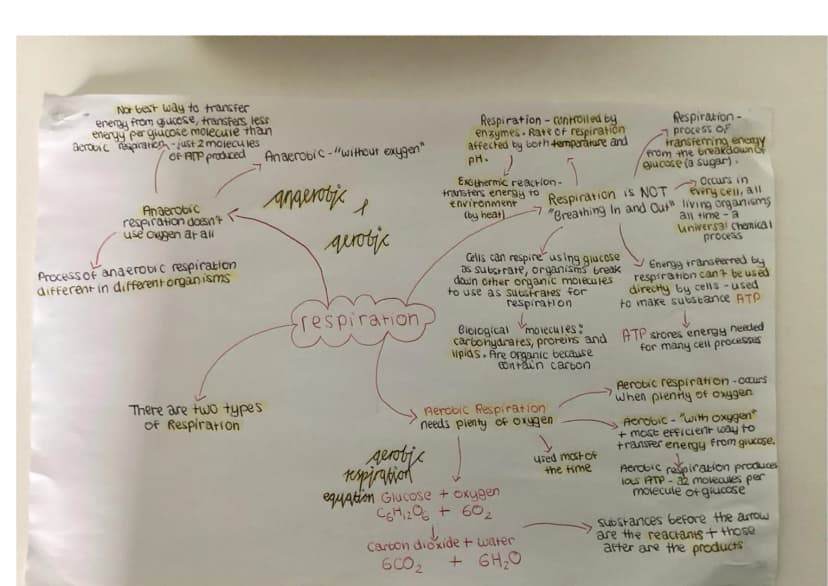
Respiration isn't just breathing - it's the process of transferring energy from glucose breakdown in every single cell. This exothermic reaction transfers energy to make ATP, which stores energy for cellular processes.
Aerobic respiration uses oxygen and is incredibly efficient, producing 32 ATP molecules per glucose molecule. The equation is: Glucose + Oxygen → Carbon dioxide + Water. This happens when there's plenty of oxygen available.
Anaerobic respiration works without oxygen but produces much less energy - just 2 ATP molecules per glucose. It's not the best energy transfer method, but it's better than nothing when oxygen runs out!
Temperature and pH affect respiration rate because the process is controlled by enzymes. Cells can also respire using other organic molecules (carbohydrates, proteins, lipids) as substrates when glucose isn't available.
💡 Remember: Aerobic = with oxygen (efficient), Anaerobic = without oxygen (less efficient but still useful!)
6
of 8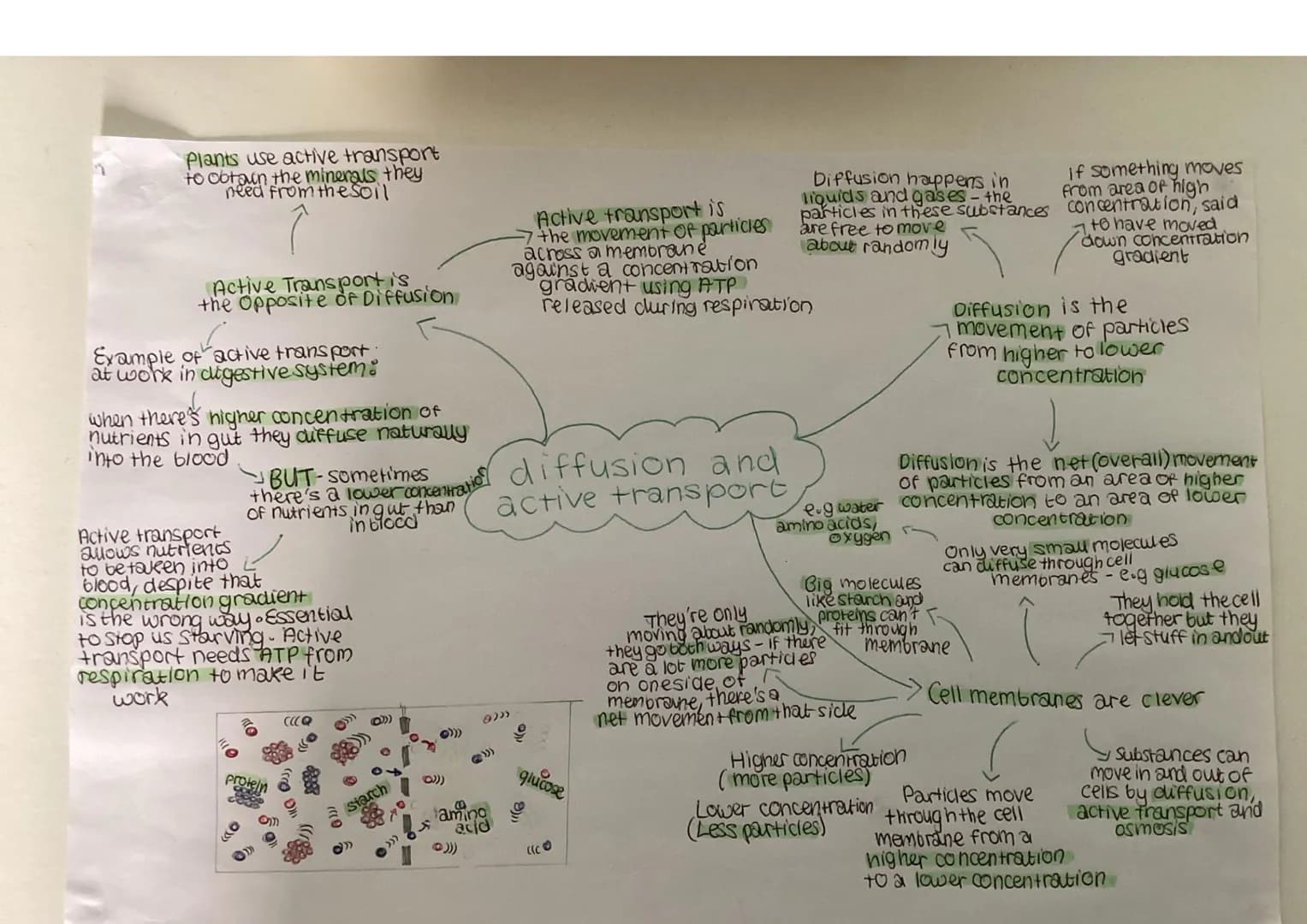
Diffusion and Active Transport
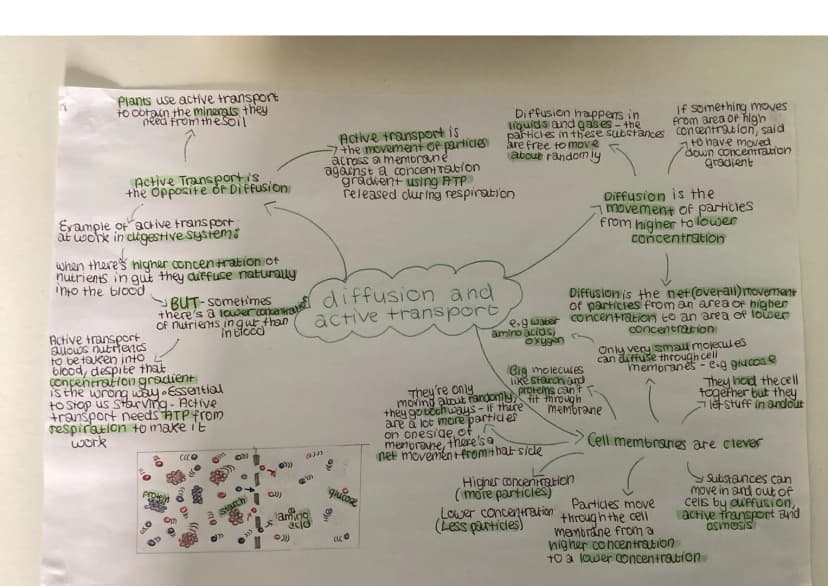
Diffusion is the movement of particles from higher to lower concentration - basically particles spreading out to even things up. Only very small molecules like glucose, water, and amino acids can diffuse through cell membranes.
Cell membranes are clever barriers that hold cells together whilst letting stuff in and out. Big molecules like starch and proteins can't squeeze through the tiny gaps, so they need other transport methods.
Active transport is diffusion's opposite - it moves particles against the concentration gradient using energy from respiration. This is essential when nutrients in your gut have lower concentration than in your blood, but your body still needs to absorb them.
Plants use active transport to grab minerals from soil even when there's more minerals in their roots than in the soil. Without this energy-requiring process, plants couldn't get essential nutrients and we'd struggle with malnutrition.
💡 Think of it: Diffusion is like rolling downhill (natural), active transport is like cycling uphill (needs energy!)
7
of 8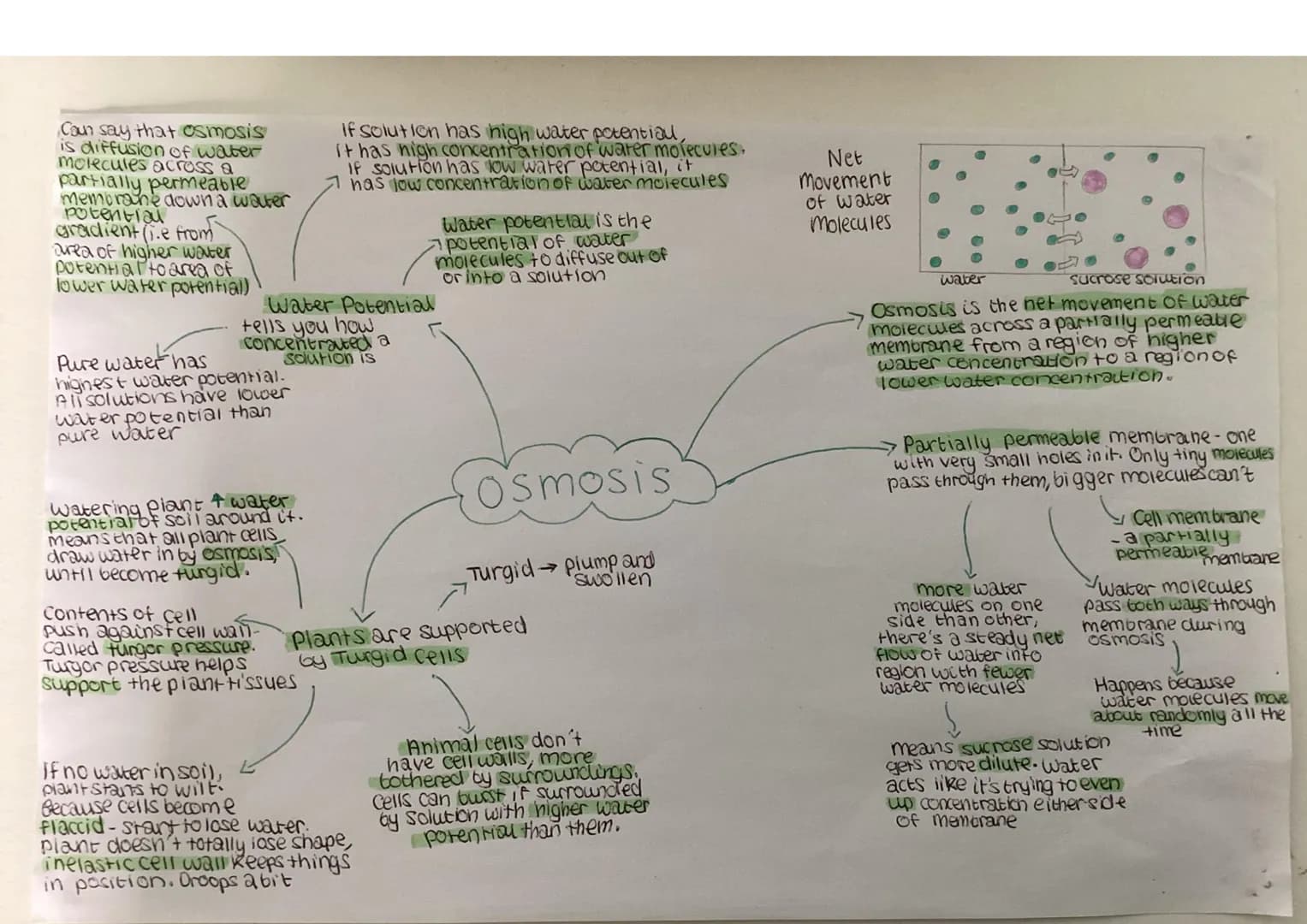
Osmosis and Water Potential
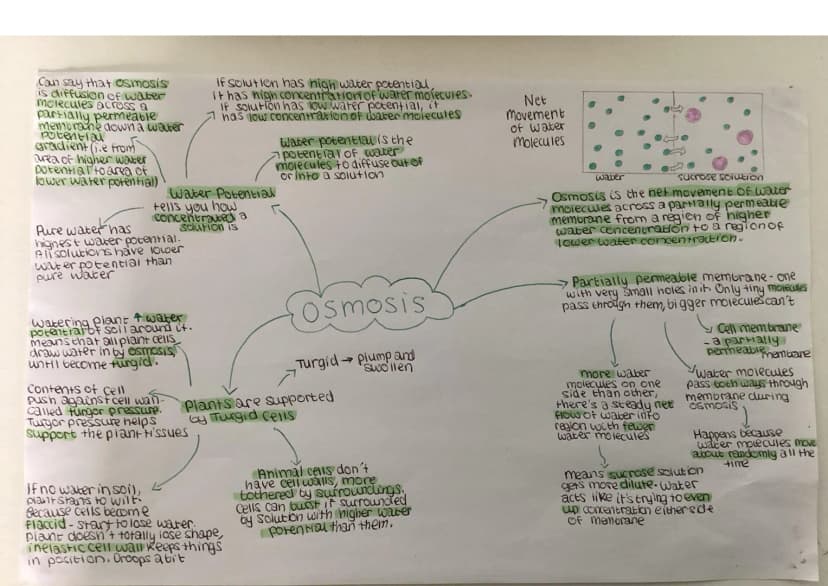
Osmosis is basically water diffusion across a partially permeable membrane. Water molecules move from higher water concentration to lower water concentration, trying to even things out on both sides.
Water potential tells you how concentrated a solution is. Pure water has the highest water potential, whilst all solutions have lower water potential than pure water. Think of it as water's "eagerness" to move.
Plant cells love being turgid (plump and swollen) because it creates turgor pressure against the cell wall, supporting the plant's structure. When plants don't get enough water, cells become flaccid and the plant wilts.
Animal cells are more vulnerable because they lack cell walls. They can actually burst if surrounded by solutions with higher water potential than their contents - that's why maintaining water balance is crucial.
💡 Plant power: Turgid cells = happy, supported plants. Flaccid cells = droopy, wilted plants
8
of 8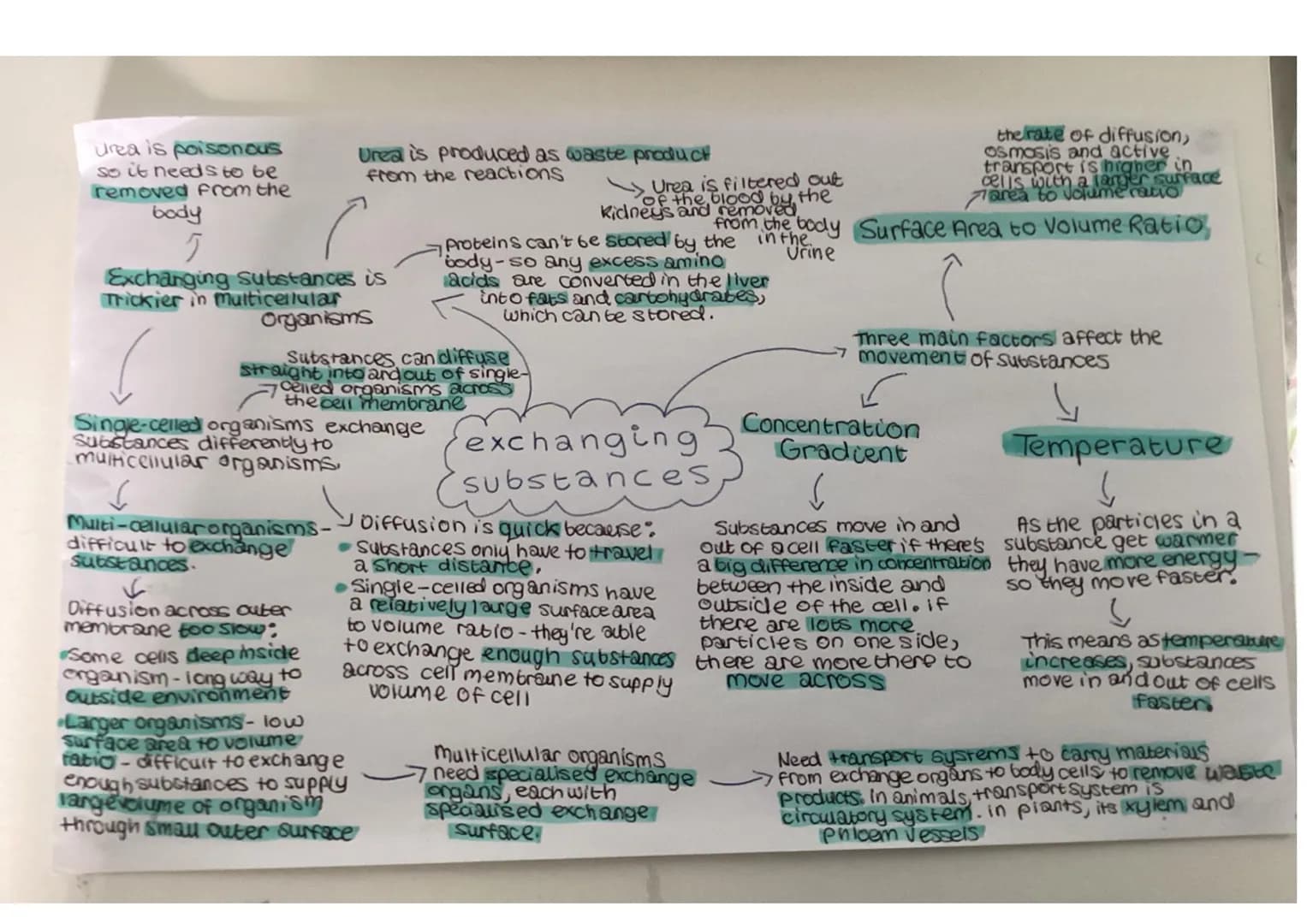
Exchanging Substances
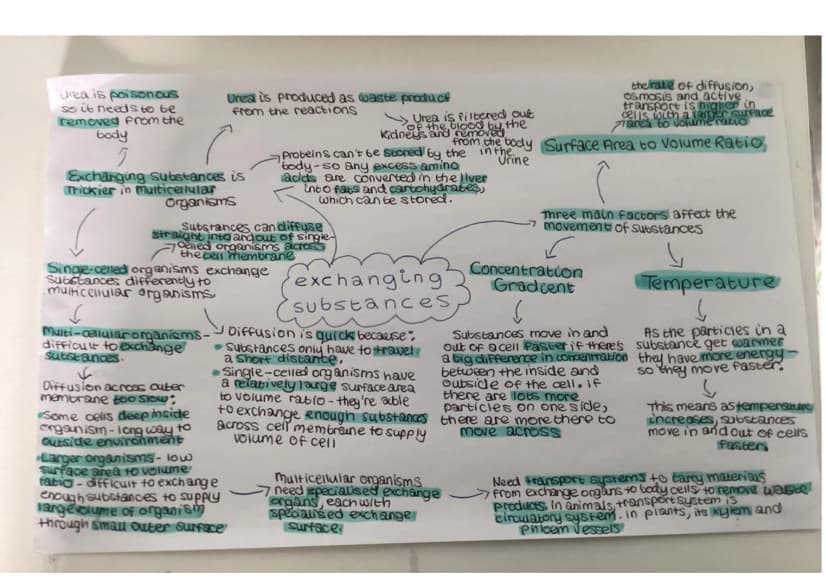
Single-celled organisms have it easy - substances diffuse straight across their cell membrane because distances are short and they have a large surface area to volume ratio. Everything they need can get in and waste can get out quickly.
Multicellular organisms face bigger challenges. Cells deep inside are far from the outside environment, and larger organisms have a smaller surface area to volume ratio, making simple diffusion too slow.
Three main factors affect substance movement: concentration gradient , temperature , and surface area .
Multicellular organisms solve these problems with specialised exchange organs and transport systems. Animals use the circulatory system whilst plants use xylem and phloem vessels. The liver also produces urea as a waste product from protein breakdown, which gets filtered out by kidneys.
💡 Size matters: Small organisms can rely on diffusion, but big organisms need specialised transport systems
We thought you’d never ask...
What is the Knowunity AI companion?
Our AI companion is specifically built for the needs of students. Based on the millions of content pieces we have on the platform we can provide truly meaningful and relevant answers to students. But its not only about answers, the companion is even more about guiding students through their daily learning challenges, with personalised study plans, quizzes or content pieces in the chat and 100% personalisation based on the students skills and developments.
Where can I download the Knowunity app?
You can download the app in the Google Play Store and in the Apple App Store.
Is Knowunity really free of charge?
That's right! Enjoy free access to study content, connect with fellow students, and get instant help – all at your fingertips.
Similar Content
 Biology
Most popular content: Diffusion and Osmosis
9BiologyUnderstanding Osmosis
Explore the concept of osmosis, including definitions, key differences between plant and animal cells, and the effects of various solutions on cell structure. This summary includes essential diagrams and questions to enhance your understanding of water movement across membranes, crucial for biology exams.
1221,0631,387
BiologyB1 biology mindmap revision notes
covers topics such as cell biology, magnification, osmosis, stem cells and specialised cells.
1094912
BiologyOsmosis & Diffusion Explained
Explore the essential concepts of osmosis and diffusion in this detailed summary. Understand how water moves through partially permeable membranes, the impact of concentration gradients, and the factors affecting diffusion rates. Ideal for GCSE biology students, this resource covers key terms and learning objectives related to cell membrane transport and passive processes.
94,167197
BiologyBiology Unit 1 Overview
Comprehensive summary of National 5 Biology Unit 1 covering essential topics such as cell structure, membrane transport mechanisms (osmosis, diffusion, active transport), DNA and protein synthesis, cellular respiration, and genetic engineering. Ideal for revision and exam preparation.
S43203
BiologyBiology Exchange Processes
Explore key concepts in cell biology, including specialized exchange surfaces, diffusion, osmosis, and active transport. This summary covers essential adaptations for efficient substance exchange in multicellular organisms, cell division, and the structure of eukaryotic and prokaryotic cells. Ideal for AQA Combined Science (Higher Tier) revision.
102,01644
BiologyPlasma Membrane Transport Mechanisms
Explore the essential concepts of plasma membranes in A-level biology, focusing on transport mechanisms such as diffusion, osmosis, and active transport. Understand the structure of the phospholipid bilayer, the role of membrane proteins, and the significance of selective permeability. This summary covers key topics including facilitated diffusion, water potential, and the fluid mosaic model, providing a comprehensive overview for students studying cellular transport.
121738
BiologyUnderstanding Diffusion & Osmosis
Explore the essential concepts of diffusion and osmosis, including definitions, processes, and real-life examples. This summary covers key terms like hypotonic, hypertonic, and isotonic solutions, as well as the role of concentration gradients and cell membrane transport. Ideal for students seeking clarity on these fundamental biological processes.
929232
BiologyOsmosis in Potatoes Experiment
Explore the osmosis process through a hands-on potato experiment. This practical guide details the steps to investigate how different sucrose concentrations affect potato mass, including calculations for percentage change. Ideal for GCSE Biology students and anyone studying diffusion, osmosis, and tonicity concepts.
1278715
BiologyAQA Biology Practical Techniques
Explore essential practical techniques for AQA GCSE Biology Paper 1, including microscopy, osmosis experiments, and biochemical tests. This summary covers step-by-step procedures, key concepts like concentration gradients, and the effects of pH on enzyme activity. Ideal for exam preparation and understanding core practical skills.
115473
Most popular content in Biology
9C
BiologyCell Biology and Cell structure
cell structures
93,2490
1
Biology1.cells Gcse biology question cards
combined science higher biology
92,3534
BiologyAQA Biology: Key Concepts
Explore essential AQA Biology topics including Photosynthesis, Respiration, Homeostasis, Genetics, and Ecology. This comprehensive knowledge organizer covers key concepts such as energy transfer, hormonal control, and genetic variation, providing a solid foundation for your studies. Ideal for exam preparation and understanding biological processes.
108,794306
T
BiologyThe functions of subcellular structures - B1 Biology
Flashcards on the different functions of subcellular structures: cell membrane, nucleus, mitochondria, ribosomes, cytoplasm, permant vacuole, chloroplasts and cell wall.
102,7955
BiologyA-Level Biology Year 1 Overview
Comprehensive summary of AQA A-Level Biology Year 1, covering key topics such as cellular structure, protein synthesis, immune response, gas exchange, and more. Ideal for exam preparation and understanding biological concepts. Includes detailed insights into cellular processes, biological classification, and the circulatory system.
1214,892694
T
BiologyTypes of cells
biology
101,2090
B
BiologyBiology Paper 1 quiz
this is a simple quiz on key knowledge needed for paper 1
102,7745
BiologyBiology paper 1 Summary
Notes for Biology paper 1 contains the full course for AQA higher combined!
104,130106
C
BiologyCells part 1 function of cells.
About cells and function of cells etc.
119861
Most popular content
9 Sociology
Sociology of Education Overview
Explore comprehensive A-Level Sociology notes on the education system, covering key theories, policies, and sociological perspectives. This resource includes insights on marketisation, gender roles, cultural deprivation, and educational inequalities, providing a thorough understanding of how education shapes social stratification and individual achievement. Ideal for exam preparation and in-depth study.
12102,8703,040
SociologySociology of Families: Comprehensive Revision
Dive into an extensive overview of family dynamics, perspectives, and patterns in sociology. This resource covers key concepts such as family diversity, gender roles, marriage, and the impact of social policies on family structures. Perfect for A-Level Sociology students preparing for Paper 2.
1273,6662,307
CriminologyCriminology: Crime & Punishment Overview
Comprehensive mindmaps covering key concepts in the Crime and Punishment topic for WJEC Criminology Unit 4. This resource includes detailed insights into the Criminal Justice System, crime prevention strategies, sentencing models, and the roles of various agencies. Ideal for A-Level revision, ensuring you grasp essential theories and legislative processes to excel in your exams.
1254,8721,059
SociologyComprehensive Crime & Deviance Overview
Explore an extensive revision of crime and deviance topics, including theories, types of crime, and the impact of media. This resource covers key concepts such as Marxism, functionalism, gender and crime, and the influence of globalization on criminal behavior. Ideal for students seeking a thorough understanding of criminology and its various theories. Type: Full Topic Revision.
1251,6541,399
C
BiologyCell Biology and Cell structure
cell structures
93,2490
 English Literature
An Inspector Calls: Character Insights
Explore in-depth analysis and key quotes for characters in J.B. Priestley's 'An Inspector Calls'. This resource covers Gerald Croft, Inspector Goole, Sheila Birling, Mrs. Birling, Eric Birling, and Eva Smith, focusing on themes of class, gender roles, and social responsibility. Ideal for students aiming for Grade 8 and above.
1025,429907
CriminologyWJEC Unit 4 Criminology
Criminology unit 4 detailed revision note
127,154125
CriminologyCriminology Theories Overview
Explore key criminology theories and their implications on crime and deviance. This comprehensive summary covers biological, psychological, and sociological perspectives, including labelling theory, right realism, and the impact of social campaigns on policy development. Ideal for A-Level criminology students seeking to understand the complexities of criminal behaviour and the factors influencing crime prevention strategies.
129,760210
English LiteratureRomeo and Juliet: Key themes
Key Romeo and Juliet themes and analysed quotes
106,708198
Can't find what you're looking for? Explore other subjects.
Students love us — and so will you.
4.6/5App Store
4.7/5Google Play
The app is very easy to use and well designed. I have found everything I was looking for so far and have been able to learn a lot from the presentations! I will definitely use the app for a class assignment! And of course it also helps a lot as an inspiration.
Stefan SiOS user
This app is really great. There are so many study notes and help [...]. My problem subject is French, for example, and the app has so many options for help. Thanks to this app, I have improved my French. I would recommend it to anyone.
Samantha KlichAndroid user
Wow, I am really amazed. I just tried the app because I've seen it advertised many times and was absolutely stunned. This app is THE HELP you want for school and above all, it offers so many things, such as workouts and fact sheets, which have been VERY helpful to me personally.
AnnaiOS user
Biology783 views·Updated Jun 15, 2026·8 pagesComprehensive GCSE Biology Mind Maps with Key Diagrams
mel@mel.jane84
Ever wonder how your cells work and what makes them tick? From the tiniest bacteria to complex plant and animal cells, understanding cell structure and function is key to grasping how all life operates. Plus, you'll discover how scientists use...
1
of 8
Sign up to see the content. It's free!
- Access to all documents
- Improve your grades
- Join milions of students
Cell Types and Structure
Prokaryotic cells (like bacteria) are the simpler ones - they're basically just floating their DNA around without a proper nucleus! Their chromosomal DNA forms one long circular loop that controls everything the cell does. They also have bonus DNA called plasmids - these little loops can carry handy genes like drug resistance and get passed between bacteria like trading cards.
Eukaryotic cells (animals and plants) are the complex ones with a proper nucleus that houses their DNA. Animal cells have a cell membrane that acts like a bouncer, deciding what gets in and out, plus mitochondria (the powerhouses) where cellular respiration happens. The cytoplasm is like a gel where most chemical reactions occur.
Plant cells have everything animal cells have, plus some extras. They've got a rigid cell wall made of cellulose for support, and chloroplasts containing chlorophyll for photosynthesis. Think of plant cells as animal cells with added superpowers!
💡 Remember: Prokaryotes = no nucleus (bacteria), Eukaryotes = nucleus present (plants and animals)
2
of 8Sign up to see the content. It's free!
- Access to all documents
- Improve your grades
- Join milions of students
Light Microscopy
Light microscopes have been helping scientists since the 1590s, and they're still brilliant for viewing things like nuclei and chloroplasts. The total magnification equals eyepiece lens magnification × objective lens magnification - simple maths that'll definitely come up in exams!
Electron microscopes (invented in the 1930s) are the heavy hitters with much higher magnification and resolution. While light microscopes are portable and can view living tissue, electron microscopes can reveal tiny details like plasmids and viruses that light microscopes simply can't see.
Resolution is crucial - it's how well a microscope can distinguish between two points close together. Higher magnification isn't always better though; if your specimen is quite big, you might not see the whole thing and focusing becomes trickier.
The key formula you need: Image size = Magnification × Real size. Master this and you'll ace those calculation questions!
💡 Top tip: Start with the lowest magnification first, then work your way up for detailed views
3
of 8Sign up to see the content. It's free!
- Access to all documents
- Improve your grades
- Join milions of students
Using Microscopes and Standard Form
Preparing specimens properly is half the battle! Place a drop of water on a clean slide, add your specimen with tweezers, then add a stain if needed. Iodine stains cytoplasm whilst methylene blue stains DNA - different stains highlight different structures.
When using the microscope, always start with the lowest-powered objective lens. Use the coarse adjustment knob to get roughly in focus, then fine-tune with the fine adjustment knob. This step-by-step approach prevents you from crashing the lens into your slide!
Standard form makes those tiny measurements manageable. Remember: if the decimal point moves left, the power of 10 is positive; if it moves right, it's negative. So 0.017 becomes 1.7 × 10⁻².
You can still work out magnification as long as you can measure the image and know the real size of the specimen. This flexibility is handy when dealing with photographs or drawings in exams.
💡 Memory trick: Think "left = positive, right = negative" for standard form powers
4
of 8Sign up to see the content. It's free!
- Access to all documents
- Improve your grades
- Join milions of students
Enzymes and Reactions
Enzymes are biological catalysts that speed up reactions without getting used up themselves. They're incredibly picky - each enzyme only works with one specific substrate because of their unique active site shape. Think of it like a lock and key system.
The 'lock and key' hypothesis explains enzyme specificity perfectly. If the substrate doesn't fit the active site's shape exactly, no reaction happens. This is why enzymes have "high specificity" for their substrate - they're basically biological perfectionists!
Every different biological reaction has its own enzyme. Respiration, photosynthesis, and protein synthesis all depend on specific enzymes to work properly. Together, these reactions make up your cell's metabolism.
Enzymes solve a major problem for living things. Chemical reactions usually need high temperatures to speed up, but enzymes let cells control reactions at body temperature without damaging themselves.
💡 Key point: Each enzyme is a protein coded by a different gene - that's why they all have unique shapes
5
of 8Sign up to see the content. It's free!
- Access to all documents
- Improve your grades
- Join milions of students
Cellular Respiration
Respiration isn't just breathing - it's the process of transferring energy from glucose breakdown in every single cell. This exothermic reaction transfers energy to make ATP, which stores energy for cellular processes.
Aerobic respiration uses oxygen and is incredibly efficient, producing 32 ATP molecules per glucose molecule. The equation is: Glucose + Oxygen → Carbon dioxide + Water. This happens when there's plenty of oxygen available.
Anaerobic respiration works without oxygen but produces much less energy - just 2 ATP molecules per glucose. It's not the best energy transfer method, but it's better than nothing when oxygen runs out!
Temperature and pH affect respiration rate because the process is controlled by enzymes. Cells can also respire using other organic molecules (carbohydrates, proteins, lipids) as substrates when glucose isn't available.
💡 Remember: Aerobic = with oxygen (efficient), Anaerobic = without oxygen (less efficient but still useful!)
6
of 8Sign up to see the content. It's free!
- Access to all documents
- Improve your grades
- Join milions of students
Diffusion and Active Transport
Diffusion is the movement of particles from higher to lower concentration - basically particles spreading out to even things up. Only very small molecules like glucose, water, and amino acids can diffuse through cell membranes.
Cell membranes are clever barriers that hold cells together whilst letting stuff in and out. Big molecules like starch and proteins can't squeeze through the tiny gaps, so they need other transport methods.
Active transport is diffusion's opposite - it moves particles against the concentration gradient using energy from respiration. This is essential when nutrients in your gut have lower concentration than in your blood, but your body still needs to absorb them.
Plants use active transport to grab minerals from soil even when there's more minerals in their roots than in the soil. Without this energy-requiring process, plants couldn't get essential nutrients and we'd struggle with malnutrition.
💡 Think of it: Diffusion is like rolling downhill (natural), active transport is like cycling uphill (needs energy!)
7
of 8Sign up to see the content. It's free!
- Access to all documents
- Improve your grades
- Join milions of students
Osmosis and Water Potential
Osmosis is basically water diffusion across a partially permeable membrane. Water molecules move from higher water concentration to lower water concentration, trying to even things out on both sides.
Water potential tells you how concentrated a solution is. Pure water has the highest water potential, whilst all solutions have lower water potential than pure water. Think of it as water's "eagerness" to move.
Plant cells love being turgid (plump and swollen) because it creates turgor pressure against the cell wall, supporting the plant's structure. When plants don't get enough water, cells become flaccid and the plant wilts.
Animal cells are more vulnerable because they lack cell walls. They can actually burst if surrounded by solutions with higher water potential than their contents - that's why maintaining water balance is crucial.
💡 Plant power: Turgid cells = happy, supported plants. Flaccid cells = droopy, wilted plants
8
of 8Sign up to see the content. It's free!
- Access to all documents
- Improve your grades
- Join milions of students
Exchanging Substances
Single-celled organisms have it easy - substances diffuse straight across their cell membrane because distances are short and they have a large surface area to volume ratio. Everything they need can get in and waste can get out quickly.
Multicellular organisms face bigger challenges. Cells deep inside are far from the outside environment, and larger organisms have a smaller surface area to volume ratio, making simple diffusion too slow.
Three main factors affect substance movement: concentration gradient , temperature , and surface area .
Multicellular organisms solve these problems with specialised exchange organs and transport systems. Animals use the circulatory system whilst plants use xylem and phloem vessels. The liver also produces urea as a waste product from protein breakdown, which gets filtered out by kidneys.
💡 Size matters: Small organisms can rely on diffusion, but big organisms need specialised transport systems
We thought you’d never ask...
What is the Knowunity AI companion?
Our AI companion is specifically built for the needs of students. Based on the millions of content pieces we have on the platform we can provide truly meaningful and relevant answers to students. But its not only about answers, the companion is even more about guiding students through their daily learning challenges, with personalised study plans, quizzes or content pieces in the chat and 100% personalisation based on the students skills and developments.
Where can I download the Knowunity app?
You can download the app in the Google Play Store and in the Apple App Store.
Is Knowunity really free of charge?
That's right! Enjoy free access to study content, connect with fellow students, and get instant help – all at your fingertips.
Similar Content
Most popular content: Diffusion and Osmosis
9BiologyUnderstanding Osmosis
Explore the concept of osmosis, including definitions, key differences between plant and animal cells, and the effects of various solutions on cell structure. This summary includes essential diagrams and questions to enhance your understanding of water movement across membranes, crucial for biology exams.
1221,0631,387
BiologyB1 biology mindmap revision notes
covers topics such as cell biology, magnification, osmosis, stem cells and specialised cells.
1094912
BiologyOsmosis & Diffusion Explained
Explore the essential concepts of osmosis and diffusion in this detailed summary. Understand how water moves through partially permeable membranes, the impact of concentration gradients, and the factors affecting diffusion rates. Ideal for GCSE biology students, this resource covers key terms and learning objectives related to cell membrane transport and passive processes.
94,167197
BiologyBiology Unit 1 Overview
Comprehensive summary of National 5 Biology Unit 1 covering essential topics such as cell structure, membrane transport mechanisms (osmosis, diffusion, active transport), DNA and protein synthesis, cellular respiration, and genetic engineering. Ideal for revision and exam preparation.
S43203
BiologyBiology Exchange Processes
Explore key concepts in cell biology, including specialized exchange surfaces, diffusion, osmosis, and active transport. This summary covers essential adaptations for efficient substance exchange in multicellular organisms, cell division, and the structure of eukaryotic and prokaryotic cells. Ideal for AQA Combined Science (Higher Tier) revision.
102,01644
BiologyPlasma Membrane Transport Mechanisms
Explore the essential concepts of plasma membranes in A-level biology, focusing on transport mechanisms such as diffusion, osmosis, and active transport. Understand the structure of the phospholipid bilayer, the role of membrane proteins, and the significance of selective permeability. This summary covers key topics including facilitated diffusion, water potential, and the fluid mosaic model, providing a comprehensive overview for students studying cellular transport.
121738
BiologyUnderstanding Diffusion & Osmosis
Explore the essential concepts of diffusion and osmosis, including definitions, processes, and real-life examples. This summary covers key terms like hypotonic, hypertonic, and isotonic solutions, as well as the role of concentration gradients and cell membrane transport. Ideal for students seeking clarity on these fundamental biological processes.
929232
BiologyOsmosis in Potatoes Experiment
Explore the osmosis process through a hands-on potato experiment. This practical guide details the steps to investigate how different sucrose concentrations affect potato mass, including calculations for percentage change. Ideal for GCSE Biology students and anyone studying diffusion, osmosis, and tonicity concepts.
1278715
BiologyAQA Biology Practical Techniques
Explore essential practical techniques for AQA GCSE Biology Paper 1, including microscopy, osmosis experiments, and biochemical tests. This summary covers step-by-step procedures, key concepts like concentration gradients, and the effects of pH on enzyme activity. Ideal for exam preparation and understanding core practical skills.
115473
Most popular content in Biology
9C
BiologyCell Biology and Cell structure
cell structures
93,2490
1
Biology1.cells Gcse biology question cards
combined science higher biology
92,3534
BiologyAQA Biology: Key Concepts
Explore essential AQA Biology topics including Photosynthesis, Respiration, Homeostasis, Genetics, and Ecology. This comprehensive knowledge organizer covers key concepts such as energy transfer, hormonal control, and genetic variation, providing a solid foundation for your studies. Ideal for exam preparation and understanding biological processes.
108,794306
T
BiologyThe functions of subcellular structures - B1 Biology
Flashcards on the different functions of subcellular structures: cell membrane, nucleus, mitochondria, ribosomes, cytoplasm, permant vacuole, chloroplasts and cell wall.
102,7955
BiologyA-Level Biology Year 1 Overview
Comprehensive summary of AQA A-Level Biology Year 1, covering key topics such as cellular structure, protein synthesis, immune response, gas exchange, and more. Ideal for exam preparation and understanding biological concepts. Includes detailed insights into cellular processes, biological classification, and the circulatory system.
1214,892694
T
BiologyTypes of cells
biology
101,2090
B
BiologyBiology Paper 1 quiz
this is a simple quiz on key knowledge needed for paper 1
102,7745
BiologyBiology paper 1 Summary
Notes for Biology paper 1 contains the full course for AQA higher combined!
104,130106
C
BiologyCells part 1 function of cells.
About cells and function of cells etc.
119861
Most popular content
9SociologySociology of Education Overview
Explore comprehensive A-Level Sociology notes on the education system, covering key theories, policies, and sociological perspectives. This resource includes insights on marketisation, gender roles, cultural deprivation, and educational inequalities, providing a thorough understanding of how education shapes social stratification and individual achievement. Ideal for exam preparation and in-depth study.
12102,8703,040
SociologySociology of Families: Comprehensive Revision
Dive into an extensive overview of family dynamics, perspectives, and patterns in sociology. This resource covers key concepts such as family diversity, gender roles, marriage, and the impact of social policies on family structures. Perfect for A-Level Sociology students preparing for Paper 2.
1273,6662,307
CriminologyCriminology: Crime & Punishment Overview
Comprehensive mindmaps covering key concepts in the Crime and Punishment topic for WJEC Criminology Unit 4. This resource includes detailed insights into the Criminal Justice System, crime prevention strategies, sentencing models, and the roles of various agencies. Ideal for A-Level revision, ensuring you grasp essential theories and legislative processes to excel in your exams.
1254,8721,059
SociologyComprehensive Crime & Deviance Overview
Explore an extensive revision of crime and deviance topics, including theories, types of crime, and the impact of media. This resource covers key concepts such as Marxism, functionalism, gender and crime, and the influence of globalization on criminal behavior. Ideal for students seeking a thorough understanding of criminology and its various theories. Type: Full Topic Revision.
1251,6541,399
C
BiologyCell Biology and Cell structure
cell structures
93,2490
English LiteratureAn Inspector Calls: Character Insights
Explore in-depth analysis and key quotes for characters in J.B. Priestley's 'An Inspector Calls'. This resource covers Gerald Croft, Inspector Goole, Sheila Birling, Mrs. Birling, Eric Birling, and Eva Smith, focusing on themes of class, gender roles, and social responsibility. Ideal for students aiming for Grade 8 and above.
1025,429907
CriminologyWJEC Unit 4 Criminology
Criminology unit 4 detailed revision note
127,154125
CriminologyCriminology Theories Overview
Explore key criminology theories and their implications on crime and deviance. This comprehensive summary covers biological, psychological, and sociological perspectives, including labelling theory, right realism, and the impact of social campaigns on policy development. Ideal for A-Level criminology students seeking to understand the complexities of criminal behaviour and the factors influencing crime prevention strategies.
129,760210
English LiteratureRomeo and Juliet: Key themes
Key Romeo and Juliet themes and analysed quotes
106,708198
Can't find what you're looking for? Explore other subjects.
Students love us — and so will you.
4.6/5App Store
4.7/5Google Play
The app is very easy to use and well designed. I have found everything I was looking for so far and have been able to learn a lot from the presentations! I will definitely use the app for a class assignment! And of course it also helps a lot as an inspiration.
Stefan SiOS user
This app is really great. There are so many study notes and help [...]. My problem subject is French, for example, and the app has so many options for help. Thanks to this app, I have improved my French. I would recommend it to anyone.
Samantha KlichAndroid user
Wow, I am really amazed. I just tried the app because I've seen it advertised many times and was absolutely stunned. This app is THE HELP you want for school and above all, it offers so many things, such as workouts and fact sheets, which have been VERY helpful to me personally.
AnnaiOS user