

Welcome to the fascinating world of fungi! This kingdom includes...
 Biology57 views·Updated Jun 18, 2026·18 pages
Comprehensive Fungi Kingdom Study Notes

1 / 10
1
of 10
Introduction to the Fungi Kingdom
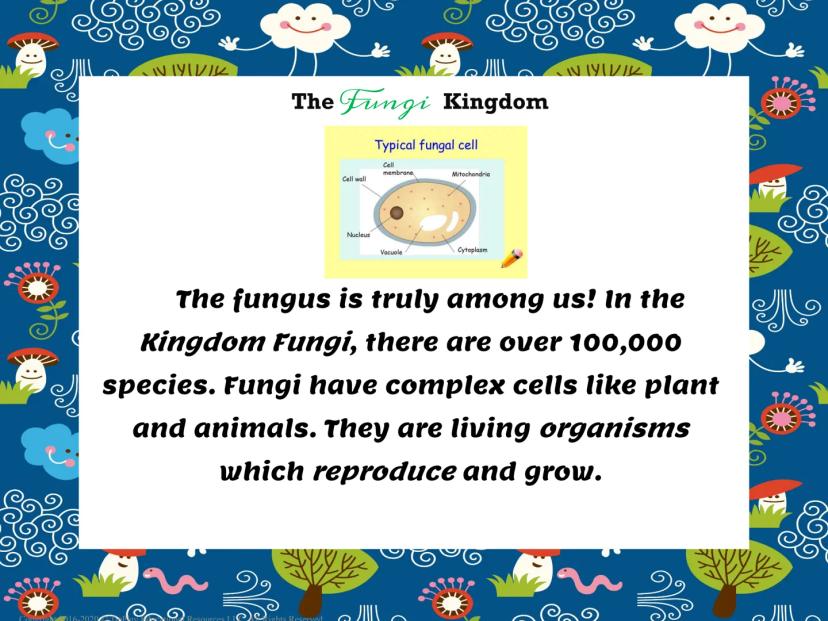
Fungi are living organisms with complex cells similar to plants and animals. They grow and reproduce but have their own unique characteristics that set them apart from other kingdoms.
Fungi live practically everywhere! You can find them in oceans, forests, grasslands, soil, and even on plants and animals. Some fungi are so tiny you need a microscope to see them, while others—like certain mushrooms—can grow as large as trees.
Unlike plants, fungi don't make their own food using sunlight. Instead, they absorb nutrients from their surroundings by breaking down organic matter.
Fun Fact: The largest known fungus lives in Oregon and is over 2,400 years old, covering more than 3 miles underground!
2
of 10
Fungi Habitats and Relationships
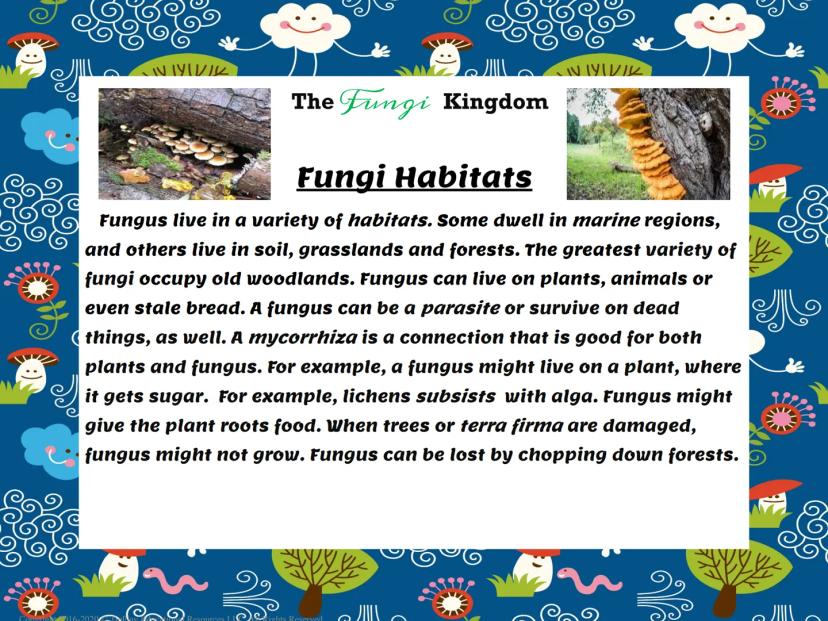
Fungi are super-adaptable organisms that thrive in countless environments. From marine waters to forests, these organisms have found ways to survive almost anywhere. The richest variety of fungi can be found in old woodlands where they have plenty to feed on.
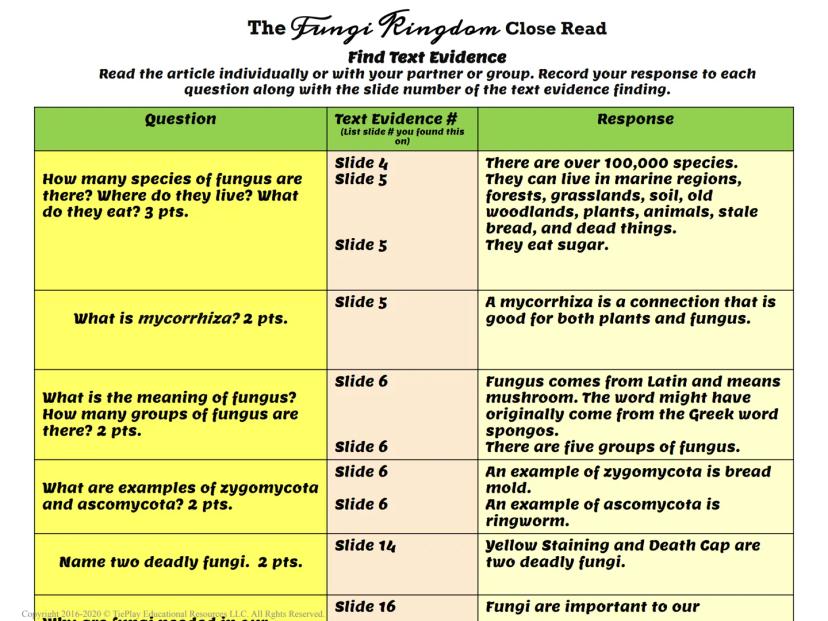
Some fungi form special partnerships with plants called mycorrhiza. This connection benefits both organisms - the fungus gets sugar from the plant, while the plant gets nutrients from the fungus through its roots. It's like a trade agreement in nature!
Fungi can be parasites (living on and harming a host) or saprophytes (feeding on dead matter). When forests are cut down or environments are damaged, we often lose unique fungal species that can't survive elsewhere.
Remember This: Fungi are master recyclers in ecosystems—they break down dead material and return nutrients to the soil!
3
of 10
Fungi Classification
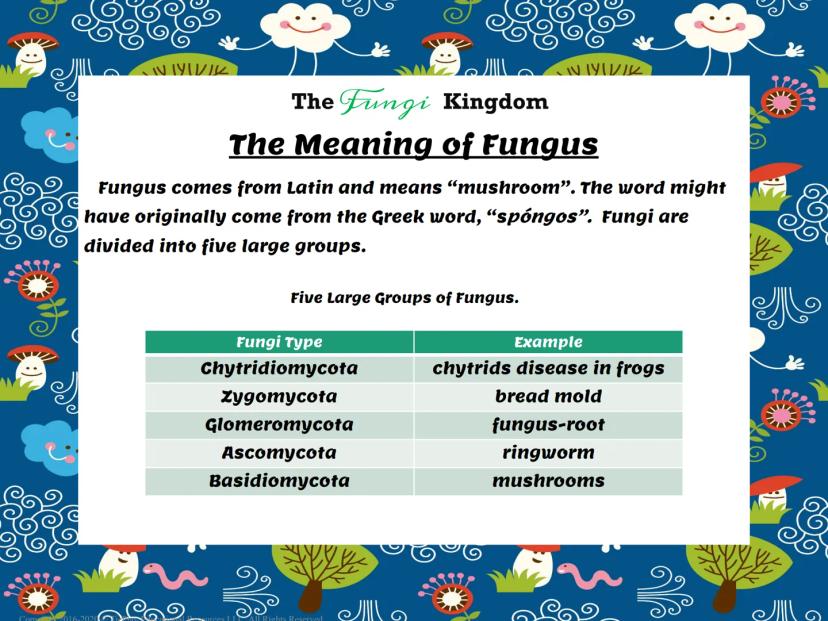
Fungi get their name from the Latin word for "mushroom," though the word might have originally come from the Greek "spongos." Scientists divide fungi into five major groups based on how they reproduce and other characteristics.
The five main groups of fungi include:
- Chytridiomycota (like the chytrids that cause disease in frogs)
- Zygomycota (includes bread mold)
- Glomeromycota
- Ascomycota (includes ringworm)
- Basidiomycota (most mushrooms belong here)
Fungi can be unicellular , multicellular, or filamentous . For simpler classification, they're sometimes grouped as sac fungi (like yeast), club fungi (like mushrooms), or thread-like fungi (like bread mold).
Science Tip: When scientists classify fungi, they look at the way they reproduce more than how they look!
4
of 10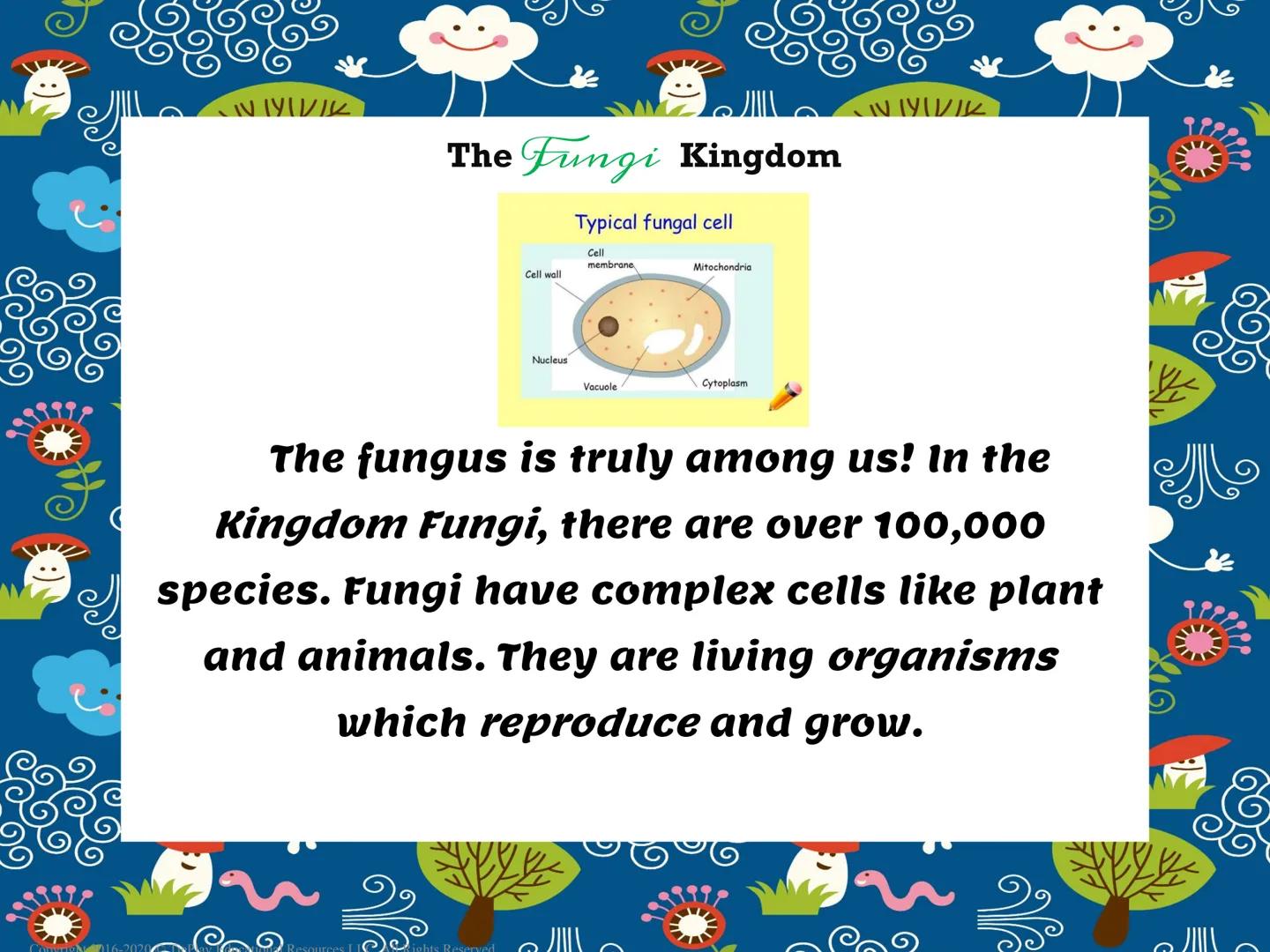
Life Cycle of Fungi
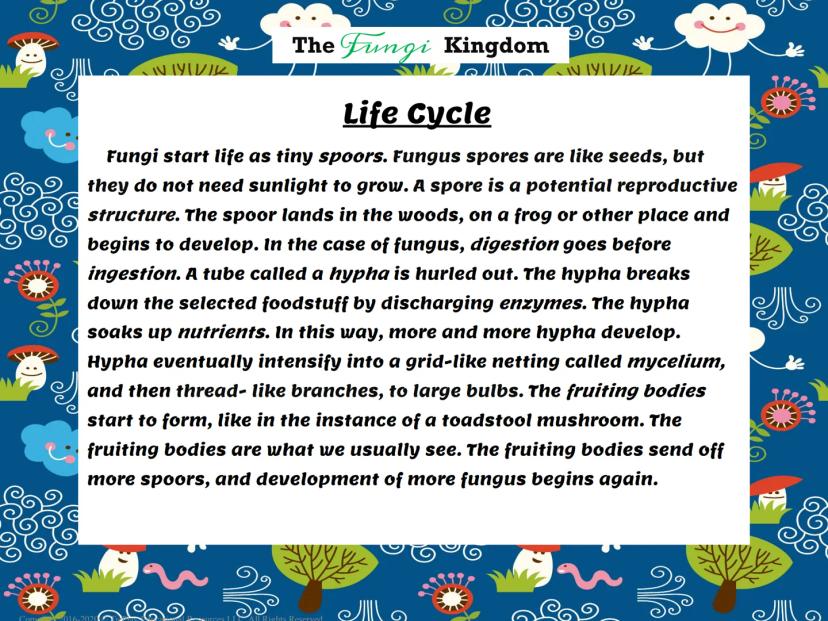
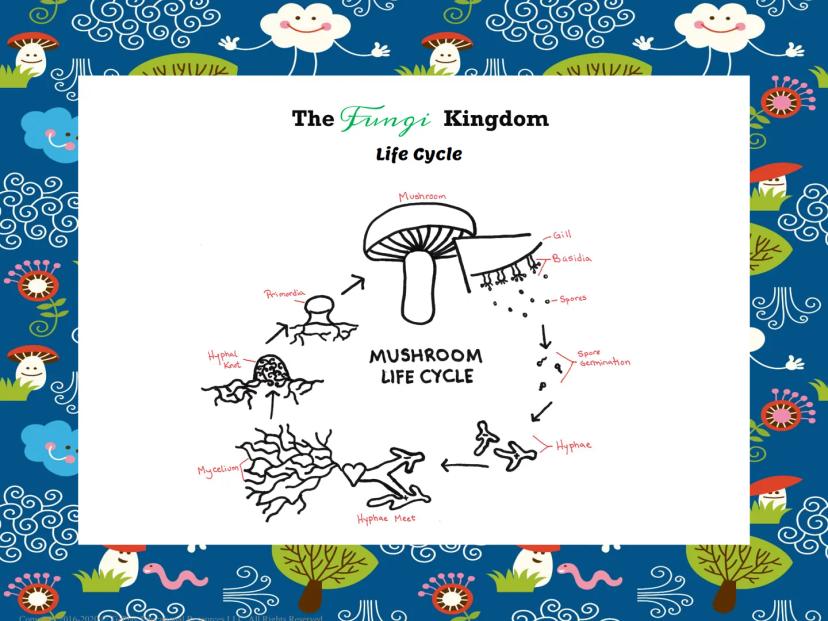
Fungi begin life as tiny spores, which are like seeds but don't need sunlight to grow. When a spore lands in a suitable place, it begins to develop by sending out a tube-like structure called a hypha.
What makes fungi special is they digest food before consuming it! The hypha releases enzymes that break down food outside the fungus, then absorbs the nutrients. As more hyphae grow, they form a network called mycelium - the main body of the fungus that's usually hidden underground or inside whatever the fungus is growing on.
Eventually, the fungus produces fruiting bodies - the visible parts we typically recognize as mushrooms or molds. These structures release more spores, continuing the life cycle. The mushroom you see is actually just the "tip of the iceberg" of the entire fungal organism!
Cool Connection: Think of mycelium as the fungus's root system and the mushroom as just its "flower" - the reproductive part!
5
of 10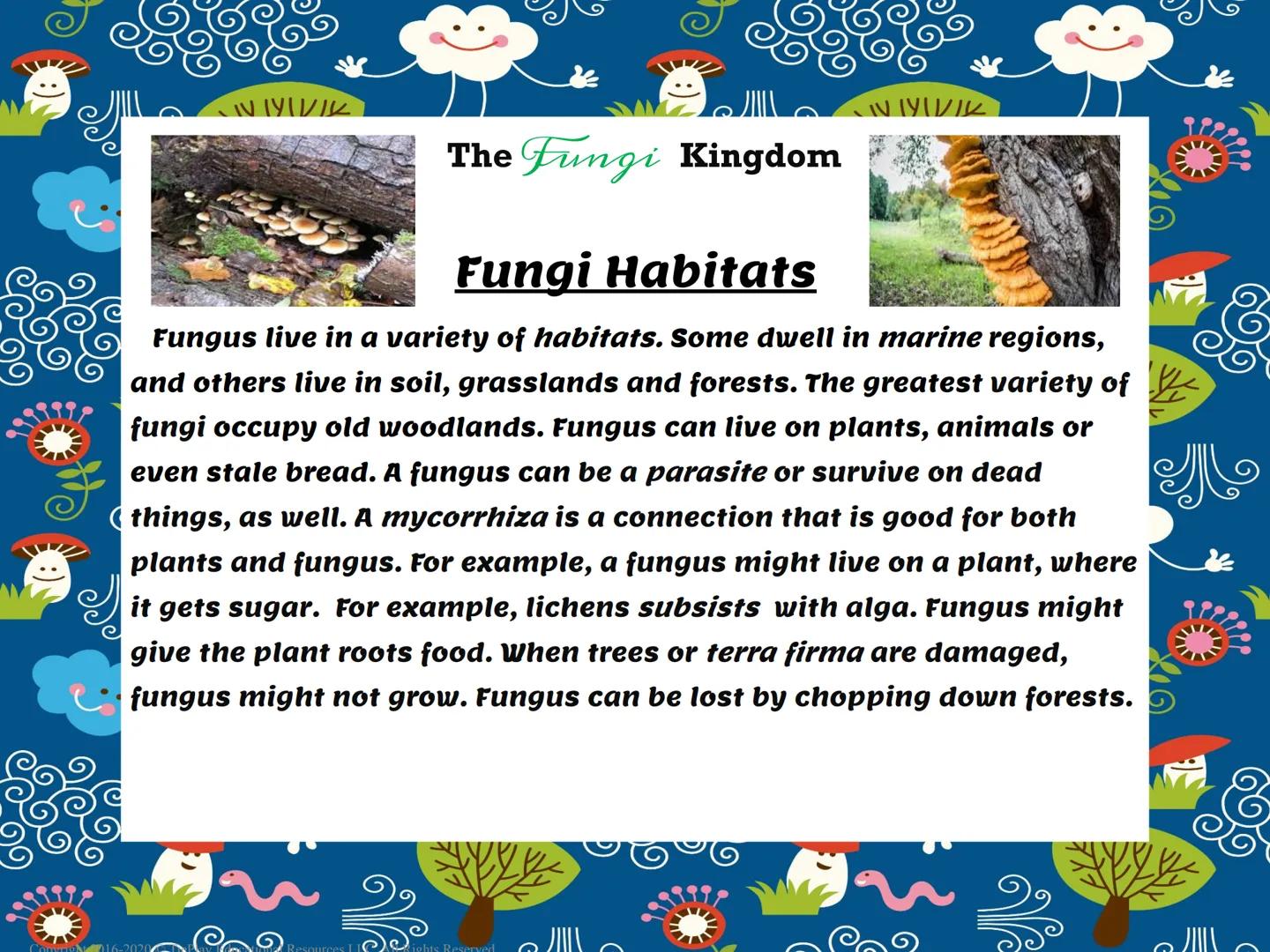
Fungi Appearance and Characteristics
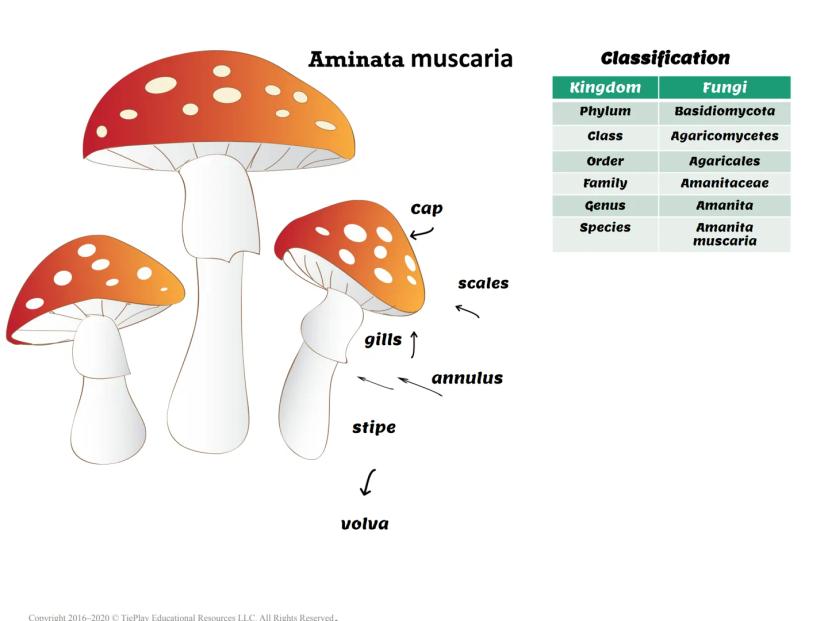
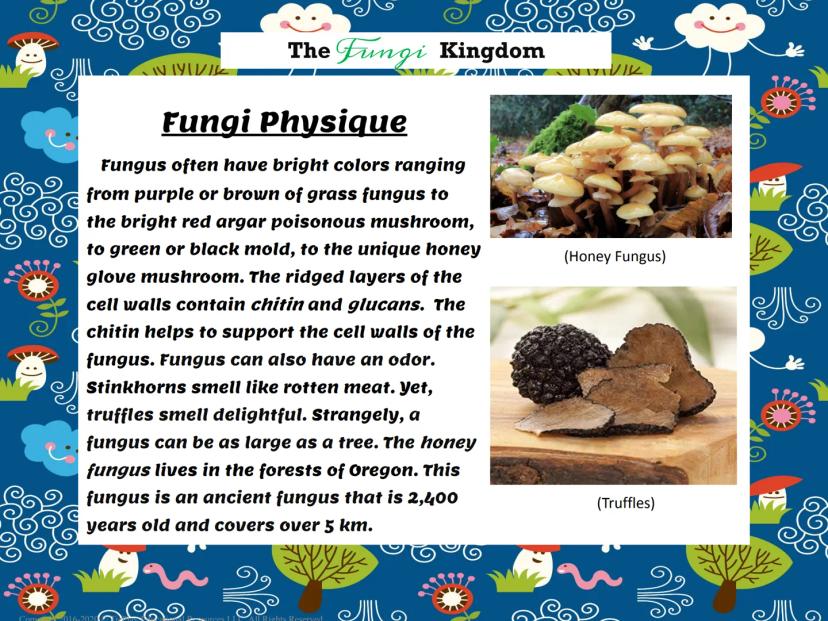
Fungi come in an amazing variety of colors and shapes! They range from the deep purple of grass fungi to the bright red of poisonous agaric mushrooms, and from green or black molds to the unique honey glove mushroom.
The cell walls of fungi contain chitin (the same material in insect exoskeletons) and glucans that give them structure and support. This makes fungi different from plants, which use cellulose in their cell walls.
Fungi also have distinctive smells. Some, like stinkhorns, smell awful (like rotting meat) to attract insects that spread their spores. Others, like truffles, have delightful aromas that make them prized in cooking. The largest known fungus is the honey fungus in Oregon, which is approximately 2,400 years old and covers over 3 miles!
Mind-Blowing Fact: If you could see all of a large fungus, including its underground network, some would be bigger than blue whales!
6
of 10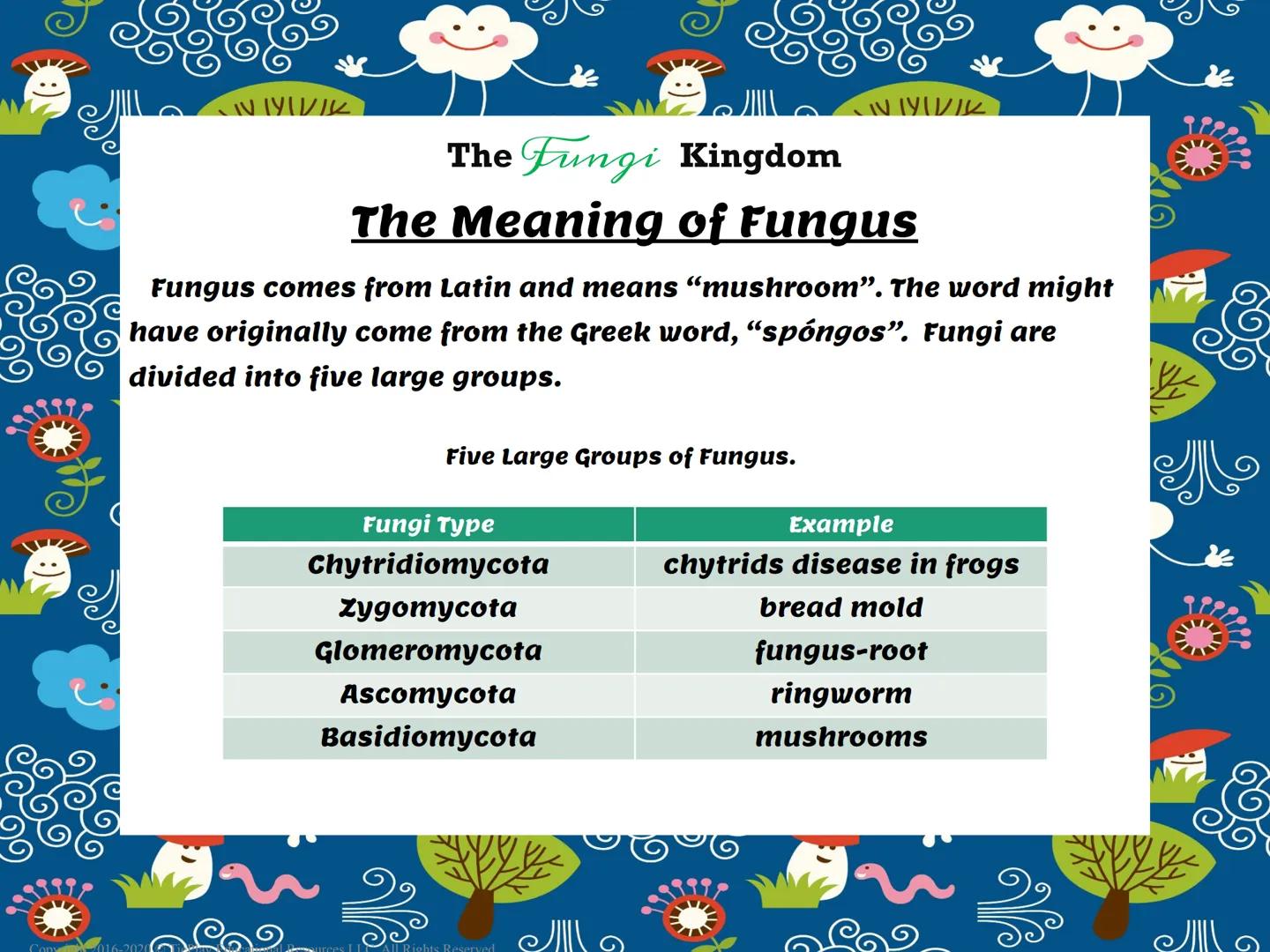
Hazardous Fungi
Not all fungi are friendly! Some molds release spores into the air that can trigger allergic reactions, coughing, runny nose, sore throat, wheezing, and sneezing in people who are sensitive to them.
Certain fungi that grow on foods like beef, poultry, or wet grains produce dangerous substances called mycotoxins. Food companies must follow strict rules to prevent these fungi from contaminating our food supply, as they can cause serious illness or even death in humans and animals.
Wild mushrooms can be particularly dangerous. The Death Cap and Yellow-staining mushrooms are just two examples of deadly fungi that can cause liver and kidney damage. Always remember: never eat mushrooms found in the wild unless they've been identified by a trained expert!
Safety Alert: Even experienced mushroom hunters can mistake deadly mushrooms for edible ones. Always buy mushrooms from a grocery store unless you're 100% certain!
7
of 10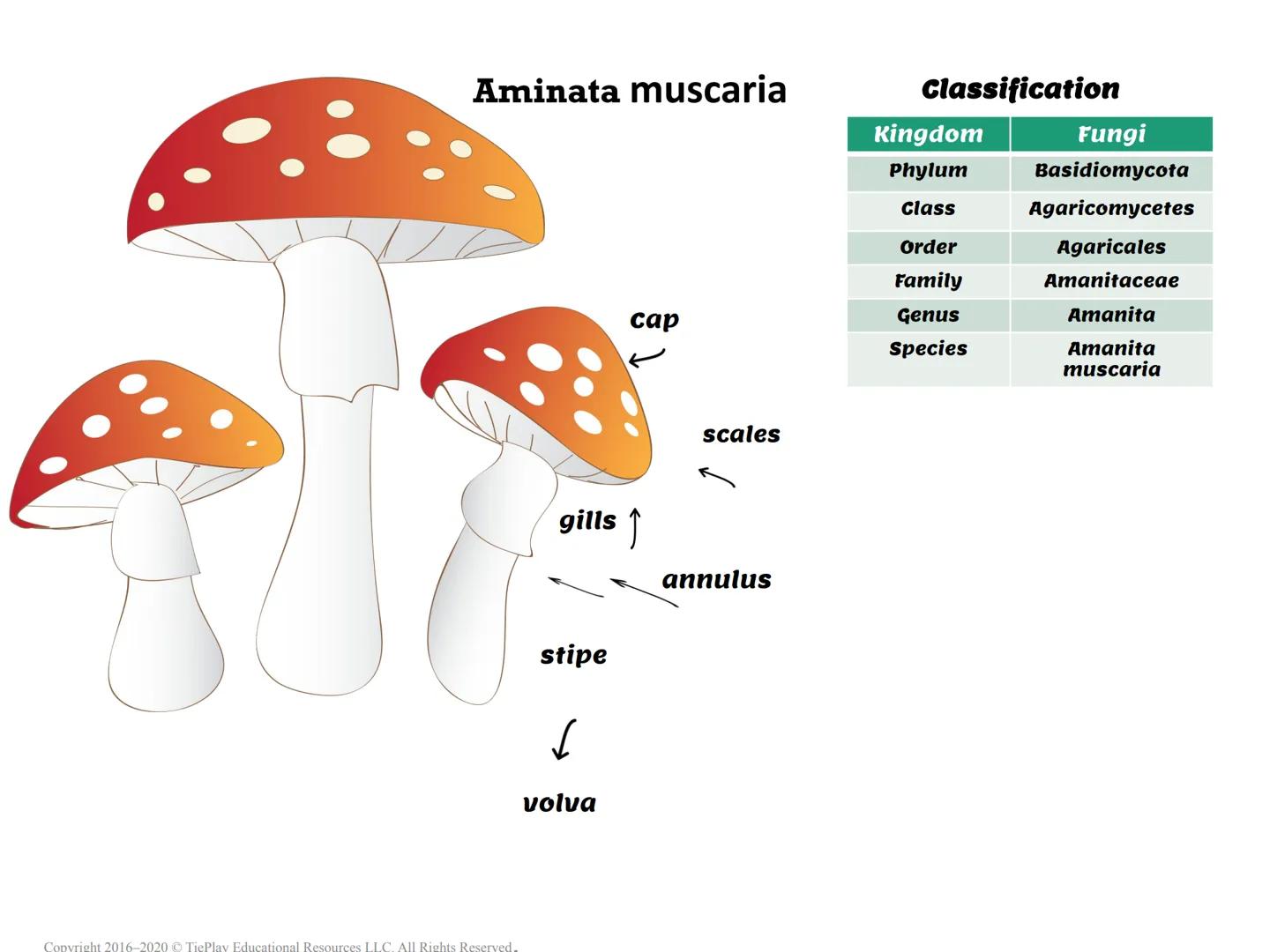
The Importance of Fungi
Fungi may seem strange or even scary, but they're actually super important to our world! As decomposers, fungi break down dead plants and animals, recycling nutrients back into the soil. Without fungi, we'd be buried in dead stuff!
In our daily lives, fungi contribute to many foods we enjoy. Yeasts help make bread rise and are essential for brewing beer. Special molds create the unique flavors in blue cheese, brie, and other tasty cheeses.
Perhaps most importantly, fungi have given us life-saving medicines. Penicillin, discovered by Alexander Fleming in 1928, was derived from a fungus and became one of the most important antibiotics ever. Other fungi provide statins for treating high cholesterol and various other medications.
Think About It: Every time you eat bread, pizza crust, or mushrooms on your burger, you're benefiting from fungi!
8
of 10
9
of 10
10
of 10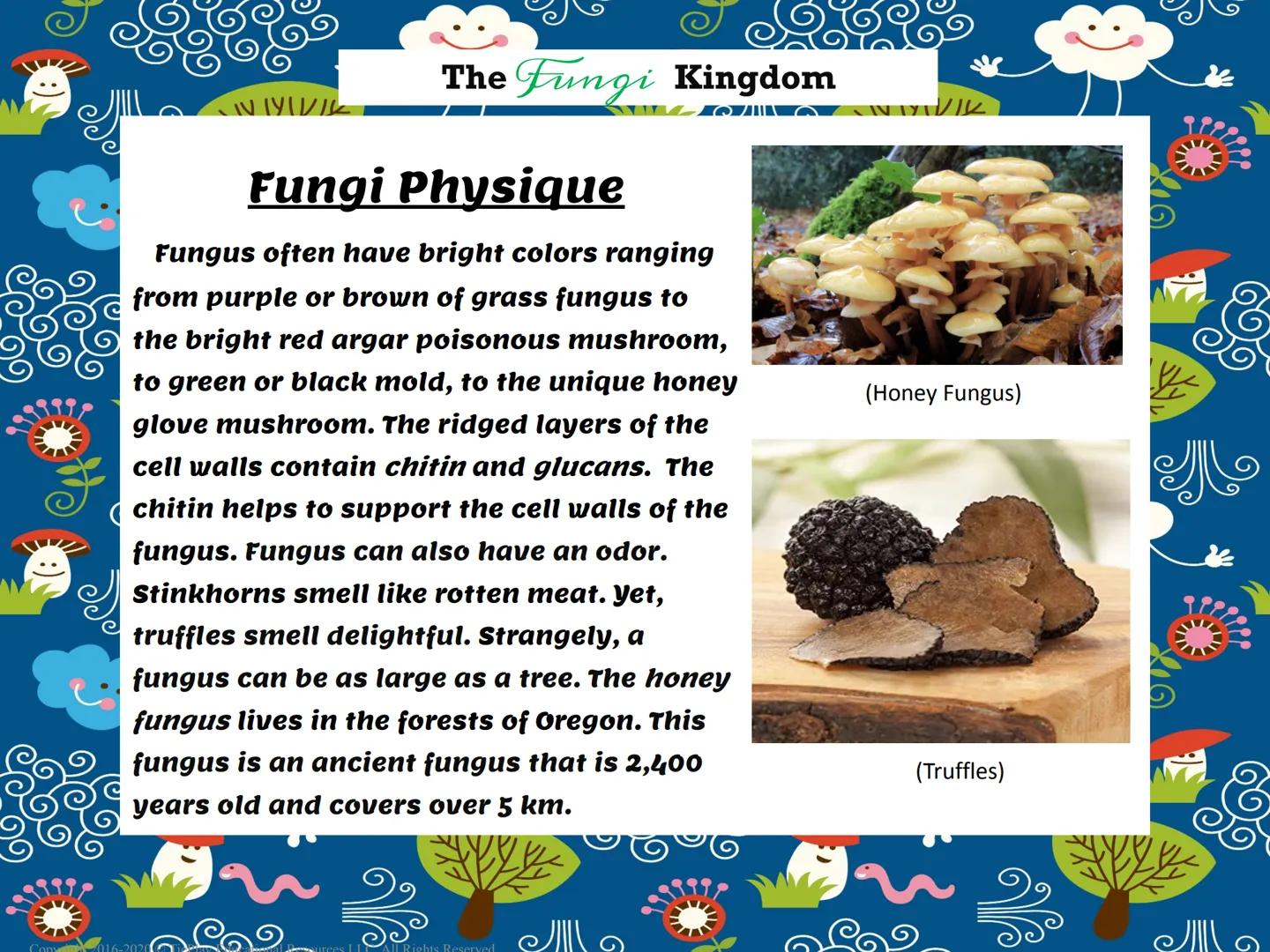
We thought you’d never ask...
What is the Knowunity AI companion?
Our AI companion is specifically built for the needs of students. Based on the millions of content pieces we have on the platform we can provide truly meaningful and relevant answers to students. But its not only about answers, the companion is even more about guiding students through their daily learning challenges, with personalised study plans, quizzes or content pieces in the chat and 100% personalisation based on the students skills and developments.
Where can I download the Knowunity app?
You can download the app in the Google Play Store and in the Apple App Store.
Is Knowunity really free of charge?
That's right! Enjoy free access to study content, connect with fellow students, and get instant help – all at your fingertips.
Similar Content
Most popular content: Mycology
1Most popular content in Biology
9C
BiologyCell Organelles
This Quiz Is To Test Your Knowledge Of Cell Organelles And Their Functions Inside The Cell. It Can Also Be A Study Guide To Remember Them Better.
6th6710
B
Biologybiology cell organelles and functions
Do you know the cell organelles and their functions?
9th4410
M
BiologyMitosis and Cell Division Flashcards
These flashcards cover the basics of mitosis and why cell division occurs in the first place.
9th3390
D
BiologyDNA and RNA
Uncover the secrets of life with this comprehensive Biology flashcard set. Perfect for grade 10 students studying Living Environment.
10th1,0782
D
BiologyDiscover the Fascinating World of Living Organisms
Uncover the secrets of biology and explore the diverse and amazing life forms that inhabit our planet with this captivating flashcard set.
7th4380
A
BiologyAnimal and plant cell structure
Quiz on animal and plant cell structures
9th3240
D
BiologyDiscover Punnet Squares
Uncover the secrets of life with this comprehensive Biology flashcard set. Perfect for grade 10 students studying Living Environment.
10th3961
D
BiologyDNA
Parts of DNA
9th2970
S
BiologySteps of Cellular Respiration
3 basic steps and Molecule Vocab
9th2660
Most popular content
9O
 AP US History
Origins and Dynamics of the Columbian Exchange
Analyze the ecological and economic motivations behind the initial transfer of goods, people, and diseases between the Old and New Worlds.
9th3,1280
I
AP US HistoryIntroduction to Early Cultural Interactions
Analyze the initial social and religious encounters between Europeans, Africans, and Indigenous peoples in the colonial Americas.
9th2,7730
O
 AP World History
Origins of Ancient River Civilizations
Analyze the environmental factors and technological innovations that led to the rise of early states in Mesopotamia, Egypt, and the Indus Valley.
9th3,1870
M
AP US HistoryMotivations for European Exploration
Analyze the economic, religious, and political factors that drove European powers to the Americas during the 15th and 16th centuries.
9th1,7780
F
 AP Psychology
Foundations of Ethical Guidelines in Research
Practice the core principles of the APA ethical code including informed consent, debriefing, and the role of Institutional Review Boards.
9th1,3360
I
AP US HistoryIntroduction to Native American Societies
Examine the diverse social, political, and economic structures of North American indigenous groups prior to European contact.
9th1,1100
I
AP BiologyIntroduction to Biological Elements of Life
Practice identifying the essential elements including carbon, nitrogen, phosphorus, and sulfur that compose biological macromolecules.
9th1,7390
I
AP US HistoryIntroduction to the Spanish Encomienda System
Explore the fundamental economic and social structures of the Spanish colonial system, focusing on the encomienda and the casta social hierarchy.
9th8890
O
AP World HistoryOrigins and Continuity of the Byzantine Empire
Analyze the political and cultural transitions from the Roman Empire to the Byzantine Empire, focusing on the reign of Justinian I and his code.
9th1,6320
Can't find what you're looking for? Explore other subjects.
Students love us — and so will you.
4.6/5App Store
4.7/5Google Play
The app is very easy to use and well designed. I have found everything I was looking for so far and have been able to learn a lot from the presentations! I will definitely use the app for a class assignment! And of course it also helps a lot as an inspiration.
Stefan SiOS user
This app is really great. There are so many study notes and help [...]. My problem subject is French, for example, and the app has so many options for help. Thanks to this app, I have improved my French. I would recommend it to anyone.
Samantha KlichAndroid user
Wow, I am really amazed. I just tried the app because I've seen it advertised many times and was absolutely stunned. This app is THE HELP you want for school and above all, it offers so many things, such as workouts and fact sheets, which have been VERY helpful to me personally.
AnnaiOS user
Biology57 views·Updated Jun 18, 2026·18 pagesComprehensive Fungi Kingdom Study Notes
Welcome to the fascinating world of fungi! This kingdom includes over 100,000 species of organisms that aren't plants or animals but play crucial roles in our environment. From mushrooms to mold, fungi are all around us - and you're about...
1
of 10
Sign up to see the content. It's free!
- Access to all documents
- Improve your grades
- Join milions of students
Introduction to the Fungi Kingdom
Fungi are living organisms with complex cells similar to plants and animals. They grow and reproduce but have their own unique characteristics that set them apart from other kingdoms.
Fungi live practically everywhere! You can find them in oceans, forests, grasslands, soil, and even on plants and animals. Some fungi are so tiny you need a microscope to see them, while others—like certain mushrooms—can grow as large as trees.
Unlike plants, fungi don't make their own food using sunlight. Instead, they absorb nutrients from their surroundings by breaking down organic matter.
Fun Fact: The largest known fungus lives in Oregon and is over 2,400 years old, covering more than 3 miles underground!
2
of 10Sign up to see the content. It's free!
- Access to all documents
- Improve your grades
- Join milions of students
Fungi Habitats and Relationships
Fungi are super-adaptable organisms that thrive in countless environments. From marine waters to forests, these organisms have found ways to survive almost anywhere. The richest variety of fungi can be found in old woodlands where they have plenty to feed on.
Some fungi form special partnerships with plants called mycorrhiza. This connection benefits both organisms - the fungus gets sugar from the plant, while the plant gets nutrients from the fungus through its roots. It's like a trade agreement in nature!
Fungi can be parasites (living on and harming a host) or saprophytes (feeding on dead matter). When forests are cut down or environments are damaged, we often lose unique fungal species that can't survive elsewhere.
Remember This: Fungi are master recyclers in ecosystems—they break down dead material and return nutrients to the soil!
3
of 10Sign up to see the content. It's free!
- Access to all documents
- Improve your grades
- Join milions of students
Fungi Classification
Fungi get their name from the Latin word for "mushroom," though the word might have originally come from the Greek "spongos." Scientists divide fungi into five major groups based on how they reproduce and other characteristics.
The five main groups of fungi include:
- Chytridiomycota (like the chytrids that cause disease in frogs)
- Zygomycota (includes bread mold)
- Glomeromycota
- Ascomycota (includes ringworm)
- Basidiomycota (most mushrooms belong here)
Fungi can be unicellular , multicellular, or filamentous . For simpler classification, they're sometimes grouped as sac fungi (like yeast), club fungi (like mushrooms), or thread-like fungi (like bread mold).
Science Tip: When scientists classify fungi, they look at the way they reproduce more than how they look!
4
of 10Sign up to see the content. It's free!
- Access to all documents
- Improve your grades
- Join milions of students
Life Cycle of Fungi
Fungi begin life as tiny spores, which are like seeds but don't need sunlight to grow. When a spore lands in a suitable place, it begins to develop by sending out a tube-like structure called a hypha.
What makes fungi special is they digest food before consuming it! The hypha releases enzymes that break down food outside the fungus, then absorbs the nutrients. As more hyphae grow, they form a network called mycelium - the main body of the fungus that's usually hidden underground or inside whatever the fungus is growing on.
Eventually, the fungus produces fruiting bodies - the visible parts we typically recognize as mushrooms or molds. These structures release more spores, continuing the life cycle. The mushroom you see is actually just the "tip of the iceberg" of the entire fungal organism!
Cool Connection: Think of mycelium as the fungus's root system and the mushroom as just its "flower" - the reproductive part!
5
of 10Sign up to see the content. It's free!
- Access to all documents
- Improve your grades
- Join milions of students
Fungi Appearance and Characteristics
Fungi come in an amazing variety of colors and shapes! They range from the deep purple of grass fungi to the bright red of poisonous agaric mushrooms, and from green or black molds to the unique honey glove mushroom.
The cell walls of fungi contain chitin (the same material in insect exoskeletons) and glucans that give them structure and support. This makes fungi different from plants, which use cellulose in their cell walls.
Fungi also have distinctive smells. Some, like stinkhorns, smell awful (like rotting meat) to attract insects that spread their spores. Others, like truffles, have delightful aromas that make them prized in cooking. The largest known fungus is the honey fungus in Oregon, which is approximately 2,400 years old and covers over 3 miles!
Mind-Blowing Fact: If you could see all of a large fungus, including its underground network, some would be bigger than blue whales!
6
of 10Sign up to see the content. It's free!
- Access to all documents
- Improve your grades
- Join milions of students
Hazardous Fungi
Not all fungi are friendly! Some molds release spores into the air that can trigger allergic reactions, coughing, runny nose, sore throat, wheezing, and sneezing in people who are sensitive to them.
Certain fungi that grow on foods like beef, poultry, or wet grains produce dangerous substances called mycotoxins. Food companies must follow strict rules to prevent these fungi from contaminating our food supply, as they can cause serious illness or even death in humans and animals.
Wild mushrooms can be particularly dangerous. The Death Cap and Yellow-staining mushrooms are just two examples of deadly fungi that can cause liver and kidney damage. Always remember: never eat mushrooms found in the wild unless they've been identified by a trained expert!
Safety Alert: Even experienced mushroom hunters can mistake deadly mushrooms for edible ones. Always buy mushrooms from a grocery store unless you're 100% certain!
7
of 10Sign up to see the content. It's free!
- Access to all documents
- Improve your grades
- Join milions of students
The Importance of Fungi
Fungi may seem strange or even scary, but they're actually super important to our world! As decomposers, fungi break down dead plants and animals, recycling nutrients back into the soil. Without fungi, we'd be buried in dead stuff!
In our daily lives, fungi contribute to many foods we enjoy. Yeasts help make bread rise and are essential for brewing beer. Special molds create the unique flavors in blue cheese, brie, and other tasty cheeses.
Perhaps most importantly, fungi have given us life-saving medicines. Penicillin, discovered by Alexander Fleming in 1928, was derived from a fungus and became one of the most important antibiotics ever. Other fungi provide statins for treating high cholesterol and various other medications.
Think About It: Every time you eat bread, pizza crust, or mushrooms on your burger, you're benefiting from fungi!
8
of 10Sign up to see the content. It's free!
- Access to all documents
- Improve your grades
- Join milions of students
9
of 10Sign up to see the content. It's free!
- Access to all documents
- Improve your grades
- Join milions of students
10
of 10Sign up to see the content. It's free!
- Access to all documents
- Improve your grades
- Join milions of students
We thought you’d never ask...
What is the Knowunity AI companion?
Our AI companion is specifically built for the needs of students. Based on the millions of content pieces we have on the platform we can provide truly meaningful and relevant answers to students. But its not only about answers, the companion is even more about guiding students through their daily learning challenges, with personalised study plans, quizzes or content pieces in the chat and 100% personalisation based on the students skills and developments.
Where can I download the Knowunity app?
You can download the app in the Google Play Store and in the Apple App Store.
Is Knowunity really free of charge?
That's right! Enjoy free access to study content, connect with fellow students, and get instant help – all at your fingertips.
Similar Content
Most popular content: Mycology
1Most popular content in Biology
9C
BiologyCell Organelles
This Quiz Is To Test Your Knowledge Of Cell Organelles And Their Functions Inside The Cell. It Can Also Be A Study Guide To Remember Them Better.
6th6710
B
Biologybiology cell organelles and functions
Do you know the cell organelles and their functions?
9th4410
M
BiologyMitosis and Cell Division Flashcards
These flashcards cover the basics of mitosis and why cell division occurs in the first place.
9th3390
D
BiologyDNA and RNA
Uncover the secrets of life with this comprehensive Biology flashcard set. Perfect for grade 10 students studying Living Environment.
10th1,0782
D
BiologyDiscover the Fascinating World of Living Organisms
Uncover the secrets of biology and explore the diverse and amazing life forms that inhabit our planet with this captivating flashcard set.
7th4380
A
BiologyAnimal and plant cell structure
Quiz on animal and plant cell structures
9th3240
D
BiologyDiscover Punnet Squares
Uncover the secrets of life with this comprehensive Biology flashcard set. Perfect for grade 10 students studying Living Environment.
10th3961
D
BiologyDNA
Parts of DNA
9th2970
S
BiologySteps of Cellular Respiration
3 basic steps and Molecule Vocab
9th2660
Most popular content
9O
AP US HistoryOrigins and Dynamics of the Columbian Exchange
Analyze the ecological and economic motivations behind the initial transfer of goods, people, and diseases between the Old and New Worlds.
9th3,1280
I
AP US HistoryIntroduction to Early Cultural Interactions
Analyze the initial social and religious encounters between Europeans, Africans, and Indigenous peoples in the colonial Americas.
9th2,7730
O
AP World HistoryOrigins of Ancient River Civilizations
Analyze the environmental factors and technological innovations that led to the rise of early states in Mesopotamia, Egypt, and the Indus Valley.
9th3,1870
M
AP US HistoryMotivations for European Exploration
Analyze the economic, religious, and political factors that drove European powers to the Americas during the 15th and 16th centuries.
9th1,7780
F
AP PsychologyFoundations of Ethical Guidelines in Research
Practice the core principles of the APA ethical code including informed consent, debriefing, and the role of Institutional Review Boards.
9th1,3360
I
AP US HistoryIntroduction to Native American Societies
Examine the diverse social, political, and economic structures of North American indigenous groups prior to European contact.
9th1,1100
I
AP BiologyIntroduction to Biological Elements of Life
Practice identifying the essential elements including carbon, nitrogen, phosphorus, and sulfur that compose biological macromolecules.
9th1,7390
I
AP US HistoryIntroduction to the Spanish Encomienda System
Explore the fundamental economic and social structures of the Spanish colonial system, focusing on the encomienda and the casta social hierarchy.
9th8890
O
AP World HistoryOrigins and Continuity of the Byzantine Empire
Analyze the political and cultural transitions from the Roman Empire to the Byzantine Empire, focusing on the reign of Justinian I and his code.
9th1,6320
Can't find what you're looking for? Explore other subjects.
Students love us — and so will you.
4.6/5App Store
4.7/5Google Play
The app is very easy to use and well designed. I have found everything I was looking for so far and have been able to learn a lot from the presentations! I will definitely use the app for a class assignment! And of course it also helps a lot as an inspiration.
Stefan SiOS user
This app is really great. There are so many study notes and help [...]. My problem subject is French, for example, and the app has so many options for help. Thanks to this app, I have improved my French. I would recommend it to anyone.
Samantha KlichAndroid user
Wow, I am really amazed. I just tried the app because I've seen it advertised many times and was absolutely stunned. This app is THE HELP you want for school and above all, it offers so many things, such as workouts and fact sheets, which have been VERY helpful to me personally.
AnnaiOS user