

Ecology is the scientific study of how organisms interact with...
 Biology61 views·Updated Jun 16, 2026·16 pages
Ecology Study Guide: Exploring Succession
1 / 10
1
of 10
ECOLOGY
Ecology helps us understand how all living things are connected to each other and their surroundings. Think of it as studying nature's complex social network!
When you learn about ecology, you're discovering the rules that keep our planet's living systems in balance. These rules affect everything from tiny bacteria to massive ecosystems.
In these notes, we'll explore the building blocks of ecology and how they fit together to create our living world.
2
of 10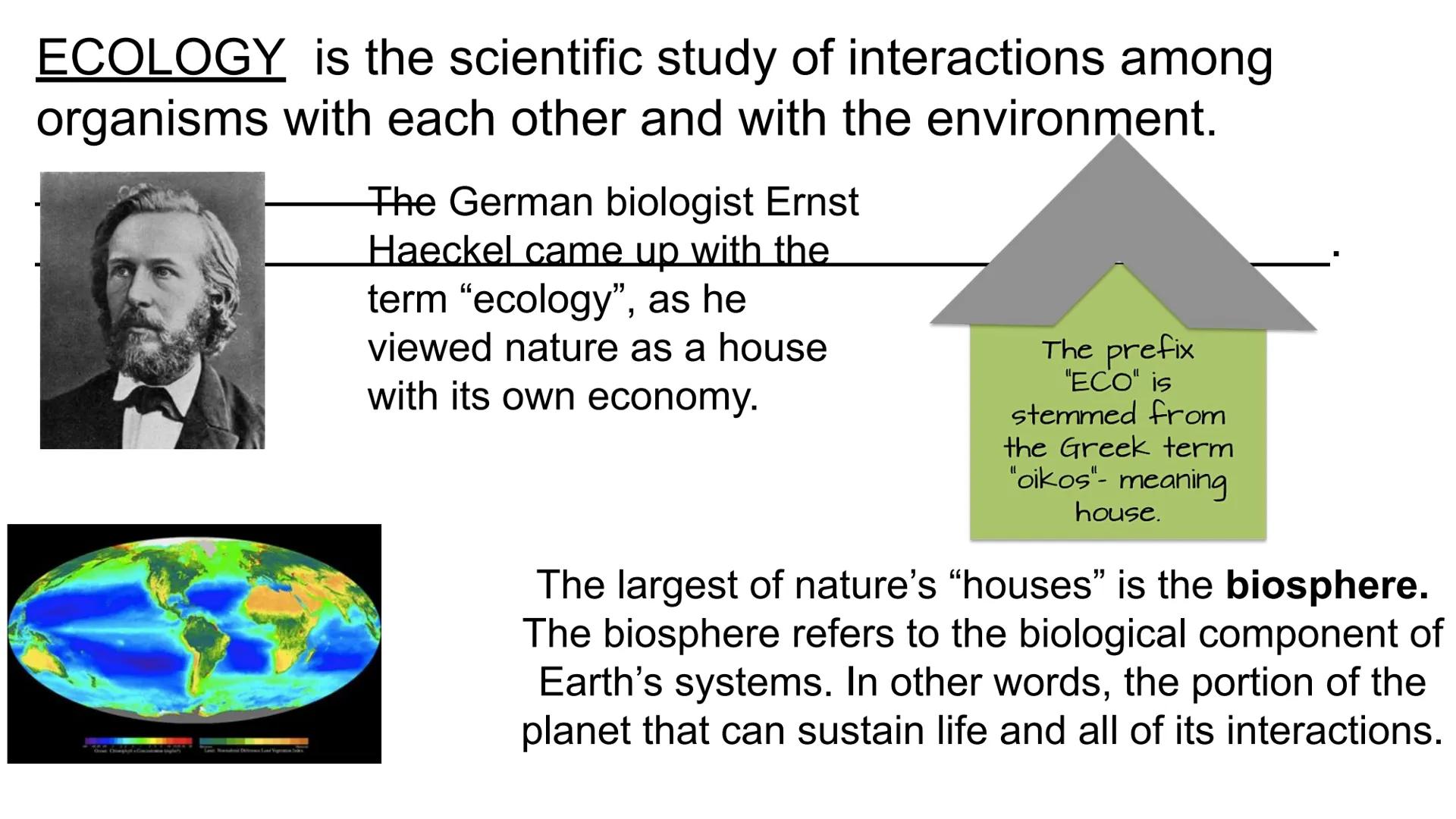
What Is Ecology?
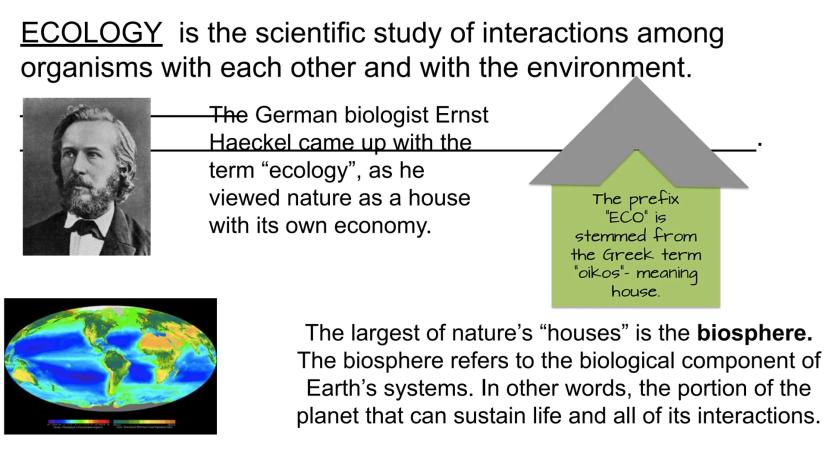
Ecology is the scientific study of how organisms interact with each other and their environment. The term was created by German biologist Ernst Haeckel, who viewed nature as a house with its own economy.
The prefix "eco" comes from the Greek word "oikos," which means "house." This gives us a helpful way to think about ecology—it's about understanding how all living things make their home on Earth!
The biggest "house" in nature is the biosphere—the portion of our planet that can support life. The biosphere includes all living organisms and the places they live, from the deepest ocean trenches to the highest mountain peaks.
Fun Fact: When you study ecology, you're learning about your own home—Earth! Everything you eat, drink, and breathe is connected to ecological systems.
3
of 10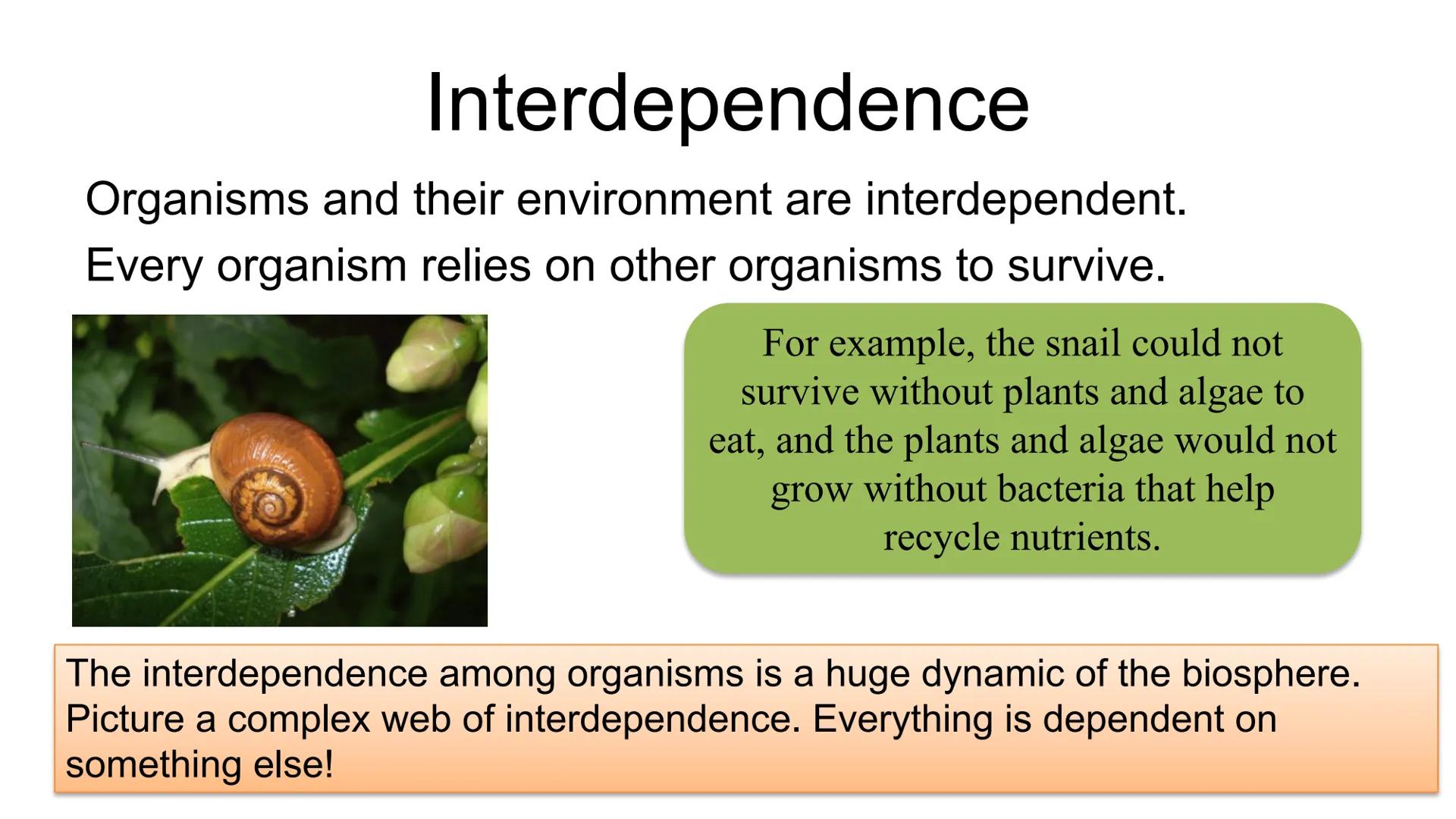
Interdependence
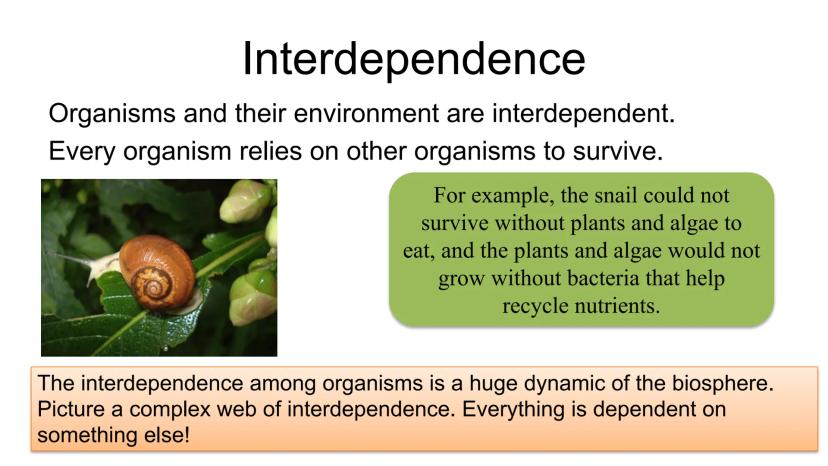
In nature, everything is connected! Interdependence means that organisms rely on each other to survive, creating a complex web of relationships.
Take a simple example: a snail needs plants and algae to eat, while those plants and algae need bacteria to help recycle nutrients in the soil. If one part of this chain disappears, the others struggle too.
This interconnection creates a dynamic system where changes in one population can ripple through many others. It's like a giant puzzle where each piece affects all the others!
Think About It: What would happen to your local ecosystem if all the bees disappeared? How many other species would be affected?
4
of 10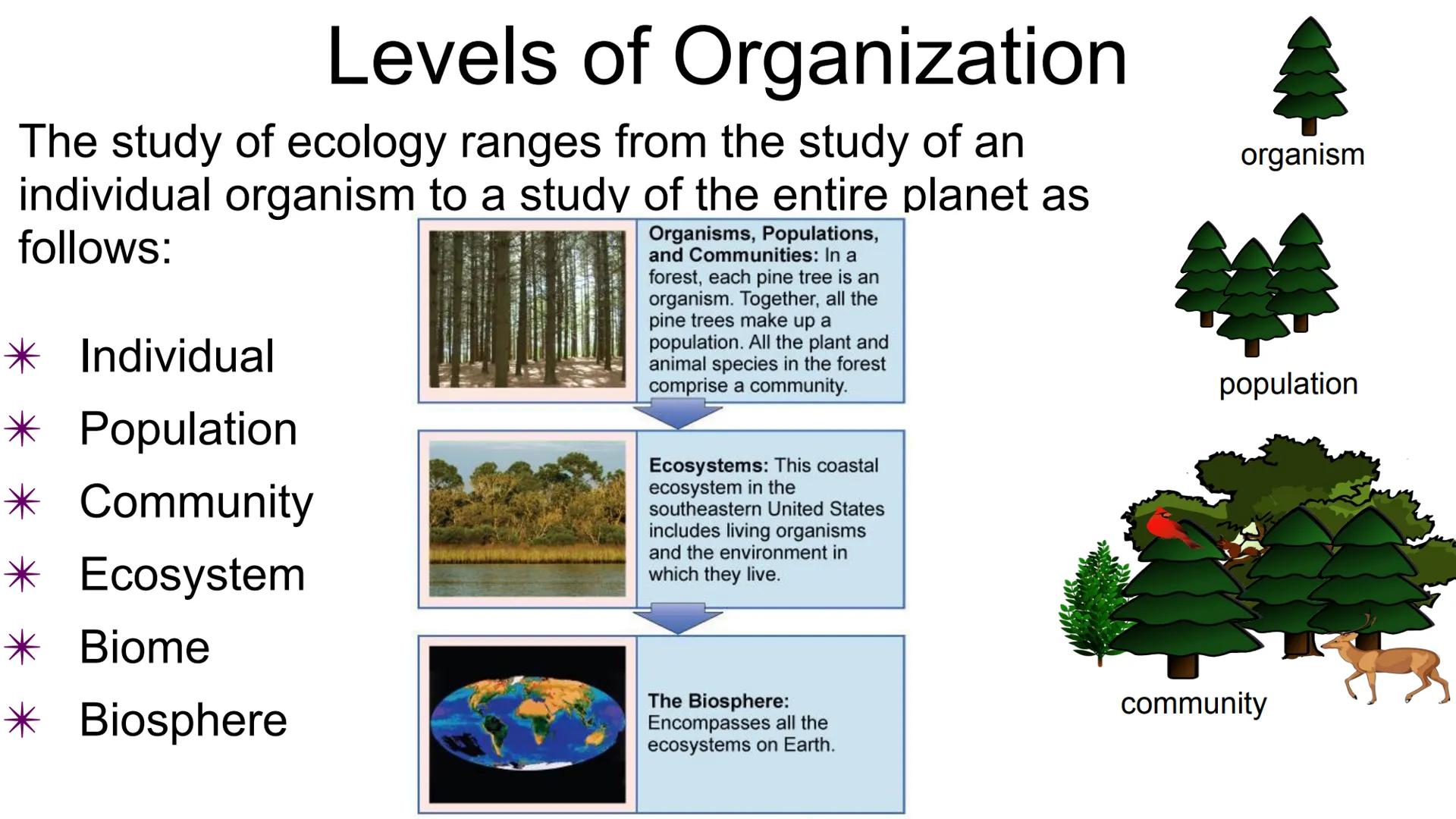
Levels of Organization
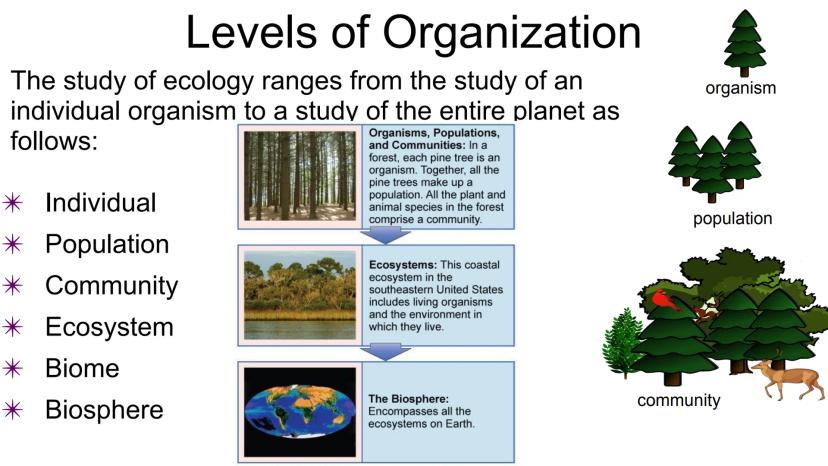
Ecologists study nature at different levels, from individual organisms to the entire planet. These levels build on each other like a pyramid:
- Individual: A single living thing, like one pine tree
- Population: All members of the same species in an area, like all pine trees in a forest
- Community: All different species living together, like all plants and animals in a forest
- Ecosystem: The community plus its physical environment
- Biome: A large region with similar climate and organisms
- Biosphere: All ecosystems on Earth combined
Each level becomes more complex and shows new patterns that you can't see at smaller scales. For example, a single tree doesn't show you how a forest works!
Remember: You can think of these levels like zooming out on a map—starting with one house, then seeing a neighborhood, a city, a state, and finally the whole country!
5
of 10
Species and Populations
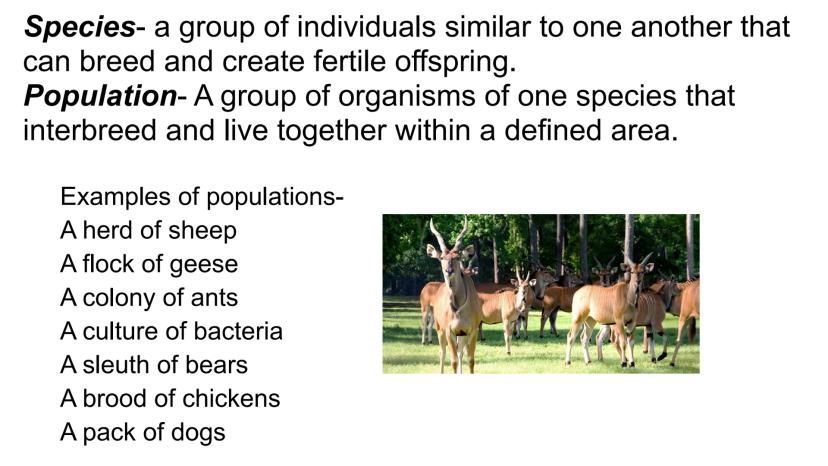
A species is a group of similar organisms that can breed with each other and produce fertile offspring. Think of dogs—different breeds look different but they're all one species because they can have puppies together.
A population is all the members of one species living in a defined area. Nature has fun names for many populations:
- A herd of sheep
- A flock of geese
- A colony of ants
- A pack of dogs
Populations are important because they show how a species is doing in a particular place. If a population gets too small, the species might disappear from that area!
Cool Connection: The population you're most familiar with is the human population in your town or city. How many people make up this population, and how has it changed over time?
6
of 10
Communities and Ecosystems
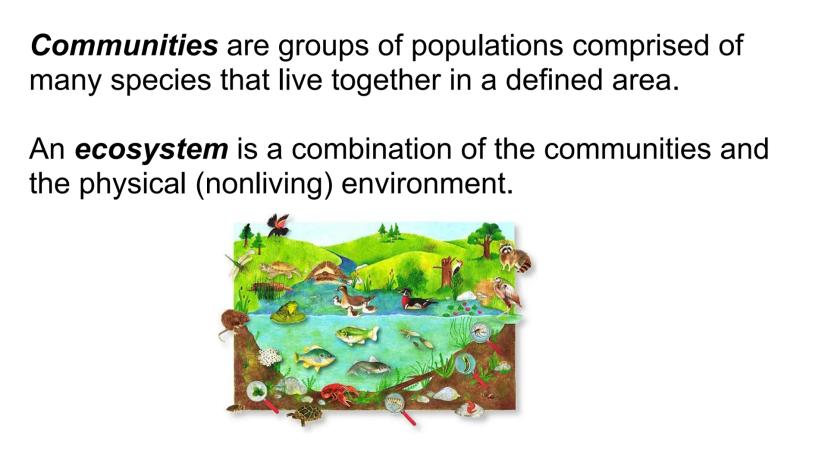
Communities are groups of different populations living together in the same area. Think of a pond community with fish, frogs, insects, and plants all interacting with each other.
An ecosystem takes things a step further by including both the community (living things) and the physical environment . The ecosystem includes everything from the water, soil, and air to all the plants and animals.
In an ecosystem, energy flows and nutrients cycle between living and non-living parts. For example, plants take nutrients from soil, animals eat plants, and when animals die, decomposers return those nutrients to the soil.
Visualization Tip: Think of a community as all the different students in your school, while an ecosystem would be the entire school including the building, grounds, and everyone in it.
7
of 10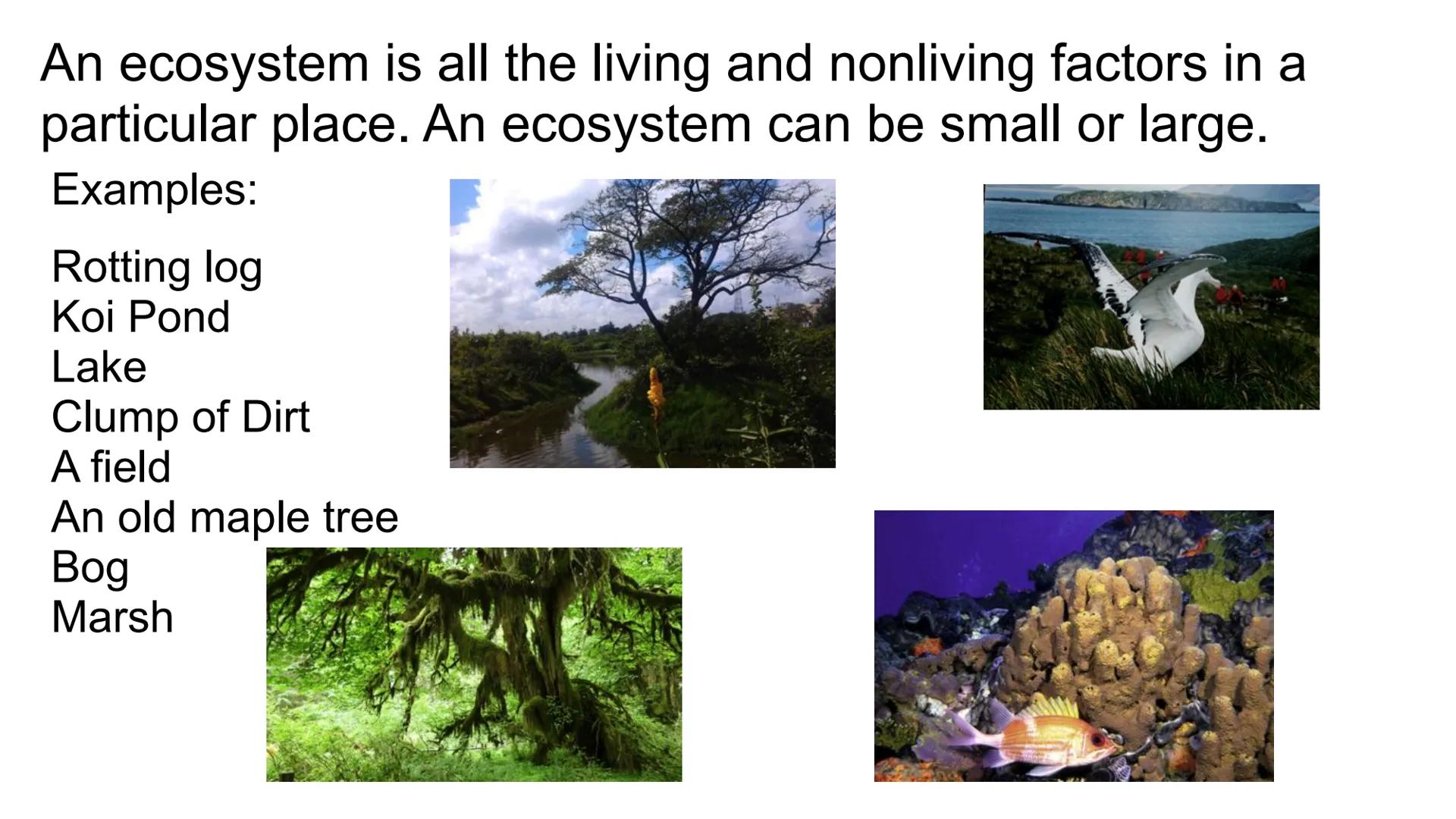
Examples of Ecosystems
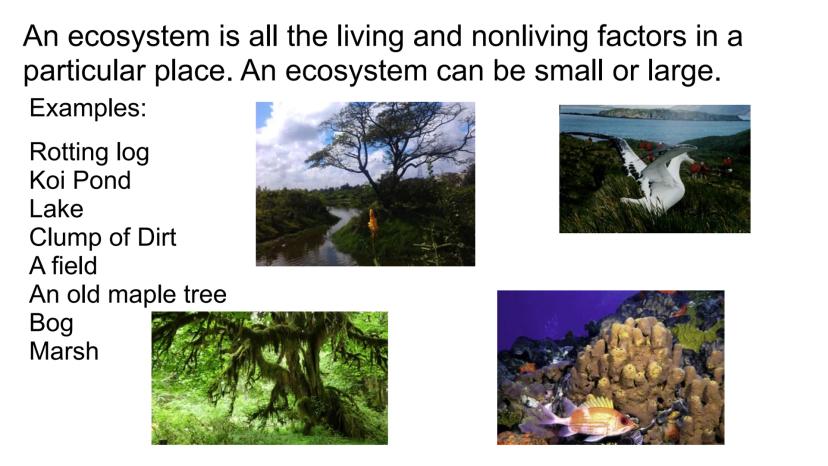
Ecosystems come in all shapes and sizes! An ecosystem includes all living things and their non-living environment in a particular place.
Small ecosystems might include:
- A rotting log with insects, fungi, and bacteria
- A koi pond with fish, plants, and microscopic life
- Even a clump of dirt can be an ecosystem!
Larger ecosystems include:
- Lakes and rivers
- Fields and forests
- Marshes and bogs
Each ecosystem has its own unique set of organisms and environmental conditions. What's amazing is that even tiny ecosystems follow the same basic rules as huge ones!
Try This: Find a small ecosystem near your home or school. Observe it for 10 minutes and list all the living and non-living components you can identify.
8
of 10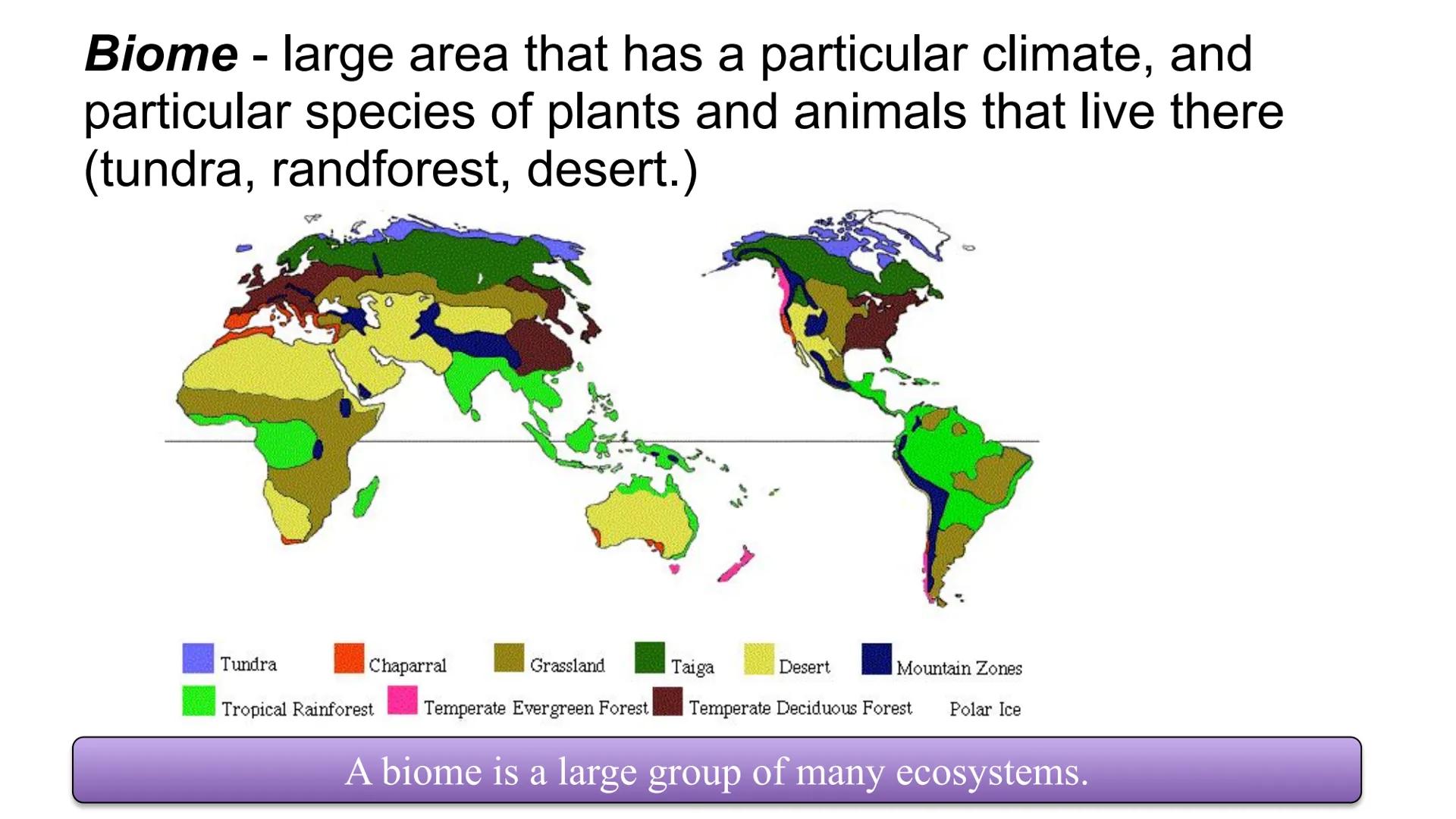
Biomes
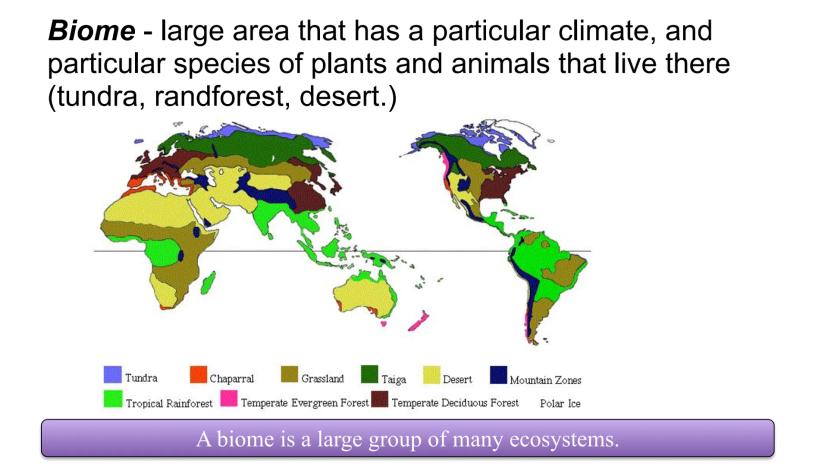
A biome is a large region with a specific climate that contains characteristic ecosystems. Biomes are like nature's neighborhoods on a global scale!
Major world biomes include:
- Tundra (cold, treeless areas near the poles)
- Tropical rainforest (warm, wet forests near the equator)
- Desert (dry areas with little precipitation)
- Grassland (areas dominated by grasses with few trees)
- Taiga (northern forests with mainly evergreen trees)
- Temperate deciduous forest (forests that lose leaves in winter)
Each biome has plants and animals specially adapted to its conditions. For example, cacti have thick stems to store water in deserts, while polar bears have thick fur for the tundra.
Did You Know? The biome you live in affects everything from what plants grow in your yard to what kinds of weather you experience throughout the year!
9
of 10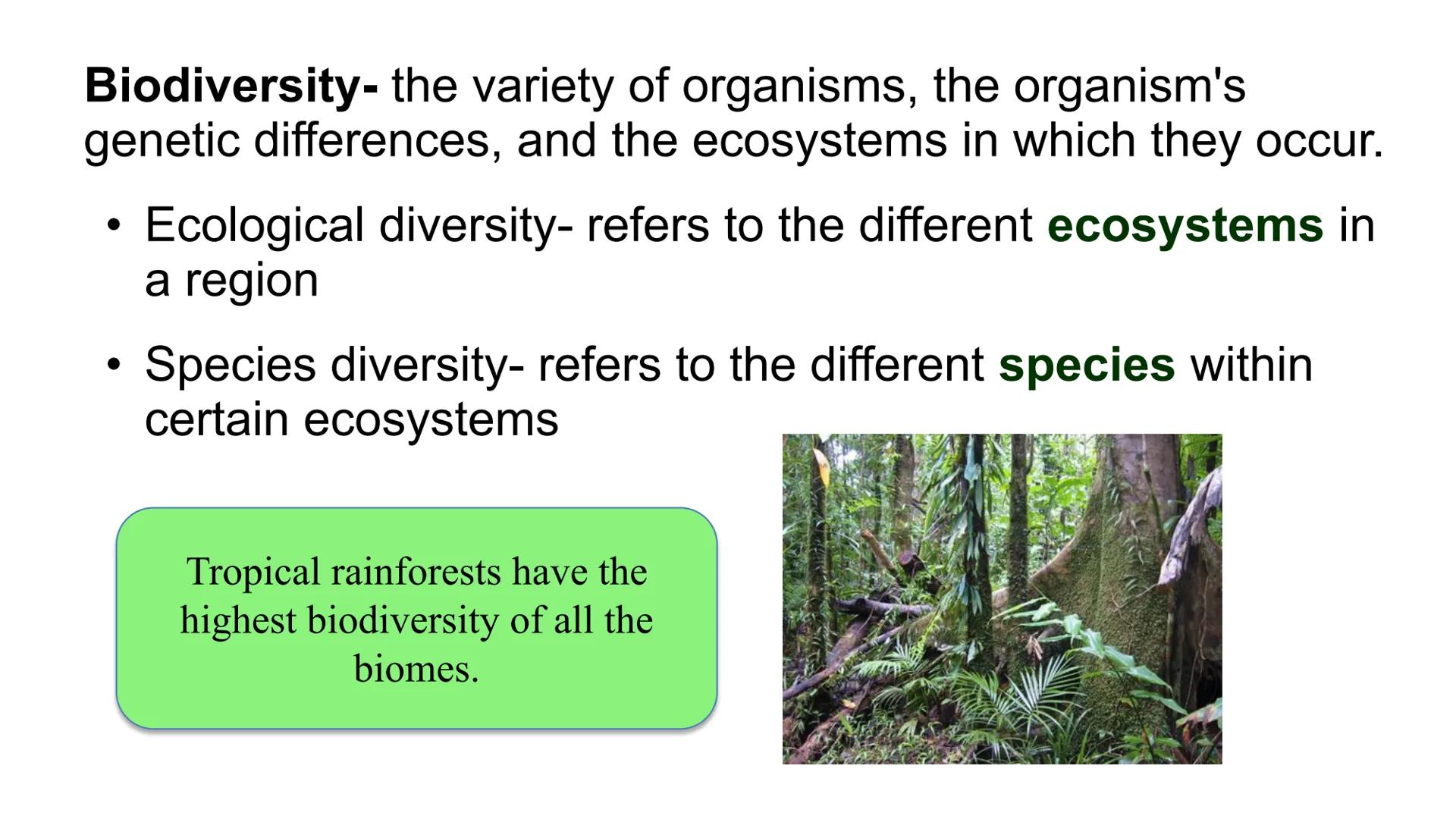
Biodiversity
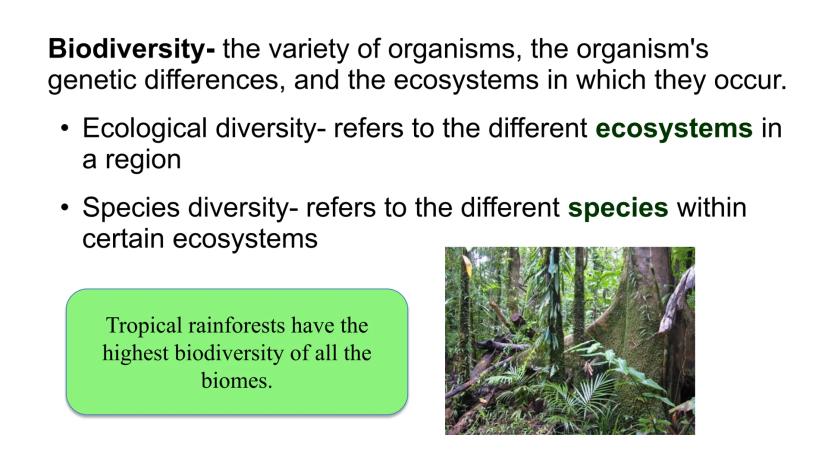
Biodiversity refers to the variety of life in an area. It includes three important types of diversity:
Ecological diversity means having many different kinds of ecosystems in a region. For example, a place with mountains, forests, and wetlands has high ecological diversity.
Species diversity refers to the number of different species in an ecosystem. Tropical rainforests have the highest species diversity of any biome—a single acre might contain thousands of different species!
Higher biodiversity usually means healthier ecosystems that can better handle disturbances like disease or climate change. It's like having a diverse investment portfolio—if one part struggles, the others can keep things running.
Amazing Fact: Scientists estimate there may be between 8-10 million species on Earth, but we've only identified about 1.5 million so far!
10
of 10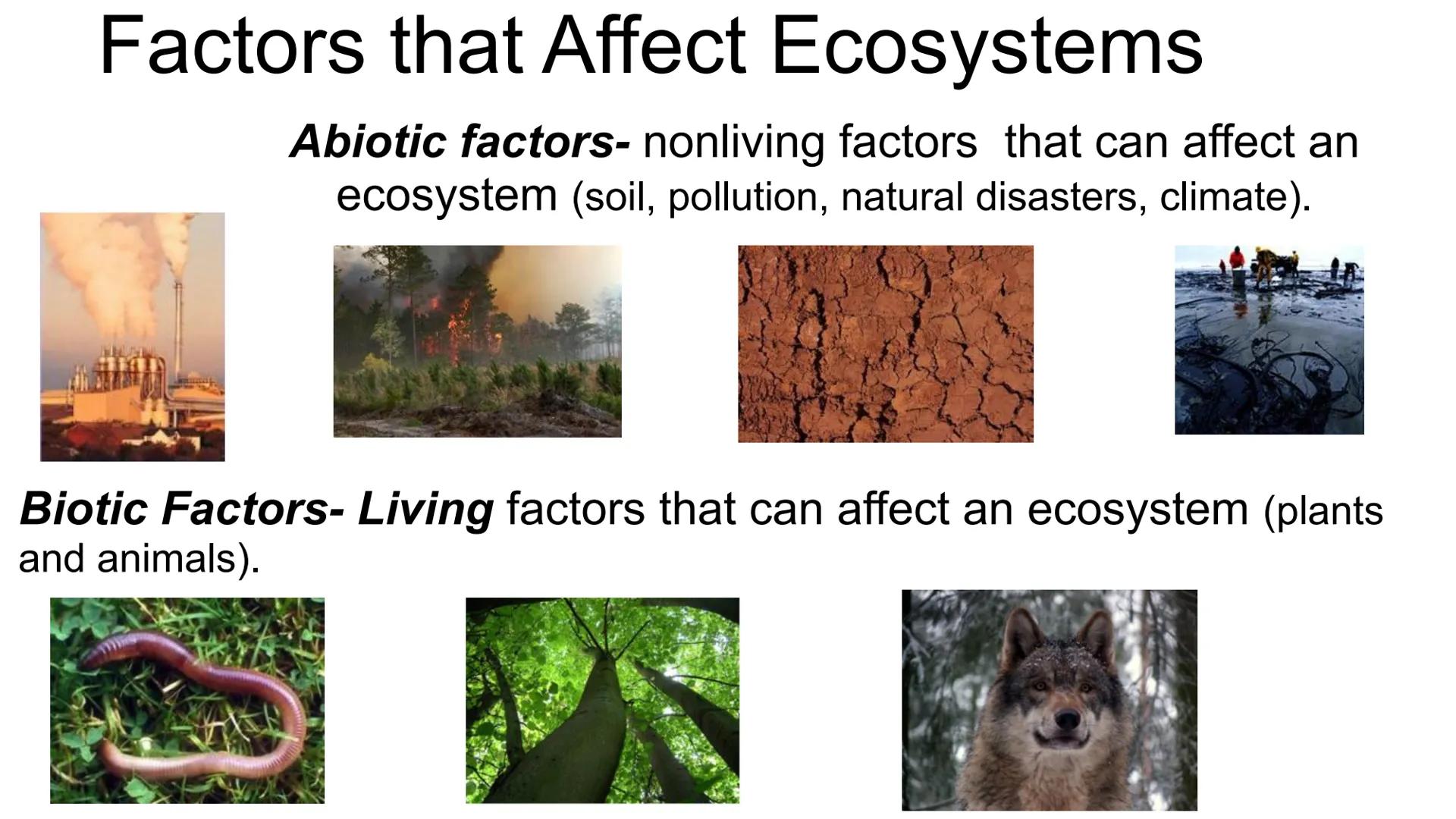
Factors that Affect Ecosystems
Ecosystems are shaped by two main types of factors:
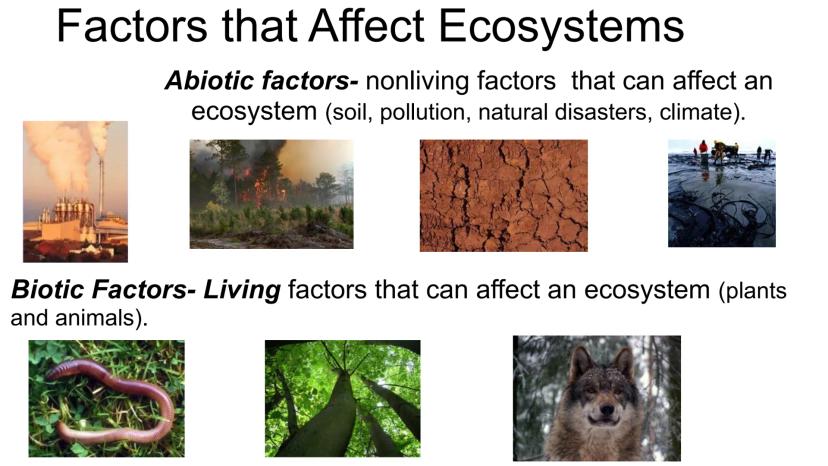
Abiotic factors are the non-living parts of the environment that affect living things. These include:
- Temperature and climate
- Soil type and quality
- Water availability
- Amount of sunlight
- Natural disasters like floods or fires
Biotic factors are the living components that influence other organisms:
- Predators and prey
- Competition between species
- Parasites and disease
- Plant and animal interactions
Both types of factors work together to determine which species can survive in an ecosystem and how abundant they'll be.
Think About It: How might climate change (an abiotic factor) affect the biotic factors in your local ecosystem?
We thought you’d never ask...
What is the Knowunity AI companion?
Our AI companion is specifically built for the needs of students. Based on the millions of content pieces we have on the platform we can provide truly meaningful and relevant answers to students. But its not only about answers, the companion is even more about guiding students through their daily learning challenges, with personalised study plans, quizzes or content pieces in the chat and 100% personalisation based on the students skills and developments.
Where can I download the Knowunity app?
You can download the app in the Google Play Store and in the Apple App Store.
Is Knowunity really free of charge?
That's right! Enjoy free access to study content, connect with fellow students, and get instant help – all at your fingertips.
Similar Content
Most popular content in Biology
9C
BiologyCell Organelles
This Quiz Is To Test Your Knowledge Of Cell Organelles And Their Functions Inside The Cell. It Can Also Be A Study Guide To Remember Them Better.
6th6710
B
Biologybiology cell organelles and functions
Do you know the cell organelles and their functions?
9th4410
M
BiologyMitosis and Cell Division Flashcards
These flashcards cover the basics of mitosis and why cell division occurs in the first place.
9th3390
D
BiologyDNA and RNA
Uncover the secrets of life with this comprehensive Biology flashcard set. Perfect for grade 10 students studying Living Environment.
10th1,0782
D
BiologyDiscover the Fascinating World of Living Organisms
Uncover the secrets of biology and explore the diverse and amazing life forms that inhabit our planet with this captivating flashcard set.
7th4380
A
BiologyAnimal and plant cell structure
Quiz on animal and plant cell structures
9th3240
D
BiologyDiscover Punnet Squares
Uncover the secrets of life with this comprehensive Biology flashcard set. Perfect for grade 10 students studying Living Environment.
10th3961
D
BiologyDNA
Parts of DNA
9th2970
S
BiologySteps of Cellular Respiration
3 basic steps and Molecule Vocab
9th2660
Most popular content
9O
 AP US History
Origins and Dynamics of the Columbian Exchange
Analyze the ecological and economic motivations behind the initial transfer of goods, people, and diseases between the Old and New Worlds.
9th3,1280
I
AP US HistoryIntroduction to Early Cultural Interactions
Analyze the initial social and religious encounters between Europeans, Africans, and Indigenous peoples in the colonial Americas.
9th2,7730
O
 AP World History
Origins of Ancient River Civilizations
Analyze the environmental factors and technological innovations that led to the rise of early states in Mesopotamia, Egypt, and the Indus Valley.
9th3,1870
M
AP US HistoryMotivations for European Exploration
Analyze the economic, religious, and political factors that drove European powers to the Americas during the 15th and 16th centuries.
9th1,7780
F
 AP Psychology
Foundations of Ethical Guidelines in Research
Practice the core principles of the APA ethical code including informed consent, debriefing, and the role of Institutional Review Boards.
9th1,3360
I
AP US HistoryIntroduction to Native American Societies
Examine the diverse social, political, and economic structures of North American indigenous groups prior to European contact.
9th1,1100
I
AP BiologyIntroduction to Biological Elements of Life
Practice identifying the essential elements including carbon, nitrogen, phosphorus, and sulfur that compose biological macromolecules.
9th1,7390
I
AP US HistoryIntroduction to the Spanish Encomienda System
Explore the fundamental economic and social structures of the Spanish colonial system, focusing on the encomienda and the casta social hierarchy.
9th8890
O
AP World HistoryOrigins and Continuity of the Byzantine Empire
Analyze the political and cultural transitions from the Roman Empire to the Byzantine Empire, focusing on the reign of Justinian I and his code.
9th1,6320
Can't find what you're looking for? Explore other subjects.
Students love us — and so will you.
4.6/5App Store
4.7/5Google Play
The app is very easy to use and well designed. I have found everything I was looking for so far and have been able to learn a lot from the presentations! I will definitely use the app for a class assignment! And of course it also helps a lot as an inspiration.
Stefan SiOS user
This app is really great. There are so many study notes and help [...]. My problem subject is French, for example, and the app has so many options for help. Thanks to this app, I have improved my French. I would recommend it to anyone.
Samantha KlichAndroid user
Wow, I am really amazed. I just tried the app because I've seen it advertised many times and was absolutely stunned. This app is THE HELP you want for school and above all, it offers so many things, such as workouts and fact sheets, which have been VERY helpful to me personally.
AnnaiOS user
Biology61 views·Updated Jun 16, 2026·16 pagesEcology Study Guide: Exploring Succession
Ecology is the scientific study of how organisms interact with each other and their environment. This fascinating field helps us understand the complex connections in nature, from tiny microorganisms to entire global systems. Let's explore how our natural world functions...
1
of 10
Sign up to see the content. It's free!
- Access to all documents
- Improve your grades
- Join milions of students
ECOLOGY
Ecology helps us understand how all living things are connected to each other and their surroundings. Think of it as studying nature's complex social network!
When you learn about ecology, you're discovering the rules that keep our planet's living systems in balance. These rules affect everything from tiny bacteria to massive ecosystems.
In these notes, we'll explore the building blocks of ecology and how they fit together to create our living world.
2
of 10Sign up to see the content. It's free!
- Access to all documents
- Improve your grades
- Join milions of students
What Is Ecology?
Ecology is the scientific study of how organisms interact with each other and their environment. The term was created by German biologist Ernst Haeckel, who viewed nature as a house with its own economy.
The prefix "eco" comes from the Greek word "oikos," which means "house." This gives us a helpful way to think about ecology—it's about understanding how all living things make their home on Earth!
The biggest "house" in nature is the biosphere—the portion of our planet that can support life. The biosphere includes all living organisms and the places they live, from the deepest ocean trenches to the highest mountain peaks.
Fun Fact: When you study ecology, you're learning about your own home—Earth! Everything you eat, drink, and breathe is connected to ecological systems.
3
of 10Sign up to see the content. It's free!
- Access to all documents
- Improve your grades
- Join milions of students
Interdependence
In nature, everything is connected! Interdependence means that organisms rely on each other to survive, creating a complex web of relationships.
Take a simple example: a snail needs plants and algae to eat, while those plants and algae need bacteria to help recycle nutrients in the soil. If one part of this chain disappears, the others struggle too.
This interconnection creates a dynamic system where changes in one population can ripple through many others. It's like a giant puzzle where each piece affects all the others!
Think About It: What would happen to your local ecosystem if all the bees disappeared? How many other species would be affected?
4
of 10Sign up to see the content. It's free!
- Access to all documents
- Improve your grades
- Join milions of students
Levels of Organization
Ecologists study nature at different levels, from individual organisms to the entire planet. These levels build on each other like a pyramid:
- Individual: A single living thing, like one pine tree
- Population: All members of the same species in an area, like all pine trees in a forest
- Community: All different species living together, like all plants and animals in a forest
- Ecosystem: The community plus its physical environment
- Biome: A large region with similar climate and organisms
- Biosphere: All ecosystems on Earth combined
Each level becomes more complex and shows new patterns that you can't see at smaller scales. For example, a single tree doesn't show you how a forest works!
Remember: You can think of these levels like zooming out on a map—starting with one house, then seeing a neighborhood, a city, a state, and finally the whole country!
5
of 10Sign up to see the content. It's free!
- Access to all documents
- Improve your grades
- Join milions of students
Species and Populations
A species is a group of similar organisms that can breed with each other and produce fertile offspring. Think of dogs—different breeds look different but they're all one species because they can have puppies together.
A population is all the members of one species living in a defined area. Nature has fun names for many populations:
- A herd of sheep
- A flock of geese
- A colony of ants
- A pack of dogs
Populations are important because they show how a species is doing in a particular place. If a population gets too small, the species might disappear from that area!
Cool Connection: The population you're most familiar with is the human population in your town or city. How many people make up this population, and how has it changed over time?
6
of 10Sign up to see the content. It's free!
- Access to all documents
- Improve your grades
- Join milions of students
Communities and Ecosystems
Communities are groups of different populations living together in the same area. Think of a pond community with fish, frogs, insects, and plants all interacting with each other.
An ecosystem takes things a step further by including both the community (living things) and the physical environment . The ecosystem includes everything from the water, soil, and air to all the plants and animals.
In an ecosystem, energy flows and nutrients cycle between living and non-living parts. For example, plants take nutrients from soil, animals eat plants, and when animals die, decomposers return those nutrients to the soil.
Visualization Tip: Think of a community as all the different students in your school, while an ecosystem would be the entire school including the building, grounds, and everyone in it.
7
of 10Sign up to see the content. It's free!
- Access to all documents
- Improve your grades
- Join milions of students
Examples of Ecosystems
Ecosystems come in all shapes and sizes! An ecosystem includes all living things and their non-living environment in a particular place.
Small ecosystems might include:
- A rotting log with insects, fungi, and bacteria
- A koi pond with fish, plants, and microscopic life
- Even a clump of dirt can be an ecosystem!
Larger ecosystems include:
- Lakes and rivers
- Fields and forests
- Marshes and bogs
Each ecosystem has its own unique set of organisms and environmental conditions. What's amazing is that even tiny ecosystems follow the same basic rules as huge ones!
Try This: Find a small ecosystem near your home or school. Observe it for 10 minutes and list all the living and non-living components you can identify.
8
of 10Sign up to see the content. It's free!
- Access to all documents
- Improve your grades
- Join milions of students
Biomes
A biome is a large region with a specific climate that contains characteristic ecosystems. Biomes are like nature's neighborhoods on a global scale!
Major world biomes include:
- Tundra (cold, treeless areas near the poles)
- Tropical rainforest (warm, wet forests near the equator)
- Desert (dry areas with little precipitation)
- Grassland (areas dominated by grasses with few trees)
- Taiga (northern forests with mainly evergreen trees)
- Temperate deciduous forest (forests that lose leaves in winter)
Each biome has plants and animals specially adapted to its conditions. For example, cacti have thick stems to store water in deserts, while polar bears have thick fur for the tundra.
Did You Know? The biome you live in affects everything from what plants grow in your yard to what kinds of weather you experience throughout the year!
9
of 10Sign up to see the content. It's free!
- Access to all documents
- Improve your grades
- Join milions of students
Biodiversity
Biodiversity refers to the variety of life in an area. It includes three important types of diversity:
Ecological diversity means having many different kinds of ecosystems in a region. For example, a place with mountains, forests, and wetlands has high ecological diversity.
Species diversity refers to the number of different species in an ecosystem. Tropical rainforests have the highest species diversity of any biome—a single acre might contain thousands of different species!
Higher biodiversity usually means healthier ecosystems that can better handle disturbances like disease or climate change. It's like having a diverse investment portfolio—if one part struggles, the others can keep things running.
Amazing Fact: Scientists estimate there may be between 8-10 million species on Earth, but we've only identified about 1.5 million so far!
10
of 10Sign up to see the content. It's free!
- Access to all documents
- Improve your grades
- Join milions of students
Factors that Affect Ecosystems
Ecosystems are shaped by two main types of factors:
Abiotic factors are the non-living parts of the environment that affect living things. These include:
- Temperature and climate
- Soil type and quality
- Water availability
- Amount of sunlight
- Natural disasters like floods or fires
Biotic factors are the living components that influence other organisms:
- Predators and prey
- Competition between species
- Parasites and disease
- Plant and animal interactions
Both types of factors work together to determine which species can survive in an ecosystem and how abundant they'll be.
Think About It: How might climate change (an abiotic factor) affect the biotic factors in your local ecosystem?
We thought you’d never ask...
What is the Knowunity AI companion?
Our AI companion is specifically built for the needs of students. Based on the millions of content pieces we have on the platform we can provide truly meaningful and relevant answers to students. But its not only about answers, the companion is even more about guiding students through their daily learning challenges, with personalised study plans, quizzes or content pieces in the chat and 100% personalisation based on the students skills and developments.
Where can I download the Knowunity app?
You can download the app in the Google Play Store and in the Apple App Store.
Is Knowunity really free of charge?
That's right! Enjoy free access to study content, connect with fellow students, and get instant help – all at your fingertips.
Similar Content
Most popular content in Biology
9C
BiologyCell Organelles
This Quiz Is To Test Your Knowledge Of Cell Organelles And Their Functions Inside The Cell. It Can Also Be A Study Guide To Remember Them Better.
6th6710
B
Biologybiology cell organelles and functions
Do you know the cell organelles and their functions?
9th4410
M
BiologyMitosis and Cell Division Flashcards
These flashcards cover the basics of mitosis and why cell division occurs in the first place.
9th3390
D
BiologyDNA and RNA
Uncover the secrets of life with this comprehensive Biology flashcard set. Perfect for grade 10 students studying Living Environment.
10th1,0782
D
BiologyDiscover the Fascinating World of Living Organisms
Uncover the secrets of biology and explore the diverse and amazing life forms that inhabit our planet with this captivating flashcard set.
7th4380
A
BiologyAnimal and plant cell structure
Quiz on animal and plant cell structures
9th3240
D
BiologyDiscover Punnet Squares
Uncover the secrets of life with this comprehensive Biology flashcard set. Perfect for grade 10 students studying Living Environment.
10th3961
D
BiologyDNA
Parts of DNA
9th2970
S
BiologySteps of Cellular Respiration
3 basic steps and Molecule Vocab
9th2660
Most popular content
9O
AP US HistoryOrigins and Dynamics of the Columbian Exchange
Analyze the ecological and economic motivations behind the initial transfer of goods, people, and diseases between the Old and New Worlds.
9th3,1280
I
AP US HistoryIntroduction to Early Cultural Interactions
Analyze the initial social and religious encounters between Europeans, Africans, and Indigenous peoples in the colonial Americas.
9th2,7730
O
AP World HistoryOrigins of Ancient River Civilizations
Analyze the environmental factors and technological innovations that led to the rise of early states in Mesopotamia, Egypt, and the Indus Valley.
9th3,1870
M
AP US HistoryMotivations for European Exploration
Analyze the economic, religious, and political factors that drove European powers to the Americas during the 15th and 16th centuries.
9th1,7780
F
AP PsychologyFoundations of Ethical Guidelines in Research
Practice the core principles of the APA ethical code including informed consent, debriefing, and the role of Institutional Review Boards.
9th1,3360
I
AP US HistoryIntroduction to Native American Societies
Examine the diverse social, political, and economic structures of North American indigenous groups prior to European contact.
9th1,1100
I
AP BiologyIntroduction to Biological Elements of Life
Practice identifying the essential elements including carbon, nitrogen, phosphorus, and sulfur that compose biological macromolecules.
9th1,7390
I
AP US HistoryIntroduction to the Spanish Encomienda System
Explore the fundamental economic and social structures of the Spanish colonial system, focusing on the encomienda and the casta social hierarchy.
9th8890
O
AP World HistoryOrigins and Continuity of the Byzantine Empire
Analyze the political and cultural transitions from the Roman Empire to the Byzantine Empire, focusing on the reign of Justinian I and his code.
9th1,6320
Can't find what you're looking for? Explore other subjects.
Students love us — and so will you.
4.6/5App Store
4.7/5Google Play
The app is very easy to use and well designed. I have found everything I was looking for so far and have been able to learn a lot from the presentations! I will definitely use the app for a class assignment! And of course it also helps a lot as an inspiration.
Stefan SiOS user
This app is really great. There are so many study notes and help [...]. My problem subject is French, for example, and the app has so many options for help. Thanks to this app, I have improved my French. I would recommend it to anyone.
Samantha KlichAndroid user
Wow, I am really amazed. I just tried the app because I've seen it advertised many times and was absolutely stunned. This app is THE HELP you want for school and above all, it offers so many things, such as workouts and fact sheets, which have been VERY helpful to me personally.
AnnaiOS user