
Ecology is all about how living things survive, compete, and...
 Biology448 views·Updated Jun 22, 2026·7 pages
Understanding Ecology for GCSE Science
Charlotte@charlotte26



1 / 7
1
of 7
Ecosystems and How Species Depend on Each Other
Think about your local park or woodland - it's actually a complex ecosystem where plants, animals, and microorganisms interact with non-living things like soil and weather. Every organism has adapted to survive in specific conditions, but they're all competing for the same basic needs.
Competition happens everywhere in nature. Plants fight for sunlight and space, whilst animals compete for food, water, and mates. This competition can occur between different species or even within the same species.
The really fascinating part is interdependence - how every organism relies on others to survive. Remove one species from an ecosystem, and you'll see ripple effects throughout the entire community. For example, if bees disappeared, many plants couldn't reproduce, which would affect herbivores, then carnivores, and so on.
Quick Tip: Stable ecosystems like tropical rainforests and coral reefs maintain constant population sizes because all the living and non-living factors are perfectly balanced.
2
of 7
What Controls Life in Ecosystems
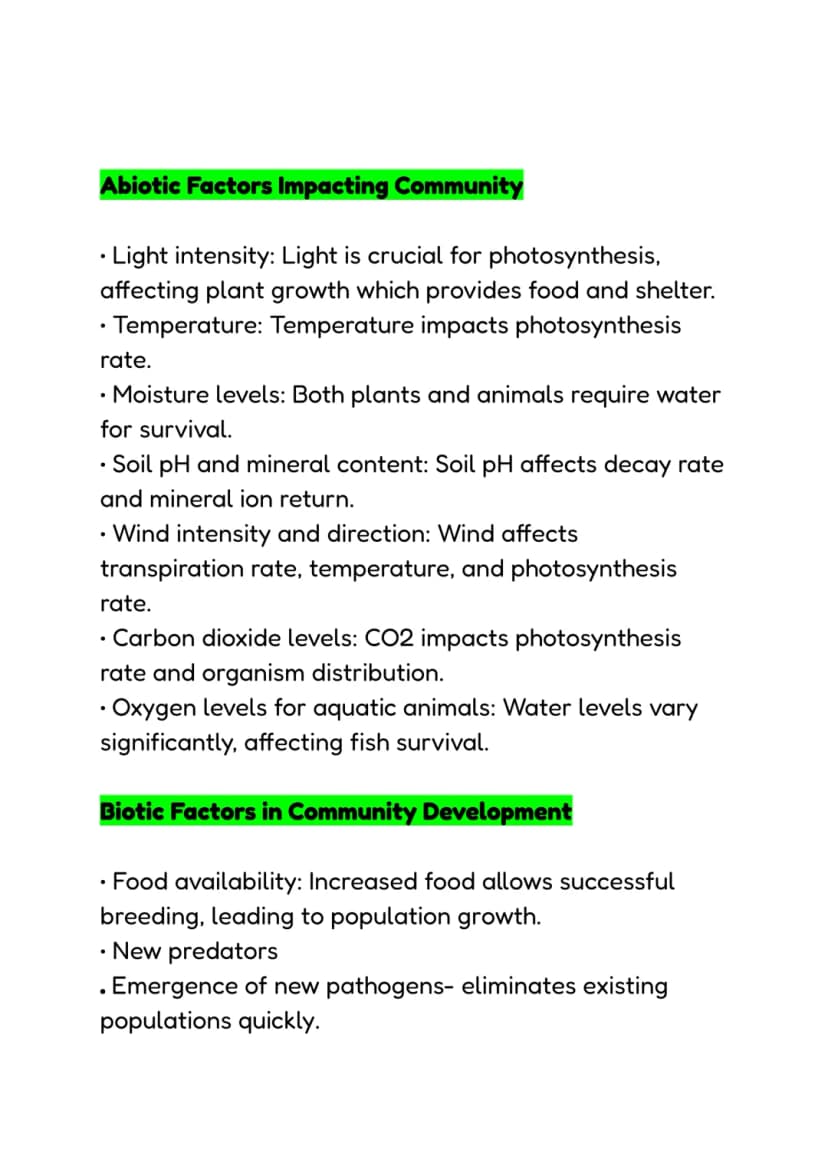
Abiotic factors have massive control over which organisms can survive where. Light intensity determines how well plants can photosynthesise, which affects the entire food web. Temperature controls how fast biological processes happen, whilst moisture levels determine whether organisms can meet their basic water needs.
Soil conditions matter more than you might think. The pH level affects how quickly dead matter decomposes and returns nutrients to the soil. Wind affects plant transpiration and can influence temperature, whilst carbon dioxide and oxygen levels directly impact photosynthesis and respiration.
Biotic factors (living elements) create equally important pressures. When food becomes abundant, animal populations breed successfully and grow rapidly. However, new predators or diseases can wipe out established populations surprisingly quickly.
Remember: Competition between well-adapted and poorly-adapted species usually results in the weaker species declining until they can't breed successfully anymore.
3
of 7
How Organisms Adapt to Survive
Every organism has evolved specific adaptations to thrive in their environment. These come in three main types that work together to ensure survival.
Structural adaptations are physical features you can observe - like sharp teeth in carnivores for tearing meat, or camouflage patterns that help predators blend into their surroundings. Behavioural adaptations involve actions and responses, such as playing dead when threatened or basking in sunlight to absorb heat.
Functional adaptations involve internal processes like metabolism and reproduction. Some animals delay embryo development until conditions improve, whilst others have evolved efficient kidneys to conserve water in dry environments.
Extremophiles are organisms that take adaptation to the extreme, surviving in conditions that would kill most life forms. These bacteria thrive in deep sea vents with crushing pressure and scorching temperatures, showing just how adaptable life can be.
Fascinating Fact: In cold climates, animals evolve smaller surface area to volume ratios and thick insulation to retain body heat more effectively.
4
of 7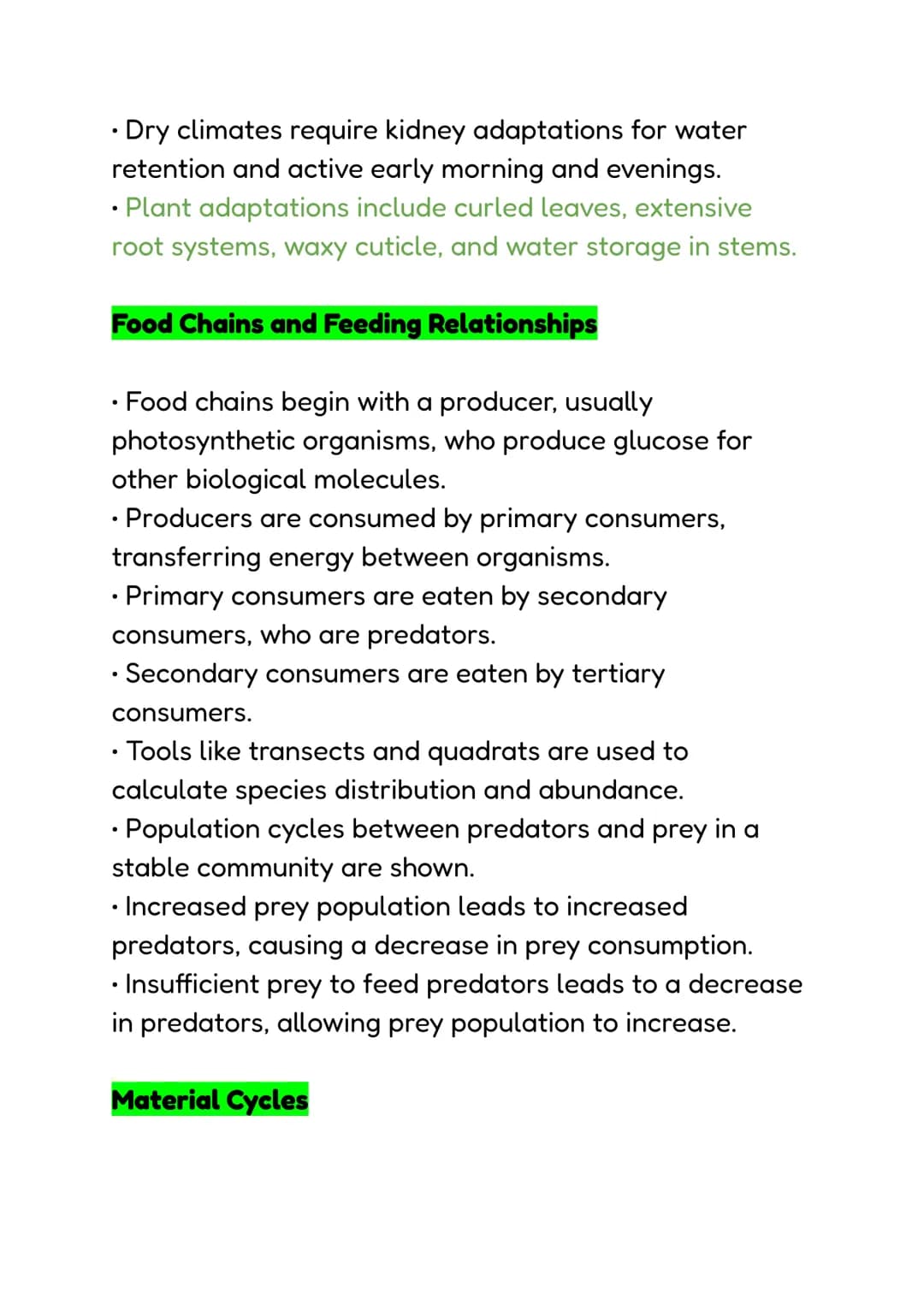
Food Chains and Energy Flow
Food chains always start with producers - mainly plants and algae that use photosynthesis to convert sunlight into glucose. This energy then transfers through different levels as organisms eat each other.
Primary consumers (herbivores) eat the producers, then secondary consumers (carnivores) hunt the herbivores. At the top, tertiary consumers prey on other carnivores. Each transfer involves energy loss, which is why food chains rarely exceed four or five levels.
Predator-prey relationships create fascinating population cycles. When prey numbers increase, predator populations grow because food is abundant. Eventually, too many predators reduce prey numbers, causing predator populations to crash. This allows prey to recover, and the cycle continues.
Scientists use tools like quadrats and transects to measure species distribution and abundance in real ecosystems. These methods help us understand how stable these natural cycles really are.
Key Insight: Population cycles between predators and prey are actually signs of a healthy, balanced ecosystem functioning properly.
5
of 7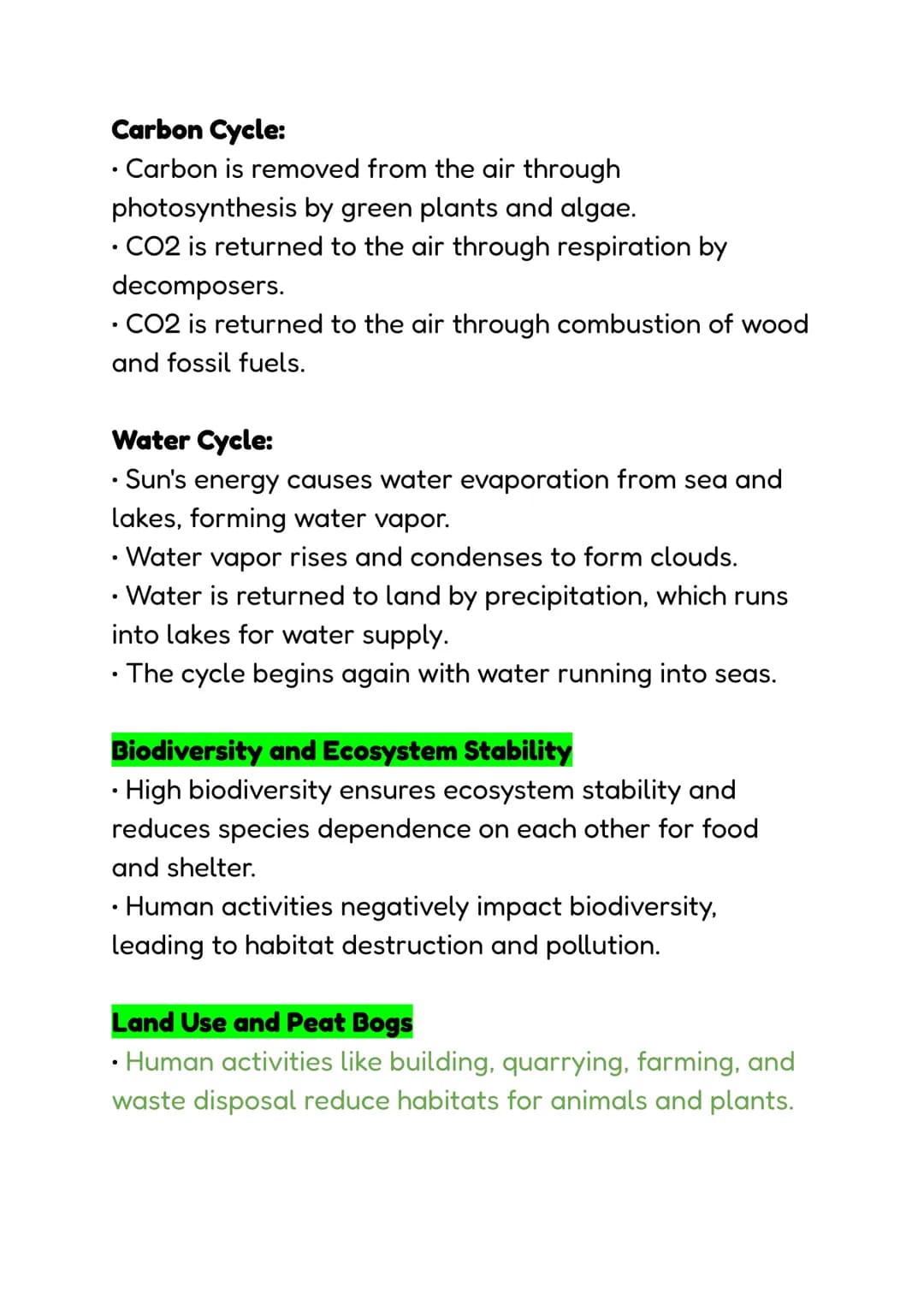
Natural Cycles That Keep Ecosystems Running
The carbon cycle constantly moves carbon between the atmosphere and living organisms. Plants remove CO2 during photosynthesis, whilst respiration and decomposition return it to the air. Human activities like burning fossil fuels are adding extra carbon to this natural cycle.
The water cycle powers itself using solar energy. Water evaporates from oceans and lakes, forms clouds, then returns as precipitation that eventually flows back to the sea. This cycle provides fresh water that all terrestrial life depends on.
Biodiversity - the variety of different species - acts like an insurance policy for ecosystems. High biodiversity means if one species struggles, others can fill similar roles. Unfortunately, human activities are reducing biodiversity through habitat destruction and pollution.
Peat bogs might look like wasteland, but they're actually biodiversity hotspots that store massive amounts of carbon. When humans destroy these habitats for development, we lose both wildlife and an important carbon store.
Did You Know? Ecosystems with high biodiversity are much more stable because species aren't completely dependent on each other for survival.
6
of 7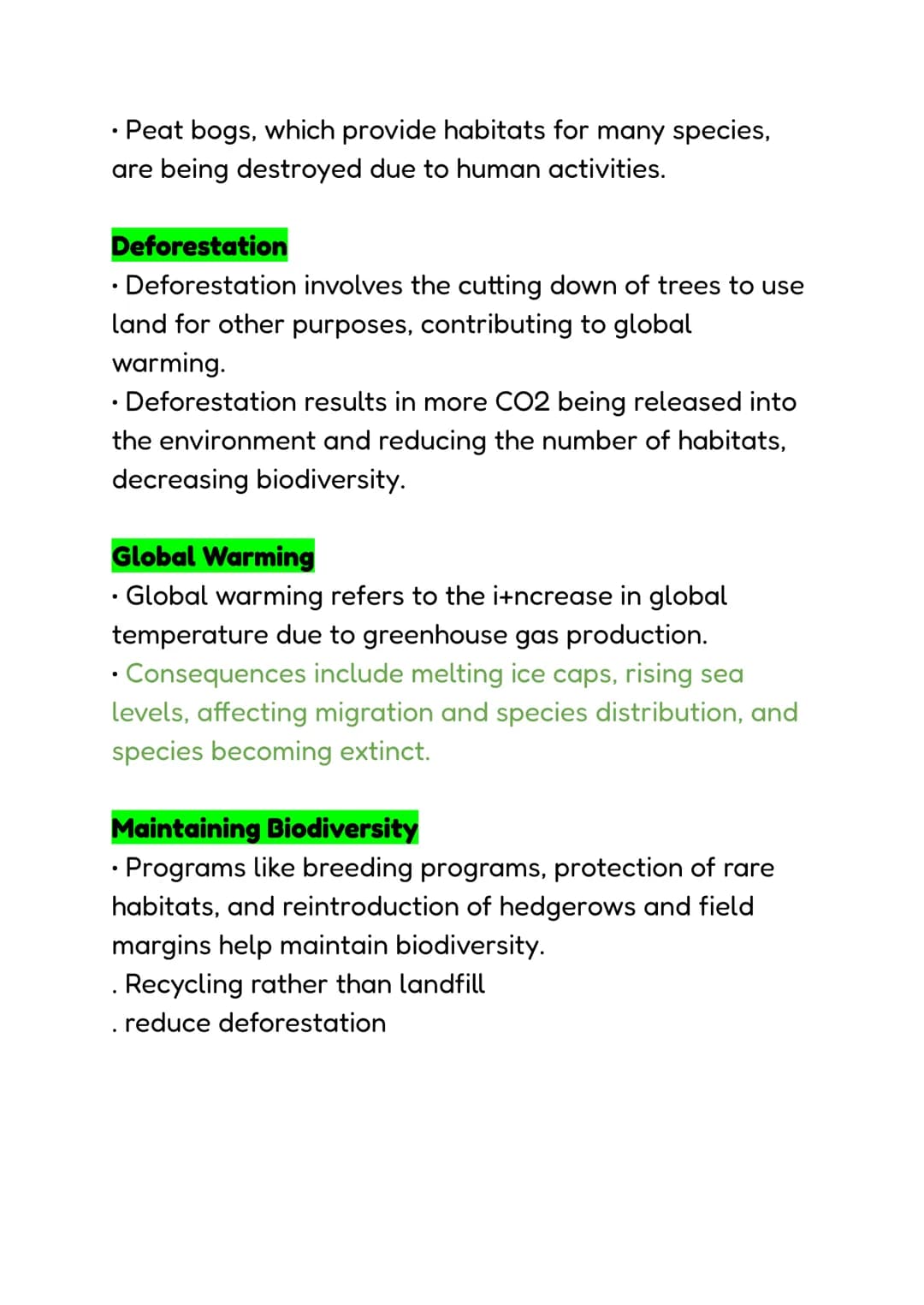
Human Impact on Natural World
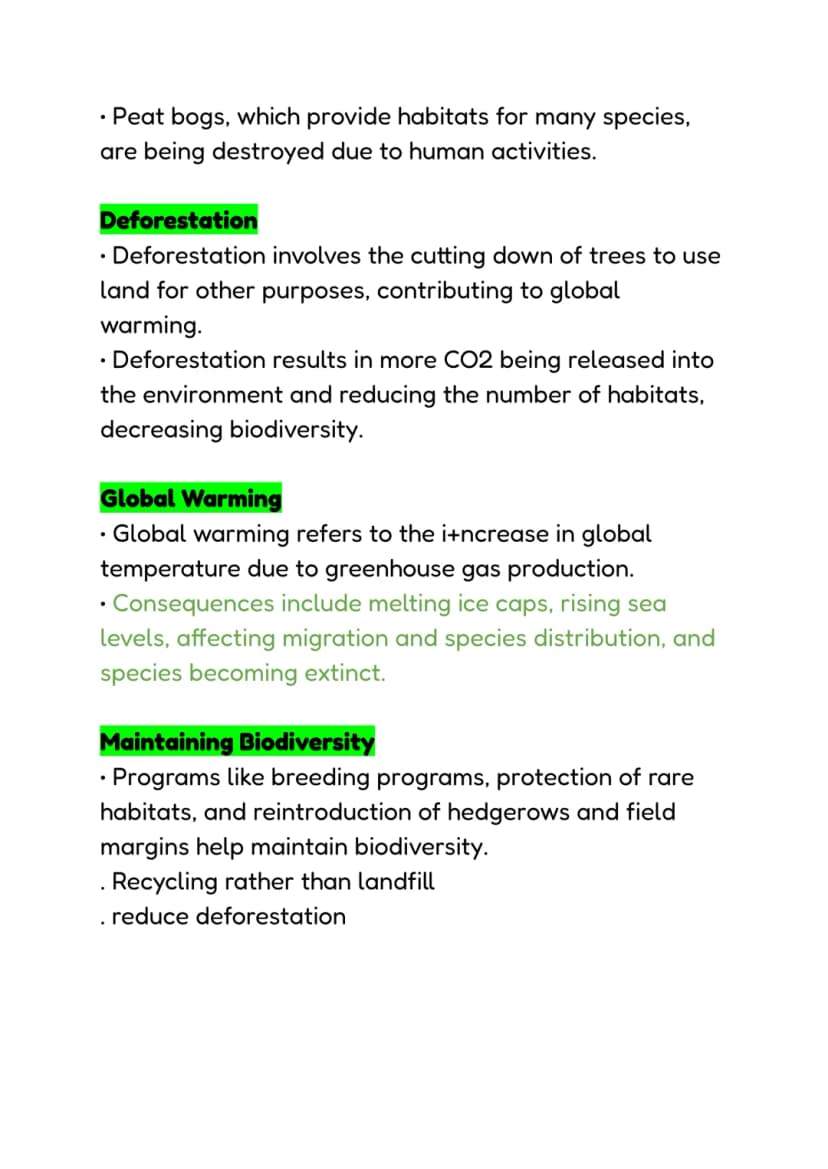
Deforestation is one of humanity's biggest impacts on ecosystems. When we cut down forests for agriculture or development, we're not just destroying habitats - we're also removing the trees that absorb CO2 from the atmosphere.
This contributes directly to global warming, the increase in Earth's temperature caused by greenhouse gases. The consequences are already visible: melting ice caps, rising sea levels, and species being forced to migrate or face extinction.
Human land use for building, farming, and waste disposal continuously reduces available habitat for wildlife. Every new housing development or industrial site means less space for natural ecosystems to function.
However, we can take action to maintain biodiversity. Breeding programmes help endangered species recover, whilst protecting rare habitats preserves entire ecosystems. Even small changes like creating hedgerows between fields or reducing landfill waste can make a significant difference.
Hope for the Future: Reintroduction programmes and habitat protection show that humans can reverse environmental damage when we work together.
7
of 7
Energy Levels in Food Webs
Understanding trophic levels helps you see exactly how energy flows through ecosystems. Each level represents a different feeding position in the food web.
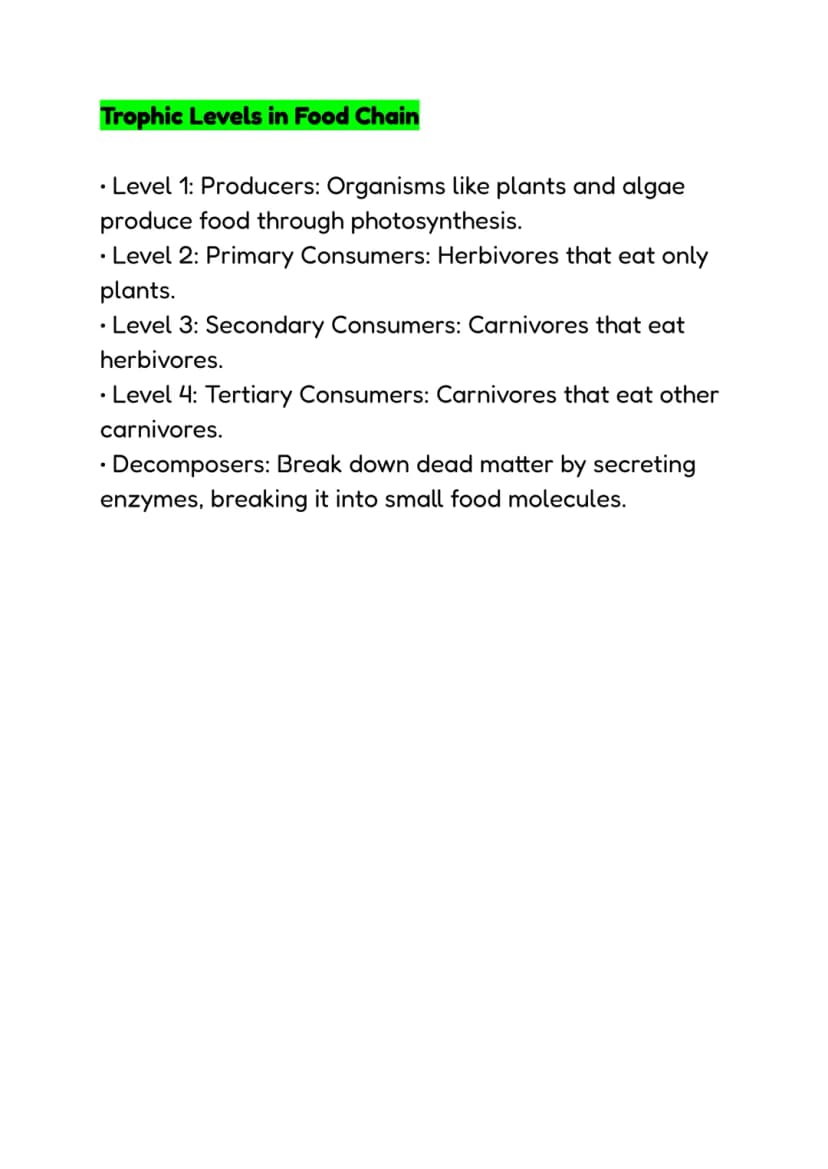
Level 1 producers (plants and algae) form the foundation by converting sunlight into chemical energy through photosynthesis. Level 2 primary consumers are herbivores that feed exclusively on plants. Level 3 secondary consumers are carnivores that hunt herbivores, whilst Level 4 tertiary consumers are top predators that eat other carnivores.
Decomposers operate outside this hierarchy but play a crucial role. These organisms break down dead material by secreting enzymes, recycling nutrients back into the ecosystem for producers to use again.
Essential Point: Each trophic level contains less energy than the one below it, which explains why there are always fewer top predators than herbivores in any ecosystem.
We thought you’d never ask...
What is the Knowunity AI companion?
Our AI companion is specifically built for the needs of students. Based on the millions of content pieces we have on the platform we can provide truly meaningful and relevant answers to students. But its not only about answers, the companion is even more about guiding students through their daily learning challenges, with personalised study plans, quizzes or content pieces in the chat and 100% personalisation based on the students skills and developments.
Where can I download the Knowunity app?
You can download the app in the Google Play Store and in the Apple App Store.
Is Knowunity really free of charge?
That's right! Enjoy free access to study content, connect with fellow students, and get instant help – all at your fingertips.
Similar Content
Most popular content in Biology
9C
BiologyCell Biology and Cell structure
cell structures
93,2490
1
Biology1.cells Gcse biology question cards
combined science higher biology
92,3534
BiologyAQA Biology: Key Concepts
Explore essential AQA Biology topics including Photosynthesis, Respiration, Homeostasis, Genetics, and Ecology. This comprehensive knowledge organizer covers key concepts such as energy transfer, hormonal control, and genetic variation, providing a solid foundation for your studies. Ideal for exam preparation and understanding biological processes.
108,794306
T
BiologyThe functions of subcellular structures - B1 Biology
Flashcards on the different functions of subcellular structures: cell membrane, nucleus, mitochondria, ribosomes, cytoplasm, permant vacuole, chloroplasts and cell wall.
102,7885
BiologyA-Level Biology Year 1 Overview
Comprehensive summary of AQA A-Level Biology Year 1, covering key topics such as cellular structure, protein synthesis, immune response, gas exchange, and more. Ideal for exam preparation and understanding biological concepts. Includes detailed insights into cellular processes, biological classification, and the circulatory system.
1214,891694
T
BiologyTypes of cells
biology
101,2090
B
BiologyBiology Paper 1 quiz
this is a simple quiz on key knowledge needed for paper 1
102,7745
BiologyBiology paper 1 Summary
Notes for Biology paper 1 contains the full course for AQA higher combined!
104,130106
C
BiologyCells part 1 function of cells.
About cells and function of cells etc.
119861
Most popular content
9 Sociology
Sociology of Education Overview
Explore comprehensive A-Level Sociology notes on the education system, covering key theories, policies, and sociological perspectives. This resource includes insights on marketisation, gender roles, cultural deprivation, and educational inequalities, providing a thorough understanding of how education shapes social stratification and individual achievement. Ideal for exam preparation and in-depth study.
12102,8693,040
SociologySociology of Families: Comprehensive Revision
Dive into an extensive overview of family dynamics, perspectives, and patterns in sociology. This resource covers key concepts such as family diversity, gender roles, marriage, and the impact of social policies on family structures. Perfect for A-Level Sociology students preparing for Paper 2.
1273,6612,307
CriminologyCriminology: Crime & Punishment Overview
Comprehensive mindmaps covering key concepts in the Crime and Punishment topic for WJEC Criminology Unit 4. This resource includes detailed insights into the Criminal Justice System, crime prevention strategies, sentencing models, and the roles of various agencies. Ideal for A-Level revision, ensuring you grasp essential theories and legislative processes to excel in your exams.
1254,8721,059
SociologyComprehensive Crime & Deviance Overview
Explore an extensive revision of crime and deviance topics, including theories, types of crime, and the impact of media. This resource covers key concepts such as Marxism, functionalism, gender and crime, and the influence of globalization on criminal behavior. Ideal for students seeking a thorough understanding of criminology and its various theories. Type: Full Topic Revision.
1251,6541,399
C
BiologyCell Biology and Cell structure
cell structures
93,2490
 English Literature
An Inspector Calls: Character Insights
Explore in-depth analysis and key quotes for characters in J.B. Priestley's 'An Inspector Calls'. This resource covers Gerald Croft, Inspector Goole, Sheila Birling, Mrs. Birling, Eric Birling, and Eva Smith, focusing on themes of class, gender roles, and social responsibility. Ideal for students aiming for Grade 8 and above.
1025,429907
CriminologyWJEC Unit 4 Criminology
Criminology unit 4 detailed revision note
127,151125
CriminologyCriminology Theories Overview
Explore key criminology theories and their implications on crime and deviance. This comprehensive summary covers biological, psychological, and sociological perspectives, including labelling theory, right realism, and the impact of social campaigns on policy development. Ideal for A-Level criminology students seeking to understand the complexities of criminal behaviour and the factors influencing crime prevention strategies.
129,760210
English LiteratureRomeo and Juliet: Key themes
Key Romeo and Juliet themes and analysed quotes
106,708198
Can't find what you're looking for? Explore other subjects.
Students love us — and so will you.
4.6/5App Store
4.7/5Google Play
The app is very easy to use and well designed. I have found everything I was looking for so far and have been able to learn a lot from the presentations! I will definitely use the app for a class assignment! And of course it also helps a lot as an inspiration.
Stefan SiOS user
This app is really great. There are so many study notes and help [...]. My problem subject is French, for example, and the app has so many options for help. Thanks to this app, I have improved my French. I would recommend it to anyone.
Samantha KlichAndroid user
Wow, I am really amazed. I just tried the app because I've seen it advertised many times and was absolutely stunned. This app is THE HELP you want for school and above all, it offers so many things, such as workouts and fact sheets, which have been VERY helpful to me personally.
AnnaiOS user
Biology448 views·Updated Jun 22, 2026·7 pagesUnderstanding Ecology for GCSE Science
Charlotte@charlotte26
Ecology is all about how living things survive, compete, and work together in their environments. You'll learn how ecosystems function, what affects wildlife populations, and why human activities are changing the natural world around us.
1
of 7
Sign up to see the content. It's free!
- Access to all documents
- Improve your grades
- Join milions of students
Ecosystems and How Species Depend on Each Other
Think about your local park or woodland - it's actually a complex ecosystem where plants, animals, and microorganisms interact with non-living things like soil and weather. Every organism has adapted to survive in specific conditions, but they're all competing for the same basic needs.
Competition happens everywhere in nature. Plants fight for sunlight and space, whilst animals compete for food, water, and mates. This competition can occur between different species or even within the same species.
The really fascinating part is interdependence - how every organism relies on others to survive. Remove one species from an ecosystem, and you'll see ripple effects throughout the entire community. For example, if bees disappeared, many plants couldn't reproduce, which would affect herbivores, then carnivores, and so on.
Quick Tip: Stable ecosystems like tropical rainforests and coral reefs maintain constant population sizes because all the living and non-living factors are perfectly balanced.
2
of 7Sign up to see the content. It's free!
- Access to all documents
- Improve your grades
- Join milions of students
What Controls Life in Ecosystems
Abiotic factors have massive control over which organisms can survive where. Light intensity determines how well plants can photosynthesise, which affects the entire food web. Temperature controls how fast biological processes happen, whilst moisture levels determine whether organisms can meet their basic water needs.
Soil conditions matter more than you might think. The pH level affects how quickly dead matter decomposes and returns nutrients to the soil. Wind affects plant transpiration and can influence temperature, whilst carbon dioxide and oxygen levels directly impact photosynthesis and respiration.
Biotic factors (living elements) create equally important pressures. When food becomes abundant, animal populations breed successfully and grow rapidly. However, new predators or diseases can wipe out established populations surprisingly quickly.
Remember: Competition between well-adapted and poorly-adapted species usually results in the weaker species declining until they can't breed successfully anymore.
3
of 7Sign up to see the content. It's free!
- Access to all documents
- Improve your grades
- Join milions of students
How Organisms Adapt to Survive
Every organism has evolved specific adaptations to thrive in their environment. These come in three main types that work together to ensure survival.
Structural adaptations are physical features you can observe - like sharp teeth in carnivores for tearing meat, or camouflage patterns that help predators blend into their surroundings. Behavioural adaptations involve actions and responses, such as playing dead when threatened or basking in sunlight to absorb heat.
Functional adaptations involve internal processes like metabolism and reproduction. Some animals delay embryo development until conditions improve, whilst others have evolved efficient kidneys to conserve water in dry environments.
Extremophiles are organisms that take adaptation to the extreme, surviving in conditions that would kill most life forms. These bacteria thrive in deep sea vents with crushing pressure and scorching temperatures, showing just how adaptable life can be.
Fascinating Fact: In cold climates, animals evolve smaller surface area to volume ratios and thick insulation to retain body heat more effectively.
4
of 7Sign up to see the content. It's free!
- Access to all documents
- Improve your grades
- Join milions of students
Food Chains and Energy Flow
Food chains always start with producers - mainly plants and algae that use photosynthesis to convert sunlight into glucose. This energy then transfers through different levels as organisms eat each other.
Primary consumers (herbivores) eat the producers, then secondary consumers (carnivores) hunt the herbivores. At the top, tertiary consumers prey on other carnivores. Each transfer involves energy loss, which is why food chains rarely exceed four or five levels.
Predator-prey relationships create fascinating population cycles. When prey numbers increase, predator populations grow because food is abundant. Eventually, too many predators reduce prey numbers, causing predator populations to crash. This allows prey to recover, and the cycle continues.
Scientists use tools like quadrats and transects to measure species distribution and abundance in real ecosystems. These methods help us understand how stable these natural cycles really are.
Key Insight: Population cycles between predators and prey are actually signs of a healthy, balanced ecosystem functioning properly.
5
of 7Sign up to see the content. It's free!
- Access to all documents
- Improve your grades
- Join milions of students
Natural Cycles That Keep Ecosystems Running
The carbon cycle constantly moves carbon between the atmosphere and living organisms. Plants remove CO2 during photosynthesis, whilst respiration and decomposition return it to the air. Human activities like burning fossil fuels are adding extra carbon to this natural cycle.
The water cycle powers itself using solar energy. Water evaporates from oceans and lakes, forms clouds, then returns as precipitation that eventually flows back to the sea. This cycle provides fresh water that all terrestrial life depends on.
Biodiversity - the variety of different species - acts like an insurance policy for ecosystems. High biodiversity means if one species struggles, others can fill similar roles. Unfortunately, human activities are reducing biodiversity through habitat destruction and pollution.
Peat bogs might look like wasteland, but they're actually biodiversity hotspots that store massive amounts of carbon. When humans destroy these habitats for development, we lose both wildlife and an important carbon store.
Did You Know? Ecosystems with high biodiversity are much more stable because species aren't completely dependent on each other for survival.
6
of 7Sign up to see the content. It's free!
- Access to all documents
- Improve your grades
- Join milions of students
Human Impact on Natural World
Deforestation is one of humanity's biggest impacts on ecosystems. When we cut down forests for agriculture or development, we're not just destroying habitats - we're also removing the trees that absorb CO2 from the atmosphere.
This contributes directly to global warming, the increase in Earth's temperature caused by greenhouse gases. The consequences are already visible: melting ice caps, rising sea levels, and species being forced to migrate or face extinction.
Human land use for building, farming, and waste disposal continuously reduces available habitat for wildlife. Every new housing development or industrial site means less space for natural ecosystems to function.
However, we can take action to maintain biodiversity. Breeding programmes help endangered species recover, whilst protecting rare habitats preserves entire ecosystems. Even small changes like creating hedgerows between fields or reducing landfill waste can make a significant difference.
Hope for the Future: Reintroduction programmes and habitat protection show that humans can reverse environmental damage when we work together.
7
of 7Sign up to see the content. It's free!
- Access to all documents
- Improve your grades
- Join milions of students
Energy Levels in Food Webs
Understanding trophic levels helps you see exactly how energy flows through ecosystems. Each level represents a different feeding position in the food web.
Level 1 producers (plants and algae) form the foundation by converting sunlight into chemical energy through photosynthesis. Level 2 primary consumers are herbivores that feed exclusively on plants. Level 3 secondary consumers are carnivores that hunt herbivores, whilst Level 4 tertiary consumers are top predators that eat other carnivores.
Decomposers operate outside this hierarchy but play a crucial role. These organisms break down dead material by secreting enzymes, recycling nutrients back into the ecosystem for producers to use again.
Essential Point: Each trophic level contains less energy than the one below it, which explains why there are always fewer top predators than herbivores in any ecosystem.
We thought you’d never ask...
What is the Knowunity AI companion?
Our AI companion is specifically built for the needs of students. Based on the millions of content pieces we have on the platform we can provide truly meaningful and relevant answers to students. But its not only about answers, the companion is even more about guiding students through their daily learning challenges, with personalised study plans, quizzes or content pieces in the chat and 100% personalisation based on the students skills and developments.
Where can I download the Knowunity app?
You can download the app in the Google Play Store and in the Apple App Store.
Is Knowunity really free of charge?
That's right! Enjoy free access to study content, connect with fellow students, and get instant help – all at your fingertips.
Similar Content
Most popular content in Biology
9C
BiologyCell Biology and Cell structure
cell structures
93,2490
1
Biology1.cells Gcse biology question cards
combined science higher biology
92,3534
BiologyAQA Biology: Key Concepts
Explore essential AQA Biology topics including Photosynthesis, Respiration, Homeostasis, Genetics, and Ecology. This comprehensive knowledge organizer covers key concepts such as energy transfer, hormonal control, and genetic variation, providing a solid foundation for your studies. Ideal for exam preparation and understanding biological processes.
108,794306
T
BiologyThe functions of subcellular structures - B1 Biology
Flashcards on the different functions of subcellular structures: cell membrane, nucleus, mitochondria, ribosomes, cytoplasm, permant vacuole, chloroplasts and cell wall.
102,7885
BiologyA-Level Biology Year 1 Overview
Comprehensive summary of AQA A-Level Biology Year 1, covering key topics such as cellular structure, protein synthesis, immune response, gas exchange, and more. Ideal for exam preparation and understanding biological concepts. Includes detailed insights into cellular processes, biological classification, and the circulatory system.
1214,891694
T
BiologyTypes of cells
biology
101,2090
B
BiologyBiology Paper 1 quiz
this is a simple quiz on key knowledge needed for paper 1
102,7745
BiologyBiology paper 1 Summary
Notes for Biology paper 1 contains the full course for AQA higher combined!
104,130106
C
BiologyCells part 1 function of cells.
About cells and function of cells etc.
119861
Most popular content
9SociologySociology of Education Overview
Explore comprehensive A-Level Sociology notes on the education system, covering key theories, policies, and sociological perspectives. This resource includes insights on marketisation, gender roles, cultural deprivation, and educational inequalities, providing a thorough understanding of how education shapes social stratification and individual achievement. Ideal for exam preparation and in-depth study.
12102,8693,040
SociologySociology of Families: Comprehensive Revision
Dive into an extensive overview of family dynamics, perspectives, and patterns in sociology. This resource covers key concepts such as family diversity, gender roles, marriage, and the impact of social policies on family structures. Perfect for A-Level Sociology students preparing for Paper 2.
1273,6612,307
CriminologyCriminology: Crime & Punishment Overview
Comprehensive mindmaps covering key concepts in the Crime and Punishment topic for WJEC Criminology Unit 4. This resource includes detailed insights into the Criminal Justice System, crime prevention strategies, sentencing models, and the roles of various agencies. Ideal for A-Level revision, ensuring you grasp essential theories and legislative processes to excel in your exams.
1254,8721,059
SociologyComprehensive Crime & Deviance Overview
Explore an extensive revision of crime and deviance topics, including theories, types of crime, and the impact of media. This resource covers key concepts such as Marxism, functionalism, gender and crime, and the influence of globalization on criminal behavior. Ideal for students seeking a thorough understanding of criminology and its various theories. Type: Full Topic Revision.
1251,6541,399
C
BiologyCell Biology and Cell structure
cell structures
93,2490
English LiteratureAn Inspector Calls: Character Insights
Explore in-depth analysis and key quotes for characters in J.B. Priestley's 'An Inspector Calls'. This resource covers Gerald Croft, Inspector Goole, Sheila Birling, Mrs. Birling, Eric Birling, and Eva Smith, focusing on themes of class, gender roles, and social responsibility. Ideal for students aiming for Grade 8 and above.
1025,429907
CriminologyWJEC Unit 4 Criminology
Criminology unit 4 detailed revision note
127,151125
CriminologyCriminology Theories Overview
Explore key criminology theories and their implications on crime and deviance. This comprehensive summary covers biological, psychological, and sociological perspectives, including labelling theory, right realism, and the impact of social campaigns on policy development. Ideal for A-Level criminology students seeking to understand the complexities of criminal behaviour and the factors influencing crime prevention strategies.
129,760210
English LiteratureRomeo and Juliet: Key themes
Key Romeo and Juliet themes and analysed quotes
106,708198
Can't find what you're looking for? Explore other subjects.
Students love us — and so will you.
4.6/5App Store
4.7/5Google Play
The app is very easy to use and well designed. I have found everything I was looking for so far and have been able to learn a lot from the presentations! I will definitely use the app for a class assignment! And of course it also helps a lot as an inspiration.
Stefan SiOS user
This app is really great. There are so many study notes and help [...]. My problem subject is French, for example, and the app has so many options for help. Thanks to this app, I have improved my French. I would recommend it to anyone.
Samantha KlichAndroid user
Wow, I am really amazed. I just tried the app because I've seen it advertised many times and was absolutely stunned. This app is THE HELP you want for school and above all, it offers so many things, such as workouts and fact sheets, which have been VERY helpful to me personally.
AnnaiOS user