

Your blood is far more complex than you might think!...
 Biology89 views·Updated Jun 14, 2026·9 pages
Blood Components and Their Functions Explained


1 / 9
1
of 9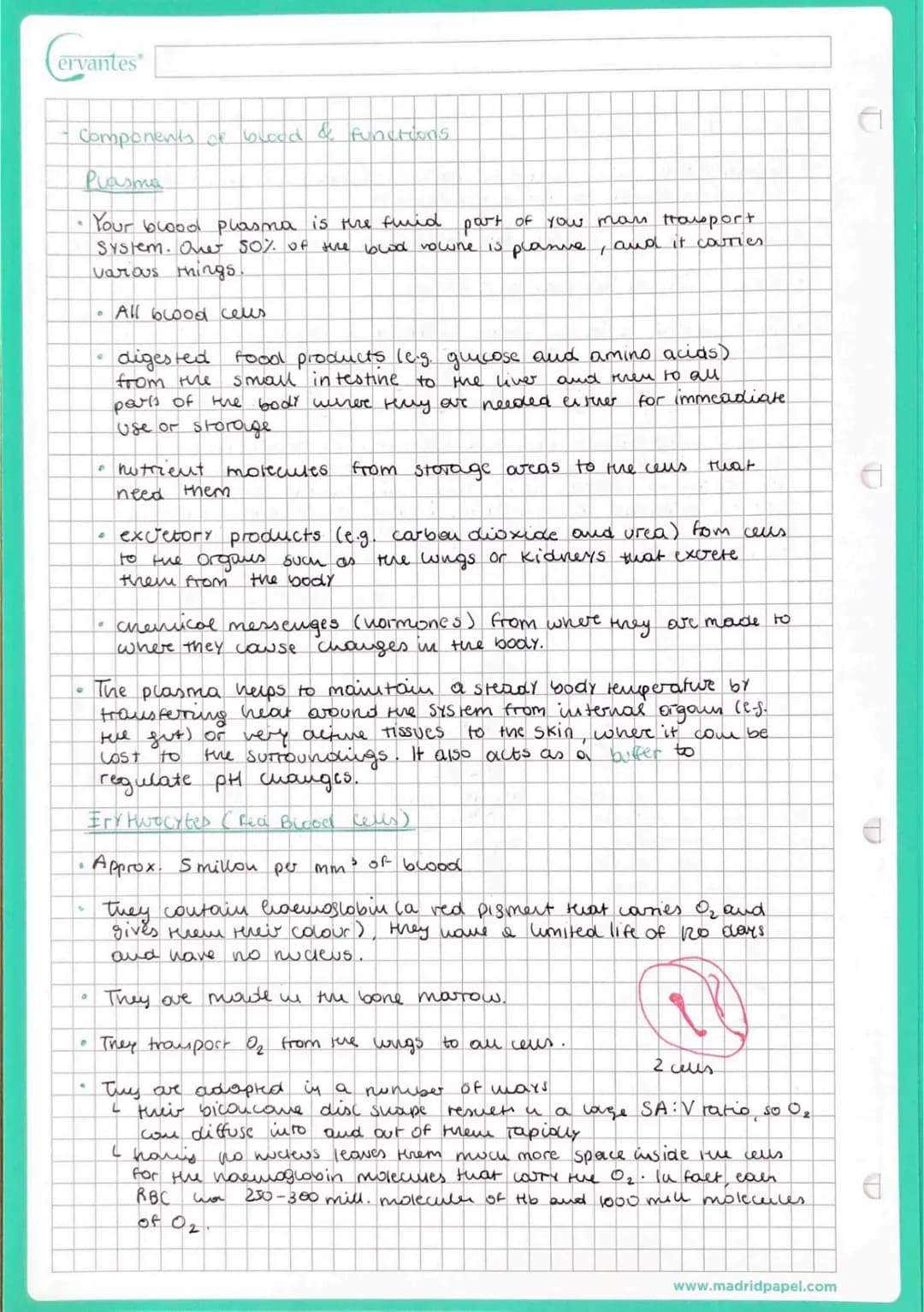
Blood Components and Their Jobs
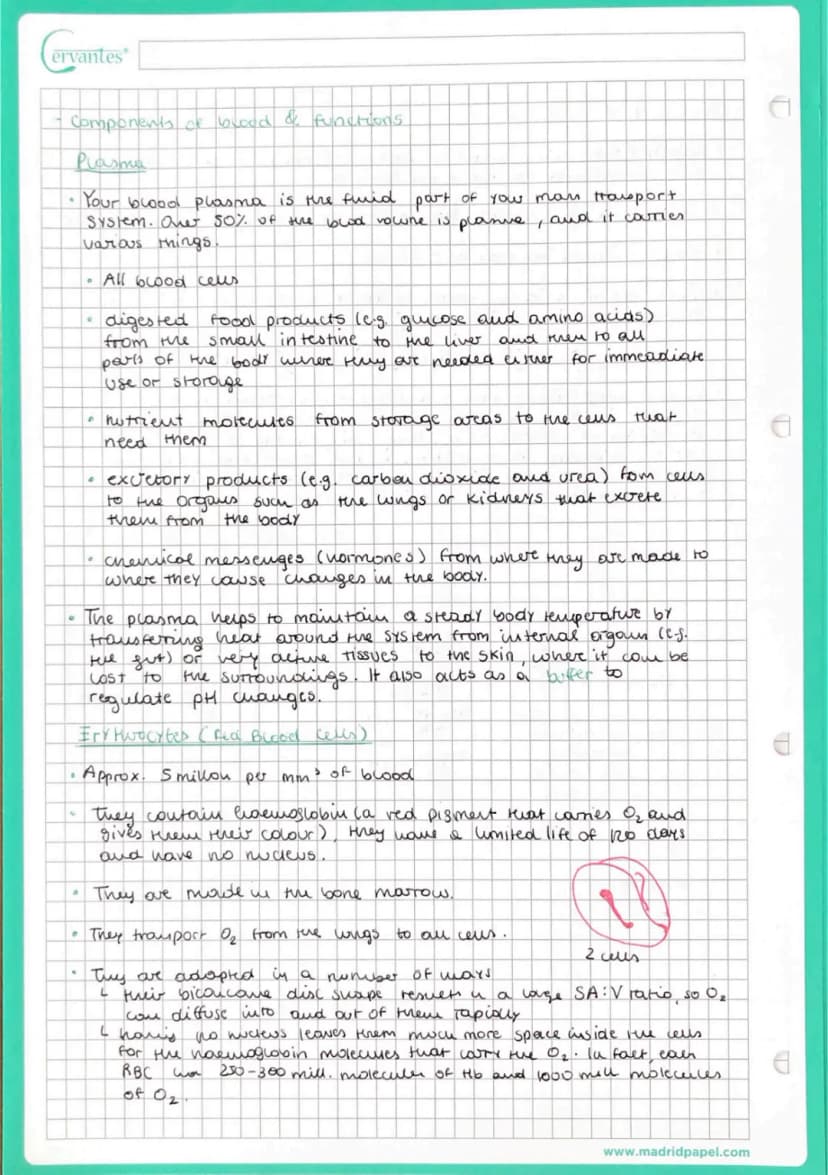
Plasma makes up over half your blood volume and acts like your body's delivery service. It transports everything from digested food (glucose and amino acids) from your small intestine to your liver, then distributes nutrients wherever they're needed. It also carries waste products like carbon dioxide and urea to organs that can get rid of them.
Think of plasma as your body's temperature control system too. It moves heat from busy internal organs to your skin where it can escape, keeping you at a steady 37°C.
Red blood cells (erythrocytes) are your oxygen carriers - about 5 million of them packed into every cubic millimetre of blood! They contain haemoglobin, the red pigment that grabs onto oxygen and gives blood its colour. These cells are perfectly designed for their job with a biconcave disc shape that maximises surface area for oxygen exchange.
Key fact: Red blood cells have no nucleus, which leaves more room for haemoglobin molecules - each cell contains 250-300 million haemoglobin molecules!
2
of 9
White Blood Cells and Platelets
White blood cells (leucocytes) are your body's security team. Much larger than red blood cells but fewer in number , they can squeeze through tiny blood vessels by changing shape. They defend against infections and play a key role in inflammatory responses when tissues get damaged.
All white blood cells have a nucleus and colourless cytoplasm - some contain granules that can be stained for identification under a microscope.
Platelets are tiny fragments from large bone marrow cells called megakaryocytes. With 150,000-400,000 per mm³ of blood, they're essential for blood clotting.
When you get a cut, platelets spring into action. They break open and release serotonin (which narrows blood vessels to reduce flow) and thromboplastin (an enzyme that kicks off the clotting process).
Remember: Platelets are like your body's emergency repair kit - always ready to plug leaks in your blood vessels!
3
of 9
The Blood Clotting Process
Blood clotting is a brilliant two-step chemical reaction that saves your life every time you get injured. Here's how it works:
Step 1: Thromboplastin (released from broken platelets) converts prothrombin (inactive protein in plasma) into thrombin (active enzyme). This needs calcium ions to work properly.
Step 2: Thrombin then converts fibrinogen (soluble plasma protein) into fibrin (insoluble protein threads). These fibrin threads form a mesh that traps more platelets and red blood cells, creating a clot.
Special proteins in platelets contract to tighten the clot, forming a protective scab whilst new skin grows underneath. It's like your body's own emergency repair system!
Clinical connection: Babies are given vitamin K injections because it's essential for making prothrombin - without it, they could suffer dangerous internal bleeding.
4
of 9
Sample Questions and Answers
Understanding blood components becomes clearer when you tackle exam-style questions. Here are some key examples:
Red blood cells and oxygen transport: RBCs lack a nucleus, giving them more space for haemoglobin molecules. However, without a nucleus containing repair instructions, they only live about 120 days. Oxygen diffuses from alveoli into RBCs down concentration gradients, then from RBCs to body cells where it's needed.
Fetal vs adult haemoglobin: Fetal haemoglobin has higher oxygen affinity than adult haemoglobin. This means fetal blood becomes oxygenated when it runs close to mum's blood in the placenta - the fetal haemoglobin "steals" oxygen from adult haemoglobin.
Prothrombin vs fibrinogen: Both are inactive precursors carried in plasma, but prothrombin becomes an enzyme (thrombin) whilst fibrinogen becomes a structural protein (fibrin). Both conversions happen during the clotting cascade.
Exam tip: Always explain the advantage of having inactive precursors - they prevent unwanted clotting until actually needed!
5
of 9
Arteries: High-Pressure Highways
Arteries carry blood away from your heart at high pressure - they need to be tough! Their walls have three layers: an outer collagen layer for strength, a middle layer of elastic fibres and smooth muscle, and a smooth inner lining (endothelium) for easy blood flow.
The thick elastic fibres allow arteries to stretch when your heart pumps, then recoil to keep blood moving. Arteries near your heart have more elastic tissue, whilst those further away have more smooth muscle.
Arterioles are smaller arteries that control blood flow to different organs. When their smooth muscle contracts, they narrow and reduce blood flow - like adjusting taps throughout your body.
Capillaries are where the real action happens! Their walls are just one cell thick, making them perfect for exchanging oxygen, nutrients and waste between blood and tissues. They're so narrow that red blood cells squeeze through single-file.
Think about it: Capillaries have the largest total surface area in your circulatory system - that's why blood slows right down to give time for exchange!
6
of 9
Veins: Low-Pressure Return Journey
Veins face a tough job - returning low-pressure blood back to your heart, often against gravity. Their structure reflects this challenge with relatively thin walls and large internal spaces (lumens) to maximise blood flow.
Unlike arteries, veins have semi-lunar valves that act like one-way gates. When blood flows towards your heart, valves open. If blood tries to flow backwards, valves slam shut. It's brilliant engineering!
Since blood pressure is low in veins, they rely on help from your skeletal muscles. When you walk or move, muscles compress veins and squeeze blood along - like squeezing a tube of toothpaste.
Venules are smaller veins without valves that collect blood from capillary networks and deliver it to larger veins.
Cool fact: The graph shows an inverse relationship between blood vessel surface area and blood velocity - where surface area is highest (capillaries), velocity is lowest due to friction!
7
of 9
8
of 9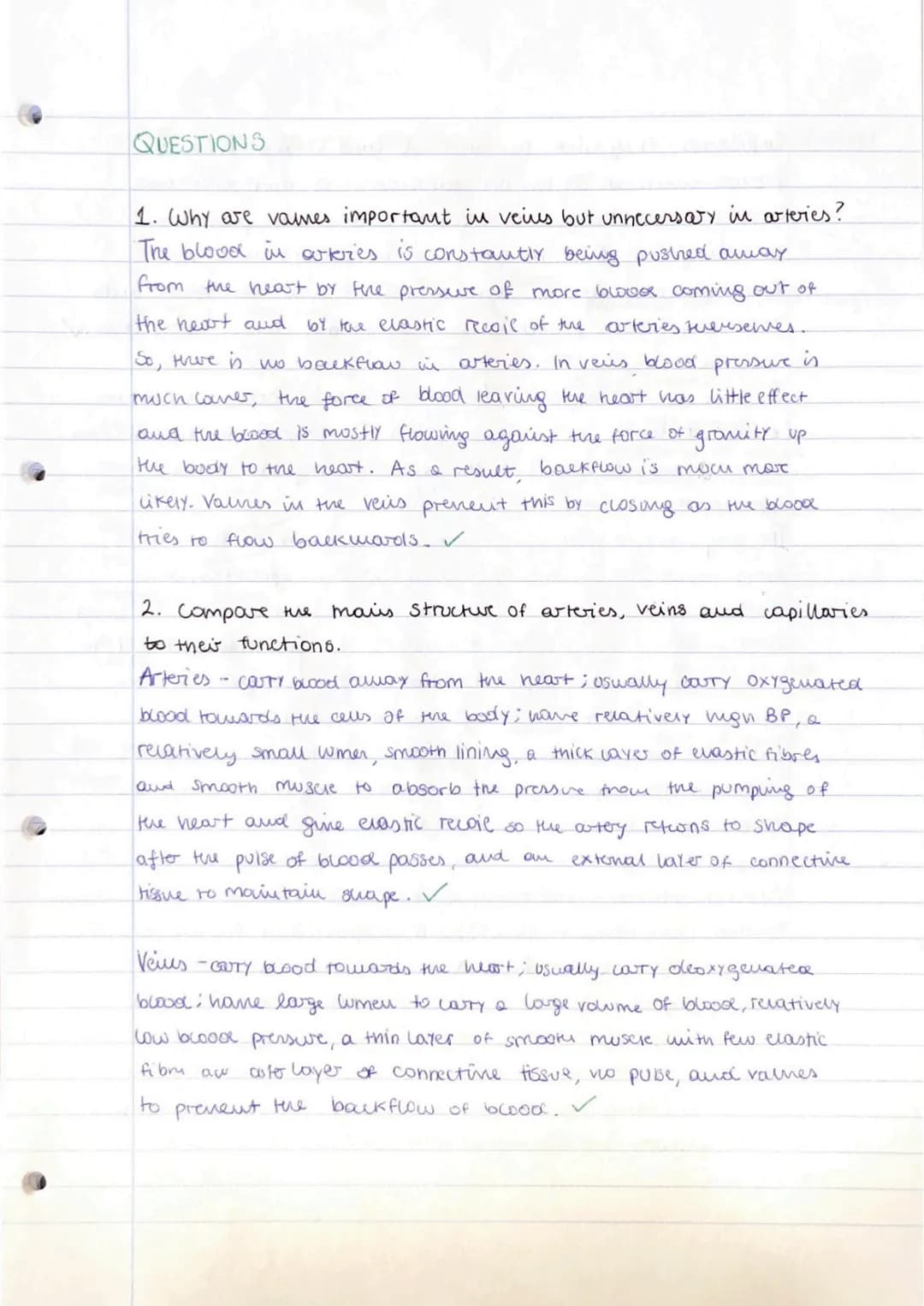
9
of 9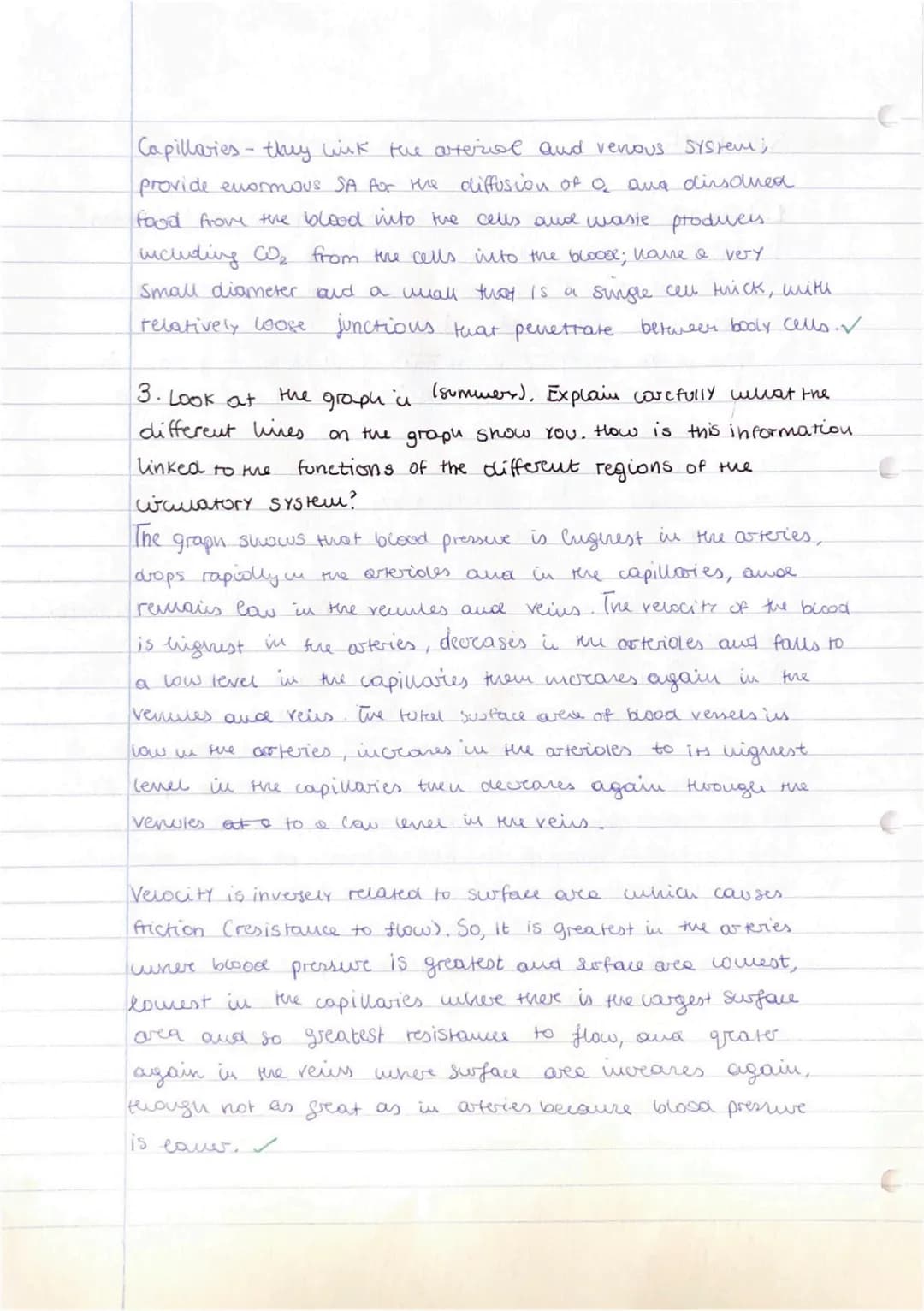
We thought you’d never ask...
What is the Knowunity AI companion?
Our AI companion is specifically built for the needs of students. Based on the millions of content pieces we have on the platform we can provide truly meaningful and relevant answers to students. But its not only about answers, the companion is even more about guiding students through their daily learning challenges, with personalised study plans, quizzes or content pieces in the chat and 100% personalisation based on the students skills and developments.
Where can I download the Knowunity app?
You can download the app in the Google Play Store and in the Apple App Store.
Is Knowunity really free of charge?
That's right! Enjoy free access to study content, connect with fellow students, and get instant help – all at your fingertips.
Similar Content
 Biology
Most popular content: Blood
8BiologyEnzymes and Circulatory Systems
Explore the roles of enzymes in digestion, the structure and function of the circulatory system, and the processes of diffusion and osmosis. This summary covers key concepts such as blood components, enzyme experiments, and nutrient transport, providing a comprehensive overview for biology students.
1198127
BiologyPlant Cell Structure & Function
Explore the organization of plant cells, including vascular tissues like xylem and phloem, and their roles in nutrient transport and photosynthesis. This summary covers key concepts such as transpiration, stomata function, and the impact of environmental factors on plant health. Ideal for GCSE Biology revision.
113377
BiologyComponents of Blood
Explore the essential components of blood, including plasma, red blood cells, white blood cells, and platelets. This summary covers their functions, such as oxygen transport, immune response, and clot formation, providing a clear understanding of how blood protects and sustains the body.
1140211
BiologyRed Blood Cell Functions
Explore the essential role of red blood cells in oxygen transport. This biology presentation covers their unique structure, including the presence of haemoglobin, the absence of a nucleus, and their biconcave shape, which maximizes oxygen absorption. Understand how these specialized cells navigate the bloodstream to deliver oxygen throughout the body.
112505
BiologyBlood Components & Vessels
Explore the essential components of blood, including red blood cells, plasma, and platelets, alongside a detailed overview of the three main types of blood vessels: arteries, veins, and capillaries. This summary highlights their functions in the circulatory system, emphasizing the role of hemoglobin in oxygen transport. Ideal for AQA Biology students.
10771
BiologyBlood Cell Functions
Explore the essential roles of red blood cells, white blood cells, platelets, and plasma in the circulatory system. This summary covers haemoglobin's oxygen transport, immune defense mechanisms, and the components of blood crucial for clotting and nutrient transport.
103521
BiologyBlood Composition Essentials
Explore the key components of blood, including plasma, red blood cells, white blood cells, and platelets. Understand their functions in oxygen transport, immune response, and clotting. This summary provides a concise overview for quick revision.
92417
BiologyBlood Components Overview
Explore the essential components of blood, including plasma, erythrocytes, leukocytes, and platelets. Understand their structures and functions in the human body, such as oxygen transport, immune response, and blood clotting. Ideal for Level 3 Health and Social Care students preparing for OCR exams.
123607
Most popular content in Biology
9C
BiologyCell Biology and Cell structure
cell structures
93,2490
1
Biology1.cells Gcse biology question cards
combined science higher biology
92,3534
BiologyAQA Biology: Key Concepts
Explore essential AQA Biology topics including Photosynthesis, Respiration, Homeostasis, Genetics, and Ecology. This comprehensive knowledge organizer covers key concepts such as energy transfer, hormonal control, and genetic variation, providing a solid foundation for your studies. Ideal for exam preparation and understanding biological processes.
108,794306
T
BiologyThe functions of subcellular structures - B1 Biology
Flashcards on the different functions of subcellular structures: cell membrane, nucleus, mitochondria, ribosomes, cytoplasm, permant vacuole, chloroplasts and cell wall.
102,7885
BiologyA-Level Biology Year 1 Overview
Comprehensive summary of AQA A-Level Biology Year 1, covering key topics such as cellular structure, protein synthesis, immune response, gas exchange, and more. Ideal for exam preparation and understanding biological concepts. Includes detailed insights into cellular processes, biological classification, and the circulatory system.
1214,891694
T
BiologyTypes of cells
biology
101,2090
B
BiologyBiology Paper 1 quiz
this is a simple quiz on key knowledge needed for paper 1
102,7745
BiologyBiology paper 1 Summary
Notes for Biology paper 1 contains the full course for AQA higher combined!
104,130106
C
BiologyCells part 1 function of cells.
About cells and function of cells etc.
119861
Most popular content
9 Sociology
Sociology of Education Overview
Explore comprehensive A-Level Sociology notes on the education system, covering key theories, policies, and sociological perspectives. This resource includes insights on marketisation, gender roles, cultural deprivation, and educational inequalities, providing a thorough understanding of how education shapes social stratification and individual achievement. Ideal for exam preparation and in-depth study.
12102,8693,040
SociologySociology of Families: Comprehensive Revision
Dive into an extensive overview of family dynamics, perspectives, and patterns in sociology. This resource covers key concepts such as family diversity, gender roles, marriage, and the impact of social policies on family structures. Perfect for A-Level Sociology students preparing for Paper 2.
1273,6662,307
CriminologyCriminology: Crime & Punishment Overview
Comprehensive mindmaps covering key concepts in the Crime and Punishment topic for WJEC Criminology Unit 4. This resource includes detailed insights into the Criminal Justice System, crime prevention strategies, sentencing models, and the roles of various agencies. Ideal for A-Level revision, ensuring you grasp essential theories and legislative processes to excel in your exams.
1254,8721,059
SociologyComprehensive Crime & Deviance Overview
Explore an extensive revision of crime and deviance topics, including theories, types of crime, and the impact of media. This resource covers key concepts such as Marxism, functionalism, gender and crime, and the influence of globalization on criminal behavior. Ideal for students seeking a thorough understanding of criminology and its various theories. Type: Full Topic Revision.
1251,6541,399
C
BiologyCell Biology and Cell structure
cell structures
93,2490
 English Literature
An Inspector Calls: Character Insights
Explore in-depth analysis and key quotes for characters in J.B. Priestley's 'An Inspector Calls'. This resource covers Gerald Croft, Inspector Goole, Sheila Birling, Mrs. Birling, Eric Birling, and Eva Smith, focusing on themes of class, gender roles, and social responsibility. Ideal for students aiming for Grade 8 and above.
1025,429907
CriminologyWJEC Unit 4 Criminology
Criminology unit 4 detailed revision note
127,151125
CriminologyCriminology Theories Overview
Explore key criminology theories and their implications on crime and deviance. This comprehensive summary covers biological, psychological, and sociological perspectives, including labelling theory, right realism, and the impact of social campaigns on policy development. Ideal for A-Level criminology students seeking to understand the complexities of criminal behaviour and the factors influencing crime prevention strategies.
129,760210
English LiteratureRomeo and Juliet: Key themes
Key Romeo and Juliet themes and analysed quotes
106,708198
Can't find what you're looking for? Explore other subjects.
Students love us — and so will you.
4.6/5App Store
4.7/5Google Play
The app is very easy to use and well designed. I have found everything I was looking for so far and have been able to learn a lot from the presentations! I will definitely use the app for a class assignment! And of course it also helps a lot as an inspiration.
Stefan SiOS user
This app is really great. There are so many study notes and help [...]. My problem subject is French, for example, and the app has so many options for help. Thanks to this app, I have improved my French. I would recommend it to anyone.
Samantha KlichAndroid user
Wow, I am really amazed. I just tried the app because I've seen it advertised many times and was absolutely stunned. This app is THE HELP you want for school and above all, it offers so many things, such as workouts and fact sheets, which have been VERY helpful to me personally.
AnnaiOS user
Biology89 views·Updated Jun 14, 2026·9 pagesBlood Components and Their Functions Explained
Your blood is far more complex than you might think! It's made up of different components that each have crucial jobs - from carrying oxygen to fighting infections to stopping you from bleeding to death when you get a cut.
1
of 9
Sign up to see the content. It's free!
- Access to all documents
- Improve your grades
- Join milions of students
Blood Components and Their Jobs
Plasma makes up over half your blood volume and acts like your body's delivery service. It transports everything from digested food (glucose and amino acids) from your small intestine to your liver, then distributes nutrients wherever they're needed. It also carries waste products like carbon dioxide and urea to organs that can get rid of them.
Think of plasma as your body's temperature control system too. It moves heat from busy internal organs to your skin where it can escape, keeping you at a steady 37°C.
Red blood cells (erythrocytes) are your oxygen carriers - about 5 million of them packed into every cubic millimetre of blood! They contain haemoglobin, the red pigment that grabs onto oxygen and gives blood its colour. These cells are perfectly designed for their job with a biconcave disc shape that maximises surface area for oxygen exchange.
Key fact: Red blood cells have no nucleus, which leaves more room for haemoglobin molecules - each cell contains 250-300 million haemoglobin molecules!
2
of 9Sign up to see the content. It's free!
- Access to all documents
- Improve your grades
- Join milions of students
White Blood Cells and Platelets
White blood cells (leucocytes) are your body's security team. Much larger than red blood cells but fewer in number , they can squeeze through tiny blood vessels by changing shape. They defend against infections and play a key role in inflammatory responses when tissues get damaged.
All white blood cells have a nucleus and colourless cytoplasm - some contain granules that can be stained for identification under a microscope.
Platelets are tiny fragments from large bone marrow cells called megakaryocytes. With 150,000-400,000 per mm³ of blood, they're essential for blood clotting.
When you get a cut, platelets spring into action. They break open and release serotonin (which narrows blood vessels to reduce flow) and thromboplastin (an enzyme that kicks off the clotting process).
Remember: Platelets are like your body's emergency repair kit - always ready to plug leaks in your blood vessels!
3
of 9Sign up to see the content. It's free!
- Access to all documents
- Improve your grades
- Join milions of students
The Blood Clotting Process
Blood clotting is a brilliant two-step chemical reaction that saves your life every time you get injured. Here's how it works:
Step 1: Thromboplastin (released from broken platelets) converts prothrombin (inactive protein in plasma) into thrombin (active enzyme). This needs calcium ions to work properly.
Step 2: Thrombin then converts fibrinogen (soluble plasma protein) into fibrin (insoluble protein threads). These fibrin threads form a mesh that traps more platelets and red blood cells, creating a clot.
Special proteins in platelets contract to tighten the clot, forming a protective scab whilst new skin grows underneath. It's like your body's own emergency repair system!
Clinical connection: Babies are given vitamin K injections because it's essential for making prothrombin - without it, they could suffer dangerous internal bleeding.
4
of 9Sign up to see the content. It's free!
- Access to all documents
- Improve your grades
- Join milions of students
Sample Questions and Answers
Understanding blood components becomes clearer when you tackle exam-style questions. Here are some key examples:
Red blood cells and oxygen transport: RBCs lack a nucleus, giving them more space for haemoglobin molecules. However, without a nucleus containing repair instructions, they only live about 120 days. Oxygen diffuses from alveoli into RBCs down concentration gradients, then from RBCs to body cells where it's needed.
Fetal vs adult haemoglobin: Fetal haemoglobin has higher oxygen affinity than adult haemoglobin. This means fetal blood becomes oxygenated when it runs close to mum's blood in the placenta - the fetal haemoglobin "steals" oxygen from adult haemoglobin.
Prothrombin vs fibrinogen: Both are inactive precursors carried in plasma, but prothrombin becomes an enzyme (thrombin) whilst fibrinogen becomes a structural protein (fibrin). Both conversions happen during the clotting cascade.
Exam tip: Always explain the advantage of having inactive precursors - they prevent unwanted clotting until actually needed!
5
of 9Sign up to see the content. It's free!
- Access to all documents
- Improve your grades
- Join milions of students
Arteries: High-Pressure Highways
Arteries carry blood away from your heart at high pressure - they need to be tough! Their walls have three layers: an outer collagen layer for strength, a middle layer of elastic fibres and smooth muscle, and a smooth inner lining (endothelium) for easy blood flow.
The thick elastic fibres allow arteries to stretch when your heart pumps, then recoil to keep blood moving. Arteries near your heart have more elastic tissue, whilst those further away have more smooth muscle.
Arterioles are smaller arteries that control blood flow to different organs. When their smooth muscle contracts, they narrow and reduce blood flow - like adjusting taps throughout your body.
Capillaries are where the real action happens! Their walls are just one cell thick, making them perfect for exchanging oxygen, nutrients and waste between blood and tissues. They're so narrow that red blood cells squeeze through single-file.
Think about it: Capillaries have the largest total surface area in your circulatory system - that's why blood slows right down to give time for exchange!
6
of 9Sign up to see the content. It's free!
- Access to all documents
- Improve your grades
- Join milions of students
Veins: Low-Pressure Return Journey
Veins face a tough job - returning low-pressure blood back to your heart, often against gravity. Their structure reflects this challenge with relatively thin walls and large internal spaces (lumens) to maximise blood flow.
Unlike arteries, veins have semi-lunar valves that act like one-way gates. When blood flows towards your heart, valves open. If blood tries to flow backwards, valves slam shut. It's brilliant engineering!
Since blood pressure is low in veins, they rely on help from your skeletal muscles. When you walk or move, muscles compress veins and squeeze blood along - like squeezing a tube of toothpaste.
Venules are smaller veins without valves that collect blood from capillary networks and deliver it to larger veins.
Cool fact: The graph shows an inverse relationship between blood vessel surface area and blood velocity - where surface area is highest (capillaries), velocity is lowest due to friction!
7
of 9Sign up to see the content. It's free!
- Access to all documents
- Improve your grades
- Join milions of students
8
of 9Sign up to see the content. It's free!
- Access to all documents
- Improve your grades
- Join milions of students
9
of 9Sign up to see the content. It's free!
- Access to all documents
- Improve your grades
- Join milions of students
We thought you’d never ask...
What is the Knowunity AI companion?
Our AI companion is specifically built for the needs of students. Based on the millions of content pieces we have on the platform we can provide truly meaningful and relevant answers to students. But its not only about answers, the companion is even more about guiding students through their daily learning challenges, with personalised study plans, quizzes or content pieces in the chat and 100% personalisation based on the students skills and developments.
Where can I download the Knowunity app?
You can download the app in the Google Play Store and in the Apple App Store.
Is Knowunity really free of charge?
That's right! Enjoy free access to study content, connect with fellow students, and get instant help – all at your fingertips.
Similar Content
Most popular content: Blood
8BiologyEnzymes and Circulatory Systems
Explore the roles of enzymes in digestion, the structure and function of the circulatory system, and the processes of diffusion and osmosis. This summary covers key concepts such as blood components, enzyme experiments, and nutrient transport, providing a comprehensive overview for biology students.
1198127
BiologyPlant Cell Structure & Function
Explore the organization of plant cells, including vascular tissues like xylem and phloem, and their roles in nutrient transport and photosynthesis. This summary covers key concepts such as transpiration, stomata function, and the impact of environmental factors on plant health. Ideal for GCSE Biology revision.
113377
BiologyComponents of Blood
Explore the essential components of blood, including plasma, red blood cells, white blood cells, and platelets. This summary covers their functions, such as oxygen transport, immune response, and clot formation, providing a clear understanding of how blood protects and sustains the body.
1140211
BiologyRed Blood Cell Functions
Explore the essential role of red blood cells in oxygen transport. This biology presentation covers their unique structure, including the presence of haemoglobin, the absence of a nucleus, and their biconcave shape, which maximizes oxygen absorption. Understand how these specialized cells navigate the bloodstream to deliver oxygen throughout the body.
112505
BiologyBlood Components & Vessels
Explore the essential components of blood, including red blood cells, plasma, and platelets, alongside a detailed overview of the three main types of blood vessels: arteries, veins, and capillaries. This summary highlights their functions in the circulatory system, emphasizing the role of hemoglobin in oxygen transport. Ideal for AQA Biology students.
10771
BiologyBlood Cell Functions
Explore the essential roles of red blood cells, white blood cells, platelets, and plasma in the circulatory system. This summary covers haemoglobin's oxygen transport, immune defense mechanisms, and the components of blood crucial for clotting and nutrient transport.
103521
BiologyBlood Composition Essentials
Explore the key components of blood, including plasma, red blood cells, white blood cells, and platelets. Understand their functions in oxygen transport, immune response, and clotting. This summary provides a concise overview for quick revision.
92417
BiologyBlood Components Overview
Explore the essential components of blood, including plasma, erythrocytes, leukocytes, and platelets. Understand their structures and functions in the human body, such as oxygen transport, immune response, and blood clotting. Ideal for Level 3 Health and Social Care students preparing for OCR exams.
123607
Most popular content in Biology
9C
BiologyCell Biology and Cell structure
cell structures
93,2490
1
Biology1.cells Gcse biology question cards
combined science higher biology
92,3534
BiologyAQA Biology: Key Concepts
Explore essential AQA Biology topics including Photosynthesis, Respiration, Homeostasis, Genetics, and Ecology. This comprehensive knowledge organizer covers key concepts such as energy transfer, hormonal control, and genetic variation, providing a solid foundation for your studies. Ideal for exam preparation and understanding biological processes.
108,794306
T
BiologyThe functions of subcellular structures - B1 Biology
Flashcards on the different functions of subcellular structures: cell membrane, nucleus, mitochondria, ribosomes, cytoplasm, permant vacuole, chloroplasts and cell wall.
102,7885
BiologyA-Level Biology Year 1 Overview
Comprehensive summary of AQA A-Level Biology Year 1, covering key topics such as cellular structure, protein synthesis, immune response, gas exchange, and more. Ideal for exam preparation and understanding biological concepts. Includes detailed insights into cellular processes, biological classification, and the circulatory system.
1214,891694
T
BiologyTypes of cells
biology
101,2090
B
BiologyBiology Paper 1 quiz
this is a simple quiz on key knowledge needed for paper 1
102,7745
BiologyBiology paper 1 Summary
Notes for Biology paper 1 contains the full course for AQA higher combined!
104,130106
C
BiologyCells part 1 function of cells.
About cells and function of cells etc.
119861
Most popular content
9SociologySociology of Education Overview
Explore comprehensive A-Level Sociology notes on the education system, covering key theories, policies, and sociological perspectives. This resource includes insights on marketisation, gender roles, cultural deprivation, and educational inequalities, providing a thorough understanding of how education shapes social stratification and individual achievement. Ideal for exam preparation and in-depth study.
12102,8693,040
SociologySociology of Families: Comprehensive Revision
Dive into an extensive overview of family dynamics, perspectives, and patterns in sociology. This resource covers key concepts such as family diversity, gender roles, marriage, and the impact of social policies on family structures. Perfect for A-Level Sociology students preparing for Paper 2.
1273,6662,307
CriminologyCriminology: Crime & Punishment Overview
Comprehensive mindmaps covering key concepts in the Crime and Punishment topic for WJEC Criminology Unit 4. This resource includes detailed insights into the Criminal Justice System, crime prevention strategies, sentencing models, and the roles of various agencies. Ideal for A-Level revision, ensuring you grasp essential theories and legislative processes to excel in your exams.
1254,8721,059
SociologyComprehensive Crime & Deviance Overview
Explore an extensive revision of crime and deviance topics, including theories, types of crime, and the impact of media. This resource covers key concepts such as Marxism, functionalism, gender and crime, and the influence of globalization on criminal behavior. Ideal for students seeking a thorough understanding of criminology and its various theories. Type: Full Topic Revision.
1251,6541,399
C
BiologyCell Biology and Cell structure
cell structures
93,2490
English LiteratureAn Inspector Calls: Character Insights
Explore in-depth analysis and key quotes for characters in J.B. Priestley's 'An Inspector Calls'. This resource covers Gerald Croft, Inspector Goole, Sheila Birling, Mrs. Birling, Eric Birling, and Eva Smith, focusing on themes of class, gender roles, and social responsibility. Ideal for students aiming for Grade 8 and above.
1025,429907
CriminologyWJEC Unit 4 Criminology
Criminology unit 4 detailed revision note
127,151125
CriminologyCriminology Theories Overview
Explore key criminology theories and their implications on crime and deviance. This comprehensive summary covers biological, psychological, and sociological perspectives, including labelling theory, right realism, and the impact of social campaigns on policy development. Ideal for A-Level criminology students seeking to understand the complexities of criminal behaviour and the factors influencing crime prevention strategies.
129,760210
English LiteratureRomeo and Juliet: Key themes
Key Romeo and Juliet themes and analysed quotes
106,708198
Can't find what you're looking for? Explore other subjects.
Students love us — and so will you.
4.6/5App Store
4.7/5Google Play
The app is very easy to use and well designed. I have found everything I was looking for so far and have been able to learn a lot from the presentations! I will definitely use the app for a class assignment! And of course it also helps a lot as an inspiration.
Stefan SiOS user
This app is really great. There are so many study notes and help [...]. My problem subject is French, for example, and the app has so many options for help. Thanks to this app, I have improved my French. I would recommend it to anyone.
Samantha KlichAndroid user
Wow, I am really amazed. I just tried the app because I've seen it advertised many times and was absolutely stunned. This app is THE HELP you want for school and above all, it offers so many things, such as workouts and fact sheets, which have been VERY helpful to me personally.
AnnaiOS user