
Let's explore the fascinating world of skin and membranes -...
 Biology78 views·Updated Jun 11, 2026·4 pages
Understanding Skin and Body Membranes - Chapter 4 Study Guide
H
hannahlandry1005@hannahlandry1005_wuhp

1 / 4
1
of 4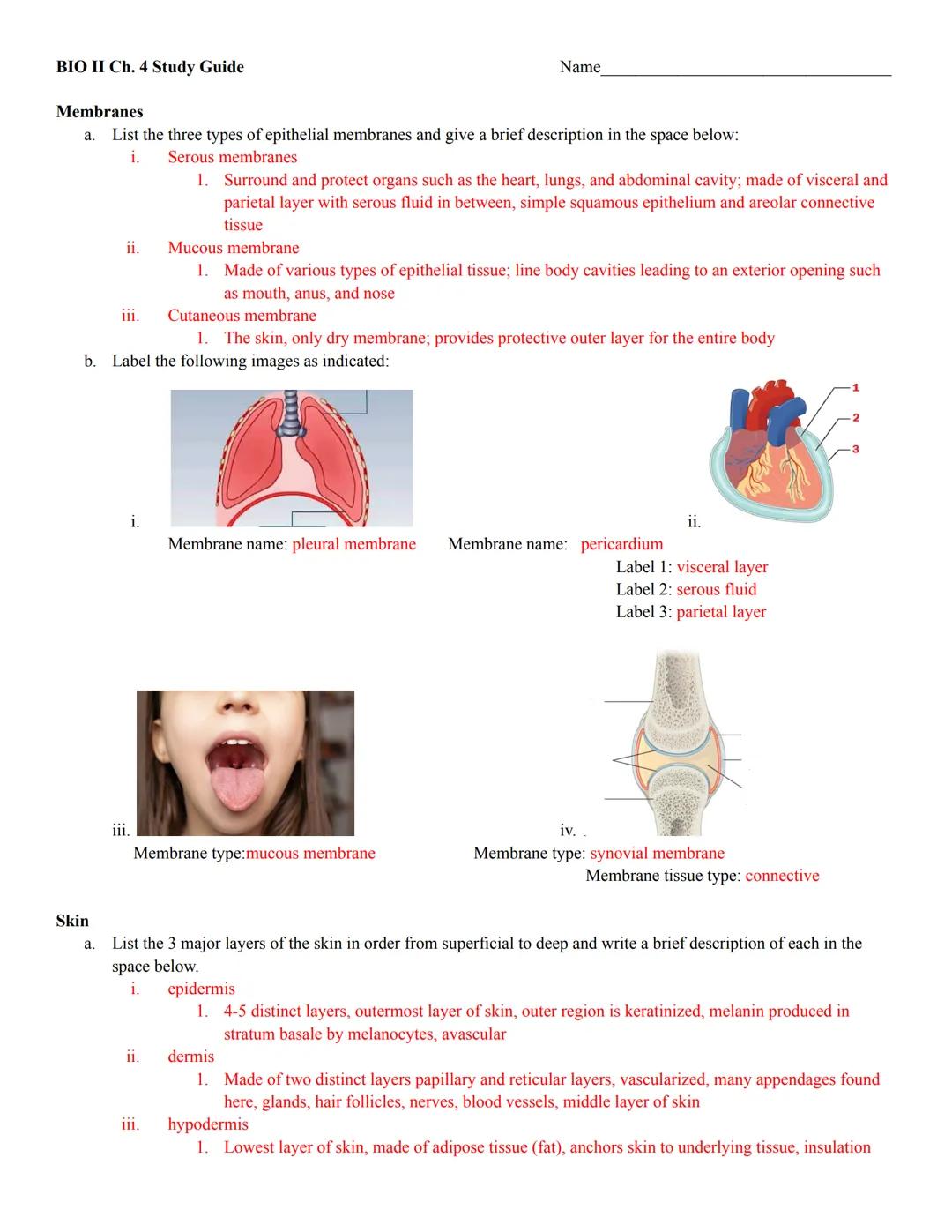
Membranes and Skin Layers
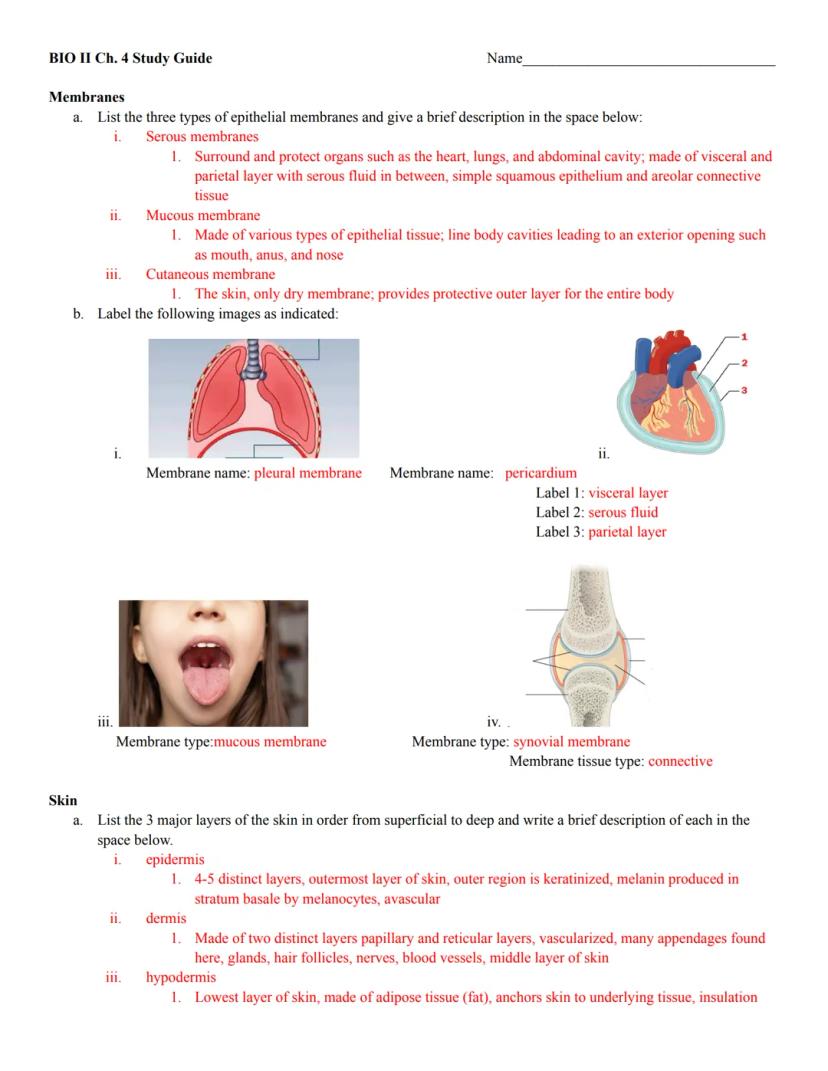
Your body contains three types of epithelial membranes, each with specific functions. Serous membranes surround and protect organs like your heart and lungs, consisting of visceral and parietal layers with fluid between them. Mucous membranes line body cavities with exterior openings such as your mouth and nose. The cutaneous membrane (skin) serves as your body's only dry membrane, providing a protective outer layer.
The skin itself consists of three distinct layers. The outermost epidermis contains 4-5 layers, is avascular (has no blood vessels), and produces melanin in the stratum basale. The middle dermis is vascularized and contains two layers (papillary and reticular) where you'll find glands, hair follicles, nerves, and blood vessels. The innermost hypodermis consists primarily of adipose (fat) tissue, anchoring skin to underlying structures and providing insulation.
Did You Know? The epidermis completely replaces itself every 35-45 days, with cells moving from the deepest layer to the surface where they eventually flake off. That's why skincare products often take several weeks to show results!
When examining membranes throughout the body, you'll notice specialized versions like the pleural membrane (around lungs), pericardium (around heart), mucous membranes (in digestive tract), and synovial membranes (in joints).
2
of 4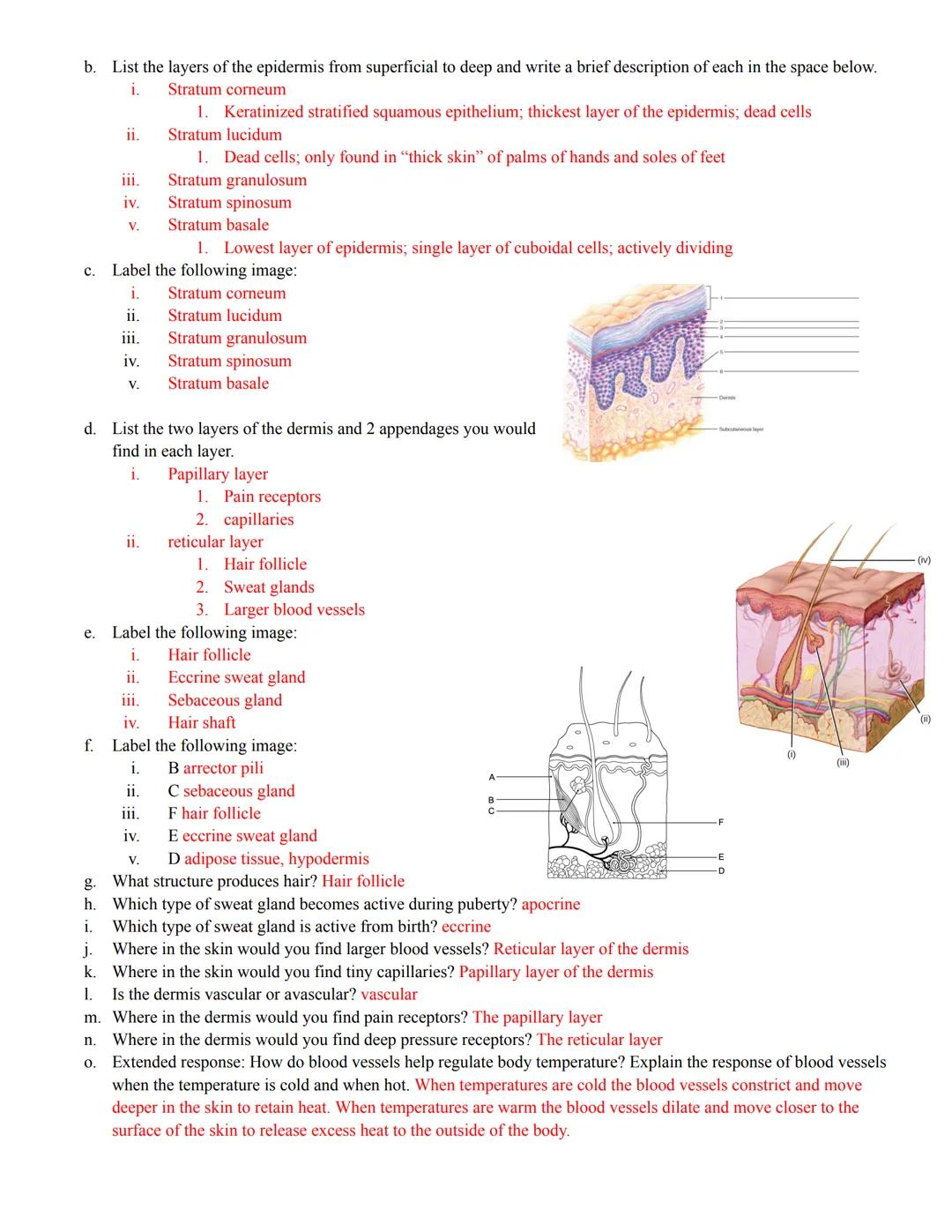
Skin Structure in Detail
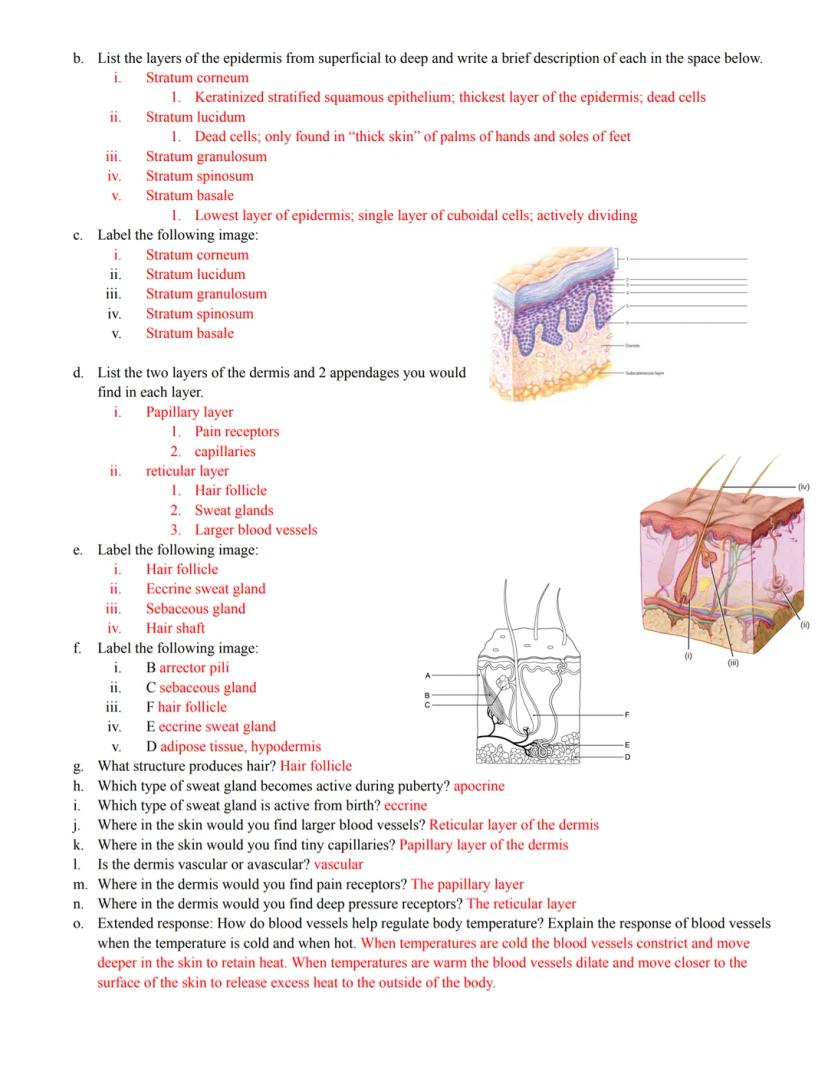
The epidermis contains five distinct layers that work together to form your protective barrier. From superficial to deep, these include the stratum corneum (thickest layer of dead, keratinized cells), stratum lucidum (found only in thick skin of palms and soles), stratum granulosum, stratum spinosum, and stratum basale (the single layer of actively dividing cells).
The dermis contains two main regions, each with specific structures. The upper papillary layer contains pain receptors and tiny capillaries, while the deeper reticular layer houses hair follicles, sweat glands, and larger blood vessels. This arrangement allows your skin to perform multiple functions simultaneously.
Your skin contains several specialized structures. Hair follicles produce hair, while two types of sweat glands regulate temperature: eccrine glands (active from birth) and apocrine glands (activate during puberty). Sebaceous glands produce oil that lubricates the skin and hair.
Cool Fact: Your blood vessels play a crucial role in temperature regulation. When you're cold, they constrict and move deeper in the skin to retain heat. When you're hot, they dilate and move closer to the surface to release excess heat - that's why you look flushed after exercise!
Other important skin structures include the arrector pili muscles (which cause goosebumps when you're cold) and adipose tissue in the hypodermis that provides insulation.
3
of 4
Skin Color and Disorders
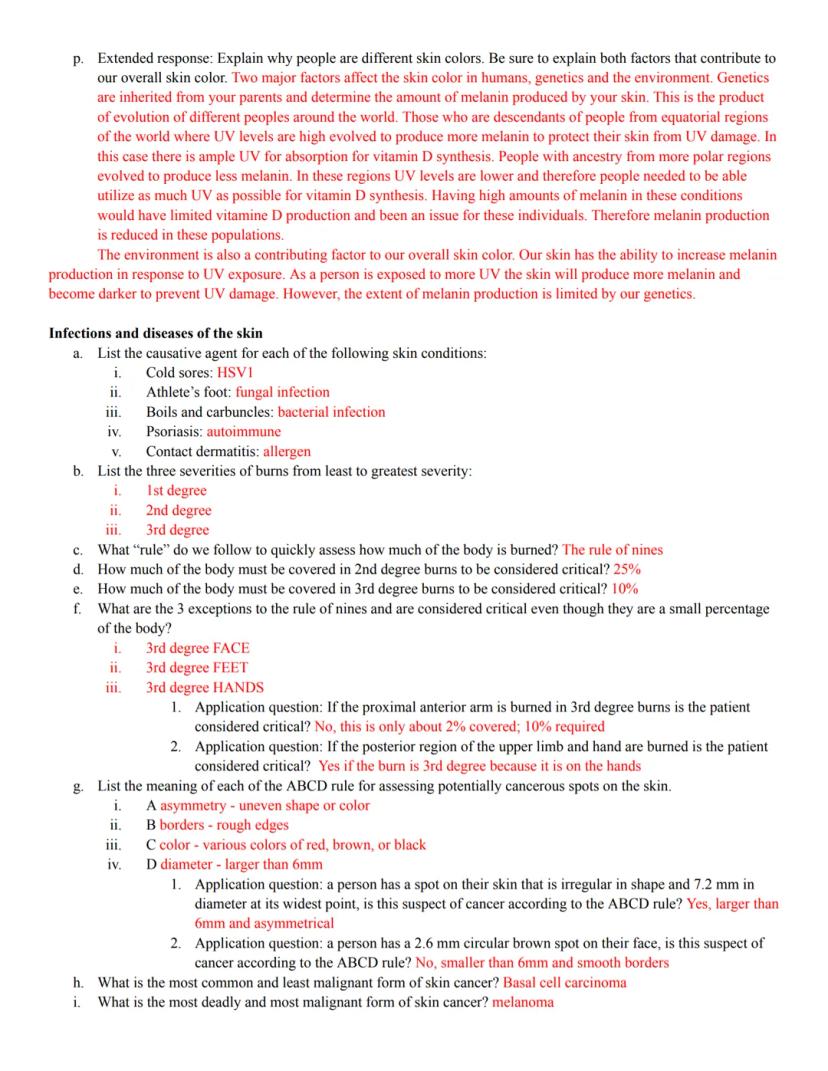
Human skin color results from two major factors: genetics and environment. Your genetic makeup determines your baseline melanin production - people with ancestry from equatorial regions evolved to produce more melanin for UV protection, while those from polar regions evolved with less melanin to maximize vitamin D synthesis. Environmental exposure to UV rays can temporarily increase your melanin production, but the extent is limited by your genetics.
Several conditions can affect your skin health. Cold sores are caused by HSV1 virus, athlete's foot by fungal infection, boils by bacteria, psoriasis by autoimmune responses, and contact dermatitis by allergens. Recognizing these causes helps with proper treatment.
Burns are classified by severity: first-degree (superficial), second-degree (partial thickness), and third-degree (full thickness). Medical professionals use the "rule of nines" to assess burn coverage, with critical cases being 25% coverage for second-degree burns or 10% for third-degree burns. Third-degree burns to the face, feet, or hands are always considered critical regardless of percentage.
Important Warning: When examining skin spots for potential cancer, remember the ABCD rule: Asymmetry (uneven shape), Borders (rough edges), Color (varied colors), and Diameter (larger than 6mm). Early detection significantly improves treatment outcomes!
The most common form of skin cancer is basal cell carcinoma, affecting the stratum basale but having a lower malignancy. The most dangerous form is melanoma, which affects melanocytes and has high malignancy rates.
4
of 4
Skin Cancer Types
Different types of skin cancer affect specific regions of the skin. Basal cell carcinoma targets the stratum basale layer of the epidermis. Despite being the most common form of skin cancer, it's also the least malignant and typically grows slowly.
Melanoma, on the other hand, affects the melanocytes - the specialized cells that produce melanin pigment in your skin. Although less common than basal cell carcinoma, melanoma is far more dangerous due to its aggressive nature and tendency to metastasize (spread) to other parts of the body.
Prevention Tip: Most skin cancers are directly linked to UV exposure. Wearing sunscreen daily (even on cloudy days), seeking shade between 10am-2pm, and wearing protective clothing can significantly reduce your lifetime risk of developing skin cancer!
Understanding the different types of skin cancer and their affected areas helps explain why regular skin checks are important. Since melanocytes are located in the stratum basale of the epidermis, melanoma can quickly access the dermis with its blood vessels, allowing cancer cells to spread throughout the body.
We thought you’d never ask...
What is the Knowunity AI companion?
Our AI companion is specifically built for the needs of students. Based on the millions of content pieces we have on the platform we can provide truly meaningful and relevant answers to students. But its not only about answers, the companion is even more about guiding students through their daily learning challenges, with personalised study plans, quizzes or content pieces in the chat and 100% personalisation based on the students skills and developments.
Where can I download the Knowunity app?
You can download the app in the Google Play Store and in the Apple App Store.
Is Knowunity really free of charge?
That's right! Enjoy free access to study content, connect with fellow students, and get instant help – all at your fingertips.
Similar Content
Most popular content: Integumentary System
6BiologyIntegumentary System
This article provides an overview of the different layers of the skin and their functions, including protection, temperature regulation, and sensory reception.
College572
BiologyThe Integumentary System
Notes on the integumentary system (includes the skin, sweat glands, oil glands, hair, nails) for anatomy and physiology classes.
10th1057
AP BiologyBody Systems Notes for AP Bio
Notes of the Human Organ Systems with diagrams, functions, main organs, and explanations. Includes 10 human organ systems
50521
 Health & Medicine
Anatomy and Physiology Notes
The integumentary system notes
1082
Health & MedicineIntegumentary Organs Functions
Description of the structure and function of the organs in the integumentary system
9th1573
BiologyANATOMY Unit 2: Integumentary System(Skin)
CONTAINS: skin layers (epidermis, dermis, hypodermis) with in depth descriptions, melanin, melanocytes, keratin. ADDITIONAL: diseases, harmful factors, effects of tattoos, accessory organs of the skin & diagram
10th25446
Most popular content in Biology
9C
BiologyCell Organelles
This Quiz Is To Test Your Knowledge Of Cell Organelles And Their Functions Inside The Cell. It Can Also Be A Study Guide To Remember Them Better.
6th6710
B
Biologybiology cell organelles and functions
Do you know the cell organelles and their functions?
9th4410
M
BiologyMitosis and Cell Division Flashcards
These flashcards cover the basics of mitosis and why cell division occurs in the first place.
9th3390
D
BiologyDNA and RNA
Uncover the secrets of life with this comprehensive Biology flashcard set. Perfect for grade 10 students studying Living Environment.
10th1,0782
D
BiologyDiscover the Fascinating World of Living Organisms
Uncover the secrets of biology and explore the diverse and amazing life forms that inhabit our planet with this captivating flashcard set.
7th4380
A
BiologyAnimal and plant cell structure
Quiz on animal and plant cell structures
9th3240
D
BiologyDiscover Punnet Squares
Uncover the secrets of life with this comprehensive Biology flashcard set. Perfect for grade 10 students studying Living Environment.
10th3961
D
BiologyDNA
Parts of DNA
9th2970
S
BiologySteps of Cellular Respiration
3 basic steps and Molecule Vocab
9th2660
Most popular content
9O
 AP US History
Origins and Dynamics of the Columbian Exchange
Analyze the ecological and economic motivations behind the initial transfer of goods, people, and diseases between the Old and New Worlds.
9th3,1280
I
AP US HistoryIntroduction to Early Cultural Interactions
Analyze the initial social and religious encounters between Europeans, Africans, and Indigenous peoples in the colonial Americas.
9th2,7730
O
 AP World History
Origins of Ancient River Civilizations
Analyze the environmental factors and technological innovations that led to the rise of early states in Mesopotamia, Egypt, and the Indus Valley.
9th3,1870
M
AP US HistoryMotivations for European Exploration
Analyze the economic, religious, and political factors that drove European powers to the Americas during the 15th and 16th centuries.
9th1,7780
F
 AP Psychology
Foundations of Ethical Guidelines in Research
Practice the core principles of the APA ethical code including informed consent, debriefing, and the role of Institutional Review Boards.
9th1,3360
I
AP US HistoryIntroduction to Native American Societies
Examine the diverse social, political, and economic structures of North American indigenous groups prior to European contact.
9th1,1100
I
AP BiologyIntroduction to Biological Elements of Life
Practice identifying the essential elements including carbon, nitrogen, phosphorus, and sulfur that compose biological macromolecules.
9th1,7390
I
AP US HistoryIntroduction to the Spanish Encomienda System
Explore the fundamental economic and social structures of the Spanish colonial system, focusing on the encomienda and the casta social hierarchy.
9th8890
O
AP World HistoryOrigins and Continuity of the Byzantine Empire
Analyze the political and cultural transitions from the Roman Empire to the Byzantine Empire, focusing on the reign of Justinian I and his code.
9th1,6320
Can't find what you're looking for? Explore other subjects.
Students love us — and so will you.
4.6/5App Store
4.7/5Google Play
The app is very easy to use and well designed. I have found everything I was looking for so far and have been able to learn a lot from the presentations! I will definitely use the app for a class assignment! And of course it also helps a lot as an inspiration.
Stefan SiOS user
This app is really great. There are so many study notes and help [...]. My problem subject is French, for example, and the app has so many options for help. Thanks to this app, I have improved my French. I would recommend it to anyone.
Samantha KlichAndroid user
Wow, I am really amazed. I just tried the app because I've seen it advertised many times and was absolutely stunned. This app is THE HELP you want for school and above all, it offers so many things, such as workouts and fact sheets, which have been VERY helpful to me personally.
AnnaiOS user
Biology78 views·Updated Jun 11, 2026·4 pagesUnderstanding Skin and Body Membranes - Chapter 4 Study Guide
H
hannahlandry1005@hannahlandry1005_wuhp
Let's explore the fascinating world of skin and membranes - the protective barriers that keep your body functioning properly. Understanding these structures helps you appreciate how your body defends itself against infection, regulates temperature, and interacts with the environment around...
1
of 4
Sign up to see the content. It's free!
- Access to all documents
- Improve your grades
- Join milions of students
Membranes and Skin Layers
Your body contains three types of epithelial membranes, each with specific functions. Serous membranes surround and protect organs like your heart and lungs, consisting of visceral and parietal layers with fluid between them. Mucous membranes line body cavities with exterior openings such as your mouth and nose. The cutaneous membrane (skin) serves as your body's only dry membrane, providing a protective outer layer.
The skin itself consists of three distinct layers. The outermost epidermis contains 4-5 layers, is avascular (has no blood vessels), and produces melanin in the stratum basale. The middle dermis is vascularized and contains two layers (papillary and reticular) where you'll find glands, hair follicles, nerves, and blood vessels. The innermost hypodermis consists primarily of adipose (fat) tissue, anchoring skin to underlying structures and providing insulation.
Did You Know? The epidermis completely replaces itself every 35-45 days, with cells moving from the deepest layer to the surface where they eventually flake off. That's why skincare products often take several weeks to show results!
When examining membranes throughout the body, you'll notice specialized versions like the pleural membrane (around lungs), pericardium (around heart), mucous membranes (in digestive tract), and synovial membranes (in joints).
2
of 4Sign up to see the content. It's free!
- Access to all documents
- Improve your grades
- Join milions of students
Skin Structure in Detail
The epidermis contains five distinct layers that work together to form your protective barrier. From superficial to deep, these include the stratum corneum (thickest layer of dead, keratinized cells), stratum lucidum (found only in thick skin of palms and soles), stratum granulosum, stratum spinosum, and stratum basale (the single layer of actively dividing cells).
The dermis contains two main regions, each with specific structures. The upper papillary layer contains pain receptors and tiny capillaries, while the deeper reticular layer houses hair follicles, sweat glands, and larger blood vessels. This arrangement allows your skin to perform multiple functions simultaneously.
Your skin contains several specialized structures. Hair follicles produce hair, while two types of sweat glands regulate temperature: eccrine glands (active from birth) and apocrine glands (activate during puberty). Sebaceous glands produce oil that lubricates the skin and hair.
Cool Fact: Your blood vessels play a crucial role in temperature regulation. When you're cold, they constrict and move deeper in the skin to retain heat. When you're hot, they dilate and move closer to the surface to release excess heat - that's why you look flushed after exercise!
Other important skin structures include the arrector pili muscles (which cause goosebumps when you're cold) and adipose tissue in the hypodermis that provides insulation.
3
of 4Sign up to see the content. It's free!
- Access to all documents
- Improve your grades
- Join milions of students
Skin Color and Disorders
Human skin color results from two major factors: genetics and environment. Your genetic makeup determines your baseline melanin production - people with ancestry from equatorial regions evolved to produce more melanin for UV protection, while those from polar regions evolved with less melanin to maximize vitamin D synthesis. Environmental exposure to UV rays can temporarily increase your melanin production, but the extent is limited by your genetics.
Several conditions can affect your skin health. Cold sores are caused by HSV1 virus, athlete's foot by fungal infection, boils by bacteria, psoriasis by autoimmune responses, and contact dermatitis by allergens. Recognizing these causes helps with proper treatment.
Burns are classified by severity: first-degree (superficial), second-degree (partial thickness), and third-degree (full thickness). Medical professionals use the "rule of nines" to assess burn coverage, with critical cases being 25% coverage for second-degree burns or 10% for third-degree burns. Third-degree burns to the face, feet, or hands are always considered critical regardless of percentage.
Important Warning: When examining skin spots for potential cancer, remember the ABCD rule: Asymmetry (uneven shape), Borders (rough edges), Color (varied colors), and Diameter (larger than 6mm). Early detection significantly improves treatment outcomes!
The most common form of skin cancer is basal cell carcinoma, affecting the stratum basale but having a lower malignancy. The most dangerous form is melanoma, which affects melanocytes and has high malignancy rates.
4
of 4Sign up to see the content. It's free!
- Access to all documents
- Improve your grades
- Join milions of students
Skin Cancer Types
Different types of skin cancer affect specific regions of the skin. Basal cell carcinoma targets the stratum basale layer of the epidermis. Despite being the most common form of skin cancer, it's also the least malignant and typically grows slowly.
Melanoma, on the other hand, affects the melanocytes - the specialized cells that produce melanin pigment in your skin. Although less common than basal cell carcinoma, melanoma is far more dangerous due to its aggressive nature and tendency to metastasize (spread) to other parts of the body.
Prevention Tip: Most skin cancers are directly linked to UV exposure. Wearing sunscreen daily (even on cloudy days), seeking shade between 10am-2pm, and wearing protective clothing can significantly reduce your lifetime risk of developing skin cancer!
Understanding the different types of skin cancer and their affected areas helps explain why regular skin checks are important. Since melanocytes are located in the stratum basale of the epidermis, melanoma can quickly access the dermis with its blood vessels, allowing cancer cells to spread throughout the body.
We thought you’d never ask...
What is the Knowunity AI companion?
Our AI companion is specifically built for the needs of students. Based on the millions of content pieces we have on the platform we can provide truly meaningful and relevant answers to students. But its not only about answers, the companion is even more about guiding students through their daily learning challenges, with personalised study plans, quizzes or content pieces in the chat and 100% personalisation based on the students skills and developments.
Where can I download the Knowunity app?
You can download the app in the Google Play Store and in the Apple App Store.
Is Knowunity really free of charge?
That's right! Enjoy free access to study content, connect with fellow students, and get instant help – all at your fingertips.
Similar Content
Most popular content: Integumentary System
6BiologyIntegumentary System
This article provides an overview of the different layers of the skin and their functions, including protection, temperature regulation, and sensory reception.
College572
BiologyThe Integumentary System
Notes on the integumentary system (includes the skin, sweat glands, oil glands, hair, nails) for anatomy and physiology classes.
10th1057
AP BiologyBody Systems Notes for AP Bio
Notes of the Human Organ Systems with diagrams, functions, main organs, and explanations. Includes 10 human organ systems
50521
Health & MedicineAnatomy and Physiology Notes
The integumentary system notes
1082
Health & MedicineIntegumentary Organs Functions
Description of the structure and function of the organs in the integumentary system
9th1573
BiologyANATOMY Unit 2: Integumentary System(Skin)
CONTAINS: skin layers (epidermis, dermis, hypodermis) with in depth descriptions, melanin, melanocytes, keratin. ADDITIONAL: diseases, harmful factors, effects of tattoos, accessory organs of the skin & diagram
10th25446
Most popular content in Biology
9C
BiologyCell Organelles
This Quiz Is To Test Your Knowledge Of Cell Organelles And Their Functions Inside The Cell. It Can Also Be A Study Guide To Remember Them Better.
6th6710
B
Biologybiology cell organelles and functions
Do you know the cell organelles and their functions?
9th4410
M
BiologyMitosis and Cell Division Flashcards
These flashcards cover the basics of mitosis and why cell division occurs in the first place.
9th3390
D
BiologyDNA and RNA
Uncover the secrets of life with this comprehensive Biology flashcard set. Perfect for grade 10 students studying Living Environment.
10th1,0782
D
BiologyDiscover the Fascinating World of Living Organisms
Uncover the secrets of biology and explore the diverse and amazing life forms that inhabit our planet with this captivating flashcard set.
7th4380
A
BiologyAnimal and plant cell structure
Quiz on animal and plant cell structures
9th3240
D
BiologyDiscover Punnet Squares
Uncover the secrets of life with this comprehensive Biology flashcard set. Perfect for grade 10 students studying Living Environment.
10th3961
D
BiologyDNA
Parts of DNA
9th2970
S
BiologySteps of Cellular Respiration
3 basic steps and Molecule Vocab
9th2660
Most popular content
9O
AP US HistoryOrigins and Dynamics of the Columbian Exchange
Analyze the ecological and economic motivations behind the initial transfer of goods, people, and diseases between the Old and New Worlds.
9th3,1280
I
AP US HistoryIntroduction to Early Cultural Interactions
Analyze the initial social and religious encounters between Europeans, Africans, and Indigenous peoples in the colonial Americas.
9th2,7730
O
AP World HistoryOrigins of Ancient River Civilizations
Analyze the environmental factors and technological innovations that led to the rise of early states in Mesopotamia, Egypt, and the Indus Valley.
9th3,1870
M
AP US HistoryMotivations for European Exploration
Analyze the economic, religious, and political factors that drove European powers to the Americas during the 15th and 16th centuries.
9th1,7780
F
AP PsychologyFoundations of Ethical Guidelines in Research
Practice the core principles of the APA ethical code including informed consent, debriefing, and the role of Institutional Review Boards.
9th1,3360
I
AP US HistoryIntroduction to Native American Societies
Examine the diverse social, political, and economic structures of North American indigenous groups prior to European contact.
9th1,1100
I
AP BiologyIntroduction to Biological Elements of Life
Practice identifying the essential elements including carbon, nitrogen, phosphorus, and sulfur that compose biological macromolecules.
9th1,7390
I
AP US HistoryIntroduction to the Spanish Encomienda System
Explore the fundamental economic and social structures of the Spanish colonial system, focusing on the encomienda and the casta social hierarchy.
9th8890
O
AP World HistoryOrigins and Continuity of the Byzantine Empire
Analyze the political and cultural transitions from the Roman Empire to the Byzantine Empire, focusing on the reign of Justinian I and his code.
9th1,6320
Can't find what you're looking for? Explore other subjects.
Students love us — and so will you.
4.6/5App Store
4.7/5Google Play
The app is very easy to use and well designed. I have found everything I was looking for so far and have been able to learn a lot from the presentations! I will definitely use the app for a class assignment! And of course it also helps a lot as an inspiration.
Stefan SiOS user
This app is really great. There are so many study notes and help [...]. My problem subject is French, for example, and the app has so many options for help. Thanks to this app, I have improved my French. I would recommend it to anyone.
Samantha KlichAndroid user
Wow, I am really amazed. I just tried the app because I've seen it advertised many times and was absolutely stunned. This app is THE HELP you want for school and above all, it offers so many things, such as workouts and fact sheets, which have been VERY helpful to me personally.
AnnaiOS user