

Biology is a diverse field with many specialized branches that...
 Biology92 views·Updated Jun 16, 2026·4 pages
Exploring Biology: Branches, Filipino Scientists, and Microscopes
1 / 4
1
of 4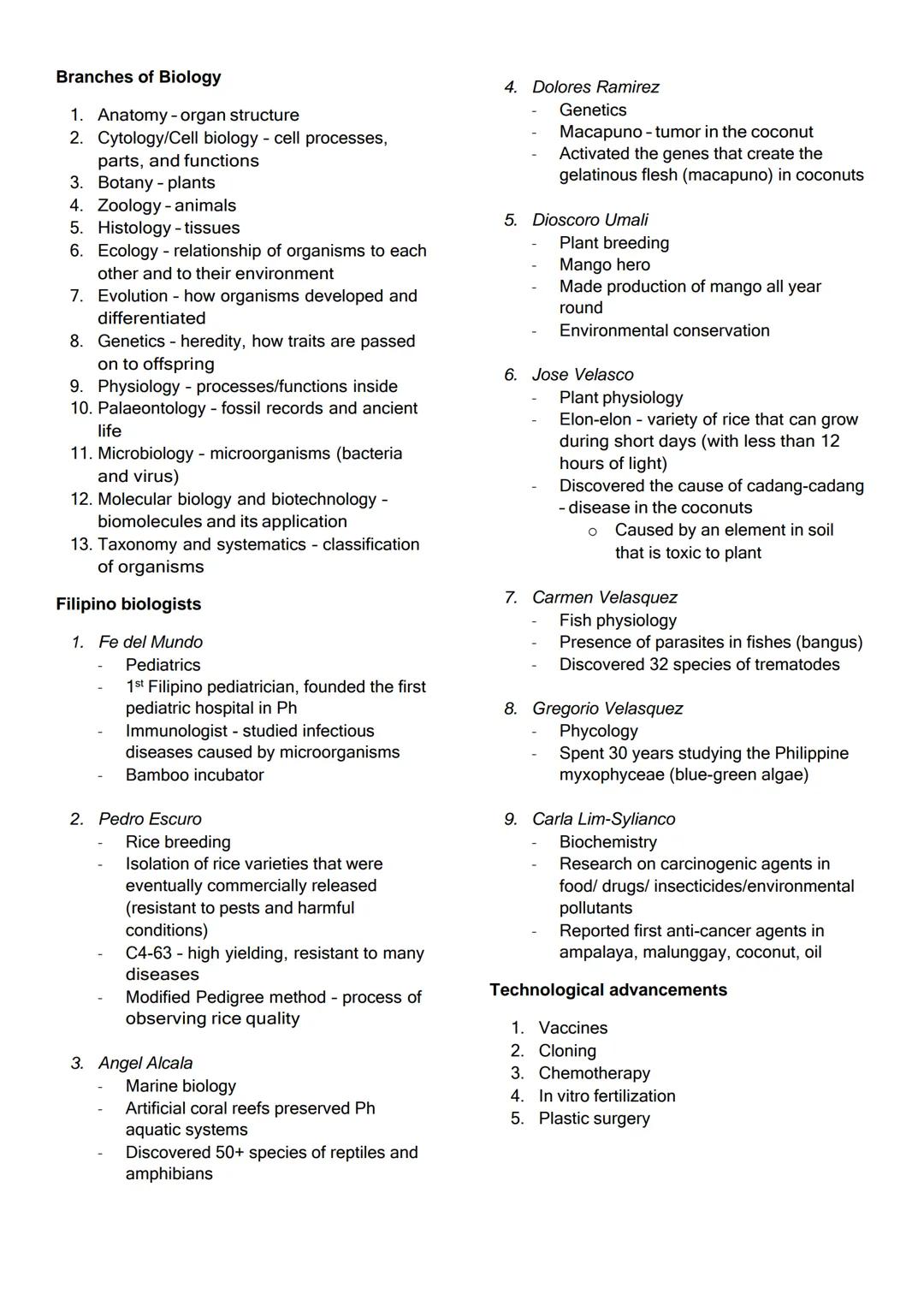
Branches of Biology and Filipino Scientists
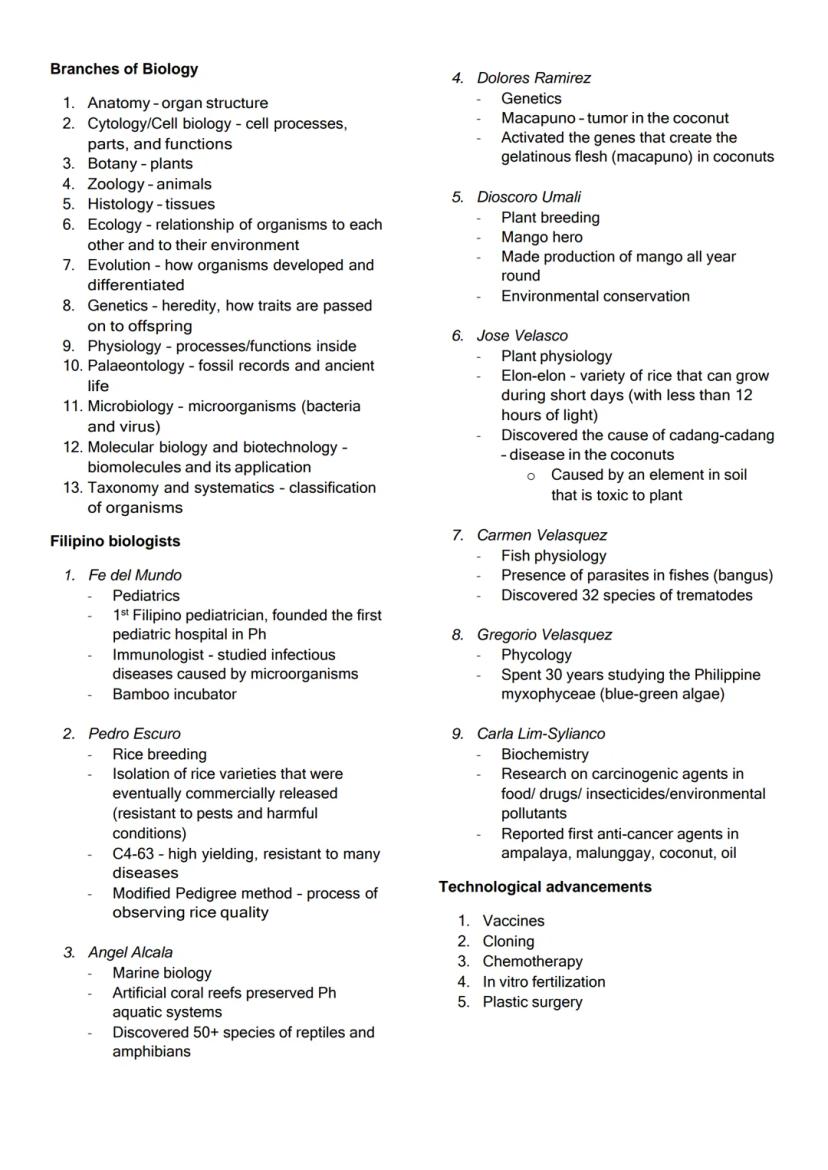
Biology branches into specialized fields that study different aspects of life. Anatomy examines organ structures, while cell biology explores cellular functions. Other major branches include botany (plants), zoology (animals), ecology (organism relationships), genetics (heredity), and physiology (body functions).
The Philippines has produced remarkable scientists who've made global contributions. Fe del Mundo, the first Filipino pediatrician, invented the bamboo incubator and studied infectious diseases. Pedro Escuro developed disease-resistant rice varieties like C4-63 using the Modified Pedigree method. Angel Alcala pioneered artificial coral reefs and discovered over 50 reptile and amphibian species.
Other notable Filipino biologists include Dolores Ramirez (macapuno coconut genetics), Dioscoro Umali , Jose Velasco , and Carmen Velasquez (fish parasites). Their work has advanced fields from marine biology to biochemistry, with practical applications ranging from food security to environmental conservation.
Fun Fact: Carla Lim-Sylianco was the first to report anti-cancer agents in common Filipino foods like ampalaya (bitter melon), malunggay (moringa), and coconut oil!
2
of 4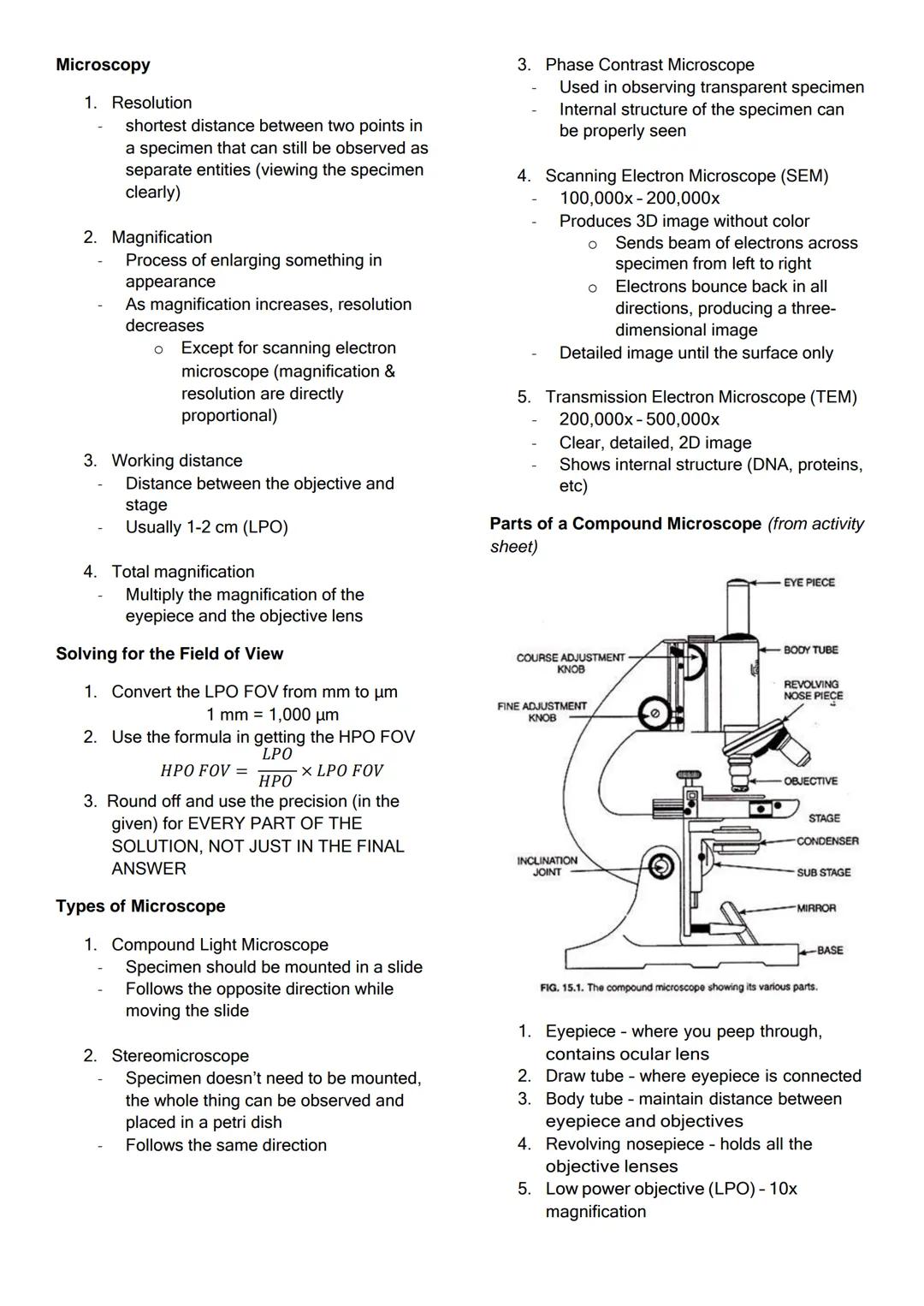
Understanding Microscopy
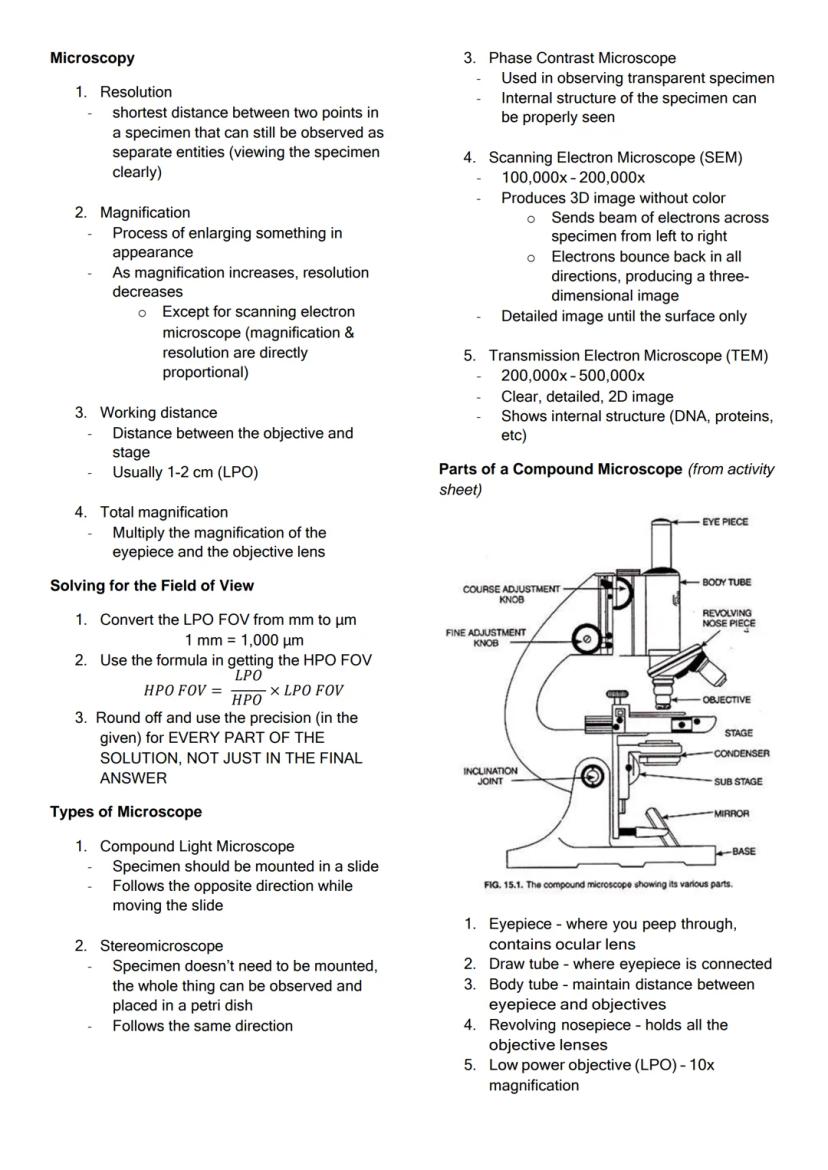
Microscopes allow us to explore the invisible world, but you need to understand a few key concepts first. Resolution is how clearly you can distinguish between two points in a specimen—essentially the quality of what you're seeing. Magnification is how much larger an object appears compared to its actual size. When using microscopes, remember that as magnification increases, resolution typically decreases (except in scanning electron microscopes).
To calculate the total magnification of what you're viewing, simply multiply the eyepiece magnification by the objective lens magnification. The working distance (space between the objective and stage) is usually 1-2 cm with a low-power objective. When calculating field of view (FOV), you'll need to convert measurements and use specific formulas.
Different microscopes serve unique purposes. The compound light microscope requires mounted specimens and follows opposite movement direction. The stereomicroscope allows observation of unmounted specimens. Phase contrast microscopes reveal transparent specimens, while electron microscopes provide extraordinary magnification—the SEM produces 3D surface images up to 200,000x, and the TEM shows internal structures at up to 500,000x magnification.
Remember: When using a microscope, always start with the lowest power objective and work your way up to higher magnifications after finding your specimen!
3
of 4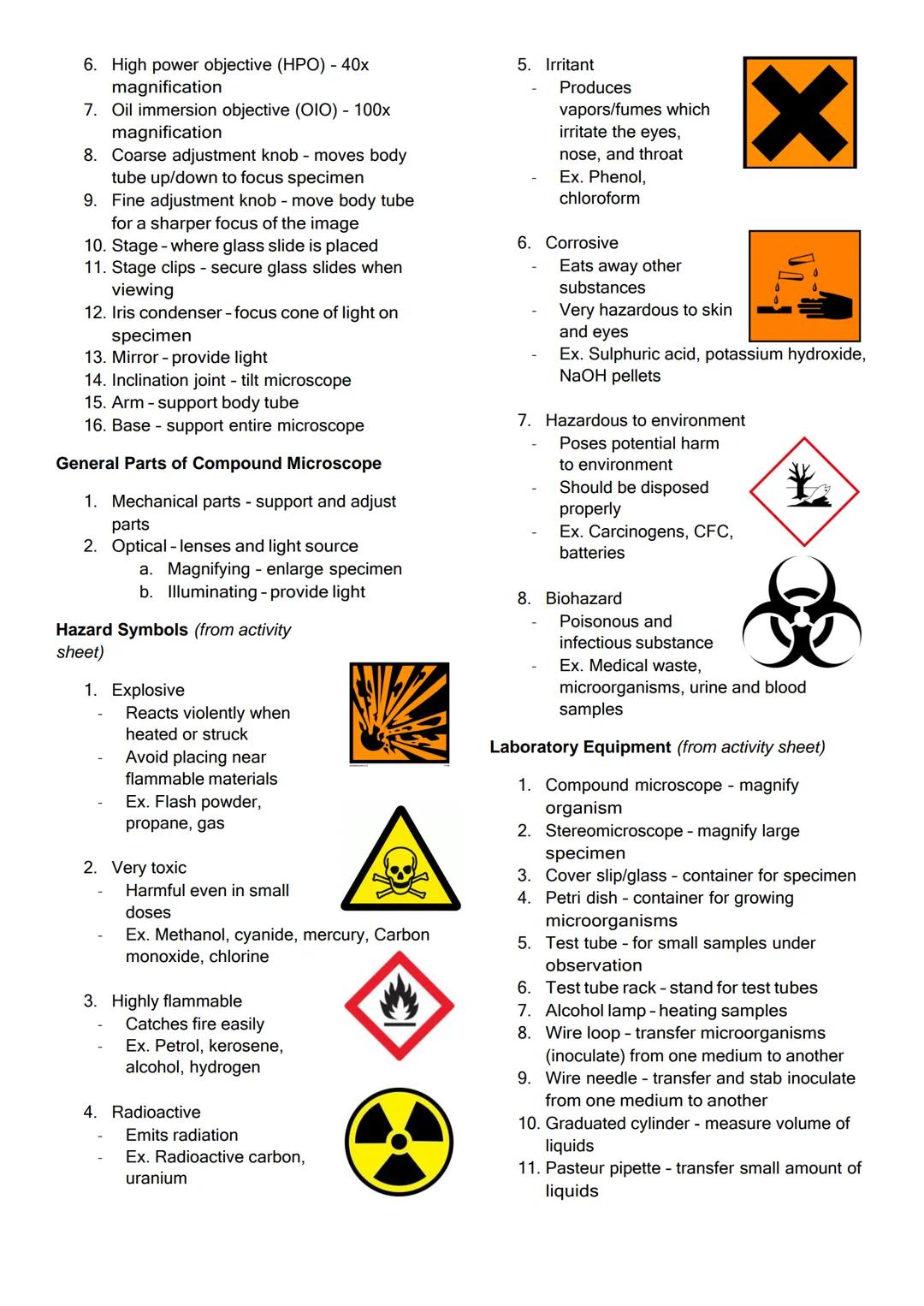
Laboratory Equipment and Safety
Understanding microscope parts is essential for proper use. The eyepiece contains the ocular lens where you look through. The revolving nosepiece holds different objective lenses: the low power objective (10x), high power objective (40x), and oil immersion objective (100x). Focusing happens with the coarse adjustment knob for major movements and the fine adjustment knob for precise focusing.
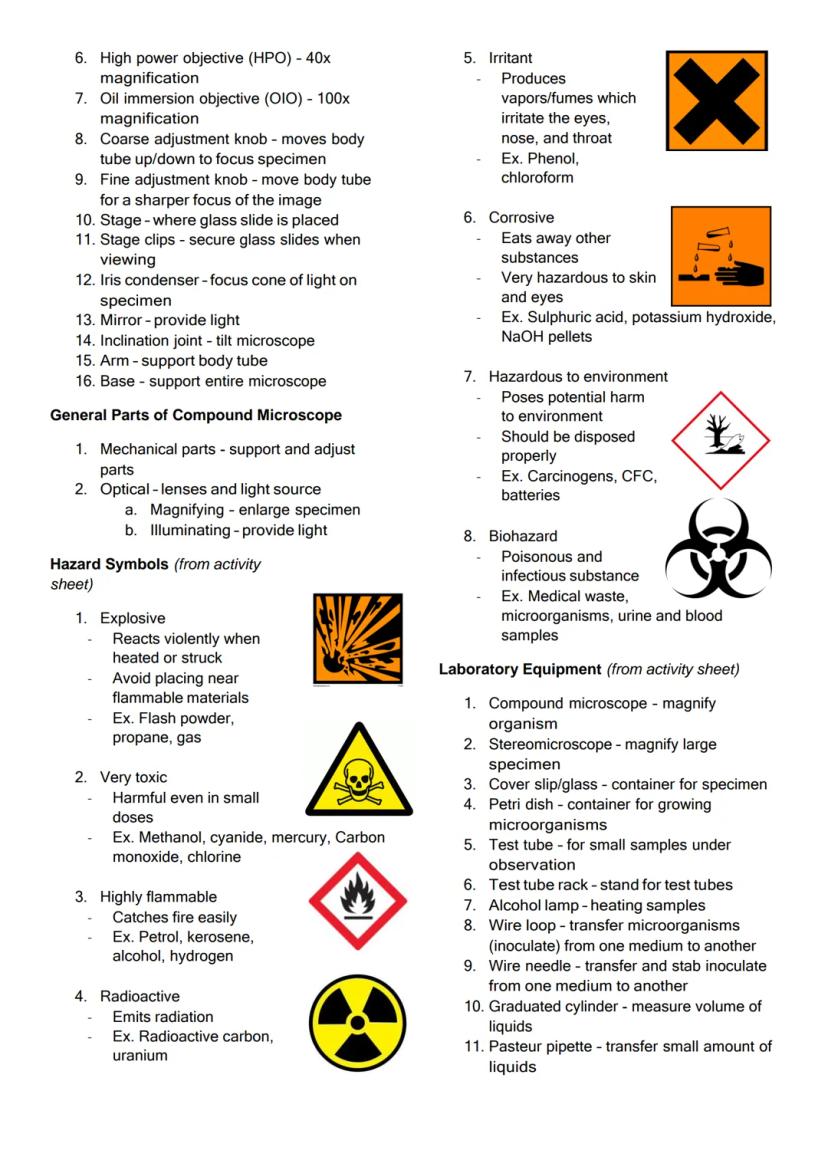
Laboratory safety requires recognizing hazard symbols. The explosive symbol indicates materials that react violently when heated. Very toxic substances like mercury are harmful even in small doses. Highly flammable materials like alcohol catch fire easily. Corrosive substances like sulfuric acid damage other materials and are dangerous to skin. Biohazard symbols mark infectious substances like blood samples.
Common lab equipment serves specific purposes. A compound microscope magnifies tiny organisms, while a stereomicroscope works for larger specimens. Petri dishes grow microorganisms, test tubes hold small samples, and graduated cylinders measure liquid volumes. For dissection, you'll use tools like scalpels, dissecting scissors, and dissecting pans to examine specimens.
Safety First: Always note the hazard symbols on lab chemicals before using them—these warnings could prevent serious injuries or accidents!
4
of 4
Laboratory Techniques
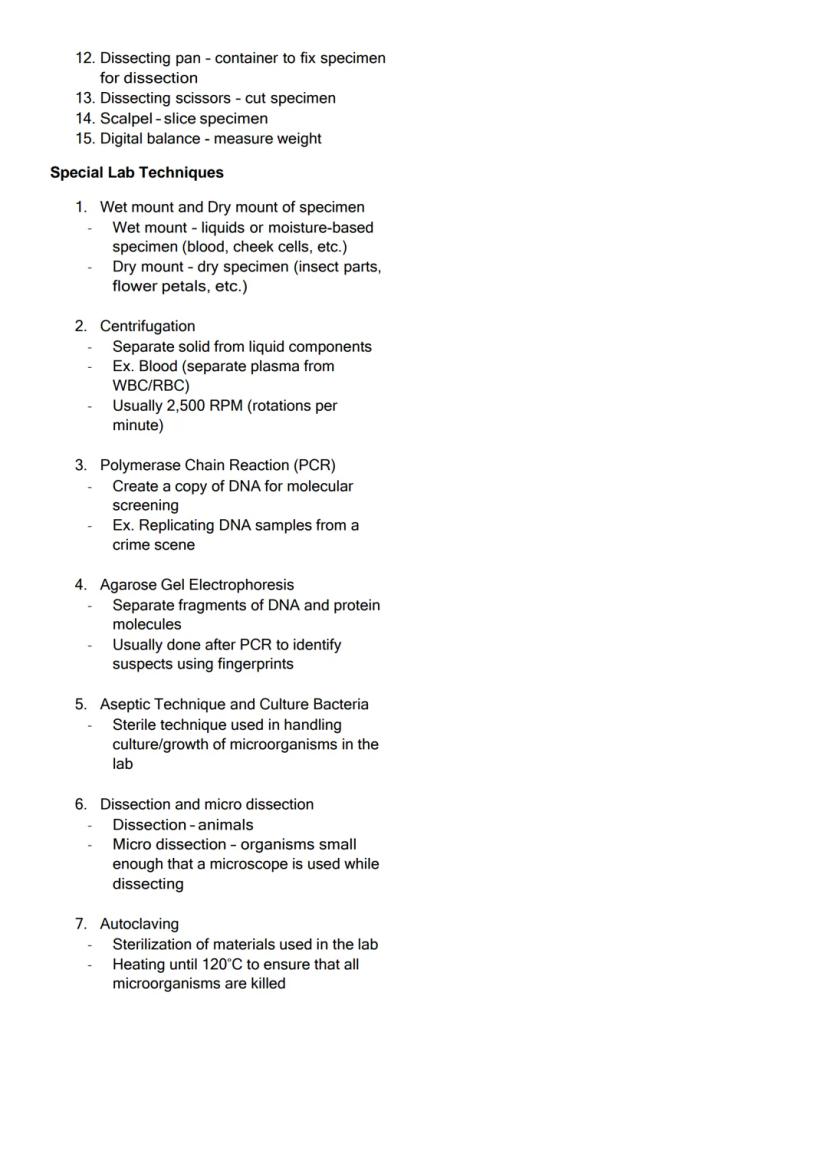
Proper specimen preparation is crucial for microscopic observation. Wet mounts are used for moist samples like blood or cheek cells, while dry mounts work for specimens like flower petals or insect parts. Knowing which technique to use ensures you'll see your specimen clearly.
Several specialized techniques help biologists analyze samples. Centrifugation separates components by spinning them at high speeds (typically 2,500 RPM), like separating blood plasma from cells. Polymerase Chain Reaction (PCR) creates DNA copies for analysis, which is essential in forensics and genetic research. Agarose Gel Electrophoresis separates DNA fragments by size and is often used after PCR.
Working with microorganisms requires special care. Aseptic technique ensures sterile conditions when culturing bacteria. Autoclaving sterilizes lab equipment by heating it to 120°C, killing all microorganisms. For examining organisms, biologists may use dissection for larger specimens or microdissection for tiny specimens that require microscope assistance during the procedure.
Pro Tip: When preparing slides, always lower the cover slip at an angle to prevent air bubbles from forming in your wet mount preparations!
We thought you’d never ask...
What is the Knowunity AI companion?
Our AI companion is specifically built for the needs of students. Based on the millions of content pieces we have on the platform we can provide truly meaningful and relevant answers to students. But its not only about answers, the companion is even more about guiding students through their daily learning challenges, with personalised study plans, quizzes or content pieces in the chat and 100% personalisation based on the students skills and developments.
Where can I download the Knowunity app?
You can download the app in the Google Play Store and in the Apple App Store.
Is Knowunity really free of charge?
That's right! Enjoy free access to study content, connect with fellow students, and get instant help – all at your fingertips.
Similar Content
 Environmental Science
Most popular content: Structure of a Microscope
2Most popular content in Biology
9C
BiologyCell Organelles
This Quiz Is To Test Your Knowledge Of Cell Organelles And Their Functions Inside The Cell. It Can Also Be A Study Guide To Remember Them Better.
6th6710
B
Biologybiology cell organelles and functions
Do you know the cell organelles and their functions?
9th4410
M
BiologyMitosis and Cell Division Flashcards
These flashcards cover the basics of mitosis and why cell division occurs in the first place.
9th3390
D
BiologyDNA and RNA
Uncover the secrets of life with this comprehensive Biology flashcard set. Perfect for grade 10 students studying Living Environment.
10th1,0782
D
BiologyDiscover the Fascinating World of Living Organisms
Uncover the secrets of biology and explore the diverse and amazing life forms that inhabit our planet with this captivating flashcard set.
7th4380
A
BiologyAnimal and plant cell structure
Quiz on animal and plant cell structures
9th3240
D
BiologyDiscover Punnet Squares
Uncover the secrets of life with this comprehensive Biology flashcard set. Perfect for grade 10 students studying Living Environment.
10th3961
D
BiologyDNA
Parts of DNA
9th2970
S
BiologySteps of Cellular Respiration
3 basic steps and Molecule Vocab
9th2660
Most popular content
9O
 AP US History
Origins and Dynamics of the Columbian Exchange
Analyze the ecological and economic motivations behind the initial transfer of goods, people, and diseases between the Old and New Worlds.
9th3,1280
I
AP US HistoryIntroduction to Early Cultural Interactions
Analyze the initial social and religious encounters between Europeans, Africans, and Indigenous peoples in the colonial Americas.
9th2,7730
O
 AP World History
Origins of Ancient River Civilizations
Analyze the environmental factors and technological innovations that led to the rise of early states in Mesopotamia, Egypt, and the Indus Valley.
9th3,1870
M
AP US HistoryMotivations for European Exploration
Analyze the economic, religious, and political factors that drove European powers to the Americas during the 15th and 16th centuries.
9th1,7780
F
 AP Psychology
Foundations of Ethical Guidelines in Research
Practice the core principles of the APA ethical code including informed consent, debriefing, and the role of Institutional Review Boards.
9th1,3360
I
AP US HistoryIntroduction to Native American Societies
Examine the diverse social, political, and economic structures of North American indigenous groups prior to European contact.
9th1,1100
I
AP BiologyIntroduction to Biological Elements of Life
Practice identifying the essential elements including carbon, nitrogen, phosphorus, and sulfur that compose biological macromolecules.
9th1,7390
I
AP US HistoryIntroduction to the Spanish Encomienda System
Explore the fundamental economic and social structures of the Spanish colonial system, focusing on the encomienda and the casta social hierarchy.
9th8890
O
AP World HistoryOrigins and Continuity of the Byzantine Empire
Analyze the political and cultural transitions from the Roman Empire to the Byzantine Empire, focusing on the reign of Justinian I and his code.
9th1,6320
Can't find what you're looking for? Explore other subjects.
Students love us — and so will you.
4.6/5App Store
4.7/5Google Play
The app is very easy to use and well designed. I have found everything I was looking for so far and have been able to learn a lot from the presentations! I will definitely use the app for a class assignment! And of course it also helps a lot as an inspiration.
Stefan SiOS user
This app is really great. There are so many study notes and help [...]. My problem subject is French, for example, and the app has so many options for help. Thanks to this app, I have improved my French. I would recommend it to anyone.
Samantha KlichAndroid user
Wow, I am really amazed. I just tried the app because I've seen it advertised many times and was absolutely stunned. This app is THE HELP you want for school and above all, it offers so many things, such as workouts and fact sheets, which have been VERY helpful to me personally.
AnnaiOS user
Biology92 views·Updated Jun 16, 2026·4 pagesExploring Biology: Branches, Filipino Scientists, and Microscopes
Biology is a diverse field with many specialized branches that help us understand all aspects of life. From tiny cells to entire ecosystems, biology explores how living things function, evolve, and interact. This guide covers the major branches of biology,...
1
of 4
Sign up to see the content. It's free!
- Access to all documents
- Improve your grades
- Join milions of students
Branches of Biology and Filipino Scientists
Biology branches into specialized fields that study different aspects of life. Anatomy examines organ structures, while cell biology explores cellular functions. Other major branches include botany (plants), zoology (animals), ecology (organism relationships), genetics (heredity), and physiology (body functions).
The Philippines has produced remarkable scientists who've made global contributions. Fe del Mundo, the first Filipino pediatrician, invented the bamboo incubator and studied infectious diseases. Pedro Escuro developed disease-resistant rice varieties like C4-63 using the Modified Pedigree method. Angel Alcala pioneered artificial coral reefs and discovered over 50 reptile and amphibian species.
Other notable Filipino biologists include Dolores Ramirez (macapuno coconut genetics), Dioscoro Umali , Jose Velasco , and Carmen Velasquez (fish parasites). Their work has advanced fields from marine biology to biochemistry, with practical applications ranging from food security to environmental conservation.
Fun Fact: Carla Lim-Sylianco was the first to report anti-cancer agents in common Filipino foods like ampalaya (bitter melon), malunggay (moringa), and coconut oil!
2
of 4Sign up to see the content. It's free!
- Access to all documents
- Improve your grades
- Join milions of students
Understanding Microscopy
Microscopes allow us to explore the invisible world, but you need to understand a few key concepts first. Resolution is how clearly you can distinguish between two points in a specimen—essentially the quality of what you're seeing. Magnification is how much larger an object appears compared to its actual size. When using microscopes, remember that as magnification increases, resolution typically decreases (except in scanning electron microscopes).
To calculate the total magnification of what you're viewing, simply multiply the eyepiece magnification by the objective lens magnification. The working distance (space between the objective and stage) is usually 1-2 cm with a low-power objective. When calculating field of view (FOV), you'll need to convert measurements and use specific formulas.
Different microscopes serve unique purposes. The compound light microscope requires mounted specimens and follows opposite movement direction. The stereomicroscope allows observation of unmounted specimens. Phase contrast microscopes reveal transparent specimens, while electron microscopes provide extraordinary magnification—the SEM produces 3D surface images up to 200,000x, and the TEM shows internal structures at up to 500,000x magnification.
Remember: When using a microscope, always start with the lowest power objective and work your way up to higher magnifications after finding your specimen!
3
of 4Sign up to see the content. It's free!
- Access to all documents
- Improve your grades
- Join milions of students
Laboratory Equipment and Safety
Understanding microscope parts is essential for proper use. The eyepiece contains the ocular lens where you look through. The revolving nosepiece holds different objective lenses: the low power objective (10x), high power objective (40x), and oil immersion objective (100x). Focusing happens with the coarse adjustment knob for major movements and the fine adjustment knob for precise focusing.
Laboratory safety requires recognizing hazard symbols. The explosive symbol indicates materials that react violently when heated. Very toxic substances like mercury are harmful even in small doses. Highly flammable materials like alcohol catch fire easily. Corrosive substances like sulfuric acid damage other materials and are dangerous to skin. Biohazard symbols mark infectious substances like blood samples.
Common lab equipment serves specific purposes. A compound microscope magnifies tiny organisms, while a stereomicroscope works for larger specimens. Petri dishes grow microorganisms, test tubes hold small samples, and graduated cylinders measure liquid volumes. For dissection, you'll use tools like scalpels, dissecting scissors, and dissecting pans to examine specimens.
Safety First: Always note the hazard symbols on lab chemicals before using them—these warnings could prevent serious injuries or accidents!
4
of 4Sign up to see the content. It's free!
- Access to all documents
- Improve your grades
- Join milions of students
Laboratory Techniques
Proper specimen preparation is crucial for microscopic observation. Wet mounts are used for moist samples like blood or cheek cells, while dry mounts work for specimens like flower petals or insect parts. Knowing which technique to use ensures you'll see your specimen clearly.
Several specialized techniques help biologists analyze samples. Centrifugation separates components by spinning them at high speeds (typically 2,500 RPM), like separating blood plasma from cells. Polymerase Chain Reaction (PCR) creates DNA copies for analysis, which is essential in forensics and genetic research. Agarose Gel Electrophoresis separates DNA fragments by size and is often used after PCR.
Working with microorganisms requires special care. Aseptic technique ensures sterile conditions when culturing bacteria. Autoclaving sterilizes lab equipment by heating it to 120°C, killing all microorganisms. For examining organisms, biologists may use dissection for larger specimens or microdissection for tiny specimens that require microscope assistance during the procedure.
Pro Tip: When preparing slides, always lower the cover slip at an angle to prevent air bubbles from forming in your wet mount preparations!
We thought you’d never ask...
What is the Knowunity AI companion?
Our AI companion is specifically built for the needs of students. Based on the millions of content pieces we have on the platform we can provide truly meaningful and relevant answers to students. But its not only about answers, the companion is even more about guiding students through their daily learning challenges, with personalised study plans, quizzes or content pieces in the chat and 100% personalisation based on the students skills and developments.
Where can I download the Knowunity app?
You can download the app in the Google Play Store and in the Apple App Store.
Is Knowunity really free of charge?
That's right! Enjoy free access to study content, connect with fellow students, and get instant help – all at your fingertips.
Similar Content
Most popular content: Structure of a Microscope
2Most popular content in Biology
9C
BiologyCell Organelles
This Quiz Is To Test Your Knowledge Of Cell Organelles And Their Functions Inside The Cell. It Can Also Be A Study Guide To Remember Them Better.
6th6710
B
Biologybiology cell organelles and functions
Do you know the cell organelles and their functions?
9th4410
M
BiologyMitosis and Cell Division Flashcards
These flashcards cover the basics of mitosis and why cell division occurs in the first place.
9th3390
D
BiologyDNA and RNA
Uncover the secrets of life with this comprehensive Biology flashcard set. Perfect for grade 10 students studying Living Environment.
10th1,0782
D
BiologyDiscover the Fascinating World of Living Organisms
Uncover the secrets of biology and explore the diverse and amazing life forms that inhabit our planet with this captivating flashcard set.
7th4380
A
BiologyAnimal and plant cell structure
Quiz on animal and plant cell structures
9th3240
D
BiologyDiscover Punnet Squares
Uncover the secrets of life with this comprehensive Biology flashcard set. Perfect for grade 10 students studying Living Environment.
10th3961
D
BiologyDNA
Parts of DNA
9th2970
S
BiologySteps of Cellular Respiration
3 basic steps and Molecule Vocab
9th2660
Most popular content
9O
AP US HistoryOrigins and Dynamics of the Columbian Exchange
Analyze the ecological and economic motivations behind the initial transfer of goods, people, and diseases between the Old and New Worlds.
9th3,1280
I
AP US HistoryIntroduction to Early Cultural Interactions
Analyze the initial social and religious encounters between Europeans, Africans, and Indigenous peoples in the colonial Americas.
9th2,7730
O
AP World HistoryOrigins of Ancient River Civilizations
Analyze the environmental factors and technological innovations that led to the rise of early states in Mesopotamia, Egypt, and the Indus Valley.
9th3,1870
M
AP US HistoryMotivations for European Exploration
Analyze the economic, religious, and political factors that drove European powers to the Americas during the 15th and 16th centuries.
9th1,7780
F
AP PsychologyFoundations of Ethical Guidelines in Research
Practice the core principles of the APA ethical code including informed consent, debriefing, and the role of Institutional Review Boards.
9th1,3360
I
AP US HistoryIntroduction to Native American Societies
Examine the diverse social, political, and economic structures of North American indigenous groups prior to European contact.
9th1,1100
I
AP BiologyIntroduction to Biological Elements of Life
Practice identifying the essential elements including carbon, nitrogen, phosphorus, and sulfur that compose biological macromolecules.
9th1,7390
I
AP US HistoryIntroduction to the Spanish Encomienda System
Explore the fundamental economic and social structures of the Spanish colonial system, focusing on the encomienda and the casta social hierarchy.
9th8890
O
AP World HistoryOrigins and Continuity of the Byzantine Empire
Analyze the political and cultural transitions from the Roman Empire to the Byzantine Empire, focusing on the reign of Justinian I and his code.
9th1,6320
Can't find what you're looking for? Explore other subjects.
Students love us — and so will you.
4.6/5App Store
4.7/5Google Play
The app is very easy to use and well designed. I have found everything I was looking for so far and have been able to learn a lot from the presentations! I will definitely use the app for a class assignment! And of course it also helps a lot as an inspiration.
Stefan SiOS user
This app is really great. There are so many study notes and help [...]. My problem subject is French, for example, and the app has so many options for help. Thanks to this app, I have improved my French. I would recommend it to anyone.
Samantha KlichAndroid user
Wow, I am really amazed. I just tried the app because I've seen it advertised many times and was absolutely stunned. This app is THE HELP you want for school and above all, it offers so many things, such as workouts and fact sheets, which have been VERY helpful to me personally.
AnnaiOS user