

The nervous systemis a complex network that coordinates all...
 Biology2,188 views·Updated Jun 28, 2026·21 pages
Awesome B5 Science Nervous System Notes and Study Guide for GCSE
1 / 10
1
of 10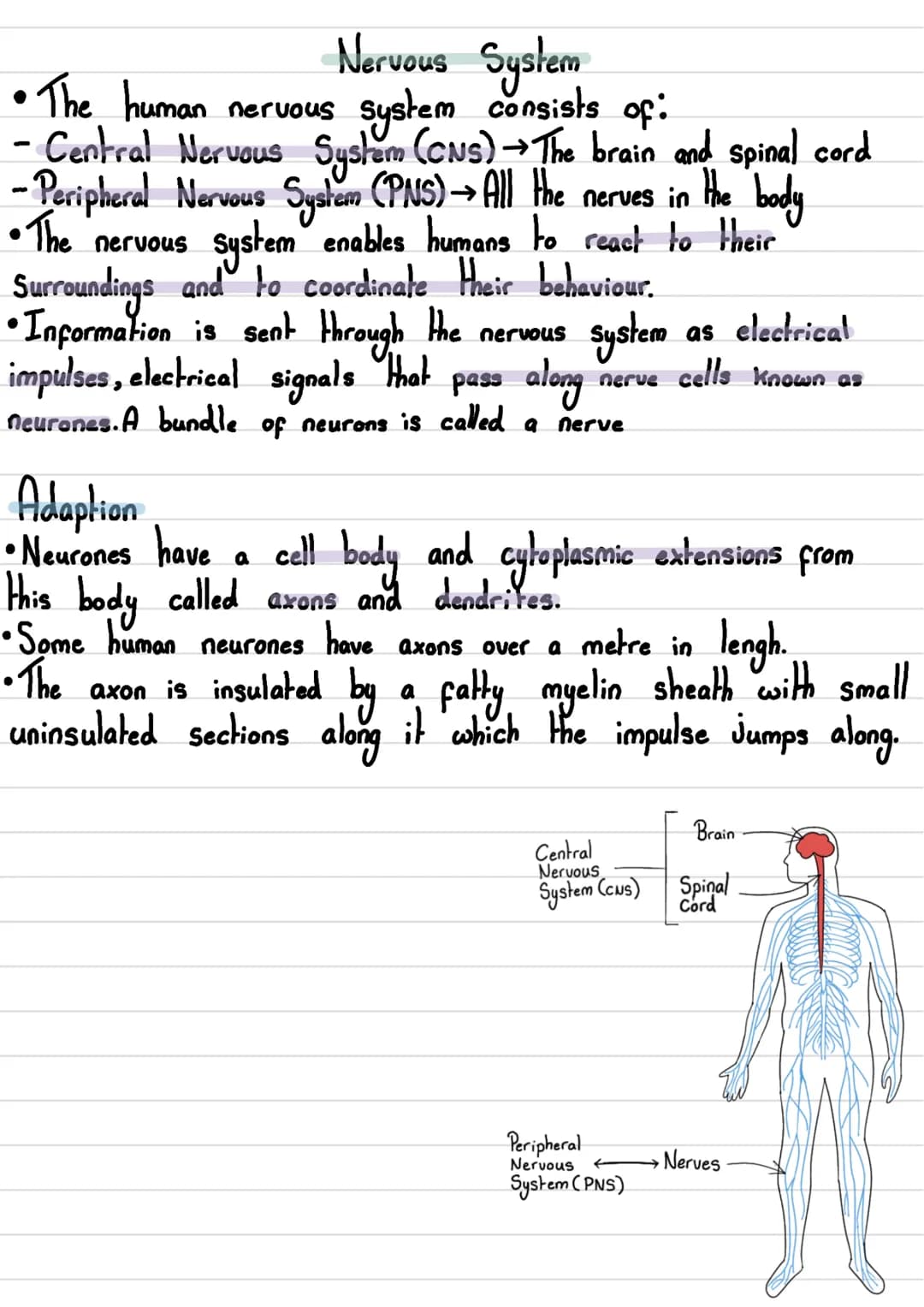
Understanding the Human Nervous System
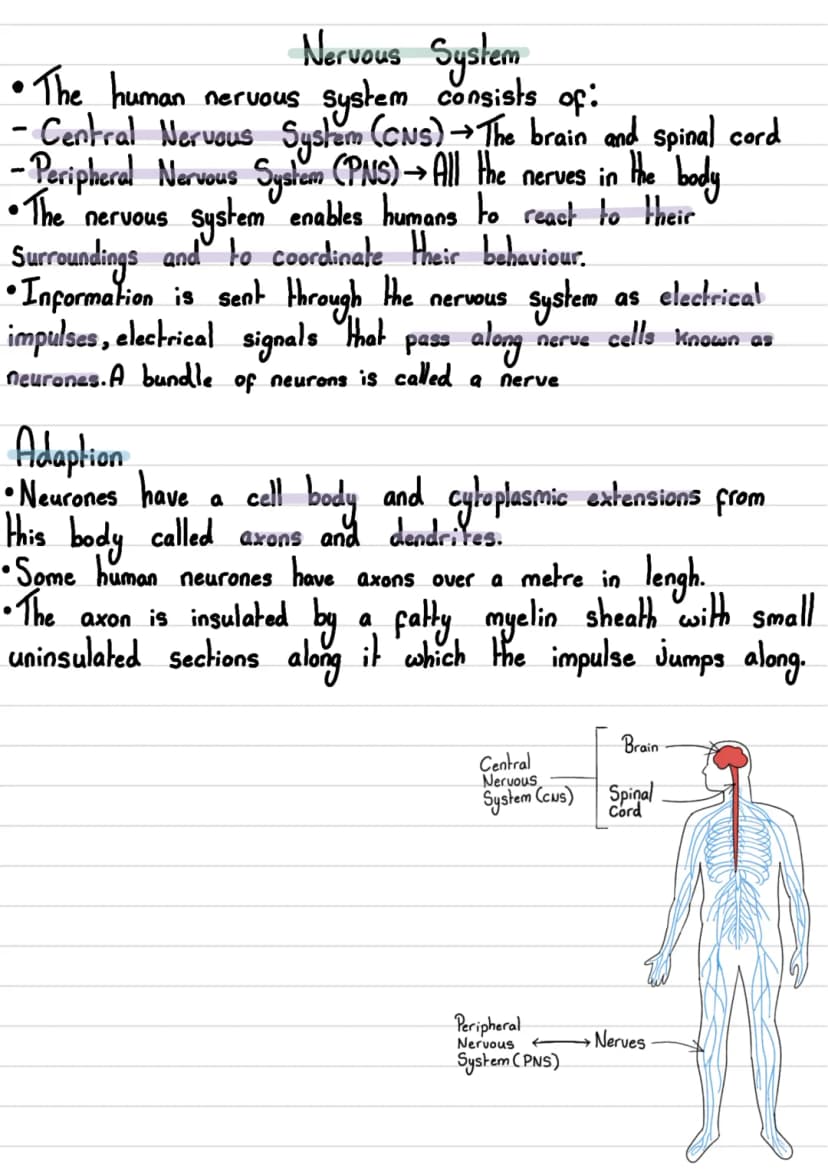
The human nervous system is a sophisticated network that enables us to interact with our environment and coordinate bodily functions. This complex system consists of two main components: the Central Nervous System (CNS) and the Peripheral Nervous System (PNS).
Definition: The Central Nervous System (CNS) comprises the brain and spinal cord, while the Peripheral Nervous System (PNS) includes all nerves throughout the body.
The nervous system transmits information through specialized cells called neurons, which carry electrical impulses throughout the body. These neurons have distinct structural features including a cell body, axons (which can extend over a meter in length), and dendrites. The axons are protected by a myelin sheath, a fatty insulating layer that helps speed up signal transmission.
Vocabulary: Neurons are the basic functional units of the nervous system. A bundle of neurons forms a nerve, which serves as an information highway in the body.
2
of 10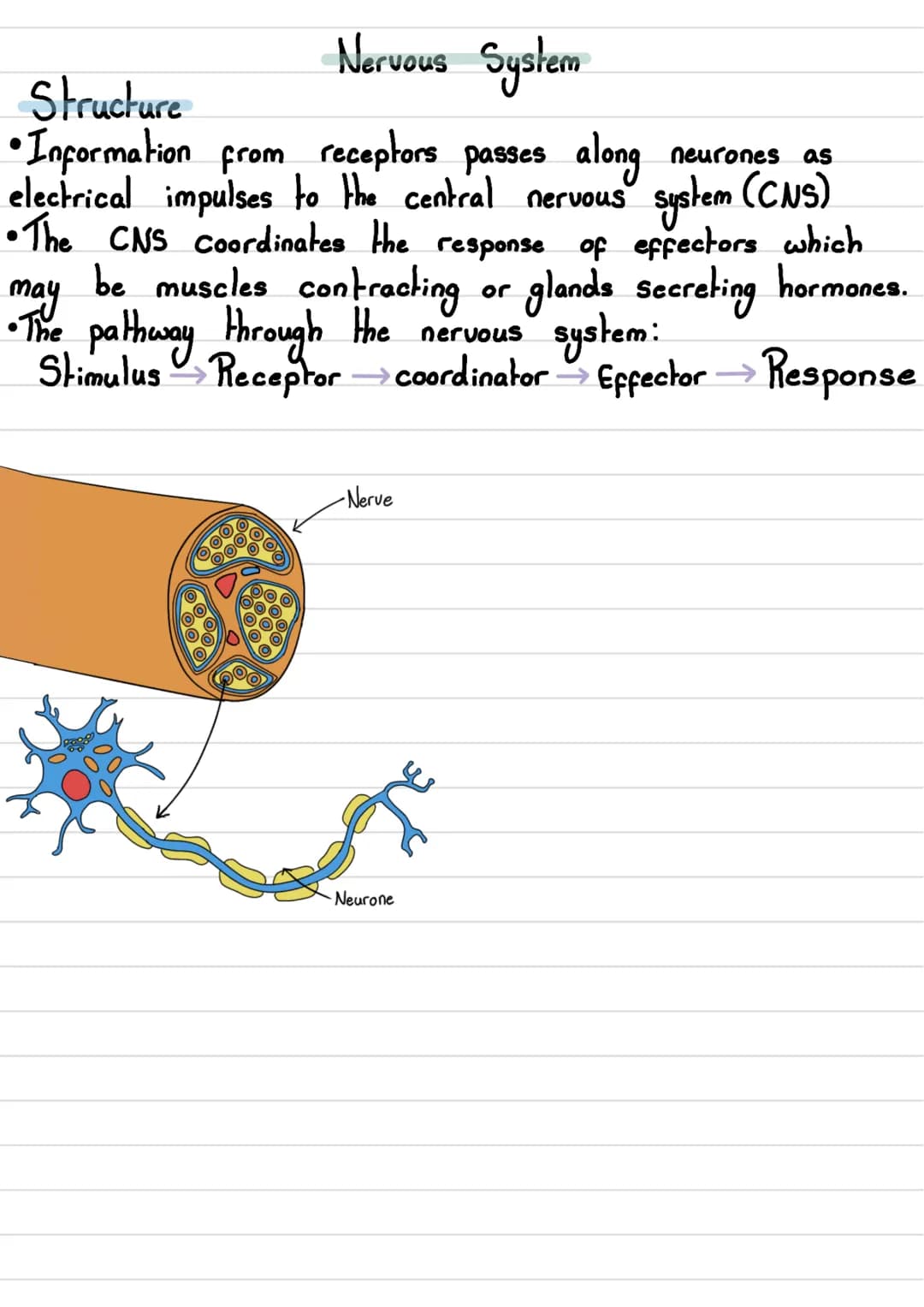
Nervous System Communication Pathways
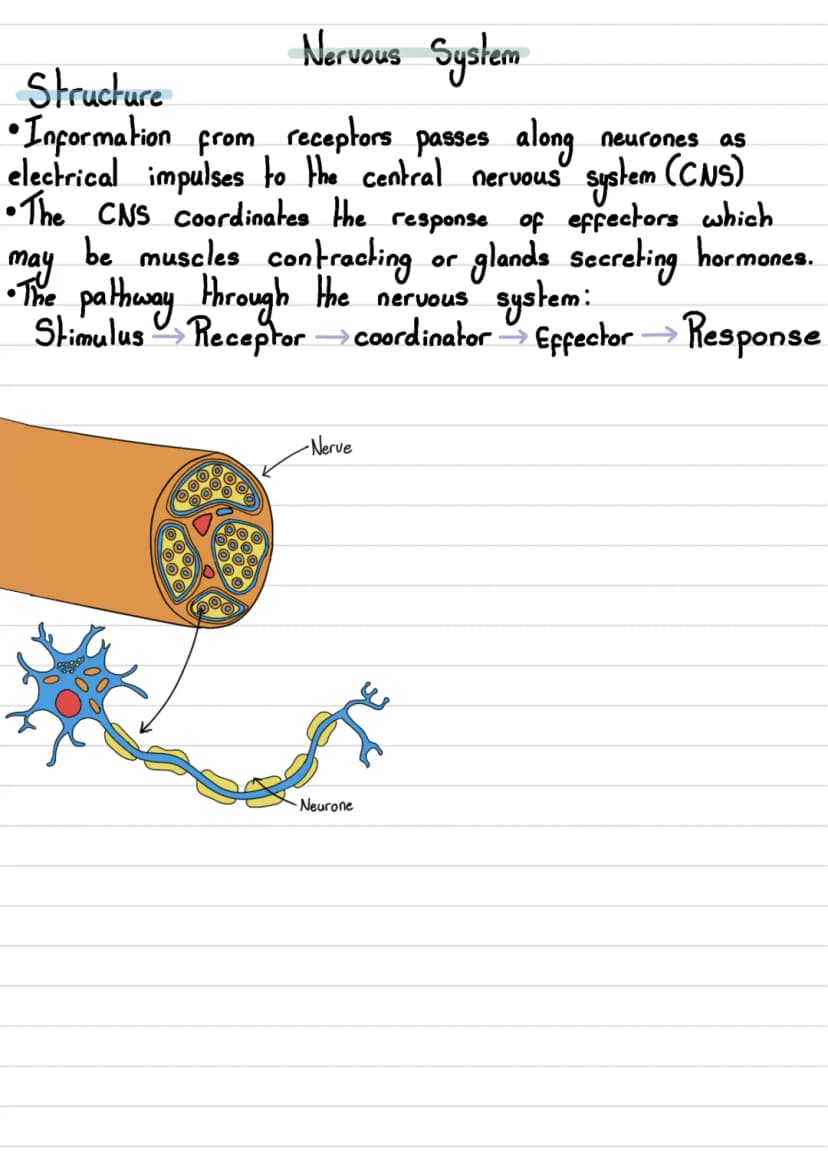
The nervous system follows a specific pathway for processing and responding to stimuli. This pathway begins with receptors detecting environmental changes and converts them into electrical impulses that travel to the CNS for processing.
Example: When you touch a hot surface, receptors in your skin detect the heat (stimulus), send signals to your CNS (coordinator), which then triggers muscles (effectors) to pull your hand away (response).
The nervous system GCSE curriculum emphasizes understanding this stimulus-response pathway: Stimulus → Receptor → Coordinator → Effector → Response
Highlight: The CNS acts as the body's command center, coordinating responses through either muscle contractions or gland secretions.
3
of 10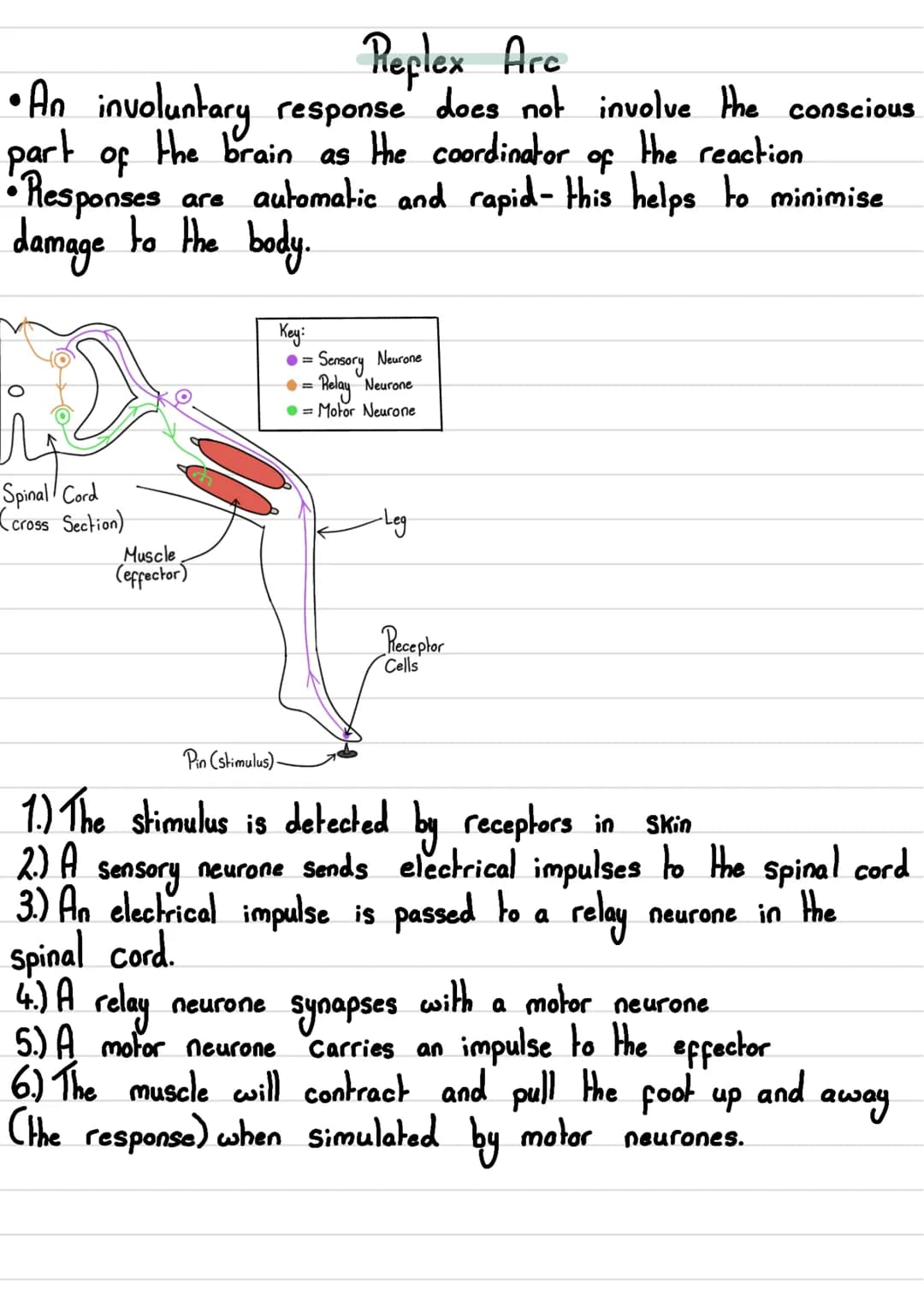
The Reflex Arc Mechanism
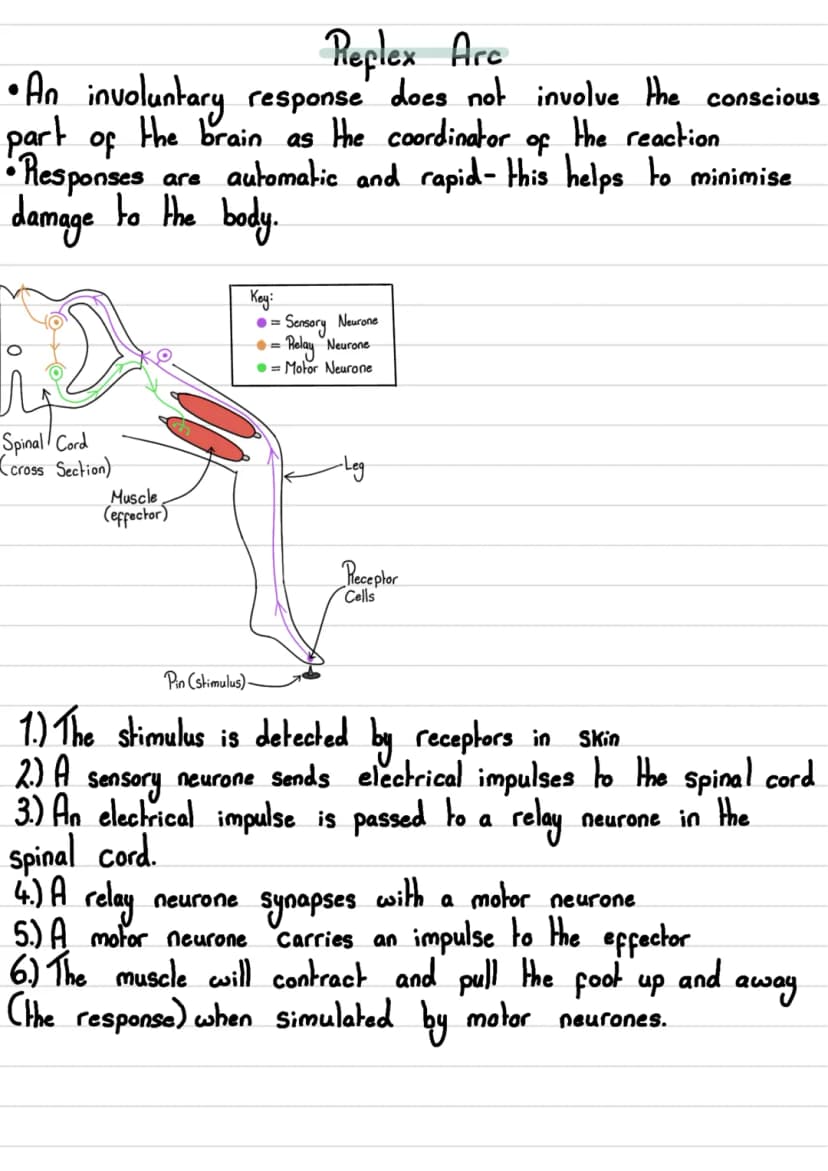
The reflex arc represents a fundamental pathway in the nervous system GCSE AQA syllabus, demonstrating how the body responds to stimuli without conscious thought. This involuntary response mechanism helps protect the body from potential harm through rapid, automatic reactions.
Definition: A reflex arc is a neural pathway that produces a rapid, involuntary response to a stimulus without involving the conscious part of the brain.
The process follows six key steps:
- Stimulus detection by skin receptors
- Signal transmission via sensory neurons
- Relay neuron processing in the spinal cord
- Synaptic transmission to motor neurons
- Signal conduction to effector muscles
- Muscle contraction response
4
of 10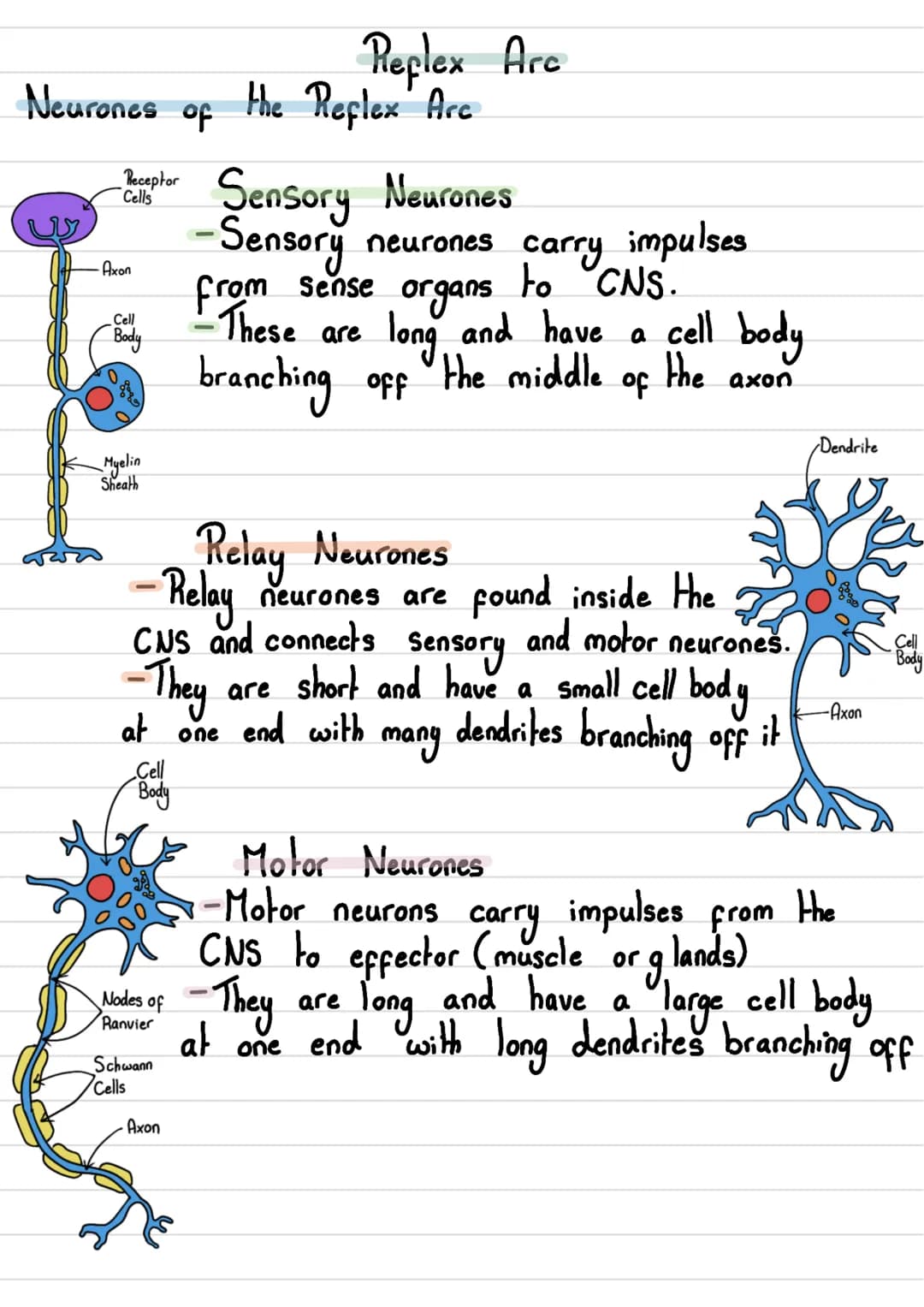
Neuron Types and Their Roles in the Reflex Arc
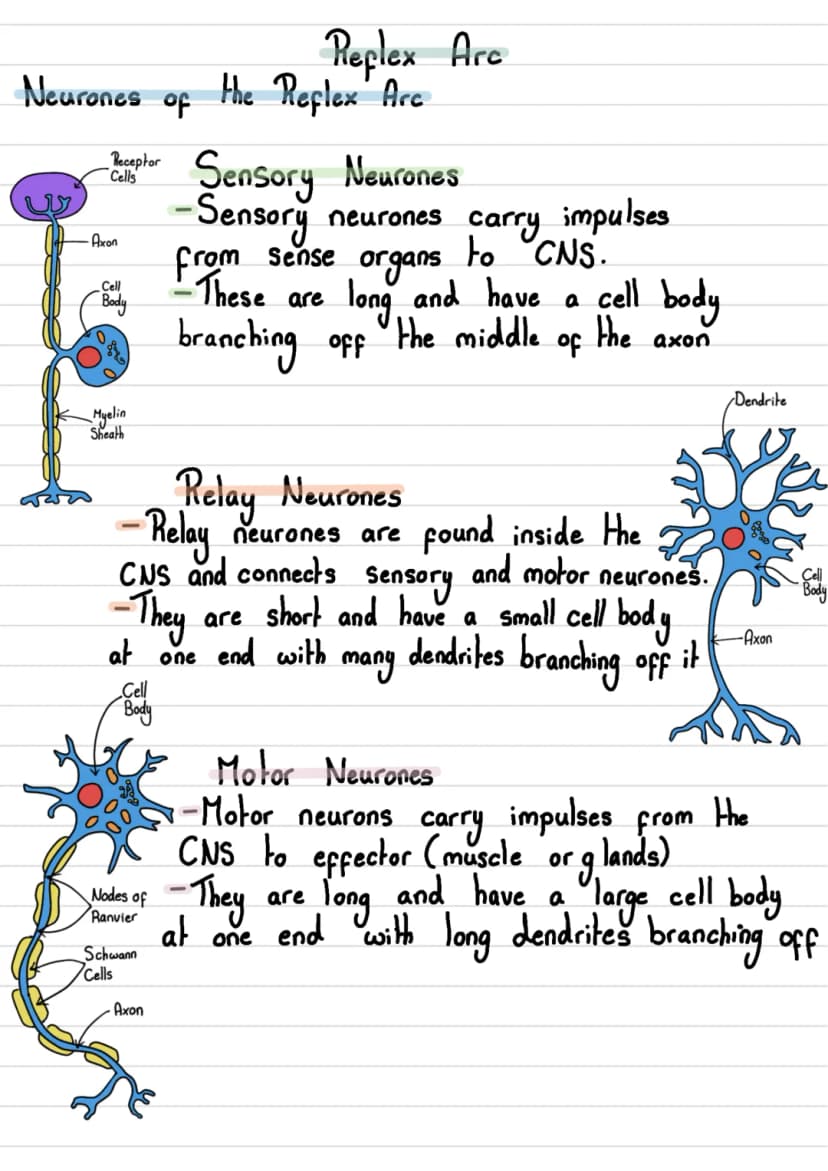
The reflex arc GCSE material identifies three distinct types of neurons, each with specific structures and functions in the nervous system:
Sensory neurons carry information from sense organs to the CNS. They feature long axons and specialized receptor cells at their endings. These neurons have a distinctive structure with a cell body positioned along their length.
Vocabulary: Nodes of Ranvier are gaps in the myelin sheath that allow for saltatory conduction, increasing the speed of nerve impulse transmission.
Motor neurons transmit signals from the CNS to effectors (muscles and glands). They possess large cell bodies and extensive dendrites for receiving signals. Relay neurons, found within the CNS, form the crucial connecting link between sensory and motor neurons, featuring shorter axons and multiple dendrites.
Highlight: The myelin sheath, formed by Schwann cells, is crucial for rapid signal transmission in both sensory and motor neurons.
5
of 10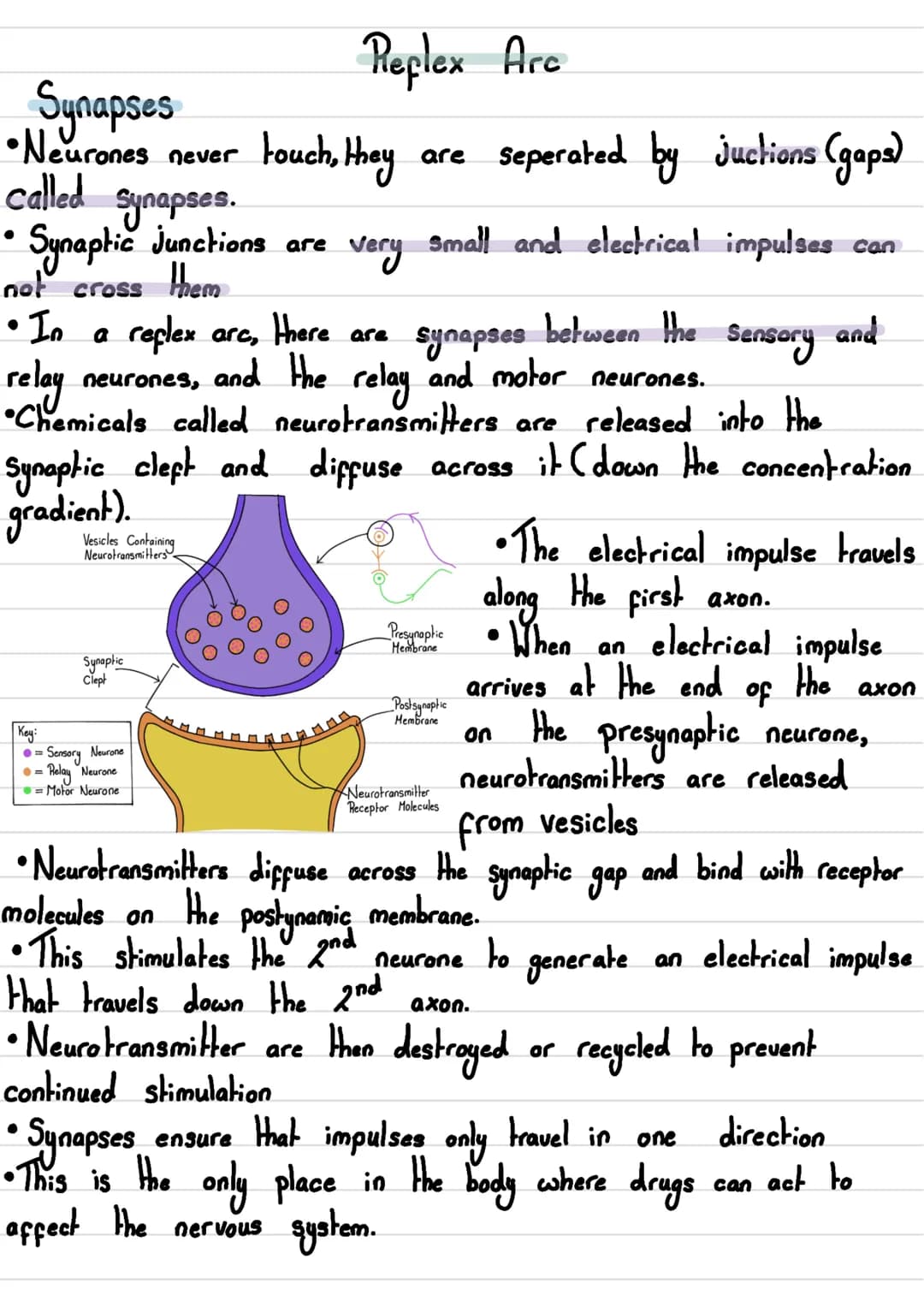
Understanding Synapses and the Reflex Arc in the Nervous System GCSE
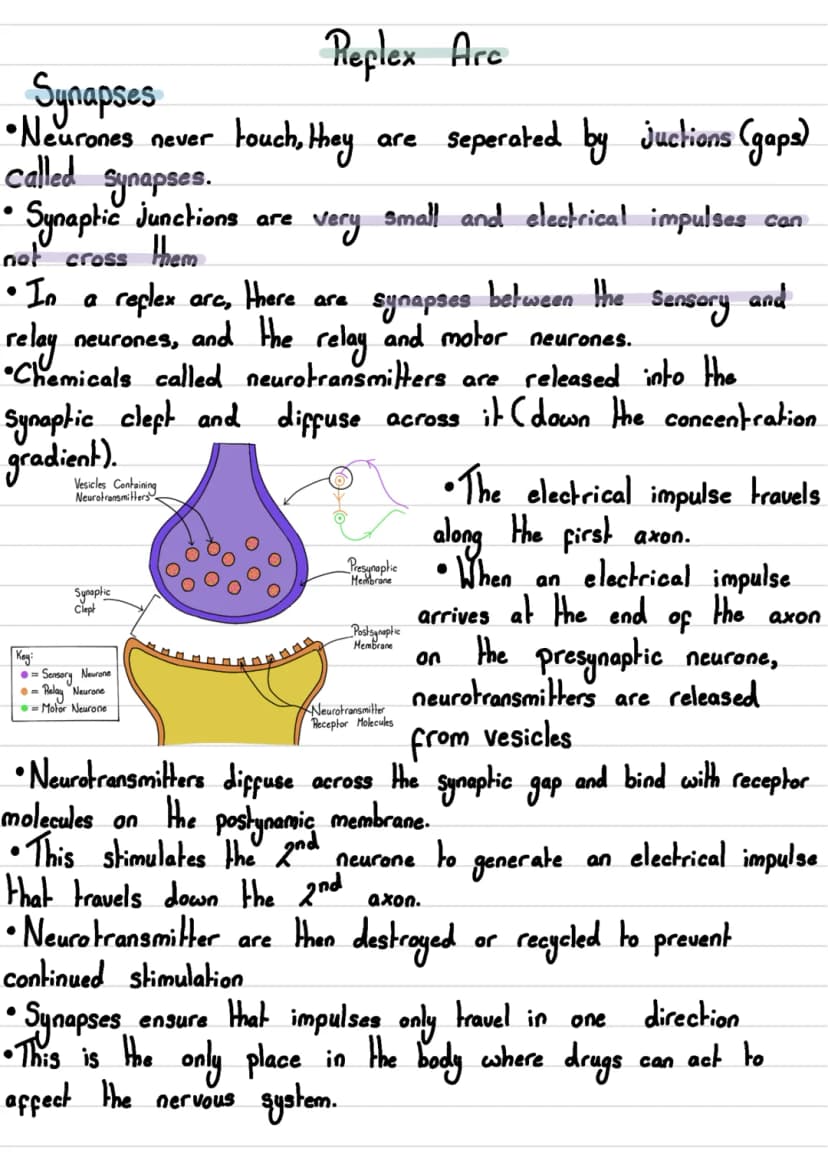
The intricate communication system within our bodies relies heavily on specialized structures called synapses. These microscopic junctions between neurons are fundamental to understanding how the nervous system functions. Neurons never physically touch each other - instead, they're separated by tiny gaps called synaptic clefts where crucial chemical messaging occurs.
In a reflex arc, multiple synapses work together to create rapid, automatic responses. The process involves three types of neurons: sensory neurons that detect stimuli, relay neurons that process information, and motor neurons that trigger responses. This chain of communication is essential for survival reactions like quickly withdrawing your hand from a hot surface.
Definition: A synapse is a junction between two neurons where chemical neurotransmitters facilitate signal transmission across a tiny gap called the synaptic cleft.
The synaptic transmission process follows a precise sequence. When an electrical impulse reaches the end of the presynaptic neuron, it triggers the release of neurotransmitters from specialized storage vesicles. These chemical messengers diffuse across the synaptic cleft and bind to receptor molecules on the postsynaptic membrane, generating a new electrical impulse in the receiving neuron.
6
of 10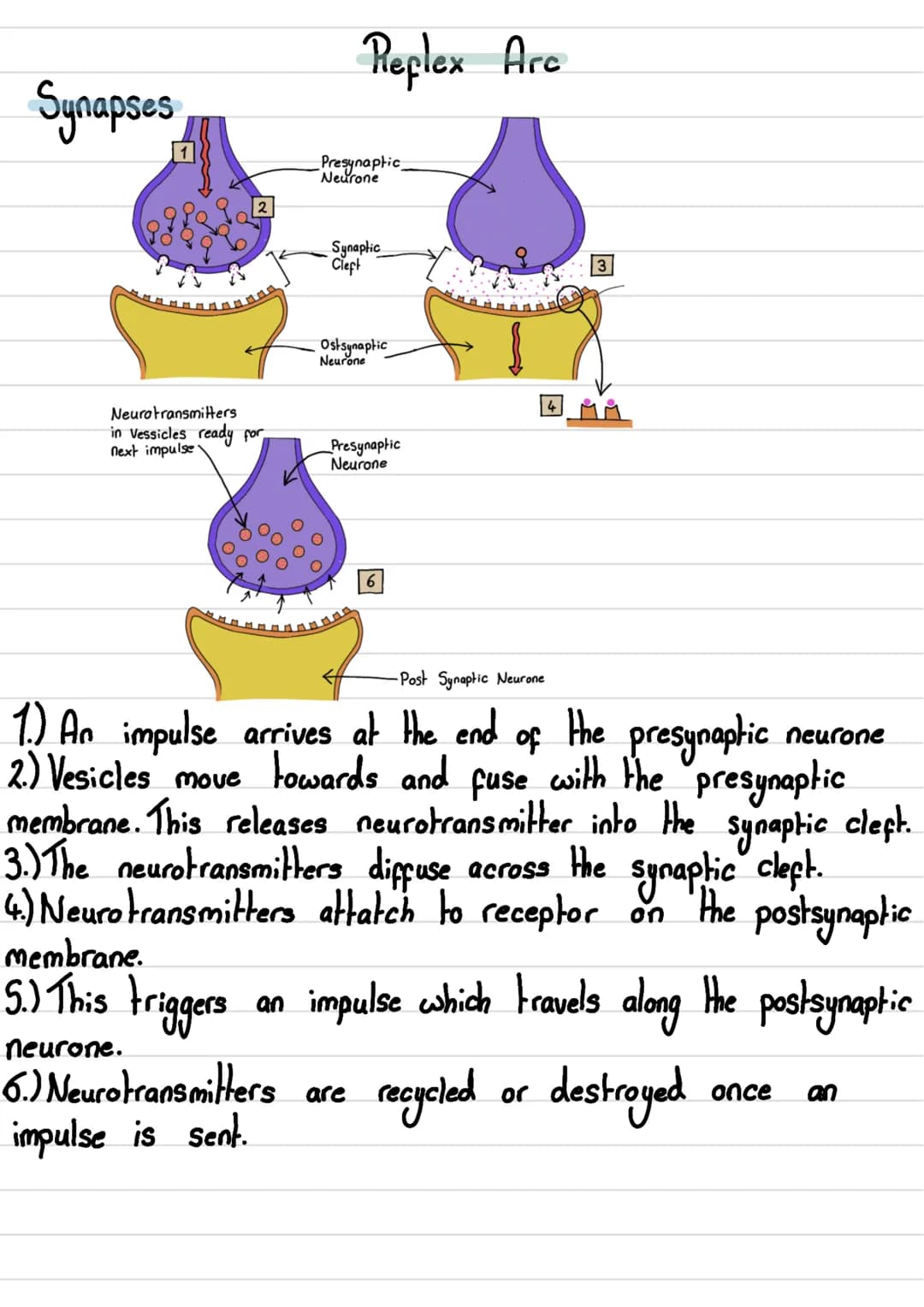
Detailed Mechanism of Synaptic Transmission in the Human Nervous System
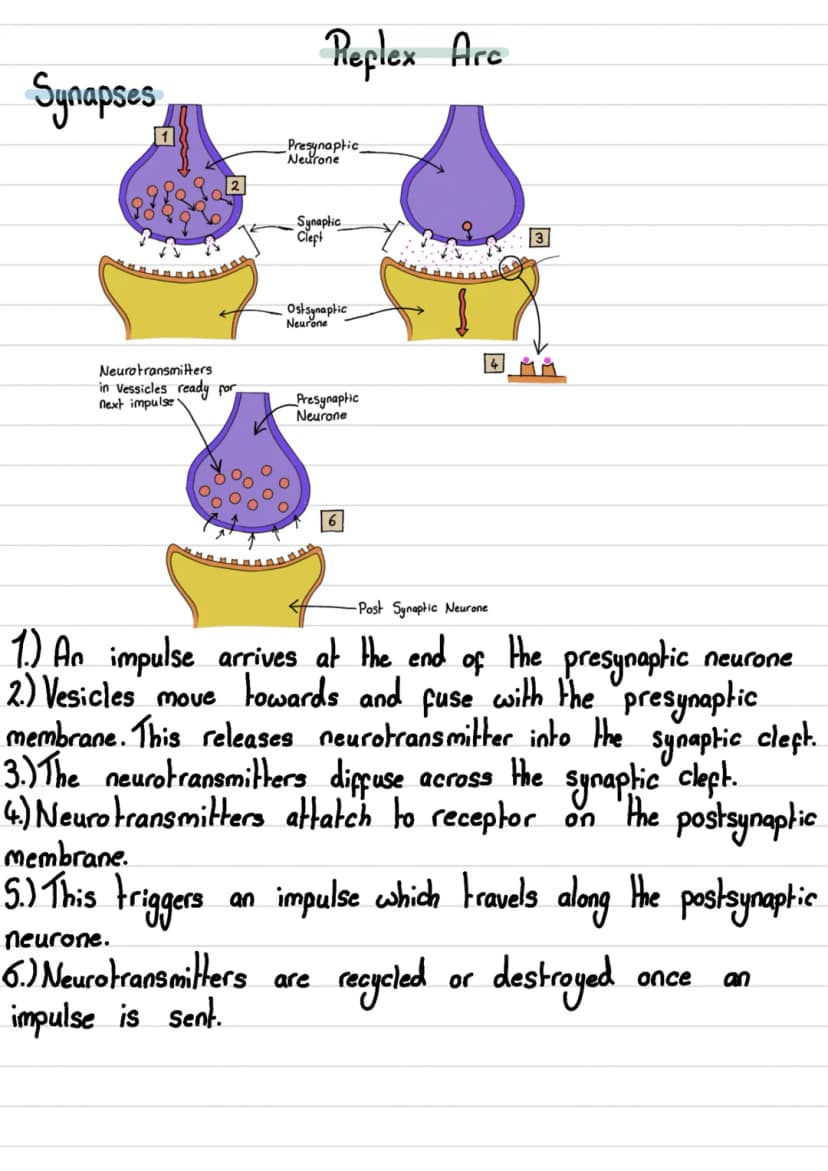
The sophisticated process of synaptic transmission involves multiple coordinated steps that ensure accurate signal propagation. Understanding this mechanism is crucial for GCSE Biology nervous system exam questions.
Highlight: Synaptic transmission is unidirectional - signals can only travel from the presynaptic to the postsynaptic neuron, ensuring organized information flow in the nervous system.
When an action potential arrives at the presynaptic terminal, calcium channels open, triggering vesicles containing neurotransmitters to fuse with the membrane. The released neurotransmitters diffuse across the synaptic cleft and bind to specific receptors on the postsynaptic membrane. This binding initiates a new electrical impulse in the receiving neuron, continuing the signal transmission.
After transmission, neurotransmitters are either recycled back into the presynaptic neuron or broken down by enzymes in the synaptic cleft. This cleanup process prevents continuous stimulation and prepares the synapse for the next signal.
7
of 10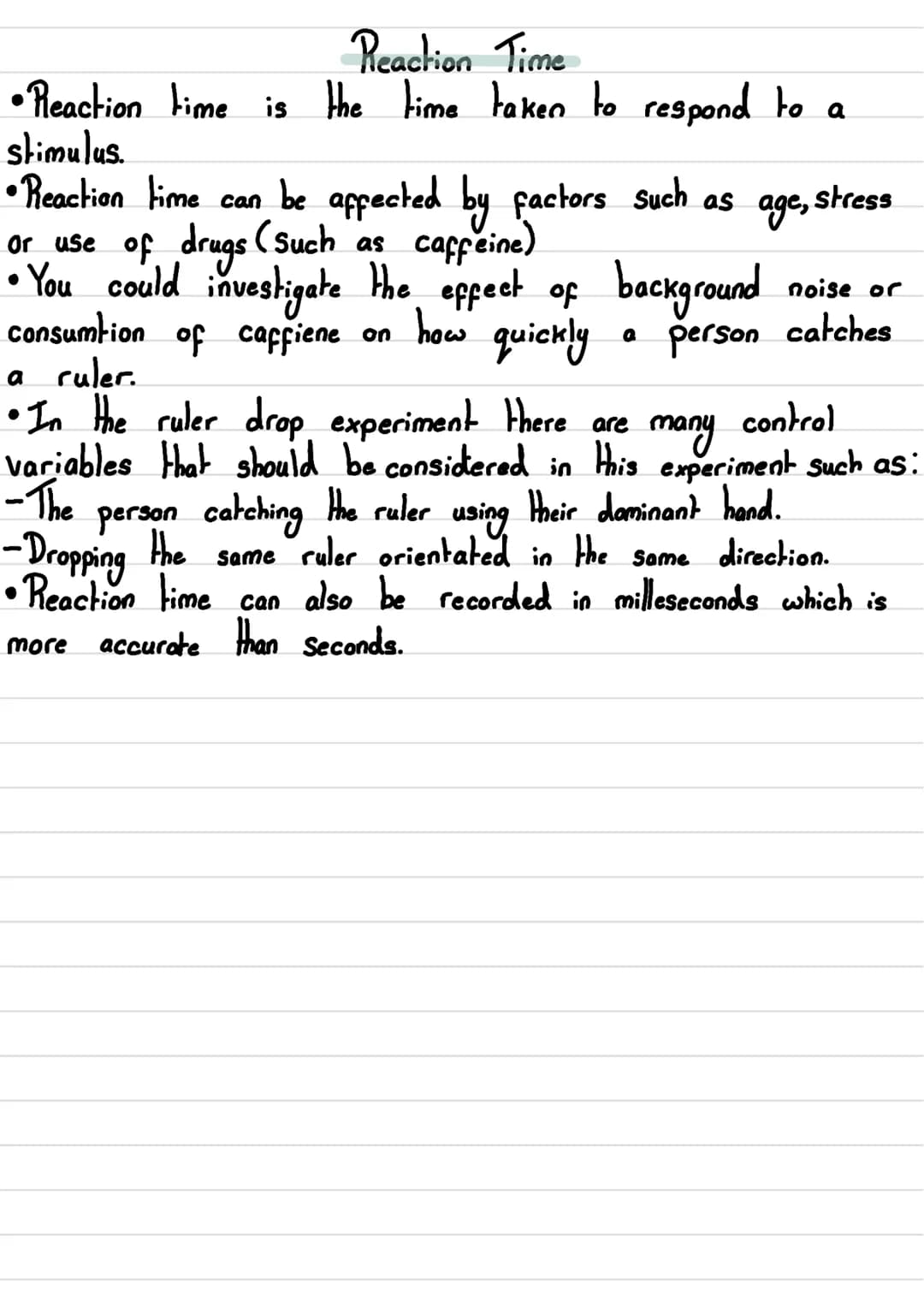
Reaction Time and Neural Response in Nervous System Study
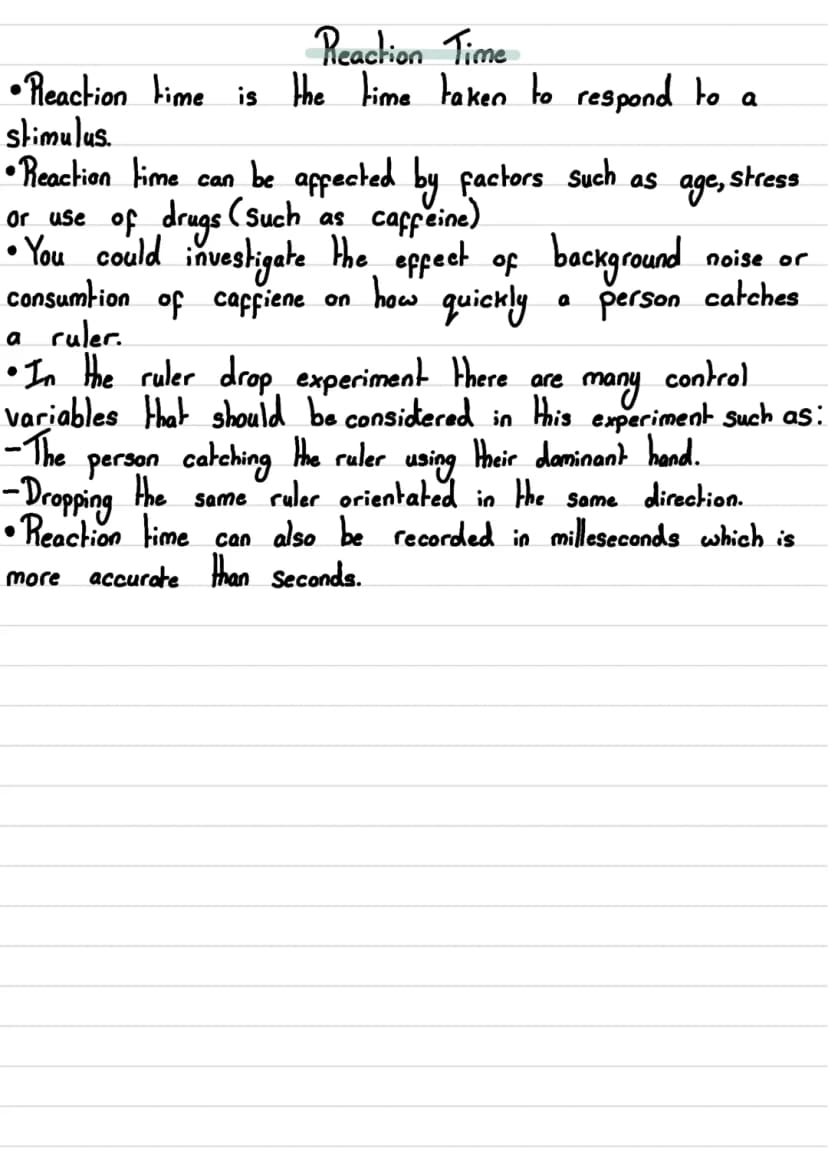
Reaction time, a crucial measure of nervous system efficiency, represents the interval between stimulus detection and response initiation. This concept is frequently tested in Nervous System GCSE Exam questions PDF materials.
Example: The ruler drop test is a common method to measure reaction time. A faster catch indicates quicker neural processing and response.
Multiple factors can influence reaction time, including age, stress levels, and chemical substances like caffeine. When conducting reaction time experiments, it's essential to control variables such as using the dominant hand and maintaining consistent testing conditions. These considerations ensure reliable results for scientific investigation.
Measuring reaction time in milliseconds provides more precise data than using seconds, allowing for detailed analysis of neural response speeds. This precision is particularly important when studying the effects of different factors on nervous system performance.
8
of 10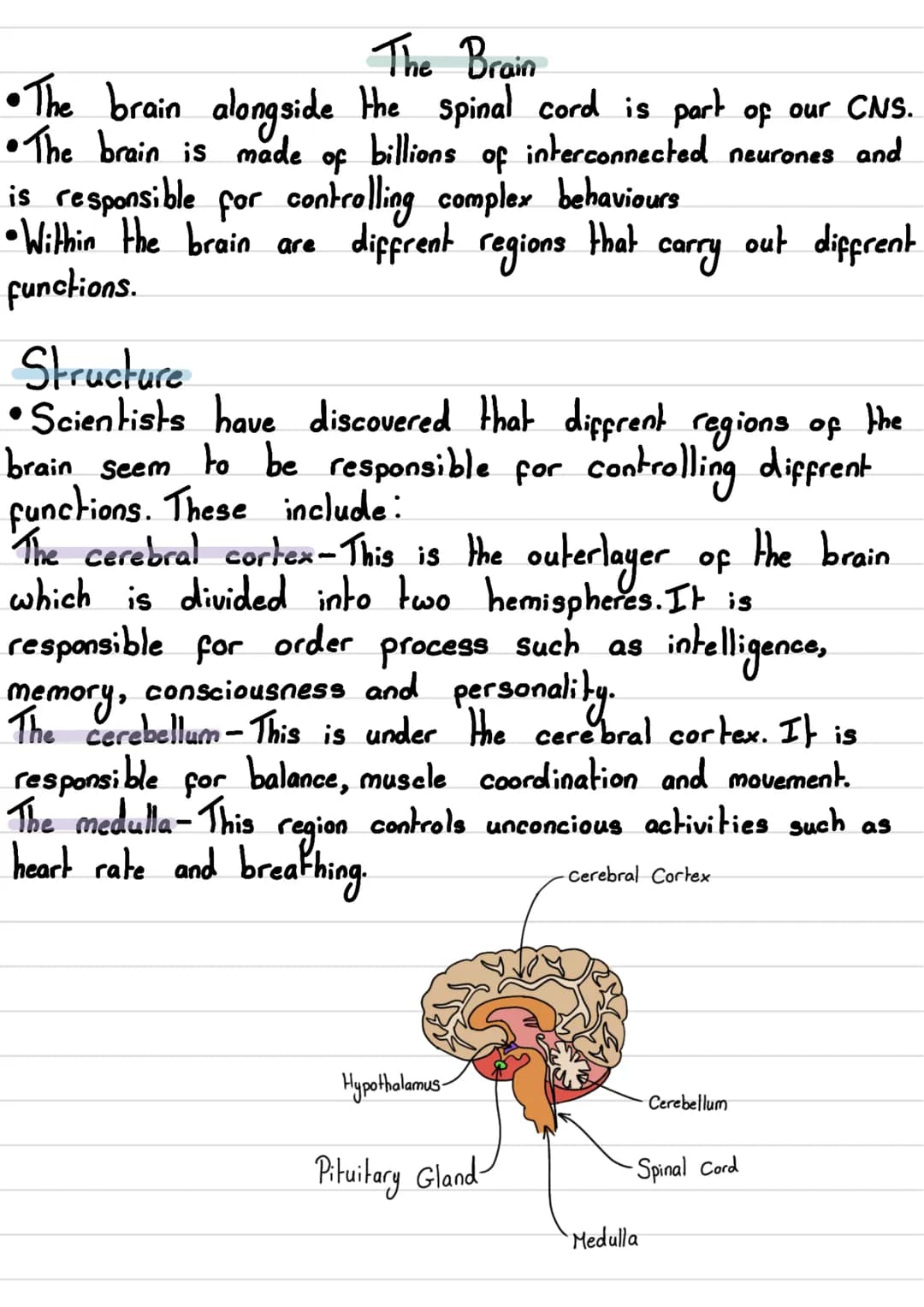
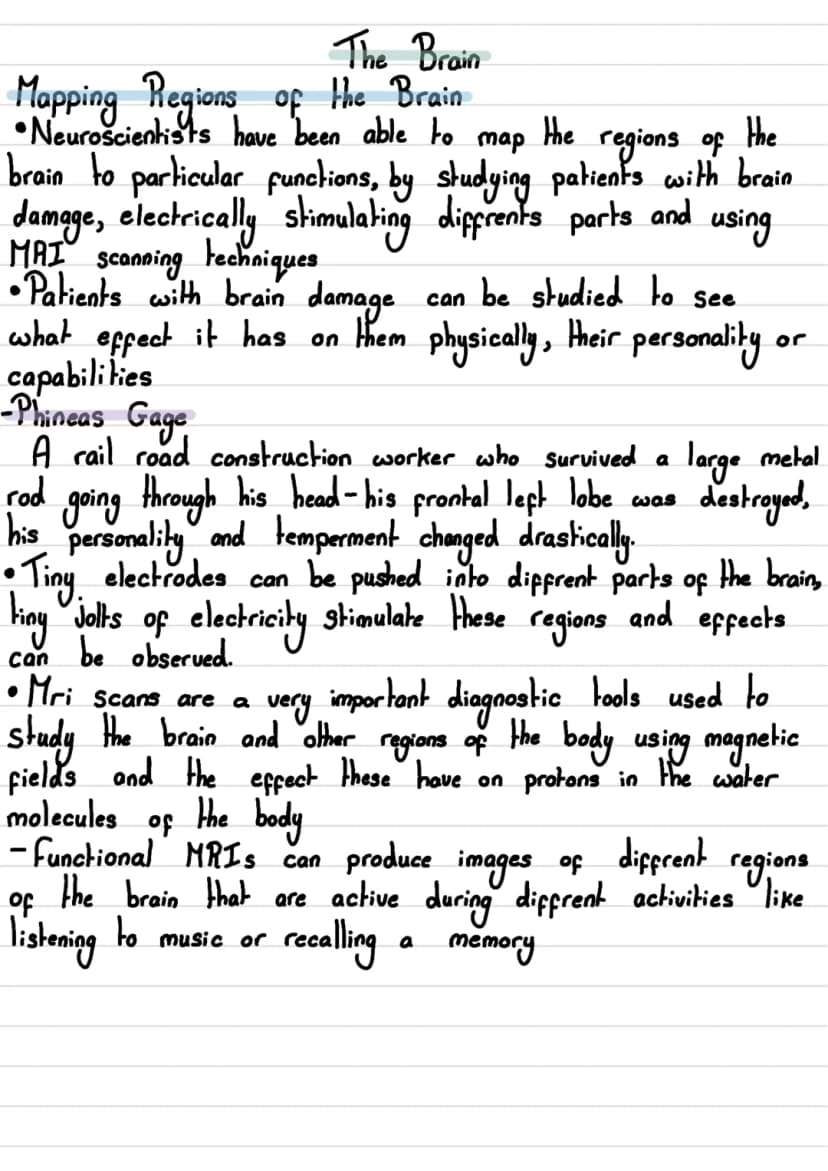
The Brain's Structure and Function in Human Nervous System Study
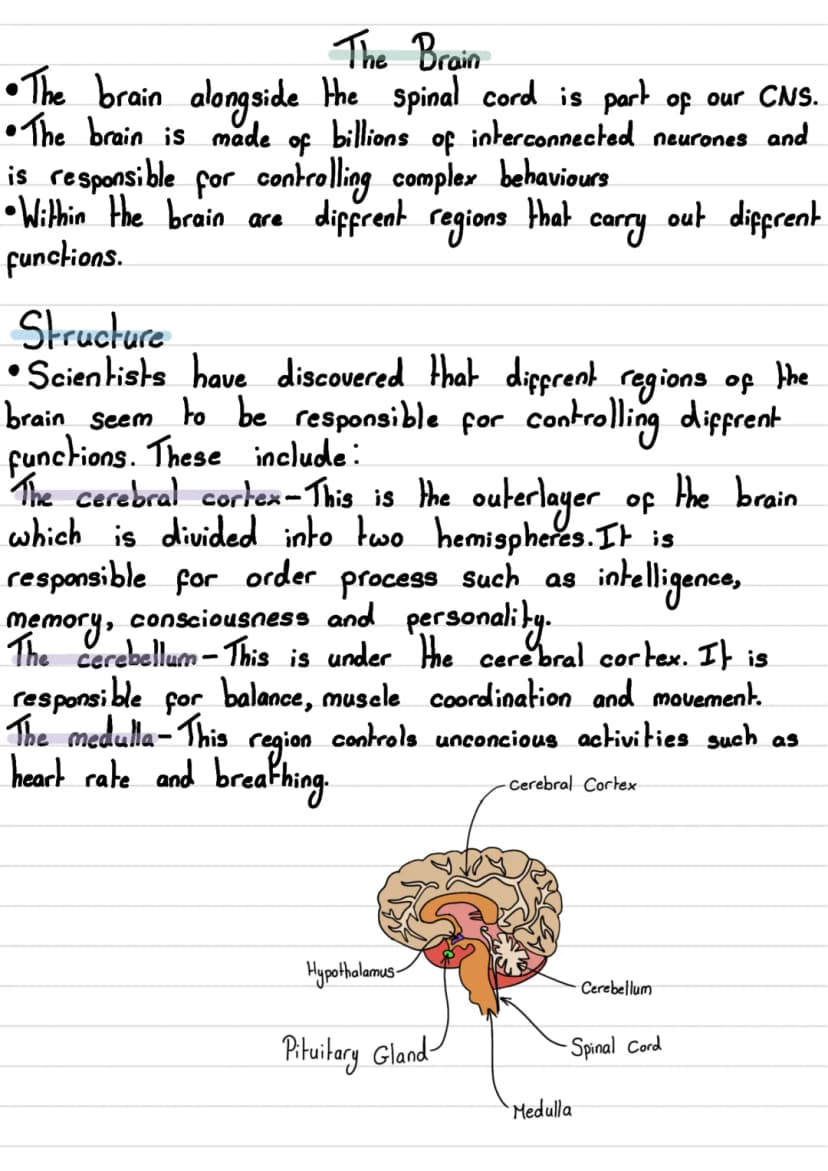
The brain, as part of the Central Nervous System (CNS), contains billions of interconnected neurons that control complex behaviors and bodily functions. Different regions of the brain have specialized roles, making it a fascinating subject in nervous system bbc Bitesize ks3 resources.
Vocabulary: The cerebral cortex is the outer layer of the brain responsible for higher-order functions like consciousness, memory, and personality.
The brain's structure includes several key regions: the cerebral cortex for higher thinking, the cerebellum for movement coordination and balance, and the medulla for automatic functions like breathing and heart rate. Scientists have mapped these regions through various methods, including studying brain damage cases and using advanced imaging techniques.
Modern neuroscience employs sophisticated tools like MRI scanning to understand brain function. These techniques allow researchers to observe active brain regions during different activities, providing valuable insights into neural processes and contributing to our understanding of the nervous system GCSE AQA curriculum.
9
of 10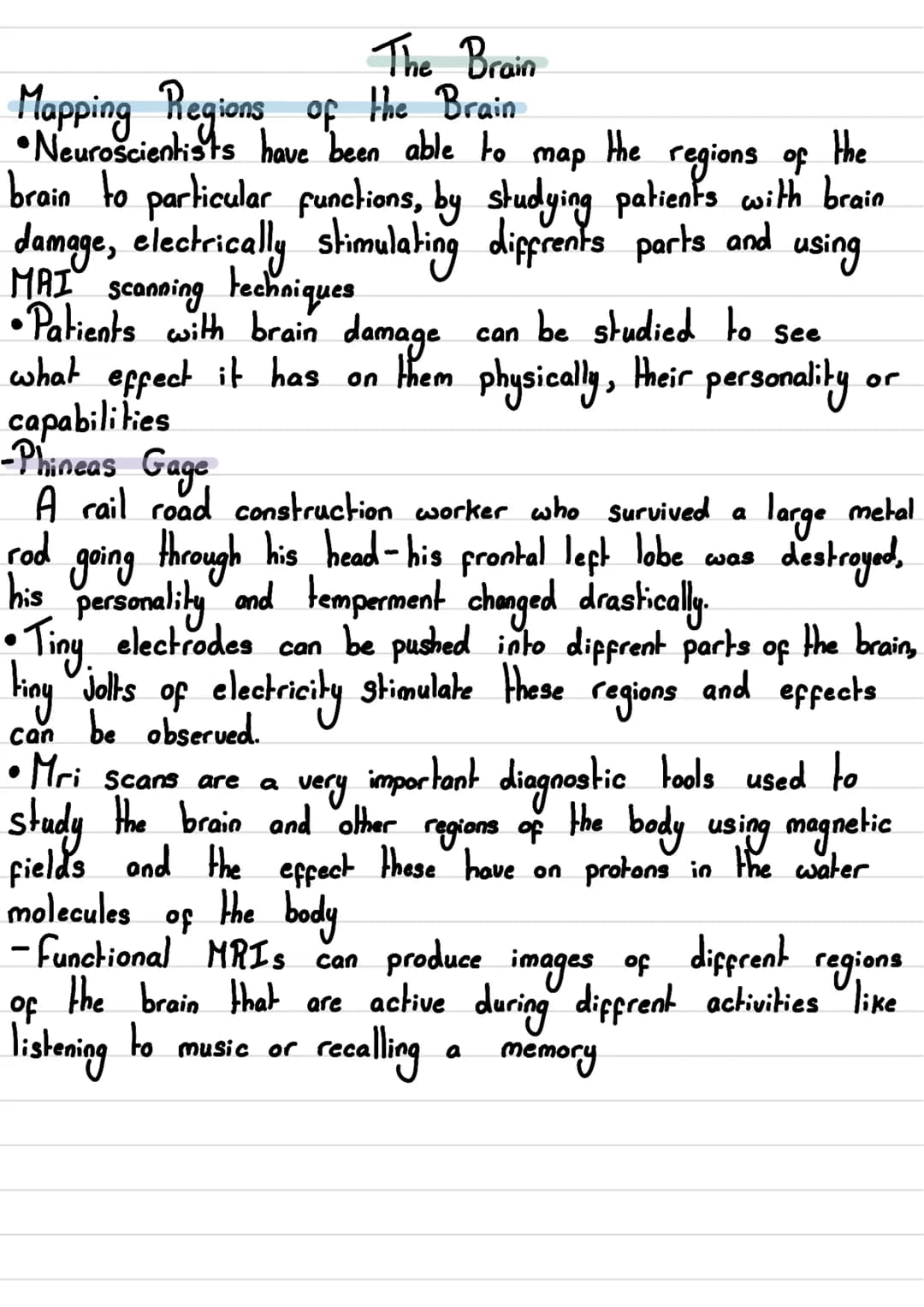
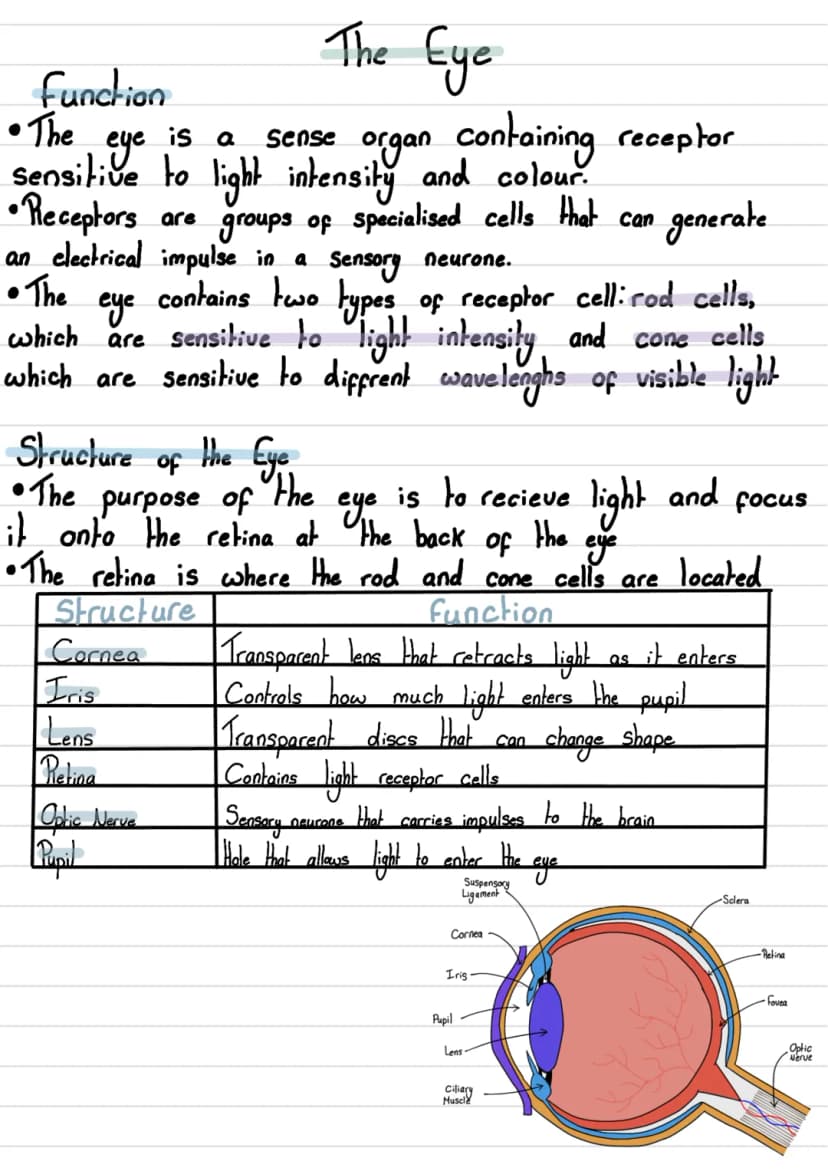
Understanding the Human Eye: Structure, Function, and Visual Processing
The human eye is a remarkable sensory organ that enables us to perceive the world through light detection and processing. This complex organ contains specialized cells and structures working together to convert light into electrical signals that our brain can interpret as visual information.
The eye's structure consists of several key components that work in harmony to enable vision. At the front, the transparent cornea serves as the initial point of light refraction. Behind it lies the iris, a colored muscular structure that controls the size of the pupil - the central opening that regulates how much light enters the eye. The lens, a flexible transparent disc, further focuses light onto the retina at the back of the eye.
Definition: The retina is a light-sensitive layer containing two types of photoreceptor cells: rod cells that detect light intensity and cone cells that perceive different wavelengths of visible light (colors).
The process of vision begins when light enters through the cornea and pupil, passing through the lens which focuses it onto the retina. The photoreceptor cells in the retina convert light energy into electrical impulses. These impulses travel through the optic nerve to the brain's visual cortex for processing. The fovea, a small depression in the retina, contains a high concentration of cone cells and is responsible for sharp, detailed central vision.
10
of 10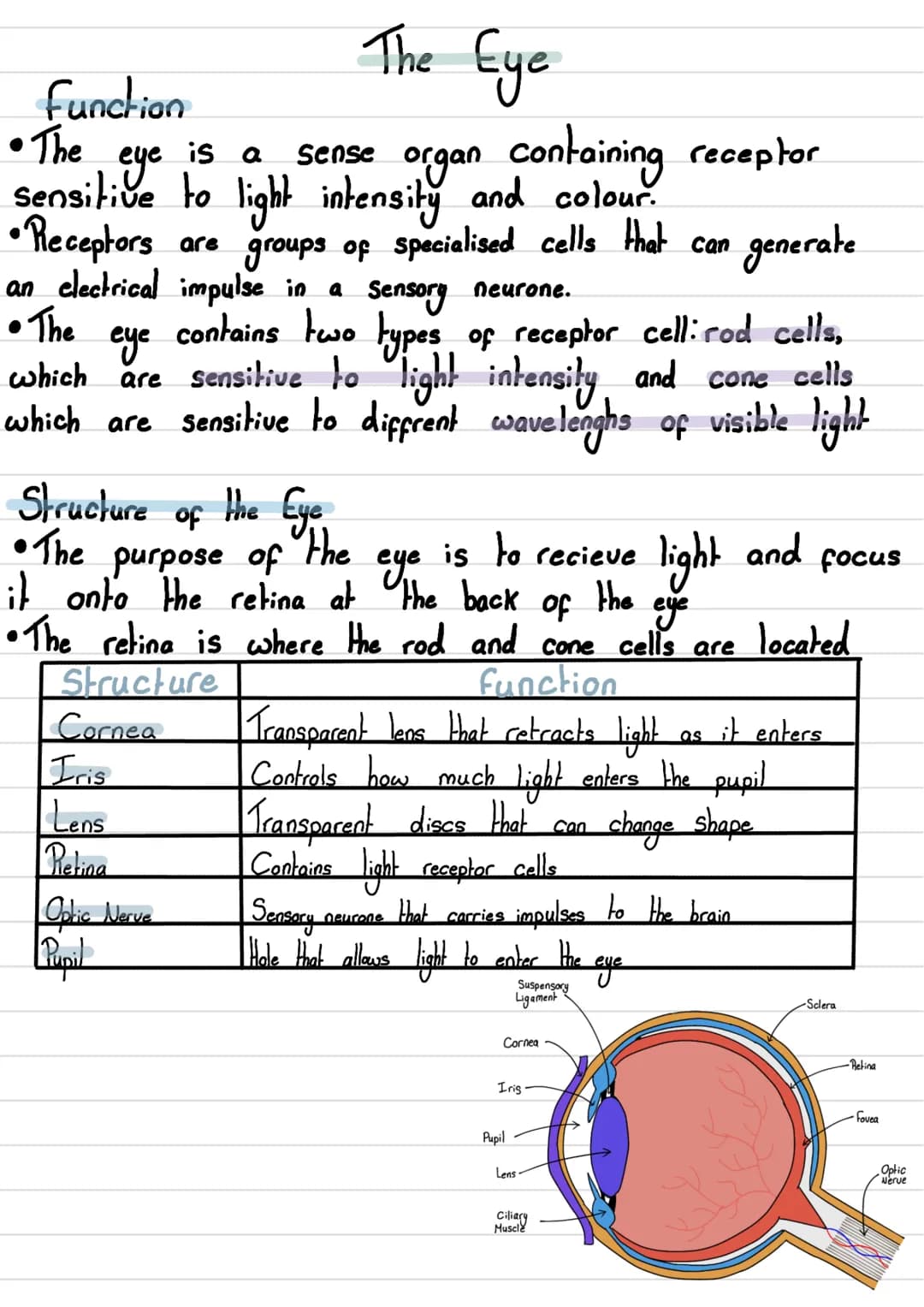
Visual Processing and Adaptation in the Human Eye
The eye's ability to adapt to different lighting conditions and focus on objects at varying distances demonstrates its sophisticated design. The ciliary muscles and suspensory ligaments work together to change the shape of the lens - a process called accommodation - allowing us to focus on both near and distant objects.
Example: When you look at a nearby book and then shift your gaze to a distant tree, your eye's lens automatically adjusts its shape to maintain clear vision. This adjustment happens through the coordinated action of the ciliary muscles and suspensory ligaments.
The distribution of rod and cone cells across the retina serves different visual functions. Rod cells, more numerous in the peripheral retina, function well in dim light and are responsible for night vision. Cone cells, concentrated in the fovea, provide color vision and sharp detail in bright light. This arrangement explains why we see better in our central vision during daylight but rely more on peripheral vision in low light conditions.
The eye's protection and maintenance systems are equally important. The tough outer layer called the sclera provides structure and protection. Tears help keep the cornea clean and moist, while the eyelids and eyelashes protect against foreign particles. These components ensure the eye can continue functioning effectively as our primary visual sensory organ.
We thought you’d never ask...
What is the Knowunity AI companion?
Our AI companion is specifically built for the needs of students. Based on the millions of content pieces we have on the platform we can provide truly meaningful and relevant answers to students. But its not only about answers, the companion is even more about guiding students through their daily learning challenges, with personalised study plans, quizzes or content pieces in the chat and 100% personalisation based on the students skills and developments.
Where can I download the Knowunity app?
You can download the app in the Google Play Store and in the Apple App Store.
Is Knowunity really free of charge?
That's right! Enjoy free access to study content, connect with fellow students, and get instant help – all at your fingertips.
Similar Content
Most popular content: Neurons
7BiologyHuman Biology Key Concepts
Explore essential topics in Human Biology, including DNA structure, gene expression, metabolic pathways, hormonal control, and the nervous system. This comprehensive summary covers cellular processes, immune responses, and cardiovascular health, providing a solid foundation for your studies. Ideal for exam preparation and revision.
S51,26035
BiologyNervous System Overview
Explore the intricate workings of the nervous system with this detailed mind map. Covering key concepts such as synaptic transmission, reflex arcs, and neuronal communication, this resource provides a comprehensive understanding of how neurons interact and transmit signals. Ideal for A Level Biology students preparing for exams.
132805
BiologyNeurobiology and Memory Insights
Explore the intricate workings of the human nervous system, focusing on memory processes, neurotransmitter functions, and the structure of neurons. This comprehensive summary covers key concepts such as short-term and long-term memory, synaptic transmission, and the impact of drugs on neural pathways. Ideal for students studying higher human biology.
S553021
BiologyCells, Growth & Nervous System
Explore key concepts in GCSE Edexcel Biology, including Mitosis, Growth in Animals and Plants, Stem Cells, and the Nervous System. Understand the structure and function of the Brain, Eye, and the process of Neurotransmission. This summary covers essential topics for effective revision and exam preparation.
111,22441
BiologyUnderstanding the Nervous System
Explore the structure and function of the nervous system, including the central nervous system, neurons, synapses, and reflex arcs. This summary covers key concepts such as neural transmission and the roles of sensory and motor neurons in response mechanisms. Ideal for biology students seeking to grasp the essentials of human nervous system functionality.
11993
BiologyNeurons and CNS Overview
Explore the structure and function of the Central Nervous System (CNS) and neurons. This summary covers the roles of sensory, motor, and relay neurons, as well as the mechanisms of neural transmission and synaptic communication. Ideal for students studying human biology and neuroscience.
122784
BiologyNeurones and Neurodegenerative Diseases
Explore the structure and function of neurones, including sensory, motor, and relay types. Understand the mechanisms of neural transmission and reflex arcs. This summary also covers neurodegenerative diseases like ALS and MS, highlighting their impact on the nervous system and muscle function. Ideal for GCSE Biology students.
9935
Most popular content in Biology
9C
BiologyCell Biology and Cell structure
cell structures
93,2490
1
Biology1.cells Gcse biology question cards
combined science higher biology
92,3534
BiologyAQA Biology: Key Concepts
Explore essential AQA Biology topics including Photosynthesis, Respiration, Homeostasis, Genetics, and Ecology. This comprehensive knowledge organizer covers key concepts such as energy transfer, hormonal control, and genetic variation, providing a solid foundation for your studies. Ideal for exam preparation and understanding biological processes.
108,794306
T
BiologyThe functions of subcellular structures - B1 Biology
Flashcards on the different functions of subcellular structures: cell membrane, nucleus, mitochondria, ribosomes, cytoplasm, permant vacuole, chloroplasts and cell wall.
102,7955
BiologyA-Level Biology Year 1 Overview
Comprehensive summary of AQA A-Level Biology Year 1, covering key topics such as cellular structure, protein synthesis, immune response, gas exchange, and more. Ideal for exam preparation and understanding biological concepts. Includes detailed insights into cellular processes, biological classification, and the circulatory system.
1214,891694
T
BiologyTypes of cells
biology
101,2090
B
BiologyBiology Paper 1 quiz
this is a simple quiz on key knowledge needed for paper 1
102,7745
BiologyBiology paper 1 Summary
Notes for Biology paper 1 contains the full course for AQA higher combined!
104,130106
C
BiologyCells part 1 function of cells.
About cells and function of cells etc.
119861
Most popular content
9 Sociology
Sociology of Education Overview
Explore comprehensive A-Level Sociology notes on the education system, covering key theories, policies, and sociological perspectives. This resource includes insights on marketisation, gender roles, cultural deprivation, and educational inequalities, providing a thorough understanding of how education shapes social stratification and individual achievement. Ideal for exam preparation and in-depth study.
12102,8693,040
SociologySociology of Families: Comprehensive Revision
Dive into an extensive overview of family dynamics, perspectives, and patterns in sociology. This resource covers key concepts such as family diversity, gender roles, marriage, and the impact of social policies on family structures. Perfect for A-Level Sociology students preparing for Paper 2.
1273,6662,307
CriminologyCriminology: Crime & Punishment Overview
Comprehensive mindmaps covering key concepts in the Crime and Punishment topic for WJEC Criminology Unit 4. This resource includes detailed insights into the Criminal Justice System, crime prevention strategies, sentencing models, and the roles of various agencies. Ideal for A-Level revision, ensuring you grasp essential theories and legislative processes to excel in your exams.
1254,8721,059
SociologyComprehensive Crime & Deviance Overview
Explore an extensive revision of crime and deviance topics, including theories, types of crime, and the impact of media. This resource covers key concepts such as Marxism, functionalism, gender and crime, and the influence of globalization on criminal behavior. Ideal for students seeking a thorough understanding of criminology and its various theories. Type: Full Topic Revision.
1251,6541,399
C
BiologyCell Biology and Cell structure
cell structures
93,2490
 English Literature
An Inspector Calls: Character Insights
Explore in-depth analysis and key quotes for characters in J.B. Priestley's 'An Inspector Calls'. This resource covers Gerald Croft, Inspector Goole, Sheila Birling, Mrs. Birling, Eric Birling, and Eva Smith, focusing on themes of class, gender roles, and social responsibility. Ideal for students aiming for Grade 8 and above.
1025,429907
CriminologyWJEC Unit 4 Criminology
Criminology unit 4 detailed revision note
127,151125
CriminologyCriminology Theories Overview
Explore key criminology theories and their implications on crime and deviance. This comprehensive summary covers biological, psychological, and sociological perspectives, including labelling theory, right realism, and the impact of social campaigns on policy development. Ideal for A-Level criminology students seeking to understand the complexities of criminal behaviour and the factors influencing crime prevention strategies.
129,760210
English LiteratureRomeo and Juliet: Key themes
Key Romeo and Juliet themes and analysed quotes
106,708198
Can't find what you're looking for? Explore other subjects.
Students love us — and so will you.
4.6/5App Store
4.7/5Google Play
The app is very easy to use and well designed. I have found everything I was looking for so far and have been able to learn a lot from the presentations! I will definitely use the app for a class assignment! And of course it also helps a lot as an inspiration.
Stefan SiOS user
This app is really great. There are so many study notes and help [...]. My problem subject is French, for example, and the app has so many options for help. Thanks to this app, I have improved my French. I would recommend it to anyone.
Samantha KlichAndroid user
Wow, I am really amazed. I just tried the app because I've seen it advertised many times and was absolutely stunned. This app is THE HELP you want for school and above all, it offers so many things, such as workouts and fact sheets, which have been VERY helpful to me personally.
AnnaiOS user
Biology2,188 views·Updated Jun 28, 2026·21 pagesAwesome B5 Science Nervous System Notes and Study Guide for GCSE
The nervous system is a complex network that coordinates all bodily functions and responses through electrical signals.
The human nervous system consists of two main parts: the central nervous system (brain and spinal cord) and the peripheral nervous system (nerves...
1
of 10
Sign up to see the content. It's free!
- Access to all documents
- Improve your grades
- Join milions of students
Understanding the Human Nervous System
The human nervous system is a sophisticated network that enables us to interact with our environment and coordinate bodily functions. This complex system consists of two main components: the Central Nervous System (CNS) and the Peripheral Nervous System (PNS).
Definition: The Central Nervous System (CNS) comprises the brain and spinal cord, while the Peripheral Nervous System (PNS) includes all nerves throughout the body.
The nervous system transmits information through specialized cells called neurons, which carry electrical impulses throughout the body. These neurons have distinct structural features including a cell body, axons (which can extend over a meter in length), and dendrites. The axons are protected by a myelin sheath, a fatty insulating layer that helps speed up signal transmission.
Vocabulary: Neurons are the basic functional units of the nervous system. A bundle of neurons forms a nerve, which serves as an information highway in the body.
2
of 10Sign up to see the content. It's free!
- Access to all documents
- Improve your grades
- Join milions of students
Nervous System Communication Pathways
The nervous system follows a specific pathway for processing and responding to stimuli. This pathway begins with receptors detecting environmental changes and converts them into electrical impulses that travel to the CNS for processing.
Example: When you touch a hot surface, receptors in your skin detect the heat (stimulus), send signals to your CNS (coordinator), which then triggers muscles (effectors) to pull your hand away (response).
The nervous system GCSE curriculum emphasizes understanding this stimulus-response pathway: Stimulus → Receptor → Coordinator → Effector → Response
Highlight: The CNS acts as the body's command center, coordinating responses through either muscle contractions or gland secretions.
3
of 10Sign up to see the content. It's free!
- Access to all documents
- Improve your grades
- Join milions of students
The Reflex Arc Mechanism
The reflex arc represents a fundamental pathway in the nervous system GCSE AQA syllabus, demonstrating how the body responds to stimuli without conscious thought. This involuntary response mechanism helps protect the body from potential harm through rapid, automatic reactions.
Definition: A reflex arc is a neural pathway that produces a rapid, involuntary response to a stimulus without involving the conscious part of the brain.
The process follows six key steps:
- Stimulus detection by skin receptors
- Signal transmission via sensory neurons
- Relay neuron processing in the spinal cord
- Synaptic transmission to motor neurons
- Signal conduction to effector muscles
- Muscle contraction response
4
of 10Sign up to see the content. It's free!
- Access to all documents
- Improve your grades
- Join milions of students
Neuron Types and Their Roles in the Reflex Arc
The reflex arc GCSE material identifies three distinct types of neurons, each with specific structures and functions in the nervous system:
Sensory neurons carry information from sense organs to the CNS. They feature long axons and specialized receptor cells at their endings. These neurons have a distinctive structure with a cell body positioned along their length.
Vocabulary: Nodes of Ranvier are gaps in the myelin sheath that allow for saltatory conduction, increasing the speed of nerve impulse transmission.
Motor neurons transmit signals from the CNS to effectors (muscles and glands). They possess large cell bodies and extensive dendrites for receiving signals. Relay neurons, found within the CNS, form the crucial connecting link between sensory and motor neurons, featuring shorter axons and multiple dendrites.
Highlight: The myelin sheath, formed by Schwann cells, is crucial for rapid signal transmission in both sensory and motor neurons.
5
of 10Sign up to see the content. It's free!
- Access to all documents
- Improve your grades
- Join milions of students
Understanding Synapses and the Reflex Arc in the Nervous System GCSE
The intricate communication system within our bodies relies heavily on specialized structures called synapses. These microscopic junctions between neurons are fundamental to understanding how the nervous system functions. Neurons never physically touch each other - instead, they're separated by tiny gaps called synaptic clefts where crucial chemical messaging occurs.
In a reflex arc, multiple synapses work together to create rapid, automatic responses. The process involves three types of neurons: sensory neurons that detect stimuli, relay neurons that process information, and motor neurons that trigger responses. This chain of communication is essential for survival reactions like quickly withdrawing your hand from a hot surface.
Definition: A synapse is a junction between two neurons where chemical neurotransmitters facilitate signal transmission across a tiny gap called the synaptic cleft.
The synaptic transmission process follows a precise sequence. When an electrical impulse reaches the end of the presynaptic neuron, it triggers the release of neurotransmitters from specialized storage vesicles. These chemical messengers diffuse across the synaptic cleft and bind to receptor molecules on the postsynaptic membrane, generating a new electrical impulse in the receiving neuron.
6
of 10Sign up to see the content. It's free!
- Access to all documents
- Improve your grades
- Join milions of students
Detailed Mechanism of Synaptic Transmission in the Human Nervous System
The sophisticated process of synaptic transmission involves multiple coordinated steps that ensure accurate signal propagation. Understanding this mechanism is crucial for GCSE Biology nervous system exam questions.
Highlight: Synaptic transmission is unidirectional - signals can only travel from the presynaptic to the postsynaptic neuron, ensuring organized information flow in the nervous system.
When an action potential arrives at the presynaptic terminal, calcium channels open, triggering vesicles containing neurotransmitters to fuse with the membrane. The released neurotransmitters diffuse across the synaptic cleft and bind to specific receptors on the postsynaptic membrane. This binding initiates a new electrical impulse in the receiving neuron, continuing the signal transmission.
After transmission, neurotransmitters are either recycled back into the presynaptic neuron or broken down by enzymes in the synaptic cleft. This cleanup process prevents continuous stimulation and prepares the synapse for the next signal.
7
of 10Sign up to see the content. It's free!
- Access to all documents
- Improve your grades
- Join milions of students
Reaction Time and Neural Response in Nervous System Study
Reaction time, a crucial measure of nervous system efficiency, represents the interval between stimulus detection and response initiation. This concept is frequently tested in Nervous System GCSE Exam questions PDF materials.
Example: The ruler drop test is a common method to measure reaction time. A faster catch indicates quicker neural processing and response.
Multiple factors can influence reaction time, including age, stress levels, and chemical substances like caffeine. When conducting reaction time experiments, it's essential to control variables such as using the dominant hand and maintaining consistent testing conditions. These considerations ensure reliable results for scientific investigation.
Measuring reaction time in milliseconds provides more precise data than using seconds, allowing for detailed analysis of neural response speeds. This precision is particularly important when studying the effects of different factors on nervous system performance.
8
of 10Sign up to see the content. It's free!
- Access to all documents
- Improve your grades
- Join milions of students
The Brain's Structure and Function in Human Nervous System Study
The brain, as part of the Central Nervous System (CNS), contains billions of interconnected neurons that control complex behaviors and bodily functions. Different regions of the brain have specialized roles, making it a fascinating subject in nervous system bbc Bitesize ks3 resources.
Vocabulary: The cerebral cortex is the outer layer of the brain responsible for higher-order functions like consciousness, memory, and personality.
The brain's structure includes several key regions: the cerebral cortex for higher thinking, the cerebellum for movement coordination and balance, and the medulla for automatic functions like breathing and heart rate. Scientists have mapped these regions through various methods, including studying brain damage cases and using advanced imaging techniques.
Modern neuroscience employs sophisticated tools like MRI scanning to understand brain function. These techniques allow researchers to observe active brain regions during different activities, providing valuable insights into neural processes and contributing to our understanding of the nervous system GCSE AQA curriculum.
9
of 10Sign up to see the content. It's free!
- Access to all documents
- Improve your grades
- Join milions of students
Understanding the Human Eye: Structure, Function, and Visual Processing
The human eye is a remarkable sensory organ that enables us to perceive the world through light detection and processing. This complex organ contains specialized cells and structures working together to convert light into electrical signals that our brain can interpret as visual information.
The eye's structure consists of several key components that work in harmony to enable vision. At the front, the transparent cornea serves as the initial point of light refraction. Behind it lies the iris, a colored muscular structure that controls the size of the pupil - the central opening that regulates how much light enters the eye. The lens, a flexible transparent disc, further focuses light onto the retina at the back of the eye.
Definition: The retina is a light-sensitive layer containing two types of photoreceptor cells: rod cells that detect light intensity and cone cells that perceive different wavelengths of visible light (colors).
The process of vision begins when light enters through the cornea and pupil, passing through the lens which focuses it onto the retina. The photoreceptor cells in the retina convert light energy into electrical impulses. These impulses travel through the optic nerve to the brain's visual cortex for processing. The fovea, a small depression in the retina, contains a high concentration of cone cells and is responsible for sharp, detailed central vision.
10
of 10Sign up to see the content. It's free!
- Access to all documents
- Improve your grades
- Join milions of students
Visual Processing and Adaptation in the Human Eye
The eye's ability to adapt to different lighting conditions and focus on objects at varying distances demonstrates its sophisticated design. The ciliary muscles and suspensory ligaments work together to change the shape of the lens - a process called accommodation - allowing us to focus on both near and distant objects.
Example: When you look at a nearby book and then shift your gaze to a distant tree, your eye's lens automatically adjusts its shape to maintain clear vision. This adjustment happens through the coordinated action of the ciliary muscles and suspensory ligaments.
The distribution of rod and cone cells across the retina serves different visual functions. Rod cells, more numerous in the peripheral retina, function well in dim light and are responsible for night vision. Cone cells, concentrated in the fovea, provide color vision and sharp detail in bright light. This arrangement explains why we see better in our central vision during daylight but rely more on peripheral vision in low light conditions.
The eye's protection and maintenance systems are equally important. The tough outer layer called the sclera provides structure and protection. Tears help keep the cornea clean and moist, while the eyelids and eyelashes protect against foreign particles. These components ensure the eye can continue functioning effectively as our primary visual sensory organ.
We thought you’d never ask...
What is the Knowunity AI companion?
Our AI companion is specifically built for the needs of students. Based on the millions of content pieces we have on the platform we can provide truly meaningful and relevant answers to students. But its not only about answers, the companion is even more about guiding students through their daily learning challenges, with personalised study plans, quizzes or content pieces in the chat and 100% personalisation based on the students skills and developments.
Where can I download the Knowunity app?
You can download the app in the Google Play Store and in the Apple App Store.
Is Knowunity really free of charge?
That's right! Enjoy free access to study content, connect with fellow students, and get instant help – all at your fingertips.
Similar Content
Most popular content: Neurons
7BiologyHuman Biology Key Concepts
Explore essential topics in Human Biology, including DNA structure, gene expression, metabolic pathways, hormonal control, and the nervous system. This comprehensive summary covers cellular processes, immune responses, and cardiovascular health, providing a solid foundation for your studies. Ideal for exam preparation and revision.
S51,26035
BiologyNervous System Overview
Explore the intricate workings of the nervous system with this detailed mind map. Covering key concepts such as synaptic transmission, reflex arcs, and neuronal communication, this resource provides a comprehensive understanding of how neurons interact and transmit signals. Ideal for A Level Biology students preparing for exams.
132805
BiologyNeurobiology and Memory Insights
Explore the intricate workings of the human nervous system, focusing on memory processes, neurotransmitter functions, and the structure of neurons. This comprehensive summary covers key concepts such as short-term and long-term memory, synaptic transmission, and the impact of drugs on neural pathways. Ideal for students studying higher human biology.
S553021
BiologyCells, Growth & Nervous System
Explore key concepts in GCSE Edexcel Biology, including Mitosis, Growth in Animals and Plants, Stem Cells, and the Nervous System. Understand the structure and function of the Brain, Eye, and the process of Neurotransmission. This summary covers essential topics for effective revision and exam preparation.
111,22441
BiologyUnderstanding the Nervous System
Explore the structure and function of the nervous system, including the central nervous system, neurons, synapses, and reflex arcs. This summary covers key concepts such as neural transmission and the roles of sensory and motor neurons in response mechanisms. Ideal for biology students seeking to grasp the essentials of human nervous system functionality.
11993
BiologyNeurons and CNS Overview
Explore the structure and function of the Central Nervous System (CNS) and neurons. This summary covers the roles of sensory, motor, and relay neurons, as well as the mechanisms of neural transmission and synaptic communication. Ideal for students studying human biology and neuroscience.
122784
BiologyNeurones and Neurodegenerative Diseases
Explore the structure and function of neurones, including sensory, motor, and relay types. Understand the mechanisms of neural transmission and reflex arcs. This summary also covers neurodegenerative diseases like ALS and MS, highlighting their impact on the nervous system and muscle function. Ideal for GCSE Biology students.
9935
Most popular content in Biology
9C
BiologyCell Biology and Cell structure
cell structures
93,2490
1
Biology1.cells Gcse biology question cards
combined science higher biology
92,3534
BiologyAQA Biology: Key Concepts
Explore essential AQA Biology topics including Photosynthesis, Respiration, Homeostasis, Genetics, and Ecology. This comprehensive knowledge organizer covers key concepts such as energy transfer, hormonal control, and genetic variation, providing a solid foundation for your studies. Ideal for exam preparation and understanding biological processes.
108,794306
T
BiologyThe functions of subcellular structures - B1 Biology
Flashcards on the different functions of subcellular structures: cell membrane, nucleus, mitochondria, ribosomes, cytoplasm, permant vacuole, chloroplasts and cell wall.
102,7955
BiologyA-Level Biology Year 1 Overview
Comprehensive summary of AQA A-Level Biology Year 1, covering key topics such as cellular structure, protein synthesis, immune response, gas exchange, and more. Ideal for exam preparation and understanding biological concepts. Includes detailed insights into cellular processes, biological classification, and the circulatory system.
1214,891694
T
BiologyTypes of cells
biology
101,2090
B
BiologyBiology Paper 1 quiz
this is a simple quiz on key knowledge needed for paper 1
102,7745
BiologyBiology paper 1 Summary
Notes for Biology paper 1 contains the full course for AQA higher combined!
104,130106
C
BiologyCells part 1 function of cells.
About cells and function of cells etc.
119861
Most popular content
9SociologySociology of Education Overview
Explore comprehensive A-Level Sociology notes on the education system, covering key theories, policies, and sociological perspectives. This resource includes insights on marketisation, gender roles, cultural deprivation, and educational inequalities, providing a thorough understanding of how education shapes social stratification and individual achievement. Ideal for exam preparation and in-depth study.
12102,8693,040
SociologySociology of Families: Comprehensive Revision
Dive into an extensive overview of family dynamics, perspectives, and patterns in sociology. This resource covers key concepts such as family diversity, gender roles, marriage, and the impact of social policies on family structures. Perfect for A-Level Sociology students preparing for Paper 2.
1273,6662,307
CriminologyCriminology: Crime & Punishment Overview
Comprehensive mindmaps covering key concepts in the Crime and Punishment topic for WJEC Criminology Unit 4. This resource includes detailed insights into the Criminal Justice System, crime prevention strategies, sentencing models, and the roles of various agencies. Ideal for A-Level revision, ensuring you grasp essential theories and legislative processes to excel in your exams.
1254,8721,059
SociologyComprehensive Crime & Deviance Overview
Explore an extensive revision of crime and deviance topics, including theories, types of crime, and the impact of media. This resource covers key concepts such as Marxism, functionalism, gender and crime, and the influence of globalization on criminal behavior. Ideal for students seeking a thorough understanding of criminology and its various theories. Type: Full Topic Revision.
1251,6541,399
C
BiologyCell Biology and Cell structure
cell structures
93,2490
English LiteratureAn Inspector Calls: Character Insights
Explore in-depth analysis and key quotes for characters in J.B. Priestley's 'An Inspector Calls'. This resource covers Gerald Croft, Inspector Goole, Sheila Birling, Mrs. Birling, Eric Birling, and Eva Smith, focusing on themes of class, gender roles, and social responsibility. Ideal for students aiming for Grade 8 and above.
1025,429907
CriminologyWJEC Unit 4 Criminology
Criminology unit 4 detailed revision note
127,151125
CriminologyCriminology Theories Overview
Explore key criminology theories and their implications on crime and deviance. This comprehensive summary covers biological, psychological, and sociological perspectives, including labelling theory, right realism, and the impact of social campaigns on policy development. Ideal for A-Level criminology students seeking to understand the complexities of criminal behaviour and the factors influencing crime prevention strategies.
129,760210
English LiteratureRomeo and Juliet: Key themes
Key Romeo and Juliet themes and analysed quotes
106,708198
Can't find what you're looking for? Explore other subjects.
Students love us — and so will you.
4.6/5App Store
4.7/5Google Play
The app is very easy to use and well designed. I have found everything I was looking for so far and have been able to learn a lot from the presentations! I will definitely use the app for a class assignment! And of course it also helps a lot as an inspiration.
Stefan SiOS user
This app is really great. There are so many study notes and help [...]. My problem subject is French, for example, and the app has so many options for help. Thanks to this app, I have improved my French. I would recommend it to anyone.
Samantha KlichAndroid user
Wow, I am really amazed. I just tried the app because I've seen it advertised many times and was absolutely stunned. This app is THE HELP you want for school and above all, it offers so many things, such as workouts and fact sheets, which have been VERY helpful to me personally.
AnnaiOS user