
Welcome to Human Anatomy and Physiology! This field explores how...
 Biology359 views·Updated Jun 15, 2026·5 pages
Understanding Human Anatomy and Physiology

Kailyn@kailynd3lrey
1 / 5
1
of 5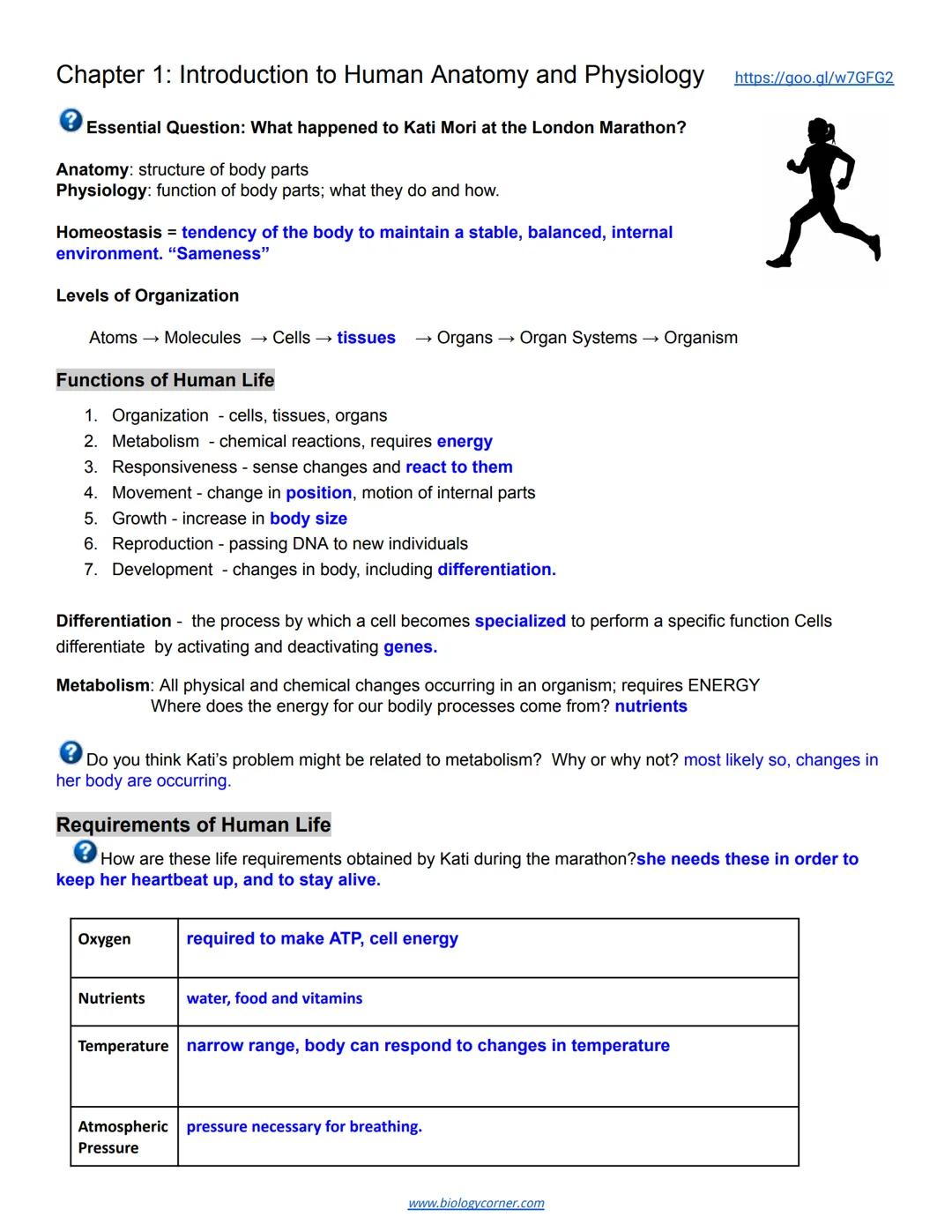
Introduction to Human Anatomy and Physiology
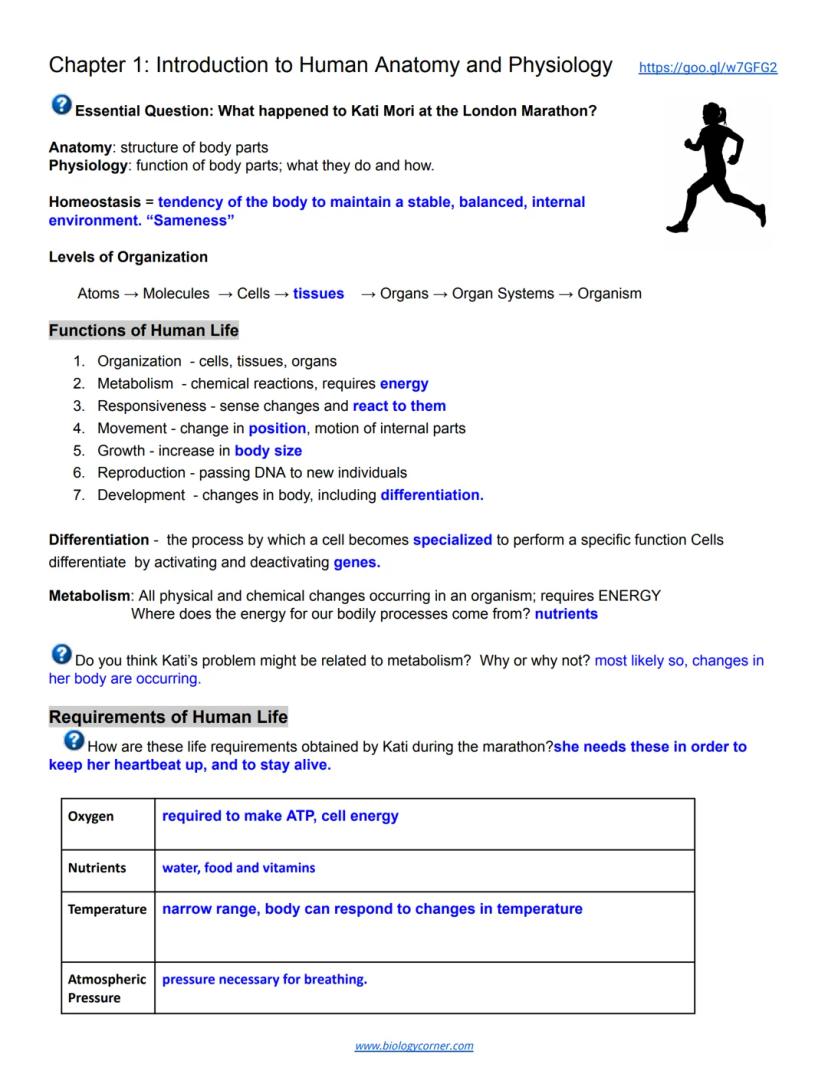
Ever wonder why marathon runners sometimes collapse? The story of Kati Mori at the London Marathon introduces us to how our bodies work. Anatomy deals with body structures while physiology examines how those parts function.
Your body constantly works to maintain homeostasis – a balanced internal environment. This happens across multiple levels of organization, from tiny atoms to complete organ systems. Everything in your body follows this pattern: atoms → molecules → cells → tissues → organs → organ systems → organism.
All living humans perform seven essential functions: organization, metabolism, responsiveness, movement, growth, reproduction, and development. Metabolism involves all physical and chemical changes occurring in your body and requires energy from nutrients.
💡 Quick Fact: Cells become specialized through a process called differentiation, where they activate or deactivate specific genes to perform unique functions in your body!
Your body requires specific elements to survive: oxygen (for cell energy), nutrients (water, food, vitamins), proper temperature, and atmospheric pressure. These requirements are especially critical during intense physical activities like marathons.
2
of 5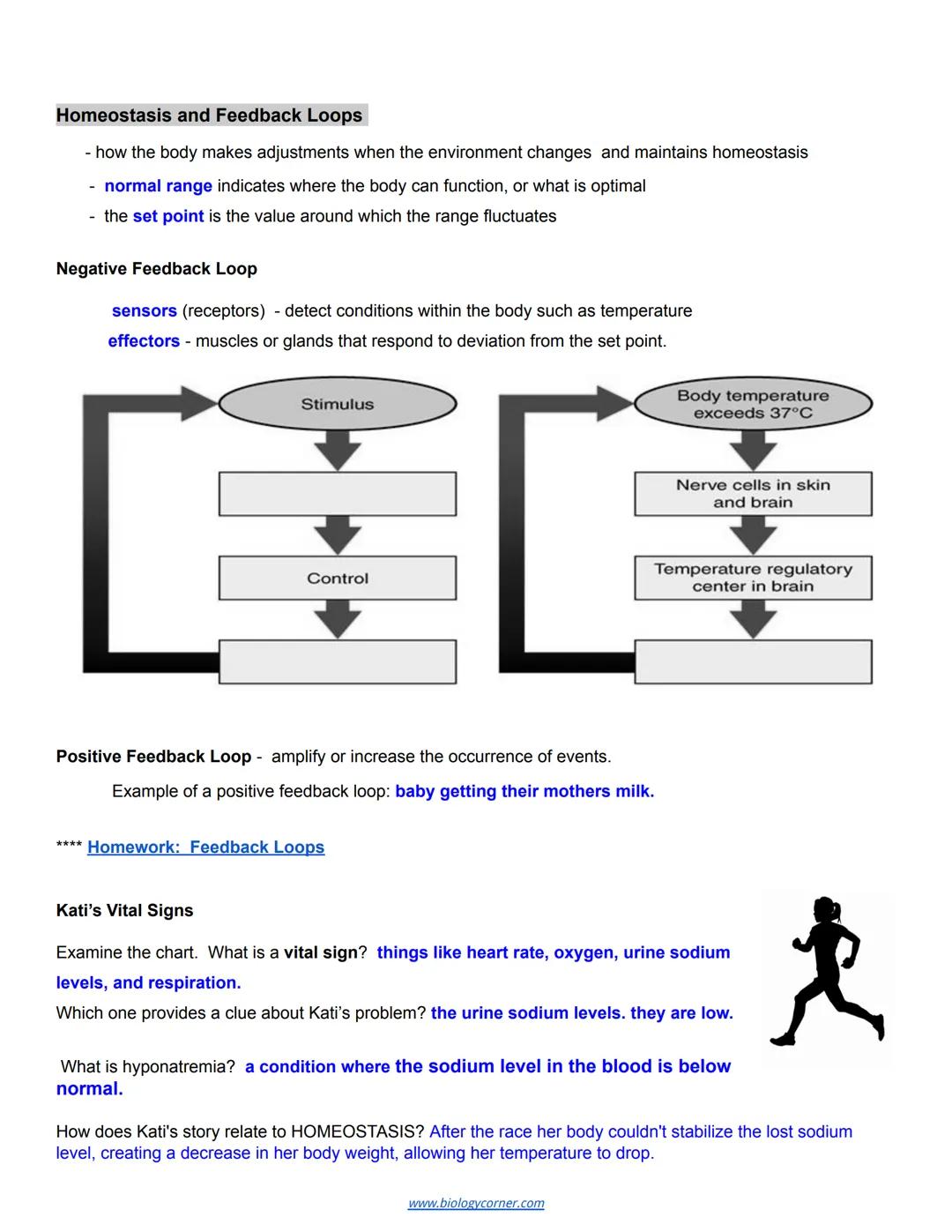
Homeostasis and Feedback Loops
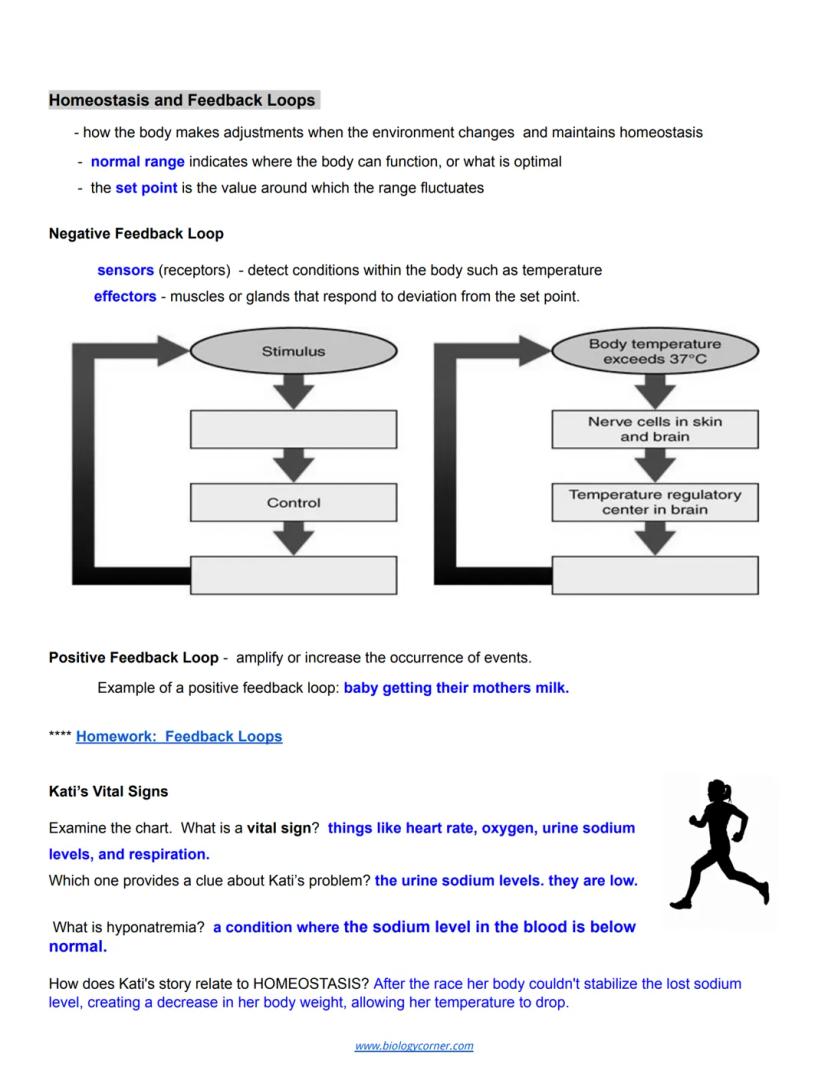
Your body maintains balance through amazing self-correcting systems. Homeostasis works within a normal range with a set point—think of it like a thermostat for your body that keeps conditions just right.
Most body functions work through negative feedback loops. These systems detect when something's off, then trigger responses to correct it. For example, when your body temperature rises above 37°C, receptors in your skin and brain detect this change. Your brain's temperature center then activates cooling mechanisms like sweating.
Sometimes your body uses positive feedback loops that amplify responses instead of reducing them. A good example is breastfeeding—when a baby nurses, it triggers more milk production, not less!
💡 Case Study Connection: Kati's marathon collapse relates to homeostasis failure. Her low urine sodium levels indicated hyponatremia—when sodium in blood drops too low. Without proper sodium balance, her body couldn't maintain normal temperature or function properly.
Understanding these feedback systems helps explain why small changes in your body chemistry can have serious consequences when your regulatory systems get overwhelmed.
3
of 5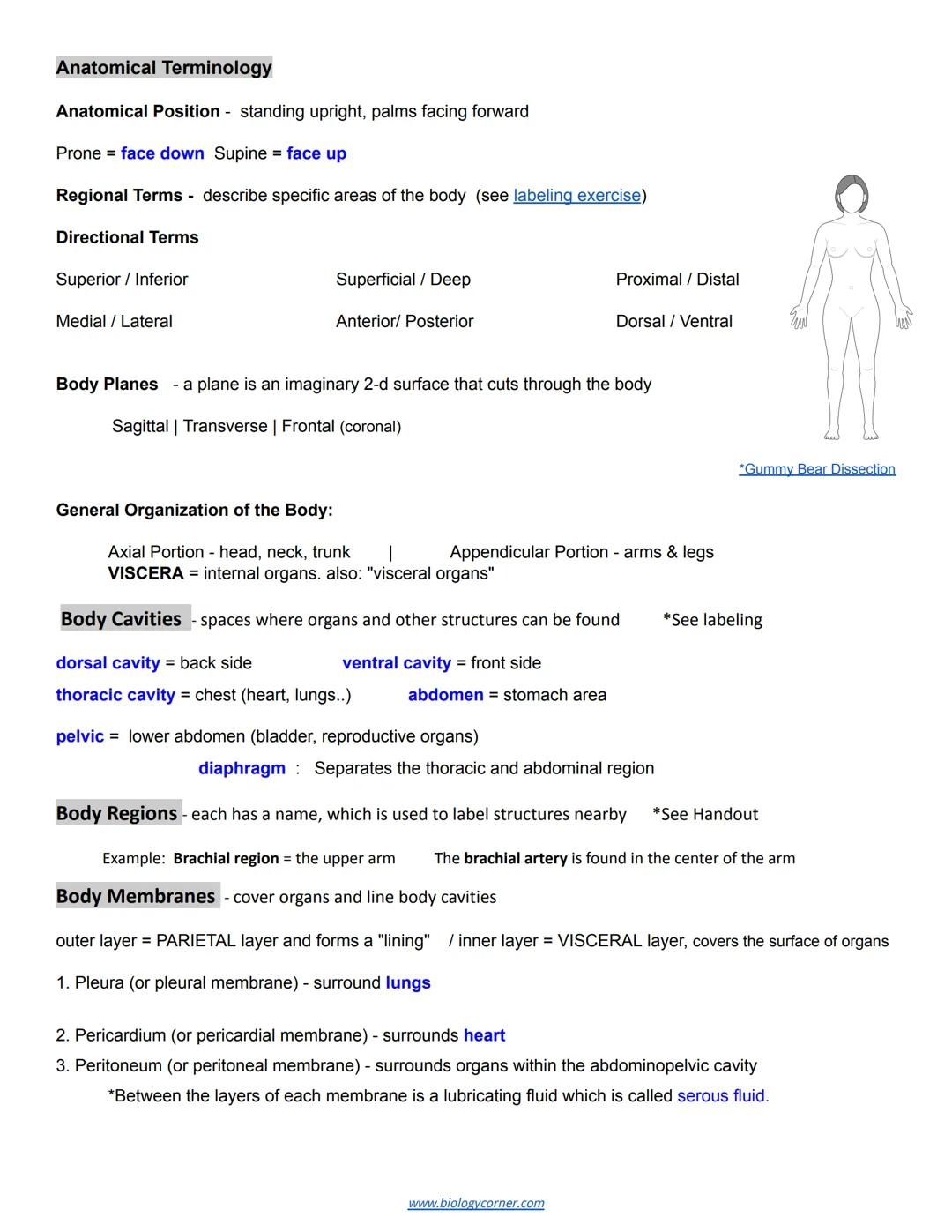
Anatomical Terminology
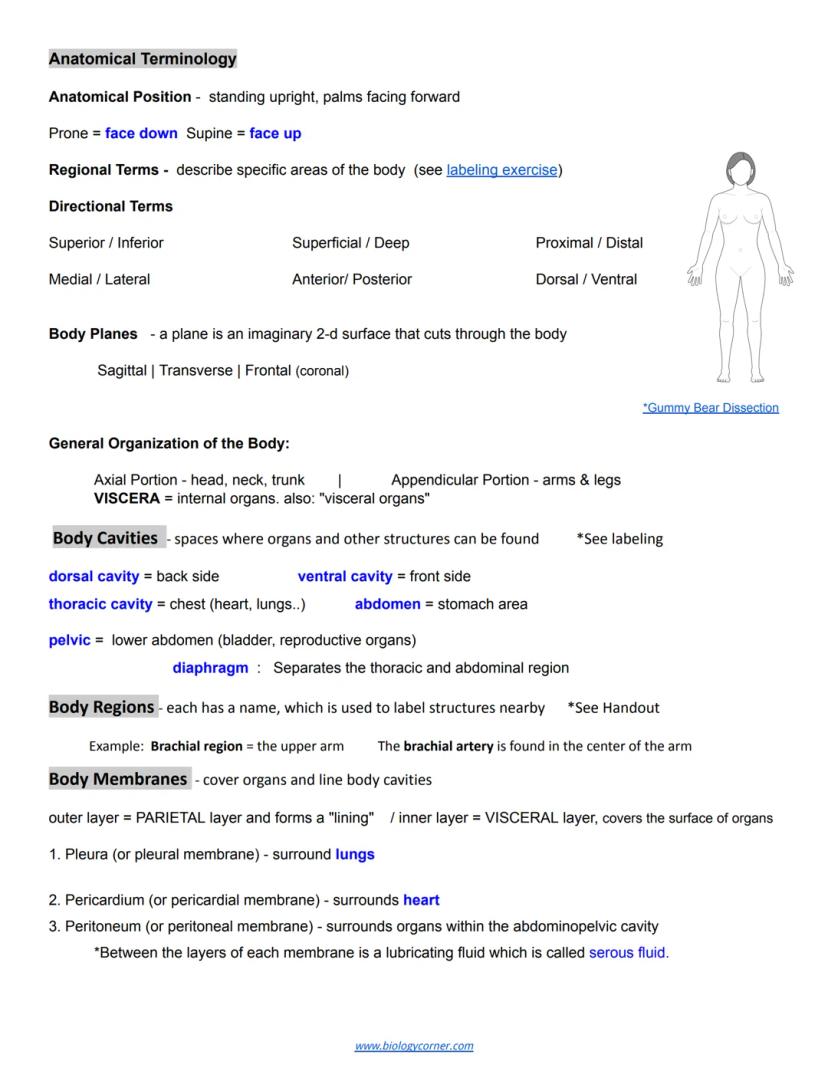
Learning to talk about body locations is like using a map—you need the right directions! The anatomical position serves as our reference point: standing upright with palms facing forward.
Directional terms help describe where body parts are located relative to each other. Some key pairs include superior/inferior , medial/lateral , anterior/posterior , and proximal/distal .
Your body has several major cavities that house organs. The dorsal cavity runs along your back (containing brain and spinal cord), while the ventral cavity in front contains the thoracic cavity (chest) and abdominopelvic cavity (stomach and pelvic regions). The diaphragm muscle separates the thoracic and abdominal regions.
💡 Memory Tip: Think of body membranes like protective wrappings! Special membranes like the pleura (lungs), pericardium (heart), and peritoneum (abdominal organs) have two layers with lubricating fluid between them.
Body regions each have specific names used in medical terminology. For example, the brachial region refers to your upper arm, and structures in that area are named accordingly (like the brachial artery).
4
of 5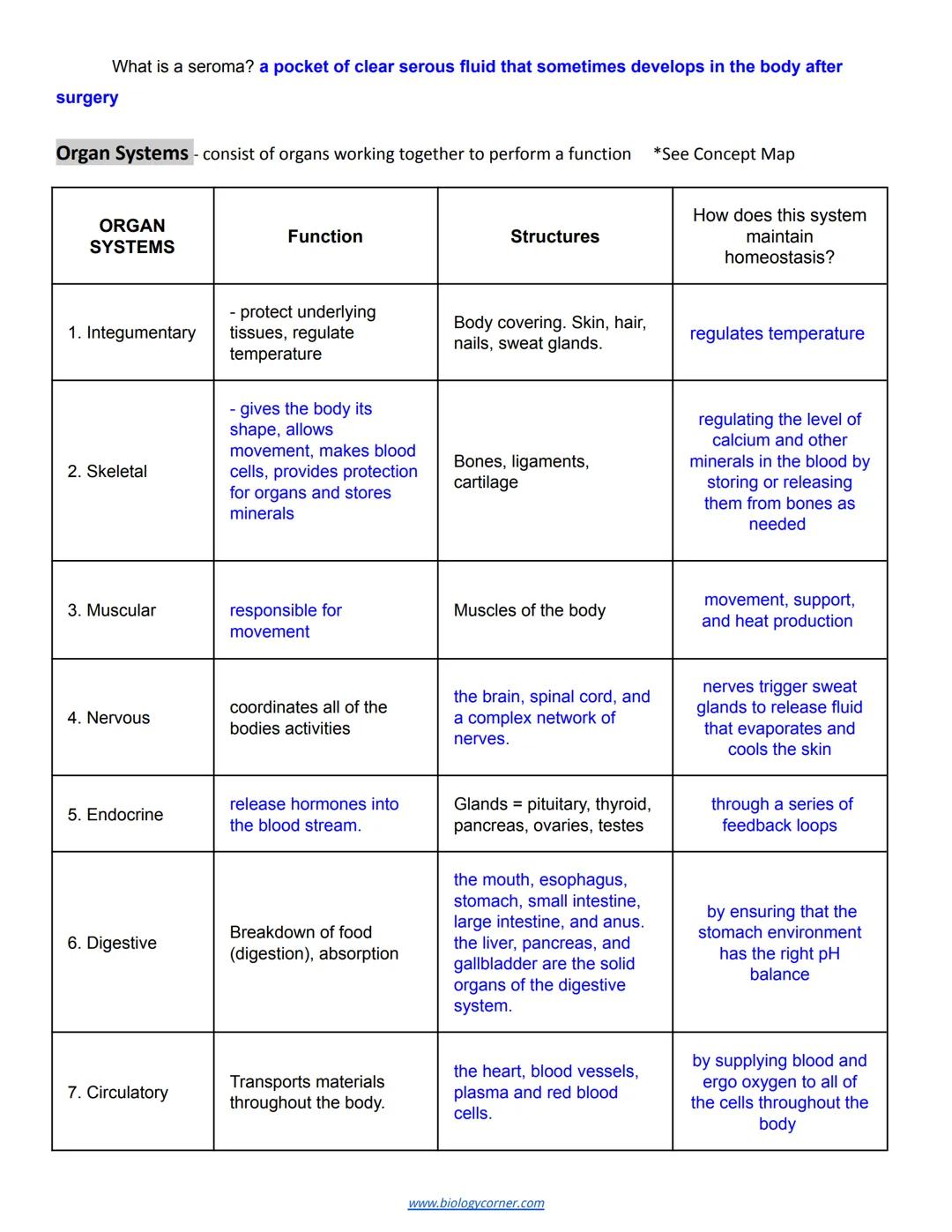
Organ Systems
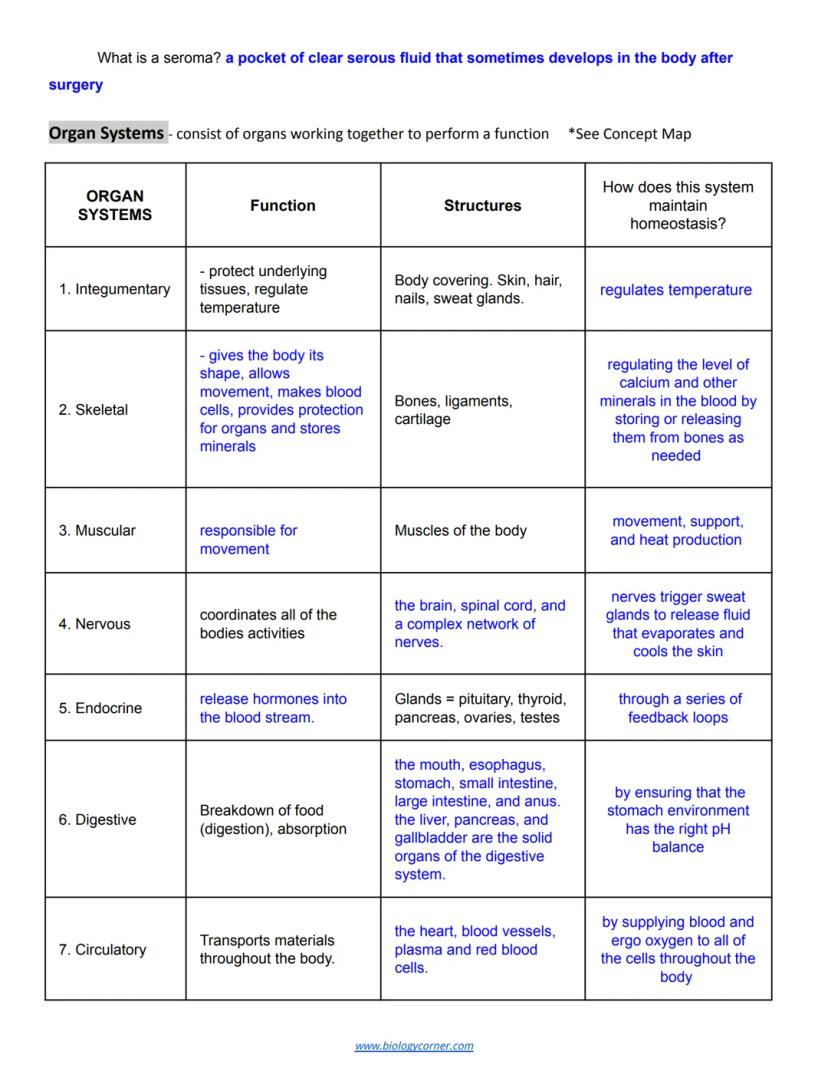
Your body has ten amazing organ systems that work together to keep you alive and functioning. Each system consists of organs that collaborate for specific functions.
The integumentary system (skin, hair, nails) protects underlying tissues and helps regulate your temperature. Your skeletal system provides shape, enables movement, creates blood cells, and stores minerals. The muscular system handles all forms of movement from running to subtle expressions.
Your nervous system (brain, spinal cord, nerves) coordinates all activities, while the endocrine system (various glands) releases hormones into the bloodstream. The digestive system breaks down food for energy, and the circulatory system transports materials throughout your body.
💡 Homeostasis Connection: Each system plays a unique role in maintaining balance. For example, your skeletal system regulates blood calcium levels by storing or releasing minerals as needed, while your nervous system triggers sweat glands to cool you down when overheated.
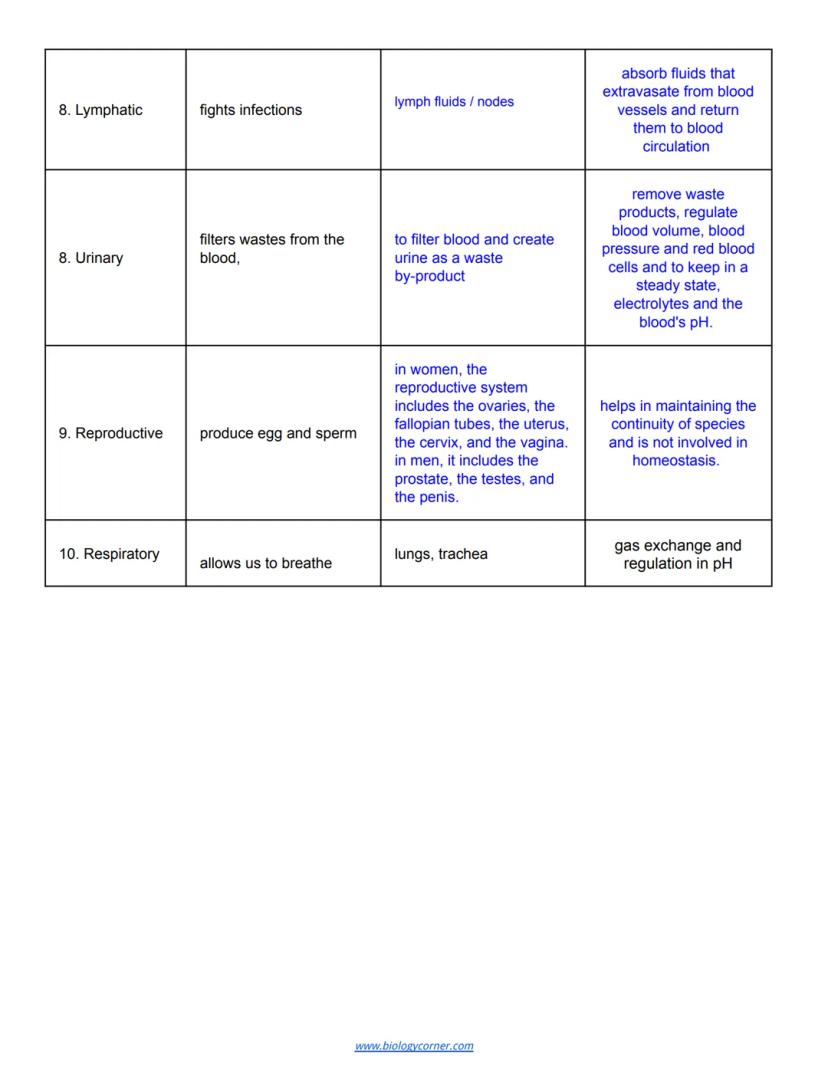
Three more vital systems round out your body's functions: the lymphatic system fights infections, the urinary system filters wastes from blood, and the reproductive system produces eggs or sperm to continue the human species.
5
of 5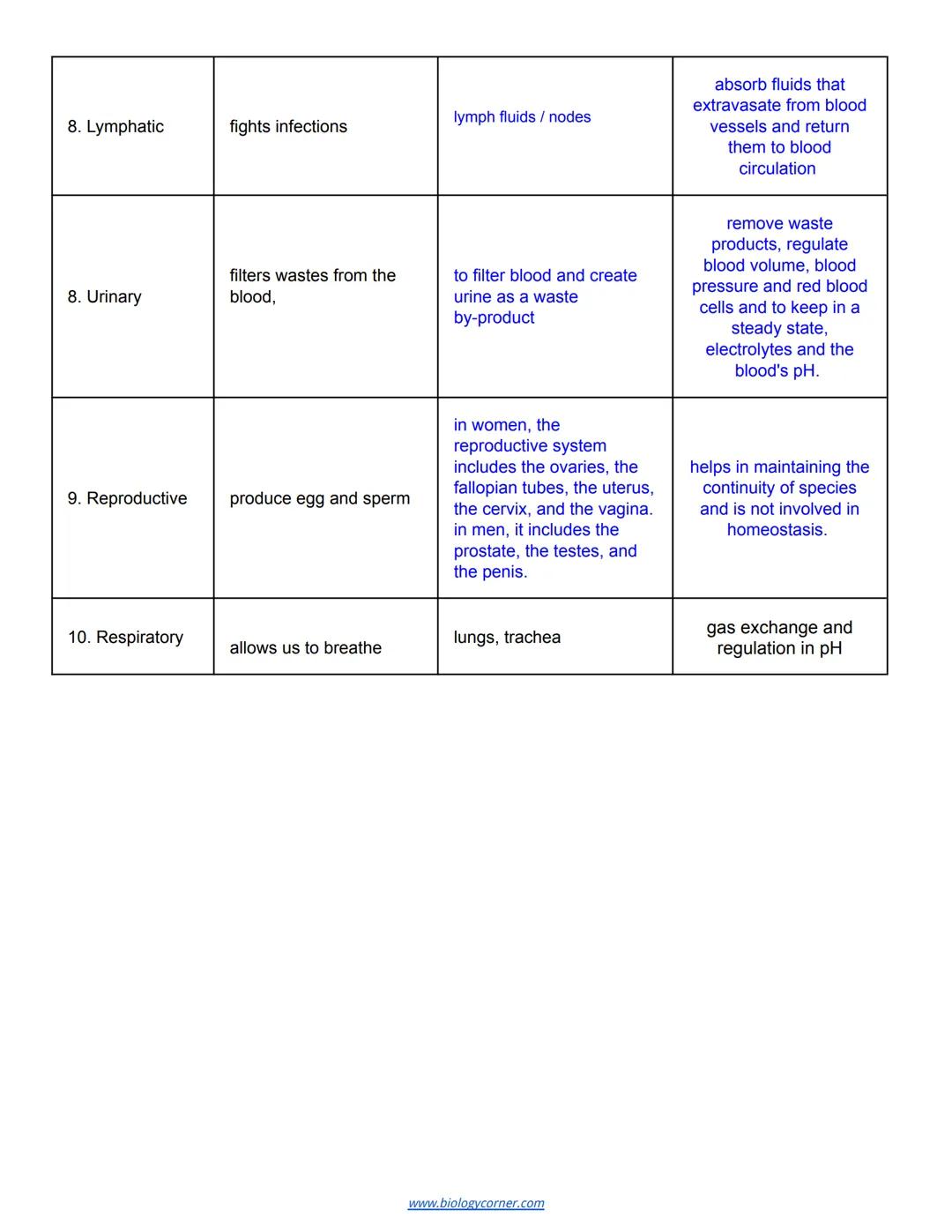
More Organ Systems
Let's dive deeper into your body's remaining organ systems! The lymphatic system consists of lymph fluids and nodes that absorb fluids leaking from blood vessels and return them to circulation. This system plays a crucial role in fighting infections that threaten your health.
Your urinary system filters wastes from the blood to create urine. This system does more than just help you pee—it removes waste products, regulates blood volume and pressure, maintains electrolyte balance, and keeps your blood at the right pH level. All these functions help maintain homeostasis.
The reproductive system differs between biological sexes. In females, it includes ovaries, fallopian tubes, uterus, cervix, and vagina. In males, it includes the prostate, testes, and penis. Unlike other systems, reproduction isn't directly involved in homeostasis—it's about continuing the species.
💡 Critical Connection: Your respiratory system (lungs, trachea) does more than just help you breathe! It's essential for gas exchange and pH regulation, both vital aspects of homeostasis.
Understanding how these systems work together helps explain complex health issues and how medical treatments target specific body functions.
We thought you’d never ask...
What is the Knowunity AI companion?
Our AI companion is specifically built for the needs of students. Based on the millions of content pieces we have on the platform we can provide truly meaningful and relevant answers to students. But its not only about answers, the companion is even more about guiding students through their daily learning challenges, with personalised study plans, quizzes or content pieces in the chat and 100% personalisation based on the students skills and developments.
Where can I download the Knowunity app?
You can download the app in the Google Play Store and in the Apple App Store.
Is Knowunity really free of charge?
That's right! Enjoy free access to study content, connect with fellow students, and get instant help – all at your fingertips.
Similar Content
Most popular content in Biology
9C
BiologyCell Organelles
This Quiz Is To Test Your Knowledge Of Cell Organelles And Their Functions Inside The Cell. It Can Also Be A Study Guide To Remember Them Better.
6th6710
B
Biologybiology cell organelles and functions
Do you know the cell organelles and their functions?
9th4410
M
BiologyMitosis and Cell Division Flashcards
These flashcards cover the basics of mitosis and why cell division occurs in the first place.
9th3390
D
BiologyDNA and RNA
Uncover the secrets of life with this comprehensive Biology flashcard set. Perfect for grade 10 students studying Living Environment.
10th1,0782
D
BiologyDiscover the Fascinating World of Living Organisms
Uncover the secrets of biology and explore the diverse and amazing life forms that inhabit our planet with this captivating flashcard set.
7th4380
A
BiologyAnimal and plant cell structure
Quiz on animal and plant cell structures
9th3240
D
BiologyDiscover Punnet Squares
Uncover the secrets of life with this comprehensive Biology flashcard set. Perfect for grade 10 students studying Living Environment.
10th3961
D
BiologyDNA
Parts of DNA
9th2970
S
BiologySteps of Cellular Respiration
3 basic steps and Molecule Vocab
9th2660
Most popular content
9O
 AP US History
Origins and Dynamics of the Columbian Exchange
Analyze the ecological and economic motivations behind the initial transfer of goods, people, and diseases between the Old and New Worlds.
9th3,1280
I
AP US HistoryIntroduction to Early Cultural Interactions
Analyze the initial social and religious encounters between Europeans, Africans, and Indigenous peoples in the colonial Americas.
9th2,7730
O
 AP World History
Origins of Ancient River Civilizations
Analyze the environmental factors and technological innovations that led to the rise of early states in Mesopotamia, Egypt, and the Indus Valley.
9th3,1870
M
AP US HistoryMotivations for European Exploration
Analyze the economic, religious, and political factors that drove European powers to the Americas during the 15th and 16th centuries.
9th1,7780
F
 AP Psychology
Foundations of Ethical Guidelines in Research
Practice the core principles of the APA ethical code including informed consent, debriefing, and the role of Institutional Review Boards.
9th1,3360
I
AP US HistoryIntroduction to Native American Societies
Examine the diverse social, political, and economic structures of North American indigenous groups prior to European contact.
9th1,1100
I
AP BiologyIntroduction to Biological Elements of Life
Practice identifying the essential elements including carbon, nitrogen, phosphorus, and sulfur that compose biological macromolecules.
9th1,7390
I
AP US HistoryIntroduction to the Spanish Encomienda System
Explore the fundamental economic and social structures of the Spanish colonial system, focusing on the encomienda and the casta social hierarchy.
9th8890
O
AP World HistoryOrigins and Continuity of the Byzantine Empire
Analyze the political and cultural transitions from the Roman Empire to the Byzantine Empire, focusing on the reign of Justinian I and his code.
9th1,6320
Can't find what you're looking for? Explore other subjects.
Students love us — and so will you.
4.6/5App Store
4.7/5Google Play
The app is very easy to use and well designed. I have found everything I was looking for so far and have been able to learn a lot from the presentations! I will definitely use the app for a class assignment! And of course it also helps a lot as an inspiration.
Stefan SiOS user
This app is really great. There are so many study notes and help [...]. My problem subject is French, for example, and the app has so many options for help. Thanks to this app, I have improved my French. I would recommend it to anyone.
Samantha KlichAndroid user
Wow, I am really amazed. I just tried the app because I've seen it advertised many times and was absolutely stunned. This app is THE HELP you want for school and above all, it offers so many things, such as workouts and fact sheets, which have been VERY helpful to me personally.
AnnaiOS user
Biology359 views·Updated Jun 15, 2026·5 pagesUnderstanding Human Anatomy and Physiology
Kailyn@kailynd3lrey
Welcome to Human Anatomy and Physiology! This field explores how your body is structured and functions. Understanding your body's systems helps explain everything from why athletes collapse during marathons to how you maintain normal temperature despite environmental changes.
1
of 5
Sign up to see the content. It's free!
- Access to all documents
- Improve your grades
- Join milions of students
Introduction to Human Anatomy and Physiology
Ever wonder why marathon runners sometimes collapse? The story of Kati Mori at the London Marathon introduces us to how our bodies work. Anatomy deals with body structures while physiology examines how those parts function.
Your body constantly works to maintain homeostasis – a balanced internal environment. This happens across multiple levels of organization, from tiny atoms to complete organ systems. Everything in your body follows this pattern: atoms → molecules → cells → tissues → organs → organ systems → organism.
All living humans perform seven essential functions: organization, metabolism, responsiveness, movement, growth, reproduction, and development. Metabolism involves all physical and chemical changes occurring in your body and requires energy from nutrients.
💡 Quick Fact: Cells become specialized through a process called differentiation, where they activate or deactivate specific genes to perform unique functions in your body!
Your body requires specific elements to survive: oxygen (for cell energy), nutrients (water, food, vitamins), proper temperature, and atmospheric pressure. These requirements are especially critical during intense physical activities like marathons.
2
of 5Sign up to see the content. It's free!
- Access to all documents
- Improve your grades
- Join milions of students
Homeostasis and Feedback Loops
Your body maintains balance through amazing self-correcting systems. Homeostasis works within a normal range with a set point—think of it like a thermostat for your body that keeps conditions just right.
Most body functions work through negative feedback loops. These systems detect when something's off, then trigger responses to correct it. For example, when your body temperature rises above 37°C, receptors in your skin and brain detect this change. Your brain's temperature center then activates cooling mechanisms like sweating.
Sometimes your body uses positive feedback loops that amplify responses instead of reducing them. A good example is breastfeeding—when a baby nurses, it triggers more milk production, not less!
💡 Case Study Connection: Kati's marathon collapse relates to homeostasis failure. Her low urine sodium levels indicated hyponatremia—when sodium in blood drops too low. Without proper sodium balance, her body couldn't maintain normal temperature or function properly.
Understanding these feedback systems helps explain why small changes in your body chemistry can have serious consequences when your regulatory systems get overwhelmed.
3
of 5Sign up to see the content. It's free!
- Access to all documents
- Improve your grades
- Join milions of students
Anatomical Terminology
Learning to talk about body locations is like using a map—you need the right directions! The anatomical position serves as our reference point: standing upright with palms facing forward.
Directional terms help describe where body parts are located relative to each other. Some key pairs include superior/inferior , medial/lateral , anterior/posterior , and proximal/distal .
Your body has several major cavities that house organs. The dorsal cavity runs along your back (containing brain and spinal cord), while the ventral cavity in front contains the thoracic cavity (chest) and abdominopelvic cavity (stomach and pelvic regions). The diaphragm muscle separates the thoracic and abdominal regions.
💡 Memory Tip: Think of body membranes like protective wrappings! Special membranes like the pleura (lungs), pericardium (heart), and peritoneum (abdominal organs) have two layers with lubricating fluid between them.
Body regions each have specific names used in medical terminology. For example, the brachial region refers to your upper arm, and structures in that area are named accordingly (like the brachial artery).
4
of 5Sign up to see the content. It's free!
- Access to all documents
- Improve your grades
- Join milions of students
Organ Systems
Your body has ten amazing organ systems that work together to keep you alive and functioning. Each system consists of organs that collaborate for specific functions.
The integumentary system (skin, hair, nails) protects underlying tissues and helps regulate your temperature. Your skeletal system provides shape, enables movement, creates blood cells, and stores minerals. The muscular system handles all forms of movement from running to subtle expressions.
Your nervous system (brain, spinal cord, nerves) coordinates all activities, while the endocrine system (various glands) releases hormones into the bloodstream. The digestive system breaks down food for energy, and the circulatory system transports materials throughout your body.
💡 Homeostasis Connection: Each system plays a unique role in maintaining balance. For example, your skeletal system regulates blood calcium levels by storing or releasing minerals as needed, while your nervous system triggers sweat glands to cool you down when overheated.
Three more vital systems round out your body's functions: the lymphatic system fights infections, the urinary system filters wastes from blood, and the reproductive system produces eggs or sperm to continue the human species.
5
of 5Sign up to see the content. It's free!
- Access to all documents
- Improve your grades
- Join milions of students
More Organ Systems
Let's dive deeper into your body's remaining organ systems! The lymphatic system consists of lymph fluids and nodes that absorb fluids leaking from blood vessels and return them to circulation. This system plays a crucial role in fighting infections that threaten your health.
Your urinary system filters wastes from the blood to create urine. This system does more than just help you pee—it removes waste products, regulates blood volume and pressure, maintains electrolyte balance, and keeps your blood at the right pH level. All these functions help maintain homeostasis.
The reproductive system differs between biological sexes. In females, it includes ovaries, fallopian tubes, uterus, cervix, and vagina. In males, it includes the prostate, testes, and penis. Unlike other systems, reproduction isn't directly involved in homeostasis—it's about continuing the species.
💡 Critical Connection: Your respiratory system (lungs, trachea) does more than just help you breathe! It's essential for gas exchange and pH regulation, both vital aspects of homeostasis.
Understanding how these systems work together helps explain complex health issues and how medical treatments target specific body functions.
We thought you’d never ask...
What is the Knowunity AI companion?
Our AI companion is specifically built for the needs of students. Based on the millions of content pieces we have on the platform we can provide truly meaningful and relevant answers to students. But its not only about answers, the companion is even more about guiding students through their daily learning challenges, with personalised study plans, quizzes or content pieces in the chat and 100% personalisation based on the students skills and developments.
Where can I download the Knowunity app?
You can download the app in the Google Play Store and in the Apple App Store.
Is Knowunity really free of charge?
That's right! Enjoy free access to study content, connect with fellow students, and get instant help – all at your fingertips.
Similar Content
Most popular content in Biology
9C
BiologyCell Organelles
This Quiz Is To Test Your Knowledge Of Cell Organelles And Their Functions Inside The Cell. It Can Also Be A Study Guide To Remember Them Better.
6th6710
B
Biologybiology cell organelles and functions
Do you know the cell organelles and their functions?
9th4410
M
BiologyMitosis and Cell Division Flashcards
These flashcards cover the basics of mitosis and why cell division occurs in the first place.
9th3390
D
BiologyDNA and RNA
Uncover the secrets of life with this comprehensive Biology flashcard set. Perfect for grade 10 students studying Living Environment.
10th1,0782
D
BiologyDiscover the Fascinating World of Living Organisms
Uncover the secrets of biology and explore the diverse and amazing life forms that inhabit our planet with this captivating flashcard set.
7th4380
A
BiologyAnimal and plant cell structure
Quiz on animal and plant cell structures
9th3240
D
BiologyDiscover Punnet Squares
Uncover the secrets of life with this comprehensive Biology flashcard set. Perfect for grade 10 students studying Living Environment.
10th3961
D
BiologyDNA
Parts of DNA
9th2970
S
BiologySteps of Cellular Respiration
3 basic steps and Molecule Vocab
9th2660
Most popular content
9O
AP US HistoryOrigins and Dynamics of the Columbian Exchange
Analyze the ecological and economic motivations behind the initial transfer of goods, people, and diseases between the Old and New Worlds.
9th3,1280
I
AP US HistoryIntroduction to Early Cultural Interactions
Analyze the initial social and religious encounters between Europeans, Africans, and Indigenous peoples in the colonial Americas.
9th2,7730
O
AP World HistoryOrigins of Ancient River Civilizations
Analyze the environmental factors and technological innovations that led to the rise of early states in Mesopotamia, Egypt, and the Indus Valley.
9th3,1870
M
AP US HistoryMotivations for European Exploration
Analyze the economic, religious, and political factors that drove European powers to the Americas during the 15th and 16th centuries.
9th1,7780
F
AP PsychologyFoundations of Ethical Guidelines in Research
Practice the core principles of the APA ethical code including informed consent, debriefing, and the role of Institutional Review Boards.
9th1,3360
I
AP US HistoryIntroduction to Native American Societies
Examine the diverse social, political, and economic structures of North American indigenous groups prior to European contact.
9th1,1100
I
AP BiologyIntroduction to Biological Elements of Life
Practice identifying the essential elements including carbon, nitrogen, phosphorus, and sulfur that compose biological macromolecules.
9th1,7390
I
AP US HistoryIntroduction to the Spanish Encomienda System
Explore the fundamental economic and social structures of the Spanish colonial system, focusing on the encomienda and the casta social hierarchy.
9th8890
O
AP World HistoryOrigins and Continuity of the Byzantine Empire
Analyze the political and cultural transitions from the Roman Empire to the Byzantine Empire, focusing on the reign of Justinian I and his code.
9th1,6320
Can't find what you're looking for? Explore other subjects.
Students love us — and so will you.
4.6/5App Store
4.7/5Google Play
The app is very easy to use and well designed. I have found everything I was looking for so far and have been able to learn a lot from the presentations! I will definitely use the app for a class assignment! And of course it also helps a lot as an inspiration.
Stefan SiOS user
This app is really great. There are so many study notes and help [...]. My problem subject is French, for example, and the app has so many options for help. Thanks to this app, I have improved my French. I would recommend it to anyone.
Samantha KlichAndroid user
Wow, I am really amazed. I just tried the app because I've seen it advertised many times and was absolutely stunned. This app is THE HELP you want for school and above all, it offers so many things, such as workouts and fact sheets, which have been VERY helpful to me personally.
AnnaiOS user