
Las plantas tienen diferentes tipos de tejidos que les permiten...
 Biologia371 views·Updated Jun 17, 2026·18 pages
Explorando los Sistemas de Tejidos Vegetales: Trabajo Escolar de Grado 6°
T
tbeltrancicacha2@tbeltrancicacha2_1u64



1 / 10
1
of 10
Portada del Proyecto
Este es el álbum sobre tejidos vegetales que estudiaremos en ciencias naturales. Vas a descubrir cómo están formadas las plantas por dentro y cómo cada parte tiene una función específica.
2
of 10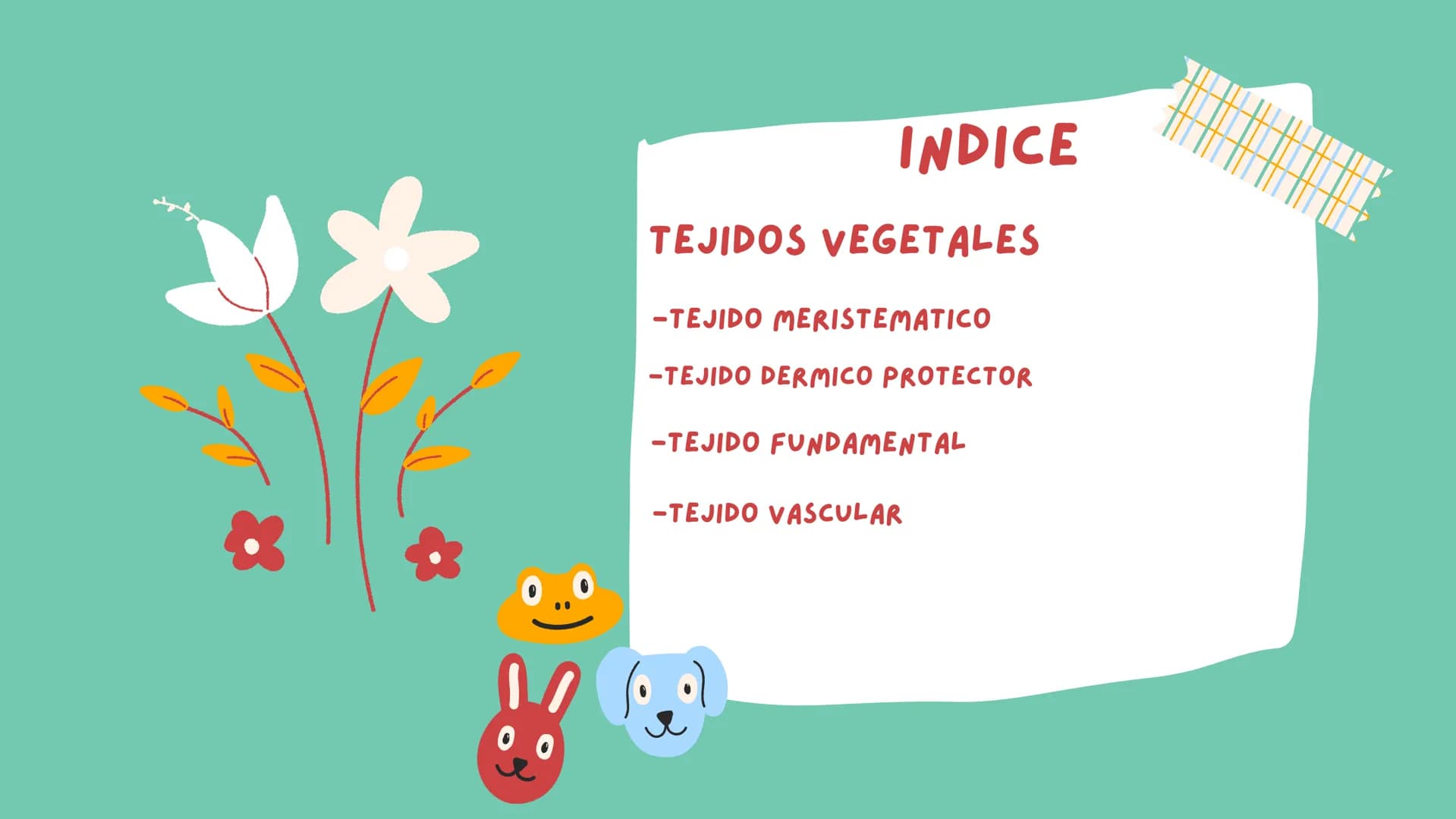
Índice de Tejidos Vegetales
Los tejidos vegetales se organizan en cuatro grupos principales que vamos a explorar:
Tejido meristemático (crecimiento), tejido dérmico protector (protección), tejido fundamental (soporte y almacenamiento) y tejido vascular (transporte).
💡 Dato curioso: Cada tejido tiene un trabajo específico, como los órganos en tu cuerpo.
3
of 10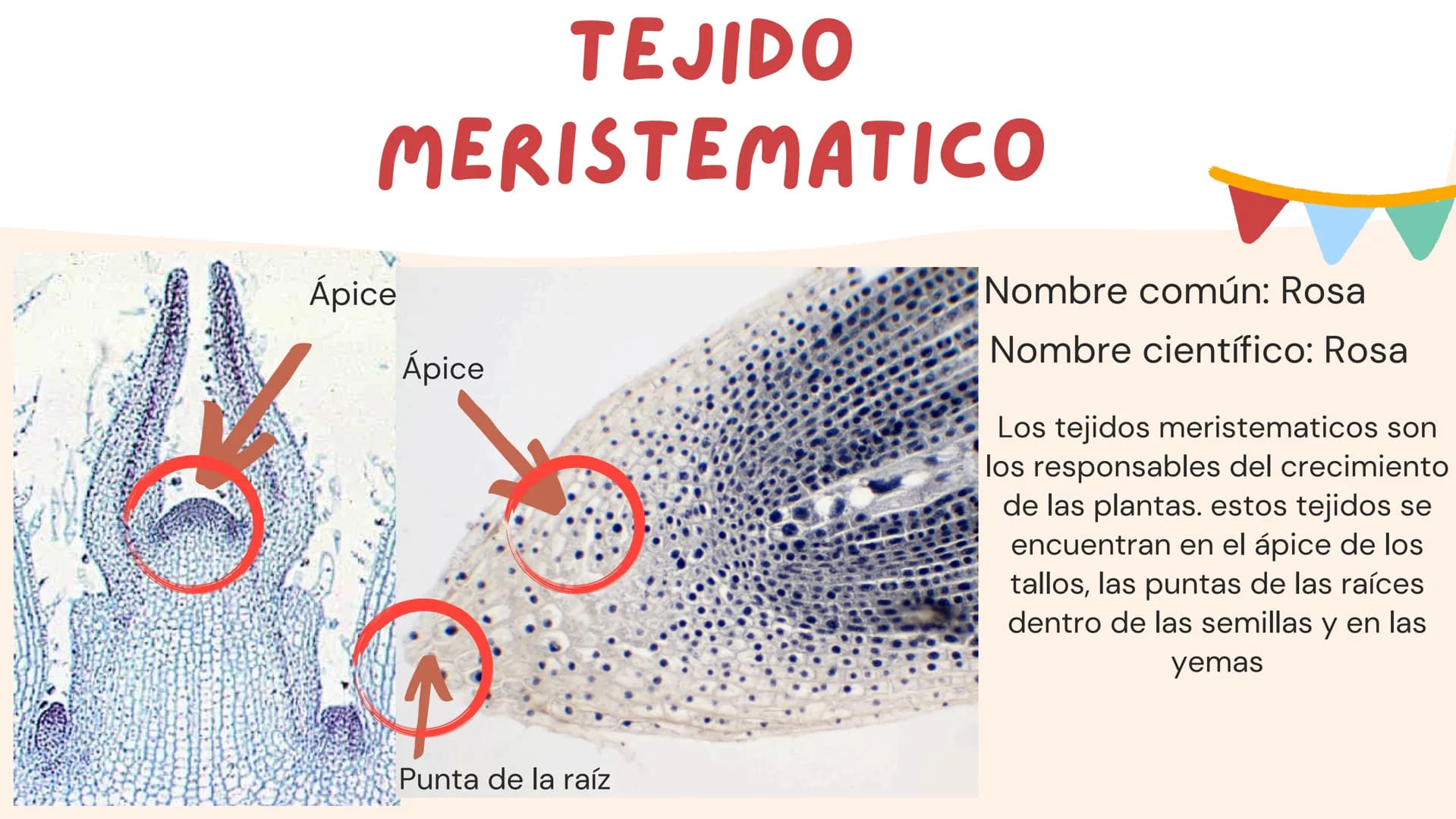
Tejido Meristemático
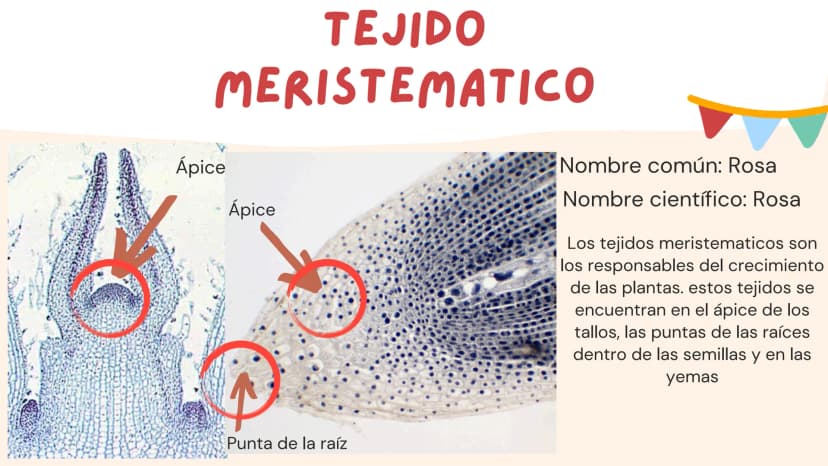
¿Sabías que las plantas crecen desde puntos específicos? Los tejidos meristemáticos son como las "fábricas de crecimiento" de las plantas.
Los encuentras en los ápices (puntas) de tallos y raíces, dentro de las semillas y en las yemas. Estos tejidos producen células nuevas constantemente, permitiendo que la planta crezca hacia arriba y hacia abajo.
La rosa es un ejemplo perfecto para observar estos tejidos en acción. Sus brotes nuevos siempre salen de estos puntos especiales.
💡 Recuerda: Sin tejido meristemático, las plantas no podrían crecer ni reparar sus daños.
4
of 10
Tejido Dérmico Protector
Imagínate que las plantas también necesitan "piel" para protegerse. El tejido dérmico es como la primera línea de defensa de las plantas.
Su trabajo principal es proteger contra parásitos, daños físicos y cambios de temperatura. También evita que la planta pierda demasiada agua, algo súper importante para su supervivencia.
Este tejido se divide en dos tipos: la epidermis (en plantas jóvenes) y el súber (en plantas leñosas más viejas).
💡 Piénsalo así: Es como si las plantas tuvieran dos tipos de "ropa" según su edad.
5
of 10
La Epidermis
La epidermis es como la piel delicada que cubre hojas, tallos jóvenes y raíces. Está formada por una sola capa de células que hace un trabajo increíble.
En las raíces tiene tricomas (pelitos) que absorben agua y nutrientes del suelo. Algunos tricomas producen sustancias urticantes para alejar a los animales herbívoros.
La epidermis también tiene estomas, que son como pequeños poros que controlan el intercambio de gases y la transpiración de la planta.
💡 Dato interesante: Los estomas pueden abrirse y cerrarse según las necesidades de la planta.
6
of 10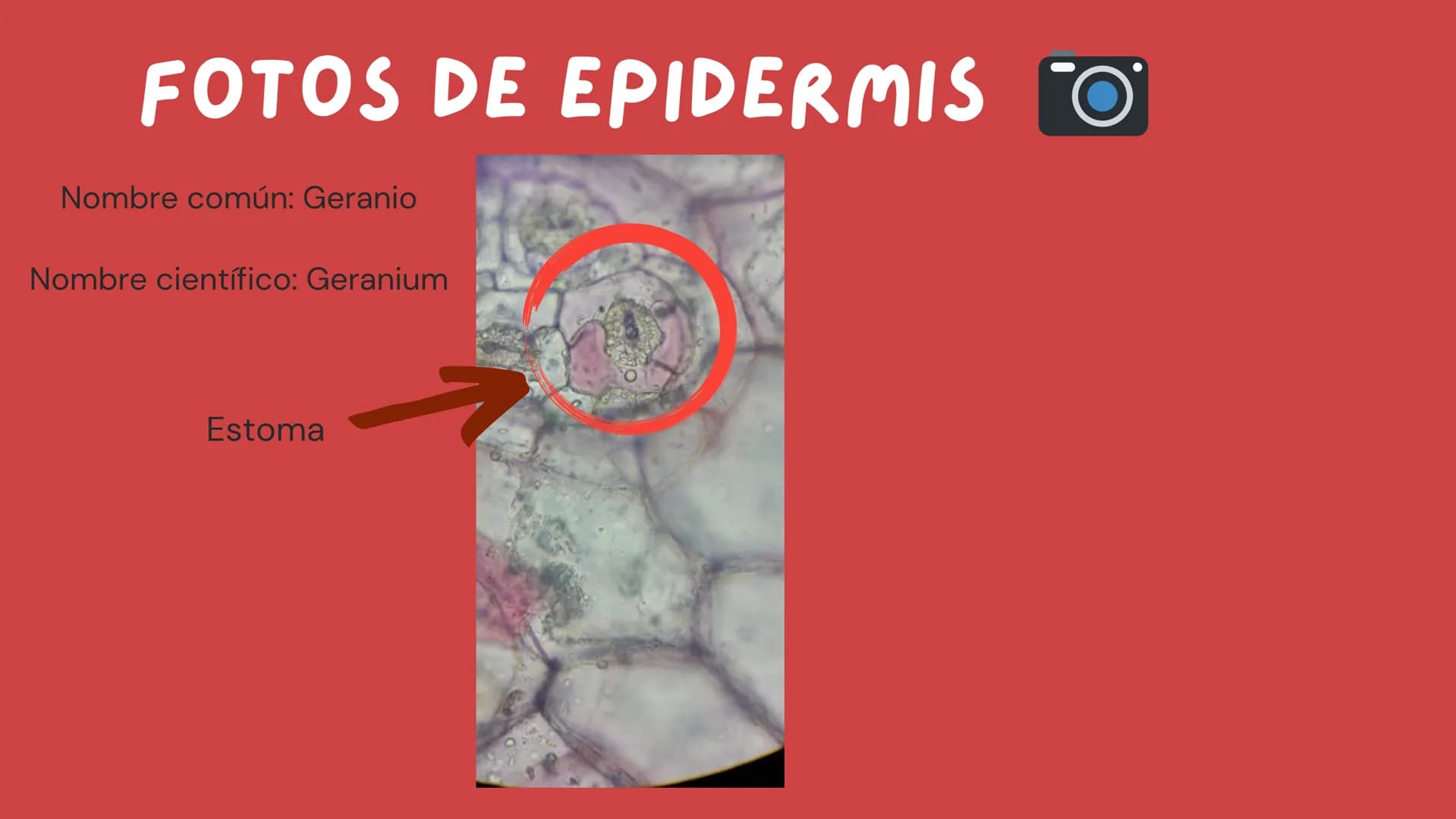
Observando la Epidermis: Geranio
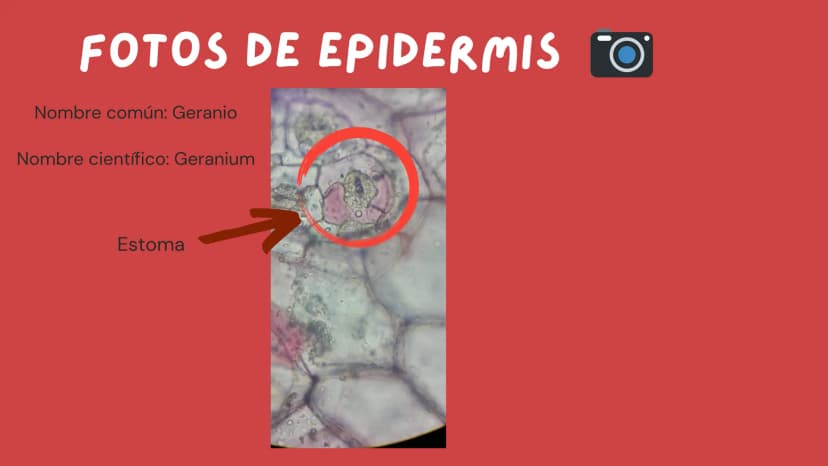
En el geranio puedes ver claramente los estomas en acción. Estas estructuras microscópicas son fundamentales para la respiración de las plantas.
Los estomas del geranio se abren durante el día para intercambiar gases y se cierran por la noche para conservar agua.
7
of 10
Observando la Epidermis: Ortiga
La ortiga es el ejemplo perfecto de tricomas defensivos. Esos pelitos que te pican cuando tocas una ortiga son tricomas especializados.
Estos tricomas liberan sustancias urticantes que protegen a la planta de ser comida por animales. Es una defensa muy efectiva que ha funcionado por millones de años.
💡 Consejo: Nunca toques una ortiga sin guantes, sus tricomas realmente funcionan.
8
of 10
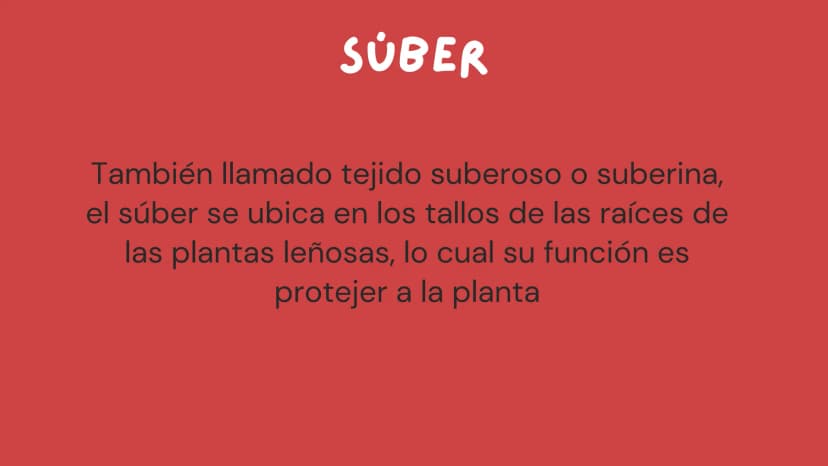
El Súber
El súber (también llamado suberina) es como la "armadura" de las plantas adultas. Se forma en tallos y raíces de plantas leñosas cuando crecen.
Reemplaza a la epidermis cuando la planta se vuelve más gruesa y necesita mayor protección. Es mucho más resistente y duradero que la epidermis.
Este tejido le da esa textura rugosa y protectora que ves en los troncos de los árboles.
💡 Ejemplo familiar: La corteza de los árboles está hecha principalmente de súber.
9
of 10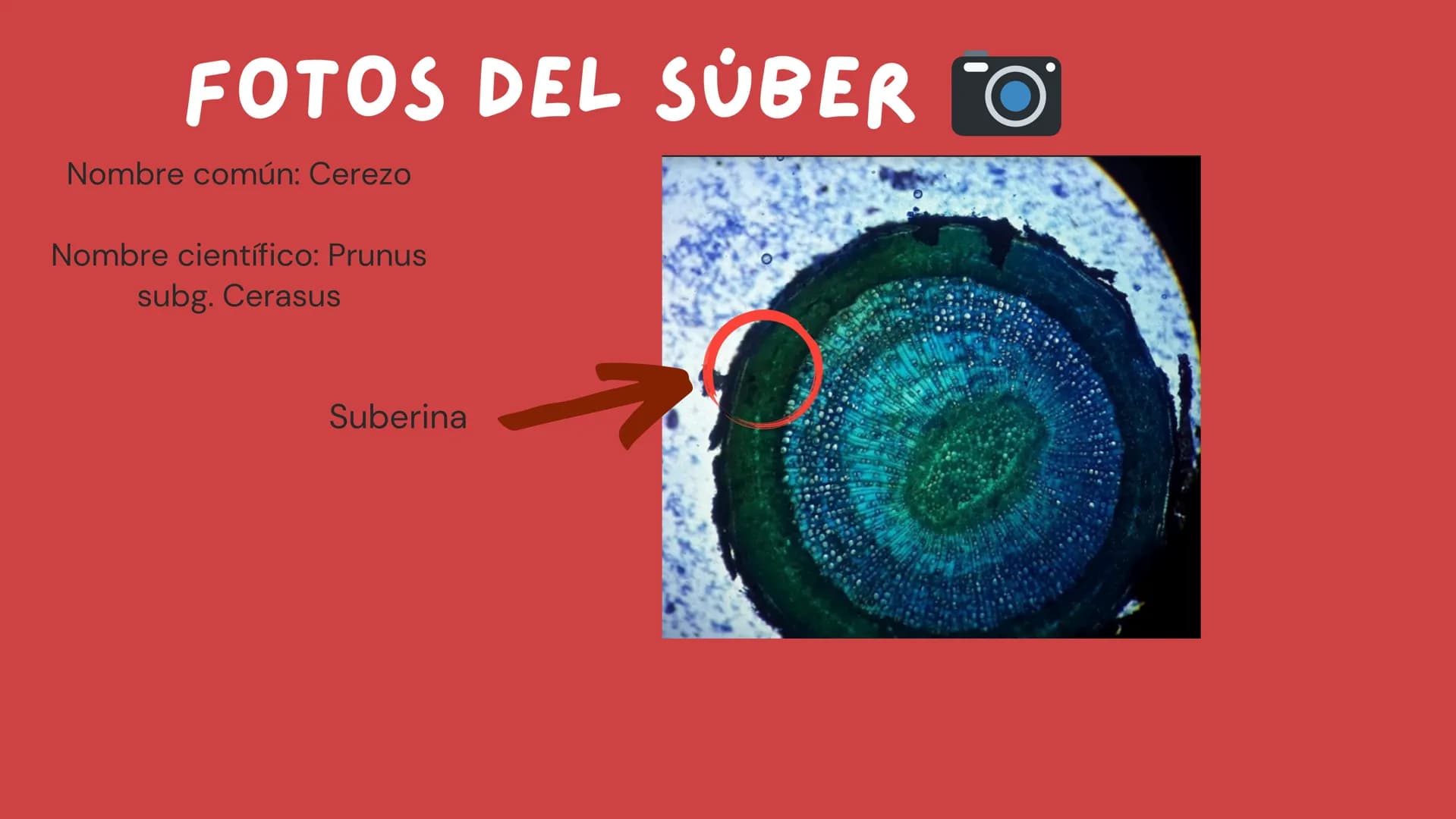
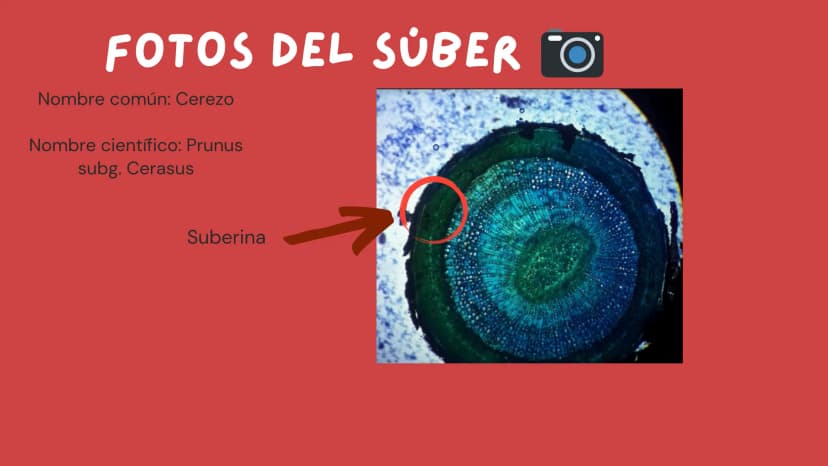
Observando el Súber: Cerezo
En el cerezo puedes ver perfectamente la suberina que forma capas protectoras en el tronco. Esta estructura gruesa y resistente protege el interior del árbol.
El súber del cerezo se renueva constantemente, por eso a veces ves que se desprenden pedacitos de corteza.
10
of 10
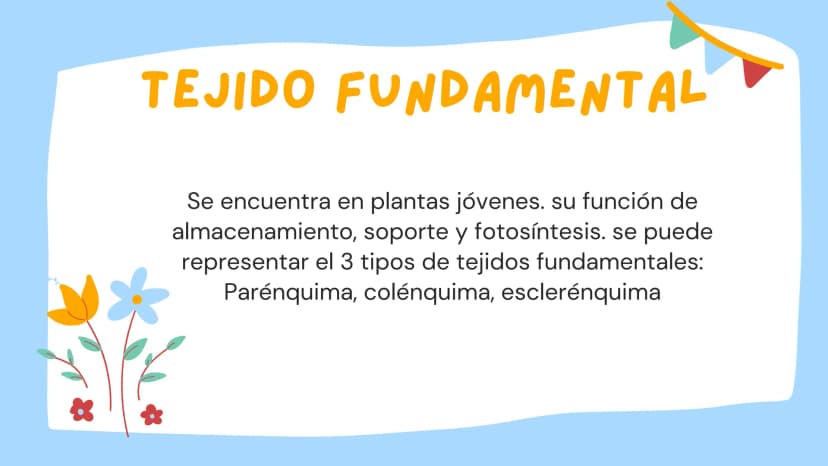
Tejido Fundamental
El tejido fundamental es como el "relleno" de las plantas jóvenes. Tiene múltiples funciones: almacenar nutrientes, dar soporte estructural y realizar fotosíntesis.
Se divide en tres tipos según su función: parénquima (almacenamiento y fotosíntesis), colénquima (soporte flexible) y esclerénquima (soporte rígido).
Este tejido es especialmente importante en plantas herbáceas y partes jóvenes de plantas leñosas.
💡 Piénsalo así: Es como el músculo, la grasa y el esqueleto de las plantas, todo en uno.
We thought you’d never ask...
What is the Knowunity AI companion?
Our AI companion is specifically built for the needs of students. Based on the millions of content pieces we have on the platform we can provide truly meaningful and relevant answers to students. But its not only about answers, the companion is even more about guiding students through their daily learning challenges, with personalised study plans, quizzes or content pieces in the chat and 100% personalisation based on the students skills and developments.
Where can I download the Knowunity app?
You can download the app in the Google Play Store and in the Apple App Store.
Is Knowunity really free of charge?
That's right! Enjoy free access to study content, connect with fellow students, and get instant help – all at your fingertips.
Similar Content
 Anatomía
Most popular content in Química
9 Química
Trucos para ganar icfes
Lo mejor
111,03212
P
BiologiaPartes de la Célula y sus Funciones
Aprende sobre las funciones de la mitocondria, ribosomas, Golgi y el núcleo celular.
6770
G
BiologiaGenotipo y Fenotipo: Conceptos Clave
Explora los términos esenciales de la genética: alelos, homocigoto, heterocigoto, dominante y recesivo.
9600
C
BiologiaConceptos Básicos de Genética Mendeliana
Explora términos clave como homocigoto, heterocigoto, alelo, gen, fenotipo y genotipo.
9540
C
BiologiaConceptos Clave de la Meiosis
Explora términos esenciales sobre la meiosis y la división celular.
7540
F
BiologiaFunciones de Organelos Celulares
Aprende las funciones principales de la membrana, núcleo, mitocondrias y ribosomas.
7600
A
BiologiaADN y Herencia: Conceptos Básicos
Conceptos clave sobre el ADN, ARN y la herencia genética para estudiantes de 8º grado.
8300
BiologiaLisosomas
Lisosomas y su importancia en la vida humana
95061
BiologiaApuntes
Síntesis de proteínas y sus pasos
92465
Most popular content
9 ICFES: Matemáticas
Simulacro ICFES primera sesión calendario B filtrado 2025
Este simulacro te ayudará a sacar un buen puntaje en las pruebas ICFES este 2025. Vamos por ese 500/500. Y poder ser admitido en la universidad que quieras, estudiar la carrera que quieres y no la que te toque. Vamos con toda para sacar un buen puntaje.
1016,900174
 ICFES: Lectura Crítica
Simulacro icfes
Simulacro
111,82946
 ICFES: Inglés
Cuadernillo Preguntaa Saber 11 Inglés.
Aprovecha los cuadernillos de Inglés para practicar y mejorar tus habilidades en el ítem de Inglés de la Prueba Saber 11. 🫡
Universidad82212
ICFES: MatemáticasMaterial de estudio ICFES
Material de estudio, preguntas icfes de matemáticas resueltas
116,996109
QuímicaTrucos para ganar icfes
Lo mejor
111,03212
S
 Otros
Otrossimulacro icfes
Este simulacro evalúa tus conocimientos en las áreas clave del examen ICFES, preparándote para obtener un excelente puntaje.
114540
 ICFES: Sociales y Ciudadanas
SIMULACRO ICFES
Simulacro icfes
111,06015
ICFES: Lectura CríticaICFES segunda sesión calendario B 2025
Segunda sesión simulacro ICFES 2025 calendario B filtrado, aprovecha y se el mejor ICFES de tu colegio y poder ingresar a universidad, y estudiar aquella carrera con la que tanto sueñas.
119,795123
ICFES: Lectura CríticaPrueba icfes 2024
Prueba icfes para practicar todas las asignaturas
118217
Can't find what you're looking for? Explore other subjects.
Students love us — and so will you.
4.6/5App Store
4.7/5Google Play
The app is very easy to use and well designed. I have found everything I was looking for so far and have been able to learn a lot from the presentations! I will definitely use the app for a class assignment! And of course it also helps a lot as an inspiration.
Stefan SiOS user
This app is really great. There are so many study notes and help [...]. My problem subject is French, for example, and the app has so many options for help. Thanks to this app, I have improved my French. I would recommend it to anyone.
Samantha KlichAndroid user
Wow, I am really amazed. I just tried the app because I've seen it advertised many times and was absolutely stunned. This app is THE HELP you want for school and above all, it offers so many things, such as workouts and fact sheets, which have been VERY helpful to me personally.
AnnaiOS user
Biologia371 views·Updated Jun 17, 2026·18 pagesExplorando los Sistemas de Tejidos Vegetales: Trabajo Escolar de Grado 6°
T
tbeltrancicacha2@tbeltrancicacha2_1u64
Las plantas tienen diferentes tipos de tejidos que les permiten crecer, protegerse y realizar funciones vitales como la fotosíntesis. Conocer estos tejidos vegetales te ayudará a entender cómo funcionan las plantas que ves todos los días.
1
of 10
Sign up to see the content. It's free!
- Access to all documents
- Improve your grades
- Join milions of students
Portada del Proyecto
Este es el álbum sobre tejidos vegetales que estudiaremos en ciencias naturales. Vas a descubrir cómo están formadas las plantas por dentro y cómo cada parte tiene una función específica.
2
of 10Sign up to see the content. It's free!
- Access to all documents
- Improve your grades
- Join milions of students
Índice de Tejidos Vegetales
Los tejidos vegetales se organizan en cuatro grupos principales que vamos a explorar:
Tejido meristemático (crecimiento), tejido dérmico protector (protección), tejido fundamental (soporte y almacenamiento) y tejido vascular (transporte).
💡 Dato curioso: Cada tejido tiene un trabajo específico, como los órganos en tu cuerpo.
3
of 10Sign up to see the content. It's free!
- Access to all documents
- Improve your grades
- Join milions of students
Tejido Meristemático
¿Sabías que las plantas crecen desde puntos específicos? Los tejidos meristemáticos son como las "fábricas de crecimiento" de las plantas.
Los encuentras en los ápices (puntas) de tallos y raíces, dentro de las semillas y en las yemas. Estos tejidos producen células nuevas constantemente, permitiendo que la planta crezca hacia arriba y hacia abajo.
La rosa es un ejemplo perfecto para observar estos tejidos en acción. Sus brotes nuevos siempre salen de estos puntos especiales.
💡 Recuerda: Sin tejido meristemático, las plantas no podrían crecer ni reparar sus daños.
4
of 10Sign up to see the content. It's free!
- Access to all documents
- Improve your grades
- Join milions of students
Tejido Dérmico Protector
Imagínate que las plantas también necesitan "piel" para protegerse. El tejido dérmico es como la primera línea de defensa de las plantas.
Su trabajo principal es proteger contra parásitos, daños físicos y cambios de temperatura. También evita que la planta pierda demasiada agua, algo súper importante para su supervivencia.
Este tejido se divide en dos tipos: la epidermis (en plantas jóvenes) y el súber (en plantas leñosas más viejas).
💡 Piénsalo así: Es como si las plantas tuvieran dos tipos de "ropa" según su edad.
5
of 10Sign up to see the content. It's free!
- Access to all documents
- Improve your grades
- Join milions of students
La Epidermis
La epidermis es como la piel delicada que cubre hojas, tallos jóvenes y raíces. Está formada por una sola capa de células que hace un trabajo increíble.
En las raíces tiene tricomas (pelitos) que absorben agua y nutrientes del suelo. Algunos tricomas producen sustancias urticantes para alejar a los animales herbívoros.
La epidermis también tiene estomas, que son como pequeños poros que controlan el intercambio de gases y la transpiración de la planta.
💡 Dato interesante: Los estomas pueden abrirse y cerrarse según las necesidades de la planta.
6
of 10Sign up to see the content. It's free!
- Access to all documents
- Improve your grades
- Join milions of students
Observando la Epidermis: Geranio
En el geranio puedes ver claramente los estomas en acción. Estas estructuras microscópicas son fundamentales para la respiración de las plantas.
Los estomas del geranio se abren durante el día para intercambiar gases y se cierran por la noche para conservar agua.
7
of 10Sign up to see the content. It's free!
- Access to all documents
- Improve your grades
- Join milions of students
Observando la Epidermis: Ortiga
La ortiga es el ejemplo perfecto de tricomas defensivos. Esos pelitos que te pican cuando tocas una ortiga son tricomas especializados.
Estos tricomas liberan sustancias urticantes que protegen a la planta de ser comida por animales. Es una defensa muy efectiva que ha funcionado por millones de años.
💡 Consejo: Nunca toques una ortiga sin guantes, sus tricomas realmente funcionan.
8
of 10Sign up to see the content. It's free!
- Access to all documents
- Improve your grades
- Join milions of students
El Súber
El súber (también llamado suberina) es como la "armadura" de las plantas adultas. Se forma en tallos y raíces de plantas leñosas cuando crecen.
Reemplaza a la epidermis cuando la planta se vuelve más gruesa y necesita mayor protección. Es mucho más resistente y duradero que la epidermis.
Este tejido le da esa textura rugosa y protectora que ves en los troncos de los árboles.
💡 Ejemplo familiar: La corteza de los árboles está hecha principalmente de súber.
9
of 10Sign up to see the content. It's free!
- Access to all documents
- Improve your grades
- Join milions of students
Observando el Súber: Cerezo
En el cerezo puedes ver perfectamente la suberina que forma capas protectoras en el tronco. Esta estructura gruesa y resistente protege el interior del árbol.
El súber del cerezo se renueva constantemente, por eso a veces ves que se desprenden pedacitos de corteza.
10
of 10Sign up to see the content. It's free!
- Access to all documents
- Improve your grades
- Join milions of students
Tejido Fundamental
El tejido fundamental es como el "relleno" de las plantas jóvenes. Tiene múltiples funciones: almacenar nutrientes, dar soporte estructural y realizar fotosíntesis.
Se divide en tres tipos según su función: parénquima (almacenamiento y fotosíntesis), colénquima (soporte flexible) y esclerénquima (soporte rígido).
Este tejido es especialmente importante en plantas herbáceas y partes jóvenes de plantas leñosas.
💡 Piénsalo así: Es como el músculo, la grasa y el esqueleto de las plantas, todo en uno.
We thought you’d never ask...
What is the Knowunity AI companion?
Our AI companion is specifically built for the needs of students. Based on the millions of content pieces we have on the platform we can provide truly meaningful and relevant answers to students. But its not only about answers, the companion is even more about guiding students through their daily learning challenges, with personalised study plans, quizzes or content pieces in the chat and 100% personalisation based on the students skills and developments.
Where can I download the Knowunity app?
You can download the app in the Google Play Store and in the Apple App Store.
Is Knowunity really free of charge?
That's right! Enjoy free access to study content, connect with fellow students, and get instant help – all at your fingertips.
Similar Content
Most popular content in Química
9QuímicaTrucos para ganar icfes
Lo mejor
111,03212
P
BiologiaPartes de la Célula y sus Funciones
Aprende sobre las funciones de la mitocondria, ribosomas, Golgi y el núcleo celular.
6770
G
BiologiaGenotipo y Fenotipo: Conceptos Clave
Explora los términos esenciales de la genética: alelos, homocigoto, heterocigoto, dominante y recesivo.
9600
C
BiologiaConceptos Básicos de Genética Mendeliana
Explora términos clave como homocigoto, heterocigoto, alelo, gen, fenotipo y genotipo.
9540
C
BiologiaConceptos Clave de la Meiosis
Explora términos esenciales sobre la meiosis y la división celular.
7540
F
BiologiaFunciones de Organelos Celulares
Aprende las funciones principales de la membrana, núcleo, mitocondrias y ribosomas.
7600
A
BiologiaADN y Herencia: Conceptos Básicos
Conceptos clave sobre el ADN, ARN y la herencia genética para estudiantes de 8º grado.
8300
BiologiaLisosomas
Lisosomas y su importancia en la vida humana
95061
BiologiaApuntes
Síntesis de proteínas y sus pasos
92465
Most popular content
9ICFES: MatemáticasSimulacro ICFES primera sesión calendario B filtrado 2025
Este simulacro te ayudará a sacar un buen puntaje en las pruebas ICFES este 2025. Vamos por ese 500/500. Y poder ser admitido en la universidad que quieras, estudiar la carrera que quieres y no la que te toque. Vamos con toda para sacar un buen puntaje.
1016,900174
ICFES: Lectura CríticaSimulacro icfes
Simulacro
111,82946
ICFES: InglésCuadernillo Preguntaa Saber 11 Inglés.
Aprovecha los cuadernillos de Inglés para practicar y mejorar tus habilidades en el ítem de Inglés de la Prueba Saber 11. 🫡
Universidad82212
ICFES: MatemáticasMaterial de estudio ICFES
Material de estudio, preguntas icfes de matemáticas resueltas
116,996109
QuímicaTrucos para ganar icfes
Lo mejor
111,03212
S
Otrossimulacro icfes
Este simulacro evalúa tus conocimientos en las áreas clave del examen ICFES, preparándote para obtener un excelente puntaje.
114540
ICFES: Sociales y CiudadanasSIMULACRO ICFES
Simulacro icfes
111,06015
ICFES: Lectura CríticaICFES segunda sesión calendario B 2025
Segunda sesión simulacro ICFES 2025 calendario B filtrado, aprovecha y se el mejor ICFES de tu colegio y poder ingresar a universidad, y estudiar aquella carrera con la que tanto sueñas.
119,795123
ICFES: Lectura CríticaPrueba icfes 2024
Prueba icfes para practicar todas las asignaturas
118217
Can't find what you're looking for? Explore other subjects.
Students love us — and so will you.
4.6/5App Store
4.7/5Google Play
The app is very easy to use and well designed. I have found everything I was looking for so far and have been able to learn a lot from the presentations! I will definitely use the app for a class assignment! And of course it also helps a lot as an inspiration.
Stefan SiOS user
This app is really great. There are so many study notes and help [...]. My problem subject is French, for example, and the app has so many options for help. Thanks to this app, I have improved my French. I would recommend it to anyone.
Samantha KlichAndroid user
Wow, I am really amazed. I just tried the app because I've seen it advertised many times and was absolutely stunned. This app is THE HELP you want for school and above all, it offers so many things, such as workouts and fact sheets, which have been VERY helpful to me personally.
AnnaiOS user