
¿Alguna vez te has preguntado cómo una planta puede crear...
 Biología529 views·Updated Jun 28, 2026·4 pages
Métodos de Reproducción en Plantas: Sexual y Asexual
L
Lola Gordillo Torrubia@lolagordillotorrubia_ttlr


1 / 4
1
of 4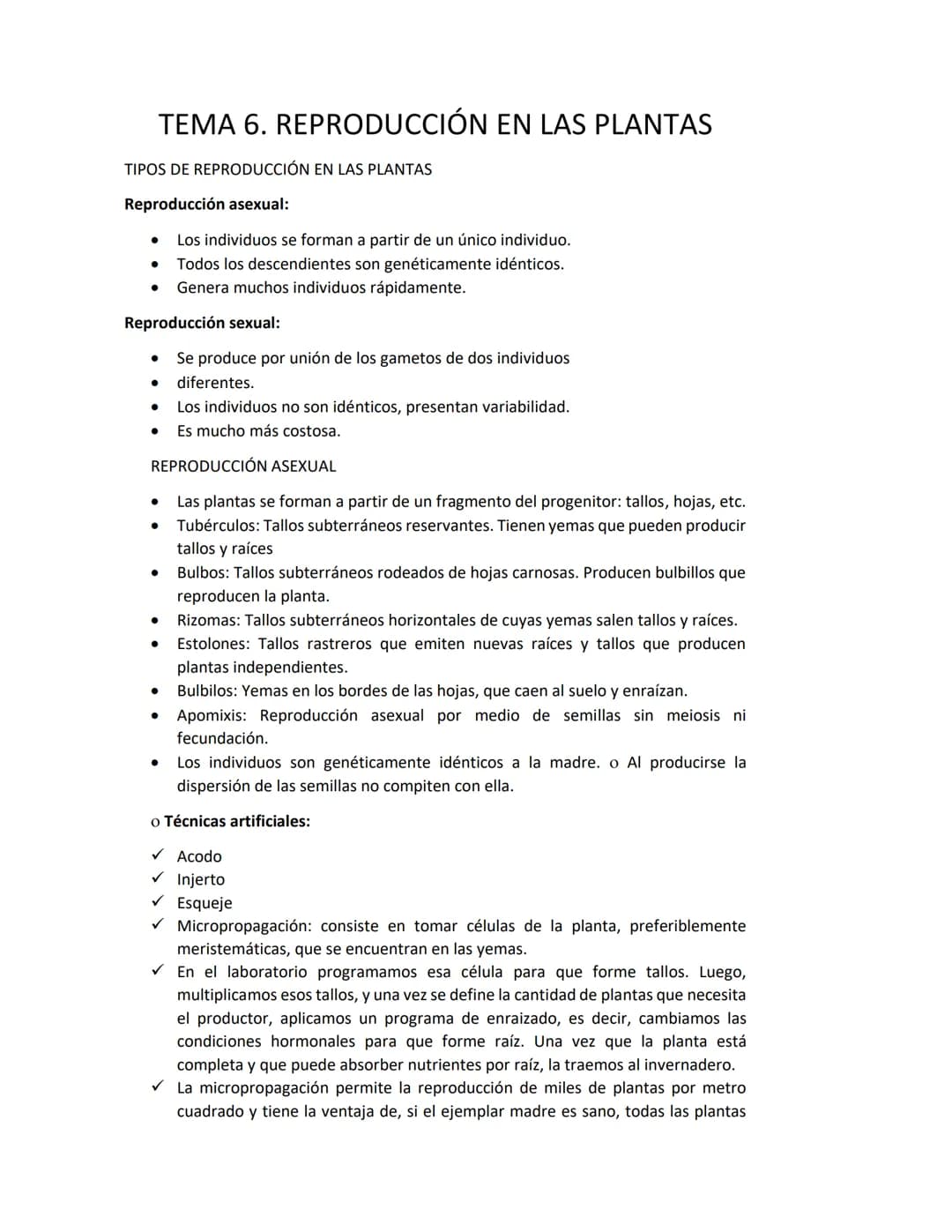
Tipos de Reproducción en las Plantas
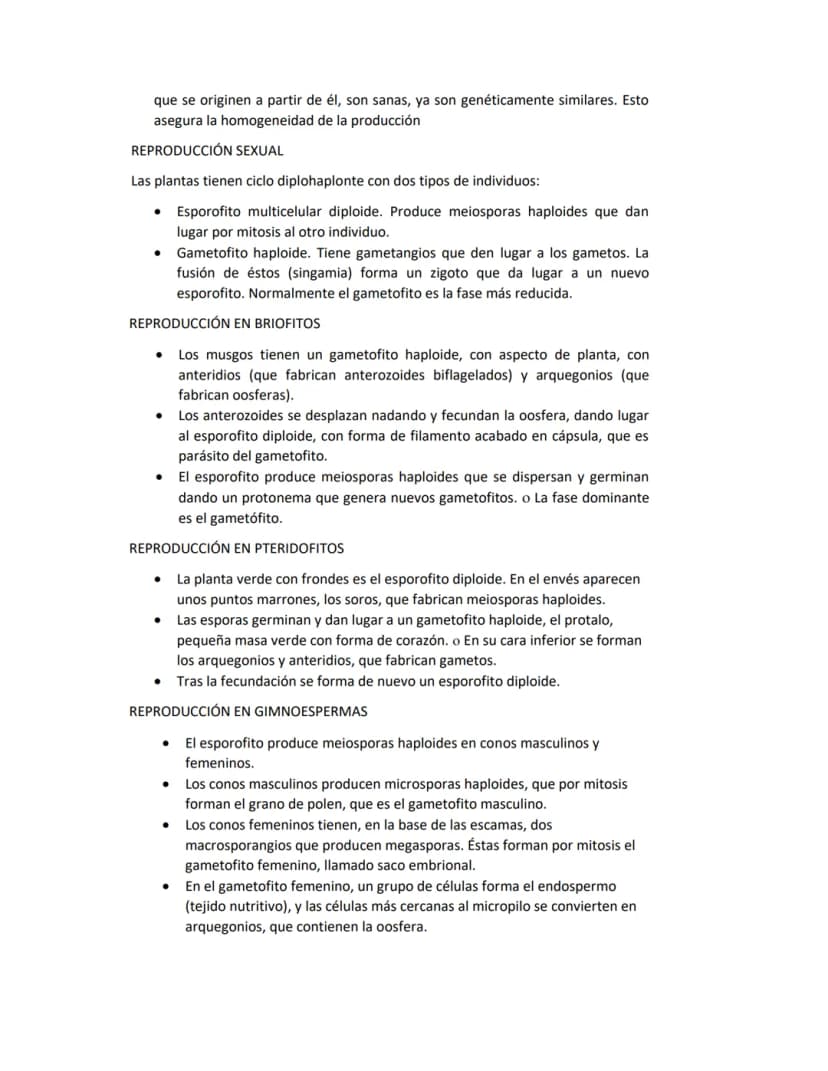
Las plantas son auténticas maestras de la supervivencia y han desarrollado dos estrategias completamente diferentes para reproducirse. Es como si tuvieran dos superpoderes distintos según lo que necesiten en cada momento.
La reproducción asexual es su método "rápido y eficaz": un solo individuo puede generar miles de copias idénticas de sí mismo. Piénsalo como una fotocopiadora biológica que funciona a toda velocidad. Los tubérculos (como las patatas), bulbos (como las cebollas), rizomas y estolones son algunas de sus técnicas más exitosas.
Lo más impresionante es la micropropagación, una técnica de laboratorio que puede producir miles de plantas por metro cuadrado. Los científicos toman células de las yemas y las "programan" para formar tallos, luego raíces, creando plantas completas en tiempo récord.
¡Dato curioso! La apomixis permite a algunas plantas crear semillas sin necesidad de fecundación, como si fueran semillas "clonadas" que no compiten con la planta madre.
2
of 4
Reproducción Sexual: El Ciclo Diplohaplonte
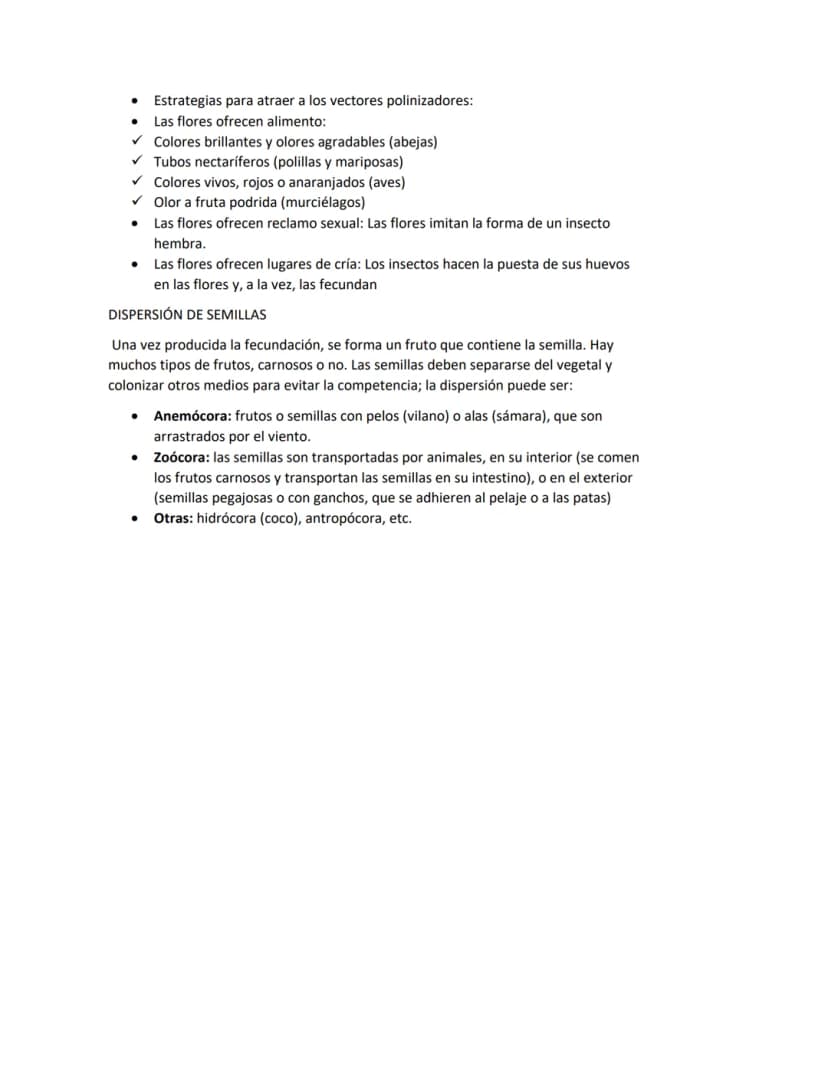
Aquí es donde las cosas se ponen realmente interesantes. Las plantas alternan entre dos "personalidades" completamente diferentes: el esporofito diploide (la planta que normalmente vemos) y el gametofito haploide (la fase reproductiva, a menudo microscópica).
En los briófitos (musgos), el gametofito es la estrella del show. Esa plantita verde que pisas en el bosque produce anterozoides que literalmente nadan hasta encontrar la oosfera para fecundarla. El resultado es un esporofito con aspecto de antena que vive como parásito encima del musgo.
Los pteridófitos (helechos) funcionan al revés: la planta verde con hojas es el esporofito, y los puntitos marrones del envés (soros) liberan esporas que germinan formando un protalo diminuto con forma de corazón.
Para recordar: En musgos domina el gametofito, en helechos domina el esporofito. ¡Es como si intercambiaran roles!
3
of 4
Gimnospermas y Angiospermas: La Evolución de la Flor
Las gimnospermas (como los pinos) revolucionaron la reproducción vegetal con sus conos. Los conos masculinos producen granos de polen que viajan por el viento hasta los conos femeninos, donde desarrollan un tubo polínico para fecundar la oosfera. El resultado son esos piñones que tanto te gustan.
Pero las angiospermas (plantas con flores) llevaron esto al siguiente nivel. Sus flores son auténticas obras de arte evolutivo con sépalos, pétalos, estambres y pistilos perfectamente organizados. Lo más alucinante es su doble fecundación: un gameto masculino fecunda la oosfera (formando el embrión) y otro fecunda el núcleo secundario (creando el endospermo nutritivo).
Esta estrategia es como tener un "pack completo": semilla + comida incluida para el futuro bebé planta. Por eso las angiospermas dominan el planeta: han perfeccionado tanto la reproducción que casi no tienen competencia.
Truco de estudio: Recuerda que solo las angiospermas tienen doble fecundación y frutos verdaderos. ¡Es su carta de presentación!
4
of 4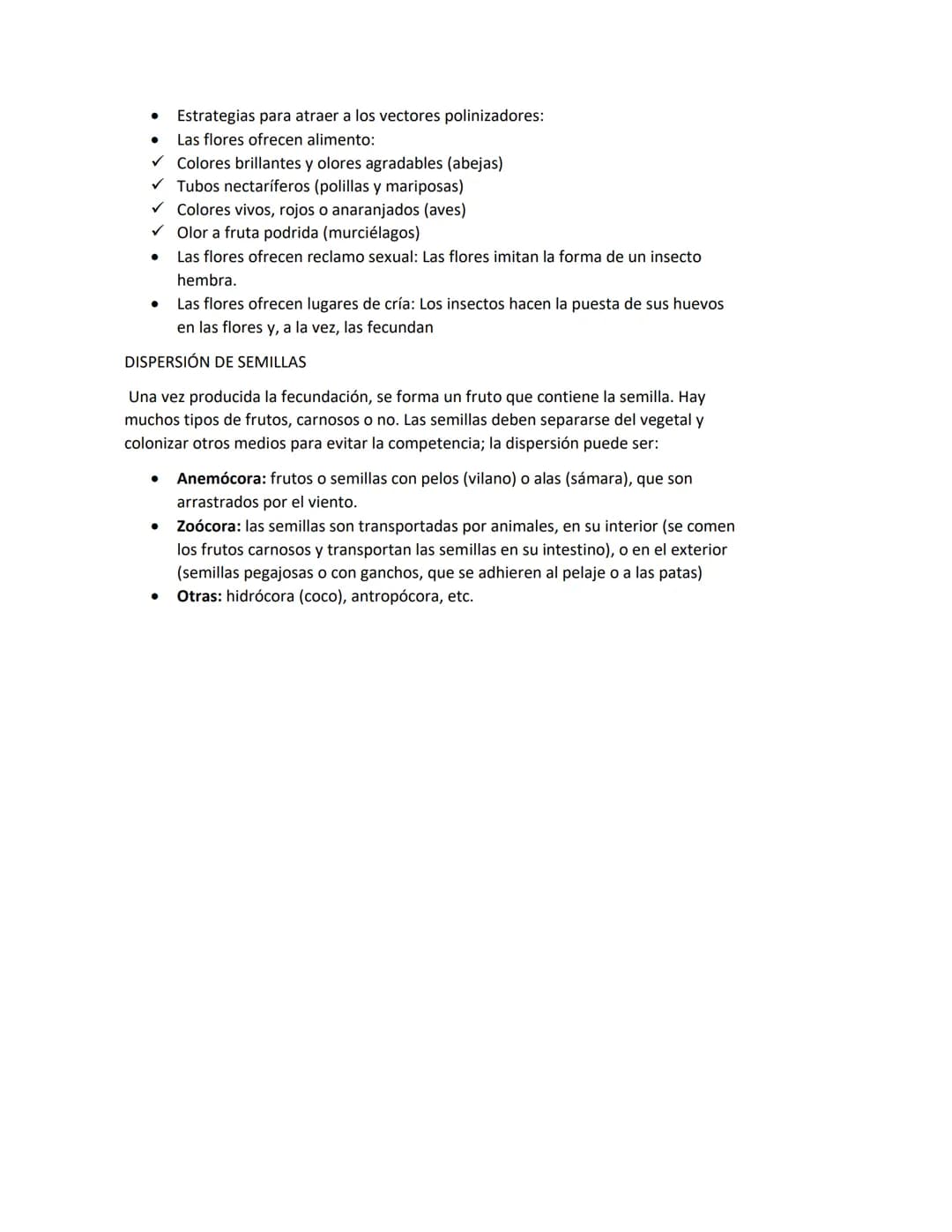
Polinización y Dispersión: Estrategias de Supervivencia
Las plantas han desarrollado técnicas de marketing que ya querrían las mejores agencias publicitarias. Para atraer vectores polinizadores, ofrecen paquetes irresistibles: colores brillantes y néctar para abejas, tubos especiales para mariposas, colores rojos para aves, e incluso olor a fruta podrida para murciélagos.
Algunas flores van más lejos y practican el "engaño sexual": imitan la forma de insectos hembra para atraer a los machos. Otras ofrecen "servicios de guardería", permitiendo que los insectos pongan huevos mientras polinizan.
La dispersión de semillas es igual de ingeniosa. La dispersión anemócora utiliza el viento con semillas que tienen pelos o alas como paracaídas. La zoócora usa a los animales: frutos sabrosos que se comen (y las semillas viajan en su intestino) o semillas pegajosas que se adhieren al pelaje.
Conexión real: La próxima vez que veas dientes de león volando o te quites semillas pegajosas de la ropa, estarás presenciando estas estrategias en acción.
We thought you’d never ask...
What is the Knowunity AI companion?
Our AI companion is specifically built for the needs of students. Based on the millions of content pieces we have on the platform we can provide truly meaningful and relevant answers to students. But its not only about answers, the companion is even more about guiding students through their daily learning challenges, with personalised study plans, quizzes or content pieces in the chat and 100% personalisation based on the students skills and developments.
Where can I download the Knowunity app?
You can download the app in the Google Play Store and in the Apple App Store.
Is Knowunity really free of charge?
That's right! Enjoy free access to study content, connect with fellow students, and get instant help – all at your fingertips.
Similar Content
Most popular content: Sexual Reproduction
1Most popular content in Biología
2Most popular content
9 Sociology
Sociology of Education Overview
Explore comprehensive A-Level Sociology notes on the education system, covering key theories, policies, and sociological perspectives. This resource includes insights on marketisation, gender roles, cultural deprivation, and educational inequalities, providing a thorough understanding of how education shapes social stratification and individual achievement. Ideal for exam preparation and in-depth study.
12102,8693,040
SociologySociology of Families: Comprehensive Revision
Dive into an extensive overview of family dynamics, perspectives, and patterns in sociology. This resource covers key concepts such as family diversity, gender roles, marriage, and the impact of social policies on family structures. Perfect for A-Level Sociology students preparing for Paper 2.
1273,6612,307
CriminologyCriminology: Crime & Punishment Overview
Comprehensive mindmaps covering key concepts in the Crime and Punishment topic for WJEC Criminology Unit 4. This resource includes detailed insights into the Criminal Justice System, crime prevention strategies, sentencing models, and the roles of various agencies. Ideal for A-Level revision, ensuring you grasp essential theories and legislative processes to excel in your exams.
1254,8691,059
SociologyComprehensive Crime & Deviance Overview
Explore an extensive revision of crime and deviance topics, including theories, types of crime, and the impact of media. This resource covers key concepts such as Marxism, functionalism, gender and crime, and the influence of globalization on criminal behavior. Ideal for students seeking a thorough understanding of criminology and its various theories. Type: Full Topic Revision.
1251,6541,399
C
 Biology
Cell Biology and Cell structure
cell structures
93,2470
 English Literature
An Inspector Calls: Character Insights
Explore in-depth analysis and key quotes for characters in J.B. Priestley's 'An Inspector Calls'. This resource covers Gerald Croft, Inspector Goole, Sheila Birling, Mrs. Birling, Eric Birling, and Eva Smith, focusing on themes of class, gender roles, and social responsibility. Ideal for students aiming for Grade 8 and above.
1025,429907
CriminologyWJEC Unit 4 Criminology
Criminology unit 4 detailed revision note
127,151125
CriminologyCriminology Theories Overview
Explore key criminology theories and their implications on crime and deviance. This comprehensive summary covers biological, psychological, and sociological perspectives, including labelling theory, right realism, and the impact of social campaigns on policy development. Ideal for A-Level criminology students seeking to understand the complexities of criminal behaviour and the factors influencing crime prevention strategies.
129,760210
English LiteratureRomeo and Juliet: Key themes
Key Romeo and Juliet themes and analysed quotes
106,708198
Can't find what you're looking for? Explore other subjects.
Students love us — and so will you.
4.6/5App Store
4.7/5Google Play
The app is very easy to use and well designed. I have found everything I was looking for so far and have been able to learn a lot from the presentations! I will definitely use the app for a class assignment! And of course it also helps a lot as an inspiration.
Stefan SiOS user
This app is really great. There are so many study notes and help [...]. My problem subject is French, for example, and the app has so many options for help. Thanks to this app, I have improved my French. I would recommend it to anyone.
Samantha KlichAndroid user
Wow, I am really amazed. I just tried the app because I've seen it advertised many times and was absolutely stunned. This app is THE HELP you want for school and above all, it offers so many things, such as workouts and fact sheets, which have been VERY helpful to me personally.
AnnaiOS user
Biología529 views·Updated Jun 28, 2026·4 pagesMétodos de Reproducción en Plantas: Sexual y Asexual
L
Lola Gordillo Torrubia@lolagordillotorrubia_ttlr
¿Alguna vez te has preguntado cómo una planta puede crear copias exactas de sí misma o cómo una flor se convierte en fruto? La reproducción en las plantas es mucho más fascinante de lo que imaginas, con estrategias increíbles para...
1
of 4
Sign up to see the content. It's free!
- Access to all documents
- Improve your grades
- Join milions of students
Tipos de Reproducción en las Plantas
Las plantas son auténticas maestras de la supervivencia y han desarrollado dos estrategias completamente diferentes para reproducirse. Es como si tuvieran dos superpoderes distintos según lo que necesiten en cada momento.
La reproducción asexual es su método "rápido y eficaz": un solo individuo puede generar miles de copias idénticas de sí mismo. Piénsalo como una fotocopiadora biológica que funciona a toda velocidad. Los tubérculos (como las patatas), bulbos (como las cebollas), rizomas y estolones son algunas de sus técnicas más exitosas.
Lo más impresionante es la micropropagación, una técnica de laboratorio que puede producir miles de plantas por metro cuadrado. Los científicos toman células de las yemas y las "programan" para formar tallos, luego raíces, creando plantas completas en tiempo récord.
¡Dato curioso! La apomixis permite a algunas plantas crear semillas sin necesidad de fecundación, como si fueran semillas "clonadas" que no compiten con la planta madre.
2
of 4Sign up to see the content. It's free!
- Access to all documents
- Improve your grades
- Join milions of students
Reproducción Sexual: El Ciclo Diplohaplonte
Aquí es donde las cosas se ponen realmente interesantes. Las plantas alternan entre dos "personalidades" completamente diferentes: el esporofito diploide (la planta que normalmente vemos) y el gametofito haploide (la fase reproductiva, a menudo microscópica).
En los briófitos (musgos), el gametofito es la estrella del show. Esa plantita verde que pisas en el bosque produce anterozoides que literalmente nadan hasta encontrar la oosfera para fecundarla. El resultado es un esporofito con aspecto de antena que vive como parásito encima del musgo.
Los pteridófitos (helechos) funcionan al revés: la planta verde con hojas es el esporofito, y los puntitos marrones del envés (soros) liberan esporas que germinan formando un protalo diminuto con forma de corazón.
Para recordar: En musgos domina el gametofito, en helechos domina el esporofito. ¡Es como si intercambiaran roles!
3
of 4Sign up to see the content. It's free!
- Access to all documents
- Improve your grades
- Join milions of students
Gimnospermas y Angiospermas: La Evolución de la Flor
Las gimnospermas (como los pinos) revolucionaron la reproducción vegetal con sus conos. Los conos masculinos producen granos de polen que viajan por el viento hasta los conos femeninos, donde desarrollan un tubo polínico para fecundar la oosfera. El resultado son esos piñones que tanto te gustan.
Pero las angiospermas (plantas con flores) llevaron esto al siguiente nivel. Sus flores son auténticas obras de arte evolutivo con sépalos, pétalos, estambres y pistilos perfectamente organizados. Lo más alucinante es su doble fecundación: un gameto masculino fecunda la oosfera (formando el embrión) y otro fecunda el núcleo secundario (creando el endospermo nutritivo).
Esta estrategia es como tener un "pack completo": semilla + comida incluida para el futuro bebé planta. Por eso las angiospermas dominan el planeta: han perfeccionado tanto la reproducción que casi no tienen competencia.
Truco de estudio: Recuerda que solo las angiospermas tienen doble fecundación y frutos verdaderos. ¡Es su carta de presentación!
4
of 4Sign up to see the content. It's free!
- Access to all documents
- Improve your grades
- Join milions of students
Polinización y Dispersión: Estrategias de Supervivencia
Las plantas han desarrollado técnicas de marketing que ya querrían las mejores agencias publicitarias. Para atraer vectores polinizadores, ofrecen paquetes irresistibles: colores brillantes y néctar para abejas, tubos especiales para mariposas, colores rojos para aves, e incluso olor a fruta podrida para murciélagos.
Algunas flores van más lejos y practican el "engaño sexual": imitan la forma de insectos hembra para atraer a los machos. Otras ofrecen "servicios de guardería", permitiendo que los insectos pongan huevos mientras polinizan.
La dispersión de semillas es igual de ingeniosa. La dispersión anemócora utiliza el viento con semillas que tienen pelos o alas como paracaídas. La zoócora usa a los animales: frutos sabrosos que se comen (y las semillas viajan en su intestino) o semillas pegajosas que se adhieren al pelaje.
Conexión real: La próxima vez que veas dientes de león volando o te quites semillas pegajosas de la ropa, estarás presenciando estas estrategias en acción.
We thought you’d never ask...
What is the Knowunity AI companion?
Our AI companion is specifically built for the needs of students. Based on the millions of content pieces we have on the platform we can provide truly meaningful and relevant answers to students. But its not only about answers, the companion is even more about guiding students through their daily learning challenges, with personalised study plans, quizzes or content pieces in the chat and 100% personalisation based on the students skills and developments.
Where can I download the Knowunity app?
You can download the app in the Google Play Store and in the Apple App Store.
Is Knowunity really free of charge?
That's right! Enjoy free access to study content, connect with fellow students, and get instant help – all at your fingertips.
Similar Content
Most popular content: Sexual Reproduction
1Most popular content in Biología
2Most popular content
9SociologySociology of Education Overview
Explore comprehensive A-Level Sociology notes on the education system, covering key theories, policies, and sociological perspectives. This resource includes insights on marketisation, gender roles, cultural deprivation, and educational inequalities, providing a thorough understanding of how education shapes social stratification and individual achievement. Ideal for exam preparation and in-depth study.
12102,8693,040
SociologySociology of Families: Comprehensive Revision
Dive into an extensive overview of family dynamics, perspectives, and patterns in sociology. This resource covers key concepts such as family diversity, gender roles, marriage, and the impact of social policies on family structures. Perfect for A-Level Sociology students preparing for Paper 2.
1273,6612,307
CriminologyCriminology: Crime & Punishment Overview
Comprehensive mindmaps covering key concepts in the Crime and Punishment topic for WJEC Criminology Unit 4. This resource includes detailed insights into the Criminal Justice System, crime prevention strategies, sentencing models, and the roles of various agencies. Ideal for A-Level revision, ensuring you grasp essential theories and legislative processes to excel in your exams.
1254,8691,059
SociologyComprehensive Crime & Deviance Overview
Explore an extensive revision of crime and deviance topics, including theories, types of crime, and the impact of media. This resource covers key concepts such as Marxism, functionalism, gender and crime, and the influence of globalization on criminal behavior. Ideal for students seeking a thorough understanding of criminology and its various theories. Type: Full Topic Revision.
1251,6541,399
C
BiologyCell Biology and Cell structure
cell structures
93,2470
English LiteratureAn Inspector Calls: Character Insights
Explore in-depth analysis and key quotes for characters in J.B. Priestley's 'An Inspector Calls'. This resource covers Gerald Croft, Inspector Goole, Sheila Birling, Mrs. Birling, Eric Birling, and Eva Smith, focusing on themes of class, gender roles, and social responsibility. Ideal for students aiming for Grade 8 and above.
1025,429907
CriminologyWJEC Unit 4 Criminology
Criminology unit 4 detailed revision note
127,151125
CriminologyCriminology Theories Overview
Explore key criminology theories and their implications on crime and deviance. This comprehensive summary covers biological, psychological, and sociological perspectives, including labelling theory, right realism, and the impact of social campaigns on policy development. Ideal for A-Level criminology students seeking to understand the complexities of criminal behaviour and the factors influencing crime prevention strategies.
129,760210
English LiteratureRomeo and Juliet: Key themes
Key Romeo and Juliet themes and analysed quotes
106,708198
Can't find what you're looking for? Explore other subjects.
Students love us — and so will you.
4.6/5App Store
4.7/5Google Play
The app is very easy to use and well designed. I have found everything I was looking for so far and have been able to learn a lot from the presentations! I will definitely use the app for a class assignment! And of course it also helps a lot as an inspiration.
Stefan SiOS user
This app is really great. There are so many study notes and help [...]. My problem subject is French, for example, and the app has so many options for help. Thanks to this app, I have improved my French. I would recommend it to anyone.
Samantha KlichAndroid user
Wow, I am really amazed. I just tried the app because I've seen it advertised many times and was absolutely stunned. This app is THE HELP you want for school and above all, it offers so many things, such as workouts and fact sheets, which have been VERY helpful to me personally.
AnnaiOS user