
José Rizal's travels shaped his perspective and fueled his passion...
 AP World History75 views·Updated Jun 15, 2026·2 pages
Journey Across the World: Jose Rizal's Travels
D
Double00@0000_happy
1
of 2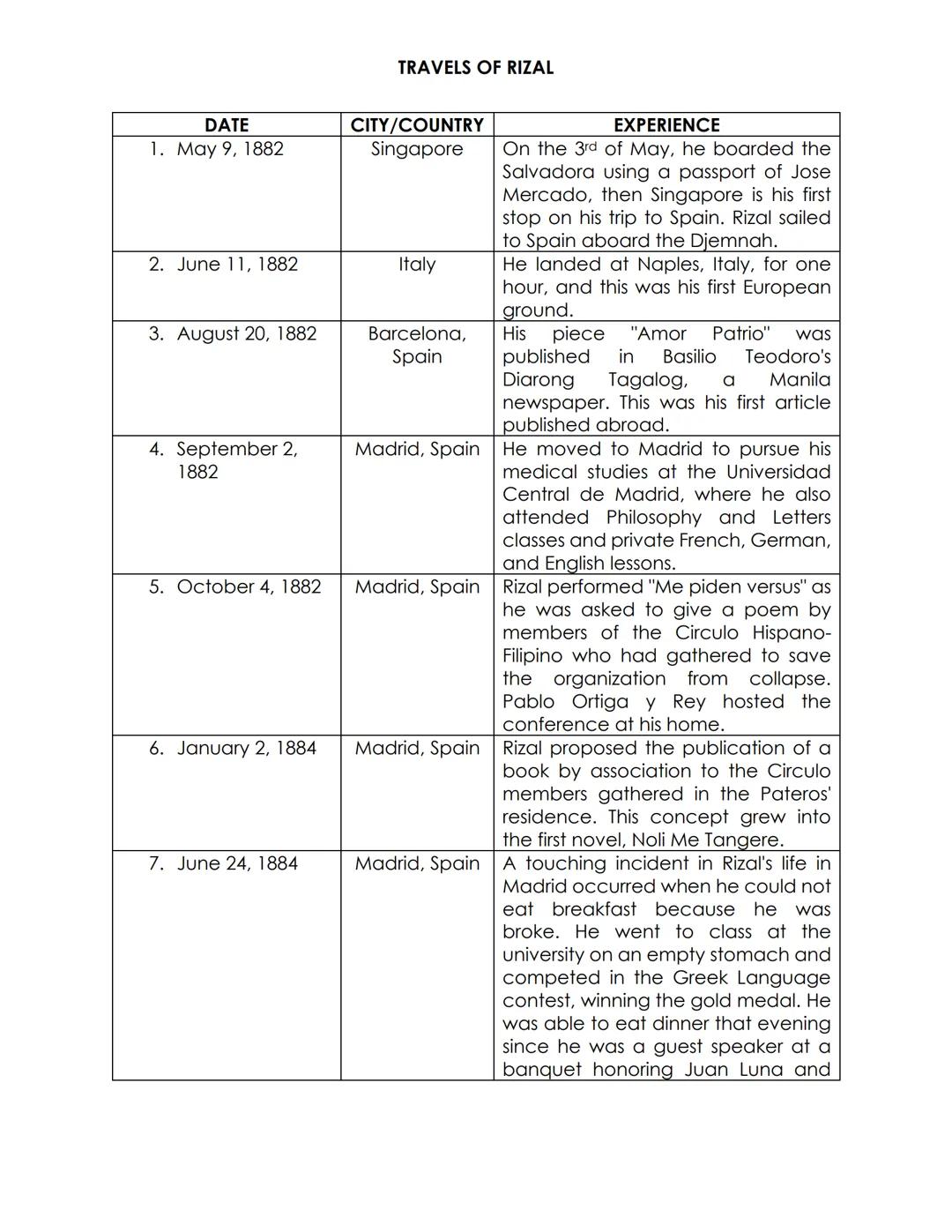
Rizal's Early International Travels
Rizal began his travels abroad on May 9, 1882, boarding the Salvadora with a passport under the name José Mercado. Singapore became his first international destination, where he briefly stayed before continuing his journey aboard the Djemnah to Europe. This marked the beginning of his transformative international experience.
On June 11, 1882, Rizal set foot on European soil for the first time when he landed in Naples, Italy, even if just for an hour. By August 20th, he had reached Barcelona, Spain, where his first article published abroad—"Amor Patrio" (Love of Country)—appeared in the Manila newspaper Diarong Tagalog.
Rizal moved to Madrid on September 2, 1882, to pursue medical studies at the Universidad Central de Madrid. He immersed himself in education, taking classes in Philosophy and Letters alongside private language lessons in French, German, and English. His dedication to knowledge was already evident.
Did you know? Despite being in a foreign land, Rizal continued to support Filipino causes. On October 4, 1882, he performed a poem titled "Me piden versus" at a gathering of the Circulo Hispano Filipino, demonstrating his ongoing connection to his homeland while abroad.
In Madrid, Rizal experienced both triumph and hardship. On January 2, 1884, he proposed publishing a book to members of the Circulo—a concept that would eventually become his influential novel Noli Me Tangere. Later that year, on June 24, a particularly touching incident occurred when Rizal competed in a Greek Language contest on an empty stomach (being too broke for breakfast) and still won the gold medal!
2
of 2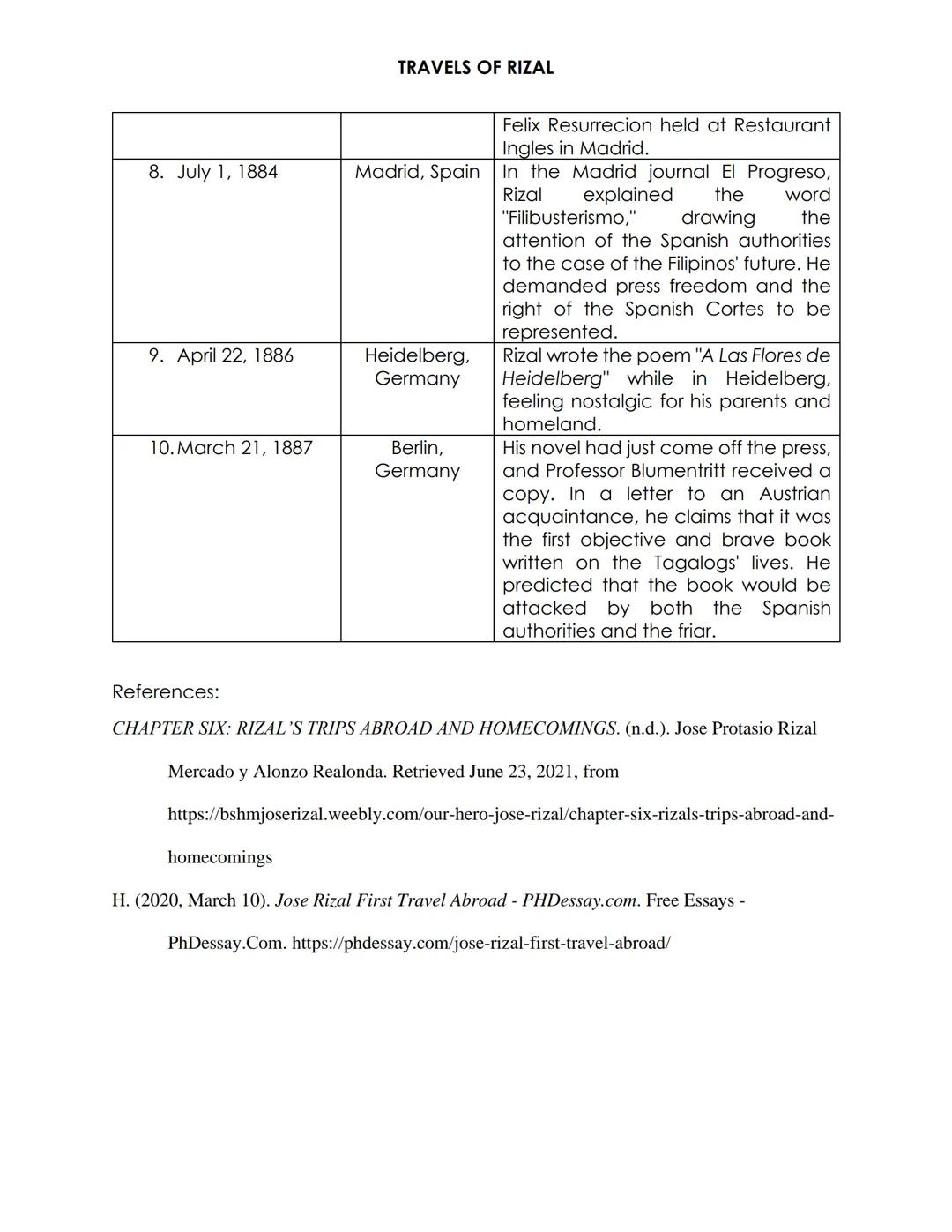
Continuing Rizal's International Journey
Rizal's travels were more than just geographic movements—they were intellectual journeys that shaped his vision for the Philippines. After his educational success in Madrid, he continued exploring Europe and developing his revolutionary ideas.
On April 22, 1886, Rizal made a significant breakthrough when he completed his Noli Me Tangere in Berlin. This novel would become one of his most important works, exposing the abuses of Spanish colonial rule in the Philippines. Through fiction, Rizal found a powerful way to express the reforms he believed were necessary for his homeland.
By March 21, 1887, Rizal's journey had produced tangible results. His completed novel was published and began circulating, marking the beginning of his most influential contribution to Philippine nationalism. The book—written during his travels—became a catalyst for change, reflecting how his international experiences translated into meaningful action for his country.
Remember this: Rizal's travels weren't luxurious vacations—they were filled with financial struggles, homesickness, and hard work. Yet through these challenges, he developed the perspectives that would make him the Philippines' national hero.
Rizal's journey demonstrates how travel can broaden your mind and sharpen your purpose. His experiences abroad connected him with new ideas while strengthening his commitment to his homeland. Through his travels, Rizal transformed from a promising student into a visionary whose works would inspire generations of Filipinos.
We thought you’d never ask...
What is the Knowunity AI companion?
Our AI companion is specifically built for the needs of students. Based on the millions of content pieces we have on the platform we can provide truly meaningful and relevant answers to students. But its not only about answers, the companion is even more about guiding students through their daily learning challenges, with personalised study plans, quizzes or content pieces in the chat and 100% personalisation based on the students skills and developments.
Where can I download the Knowunity app?
You can download the app in the Google Play Store and in the Apple App Store.
Is Knowunity really free of charge?
That's right! Enjoy free access to study content, connect with fellow students, and get instant help – all at your fingertips.
Most popular content: Exploration
3 European History
Most popular content in AP World History
9O
AP World HistoryOrigins of Ancient River Civilizations
Analyze the environmental factors and technological innovations that led to the rise of early states in Mesopotamia, Egypt, and the Indus Valley.
9th3,1870
O
AP World HistoryOrigins and Continuity of the Byzantine Empire
Analyze the political and cultural transitions from the Roman Empire to the Byzantine Empire, focusing on the reign of Justinian I and his code.
9th1,6320
O
AP World HistoryOrigins of African State Building (1200-1450)
Analyze how trade networks and environmental factors influenced the formation of early states like Great Zimbabwe and the Swahili city-states.
9th9700
I
AP World HistoryIntroduction to Classical Civilizations
Master fundamental concepts, geographic locations, and the defining characteristics of major empires like Rome, Han China, and Maurya India.
9th7540
O
AP World HistoryOrigins of Indigenous Americas State Building
Analyze the foundational governance structures and environmental adaptations of the Maya, Aztec, and Inca civilizations between 1200 and 1450.
9th5070
1
AP World History1200-1450 CE quiz 1
Quiz on information about developments in East Asia, South Asia, the Middle East, and Europe at the time
10th2430
O
AP World HistoryOrigins of Economic Exchange Networks
Practice identifying the foundational environmental and technological factors that enabled Silk Road, Indian Ocean, and Trans-Saharan trade.
9th3370
S
AP World HistoryState Building in East Asia Developments
Analyze the administrative methods, such as the Confucian bureaucracy and tributary system, used by the Song Dynasty to maintain political power.
9th2730
I
AP World HistoryIntroduction to State Building and Administration
Practice analyzing how land-based empires used bureaucracies and military elites to consolidate power between 1450 and 1750.
9th2600
Most popular content
9O
 AP US History
Origins and Dynamics of the Columbian Exchange
Analyze the ecological and economic motivations behind the initial transfer of goods, people, and diseases between the Old and New Worlds.
9th3,1280
I
AP US HistoryIntroduction to Early Cultural Interactions
Analyze the initial social and religious encounters between Europeans, Africans, and Indigenous peoples in the colonial Americas.
9th2,7730
O
AP World HistoryOrigins of Ancient River Civilizations
Analyze the environmental factors and technological innovations that led to the rise of early states in Mesopotamia, Egypt, and the Indus Valley.
9th3,1870
M
AP US HistoryMotivations for European Exploration
Analyze the economic, religious, and political factors that drove European powers to the Americas during the 15th and 16th centuries.
9th1,7780
F
 AP Psychology
Foundations of Ethical Guidelines in Research
Practice the core principles of the APA ethical code including informed consent, debriefing, and the role of Institutional Review Boards.
9th1,3360
I
AP US HistoryIntroduction to Native American Societies
Examine the diverse social, political, and economic structures of North American indigenous groups prior to European contact.
9th1,1100
I
 AP Biology
Introduction to Biological Elements of Life
Practice identifying the essential elements including carbon, nitrogen, phosphorus, and sulfur that compose biological macromolecules.
9th1,7390
I
AP US HistoryIntroduction to the Spanish Encomienda System
Explore the fundamental economic and social structures of the Spanish colonial system, focusing on the encomienda and the casta social hierarchy.
9th8890
O
AP World HistoryOrigins and Continuity of the Byzantine Empire
Analyze the political and cultural transitions from the Roman Empire to the Byzantine Empire, focusing on the reign of Justinian I and his code.
9th1,6320
Can't find what you're looking for? Explore other subjects.
Students love us — and so will you.
4.6/5App Store
4.7/5Google Play
The app is very easy to use and well designed. I have found everything I was looking for so far and have been able to learn a lot from the presentations! I will definitely use the app for a class assignment! And of course it also helps a lot as an inspiration.
Stefan SiOS user
This app is really great. There are so many study notes and help [...]. My problem subject is French, for example, and the app has so many options for help. Thanks to this app, I have improved my French. I would recommend it to anyone.
Samantha KlichAndroid user
Wow, I am really amazed. I just tried the app because I've seen it advertised many times and was absolutely stunned. This app is THE HELP you want for school and above all, it offers so many things, such as workouts and fact sheets, which have been VERY helpful to me personally.
AnnaiOS user
AP World History75 views·Updated Jun 15, 2026·2 pagesJourney Across the World: Jose Rizal's Travels
D
Double00@0000_happy
José Rizal's travels shaped his perspective and fueled his passion for reform in the Philippines. From 1882 to 1887, his journeys across Europe and Asia exposed him to new ideas and cultures while providing opportunities to develop as a writer,...
1
of 2
Sign up to see the content. It's free!
- Access to all documents
- Improve your grades
- Join milions of students
Rizal's Early International Travels
Rizal began his travels abroad on May 9, 1882, boarding the Salvadora with a passport under the name José Mercado. Singapore became his first international destination, where he briefly stayed before continuing his journey aboard the Djemnah to Europe. This marked the beginning of his transformative international experience.
On June 11, 1882, Rizal set foot on European soil for the first time when he landed in Naples, Italy, even if just for an hour. By August 20th, he had reached Barcelona, Spain, where his first article published abroad—"Amor Patrio" (Love of Country)—appeared in the Manila newspaper Diarong Tagalog.
Rizal moved to Madrid on September 2, 1882, to pursue medical studies at the Universidad Central de Madrid. He immersed himself in education, taking classes in Philosophy and Letters alongside private language lessons in French, German, and English. His dedication to knowledge was already evident.
Did you know? Despite being in a foreign land, Rizal continued to support Filipino causes. On October 4, 1882, he performed a poem titled "Me piden versus" at a gathering of the Circulo Hispano Filipino, demonstrating his ongoing connection to his homeland while abroad.
In Madrid, Rizal experienced both triumph and hardship. On January 2, 1884, he proposed publishing a book to members of the Circulo—a concept that would eventually become his influential novel Noli Me Tangere. Later that year, on June 24, a particularly touching incident occurred when Rizal competed in a Greek Language contest on an empty stomach (being too broke for breakfast) and still won the gold medal!
2
of 2Sign up to see the content. It's free!
- Access to all documents
- Improve your grades
- Join milions of students
Continuing Rizal's International Journey
Rizal's travels were more than just geographic movements—they were intellectual journeys that shaped his vision for the Philippines. After his educational success in Madrid, he continued exploring Europe and developing his revolutionary ideas.
On April 22, 1886, Rizal made a significant breakthrough when he completed his Noli Me Tangere in Berlin. This novel would become one of his most important works, exposing the abuses of Spanish colonial rule in the Philippines. Through fiction, Rizal found a powerful way to express the reforms he believed were necessary for his homeland.
By March 21, 1887, Rizal's journey had produced tangible results. His completed novel was published and began circulating, marking the beginning of his most influential contribution to Philippine nationalism. The book—written during his travels—became a catalyst for change, reflecting how his international experiences translated into meaningful action for his country.
Remember this: Rizal's travels weren't luxurious vacations—they were filled with financial struggles, homesickness, and hard work. Yet through these challenges, he developed the perspectives that would make him the Philippines' national hero.
Rizal's journey demonstrates how travel can broaden your mind and sharpen your purpose. His experiences abroad connected him with new ideas while strengthening his commitment to his homeland. Through his travels, Rizal transformed from a promising student into a visionary whose works would inspire generations of Filipinos.
We thought you’d never ask...
What is the Knowunity AI companion?
Our AI companion is specifically built for the needs of students. Based on the millions of content pieces we have on the platform we can provide truly meaningful and relevant answers to students. But its not only about answers, the companion is even more about guiding students through their daily learning challenges, with personalised study plans, quizzes or content pieces in the chat and 100% personalisation based on the students skills and developments.
Where can I download the Knowunity app?
You can download the app in the Google Play Store and in the Apple App Store.
Is Knowunity really free of charge?
That's right! Enjoy free access to study content, connect with fellow students, and get instant help – all at your fingertips.
Most popular content: Exploration
3Most popular content in AP World History
9O
AP World HistoryOrigins of Ancient River Civilizations
Analyze the environmental factors and technological innovations that led to the rise of early states in Mesopotamia, Egypt, and the Indus Valley.
9th3,1870
O
AP World HistoryOrigins and Continuity of the Byzantine Empire
Analyze the political and cultural transitions from the Roman Empire to the Byzantine Empire, focusing on the reign of Justinian I and his code.
9th1,6320
O
AP World HistoryOrigins of African State Building (1200-1450)
Analyze how trade networks and environmental factors influenced the formation of early states like Great Zimbabwe and the Swahili city-states.
9th9700
I
AP World HistoryIntroduction to Classical Civilizations
Master fundamental concepts, geographic locations, and the defining characteristics of major empires like Rome, Han China, and Maurya India.
9th7540
O
AP World HistoryOrigins of Indigenous Americas State Building
Analyze the foundational governance structures and environmental adaptations of the Maya, Aztec, and Inca civilizations between 1200 and 1450.
9th5070
1
AP World History1200-1450 CE quiz 1
Quiz on information about developments in East Asia, South Asia, the Middle East, and Europe at the time
10th2430
O
AP World HistoryOrigins of Economic Exchange Networks
Practice identifying the foundational environmental and technological factors that enabled Silk Road, Indian Ocean, and Trans-Saharan trade.
9th3370
S
AP World HistoryState Building in East Asia Developments
Analyze the administrative methods, such as the Confucian bureaucracy and tributary system, used by the Song Dynasty to maintain political power.
9th2730
I
AP World HistoryIntroduction to State Building and Administration
Practice analyzing how land-based empires used bureaucracies and military elites to consolidate power between 1450 and 1750.
9th2600
Most popular content
9O
AP US HistoryOrigins and Dynamics of the Columbian Exchange
Analyze the ecological and economic motivations behind the initial transfer of goods, people, and diseases between the Old and New Worlds.
9th3,1280
I
AP US HistoryIntroduction to Early Cultural Interactions
Analyze the initial social and religious encounters between Europeans, Africans, and Indigenous peoples in the colonial Americas.
9th2,7730
O
AP World HistoryOrigins of Ancient River Civilizations
Analyze the environmental factors and technological innovations that led to the rise of early states in Mesopotamia, Egypt, and the Indus Valley.
9th3,1870
M
AP US HistoryMotivations for European Exploration
Analyze the economic, religious, and political factors that drove European powers to the Americas during the 15th and 16th centuries.
9th1,7780
F
AP PsychologyFoundations of Ethical Guidelines in Research
Practice the core principles of the APA ethical code including informed consent, debriefing, and the role of Institutional Review Boards.
9th1,3360
I
AP US HistoryIntroduction to Native American Societies
Examine the diverse social, political, and economic structures of North American indigenous groups prior to European contact.
9th1,1100
I
AP BiologyIntroduction to Biological Elements of Life
Practice identifying the essential elements including carbon, nitrogen, phosphorus, and sulfur that compose biological macromolecules.
9th1,7390
I
AP US HistoryIntroduction to the Spanish Encomienda System
Explore the fundamental economic and social structures of the Spanish colonial system, focusing on the encomienda and the casta social hierarchy.
9th8890
O
AP World HistoryOrigins and Continuity of the Byzantine Empire
Analyze the political and cultural transitions from the Roman Empire to the Byzantine Empire, focusing on the reign of Justinian I and his code.
9th1,6320
Can't find what you're looking for? Explore other subjects.
Students love us — and so will you.
4.6/5App Store
4.7/5Google Play
The app is very easy to use and well designed. I have found everything I was looking for so far and have been able to learn a lot from the presentations! I will definitely use the app for a class assignment! And of course it also helps a lot as an inspiration.
Stefan SiOS user
This app is really great. There are so many study notes and help [...]. My problem subject is French, for example, and the app has so many options for help. Thanks to this app, I have improved my French. I would recommend it to anyone.
Samantha KlichAndroid user
Wow, I am really amazed. I just tried the app because I've seen it advertised many times and was absolutely stunned. This app is THE HELP you want for school and above all, it offers so many things, such as workouts and fact sheets, which have been VERY helpful to me personally.
AnnaiOS user