
Ever wonder how global trade shaped early America? In the...
 AP US History19 views·Updated Jun 17, 2026·3 pages
Comprehensive Notes for APUSH 2.6

Shreya Bedi@shreyabedi_oyaa
1 / 3
1
of 3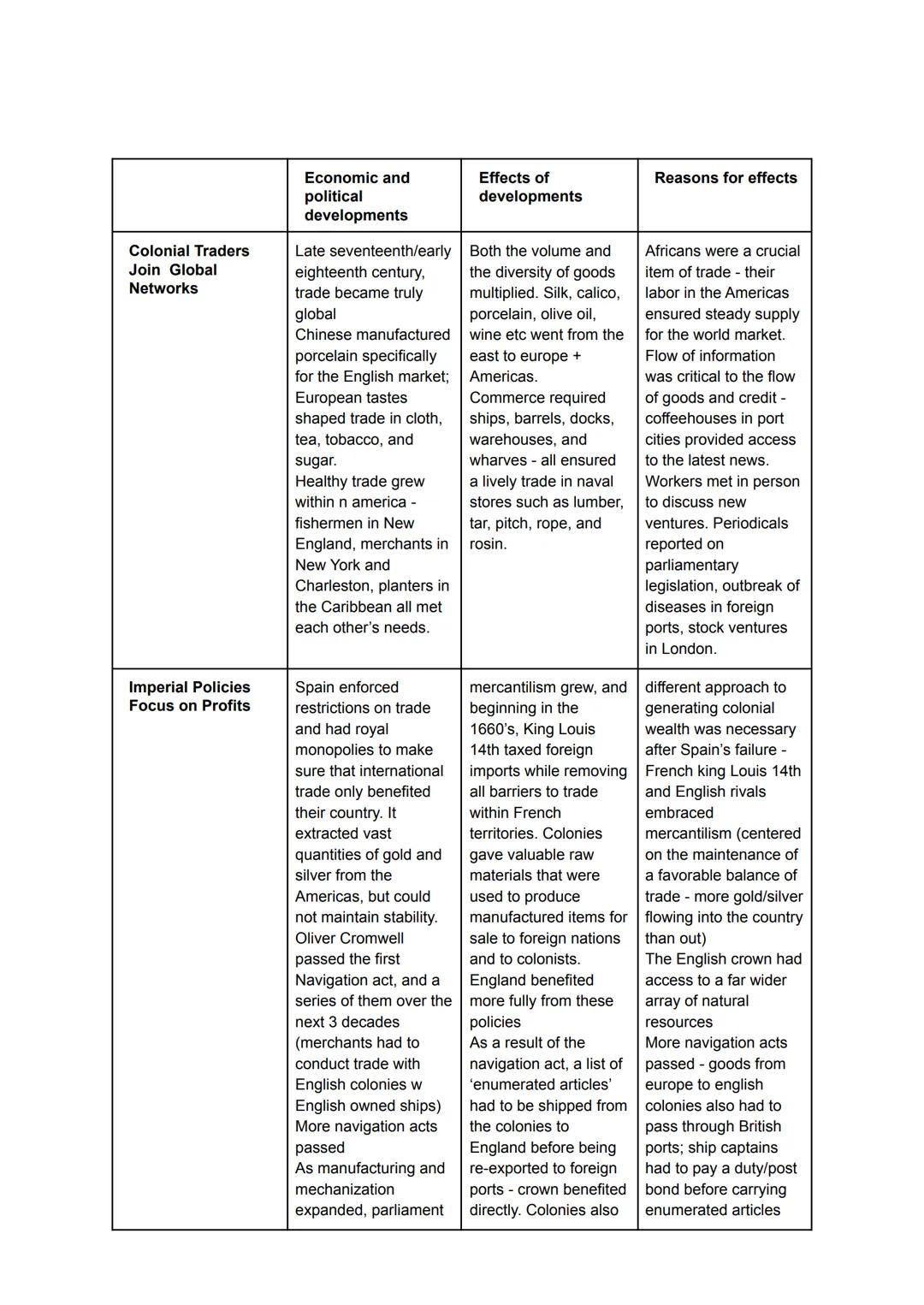
Global Trade Networks Transform Colonial Economies
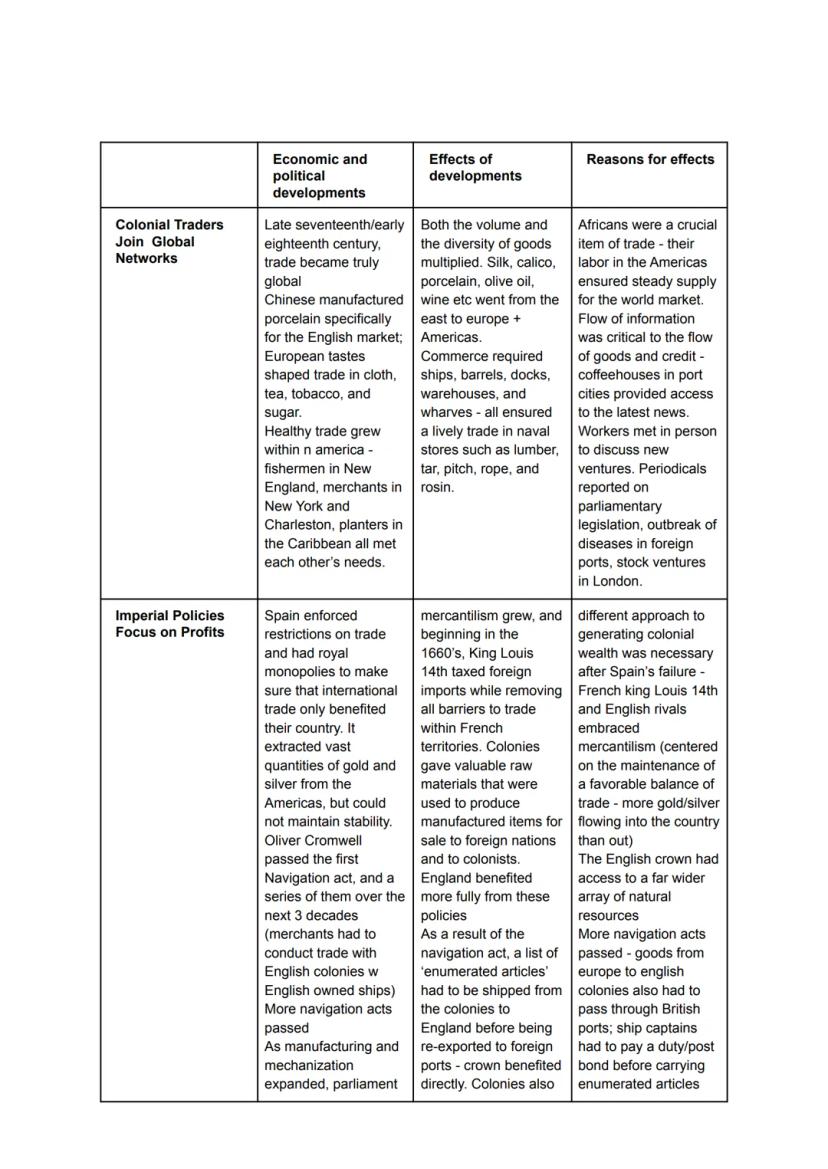
Trade became truly global by the early 1700s, with goods flowing between continents like never before. Chinese manufacturers created porcelain specifically for English customers, while European tastes influenced worldwide trade in cloth, tea, tobacco, and sugar. Within North America, a healthy commercial network developed as New England fishermen, New York merchants, and Caribbean planters all exchanged goods.
Mercantilism emerged as the dominant economic philosophy. This system centered on maintaining a favorable balance of trade—ensuring more gold and silver flowed into a country than out. After witnessing Spain's failed approach (extracting massive quantities of precious metals), England and France developed more sophisticated trade policies to control colonial commerce.
England's Navigation Acts, first passed under Oliver Cromwell and expanded over decades, required colonial trade to use English ships and pass through English ports. "Enumerated articles" from colonies had to first ship to England before being re-exported elsewhere, ensuring profits for the mother country. Later acts even prohibited American-made textiles, hats, and iron goods to prevent colonial manufacturing from competing with British industries.
Did you know? Coffeehouses in colonial port cities became crucial centers where merchants exchanged the latest shipping news, discussed business ventures, and read about parliamentary laws or disease outbreaks in distant ports—making information flow as important as the flow of goods!
2
of 3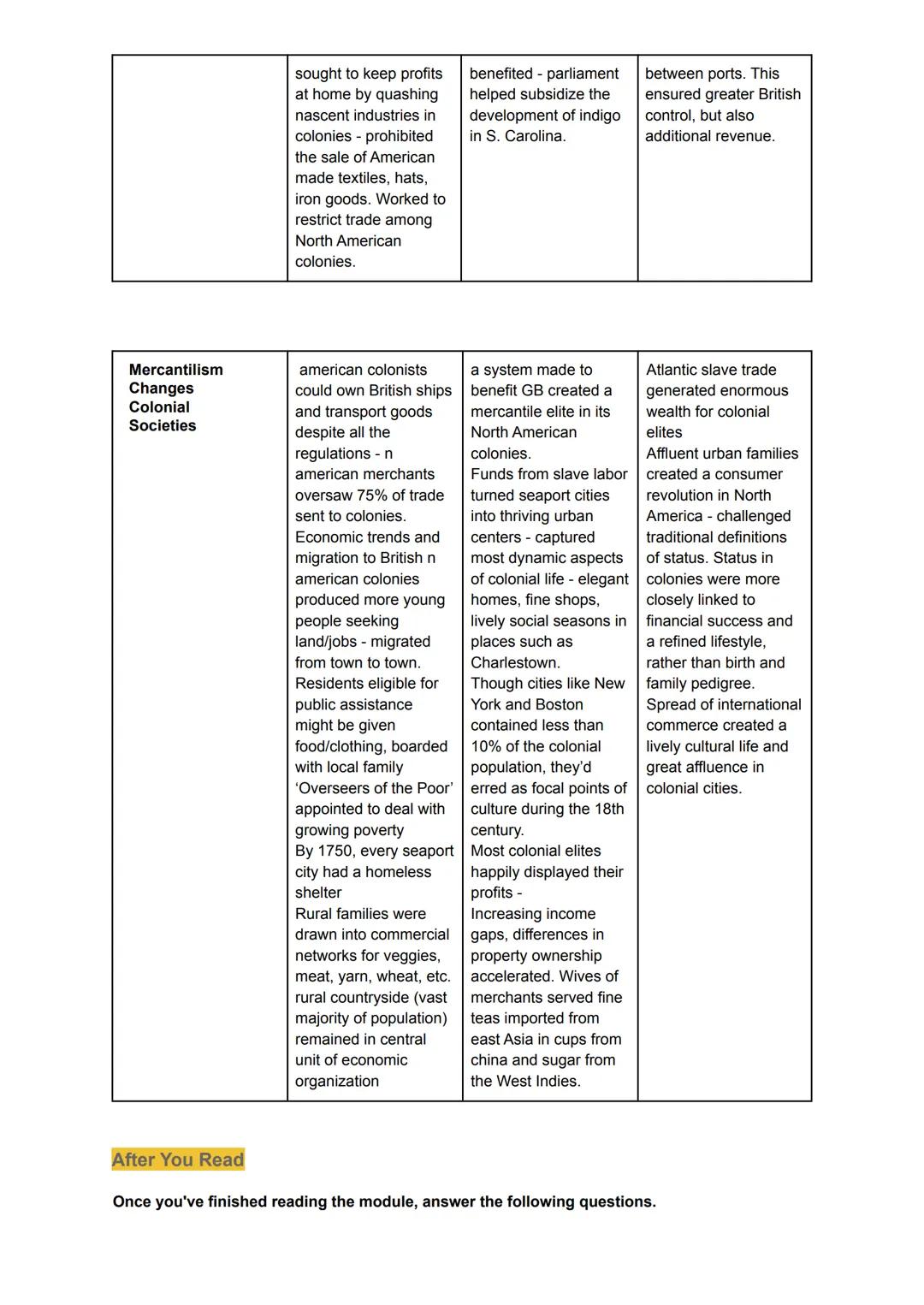
Colonial Society Transforms Under Global Commerce
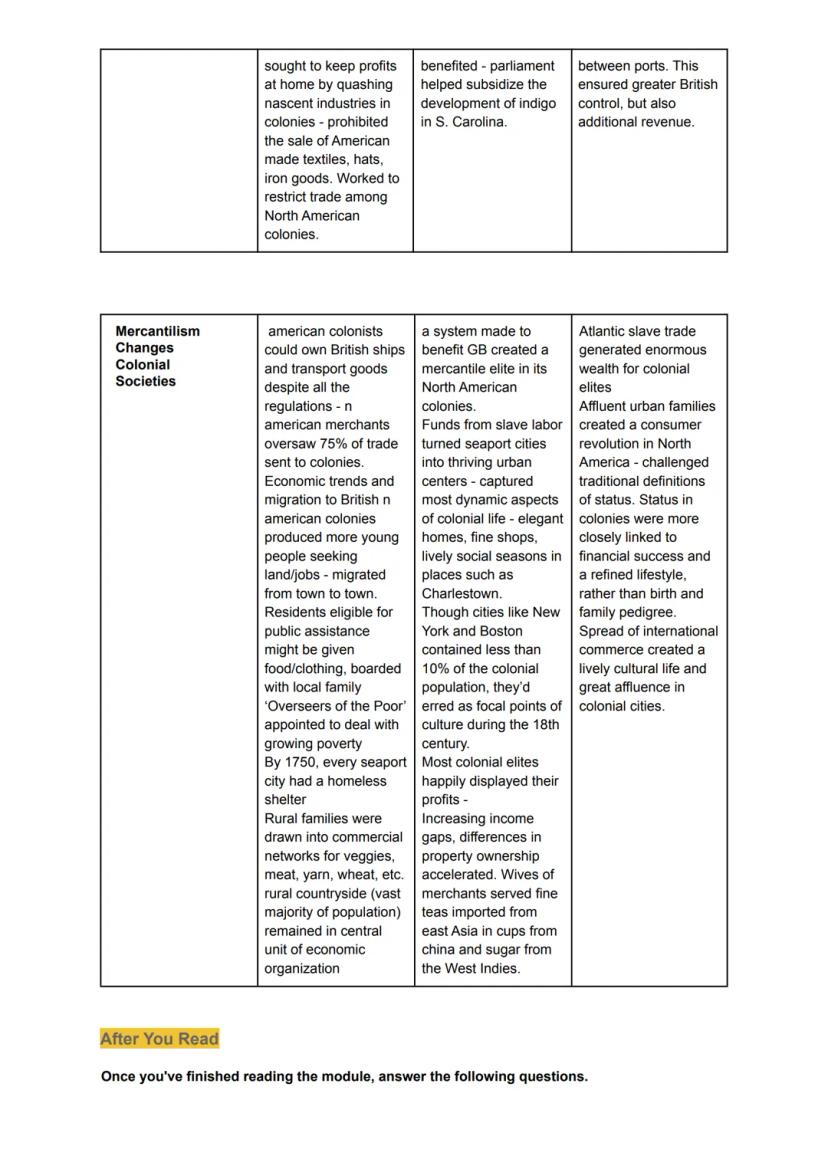
Despite strict British regulations, American colonists found ways to participate and profit. North American merchants managed to control about 75% of trade sent to the colonies, creating a growing mercantile elite in American port cities. The Atlantic slave trade generated enormous wealth for these colonial businessmen, transforming places like Charleston and Boston into thriving urban centers.
This new wealth created stark social divides. While affluent urban families enjoyed imported teas served in Chinese porcelain with West Indian sugar, economic hardship spread too. Young people migrated between towns seeking work, and growing poverty required "Overseers of the Poor" and homeless shelters in every seaport city by 1750.
Rural families (the vast majority of colonists) were increasingly drawn into commercial networks, selling vegetables, meat, yarn, and wheat. But the most dramatic social changes happened in cities, which became cultural focal points despite containing less than 10% of the colonial population.
Think about it: Status in colonial America became increasingly linked to financial success rather than family background or birth. This "consumer revolution" allowed people with new money to display their wealth through imported goods, challenging traditional ideas about social class.
3
of 3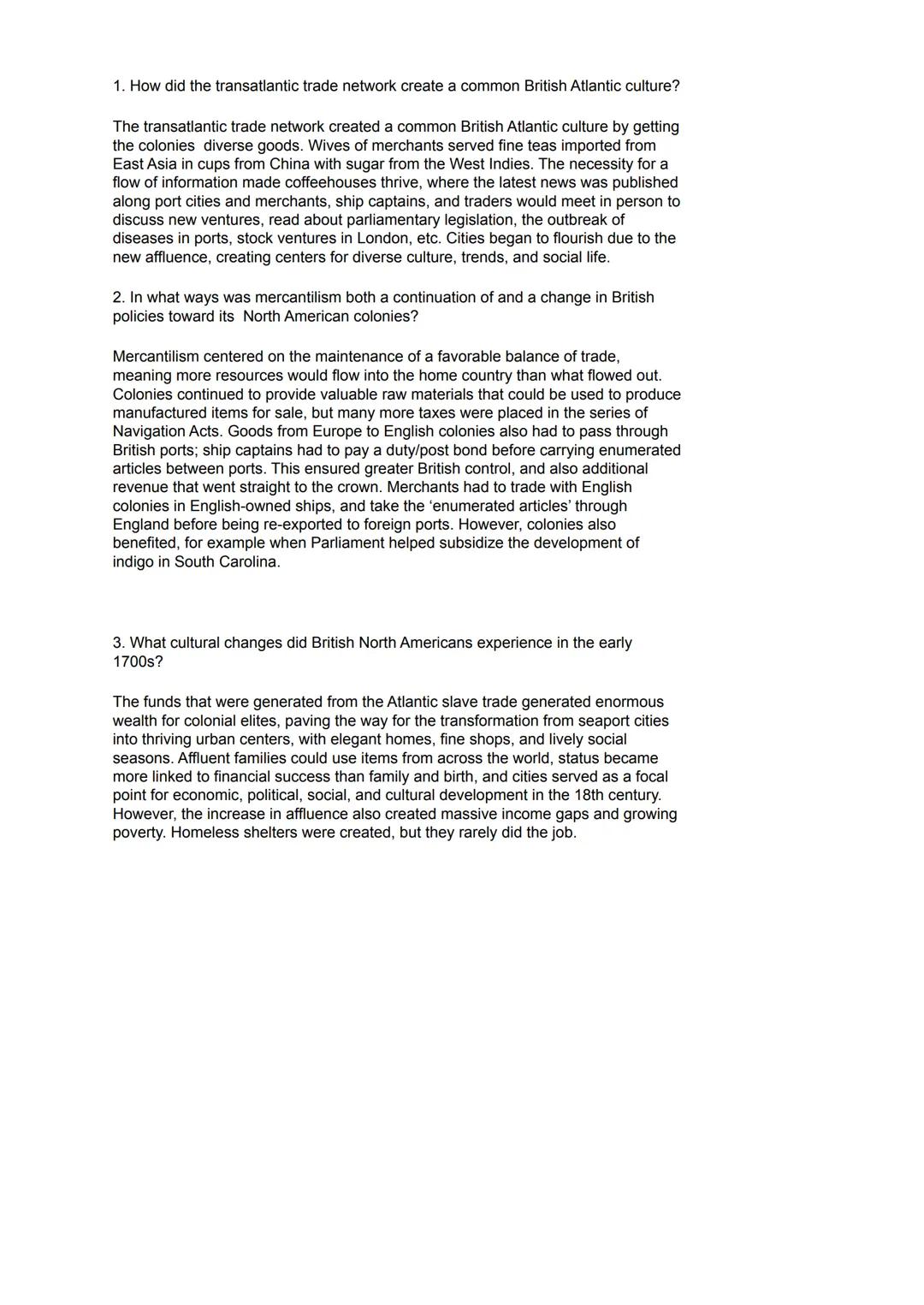
The Cultural Impact of Atlantic Trade
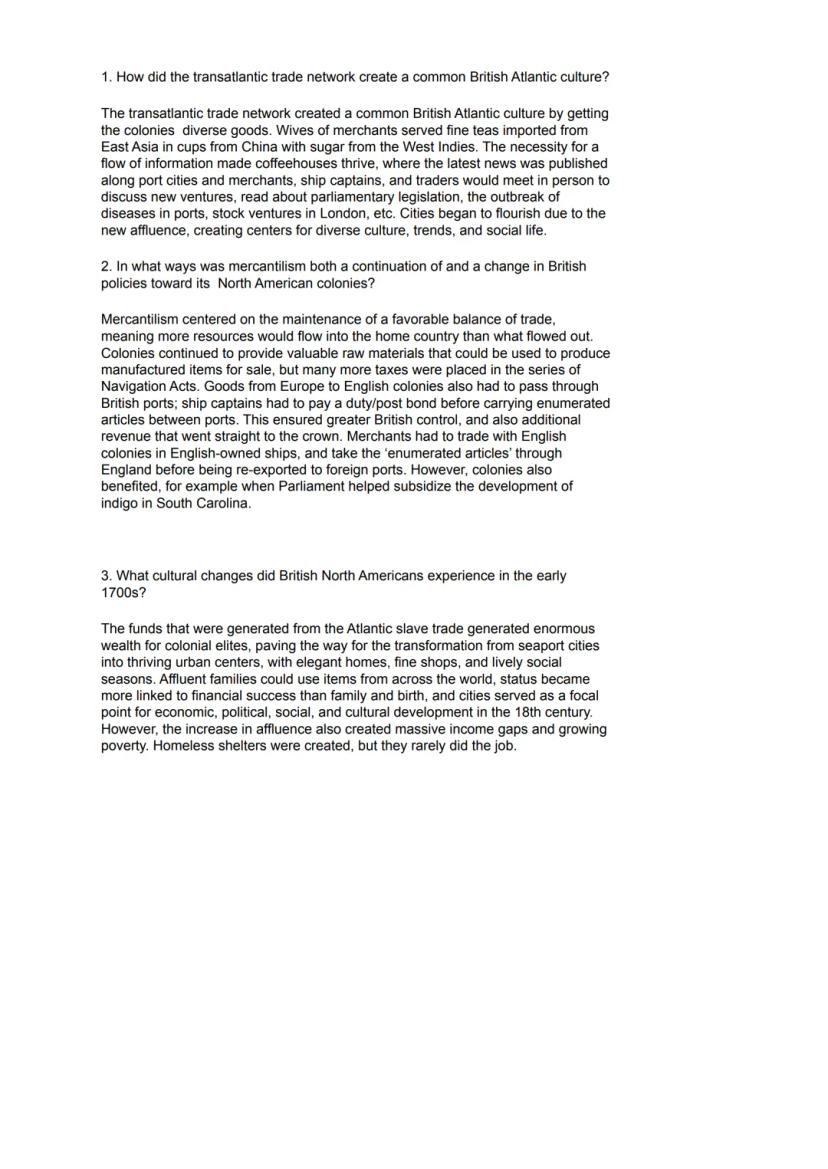
The transatlantic trade network created a shared British Atlantic culture through the exchange of goods and ideas. Colonial elites displayed their prosperity through imported luxuries and fashionable homes. Merchants' wives served exotic teas in fine porcelain, creating new social rituals that defined high society. As cities flourished with new wealth, they became centers for cultural trends, social gatherings, and political discussions.
Information exchange proved just as valuable as physical goods. Coffeehouses in port cities became hubs where traders discussed business opportunities and read about parliamentary decisions, foreign markets, and shipping news. This communication network kept colonial merchants connected to European economic developments despite the vast ocean between them.
While mercantilism aimed to benefit Britain, it unintentionally created powerful American commercial interests. Parliament placed numerous taxes through the Navigation Acts and required goods to pass through British ports before reaching foreign destinations. However, colonies sometimes benefited too—for example, when Parliament subsidized South Carolina's indigo production to secure a steady supply.
Remember this: Although trade created tremendous wealth for some, it also widened social divides. Growing poverty in colonial cities led to the establishment of homeless shelters and public assistance programs by 1750, showing the uneven effects of early capitalism on colonial society.
We thought you’d never ask...
What is the Knowunity AI companion?
Our AI companion is specifically built for the needs of students. Based on the millions of content pieces we have on the platform we can provide truly meaningful and relevant answers to students. But its not only about answers, the companion is even more about guiding students through their daily learning challenges, with personalised study plans, quizzes or content pieces in the chat and 100% personalisation based on the students skills and developments.
Where can I download the Knowunity app?
You can download the app in the Google Play Store and in the Apple App Store.
Is Knowunity really free of charge?
That's right! Enjoy free access to study content, connect with fellow students, and get instant help – all at your fingertips.
Similar Content
Most popular content in AP US History
9O
AP US HistoryOrigins and Dynamics of the Columbian Exchange
Analyze the ecological and economic motivations behind the initial transfer of goods, people, and diseases between the Old and New Worlds.
9th3,1280
I
AP US HistoryIntroduction to Early Cultural Interactions
Analyze the initial social and religious encounters between Europeans, Africans, and Indigenous peoples in the colonial Americas.
9th2,7730
M
AP US HistoryMotivations for European Exploration
Analyze the economic, religious, and political factors that drove European powers to the Americas during the 15th and 16th centuries.
9th1,7780
I
AP US HistoryIntroduction to Native American Societies
Examine the diverse social, political, and economic structures of North American indigenous groups prior to European contact.
9th1,1100
I
AP US HistoryIntroduction to the Spanish Encomienda System
Explore the fundamental economic and social structures of the Spanish colonial system, focusing on the encomienda and the casta social hierarchy.
9th8890
M
AP US HistoryMotivations for European Colonization
Analyze the differing economic, religious, and social goals that drove Spanish, French, Dutch, and British expansion in the New World.
9th7570
W
AP US HistoryWeaknesses of the Articles of Confederation
Analyze the structural deficiencies of the first national government, focusing on fiscal instability and the lack of executive authority.
9th7700
I
AP US HistoryInitial Native-European Contacts and Perceptions
Analyze primary sources from the 15th and 16th centuries to compare Spanish, French, and English initial interactions with indigenous populations.
9th6370
AP US HistoryUnit 1: Apush
1491-1607
11th1,0059
Most popular content
9O
AP US HistoryOrigins and Dynamics of the Columbian Exchange
Analyze the ecological and economic motivations behind the initial transfer of goods, people, and diseases between the Old and New Worlds.
9th3,1280
I
AP US HistoryIntroduction to Early Cultural Interactions
Analyze the initial social and religious encounters between Europeans, Africans, and Indigenous peoples in the colonial Americas.
9th2,7730
O
 AP World History
Origins of Ancient River Civilizations
Analyze the environmental factors and technological innovations that led to the rise of early states in Mesopotamia, Egypt, and the Indus Valley.
9th3,1870
M
AP US HistoryMotivations for European Exploration
Analyze the economic, religious, and political factors that drove European powers to the Americas during the 15th and 16th centuries.
9th1,7780
F
 AP Psychology
Foundations of Ethical Guidelines in Research
Practice the core principles of the APA ethical code including informed consent, debriefing, and the role of Institutional Review Boards.
9th1,3360
I
AP US HistoryIntroduction to Native American Societies
Examine the diverse social, political, and economic structures of North American indigenous groups prior to European contact.
9th1,1100
I
 AP Biology
Introduction to Biological Elements of Life
Practice identifying the essential elements including carbon, nitrogen, phosphorus, and sulfur that compose biological macromolecules.
9th1,7390
I
AP US HistoryIntroduction to the Spanish Encomienda System
Explore the fundamental economic and social structures of the Spanish colonial system, focusing on the encomienda and the casta social hierarchy.
9th8890
O
AP World HistoryOrigins and Continuity of the Byzantine Empire
Analyze the political and cultural transitions from the Roman Empire to the Byzantine Empire, focusing on the reign of Justinian I and his code.
9th1,6320
Can't find what you're looking for? Explore other subjects.
Students love us — and so will you.
4.6/5App Store
4.7/5Google Play
The app is very easy to use and well designed. I have found everything I was looking for so far and have been able to learn a lot from the presentations! I will definitely use the app for a class assignment! And of course it also helps a lot as an inspiration.
Stefan SiOS user
This app is really great. There are so many study notes and help [...]. My problem subject is French, for example, and the app has so many options for help. Thanks to this app, I have improved my French. I would recommend it to anyone.
Samantha KlichAndroid user
Wow, I am really amazed. I just tried the app because I've seen it advertised many times and was absolutely stunned. This app is THE HELP you want for school and above all, it offers so many things, such as workouts and fact sheets, which have been VERY helpful to me personally.
AnnaiOS user
AP US History19 views·Updated Jun 17, 2026·3 pagesComprehensive Notes for APUSH 2.6
Shreya Bedi@shreyabedi_oyaa
Ever wonder how global trade shaped early America? In the late 17th and early 18th centuries, international commerce exploded, connecting continents and transforming colonial life. This new economic system created wealthy merchants in American ports while British imperial policies attempted...
1
of 3
Sign up to see the content. It's free!
- Access to all documents
- Improve your grades
- Join milions of students
Global Trade Networks Transform Colonial Economies
Trade became truly global by the early 1700s, with goods flowing between continents like never before. Chinese manufacturers created porcelain specifically for English customers, while European tastes influenced worldwide trade in cloth, tea, tobacco, and sugar. Within North America, a healthy commercial network developed as New England fishermen, New York merchants, and Caribbean planters all exchanged goods.
Mercantilism emerged as the dominant economic philosophy. This system centered on maintaining a favorable balance of trade—ensuring more gold and silver flowed into a country than out. After witnessing Spain's failed approach (extracting massive quantities of precious metals), England and France developed more sophisticated trade policies to control colonial commerce.
England's Navigation Acts, first passed under Oliver Cromwell and expanded over decades, required colonial trade to use English ships and pass through English ports. "Enumerated articles" from colonies had to first ship to England before being re-exported elsewhere, ensuring profits for the mother country. Later acts even prohibited American-made textiles, hats, and iron goods to prevent colonial manufacturing from competing with British industries.
Did you know? Coffeehouses in colonial port cities became crucial centers where merchants exchanged the latest shipping news, discussed business ventures, and read about parliamentary laws or disease outbreaks in distant ports—making information flow as important as the flow of goods!
2
of 3Sign up to see the content. It's free!
- Access to all documents
- Improve your grades
- Join milions of students
Colonial Society Transforms Under Global Commerce
Despite strict British regulations, American colonists found ways to participate and profit. North American merchants managed to control about 75% of trade sent to the colonies, creating a growing mercantile elite in American port cities. The Atlantic slave trade generated enormous wealth for these colonial businessmen, transforming places like Charleston and Boston into thriving urban centers.
This new wealth created stark social divides. While affluent urban families enjoyed imported teas served in Chinese porcelain with West Indian sugar, economic hardship spread too. Young people migrated between towns seeking work, and growing poverty required "Overseers of the Poor" and homeless shelters in every seaport city by 1750.
Rural families (the vast majority of colonists) were increasingly drawn into commercial networks, selling vegetables, meat, yarn, and wheat. But the most dramatic social changes happened in cities, which became cultural focal points despite containing less than 10% of the colonial population.
Think about it: Status in colonial America became increasingly linked to financial success rather than family background or birth. This "consumer revolution" allowed people with new money to display their wealth through imported goods, challenging traditional ideas about social class.
3
of 3Sign up to see the content. It's free!
- Access to all documents
- Improve your grades
- Join milions of students
The Cultural Impact of Atlantic Trade
The transatlantic trade network created a shared British Atlantic culture through the exchange of goods and ideas. Colonial elites displayed their prosperity through imported luxuries and fashionable homes. Merchants' wives served exotic teas in fine porcelain, creating new social rituals that defined high society. As cities flourished with new wealth, they became centers for cultural trends, social gatherings, and political discussions.
Information exchange proved just as valuable as physical goods. Coffeehouses in port cities became hubs where traders discussed business opportunities and read about parliamentary decisions, foreign markets, and shipping news. This communication network kept colonial merchants connected to European economic developments despite the vast ocean between them.
While mercantilism aimed to benefit Britain, it unintentionally created powerful American commercial interests. Parliament placed numerous taxes through the Navigation Acts and required goods to pass through British ports before reaching foreign destinations. However, colonies sometimes benefited too—for example, when Parliament subsidized South Carolina's indigo production to secure a steady supply.
Remember this: Although trade created tremendous wealth for some, it also widened social divides. Growing poverty in colonial cities led to the establishment of homeless shelters and public assistance programs by 1750, showing the uneven effects of early capitalism on colonial society.
We thought you’d never ask...
What is the Knowunity AI companion?
Our AI companion is specifically built for the needs of students. Based on the millions of content pieces we have on the platform we can provide truly meaningful and relevant answers to students. But its not only about answers, the companion is even more about guiding students through their daily learning challenges, with personalised study plans, quizzes or content pieces in the chat and 100% personalisation based on the students skills and developments.
Where can I download the Knowunity app?
You can download the app in the Google Play Store and in the Apple App Store.
Is Knowunity really free of charge?
That's right! Enjoy free access to study content, connect with fellow students, and get instant help – all at your fingertips.
Similar Content
Most popular content in AP US History
9O
AP US HistoryOrigins and Dynamics of the Columbian Exchange
Analyze the ecological and economic motivations behind the initial transfer of goods, people, and diseases between the Old and New Worlds.
9th3,1280
I
AP US HistoryIntroduction to Early Cultural Interactions
Analyze the initial social and religious encounters between Europeans, Africans, and Indigenous peoples in the colonial Americas.
9th2,7730
M
AP US HistoryMotivations for European Exploration
Analyze the economic, religious, and political factors that drove European powers to the Americas during the 15th and 16th centuries.
9th1,7780
I
AP US HistoryIntroduction to Native American Societies
Examine the diverse social, political, and economic structures of North American indigenous groups prior to European contact.
9th1,1100
I
AP US HistoryIntroduction to the Spanish Encomienda System
Explore the fundamental economic and social structures of the Spanish colonial system, focusing on the encomienda and the casta social hierarchy.
9th8890
M
AP US HistoryMotivations for European Colonization
Analyze the differing economic, religious, and social goals that drove Spanish, French, Dutch, and British expansion in the New World.
9th7570
W
AP US HistoryWeaknesses of the Articles of Confederation
Analyze the structural deficiencies of the first national government, focusing on fiscal instability and the lack of executive authority.
9th7700
I
AP US HistoryInitial Native-European Contacts and Perceptions
Analyze primary sources from the 15th and 16th centuries to compare Spanish, French, and English initial interactions with indigenous populations.
9th6370
AP US HistoryUnit 1: Apush
1491-1607
11th1,0059
Most popular content
9O
AP US HistoryOrigins and Dynamics of the Columbian Exchange
Analyze the ecological and economic motivations behind the initial transfer of goods, people, and diseases between the Old and New Worlds.
9th3,1280
I
AP US HistoryIntroduction to Early Cultural Interactions
Analyze the initial social and religious encounters between Europeans, Africans, and Indigenous peoples in the colonial Americas.
9th2,7730
O
AP World HistoryOrigins of Ancient River Civilizations
Analyze the environmental factors and technological innovations that led to the rise of early states in Mesopotamia, Egypt, and the Indus Valley.
9th3,1870
M
AP US HistoryMotivations for European Exploration
Analyze the economic, religious, and political factors that drove European powers to the Americas during the 15th and 16th centuries.
9th1,7780
F
AP PsychologyFoundations of Ethical Guidelines in Research
Practice the core principles of the APA ethical code including informed consent, debriefing, and the role of Institutional Review Boards.
9th1,3360
I
AP US HistoryIntroduction to Native American Societies
Examine the diverse social, political, and economic structures of North American indigenous groups prior to European contact.
9th1,1100
I
AP BiologyIntroduction to Biological Elements of Life
Practice identifying the essential elements including carbon, nitrogen, phosphorus, and sulfur that compose biological macromolecules.
9th1,7390
I
AP US HistoryIntroduction to the Spanish Encomienda System
Explore the fundamental economic and social structures of the Spanish colonial system, focusing on the encomienda and the casta social hierarchy.
9th8890
O
AP World HistoryOrigins and Continuity of the Byzantine Empire
Analyze the political and cultural transitions from the Roman Empire to the Byzantine Empire, focusing on the reign of Justinian I and his code.
9th1,6320
Can't find what you're looking for? Explore other subjects.
Students love us — and so will you.
4.6/5App Store
4.7/5Google Play
The app is very easy to use and well designed. I have found everything I was looking for so far and have been able to learn a lot from the presentations! I will definitely use the app for a class assignment! And of course it also helps a lot as an inspiration.
Stefan SiOS user
This app is really great. There are so many study notes and help [...]. My problem subject is French, for example, and the app has so many options for help. Thanks to this app, I have improved my French. I would recommend it to anyone.
Samantha KlichAndroid user
Wow, I am really amazed. I just tried the app because I've seen it advertised many times and was absolutely stunned. This app is THE HELP you want for school and above all, it offers so many things, such as workouts and fact sheets, which have been VERY helpful to me personally.
AnnaiOS user