

Ever wonder why you spend one-third of your life with...
 AP Psychology76 views·Updated Jun 17, 2026·5 pages
Understanding Sleep: AP Psychology Insights

1 / 5
1
of 5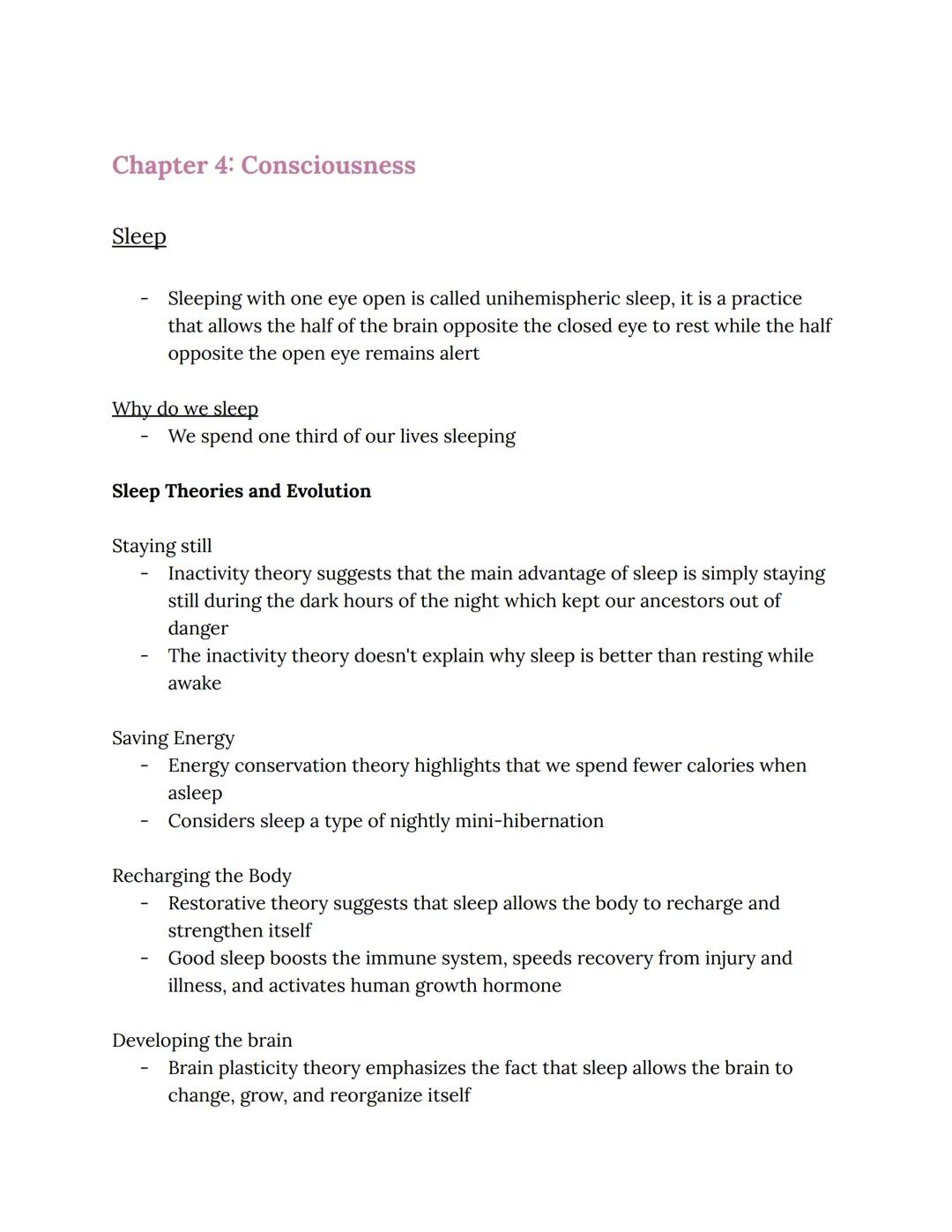
Why We Sleep
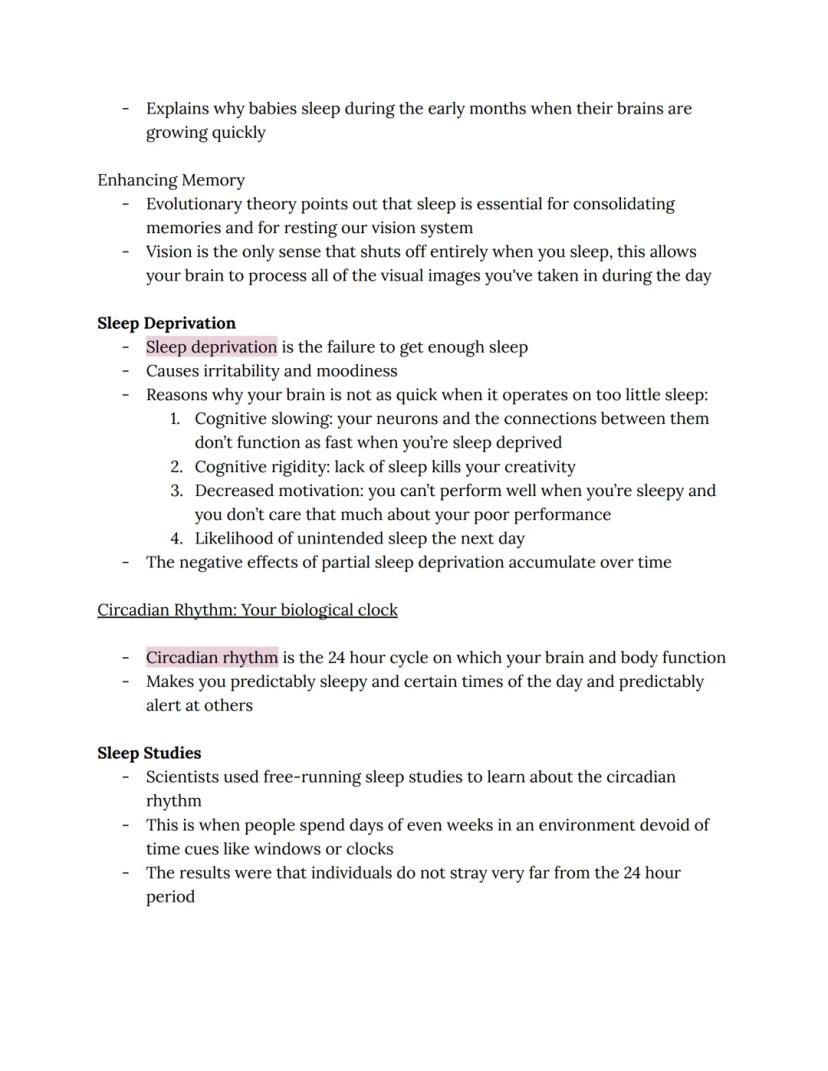
Why do we actually need sleep? Scientists have several theories. The inactivity theory suggests sleep evolved to keep us still and safe during dangerous nighttime hours. Meanwhile, the energy conservation theory views sleep as a mini-hibernation that saves calories.
More compelling is the restorative theory, which explains that sleep allows your body to repair itself. Good sleep boosts your immune system, activates growth hormones, and speeds recovery. Your brain especially benefits from sleep according to the brain plasticity theory - sleep helps your brain reorganize and grow, which is why babies sleep so much during rapid brain development.
Sleep also plays a crucial role in memory. Your brain uses this time to process and consolidate what you've learned during the day. Interestingly, vision is the only sense that completely shuts down during sleep, giving your brain time to process all the visual information you've collected.
Did you know? Some animals like dolphins practice "unihemispheric sleep" - sleeping with one eye open and half their brain alert while the other half rests. This allows them to stay aware of predators while still getting necessary sleep.
2
of 5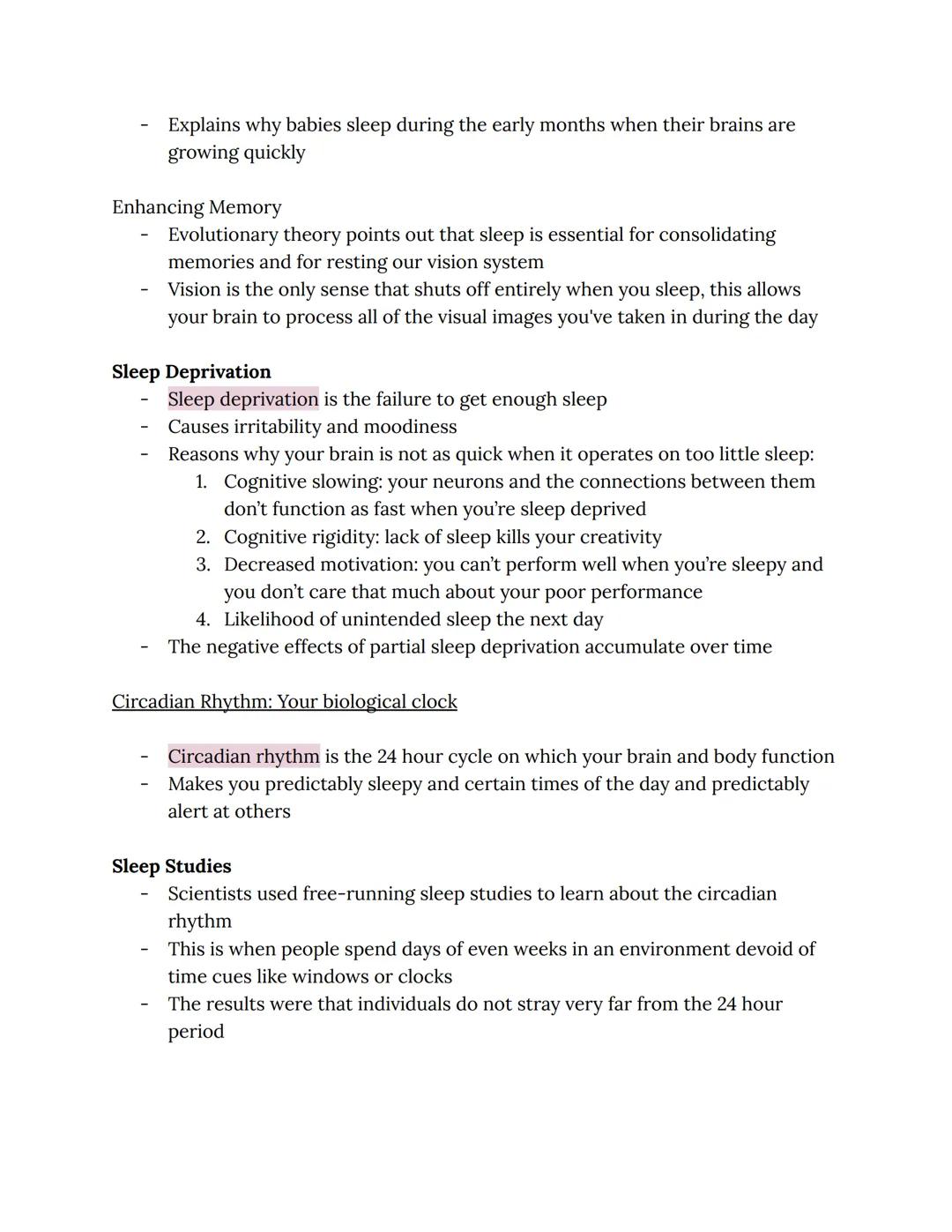
Sleep Deprivation and Biological Rhythms
Missing sleep doesn't just make you cranky - it seriously impacts your brain function. Sleep deprivation causes cognitive slowing (your brain works more slowly), cognitive rigidity (decreased creativity), and decreased motivation. Even worse, these effects build up over time with partial sleep loss.
Your body runs on a circadian rhythm - a roughly 24-hour biological clock that determines when you feel sleepy or alert. Scientists discovered through "free-running" studies (where people live without time cues like clocks or windows) that humans naturally stick close to this 24-hour cycle.
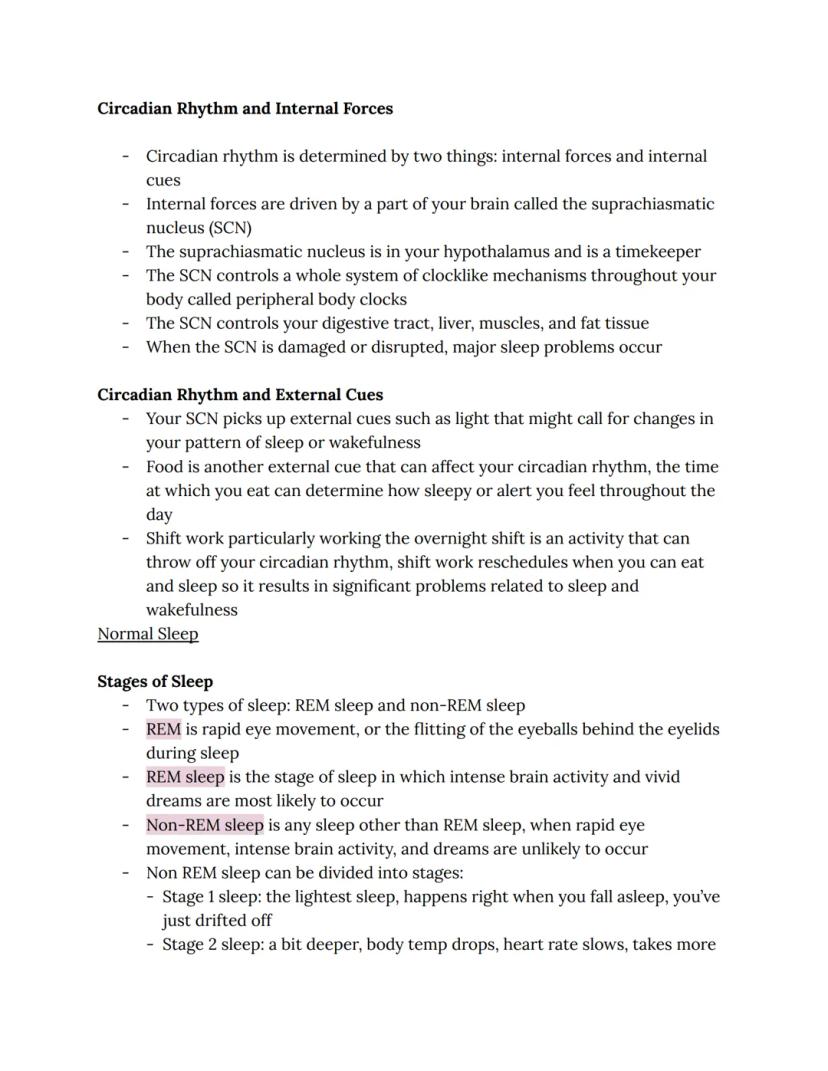
Your circadian rhythm is controlled by the suprachiasmatic nucleus (SCN) in your hypothalamus. Think of it as your brain's timekeeper, coordinating a whole network of "peripheral body clocks" throughout your body that regulate everything from digestion to muscle function.
Sleep fact: The effects of sleep deprivation accumulate over time. Getting just 6 hours of sleep per night for two weeks can impair your performance as much as staying awake for 48 hours straight!
3
of 5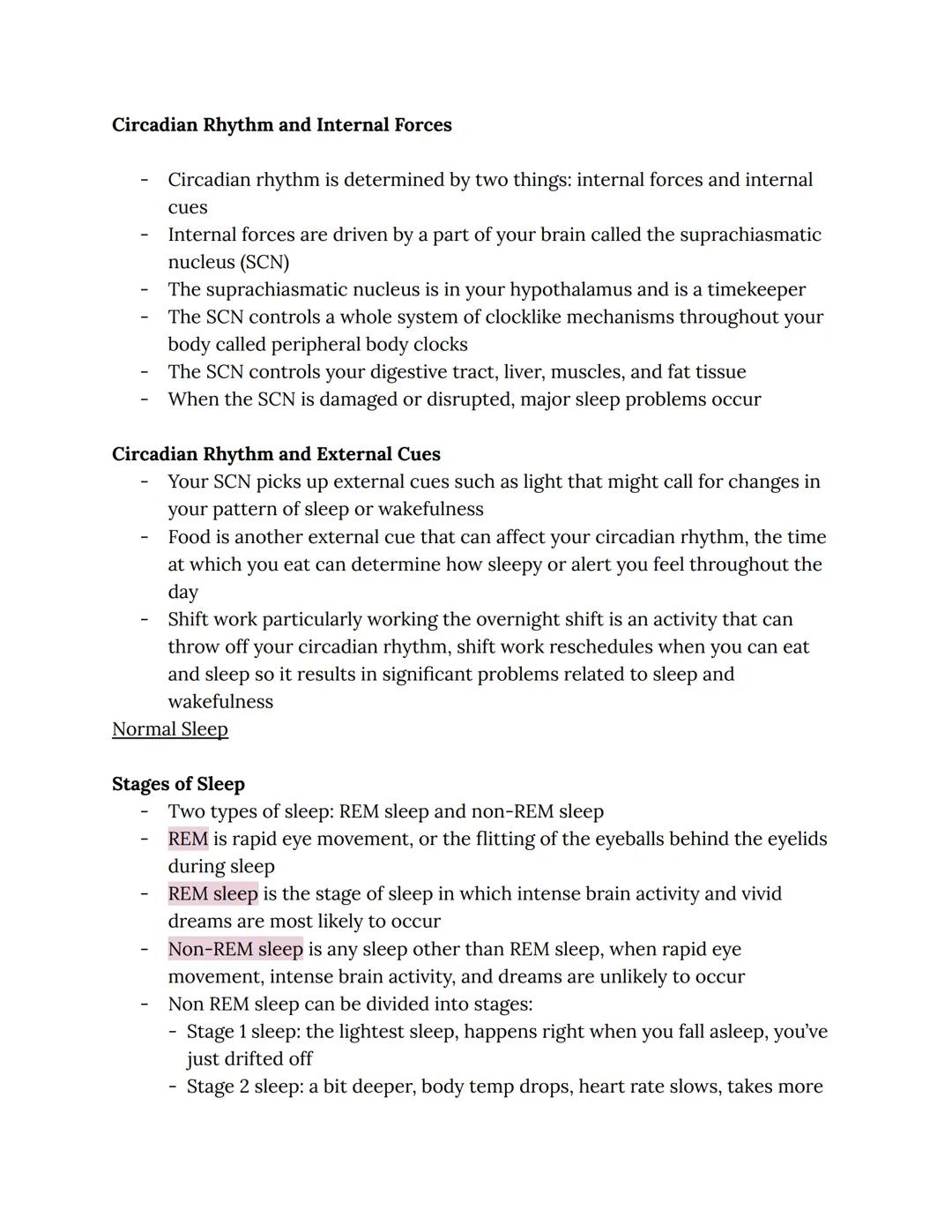
Sleep Regulation and Stages
Your sleep-wake cycle is influenced by both internal forces and external cues. The SCN in your brain acts as your master clock, but it relies on external cues like light to stay calibrated. Even meal timing affects how sleepy or alert you feel throughout the day.
Working night shifts can severely disrupt your circadian rhythm because it forces you to eat and sleep at unnatural times. This explains why shift workers often struggle with sleep problems and daytime sleepiness.
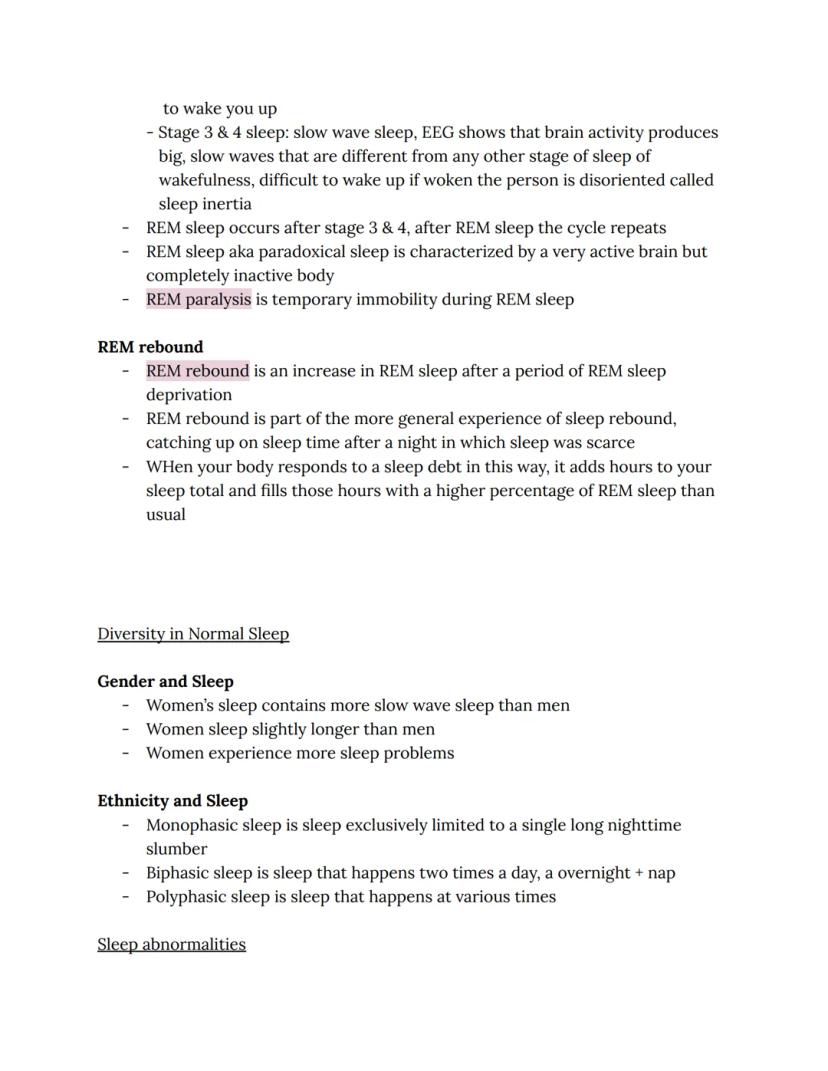
Sleep itself has distinct stages. Non-REM sleep includes four stages of progressively deeper sleep. Stage 1 is the lightest sleep when you've just drifted off. Stage 2 is deeper, with slowing heart rate and dropping body temperature. Stages 3 and 4 are slow-wave sleep - the deepest sleep where your brain produces distinctive slow waves and you're difficult to wake up.
Remember this: If you're woken from deep sleep, you'll likely experience "sleep inertia" - that confused, groggy feeling that makes it hard to function right after waking up.
4
of 5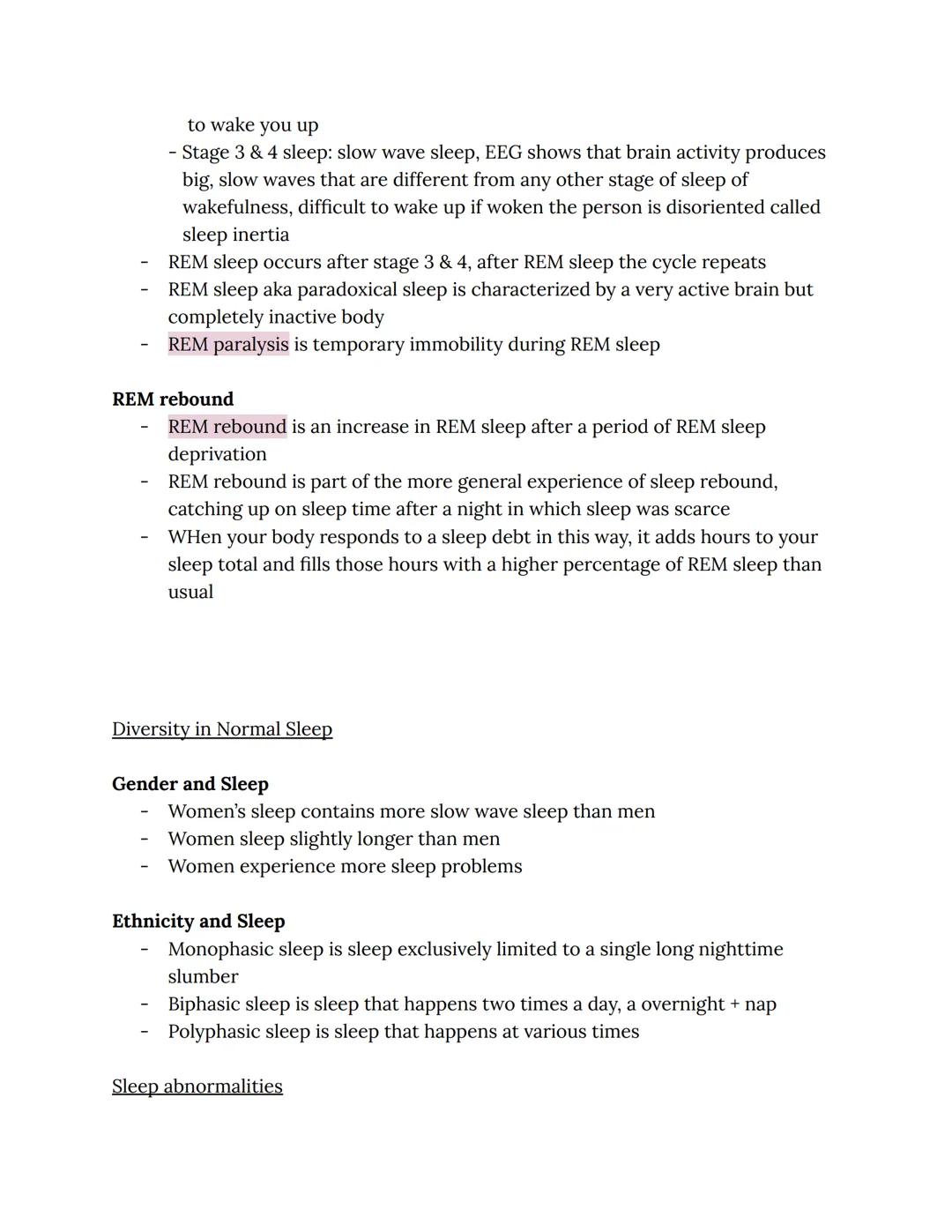
REM Sleep and Sleep Variations
After cycling through non-REM sleep, you enter REM (rapid eye movement) sleep, where your eyes dart back and forth under your eyelids. REM sleep features an intensely active brain but a completely paralyzed body - a phenomenon called REM paralysis that prevents you from acting out your dreams.
If you're deprived of REM sleep, your body will compensate with REM rebound - spending extra time in REM sleep the next chance it gets. This is part of how your body handles a sleep debt, adding extra hours to your sleep and filling them with more REM sleep than usual.
Sleep patterns vary among different groups. Women tend to get more slow-wave sleep than men and sleep slightly longer, though they also report more sleep problems. Cultural differences exist too - while Americans typically follow monophasic sleep (one long nighttime sleep period), many cultures practice biphasic sleep (nighttime sleep plus a daytime nap) or even polyphasic sleep (multiple sleep periods throughout the day).
Try this: Notice your own sleep patterns. Do you naturally feel sleepy at the same times each day? This can help you identify your personal circadian rhythm and plan your schedule accordingly.
5
of 5
Sleep Disorders
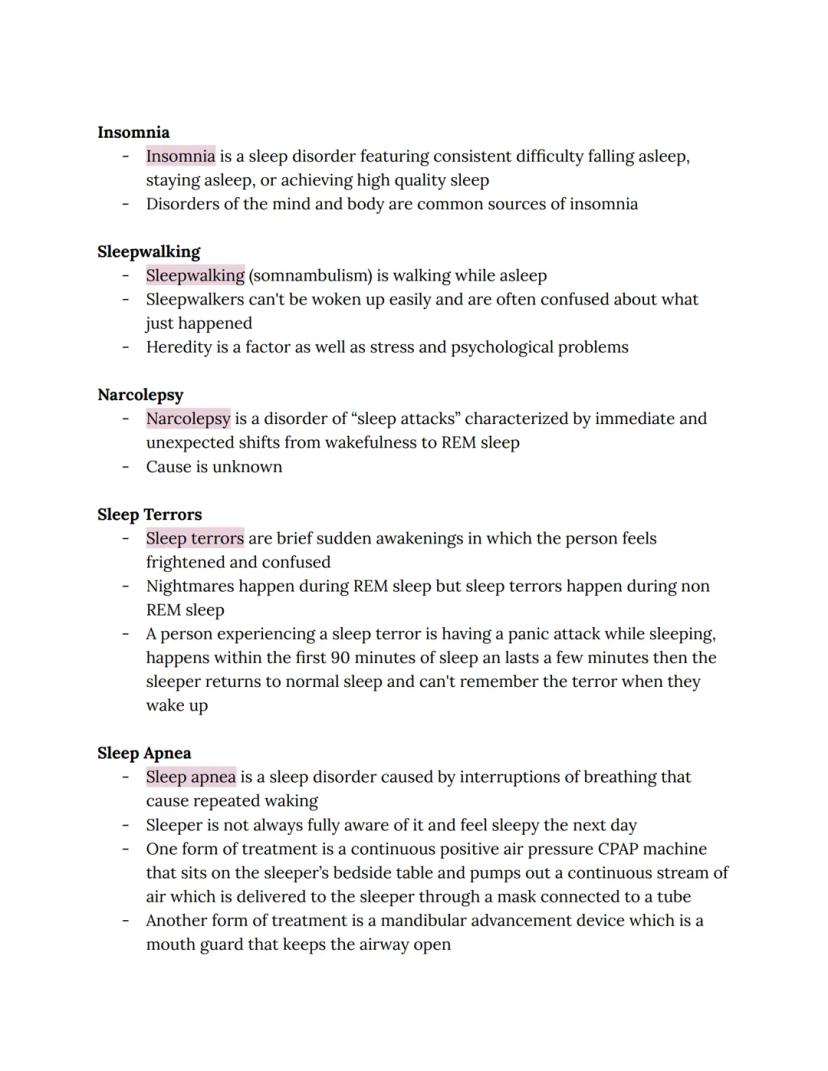
Insomnia affects millions of people who struggle to fall asleep, stay asleep, or get quality sleep. It's often linked to other physical or mental health issues like anxiety or chronic pain.
Sleepwalking (somnambulism) runs in families and can be triggered by stress. Sleepwalkers can perform complex activities while asleep and often don't remember their nighttime adventures.
Narcolepsy involves sudden "sleep attacks" where a person unexpectedly shifts from wakefulness directly into REM sleep. This rare disorder can seriously impact daily life and safety.
Sleep terrors differ from nightmares - they occur during non-REM sleep and involve brief awakenings with intense fear and confusion. Think of them as panic attacks during sleep that the person won't remember the next day.
Sleep apnea involves breathing interruptions that repeatedly wake the sleeper throughout the night, often without their full awareness. Treatment options include CPAP machines that provide continuous airflow or special mouthguards that keep airways open.
Health tip: If you consistently feel exhausted during the day despite getting enough hours of sleep, consider talking to a doctor about possible sleep disorders. Conditions like sleep apnea can go undiagnosed for years while seriously affecting your health.
We thought you’d never ask...
What is the Knowunity AI companion?
Our AI companion is specifically built for the needs of students. Based on the millions of content pieces we have on the platform we can provide truly meaningful and relevant answers to students. But its not only about answers, the companion is even more about guiding students through their daily learning challenges, with personalised study plans, quizzes or content pieces in the chat and 100% personalisation based on the students skills and developments.
Where can I download the Knowunity app?
You can download the app in the Google Play Store and in the Apple App Store.
Is Knowunity really free of charge?
That's right! Enjoy free access to study content, connect with fellow students, and get instant help – all at your fingertips.
Similar Content
 Psychology
Most popular content in AP Psychology
9F
AP PsychologyFoundations of Ethical Guidelines in Research
Practice the core principles of the APA ethical code including informed consent, debriefing, and the role of Institutional Review Boards.
9th1,3360
F
AP PsychologyFoundations of Research Design and Methodology
Practice distinguishing between different research methods including experiments, correlations, and case studies while identifying key variables.
9th6670
H
AP PsychologyHistorical Foundations of Psychology
Practice distinguishing between structuralism, functionalism, and the early philosophical roots of psychological science.
9th1,0920
I
AP PsychologyIntroduction to Descriptive Statistics
Practice identifying and calculating measures of central tendency and variation to summarize psychological data sets.
9th7010
I
AP PsychologyIntroduction to Auditory System Structures
Practice identifying the anatomical structures of the ear and their specific roles in converting sound waves into neural impulses.
9th6000
H
AP PsychologyHemispheric Specialization and Brain Structures
Practice identifying how specific structures like the corpus callosum and cerebral cortex coordinate complex human behaviors and sensory input.
9th3330
P
AP PsychologyParts of the brain and their functions quiz
Quick quiz on parts of the brain and their functions
10th1450
AP PsychologyAP psych
literally 103 pages of psych notes i took
10th1223
AP PsychologyThe Best AP Psychology Cram Sheet
cram sheet for AP Psych
10th95568
Most popular content
9O
 AP US History
Origins and Dynamics of the Columbian Exchange
Analyze the ecological and economic motivations behind the initial transfer of goods, people, and diseases between the Old and New Worlds.
9th3,1280
I
AP US HistoryIntroduction to Early Cultural Interactions
Analyze the initial social and religious encounters between Europeans, Africans, and Indigenous peoples in the colonial Americas.
9th2,7730
O
 AP World History
Origins of Ancient River Civilizations
Analyze the environmental factors and technological innovations that led to the rise of early states in Mesopotamia, Egypt, and the Indus Valley.
9th3,1870
M
AP US HistoryMotivations for European Exploration
Analyze the economic, religious, and political factors that drove European powers to the Americas during the 15th and 16th centuries.
9th1,7780
F
AP PsychologyFoundations of Ethical Guidelines in Research
Practice the core principles of the APA ethical code including informed consent, debriefing, and the role of Institutional Review Boards.
9th1,3360
I
AP US HistoryIntroduction to Native American Societies
Examine the diverse social, political, and economic structures of North American indigenous groups prior to European contact.
9th1,1100
I
 AP Biology
Introduction to Biological Elements of Life
Practice identifying the essential elements including carbon, nitrogen, phosphorus, and sulfur that compose biological macromolecules.
9th1,7390
I
AP US HistoryIntroduction to the Spanish Encomienda System
Explore the fundamental economic and social structures of the Spanish colonial system, focusing on the encomienda and the casta social hierarchy.
9th8890
O
AP World HistoryOrigins and Continuity of the Byzantine Empire
Analyze the political and cultural transitions from the Roman Empire to the Byzantine Empire, focusing on the reign of Justinian I and his code.
9th1,6320
Can't find what you're looking for? Explore other subjects.
Students love us — and so will you.
4.6/5App Store
4.7/5Google Play
The app is very easy to use and well designed. I have found everything I was looking for so far and have been able to learn a lot from the presentations! I will definitely use the app for a class assignment! And of course it also helps a lot as an inspiration.
Stefan SiOS user
This app is really great. There are so many study notes and help [...]. My problem subject is French, for example, and the app has so many options for help. Thanks to this app, I have improved my French. I would recommend it to anyone.
Samantha KlichAndroid user
Wow, I am really amazed. I just tried the app because I've seen it advertised many times and was absolutely stunned. This app is THE HELP you want for school and above all, it offers so many things, such as workouts and fact sheets, which have been VERY helpful to me personally.
AnnaiOS user
AP Psychology76 views·Updated Jun 17, 2026·5 pagesUnderstanding Sleep: AP Psychology Insights
Ever wonder why you spend one-third of your life with your eyes closed? Sleep isn't just downtime - it's a complex, essential process that keeps your brain and body functioning properly. Understanding how sleep works can help you make better...
1
of 5
Sign up to see the content. It's free!
- Access to all documents
- Improve your grades
- Join milions of students
Why We Sleep
Why do we actually need sleep? Scientists have several theories. The inactivity theory suggests sleep evolved to keep us still and safe during dangerous nighttime hours. Meanwhile, the energy conservation theory views sleep as a mini-hibernation that saves calories.
More compelling is the restorative theory, which explains that sleep allows your body to repair itself. Good sleep boosts your immune system, activates growth hormones, and speeds recovery. Your brain especially benefits from sleep according to the brain plasticity theory - sleep helps your brain reorganize and grow, which is why babies sleep so much during rapid brain development.
Sleep also plays a crucial role in memory. Your brain uses this time to process and consolidate what you've learned during the day. Interestingly, vision is the only sense that completely shuts down during sleep, giving your brain time to process all the visual information you've collected.
Did you know? Some animals like dolphins practice "unihemispheric sleep" - sleeping with one eye open and half their brain alert while the other half rests. This allows them to stay aware of predators while still getting necessary sleep.
2
of 5Sign up to see the content. It's free!
- Access to all documents
- Improve your grades
- Join milions of students
Sleep Deprivation and Biological Rhythms
Missing sleep doesn't just make you cranky - it seriously impacts your brain function. Sleep deprivation causes cognitive slowing (your brain works more slowly), cognitive rigidity (decreased creativity), and decreased motivation. Even worse, these effects build up over time with partial sleep loss.
Your body runs on a circadian rhythm - a roughly 24-hour biological clock that determines when you feel sleepy or alert. Scientists discovered through "free-running" studies (where people live without time cues like clocks or windows) that humans naturally stick close to this 24-hour cycle.
Your circadian rhythm is controlled by the suprachiasmatic nucleus (SCN) in your hypothalamus. Think of it as your brain's timekeeper, coordinating a whole network of "peripheral body clocks" throughout your body that regulate everything from digestion to muscle function.
Sleep fact: The effects of sleep deprivation accumulate over time. Getting just 6 hours of sleep per night for two weeks can impair your performance as much as staying awake for 48 hours straight!
3
of 5Sign up to see the content. It's free!
- Access to all documents
- Improve your grades
- Join milions of students
Sleep Regulation and Stages
Your sleep-wake cycle is influenced by both internal forces and external cues. The SCN in your brain acts as your master clock, but it relies on external cues like light to stay calibrated. Even meal timing affects how sleepy or alert you feel throughout the day.
Working night shifts can severely disrupt your circadian rhythm because it forces you to eat and sleep at unnatural times. This explains why shift workers often struggle with sleep problems and daytime sleepiness.
Sleep itself has distinct stages. Non-REM sleep includes four stages of progressively deeper sleep. Stage 1 is the lightest sleep when you've just drifted off. Stage 2 is deeper, with slowing heart rate and dropping body temperature. Stages 3 and 4 are slow-wave sleep - the deepest sleep where your brain produces distinctive slow waves and you're difficult to wake up.
Remember this: If you're woken from deep sleep, you'll likely experience "sleep inertia" - that confused, groggy feeling that makes it hard to function right after waking up.
4
of 5Sign up to see the content. It's free!
- Access to all documents
- Improve your grades
- Join milions of students
REM Sleep and Sleep Variations
After cycling through non-REM sleep, you enter REM (rapid eye movement) sleep, where your eyes dart back and forth under your eyelids. REM sleep features an intensely active brain but a completely paralyzed body - a phenomenon called REM paralysis that prevents you from acting out your dreams.
If you're deprived of REM sleep, your body will compensate with REM rebound - spending extra time in REM sleep the next chance it gets. This is part of how your body handles a sleep debt, adding extra hours to your sleep and filling them with more REM sleep than usual.
Sleep patterns vary among different groups. Women tend to get more slow-wave sleep than men and sleep slightly longer, though they also report more sleep problems. Cultural differences exist too - while Americans typically follow monophasic sleep (one long nighttime sleep period), many cultures practice biphasic sleep (nighttime sleep plus a daytime nap) or even polyphasic sleep (multiple sleep periods throughout the day).
Try this: Notice your own sleep patterns. Do you naturally feel sleepy at the same times each day? This can help you identify your personal circadian rhythm and plan your schedule accordingly.
5
of 5Sign up to see the content. It's free!
- Access to all documents
- Improve your grades
- Join milions of students
Sleep Disorders
Insomnia affects millions of people who struggle to fall asleep, stay asleep, or get quality sleep. It's often linked to other physical or mental health issues like anxiety or chronic pain.
Sleepwalking (somnambulism) runs in families and can be triggered by stress. Sleepwalkers can perform complex activities while asleep and often don't remember their nighttime adventures.
Narcolepsy involves sudden "sleep attacks" where a person unexpectedly shifts from wakefulness directly into REM sleep. This rare disorder can seriously impact daily life and safety.
Sleep terrors differ from nightmares - they occur during non-REM sleep and involve brief awakenings with intense fear and confusion. Think of them as panic attacks during sleep that the person won't remember the next day.
Sleep apnea involves breathing interruptions that repeatedly wake the sleeper throughout the night, often without their full awareness. Treatment options include CPAP machines that provide continuous airflow or special mouthguards that keep airways open.
Health tip: If you consistently feel exhausted during the day despite getting enough hours of sleep, consider talking to a doctor about possible sleep disorders. Conditions like sleep apnea can go undiagnosed for years while seriously affecting your health.
We thought you’d never ask...
What is the Knowunity AI companion?
Our AI companion is specifically built for the needs of students. Based on the millions of content pieces we have on the platform we can provide truly meaningful and relevant answers to students. But its not only about answers, the companion is even more about guiding students through their daily learning challenges, with personalised study plans, quizzes or content pieces in the chat and 100% personalisation based on the students skills and developments.
Where can I download the Knowunity app?
You can download the app in the Google Play Store and in the Apple App Store.
Is Knowunity really free of charge?
That's right! Enjoy free access to study content, connect with fellow students, and get instant help – all at your fingertips.
Similar Content
Most popular content in AP Psychology
9F
AP PsychologyFoundations of Ethical Guidelines in Research
Practice the core principles of the APA ethical code including informed consent, debriefing, and the role of Institutional Review Boards.
9th1,3360
F
AP PsychologyFoundations of Research Design and Methodology
Practice distinguishing between different research methods including experiments, correlations, and case studies while identifying key variables.
9th6670
H
AP PsychologyHistorical Foundations of Psychology
Practice distinguishing between structuralism, functionalism, and the early philosophical roots of psychological science.
9th1,0920
I
AP PsychologyIntroduction to Descriptive Statistics
Practice identifying and calculating measures of central tendency and variation to summarize psychological data sets.
9th7010
I
AP PsychologyIntroduction to Auditory System Structures
Practice identifying the anatomical structures of the ear and their specific roles in converting sound waves into neural impulses.
9th6000
H
AP PsychologyHemispheric Specialization and Brain Structures
Practice identifying how specific structures like the corpus callosum and cerebral cortex coordinate complex human behaviors and sensory input.
9th3330
P
AP PsychologyParts of the brain and their functions quiz
Quick quiz on parts of the brain and their functions
10th1450
AP PsychologyAP psych
literally 103 pages of psych notes i took
10th1223
AP PsychologyThe Best AP Psychology Cram Sheet
cram sheet for AP Psych
10th95568
Most popular content
9O
AP US HistoryOrigins and Dynamics of the Columbian Exchange
Analyze the ecological and economic motivations behind the initial transfer of goods, people, and diseases between the Old and New Worlds.
9th3,1280
I
AP US HistoryIntroduction to Early Cultural Interactions
Analyze the initial social and religious encounters between Europeans, Africans, and Indigenous peoples in the colonial Americas.
9th2,7730
O
AP World HistoryOrigins of Ancient River Civilizations
Analyze the environmental factors and technological innovations that led to the rise of early states in Mesopotamia, Egypt, and the Indus Valley.
9th3,1870
M
AP US HistoryMotivations for European Exploration
Analyze the economic, religious, and political factors that drove European powers to the Americas during the 15th and 16th centuries.
9th1,7780
F
AP PsychologyFoundations of Ethical Guidelines in Research
Practice the core principles of the APA ethical code including informed consent, debriefing, and the role of Institutional Review Boards.
9th1,3360
I
AP US HistoryIntroduction to Native American Societies
Examine the diverse social, political, and economic structures of North American indigenous groups prior to European contact.
9th1,1100
I
AP BiologyIntroduction to Biological Elements of Life
Practice identifying the essential elements including carbon, nitrogen, phosphorus, and sulfur that compose biological macromolecules.
9th1,7390
I
AP US HistoryIntroduction to the Spanish Encomienda System
Explore the fundamental economic and social structures of the Spanish colonial system, focusing on the encomienda and the casta social hierarchy.
9th8890
O
AP World HistoryOrigins and Continuity of the Byzantine Empire
Analyze the political and cultural transitions from the Roman Empire to the Byzantine Empire, focusing on the reign of Justinian I and his code.
9th1,6320
Can't find what you're looking for? Explore other subjects.
Students love us — and so will you.
4.6/5App Store
4.7/5Google Play
The app is very easy to use and well designed. I have found everything I was looking for so far and have been able to learn a lot from the presentations! I will definitely use the app for a class assignment! And of course it also helps a lot as an inspiration.
Stefan SiOS user
This app is really great. There are so many study notes and help [...]. My problem subject is French, for example, and the app has so many options for help. Thanks to this app, I have improved my French. I would recommend it to anyone.
Samantha KlichAndroid user
Wow, I am really amazed. I just tried the app because I've seen it advertised many times and was absolutely stunned. This app is THE HELP you want for school and above all, it offers so many things, such as workouts and fact sheets, which have been VERY helpful to me personally.
AnnaiOS user