
Earth's diverse aquatic environments and biological systems form the foundation...
 AP Environmental Science75 views·Updated Jun 19, 2026·5 pages
Discovering Biomes and Aquatic Ecosystems

skoot@skoot




1 / 5
1
of 5
Aquatic Biomes and Marine Life
Water covers a massive 71% of Earth's surface, creating vast habitats for countless organisms. In these aquatic environments, key factors like temperature, dissolved oxygen, light penetration, and nutrient availability determine which creatures can thrive.
The distribution of aquatic life is largely determined by salinity (salt content). Saltwater environments make up 98% of Earth's water, with 96.5% found in oceans. These marine zones include vibrant coral reefs (home to 90% of fish species), productive estuaries (where rivers meet oceans creating brackish water), and mangrove forests with deep roots that prevent coastal erosion.
Aquatic species fall into several categories: nekton (strong swimmers like fish and whales), benthos (bottom dwellers such as crabs and clams), decomposers (mainly bacteria), and phytoplankton (primary producers that form the base of marine food webs).
Did you know? About 90% of marine fish species stay near coastlines where nutrients are abundant, rather than venturing into the open ocean!
2
of 5
Ocean Zones and Freshwater Environments
Oceans are divided into distinctive zones, each supporting different life forms. The nutrient-rich coastal zone extends from land to the edge of the continental shelf and hosts 90% of all marine species. Beyond lies the open sea and ocean bottom, which have three primary layers.
These layers include the sunlit euphotic zone (home to phytoplankton and large fish), the dimly lit bathyal zone (where zooplankton and smaller fish live), and the dark, cold abyssal zone (with no plants, only filter feeders).
Freshwater makes up only 2.5% of Earth's water (mostly in ice caps) but creates diverse habitats. Lakes have four distinct zones: the shallow, sunny littoral zone near shore; the sunlit limnetic zone in upper waters; the low-oxygen profundal zone in middle depths; and the benthic zone at the bottom where decomposers process dead matter.
Remember this: The deepest ocean zones receive no sunlight at all, yet still support unique life forms adapted to extreme pressure, cold, and darkness!
3
of 5
Biological Diversity and Biomes
Biological diversity takes many forms that scientists categorize and study. Species diversity includes both the variety of species (richness) and how evenly they're distributed. Genetic diversity refers to the variety of genes within populations, while ecosystem diversity encompasses the range of habitats and ecological communities.
Earth's major biomes are regions with distinct climates and species. These include deserts (low precipitation, often hot), grasslands, tropical rainforests, temperate regions, and Arctic environments. Scientists use climatographs to represent and study the climate patterns in different biomes.
Special biome types include the chaparral (a shrubland found on every continent with hot, dry summers) and the tundra with its permanently frozen soil called permafrost.
Quick tip: When studying biomes for a test, focus on both the climate conditions AND the typical plant adaptations for each—they go hand in hand!
4
of 5
Extreme Ecosystems: The Intertidal Zone
The intertidal zone is a fascinating biome found along shorelines where land meets sea. This ecosystem experiences dramatic changes as tides move in and out throughout the day.
During low tide, organisms are exposed to air and must withstand drying out, temperature fluctuations, and predators from land. When high tide returns, these same creatures become submerged in water and face marine predators instead.
Because of these constantly shifting conditions, intertidal organisms like starfish are considered extremophiles—creatures adapted to survive in environments that would kill most other species.
Amazing fact: Some intertidal creatures can survive being baked in the sun for hours during low tide, then completely submerged in cold saltwater during high tide—all in the same day!
5
of 5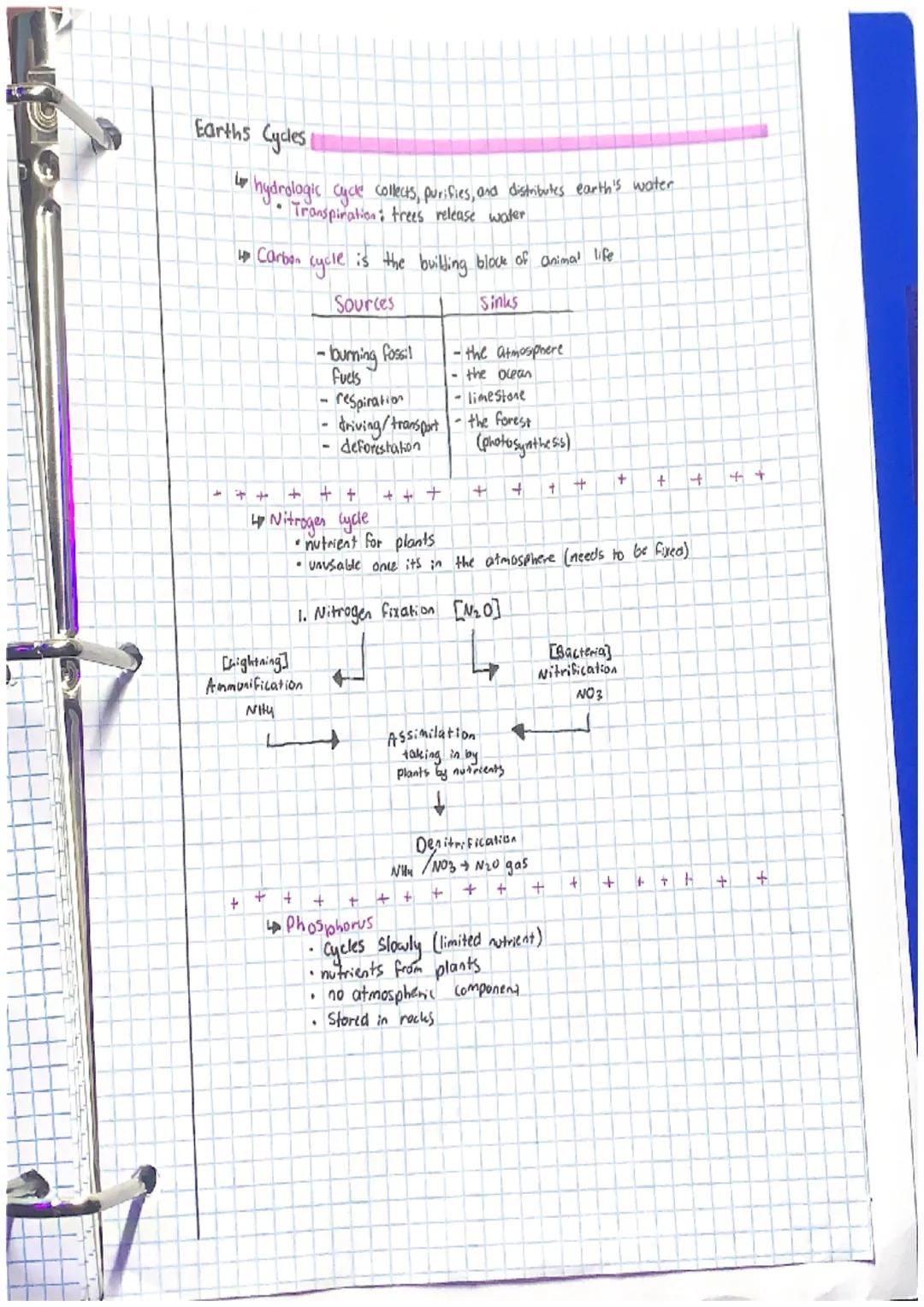
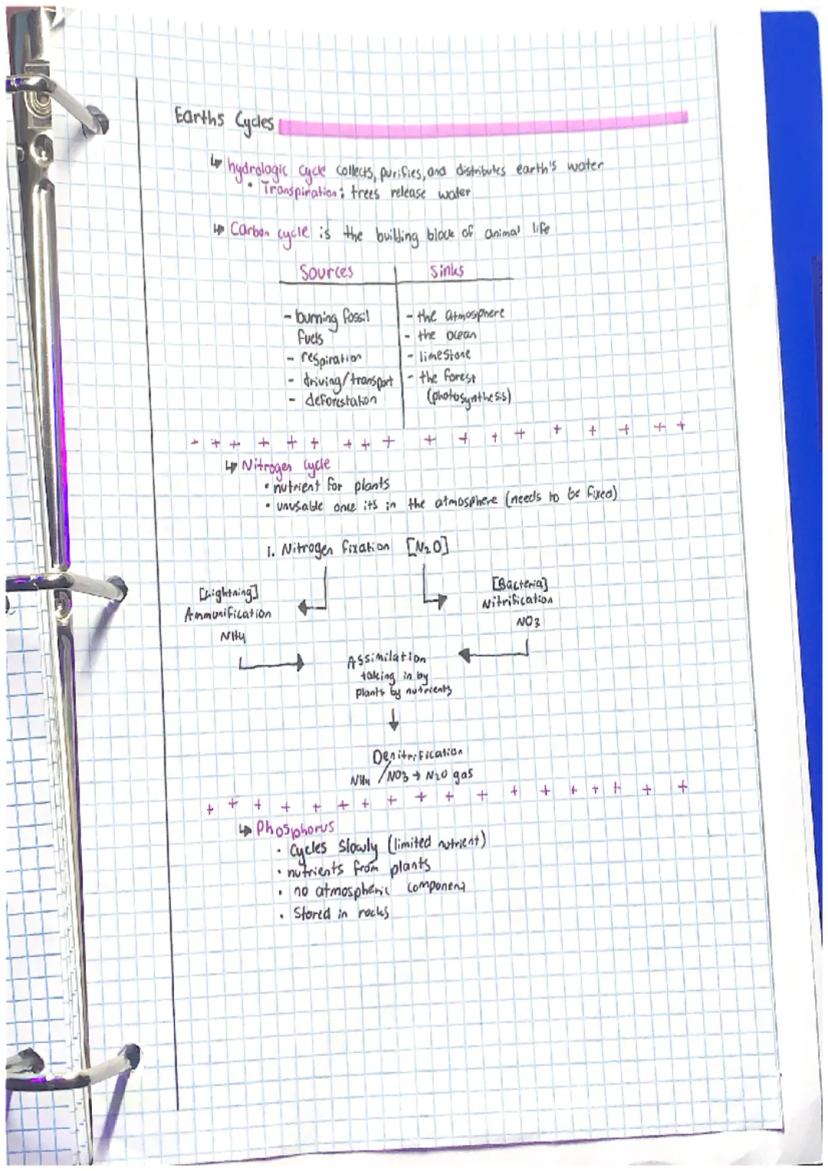
Earth's Cycles
The hydrologic cycle continuously collects, purifies, and distributes Earth's water. Part of this cycle includes transpiration, where trees release water vapor back into the atmosphere.
The carbon cycle circulates this crucial element that forms the building blocks of all life. Carbon moves between sources (like burning fossil fuels, respiration, and deforestation) and sinks (the atmosphere, oceans, forests, and limestone).
The nitrogen cycle is essential for plant nutrition but faces a challenge: atmospheric nitrogen must be "fixed" before organisms can use it. This process includes nitrogen fixation (by lightning or bacteria), nitrification, assimilation by plants, and eventually denitrification that returns nitrogen to the atmosphere.
The phosphorus cycle moves more slowly than other cycles, making phosphorus a limited nutrient. With no atmospheric component, phosphorus is stored in rocks and cycles through living organisms and soil. This cycle is critical for plant growth but operates at a much slower pace than other nutrient cycles.
Important connection: Human activities have dramatically accelerated the carbon cycle through fossil fuel use and deforestation, leading to climate change concerns.
We thought you’d never ask...
What is the Knowunity AI companion?
Our AI companion is specifically built for the needs of students. Based on the millions of content pieces we have on the platform we can provide truly meaningful and relevant answers to students. But its not only about answers, the companion is even more about guiding students through their daily learning challenges, with personalised study plans, quizzes or content pieces in the chat and 100% personalisation based on the students skills and developments.
Where can I download the Knowunity app?
You can download the app in the Google Play Store and in the Apple App Store.
Is Knowunity really free of charge?
That's right! Enjoy free access to study content, connect with fellow students, and get instant help – all at your fingertips.
Most popular content in AP Environmental Science
9I
AP Environmental ScienceIntroduction to Ecological Economics
Explore the fundamental principles of ecological economics, including natural capital, ecosystem services, and the valuation of natural resources.
9th4260
AP Environmental ScienceAPES Final Notes
Notes of the high weighted units of APES. Watch Jordan Smedes' videos on youtube and use these notes to review for the AP test.
1,096120
AP Environmental ScienceUnit 1 Multiple Choice Test
APES Unit 1 MC test from AP Central. 33 questions with diagrams.
1,80321
AP Environmental ScienceAPES UNIT 1
Unit 1 APES notes
11th661
AP Environmental ScienceAPES Unit One and Two
brief overview with what you should know for unit 1 and 2 with definitions and examples included.
11th1767
AP Environmental ScienceAPES Sustainability, Biomes, Evolution Review Notes
Chapter 1, 2, 4, 5, 6 Notes REVIEWED
38010
AP Environmental ScienceAPES Unit 2 Key Terms
Unit 2 key terms for APES- biospheres
11th380
AP Environmental ScienceDemographic Transitions Notes
human population demographic transitions, from AP environmental science, but can be utilized in AP human geography and much more.
9th18311
AP Environmental ScienceBIOGEOCHEMICAL CYCLES
Gives an overview about chemical elements and movement of elements.
1348
Most popular content
9O
 AP US History
Origins and Dynamics of the Columbian Exchange
Analyze the ecological and economic motivations behind the initial transfer of goods, people, and diseases between the Old and New Worlds.
9th3,1280
I
AP US HistoryIntroduction to Early Cultural Interactions
Analyze the initial social and religious encounters between Europeans, Africans, and Indigenous peoples in the colonial Americas.
9th2,7730
O
 AP World History
Origins of Ancient River Civilizations
Analyze the environmental factors and technological innovations that led to the rise of early states in Mesopotamia, Egypt, and the Indus Valley.
9th3,1870
M
AP US HistoryMotivations for European Exploration
Analyze the economic, religious, and political factors that drove European powers to the Americas during the 15th and 16th centuries.
9th1,7780
F
 AP Psychology
Foundations of Ethical Guidelines in Research
Practice the core principles of the APA ethical code including informed consent, debriefing, and the role of Institutional Review Boards.
9th1,3360
I
AP US HistoryIntroduction to Native American Societies
Examine the diverse social, political, and economic structures of North American indigenous groups prior to European contact.
9th1,1100
I
 AP Biology
Introduction to Biological Elements of Life
Practice identifying the essential elements including carbon, nitrogen, phosphorus, and sulfur that compose biological macromolecules.
9th1,7390
I
AP US HistoryIntroduction to the Spanish Encomienda System
Explore the fundamental economic and social structures of the Spanish colonial system, focusing on the encomienda and the casta social hierarchy.
9th8890
O
AP World HistoryOrigins and Continuity of the Byzantine Empire
Analyze the political and cultural transitions from the Roman Empire to the Byzantine Empire, focusing on the reign of Justinian I and his code.
9th1,6320
Can't find what you're looking for? Explore other subjects.
Students love us — and so will you.
4.6/5App Store
4.7/5Google Play
The app is very easy to use and well designed. I have found everything I was looking for so far and have been able to learn a lot from the presentations! I will definitely use the app for a class assignment! And of course it also helps a lot as an inspiration.
Stefan SiOS user
This app is really great. There are so many study notes and help [...]. My problem subject is French, for example, and the app has so many options for help. Thanks to this app, I have improved my French. I would recommend it to anyone.
Samantha KlichAndroid user
Wow, I am really amazed. I just tried the app because I've seen it advertised many times and was absolutely stunned. This app is THE HELP you want for school and above all, it offers so many things, such as workouts and fact sheets, which have been VERY helpful to me personally.
AnnaiOS user
AP Environmental Science75 views·Updated Jun 19, 2026·5 pagesDiscovering Biomes and Aquatic Ecosystems
skoot@skoot
Earth's diverse aquatic environments and biological systems form the foundation of our planet's ecological balance. These interconnected biomes and cycles support an incredible variety of life and maintain crucial environmental processes that sustain all living things.
1
of 5
Sign up to see the content. It's free!
- Access to all documents
- Improve your grades
- Join milions of students
Aquatic Biomes and Marine Life
Water covers a massive 71% of Earth's surface, creating vast habitats for countless organisms. In these aquatic environments, key factors like temperature, dissolved oxygen, light penetration, and nutrient availability determine which creatures can thrive.
The distribution of aquatic life is largely determined by salinity (salt content). Saltwater environments make up 98% of Earth's water, with 96.5% found in oceans. These marine zones include vibrant coral reefs (home to 90% of fish species), productive estuaries (where rivers meet oceans creating brackish water), and mangrove forests with deep roots that prevent coastal erosion.
Aquatic species fall into several categories: nekton (strong swimmers like fish and whales), benthos (bottom dwellers such as crabs and clams), decomposers (mainly bacteria), and phytoplankton (primary producers that form the base of marine food webs).
Did you know? About 90% of marine fish species stay near coastlines where nutrients are abundant, rather than venturing into the open ocean!
2
of 5Sign up to see the content. It's free!
- Access to all documents
- Improve your grades
- Join milions of students
Ocean Zones and Freshwater Environments
Oceans are divided into distinctive zones, each supporting different life forms. The nutrient-rich coastal zone extends from land to the edge of the continental shelf and hosts 90% of all marine species. Beyond lies the open sea and ocean bottom, which have three primary layers.
These layers include the sunlit euphotic zone (home to phytoplankton and large fish), the dimly lit bathyal zone (where zooplankton and smaller fish live), and the dark, cold abyssal zone (with no plants, only filter feeders).
Freshwater makes up only 2.5% of Earth's water (mostly in ice caps) but creates diverse habitats. Lakes have four distinct zones: the shallow, sunny littoral zone near shore; the sunlit limnetic zone in upper waters; the low-oxygen profundal zone in middle depths; and the benthic zone at the bottom where decomposers process dead matter.
Remember this: The deepest ocean zones receive no sunlight at all, yet still support unique life forms adapted to extreme pressure, cold, and darkness!
3
of 5Sign up to see the content. It's free!
- Access to all documents
- Improve your grades
- Join milions of students
Biological Diversity and Biomes
Biological diversity takes many forms that scientists categorize and study. Species diversity includes both the variety of species (richness) and how evenly they're distributed. Genetic diversity refers to the variety of genes within populations, while ecosystem diversity encompasses the range of habitats and ecological communities.
Earth's major biomes are regions with distinct climates and species. These include deserts (low precipitation, often hot), grasslands, tropical rainforests, temperate regions, and Arctic environments. Scientists use climatographs to represent and study the climate patterns in different biomes.
Special biome types include the chaparral (a shrubland found on every continent with hot, dry summers) and the tundra with its permanently frozen soil called permafrost.
Quick tip: When studying biomes for a test, focus on both the climate conditions AND the typical plant adaptations for each—they go hand in hand!
4
of 5Sign up to see the content. It's free!
- Access to all documents
- Improve your grades
- Join milions of students
Extreme Ecosystems: The Intertidal Zone
The intertidal zone is a fascinating biome found along shorelines where land meets sea. This ecosystem experiences dramatic changes as tides move in and out throughout the day.
During low tide, organisms are exposed to air and must withstand drying out, temperature fluctuations, and predators from land. When high tide returns, these same creatures become submerged in water and face marine predators instead.
Because of these constantly shifting conditions, intertidal organisms like starfish are considered extremophiles—creatures adapted to survive in environments that would kill most other species.
Amazing fact: Some intertidal creatures can survive being baked in the sun for hours during low tide, then completely submerged in cold saltwater during high tide—all in the same day!
5
of 5Sign up to see the content. It's free!
- Access to all documents
- Improve your grades
- Join milions of students
Earth's Cycles
The hydrologic cycle continuously collects, purifies, and distributes Earth's water. Part of this cycle includes transpiration, where trees release water vapor back into the atmosphere.
The carbon cycle circulates this crucial element that forms the building blocks of all life. Carbon moves between sources (like burning fossil fuels, respiration, and deforestation) and sinks (the atmosphere, oceans, forests, and limestone).
The nitrogen cycle is essential for plant nutrition but faces a challenge: atmospheric nitrogen must be "fixed" before organisms can use it. This process includes nitrogen fixation (by lightning or bacteria), nitrification, assimilation by plants, and eventually denitrification that returns nitrogen to the atmosphere.
The phosphorus cycle moves more slowly than other cycles, making phosphorus a limited nutrient. With no atmospheric component, phosphorus is stored in rocks and cycles through living organisms and soil. This cycle is critical for plant growth but operates at a much slower pace than other nutrient cycles.
Important connection: Human activities have dramatically accelerated the carbon cycle through fossil fuel use and deforestation, leading to climate change concerns.
We thought you’d never ask...
What is the Knowunity AI companion?
Our AI companion is specifically built for the needs of students. Based on the millions of content pieces we have on the platform we can provide truly meaningful and relevant answers to students. But its not only about answers, the companion is even more about guiding students through their daily learning challenges, with personalised study plans, quizzes or content pieces in the chat and 100% personalisation based on the students skills and developments.
Where can I download the Knowunity app?
You can download the app in the Google Play Store and in the Apple App Store.
Is Knowunity really free of charge?
That's right! Enjoy free access to study content, connect with fellow students, and get instant help – all at your fingertips.
Most popular content in AP Environmental Science
9I
AP Environmental ScienceIntroduction to Ecological Economics
Explore the fundamental principles of ecological economics, including natural capital, ecosystem services, and the valuation of natural resources.
9th4260
AP Environmental ScienceAPES Final Notes
Notes of the high weighted units of APES. Watch Jordan Smedes' videos on youtube and use these notes to review for the AP test.
1,096120
AP Environmental ScienceUnit 1 Multiple Choice Test
APES Unit 1 MC test from AP Central. 33 questions with diagrams.
1,80321
AP Environmental ScienceAPES UNIT 1
Unit 1 APES notes
11th661
AP Environmental ScienceAPES Unit One and Two
brief overview with what you should know for unit 1 and 2 with definitions and examples included.
11th1767
AP Environmental ScienceAPES Sustainability, Biomes, Evolution Review Notes
Chapter 1, 2, 4, 5, 6 Notes REVIEWED
38010
AP Environmental ScienceAPES Unit 2 Key Terms
Unit 2 key terms for APES- biospheres
11th380
AP Environmental ScienceDemographic Transitions Notes
human population demographic transitions, from AP environmental science, but can be utilized in AP human geography and much more.
9th18311
AP Environmental ScienceBIOGEOCHEMICAL CYCLES
Gives an overview about chemical elements and movement of elements.
1348
Most popular content
9O
AP US HistoryOrigins and Dynamics of the Columbian Exchange
Analyze the ecological and economic motivations behind the initial transfer of goods, people, and diseases between the Old and New Worlds.
9th3,1280
I
AP US HistoryIntroduction to Early Cultural Interactions
Analyze the initial social and religious encounters between Europeans, Africans, and Indigenous peoples in the colonial Americas.
9th2,7730
O
AP World HistoryOrigins of Ancient River Civilizations
Analyze the environmental factors and technological innovations that led to the rise of early states in Mesopotamia, Egypt, and the Indus Valley.
9th3,1870
M
AP US HistoryMotivations for European Exploration
Analyze the economic, religious, and political factors that drove European powers to the Americas during the 15th and 16th centuries.
9th1,7780
F
AP PsychologyFoundations of Ethical Guidelines in Research
Practice the core principles of the APA ethical code including informed consent, debriefing, and the role of Institutional Review Boards.
9th1,3360
I
AP US HistoryIntroduction to Native American Societies
Examine the diverse social, political, and economic structures of North American indigenous groups prior to European contact.
9th1,1100
I
AP BiologyIntroduction to Biological Elements of Life
Practice identifying the essential elements including carbon, nitrogen, phosphorus, and sulfur that compose biological macromolecules.
9th1,7390
I
AP US HistoryIntroduction to the Spanish Encomienda System
Explore the fundamental economic and social structures of the Spanish colonial system, focusing on the encomienda and the casta social hierarchy.
9th8890
O
AP World HistoryOrigins and Continuity of the Byzantine Empire
Analyze the political and cultural transitions from the Roman Empire to the Byzantine Empire, focusing on the reign of Justinian I and his code.
9th1,6320
Can't find what you're looking for? Explore other subjects.
Students love us — and so will you.
4.6/5App Store
4.7/5Google Play
The app is very easy to use and well designed. I have found everything I was looking for so far and have been able to learn a lot from the presentations! I will definitely use the app for a class assignment! And of course it also helps a lot as an inspiration.
Stefan SiOS user
This app is really great. There are so many study notes and help [...]. My problem subject is French, for example, and the app has so many options for help. Thanks to this app, I have improved my French. I would recommend it to anyone.
Samantha KlichAndroid user
Wow, I am really amazed. I just tried the app because I've seen it advertised many times and was absolutely stunned. This app is THE HELP you want for school and above all, it offers so many things, such as workouts and fact sheets, which have been VERY helpful to me personally.
AnnaiOS user