

Biology is the study of life and living organisms, from...
 AP Biology77 views·Updated Jun 18, 2026·6 pages
Introduction to Biology: Chapter 1 Key Notes and Outline

1 / 6
1
of 6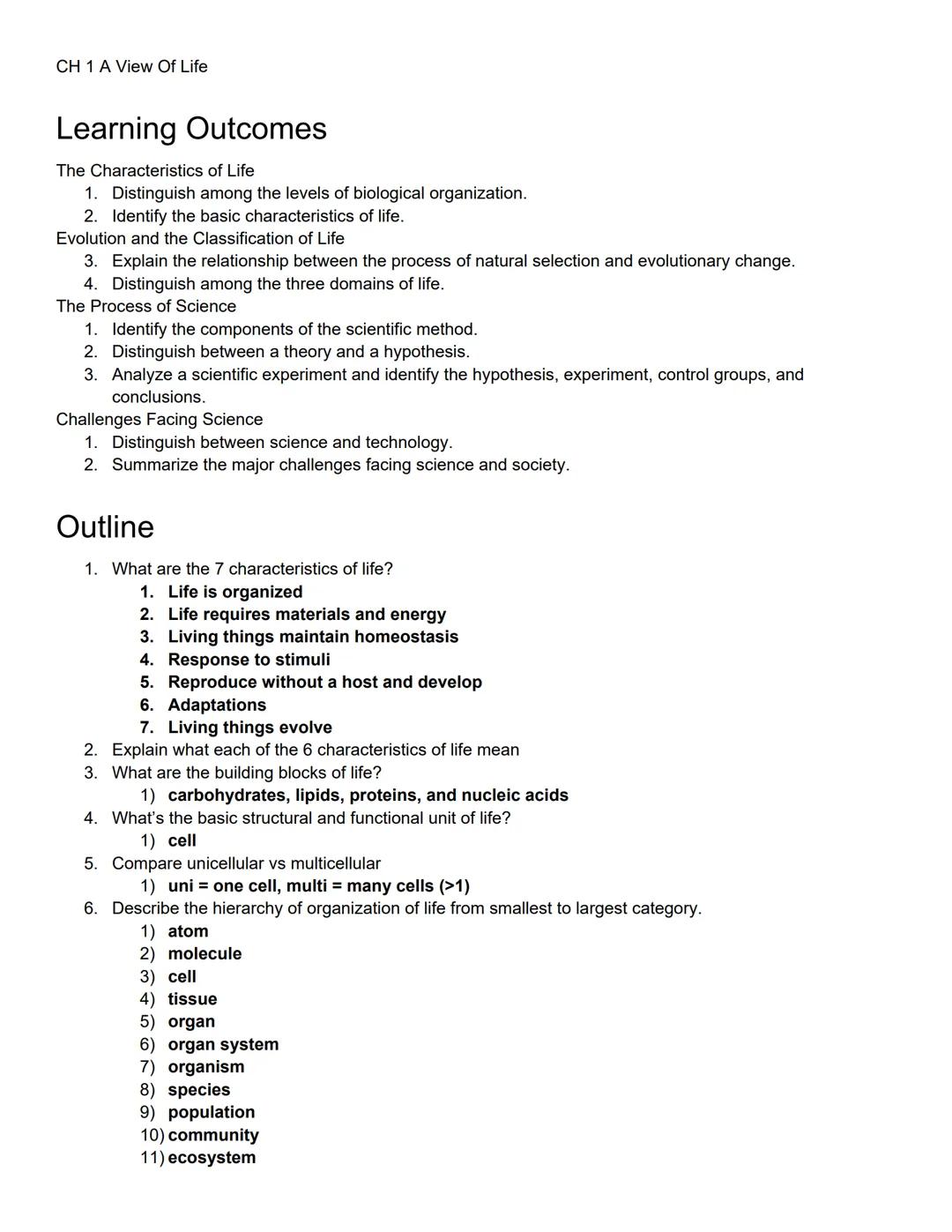
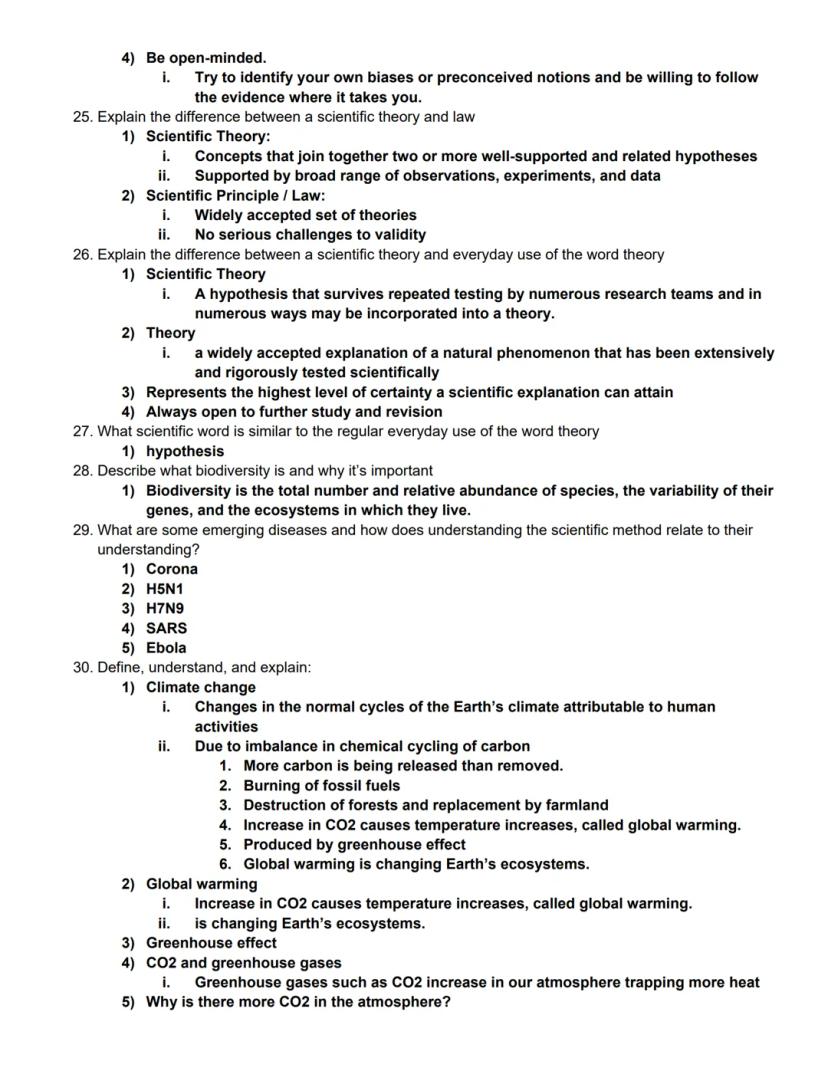
Characteristics of Life
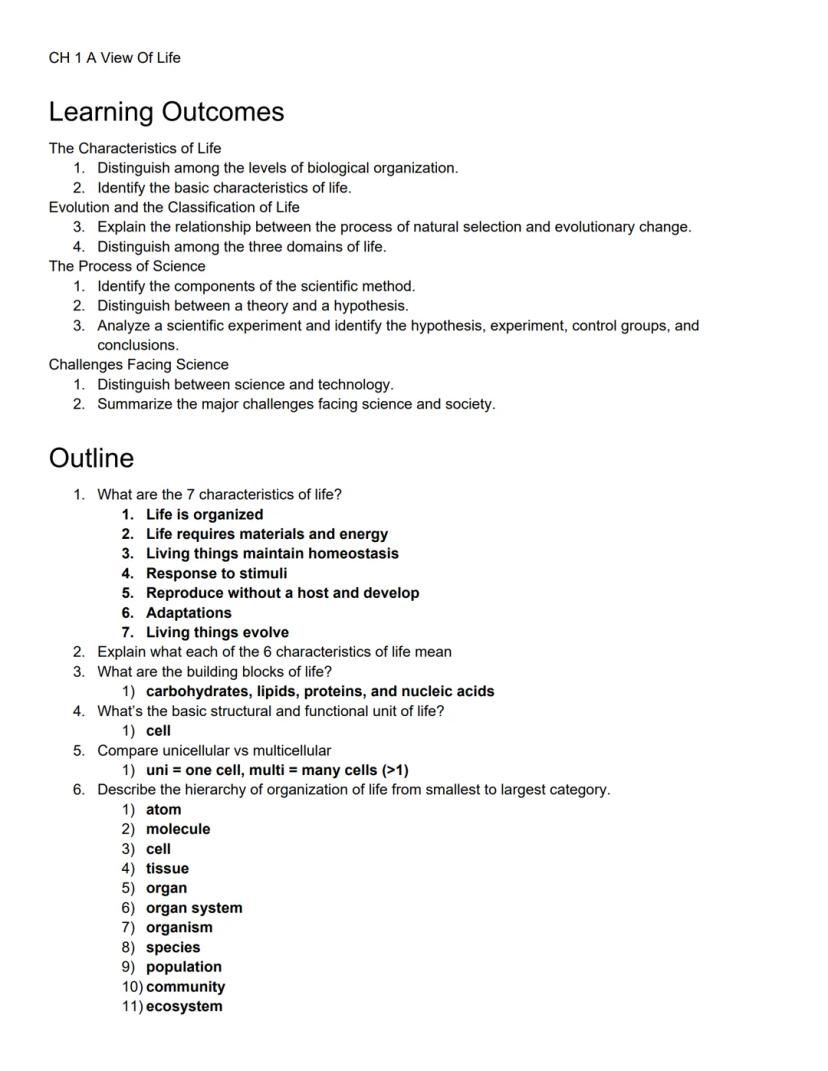
Ever wonder what makes something "alive"? Living things share seven key characteristics that distinguish them from non-living objects. All living organisms are organized (from atoms to the biosphere), require materials and energy, maintain homeostasis (internal balance), respond to stimuli, reproduce and develop, have adaptations for survival, and evolve over time.
Life is organized in a hierarchy from simple to complex. It starts with atoms that form molecules, which make up cells—the basic unit of life. Cells can be part of tissues, which form organs and organ systems within organisms. Beyond individual organisms, we have species, populations, communities, ecosystems, and finally the biosphere (all life on Earth).
The building blocks of life include four major types of molecules: carbohydrates, lipids, proteins, and nucleic acids. These molecules are essential for structure and function in all living things. Organisms can be unicellular or multicellular (many cells), but all cells contain DNA, ribosomes, cytoplasm, and a plasma membrane.
Quick Check: Try naming the levels of biological organization from smallest to largest. Can you identify which level you belong to, and which levels you're part of?
2
of 6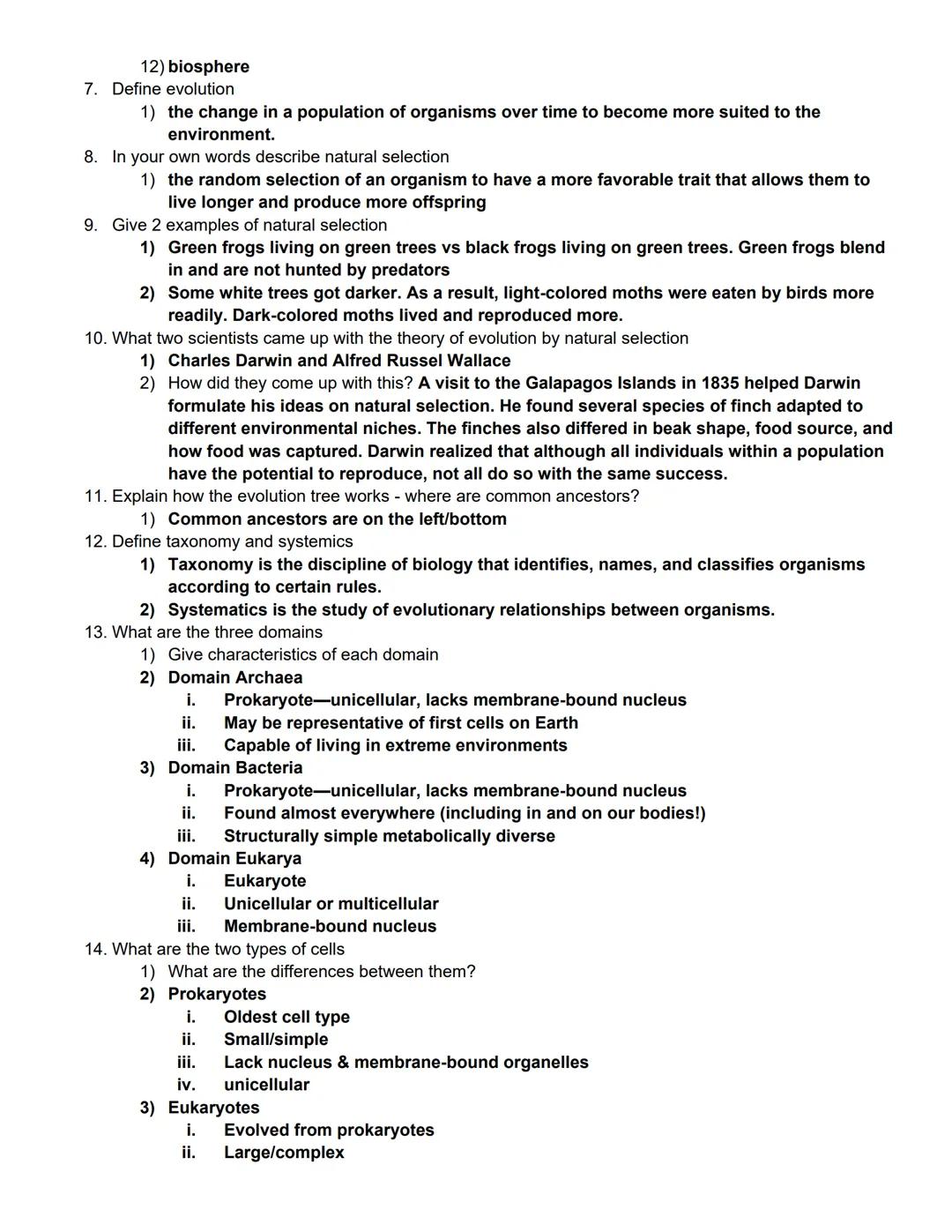
Evolution and Classification
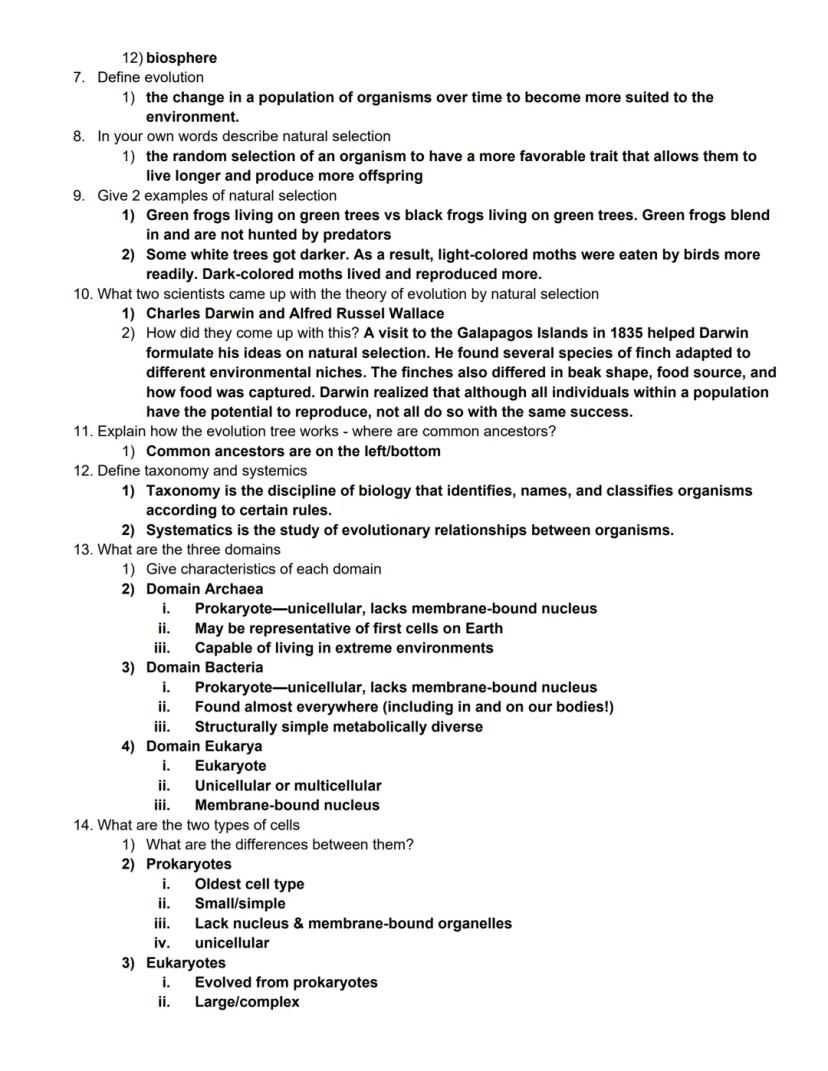
Evolution is the change in a population of organisms over time as they become better suited to their environment. It happens through a process called natural selection, where organisms with favorable traits survive longer and produce more offspring. Think of it like this: green frogs on green trees are less likely to be eaten by predators than black frogs on green trees, so more green frogs survive to reproduce.
Charles Darwin and Alfred Russel Wallace developed the theory of evolution by natural selection after observing variations in species. Darwin's famous visit to the Galápagos Islands in 1835 showed him how finches had developed different beak shapes depending on their food sources—a perfect example of adaptation through natural selection.
Scientists classify life into three domains: Archaea , Bacteria , and Eukarya (organisms with complex cells). Domains Archaea and Bacteria contain prokaryotic cells (no nucleus), while Eukarya contains eukaryotic cells .
The Eukarya domain is further divided into four kingdoms: Protista (diverse single or multicellular organisms), Fungi (decomposers like mushrooms and molds), Plantae (photosynthesizing multicellular organisms), and Animalia (multicellular organisms that ingest food). Each organism is named using binomial nomenclature—a two-part Latin name showing its genus and species.
Biology Hack: When you see an evolutionary tree, remember that common ancestors are found at the branch points, with more recently evolved organisms toward the tips of the branches.
3
of 6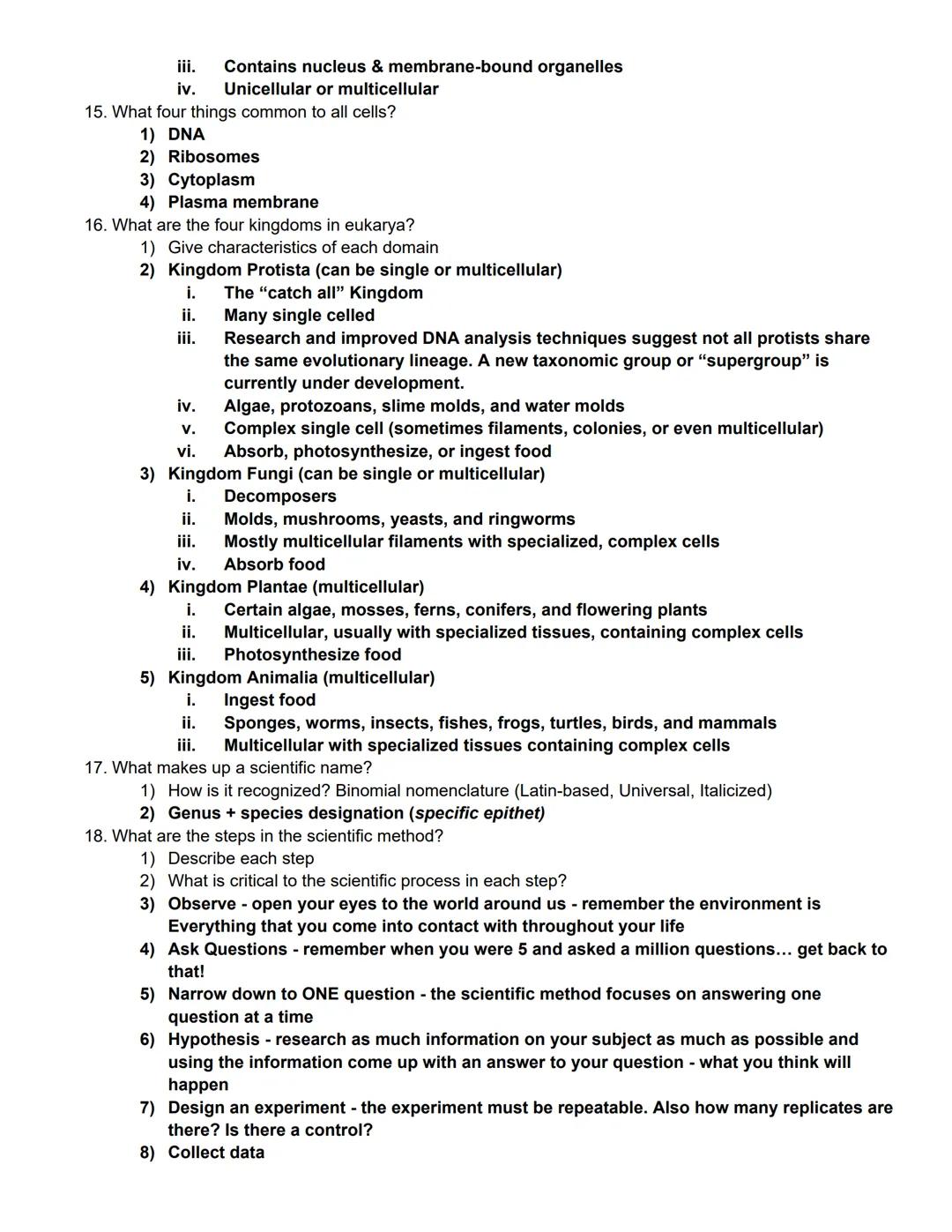
The Scientific Method
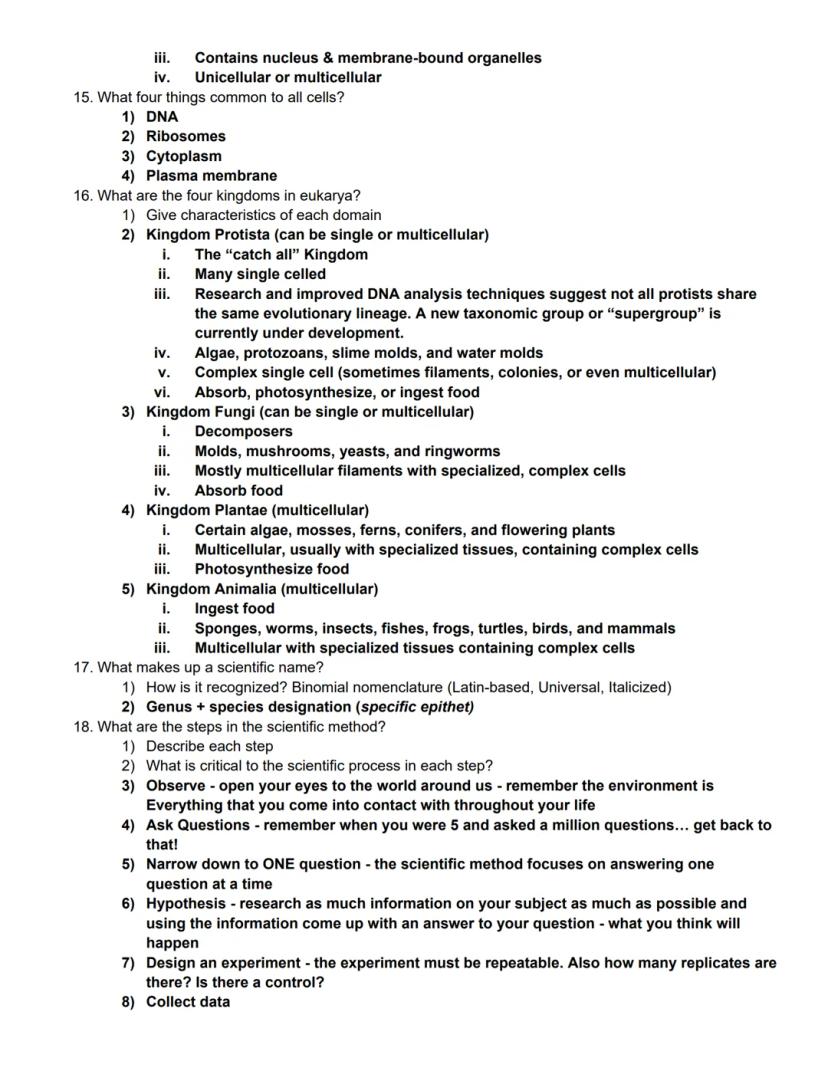
Science isn't just facts—it's a process of discovery! The scientific method provides a structured approach for investigating questions about our world. It begins with observation and asking questions, followed by narrowing down to one specific question you want to answer.
After researching your topic, you develop a hypothesis—your educated guess about what will happen. Next comes designing a repeatable experiment, collecting data, analyzing results, and drawing conclusions based on evidence (not opinions!). The final crucial step is communicating your results so others can learn from or verify your work.
Good experimental design is essential for reliable results. You'll need to identify your independent variable and your dependent variable . Scientists also use p-values to determine if results are statistically significant—generally, a p-value less than 0.05 (less than 5% probability the result happened by chance) is considered significant.
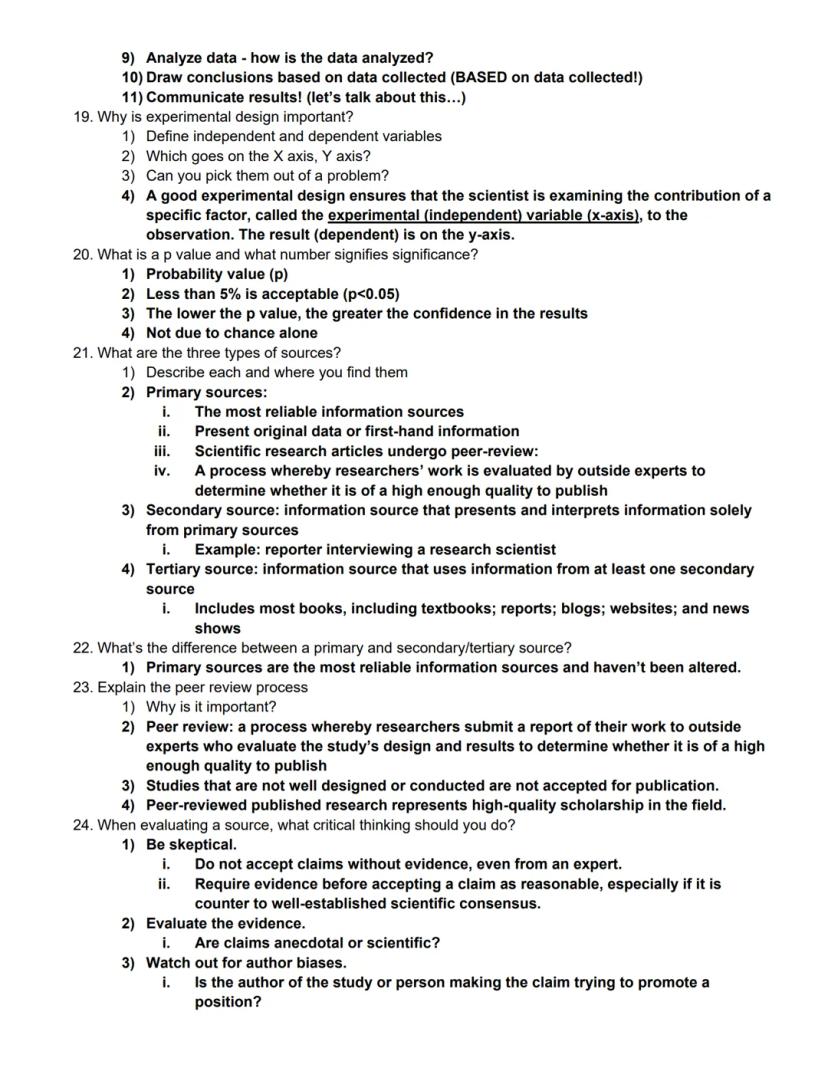
Scientific information comes from three types of sources. Primary sources are the most reliable, containing original research and data that undergoes peer review (evaluation by experts). Secondary sources interpret primary sources (like a news article about research), while tertiary sources (like textbooks or websites) compile information from secondary sources.
Pro Tip: When evaluating scientific information, always be skeptical, look for evidence backing claims, watch for bias, and be open-minded enough to change your view when presented with solid evidence.
4
of 6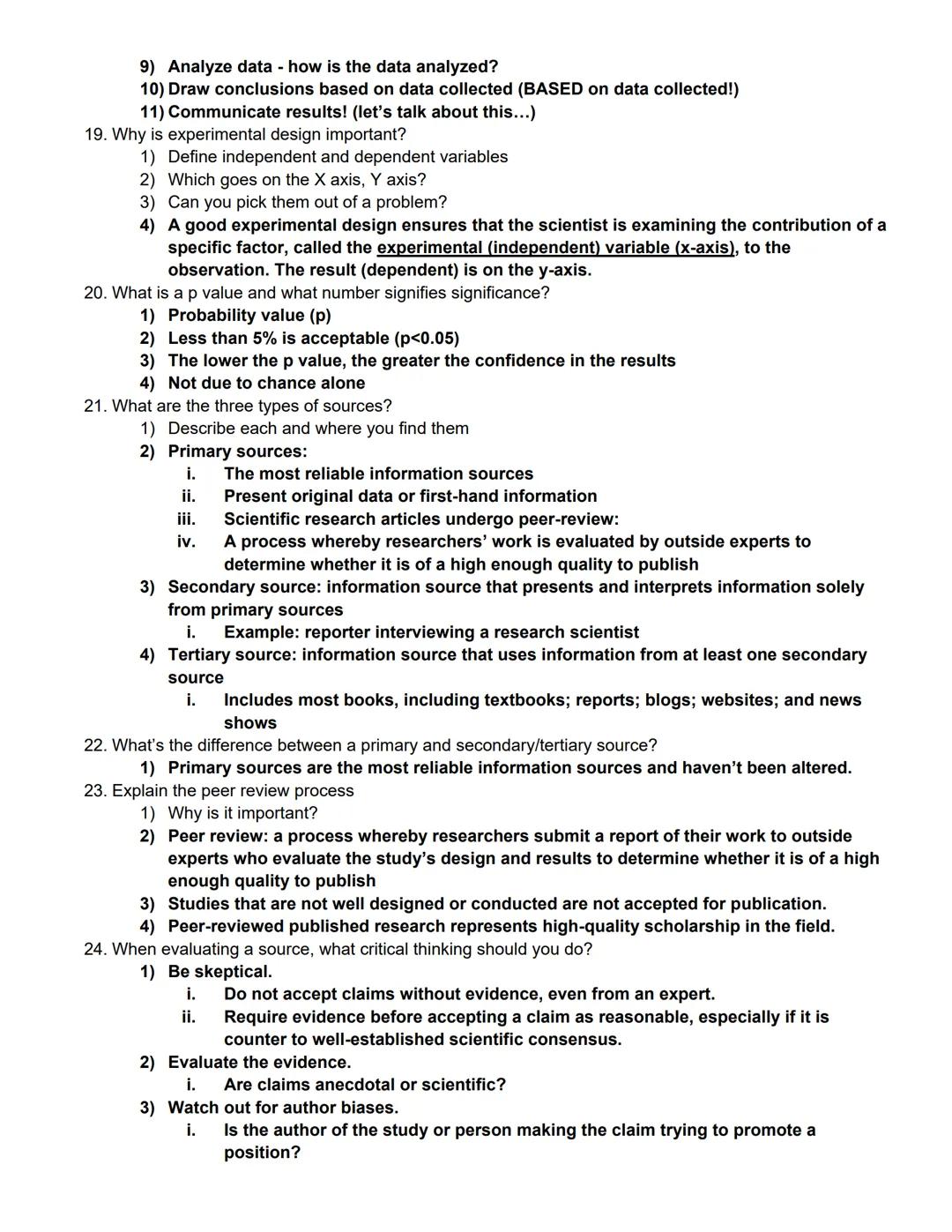
Scientific Theories and Global Challenges
In everyday language, "theory" often means "guess," but a scientific theory is much more powerful! Scientific theories are comprehensive explanations supported by extensive evidence and testing. They join together multiple well-supported hypotheses and have survived repeated testing by numerous scientists. The everyday use of "theory" is more like what scientists call a hypothesis—an educated guess that needs testing.
Our world faces several major scientific challenges that require our understanding and action. Biodiversity—the variety of living organisms in ecosystems—is declining at alarming rates. This matters because diverse ecosystems are more stable and provide essential services like clean water, pollination, and medicine sources.
Climate change represents another critical challenge. It refers to alterations in Earth's normal climate cycles due to human activities, particularly the release of greenhouse gases. The burning of fossil fuels and destruction of forests have created an imbalance in carbon cycling—more carbon dioxide is being released than removed from the atmosphere.
This excess carbon dioxide creates the greenhouse effect, trapping heat and causing global warming. The rising temperatures are already changing Earth's ecosystems, affecting everything from polar ice caps to the timing of seasonal events. Understanding these challenges requires scientific literacy and critical thinking skills.
Think About It: How might understanding the scientific method help society address emerging diseases like COVID-19 or future pandemics? What questions would scientists need to ask?
5
of 6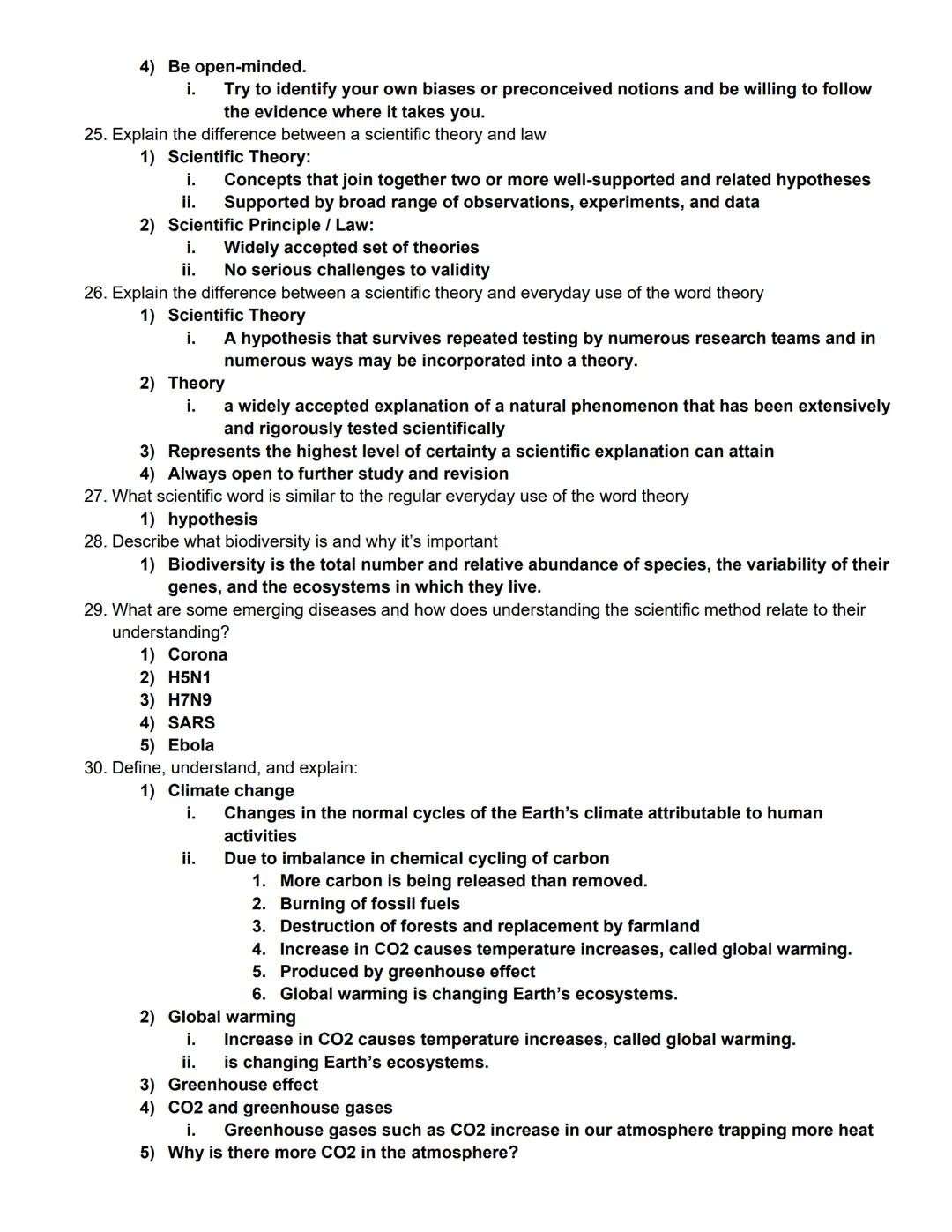
6
of 6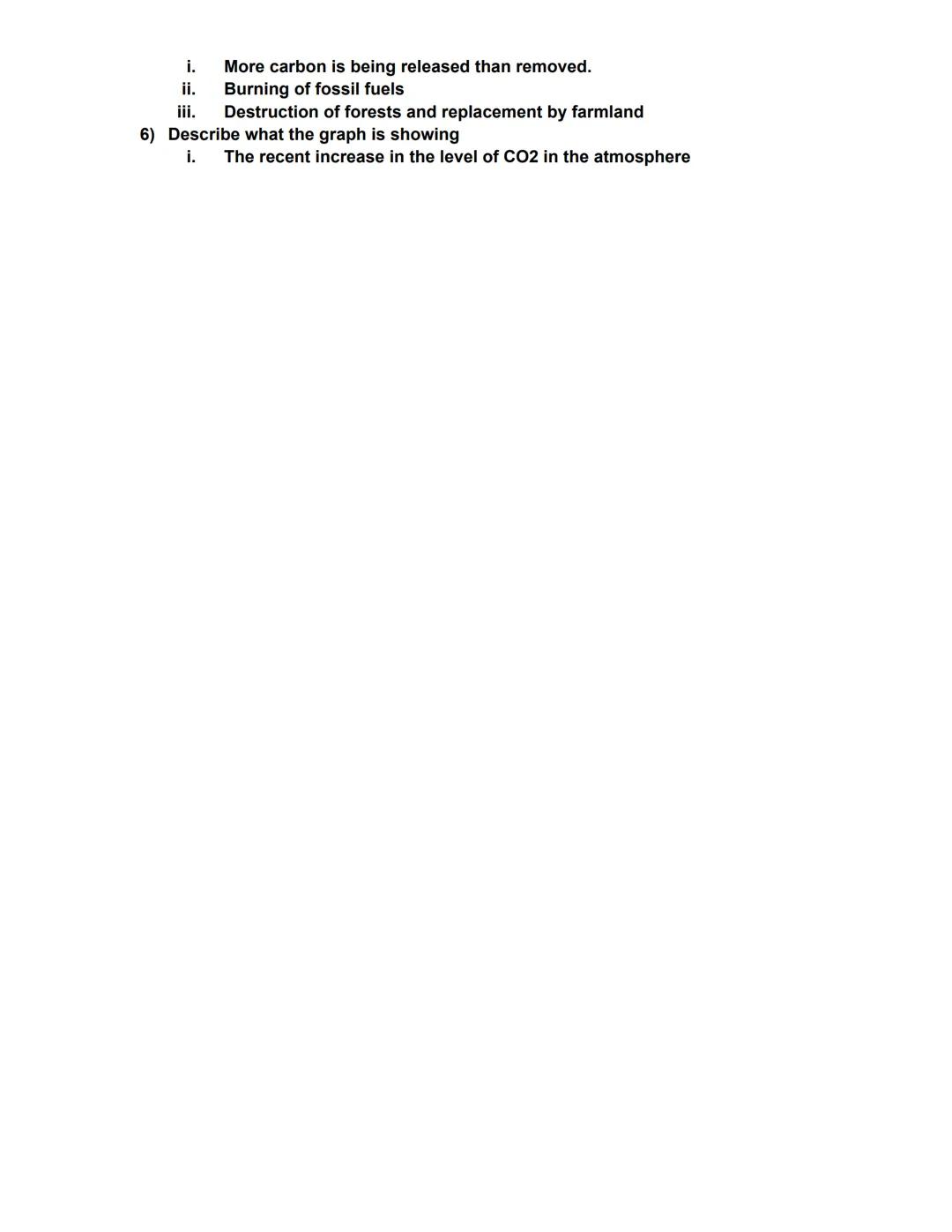
We thought you’d never ask...
What is the Knowunity AI companion?
Our AI companion is specifically built for the needs of students. Based on the millions of content pieces we have on the platform we can provide truly meaningful and relevant answers to students. But its not only about answers, the companion is even more about guiding students through their daily learning challenges, with personalised study plans, quizzes or content pieces in the chat and 100% personalisation based on the students skills and developments.
Where can I download the Knowunity app?
You can download the app in the Google Play Store and in the Apple App Store.
Is Knowunity really free of charge?
That's right! Enjoy free access to study content, connect with fellow students, and get instant help – all at your fingertips.
Similar Content
 Health & Medicine
Most popular content in AP Biology
9I
AP BiologyIntroduction to Biological Elements of Life
Practice identifying the essential elements including carbon, nitrogen, phosphorus, and sulfur that compose biological macromolecules.
9th1,7390
I
AP BiologyIntroduction to Water Polarity and Bonding
Practice identifying partial charges and the chemical basis of hydrogen bond formation between polar water molecules.
9th8520
I
AP BiologyIntroduction to Biological Macromolecules
Practice identifying the four classes of biological macromolecules and the dehydration synthesis reactions that form their covalent bonds.
9th5890
I
AP BiologyIntroduction to Biological Macromolecules
Practice identifying the monomers and chemical compositions of carbohydrates, lipids, proteins, and nucleic acids in biological systems.
9th4460
I
AP BiologyIntroduction to Cell Compartmentalization
Practice identifying how membrane-bound organelles increase surface area and facilitate specialized chemical reactions in eukaryotic cells.
9th3370
C
AP BiologyComponents of the Plasma Membrane
Practice identifying the molecular structure of phospholipids, proteins, cholesterol, and carbohydrates within the fluid mosaic model.
9th2720
I
AP BiologyIntroduction to Evidence of Evolution
Practice identifying fundamental concepts of common ancestry, including homologous structures, vestigial traits, and the fossil record.
9th2010
AP BiologyBio 1000 Chapter 2 The Molecules of Cells
Cell Make up
College55211
F
AP BiologyFundamentals of Cell Size and Surface Area
Practice calculating surface area-to-volume ratios and defining how these geometric constraints limit the maximum size of a functional biological cell.
9th1550
Most popular content
9O
 AP US History
Origins and Dynamics of the Columbian Exchange
Analyze the ecological and economic motivations behind the initial transfer of goods, people, and diseases between the Old and New Worlds.
9th3,1280
I
AP US HistoryIntroduction to Early Cultural Interactions
Analyze the initial social and religious encounters between Europeans, Africans, and Indigenous peoples in the colonial Americas.
9th2,7730
O
 AP World History
Origins of Ancient River Civilizations
Analyze the environmental factors and technological innovations that led to the rise of early states in Mesopotamia, Egypt, and the Indus Valley.
9th3,1870
M
AP US HistoryMotivations for European Exploration
Analyze the economic, religious, and political factors that drove European powers to the Americas during the 15th and 16th centuries.
9th1,7780
F
 AP Psychology
Foundations of Ethical Guidelines in Research
Practice the core principles of the APA ethical code including informed consent, debriefing, and the role of Institutional Review Boards.
9th1,3360
I
AP US HistoryIntroduction to Native American Societies
Examine the diverse social, political, and economic structures of North American indigenous groups prior to European contact.
9th1,1100
I
AP BiologyIntroduction to Biological Elements of Life
Practice identifying the essential elements including carbon, nitrogen, phosphorus, and sulfur that compose biological macromolecules.
9th1,7390
I
AP US HistoryIntroduction to the Spanish Encomienda System
Explore the fundamental economic and social structures of the Spanish colonial system, focusing on the encomienda and the casta social hierarchy.
9th8890
O
AP World HistoryOrigins and Continuity of the Byzantine Empire
Analyze the political and cultural transitions from the Roman Empire to the Byzantine Empire, focusing on the reign of Justinian I and his code.
9th1,6320
Can't find what you're looking for? Explore other subjects.
Students love us — and so will you.
4.6/5App Store
4.7/5Google Play
The app is very easy to use and well designed. I have found everything I was looking for so far and have been able to learn a lot from the presentations! I will definitely use the app for a class assignment! And of course it also helps a lot as an inspiration.
Stefan SiOS user
This app is really great. There are so many study notes and help [...]. My problem subject is French, for example, and the app has so many options for help. Thanks to this app, I have improved my French. I would recommend it to anyone.
Samantha KlichAndroid user
Wow, I am really amazed. I just tried the app because I've seen it advertised many times and was absolutely stunned. This app is THE HELP you want for school and above all, it offers so many things, such as workouts and fact sheets, which have been VERY helpful to me personally.
AnnaiOS user
AP Biology77 views·Updated Jun 18, 2026·6 pagesIntroduction to Biology: Chapter 1 Key Notes and Outline
Biology is the study of life and living organisms, from the smallest cells to the largest ecosystems. Understanding the characteristics of life and how organisms evolve helps us make sense of the incredible diversity on our planet. This summary will...
1
of 6
Sign up to see the content. It's free!
- Access to all documents
- Improve your grades
- Join milions of students
Characteristics of Life
Ever wonder what makes something "alive"? Living things share seven key characteristics that distinguish them from non-living objects. All living organisms are organized (from atoms to the biosphere), require materials and energy, maintain homeostasis (internal balance), respond to stimuli, reproduce and develop, have adaptations for survival, and evolve over time.
Life is organized in a hierarchy from simple to complex. It starts with atoms that form molecules, which make up cells—the basic unit of life. Cells can be part of tissues, which form organs and organ systems within organisms. Beyond individual organisms, we have species, populations, communities, ecosystems, and finally the biosphere (all life on Earth).
The building blocks of life include four major types of molecules: carbohydrates, lipids, proteins, and nucleic acids. These molecules are essential for structure and function in all living things. Organisms can be unicellular or multicellular (many cells), but all cells contain DNA, ribosomes, cytoplasm, and a plasma membrane.
Quick Check: Try naming the levels of biological organization from smallest to largest. Can you identify which level you belong to, and which levels you're part of?
2
of 6Sign up to see the content. It's free!
- Access to all documents
- Improve your grades
- Join milions of students
Evolution and Classification
Evolution is the change in a population of organisms over time as they become better suited to their environment. It happens through a process called natural selection, where organisms with favorable traits survive longer and produce more offspring. Think of it like this: green frogs on green trees are less likely to be eaten by predators than black frogs on green trees, so more green frogs survive to reproduce.
Charles Darwin and Alfred Russel Wallace developed the theory of evolution by natural selection after observing variations in species. Darwin's famous visit to the Galápagos Islands in 1835 showed him how finches had developed different beak shapes depending on their food sources—a perfect example of adaptation through natural selection.
Scientists classify life into three domains: Archaea , Bacteria , and Eukarya (organisms with complex cells). Domains Archaea and Bacteria contain prokaryotic cells (no nucleus), while Eukarya contains eukaryotic cells .
The Eukarya domain is further divided into four kingdoms: Protista (diverse single or multicellular organisms), Fungi (decomposers like mushrooms and molds), Plantae (photosynthesizing multicellular organisms), and Animalia (multicellular organisms that ingest food). Each organism is named using binomial nomenclature—a two-part Latin name showing its genus and species.
Biology Hack: When you see an evolutionary tree, remember that common ancestors are found at the branch points, with more recently evolved organisms toward the tips of the branches.
3
of 6Sign up to see the content. It's free!
- Access to all documents
- Improve your grades
- Join milions of students
The Scientific Method
Science isn't just facts—it's a process of discovery! The scientific method provides a structured approach for investigating questions about our world. It begins with observation and asking questions, followed by narrowing down to one specific question you want to answer.
After researching your topic, you develop a hypothesis—your educated guess about what will happen. Next comes designing a repeatable experiment, collecting data, analyzing results, and drawing conclusions based on evidence (not opinions!). The final crucial step is communicating your results so others can learn from or verify your work.
Good experimental design is essential for reliable results. You'll need to identify your independent variable and your dependent variable . Scientists also use p-values to determine if results are statistically significant—generally, a p-value less than 0.05 (less than 5% probability the result happened by chance) is considered significant.
Scientific information comes from three types of sources. Primary sources are the most reliable, containing original research and data that undergoes peer review (evaluation by experts). Secondary sources interpret primary sources (like a news article about research), while tertiary sources (like textbooks or websites) compile information from secondary sources.
Pro Tip: When evaluating scientific information, always be skeptical, look for evidence backing claims, watch for bias, and be open-minded enough to change your view when presented with solid evidence.
4
of 6Sign up to see the content. It's free!
- Access to all documents
- Improve your grades
- Join milions of students
Scientific Theories and Global Challenges
In everyday language, "theory" often means "guess," but a scientific theory is much more powerful! Scientific theories are comprehensive explanations supported by extensive evidence and testing. They join together multiple well-supported hypotheses and have survived repeated testing by numerous scientists. The everyday use of "theory" is more like what scientists call a hypothesis—an educated guess that needs testing.
Our world faces several major scientific challenges that require our understanding and action. Biodiversity—the variety of living organisms in ecosystems—is declining at alarming rates. This matters because diverse ecosystems are more stable and provide essential services like clean water, pollination, and medicine sources.
Climate change represents another critical challenge. It refers to alterations in Earth's normal climate cycles due to human activities, particularly the release of greenhouse gases. The burning of fossil fuels and destruction of forests have created an imbalance in carbon cycling—more carbon dioxide is being released than removed from the atmosphere.
This excess carbon dioxide creates the greenhouse effect, trapping heat and causing global warming. The rising temperatures are already changing Earth's ecosystems, affecting everything from polar ice caps to the timing of seasonal events. Understanding these challenges requires scientific literacy and critical thinking skills.
Think About It: How might understanding the scientific method help society address emerging diseases like COVID-19 or future pandemics? What questions would scientists need to ask?
5
of 6Sign up to see the content. It's free!
- Access to all documents
- Improve your grades
- Join milions of students
6
of 6Sign up to see the content. It's free!
- Access to all documents
- Improve your grades
- Join milions of students
We thought you’d never ask...
What is the Knowunity AI companion?
Our AI companion is specifically built for the needs of students. Based on the millions of content pieces we have on the platform we can provide truly meaningful and relevant answers to students. But its not only about answers, the companion is even more about guiding students through their daily learning challenges, with personalised study plans, quizzes or content pieces in the chat and 100% personalisation based on the students skills and developments.
Where can I download the Knowunity app?
You can download the app in the Google Play Store and in the Apple App Store.
Is Knowunity really free of charge?
That's right! Enjoy free access to study content, connect with fellow students, and get instant help – all at your fingertips.
Similar Content
Most popular content in AP Biology
9I
AP BiologyIntroduction to Biological Elements of Life
Practice identifying the essential elements including carbon, nitrogen, phosphorus, and sulfur that compose biological macromolecules.
9th1,7390
I
AP BiologyIntroduction to Water Polarity and Bonding
Practice identifying partial charges and the chemical basis of hydrogen bond formation between polar water molecules.
9th8520
I
AP BiologyIntroduction to Biological Macromolecules
Practice identifying the four classes of biological macromolecules and the dehydration synthesis reactions that form their covalent bonds.
9th5890
I
AP BiologyIntroduction to Biological Macromolecules
Practice identifying the monomers and chemical compositions of carbohydrates, lipids, proteins, and nucleic acids in biological systems.
9th4460
I
AP BiologyIntroduction to Cell Compartmentalization
Practice identifying how membrane-bound organelles increase surface area and facilitate specialized chemical reactions in eukaryotic cells.
9th3370
C
AP BiologyComponents of the Plasma Membrane
Practice identifying the molecular structure of phospholipids, proteins, cholesterol, and carbohydrates within the fluid mosaic model.
9th2720
I
AP BiologyIntroduction to Evidence of Evolution
Practice identifying fundamental concepts of common ancestry, including homologous structures, vestigial traits, and the fossil record.
9th2010
AP BiologyBio 1000 Chapter 2 The Molecules of Cells
Cell Make up
College55211
F
AP BiologyFundamentals of Cell Size and Surface Area
Practice calculating surface area-to-volume ratios and defining how these geometric constraints limit the maximum size of a functional biological cell.
9th1550
Most popular content
9O
AP US HistoryOrigins and Dynamics of the Columbian Exchange
Analyze the ecological and economic motivations behind the initial transfer of goods, people, and diseases between the Old and New Worlds.
9th3,1280
I
AP US HistoryIntroduction to Early Cultural Interactions
Analyze the initial social and religious encounters between Europeans, Africans, and Indigenous peoples in the colonial Americas.
9th2,7730
O
AP World HistoryOrigins of Ancient River Civilizations
Analyze the environmental factors and technological innovations that led to the rise of early states in Mesopotamia, Egypt, and the Indus Valley.
9th3,1870
M
AP US HistoryMotivations for European Exploration
Analyze the economic, religious, and political factors that drove European powers to the Americas during the 15th and 16th centuries.
9th1,7780
F
AP PsychologyFoundations of Ethical Guidelines in Research
Practice the core principles of the APA ethical code including informed consent, debriefing, and the role of Institutional Review Boards.
9th1,3360
I
AP US HistoryIntroduction to Native American Societies
Examine the diverse social, political, and economic structures of North American indigenous groups prior to European contact.
9th1,1100
I
AP BiologyIntroduction to Biological Elements of Life
Practice identifying the essential elements including carbon, nitrogen, phosphorus, and sulfur that compose biological macromolecules.
9th1,7390
I
AP US HistoryIntroduction to the Spanish Encomienda System
Explore the fundamental economic and social structures of the Spanish colonial system, focusing on the encomienda and the casta social hierarchy.
9th8890
O
AP World HistoryOrigins and Continuity of the Byzantine Empire
Analyze the political and cultural transitions from the Roman Empire to the Byzantine Empire, focusing on the reign of Justinian I and his code.
9th1,6320
Can't find what you're looking for? Explore other subjects.
Students love us — and so will you.
4.6/5App Store
4.7/5Google Play
The app is very easy to use and well designed. I have found everything I was looking for so far and have been able to learn a lot from the presentations! I will definitely use the app for a class assignment! And of course it also helps a lot as an inspiration.
Stefan SiOS user
This app is really great. There are so many study notes and help [...]. My problem subject is French, for example, and the app has so many options for help. Thanks to this app, I have improved my French. I would recommend it to anyone.
Samantha KlichAndroid user
Wow, I am really amazed. I just tried the app because I've seen it advertised many times and was absolutely stunned. This app is THE HELP you want for school and above all, it offers so many things, such as workouts and fact sheets, which have been VERY helpful to me personally.
AnnaiOS user