
Lipid metabolism is the complex journey of how your body...
 AP Biology29 views·Updated Jun 6, 2026·19 pages
Todo Sobre el Metabolismo de Lípidos

Natalie Corrente@nataliecorrente




1 / 10
1
of 10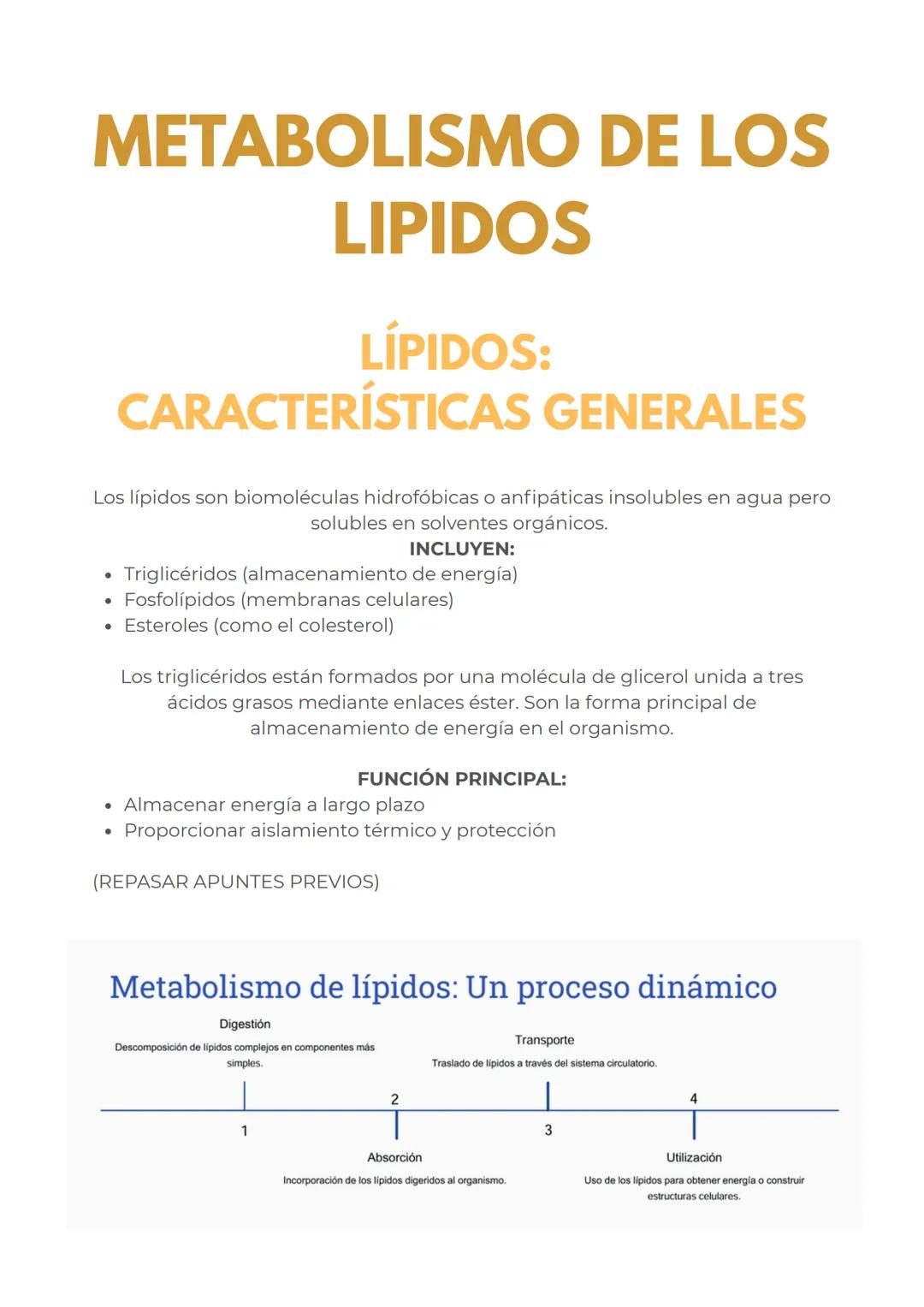
Lipid Basics and Metabolism Overview
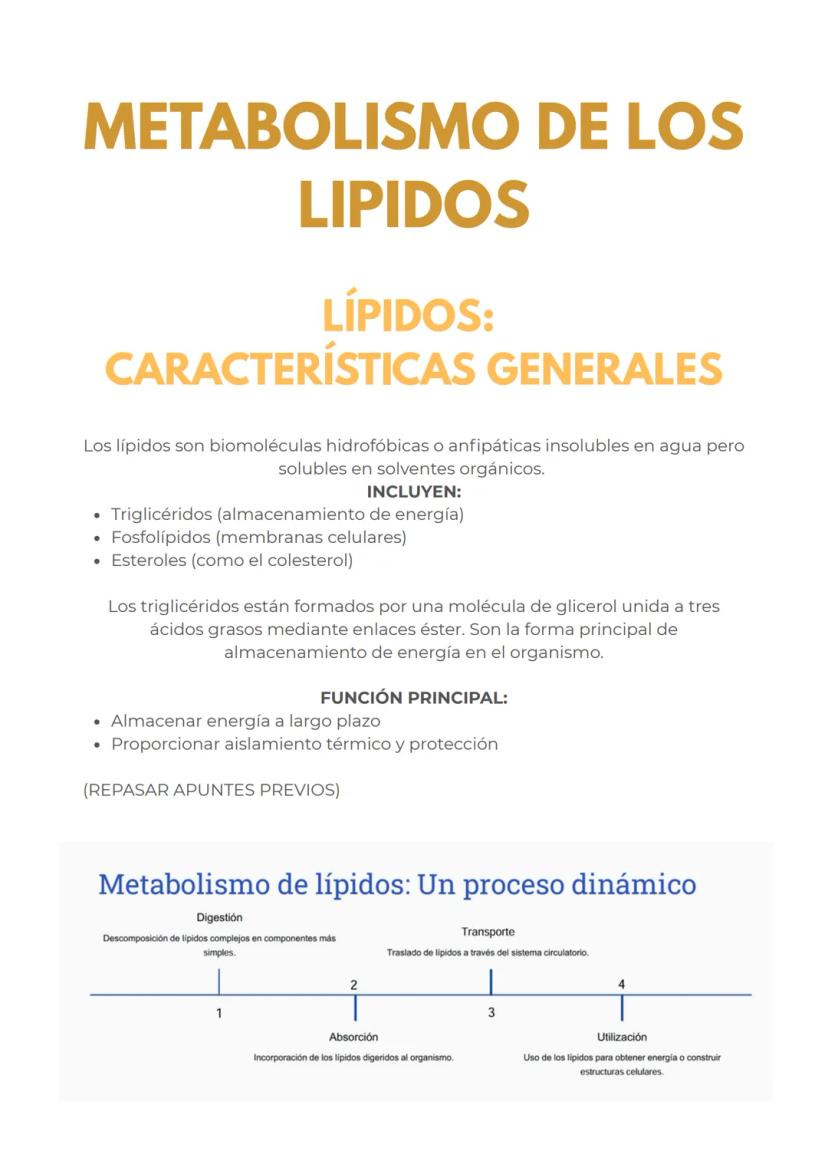
Lipids are fat molecules that don't dissolve in water but are crucial for your body's functioning. They include triglycerids (your body's main energy storage), phospholipids (in cell membranes), and sterols like cholesterol.
Triglycerides, the most common dietary fats, consist of one glycerol molecule bonded to three fatty acids. These compounds serve as your body's long-term energy storage system and provide insulation and protection for your organs.
Lipid metabolism is a four-step process that's constantly happening in your body. First, digestion breaks down complex fats into simpler components. Then absorption incorporates these digested lipids into your body. The transport system moves lipids through your bloodstream, and finally, your body utilizes these fats for energy or building cellular structures.
Did you know? Your body stores fat as a super-efficient energy reserve—each pound of body fat contains roughly 3,500 calories, which is why fat is such an effective way for your body to store energy for later use!
2
of 10
Digestion and Absorption of Triglycerides
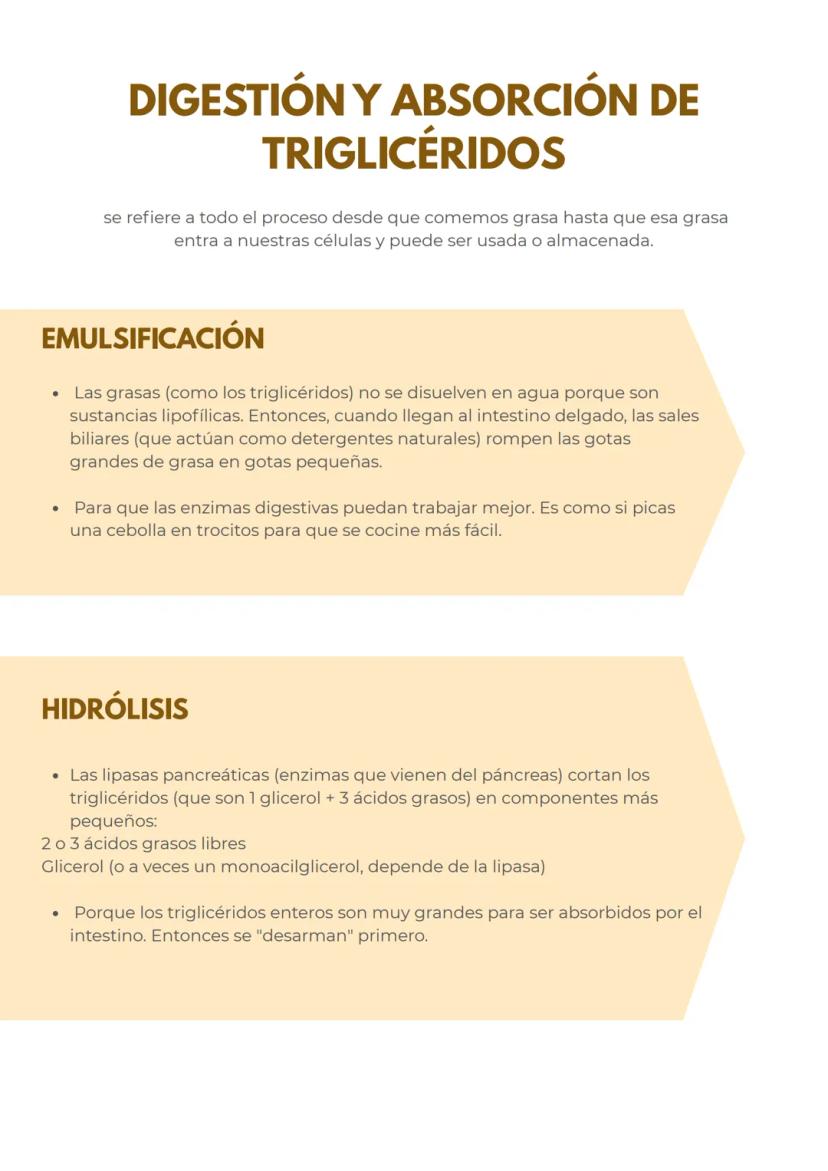
When you eat fatty foods, your body can't immediately use these fats because they don't mix with watery digestive fluids. This is where emulsification comes in—bile salts from your liver act like natural detergents, breaking large fat droplets into tiny ones. Think of it like chopping a large piece of food into smaller bits so it's easier to process.
After emulsification, pancreatic lipases (digestive enzymes) perform hydrolysis on triglycerides. These enzymes split triglycerides into their component parts: 2-3 free fatty acids and glycerol or monoacylglycerol. This breakdown is necessary because whole triglycerides are too large to pass through the intestinal wall.
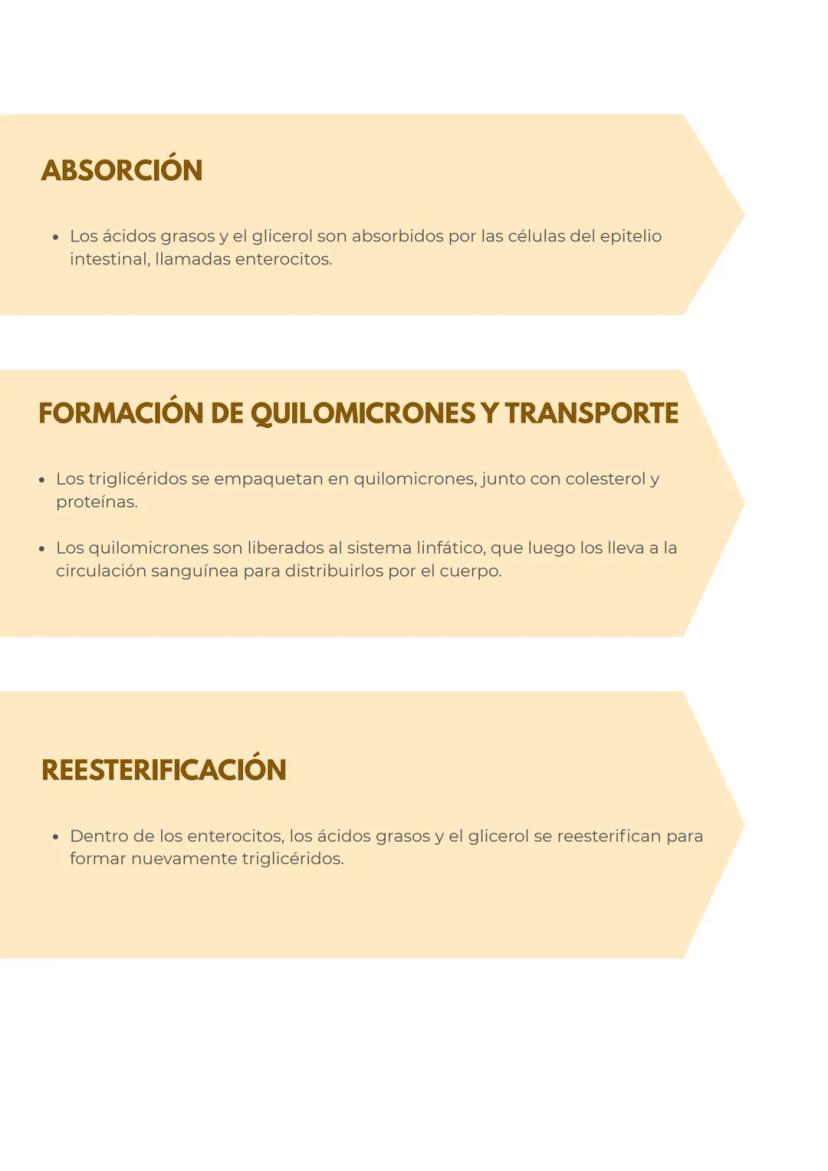
These smaller components can now be absorbed by enterocytes (intestinal cells) in your small intestine. Once inside these cells, something interesting happens—the fatty acids and glycerol are reassembled back into triglycerides through a process called reesterification.
Real-world connection: The next time you notice oil floating on top of soup or salad dressing separating, you're seeing exactly why your body needs bile to break down fats—oil and water don't naturally mix!
3
of 10
Lipid Transport in the Bloodstream
Once triglycerides are reassembled inside intestinal cells, they face a new challenge—they can't travel freely in your bloodstream because blood is primarily water. The solution? Your body packages these fats into lipoproteins called chylomicrons.
Lipoproteins are complex particles with a specific structure designed for fat transport. They have an outer shell made of phospholipids, free cholesterol, and special proteins called apolipoproteins that help them navigate through your body. Inside this protective shell is where triglycerides and cholesterol esters are carried.
Your body has different types of lipoproteins, each with specific functions. Chylomicrons carry dietary fats from your intestine to tissues. VLDL transports liver-made triglycerides. LDL (often called "bad cholesterol") delivers cholesterol to tissues, while HDL ("good cholesterol") removes excess cholesterol from tissues and returns it to the liver.
Remember this: Lipoproteins are like specialized delivery trucks—each type has a different route and cargo, helping to ensure fats get where they need to go in your water-based bloodstream!
4
of 10
Fat Storage in Adipose Tissue
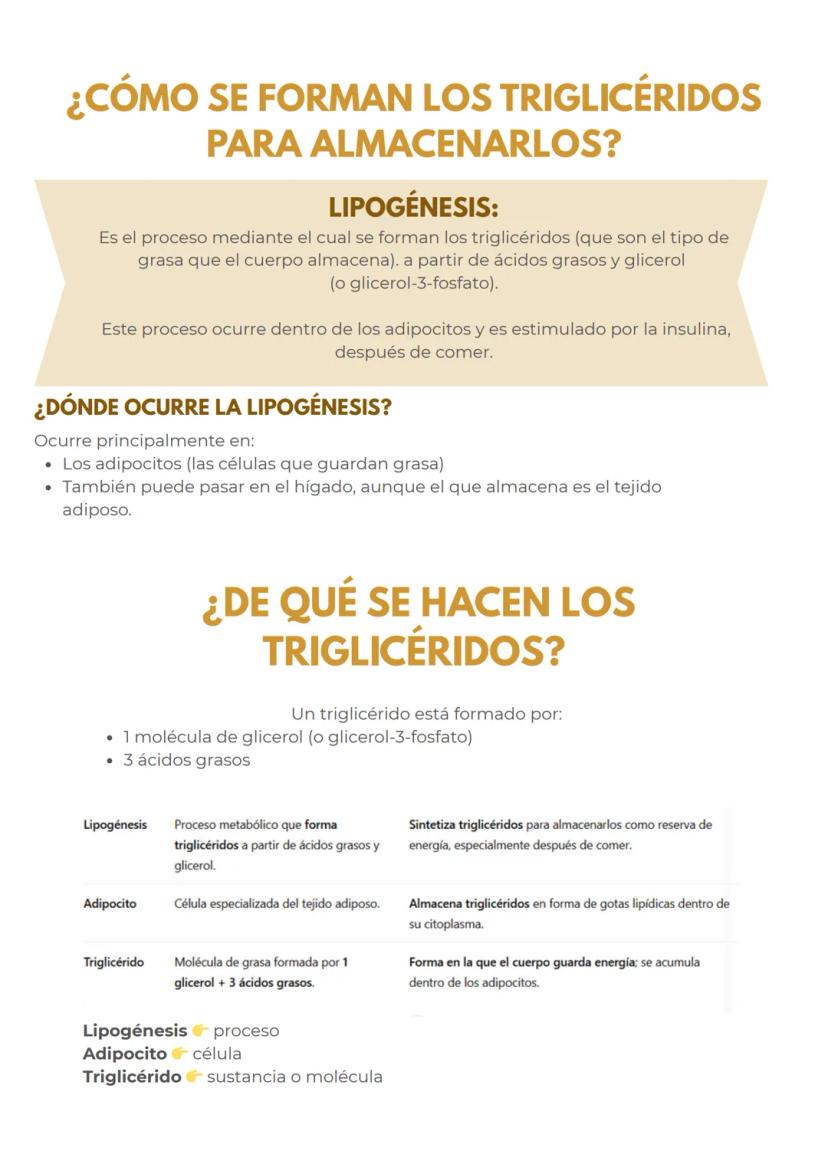
When you consume more calories than your body needs, the excess energy gets stored primarily as triglycerides in specialized cells called adipocytes that make up your adipose tissue (fat tissue). These cells are specifically designed to hold large amounts of fat in structures called lipid droplets.
This storage process is heavily influenced by insulin, a hormone released after eating. When insulin levels rise, it signals your body to store energy rather than use it. Insulin stimulates the uptake of fatty acids and glycerol into adipose tissue and activates enzymes that help form triglycerides within fat cells.
The process of creating triglycerides for storage is called lipogenesis. It occurs mainly in adipocytes but can also happen in the liver. Each triglyceride molecule consists of one glycerol molecule bonded to three fatty acids, creating an efficient way to pack a lot of energy into a small space.
Fascinating fact: Your adipose tissue isn't just for energy storage—it's also an active endocrine organ that produces hormones affecting hunger, metabolism, and inflammation throughout your body!
5
of 10
Fat Mobilization and Energy Production
When you haven't eaten for a while or during exercise, your body needs to access stored energy. This is when lipolysis occurs—the process of breaking down stored triglycerides into free fatty acids and glycerol. This process is controlled by hormones like glucagon and adrenaline, which activate an enzyme called Hormone-Sensitive Lipase (HSL).
Once released from fat cells, fatty acids travel through your bloodstream attached to a protein called albumin. Meanwhile, glycerol heads to your liver where it can be converted to glucose through gluconeogenesis. This provides a dual energy source during fasting periods.
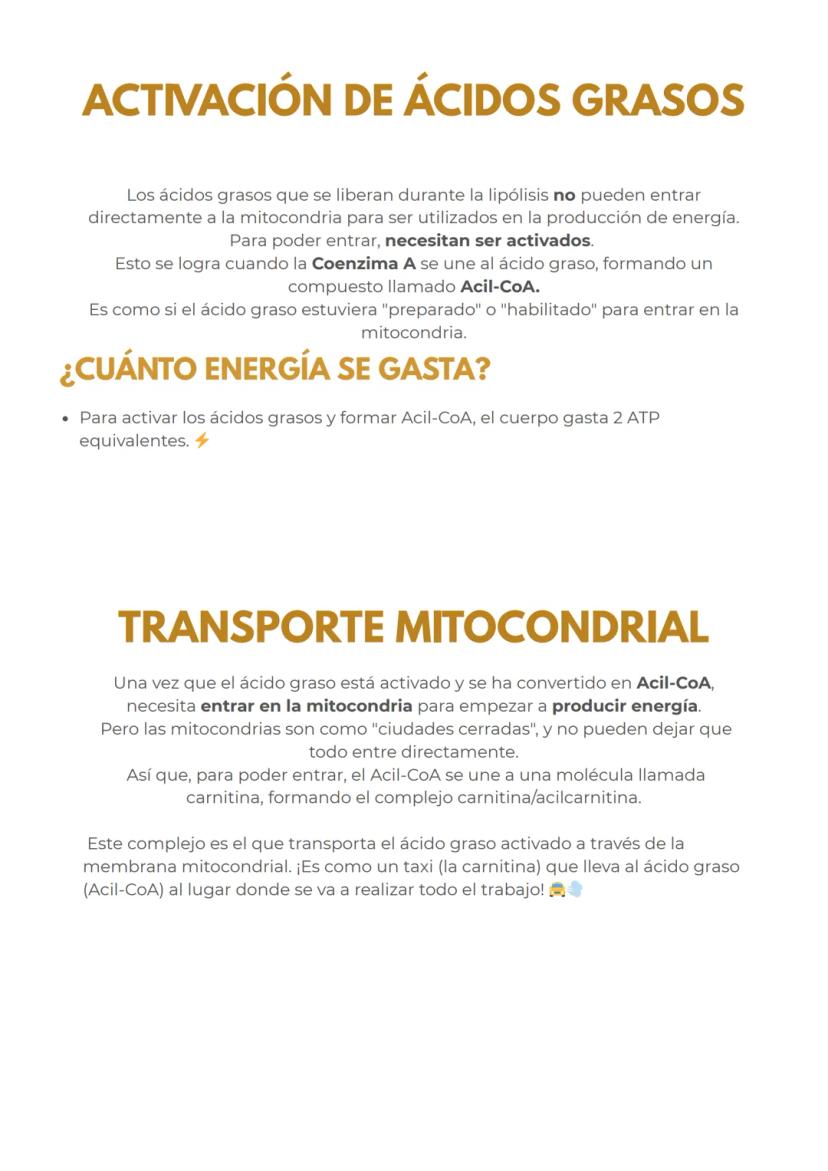
Before fatty acids can generate energy, they need to be activated by combining with Coenzyme A to form Acyl-CoA (costing your body 2 ATP). These activated fatty acids then require a special transport system using a molecule called carnitine to enter the mitochondria—your cellular powerhouses where energy production occurs.
Think about it: The balance between fat storage (lipogenesis) and breakdown (lipolysis) is constantly adjusting based on your eating patterns, activity level, and hormonal state—it's like your body's sophisticated energy management system!
6
of 10
7
of 10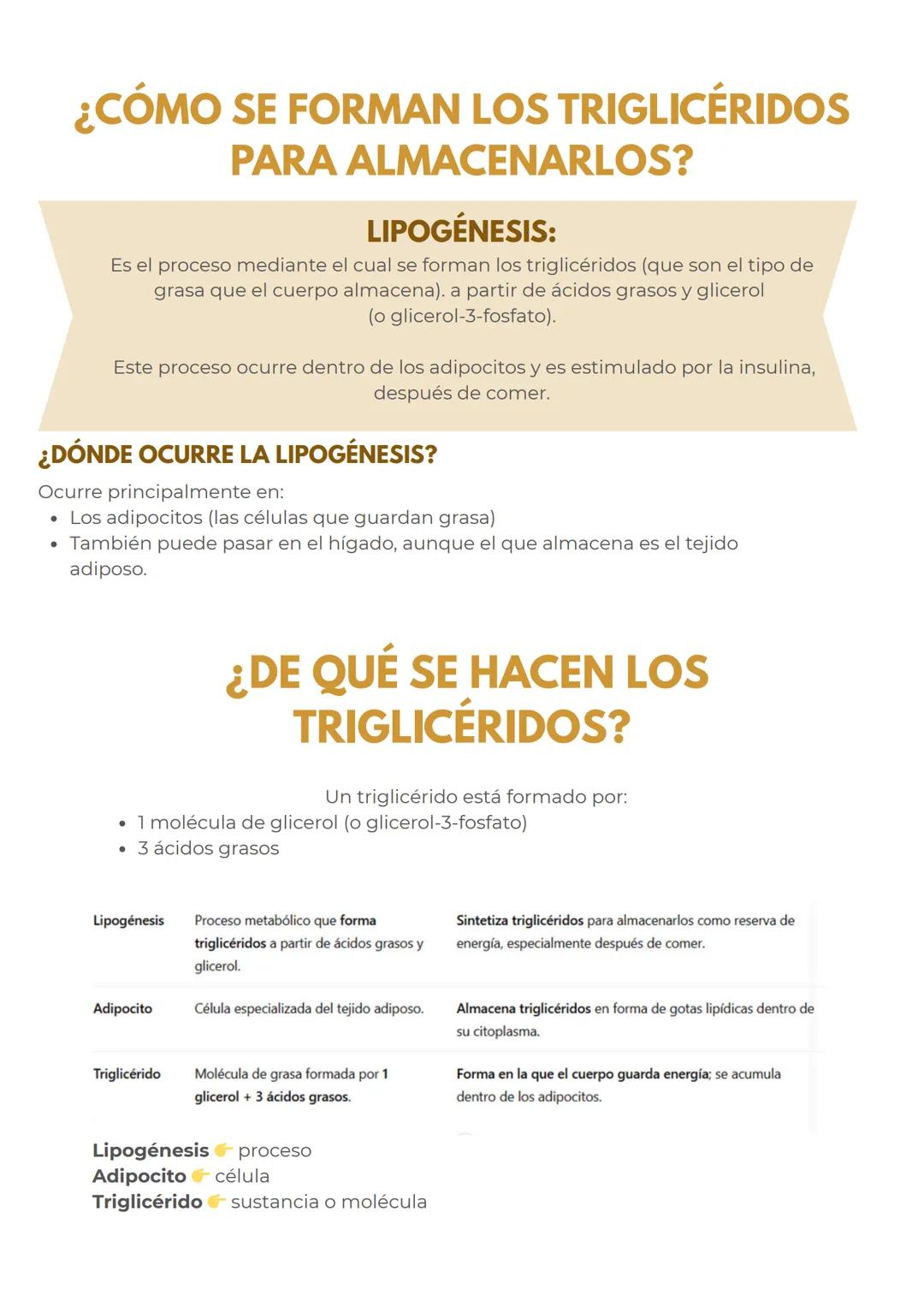
8
of 10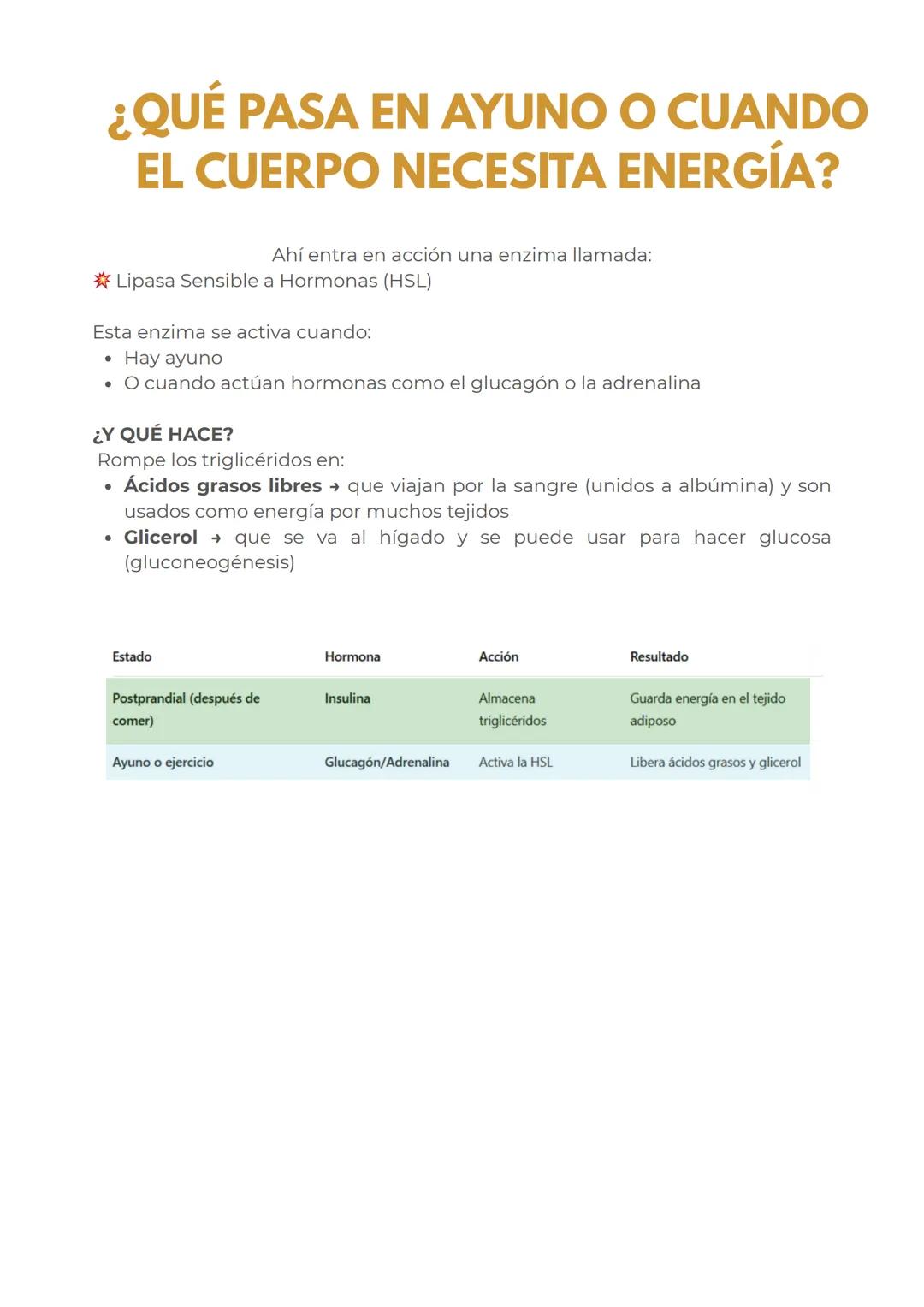
9
of 10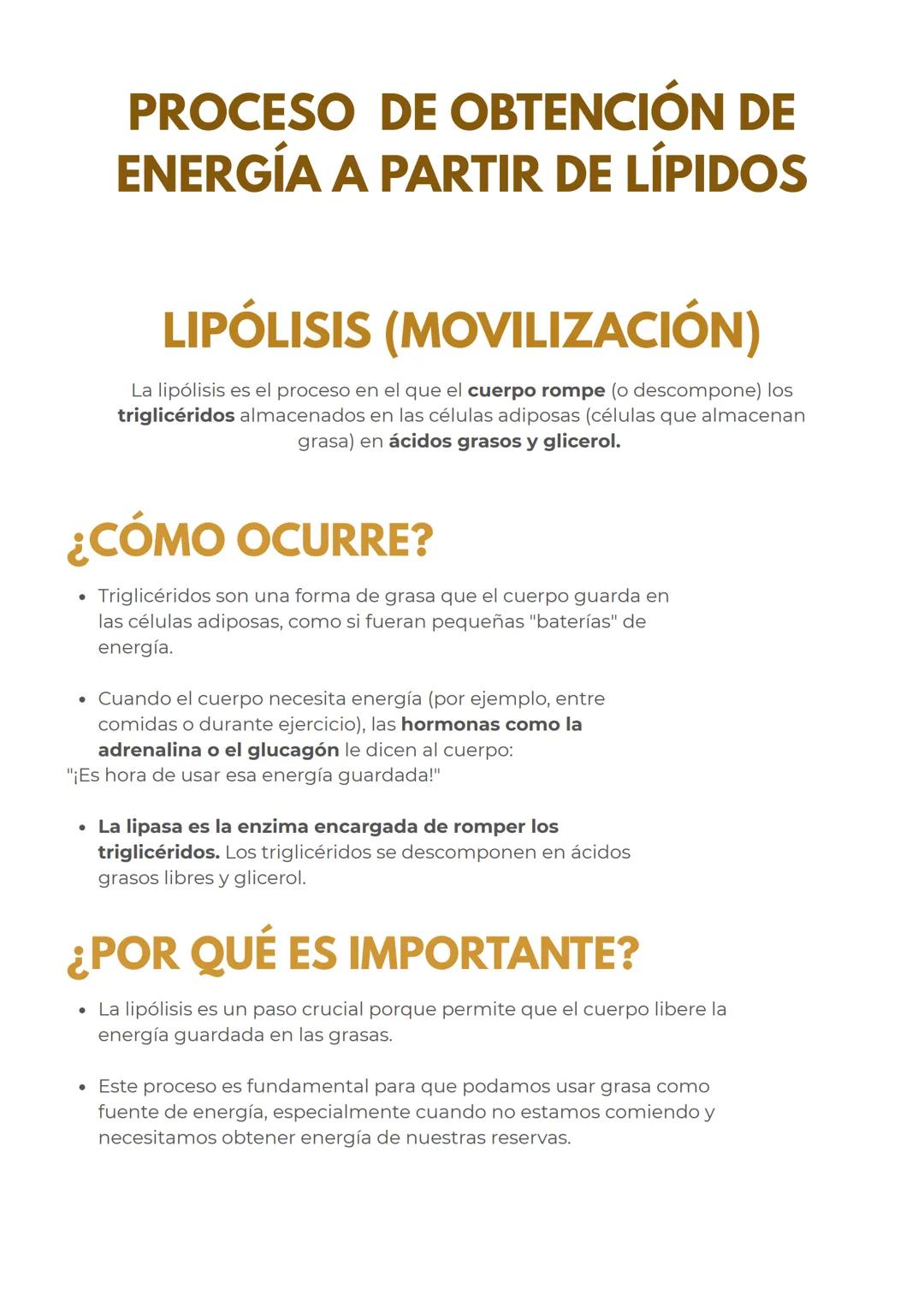
10
of 10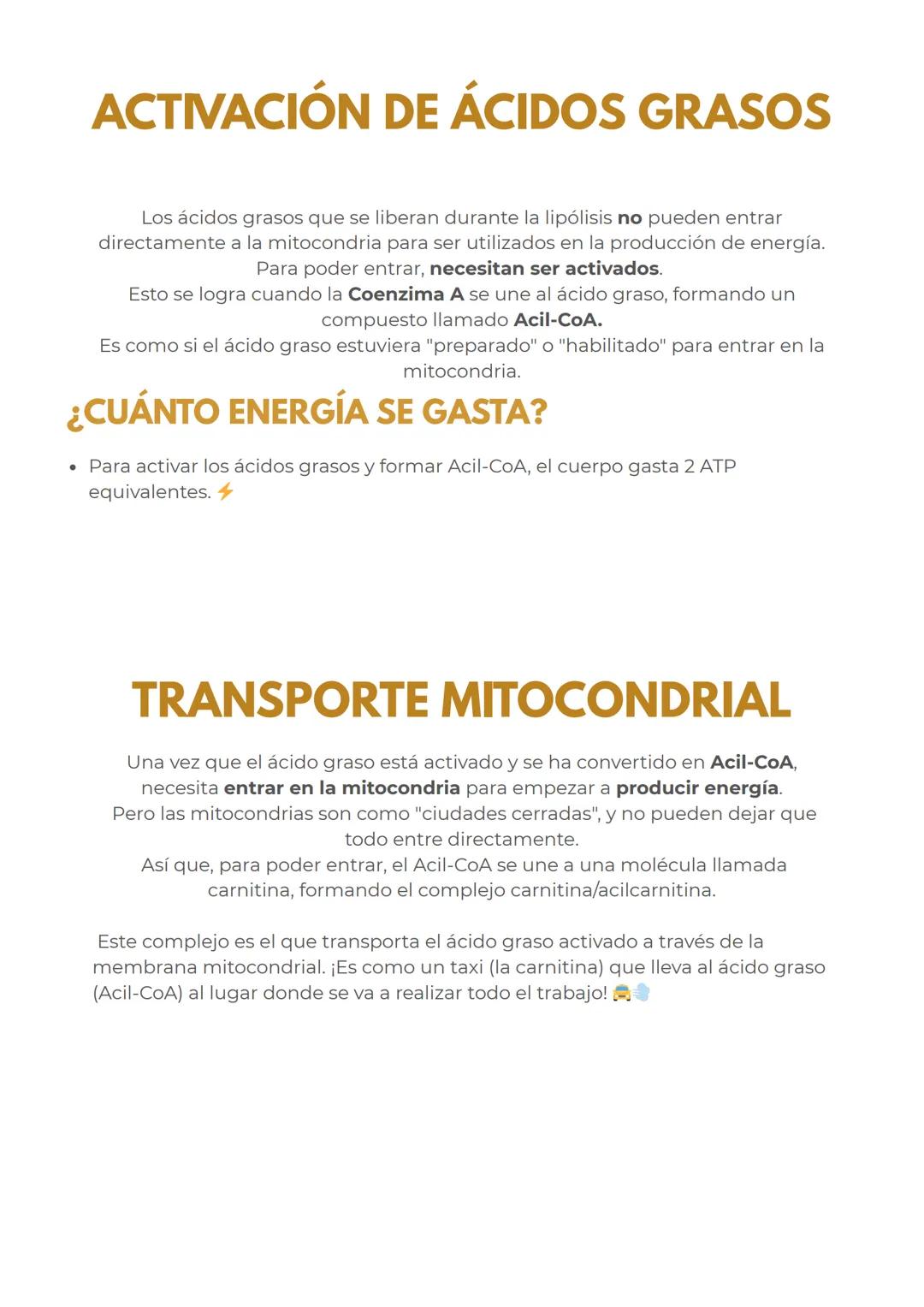
We thought you’d never ask...
What is the Knowunity AI companion?
Our AI companion is specifically built for the needs of students. Based on the millions of content pieces we have on the platform we can provide truly meaningful and relevant answers to students. But its not only about answers, the companion is even more about guiding students through their daily learning challenges, with personalised study plans, quizzes or content pieces in the chat and 100% personalisation based on the students skills and developments.
Where can I download the Knowunity app?
You can download the app in the Google Play Store and in the Apple App Store.
Is Knowunity really free of charge?
That's right! Enjoy free access to study content, connect with fellow students, and get instant help – all at your fingertips.
Most popular content in AP Biology
9I
AP BiologyIntroduction to Biological Elements of Life
Practice identifying the essential elements including carbon, nitrogen, phosphorus, and sulfur that compose biological macromolecules.
9th1,7390
I
AP BiologyIntroduction to Water Polarity and Bonding
Practice identifying partial charges and the chemical basis of hydrogen bond formation between polar water molecules.
9th8520
I
AP BiologyIntroduction to Biological Macromolecules
Practice identifying the four classes of biological macromolecules and the dehydration synthesis reactions that form their covalent bonds.
9th5890
I
AP BiologyIntroduction to Biological Macromolecules
Practice identifying the monomers and chemical compositions of carbohydrates, lipids, proteins, and nucleic acids in biological systems.
9th4460
I
AP BiologyIntroduction to Cell Compartmentalization
Practice identifying how membrane-bound organelles increase surface area and facilitate specialized chemical reactions in eukaryotic cells.
9th3370
C
AP BiologyComponents of the Plasma Membrane
Practice identifying the molecular structure of phospholipids, proteins, cholesterol, and carbohydrates within the fluid mosaic model.
9th2720
I
AP BiologyIntroduction to Evidence of Evolution
Practice identifying fundamental concepts of common ancestry, including homologous structures, vestigial traits, and the fossil record.
9th2010
AP BiologyBio 1000 Chapter 2 The Molecules of Cells
Cell Make up
College55211
F
AP BiologyFundamentals of Cell Size and Surface Area
Practice calculating surface area-to-volume ratios and defining how these geometric constraints limit the maximum size of a functional biological cell.
9th1550
Most popular content
9O
 AP US History
Origins and Dynamics of the Columbian Exchange
Analyze the ecological and economic motivations behind the initial transfer of goods, people, and diseases between the Old and New Worlds.
9th3,1280
I
AP US HistoryIntroduction to Early Cultural Interactions
Analyze the initial social and religious encounters between Europeans, Africans, and Indigenous peoples in the colonial Americas.
9th2,7730
O
 AP World History
Origins of Ancient River Civilizations
Analyze the environmental factors and technological innovations that led to the rise of early states in Mesopotamia, Egypt, and the Indus Valley.
9th3,1870
M
AP US HistoryMotivations for European Exploration
Analyze the economic, religious, and political factors that drove European powers to the Americas during the 15th and 16th centuries.
9th1,7780
F
 AP Psychology
Foundations of Ethical Guidelines in Research
Practice the core principles of the APA ethical code including informed consent, debriefing, and the role of Institutional Review Boards.
9th1,3360
I
AP US HistoryIntroduction to Native American Societies
Examine the diverse social, political, and economic structures of North American indigenous groups prior to European contact.
9th1,1100
I
AP BiologyIntroduction to Biological Elements of Life
Practice identifying the essential elements including carbon, nitrogen, phosphorus, and sulfur that compose biological macromolecules.
9th1,7390
I
AP US HistoryIntroduction to the Spanish Encomienda System
Explore the fundamental economic and social structures of the Spanish colonial system, focusing on the encomienda and the casta social hierarchy.
9th8890
O
AP World HistoryOrigins and Continuity of the Byzantine Empire
Analyze the political and cultural transitions from the Roman Empire to the Byzantine Empire, focusing on the reign of Justinian I and his code.
9th1,6320
Can't find what you're looking for? Explore other subjects.
Students love us — and so will you.
4.6/5App Store
4.7/5Google Play
The app is very easy to use and well designed. I have found everything I was looking for so far and have been able to learn a lot from the presentations! I will definitely use the app for a class assignment! And of course it also helps a lot as an inspiration.
Stefan SiOS user
This app is really great. There are so many study notes and help [...]. My problem subject is French, for example, and the app has so many options for help. Thanks to this app, I have improved my French. I would recommend it to anyone.
Samantha KlichAndroid user
Wow, I am really amazed. I just tried the app because I've seen it advertised many times and was absolutely stunned. This app is THE HELP you want for school and above all, it offers so many things, such as workouts and fact sheets, which have been VERY helpful to me personally.
AnnaiOS user
AP Biology29 views·Updated Jun 6, 2026·19 pagesTodo Sobre el Metabolismo de Lípidos
Natalie Corrente@nataliecorrente
Lipid metabolism is the complex journey of how your body processes fats from food to energy. This process includes breaking down dietary fats, absorbing them into your bloodstream, and either using them for energy or storing them for later use....
1
of 10
Sign up to see the content. It's free!
- Access to all documents
- Improve your grades
- Join milions of students
Lipid Basics and Metabolism Overview
Lipids are fat molecules that don't dissolve in water but are crucial for your body's functioning. They include triglycerids (your body's main energy storage), phospholipids (in cell membranes), and sterols like cholesterol.
Triglycerides, the most common dietary fats, consist of one glycerol molecule bonded to three fatty acids. These compounds serve as your body's long-term energy storage system and provide insulation and protection for your organs.
Lipid metabolism is a four-step process that's constantly happening in your body. First, digestion breaks down complex fats into simpler components. Then absorption incorporates these digested lipids into your body. The transport system moves lipids through your bloodstream, and finally, your body utilizes these fats for energy or building cellular structures.
Did you know? Your body stores fat as a super-efficient energy reserve—each pound of body fat contains roughly 3,500 calories, which is why fat is such an effective way for your body to store energy for later use!
2
of 10Sign up to see the content. It's free!
- Access to all documents
- Improve your grades
- Join milions of students
Digestion and Absorption of Triglycerides
When you eat fatty foods, your body can't immediately use these fats because they don't mix with watery digestive fluids. This is where emulsification comes in—bile salts from your liver act like natural detergents, breaking large fat droplets into tiny ones. Think of it like chopping a large piece of food into smaller bits so it's easier to process.
After emulsification, pancreatic lipases (digestive enzymes) perform hydrolysis on triglycerides. These enzymes split triglycerides into their component parts: 2-3 free fatty acids and glycerol or monoacylglycerol. This breakdown is necessary because whole triglycerides are too large to pass through the intestinal wall.
These smaller components can now be absorbed by enterocytes (intestinal cells) in your small intestine. Once inside these cells, something interesting happens—the fatty acids and glycerol are reassembled back into triglycerides through a process called reesterification.
Real-world connection: The next time you notice oil floating on top of soup or salad dressing separating, you're seeing exactly why your body needs bile to break down fats—oil and water don't naturally mix!
3
of 10Sign up to see the content. It's free!
- Access to all documents
- Improve your grades
- Join milions of students
Lipid Transport in the Bloodstream
Once triglycerides are reassembled inside intestinal cells, they face a new challenge—they can't travel freely in your bloodstream because blood is primarily water. The solution? Your body packages these fats into lipoproteins called chylomicrons.
Lipoproteins are complex particles with a specific structure designed for fat transport. They have an outer shell made of phospholipids, free cholesterol, and special proteins called apolipoproteins that help them navigate through your body. Inside this protective shell is where triglycerides and cholesterol esters are carried.
Your body has different types of lipoproteins, each with specific functions. Chylomicrons carry dietary fats from your intestine to tissues. VLDL transports liver-made triglycerides. LDL (often called "bad cholesterol") delivers cholesterol to tissues, while HDL ("good cholesterol") removes excess cholesterol from tissues and returns it to the liver.
Remember this: Lipoproteins are like specialized delivery trucks—each type has a different route and cargo, helping to ensure fats get where they need to go in your water-based bloodstream!
4
of 10Sign up to see the content. It's free!
- Access to all documents
- Improve your grades
- Join milions of students
Fat Storage in Adipose Tissue
When you consume more calories than your body needs, the excess energy gets stored primarily as triglycerides in specialized cells called adipocytes that make up your adipose tissue (fat tissue). These cells are specifically designed to hold large amounts of fat in structures called lipid droplets.
This storage process is heavily influenced by insulin, a hormone released after eating. When insulin levels rise, it signals your body to store energy rather than use it. Insulin stimulates the uptake of fatty acids and glycerol into adipose tissue and activates enzymes that help form triglycerides within fat cells.
The process of creating triglycerides for storage is called lipogenesis. It occurs mainly in adipocytes but can also happen in the liver. Each triglyceride molecule consists of one glycerol molecule bonded to three fatty acids, creating an efficient way to pack a lot of energy into a small space.
Fascinating fact: Your adipose tissue isn't just for energy storage—it's also an active endocrine organ that produces hormones affecting hunger, metabolism, and inflammation throughout your body!
5
of 10Sign up to see the content. It's free!
- Access to all documents
- Improve your grades
- Join milions of students
Fat Mobilization and Energy Production
When you haven't eaten for a while or during exercise, your body needs to access stored energy. This is when lipolysis occurs—the process of breaking down stored triglycerides into free fatty acids and glycerol. This process is controlled by hormones like glucagon and adrenaline, which activate an enzyme called Hormone-Sensitive Lipase (HSL).
Once released from fat cells, fatty acids travel through your bloodstream attached to a protein called albumin. Meanwhile, glycerol heads to your liver where it can be converted to glucose through gluconeogenesis. This provides a dual energy source during fasting periods.
Before fatty acids can generate energy, they need to be activated by combining with Coenzyme A to form Acyl-CoA (costing your body 2 ATP). These activated fatty acids then require a special transport system using a molecule called carnitine to enter the mitochondria—your cellular powerhouses where energy production occurs.
Think about it: The balance between fat storage (lipogenesis) and breakdown (lipolysis) is constantly adjusting based on your eating patterns, activity level, and hormonal state—it's like your body's sophisticated energy management system!
6
of 10Sign up to see the content. It's free!
- Access to all documents
- Improve your grades
- Join milions of students
7
of 10Sign up to see the content. It's free!
- Access to all documents
- Improve your grades
- Join milions of students
8
of 10Sign up to see the content. It's free!
- Access to all documents
- Improve your grades
- Join milions of students
9
of 10Sign up to see the content. It's free!
- Access to all documents
- Improve your grades
- Join milions of students
10
of 10Sign up to see the content. It's free!
- Access to all documents
- Improve your grades
- Join milions of students
We thought you’d never ask...
What is the Knowunity AI companion?
Our AI companion is specifically built for the needs of students. Based on the millions of content pieces we have on the platform we can provide truly meaningful and relevant answers to students. But its not only about answers, the companion is even more about guiding students through their daily learning challenges, with personalised study plans, quizzes or content pieces in the chat and 100% personalisation based on the students skills and developments.
Where can I download the Knowunity app?
You can download the app in the Google Play Store and in the Apple App Store.
Is Knowunity really free of charge?
That's right! Enjoy free access to study content, connect with fellow students, and get instant help – all at your fingertips.
Most popular content in AP Biology
9I
AP BiologyIntroduction to Biological Elements of Life
Practice identifying the essential elements including carbon, nitrogen, phosphorus, and sulfur that compose biological macromolecules.
9th1,7390
I
AP BiologyIntroduction to Water Polarity and Bonding
Practice identifying partial charges and the chemical basis of hydrogen bond formation between polar water molecules.
9th8520
I
AP BiologyIntroduction to Biological Macromolecules
Practice identifying the four classes of biological macromolecules and the dehydration synthesis reactions that form their covalent bonds.
9th5890
I
AP BiologyIntroduction to Biological Macromolecules
Practice identifying the monomers and chemical compositions of carbohydrates, lipids, proteins, and nucleic acids in biological systems.
9th4460
I
AP BiologyIntroduction to Cell Compartmentalization
Practice identifying how membrane-bound organelles increase surface area and facilitate specialized chemical reactions in eukaryotic cells.
9th3370
C
AP BiologyComponents of the Plasma Membrane
Practice identifying the molecular structure of phospholipids, proteins, cholesterol, and carbohydrates within the fluid mosaic model.
9th2720
I
AP BiologyIntroduction to Evidence of Evolution
Practice identifying fundamental concepts of common ancestry, including homologous structures, vestigial traits, and the fossil record.
9th2010
AP BiologyBio 1000 Chapter 2 The Molecules of Cells
Cell Make up
College55211
F
AP BiologyFundamentals of Cell Size and Surface Area
Practice calculating surface area-to-volume ratios and defining how these geometric constraints limit the maximum size of a functional biological cell.
9th1550
Most popular content
9O
AP US HistoryOrigins and Dynamics of the Columbian Exchange
Analyze the ecological and economic motivations behind the initial transfer of goods, people, and diseases between the Old and New Worlds.
9th3,1280
I
AP US HistoryIntroduction to Early Cultural Interactions
Analyze the initial social and religious encounters between Europeans, Africans, and Indigenous peoples in the colonial Americas.
9th2,7730
O
AP World HistoryOrigins of Ancient River Civilizations
Analyze the environmental factors and technological innovations that led to the rise of early states in Mesopotamia, Egypt, and the Indus Valley.
9th3,1870
M
AP US HistoryMotivations for European Exploration
Analyze the economic, religious, and political factors that drove European powers to the Americas during the 15th and 16th centuries.
9th1,7780
F
AP PsychologyFoundations of Ethical Guidelines in Research
Practice the core principles of the APA ethical code including informed consent, debriefing, and the role of Institutional Review Boards.
9th1,3360
I
AP US HistoryIntroduction to Native American Societies
Examine the diverse social, political, and economic structures of North American indigenous groups prior to European contact.
9th1,1100
I
AP BiologyIntroduction to Biological Elements of Life
Practice identifying the essential elements including carbon, nitrogen, phosphorus, and sulfur that compose biological macromolecules.
9th1,7390
I
AP US HistoryIntroduction to the Spanish Encomienda System
Explore the fundamental economic and social structures of the Spanish colonial system, focusing on the encomienda and the casta social hierarchy.
9th8890
O
AP World HistoryOrigins and Continuity of the Byzantine Empire
Analyze the political and cultural transitions from the Roman Empire to the Byzantine Empire, focusing on the reign of Justinian I and his code.
9th1,6320
Can't find what you're looking for? Explore other subjects.
Students love us — and so will you.
4.6/5App Store
4.7/5Google Play
The app is very easy to use and well designed. I have found everything I was looking for so far and have been able to learn a lot from the presentations! I will definitely use the app for a class assignment! And of course it also helps a lot as an inspiration.
Stefan SiOS user
This app is really great. There are so many study notes and help [...]. My problem subject is French, for example, and the app has so many options for help. Thanks to this app, I have improved my French. I would recommend it to anyone.
Samantha KlichAndroid user
Wow, I am really amazed. I just tried the app because I've seen it advertised many times and was absolutely stunned. This app is THE HELP you want for school and above all, it offers so many things, such as workouts and fact sheets, which have been VERY helpful to me personally.
AnnaiOS user