

Homeostasis is your body's incredible ability to keep everything balanced...
 AP Biology68 views·Updated Jun 18, 2026·3 pages
Comprehensive Homeostasis Study Guide for AP Biology
1 / 3
1
of 3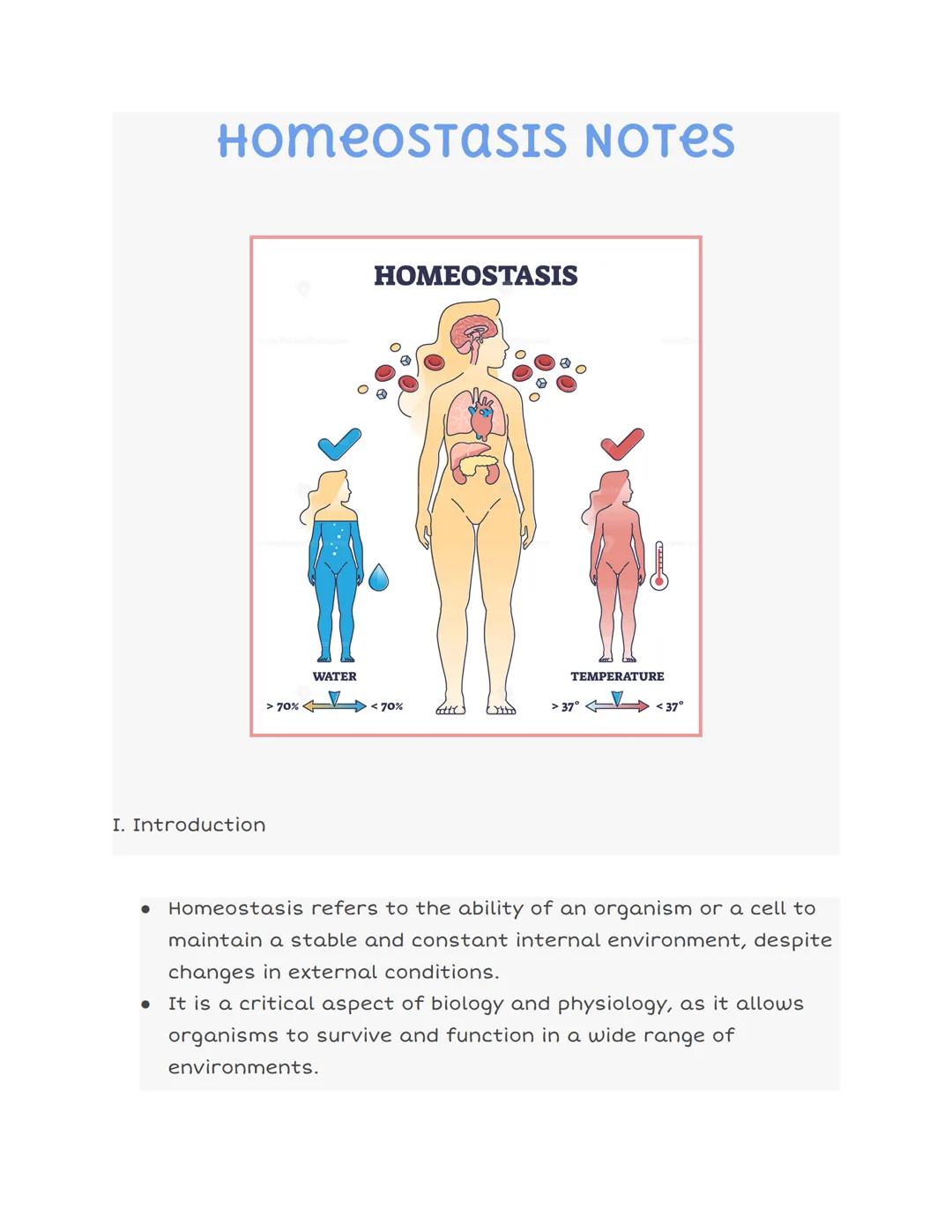
Understanding Homeostasis
Your body is constantly working behind the scenes to maintain perfect balance. Homeostasis refers to your body's ability to maintain a stable internal environment despite external changes. This is why you can still function normally whether it's freezing outside or blazing hot.
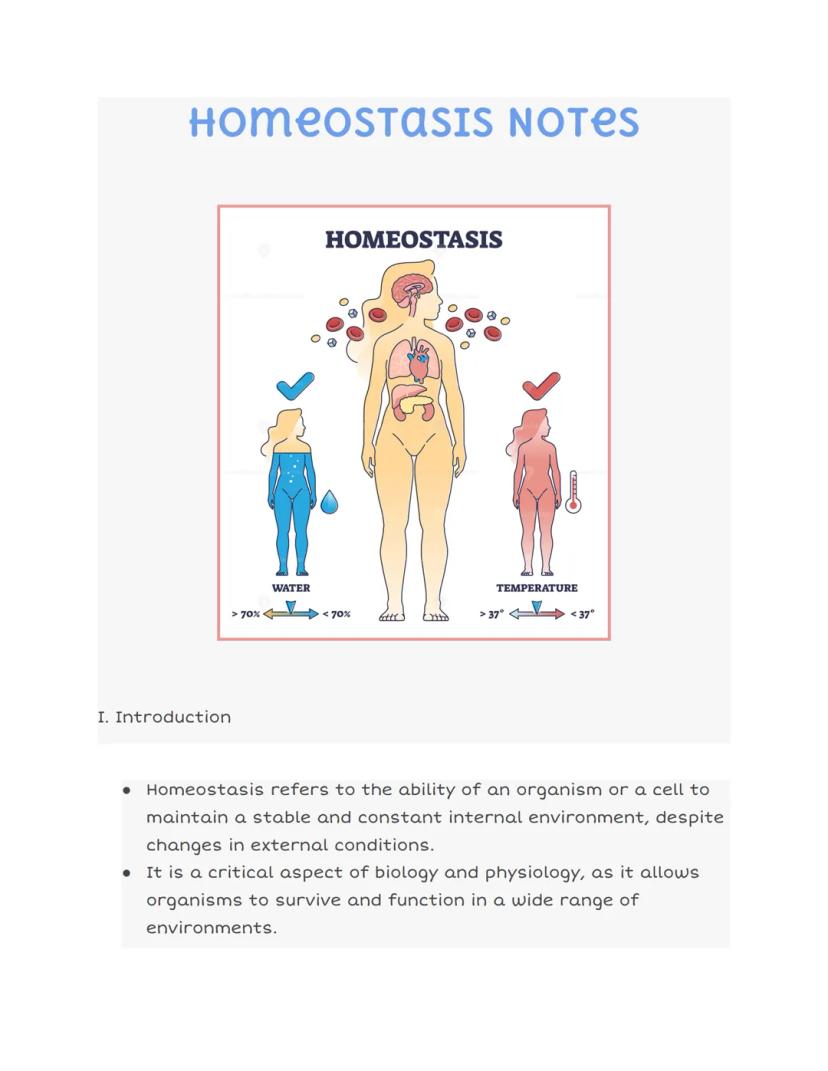
Water makes up more than 70% of your body, and maintaining this balance is crucial. Similarly, your body works hard to keep your temperature at approximately 37°C (98.6°F). Even small deviations from these normal ranges can affect how well your body functions.
The concept of homeostasis explains why you start sweating when hot or shivering when cold - these are automatic responses your body uses to maintain balance.
Think About It: Imagine if your body couldn't maintain its temperature - you'd overheat in summer and freeze in winter! Homeostasis is what allows you to adapt to different environments.
2
of 3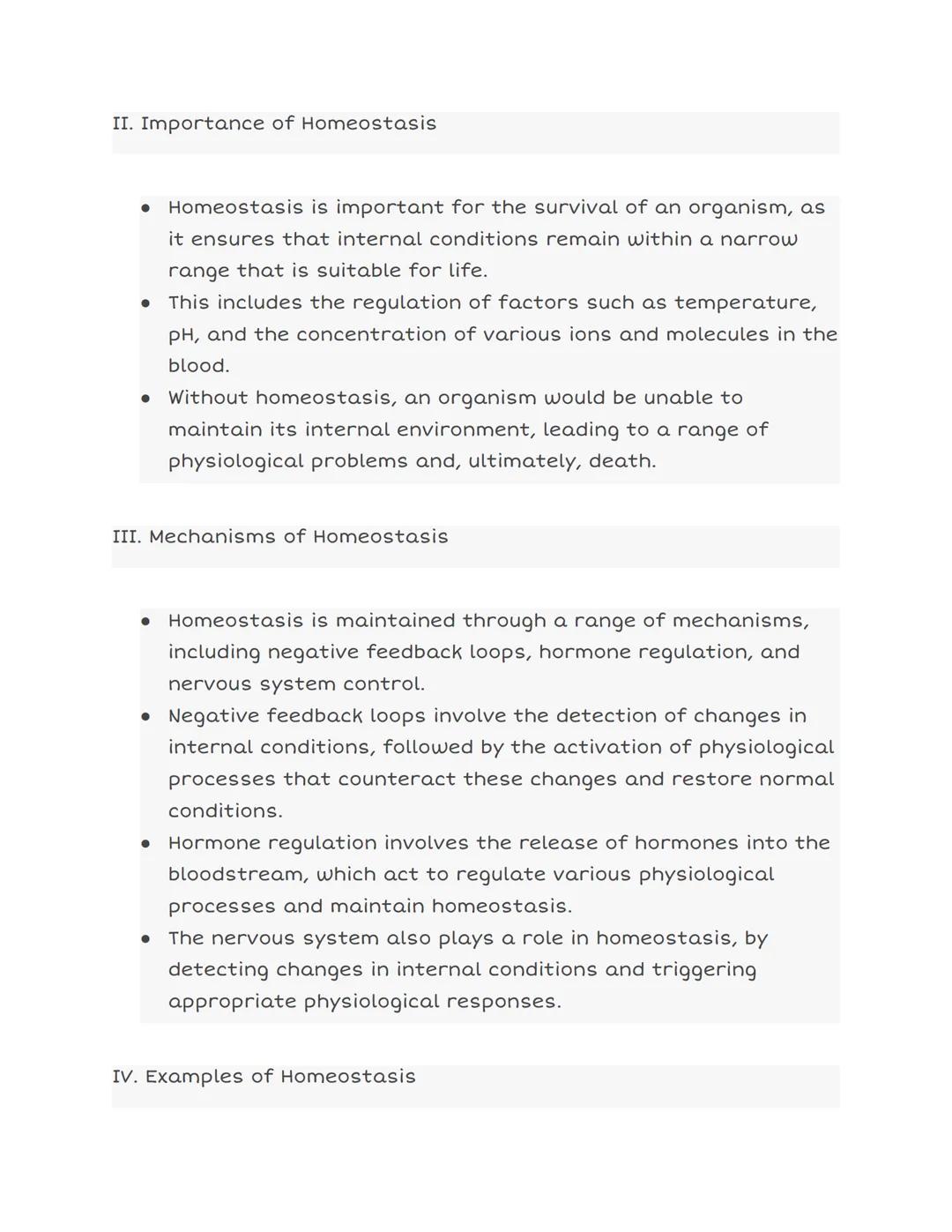
Why Homeostasis Matters & How It Works
Homeostasis keeps your internal conditions in the narrow range necessary for life. Without it, your body couldn't function properly - even minor disruptions can cause problems, and major ones could be fatal. Your body regulates temperature, pH levels, and concentrations of various substances in your blood to keep everything running smoothly.
Your body uses several clever mechanisms to maintain balance. Negative feedback loops are like your body's thermostat - they detect when something's off and trigger responses to bring it back to normal. For example, if your blood sugar rises too high, your body responds to bring it down.
Hormones act as chemical messengers, traveling through your bloodstream to regulate different processes. Meanwhile, your nervous system constantly monitors internal conditions and triggers responses when needed - like making you feel thirsty when you need water.
Quick Fact: Most homeostatic processes happen automatically - you don't have to think about regulating your body temperature or blood pressure. Your body handles these critical functions without your conscious control!
3
of 3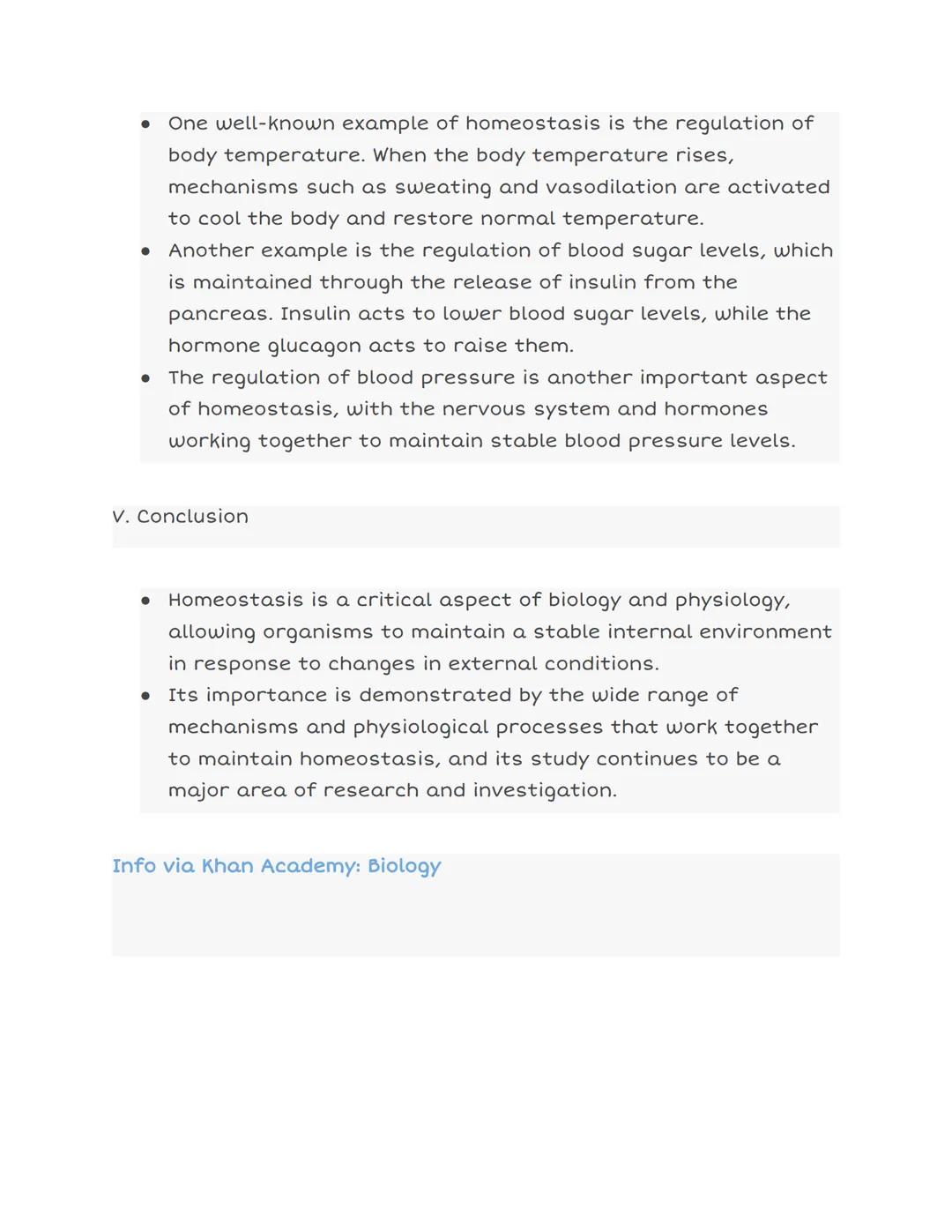
Homeostasis in Action
Temperature regulation shows homeostasis at work. When you get too hot, your body activates cooling mechanisms like sweating and vasodilation (widening blood vessels near your skin). This helps release heat and return your body to its optimal temperature.
Blood sugar regulation is another perfect example. When you eat something sugary, your pancreas releases insulin to lower blood glucose levels. If blood sugar drops too low, it releases glucagon to raise it back up. This constant balancing act keeps your energy levels stable.
Your body also maintains proper blood pressure through a complex system involving your heart, blood vessels, kidneys, and various hormones. When blood pressure rises, your body triggers responses to lower it, and vice versa.
Success Tip: Understanding homeostasis can help you make better health choices! For example, knowing how your body regulates temperature can help you dress appropriately for weather conditions and recognize early signs of heat exhaustion or hypothermia.
We thought you’d never ask...
What is the Knowunity AI companion?
Our AI companion is specifically built for the needs of students. Based on the millions of content pieces we have on the platform we can provide truly meaningful and relevant answers to students. But its not only about answers, the companion is even more about guiding students through their daily learning challenges, with personalised study plans, quizzes or content pieces in the chat and 100% personalisation based on the students skills and developments.
Where can I download the Knowunity app?
You can download the app in the Google Play Store and in the Apple App Store.
Is Knowunity really free of charge?
That's right! Enjoy free access to study content, connect with fellow students, and get instant help – all at your fingertips.
Similar Content
 Biology
Most popular content: Homeostasis
1Most popular content in AP Biology
9I
AP BiologyIntroduction to Biological Elements of Life
Practice identifying the essential elements including carbon, nitrogen, phosphorus, and sulfur that compose biological macromolecules.
9th1,7390
I
AP BiologyIntroduction to Water Polarity and Bonding
Practice identifying partial charges and the chemical basis of hydrogen bond formation between polar water molecules.
9th8520
I
AP BiologyIntroduction to Biological Macromolecules
Practice identifying the four classes of biological macromolecules and the dehydration synthesis reactions that form their covalent bonds.
9th5890
I
AP BiologyIntroduction to Biological Macromolecules
Practice identifying the monomers and chemical compositions of carbohydrates, lipids, proteins, and nucleic acids in biological systems.
9th4460
I
AP BiologyIntroduction to Cell Compartmentalization
Practice identifying how membrane-bound organelles increase surface area and facilitate specialized chemical reactions in eukaryotic cells.
9th3370
C
AP BiologyComponents of the Plasma Membrane
Practice identifying the molecular structure of phospholipids, proteins, cholesterol, and carbohydrates within the fluid mosaic model.
9th2720
I
AP BiologyIntroduction to Evidence of Evolution
Practice identifying fundamental concepts of common ancestry, including homologous structures, vestigial traits, and the fossil record.
9th2010
AP BiologyBio 1000 Chapter 2 The Molecules of Cells
Cell Make up
College55211
F
AP BiologyFundamentals of Cell Size and Surface Area
Practice calculating surface area-to-volume ratios and defining how these geometric constraints limit the maximum size of a functional biological cell.
9th1550
Most popular content
9O
 AP US History
Origins and Dynamics of the Columbian Exchange
Analyze the ecological and economic motivations behind the initial transfer of goods, people, and diseases between the Old and New Worlds.
9th3,1280
I
AP US HistoryIntroduction to Early Cultural Interactions
Analyze the initial social and religious encounters between Europeans, Africans, and Indigenous peoples in the colonial Americas.
9th2,7730
O
 AP World History
Origins of Ancient River Civilizations
Analyze the environmental factors and technological innovations that led to the rise of early states in Mesopotamia, Egypt, and the Indus Valley.
9th3,1870
M
AP US HistoryMotivations for European Exploration
Analyze the economic, religious, and political factors that drove European powers to the Americas during the 15th and 16th centuries.
9th1,7780
F
 AP Psychology
Foundations of Ethical Guidelines in Research
Practice the core principles of the APA ethical code including informed consent, debriefing, and the role of Institutional Review Boards.
9th1,3360
I
AP US HistoryIntroduction to Native American Societies
Examine the diverse social, political, and economic structures of North American indigenous groups prior to European contact.
9th1,1100
I
AP BiologyIntroduction to Biological Elements of Life
Practice identifying the essential elements including carbon, nitrogen, phosphorus, and sulfur that compose biological macromolecules.
9th1,7390
I
AP US HistoryIntroduction to the Spanish Encomienda System
Explore the fundamental economic and social structures of the Spanish colonial system, focusing on the encomienda and the casta social hierarchy.
9th8890
O
AP World HistoryOrigins and Continuity of the Byzantine Empire
Analyze the political and cultural transitions from the Roman Empire to the Byzantine Empire, focusing on the reign of Justinian I and his code.
9th1,6320
Can't find what you're looking for? Explore other subjects.
Students love us — and so will you.
4.6/5App Store
4.7/5Google Play
The app is very easy to use and well designed. I have found everything I was looking for so far and have been able to learn a lot from the presentations! I will definitely use the app for a class assignment! And of course it also helps a lot as an inspiration.
Stefan SiOS user
This app is really great. There are so many study notes and help [...]. My problem subject is French, for example, and the app has so many options for help. Thanks to this app, I have improved my French. I would recommend it to anyone.
Samantha KlichAndroid user
Wow, I am really amazed. I just tried the app because I've seen it advertised many times and was absolutely stunned. This app is THE HELP you want for school and above all, it offers so many things, such as workouts and fact sheets, which have been VERY helpful to me personally.
AnnaiOS user
AP Biology68 views·Updated Jun 18, 2026·3 pagesComprehensive Homeostasis Study Guide for AP Biology
Homeostasis is your body's incredible ability to keep everything balanced inside, no matter what's happening outside. Think of your body as a smart house that automatically adjusts temperature, water levels, and other important factors to keep you functioning properly. This...
1
of 3
Sign up to see the content. It's free!
- Access to all documents
- Improve your grades
- Join milions of students
Understanding Homeostasis
Your body is constantly working behind the scenes to maintain perfect balance. Homeostasis refers to your body's ability to maintain a stable internal environment despite external changes. This is why you can still function normally whether it's freezing outside or blazing hot.
Water makes up more than 70% of your body, and maintaining this balance is crucial. Similarly, your body works hard to keep your temperature at approximately 37°C (98.6°F). Even small deviations from these normal ranges can affect how well your body functions.
The concept of homeostasis explains why you start sweating when hot or shivering when cold - these are automatic responses your body uses to maintain balance.
Think About It: Imagine if your body couldn't maintain its temperature - you'd overheat in summer and freeze in winter! Homeostasis is what allows you to adapt to different environments.
2
of 3Sign up to see the content. It's free!
- Access to all documents
- Improve your grades
- Join milions of students
Why Homeostasis Matters & How It Works
Homeostasis keeps your internal conditions in the narrow range necessary for life. Without it, your body couldn't function properly - even minor disruptions can cause problems, and major ones could be fatal. Your body regulates temperature, pH levels, and concentrations of various substances in your blood to keep everything running smoothly.
Your body uses several clever mechanisms to maintain balance. Negative feedback loops are like your body's thermostat - they detect when something's off and trigger responses to bring it back to normal. For example, if your blood sugar rises too high, your body responds to bring it down.
Hormones act as chemical messengers, traveling through your bloodstream to regulate different processes. Meanwhile, your nervous system constantly monitors internal conditions and triggers responses when needed - like making you feel thirsty when you need water.
Quick Fact: Most homeostatic processes happen automatically - you don't have to think about regulating your body temperature or blood pressure. Your body handles these critical functions without your conscious control!
3
of 3Sign up to see the content. It's free!
- Access to all documents
- Improve your grades
- Join milions of students
Homeostasis in Action
Temperature regulation shows homeostasis at work. When you get too hot, your body activates cooling mechanisms like sweating and vasodilation (widening blood vessels near your skin). This helps release heat and return your body to its optimal temperature.
Blood sugar regulation is another perfect example. When you eat something sugary, your pancreas releases insulin to lower blood glucose levels. If blood sugar drops too low, it releases glucagon to raise it back up. This constant balancing act keeps your energy levels stable.
Your body also maintains proper blood pressure through a complex system involving your heart, blood vessels, kidneys, and various hormones. When blood pressure rises, your body triggers responses to lower it, and vice versa.
Success Tip: Understanding homeostasis can help you make better health choices! For example, knowing how your body regulates temperature can help you dress appropriately for weather conditions and recognize early signs of heat exhaustion or hypothermia.
We thought you’d never ask...
What is the Knowunity AI companion?
Our AI companion is specifically built for the needs of students. Based on the millions of content pieces we have on the platform we can provide truly meaningful and relevant answers to students. But its not only about answers, the companion is even more about guiding students through their daily learning challenges, with personalised study plans, quizzes or content pieces in the chat and 100% personalisation based on the students skills and developments.
Where can I download the Knowunity app?
You can download the app in the Google Play Store and in the Apple App Store.
Is Knowunity really free of charge?
That's right! Enjoy free access to study content, connect with fellow students, and get instant help – all at your fingertips.
Similar Content
Most popular content: Homeostasis
1Most popular content in AP Biology
9I
AP BiologyIntroduction to Biological Elements of Life
Practice identifying the essential elements including carbon, nitrogen, phosphorus, and sulfur that compose biological macromolecules.
9th1,7390
I
AP BiologyIntroduction to Water Polarity and Bonding
Practice identifying partial charges and the chemical basis of hydrogen bond formation between polar water molecules.
9th8520
I
AP BiologyIntroduction to Biological Macromolecules
Practice identifying the four classes of biological macromolecules and the dehydration synthesis reactions that form their covalent bonds.
9th5890
I
AP BiologyIntroduction to Biological Macromolecules
Practice identifying the monomers and chemical compositions of carbohydrates, lipids, proteins, and nucleic acids in biological systems.
9th4460
I
AP BiologyIntroduction to Cell Compartmentalization
Practice identifying how membrane-bound organelles increase surface area and facilitate specialized chemical reactions in eukaryotic cells.
9th3370
C
AP BiologyComponents of the Plasma Membrane
Practice identifying the molecular structure of phospholipids, proteins, cholesterol, and carbohydrates within the fluid mosaic model.
9th2720
I
AP BiologyIntroduction to Evidence of Evolution
Practice identifying fundamental concepts of common ancestry, including homologous structures, vestigial traits, and the fossil record.
9th2010
AP BiologyBio 1000 Chapter 2 The Molecules of Cells
Cell Make up
College55211
F
AP BiologyFundamentals of Cell Size and Surface Area
Practice calculating surface area-to-volume ratios and defining how these geometric constraints limit the maximum size of a functional biological cell.
9th1550
Most popular content
9O
AP US HistoryOrigins and Dynamics of the Columbian Exchange
Analyze the ecological and economic motivations behind the initial transfer of goods, people, and diseases between the Old and New Worlds.
9th3,1280
I
AP US HistoryIntroduction to Early Cultural Interactions
Analyze the initial social and religious encounters between Europeans, Africans, and Indigenous peoples in the colonial Americas.
9th2,7730
O
AP World HistoryOrigins of Ancient River Civilizations
Analyze the environmental factors and technological innovations that led to the rise of early states in Mesopotamia, Egypt, and the Indus Valley.
9th3,1870
M
AP US HistoryMotivations for European Exploration
Analyze the economic, religious, and political factors that drove European powers to the Americas during the 15th and 16th centuries.
9th1,7780
F
AP PsychologyFoundations of Ethical Guidelines in Research
Practice the core principles of the APA ethical code including informed consent, debriefing, and the role of Institutional Review Boards.
9th1,3360
I
AP US HistoryIntroduction to Native American Societies
Examine the diverse social, political, and economic structures of North American indigenous groups prior to European contact.
9th1,1100
I
AP BiologyIntroduction to Biological Elements of Life
Practice identifying the essential elements including carbon, nitrogen, phosphorus, and sulfur that compose biological macromolecules.
9th1,7390
I
AP US HistoryIntroduction to the Spanish Encomienda System
Explore the fundamental economic and social structures of the Spanish colonial system, focusing on the encomienda and the casta social hierarchy.
9th8890
O
AP World HistoryOrigins and Continuity of the Byzantine Empire
Analyze the political and cultural transitions from the Roman Empire to the Byzantine Empire, focusing on the reign of Justinian I and his code.
9th1,6320
Can't find what you're looking for? Explore other subjects.
Students love us — and so will you.
4.6/5App Store
4.7/5Google Play
The app is very easy to use and well designed. I have found everything I was looking for so far and have been able to learn a lot from the presentations! I will definitely use the app for a class assignment! And of course it also helps a lot as an inspiration.
Stefan SiOS user
This app is really great. There are so many study notes and help [...]. My problem subject is French, for example, and the app has so many options for help. Thanks to this app, I have improved my French. I would recommend it to anyone.
Samantha KlichAndroid user
Wow, I am really amazed. I just tried the app because I've seen it advertised many times and was absolutely stunned. This app is THE HELP you want for school and above all, it offers so many things, such as workouts and fact sheets, which have been VERY helpful to me personally.
AnnaiOS user