
Ecology is the study of how living organisms interact with...
 AP Biology251 views·Updated Jun 5, 2026·5 pages
Comprehensive Study Guide for AP Biology: Unit 8 - Ecology
A
Aaron Jackson@aaronjackson_kbwj


1 / 5
1
of 5
Ecosystems: The Building Blocks of Nature
Ecosystems consist of both biotic factors (living components like plants, animals, fungi, and bacteria) and abiotic factors . These components work together to create functioning natural systems.
Energy flows through ecosystems in a one-way direction. It starts with producers (mostly plants) that convert sunlight into chemical energy through photosynthesis. This energy then passes to consumers (animals that eat plants or other animals) and finally to decomposers (fungi and bacteria) that break down dead organisms.
Nutrients like carbon, nitrogen, and phosphorus continuously cycle through ecosystems. Unlike energy, nutrients don't flow one way but instead get recycled. Plants absorb these elements, animals consume them, and decomposers release them back into the environment for reuse.
Quick Fact: While energy can only flow in one direction through an ecosystem (and is eventually lost as heat), nutrients are constantly recycled—making decomposers like fungi and bacteria essential for ecosystem health!
2
of 5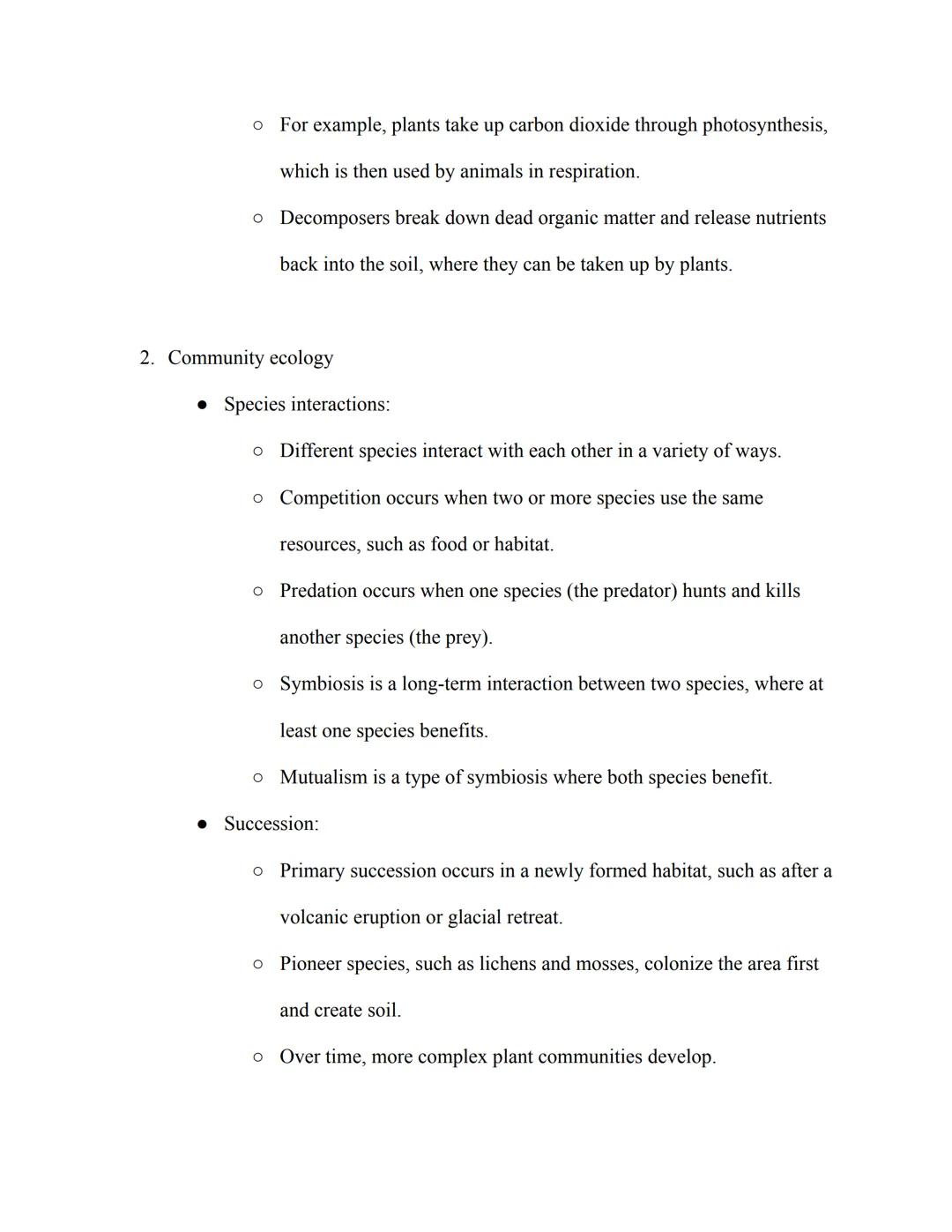
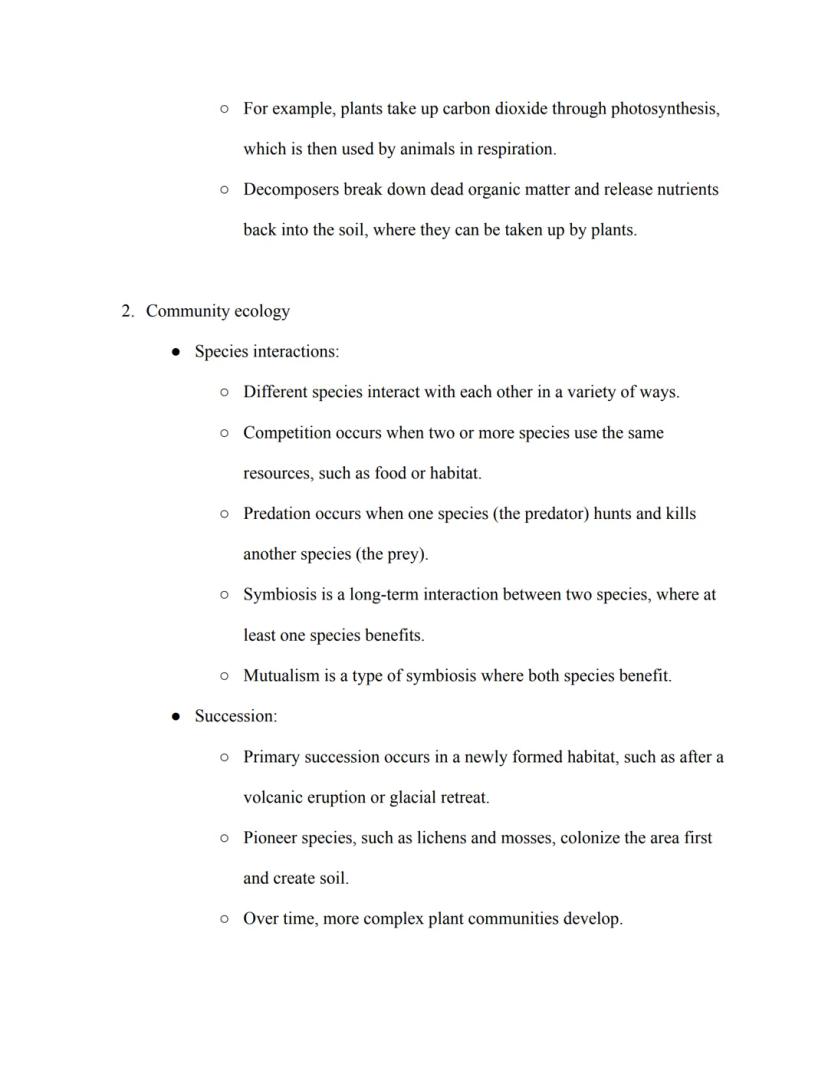
Community Ecology: Species Living Together
Species interact with each other in various important ways. Competition happens when species fight over the same resources like food or habitat. Predation occurs when one species hunts another. Symbiosis represents long-term interactions between species—with mutualism being the type where both species benefit from the relationship.
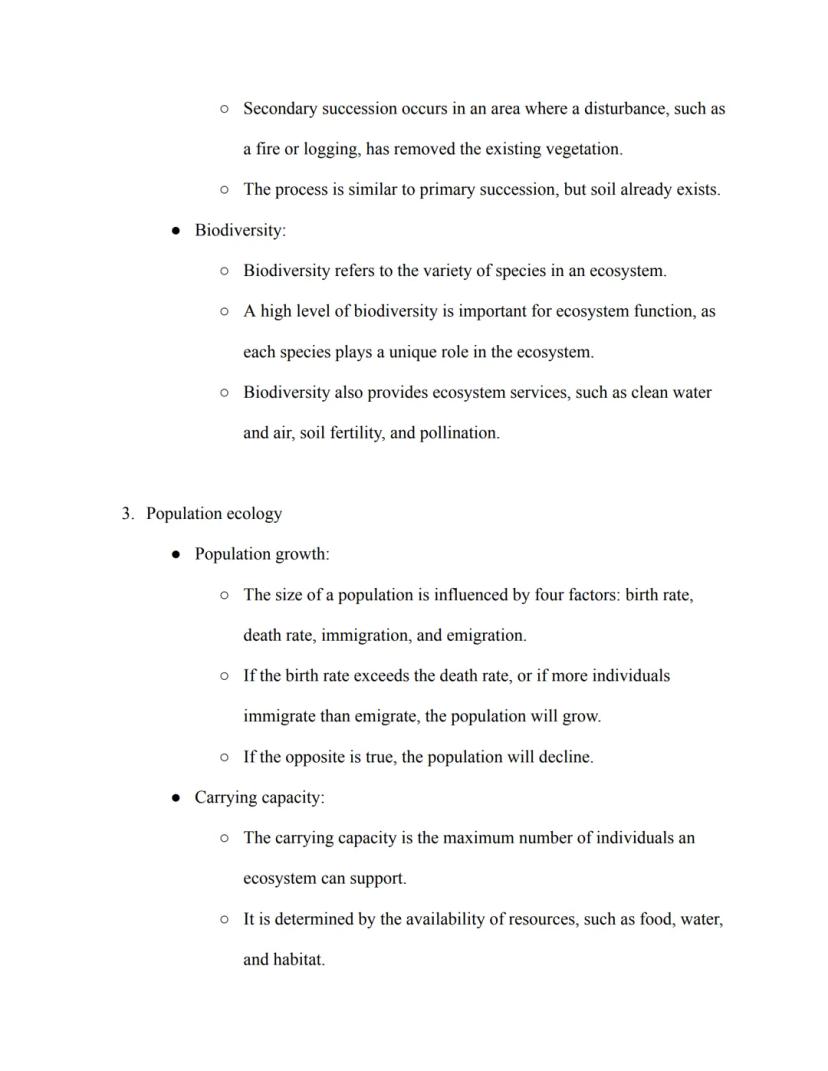
Ecosystems change over time through a process called succession. Primary succession starts in brand new habitats (like after a volcanic eruption) when pioneer species like lichens and mosses first colonize the area and create soil. Secondary succession happens after disturbances like fires where soil already exists, allowing for faster recovery.
Biodiversity, the variety of species in an ecosystem, is crucial for healthy ecosystems. Each species plays a unique role, and together they provide essential services like clean water, pollination, and soil fertility. The more diverse an ecosystem, the more resilient it tends to be against disturbances.
Remember This: When you see an empty lot gradually filling with plants over time, you're witnessing succession in action—nature's way of rebuilding communities!
3
of 5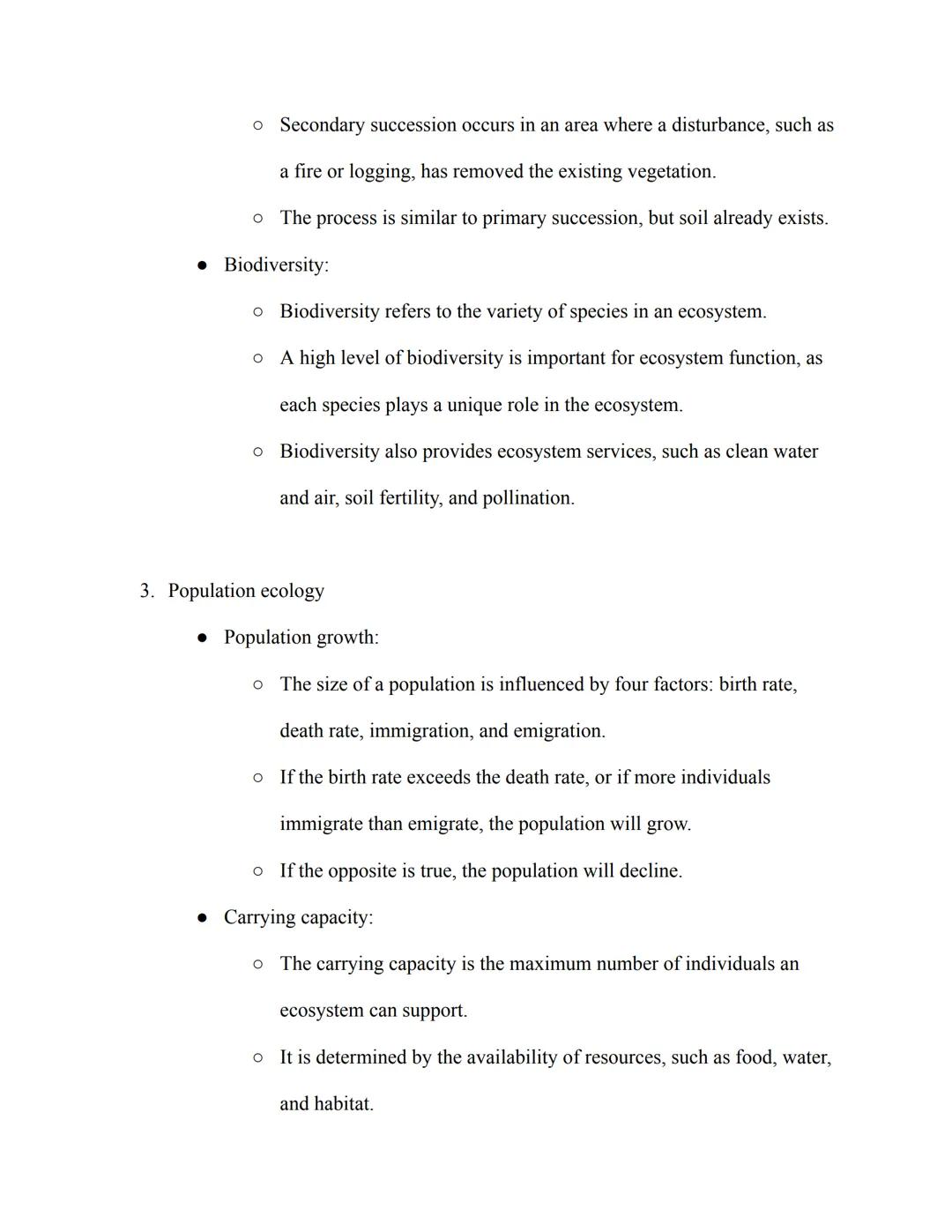
Population Ecology: Understanding Groups
Population size changes based on four key factors: birth rate, death rate, immigration, and emigration. If more individuals are born than die, or if more move in than leave, the population grows. The opposite causes population decline. These simple principles explain how animal and plant populations change over time.
Every ecosystem has a carrying capacity—the maximum number of individuals it can support. Resources like food, water, and habitat determine this limit. When a population reaches carrying capacity, growth stops and may even reverse if resources become scarce.
Population sizes rarely stay stable in nature. They fluctuate due to factors like disease, predation, and competition. Boom and bust cycles occur when rapid population growth is followed by sharp decline, often because the population exceeded carrying capacity and depleted resources.
Think About It: The next time you see a sudden increase in a local animal population (like squirrels or rabbits), consider what factors might be causing this growth and what might eventually limit it!
4
of 5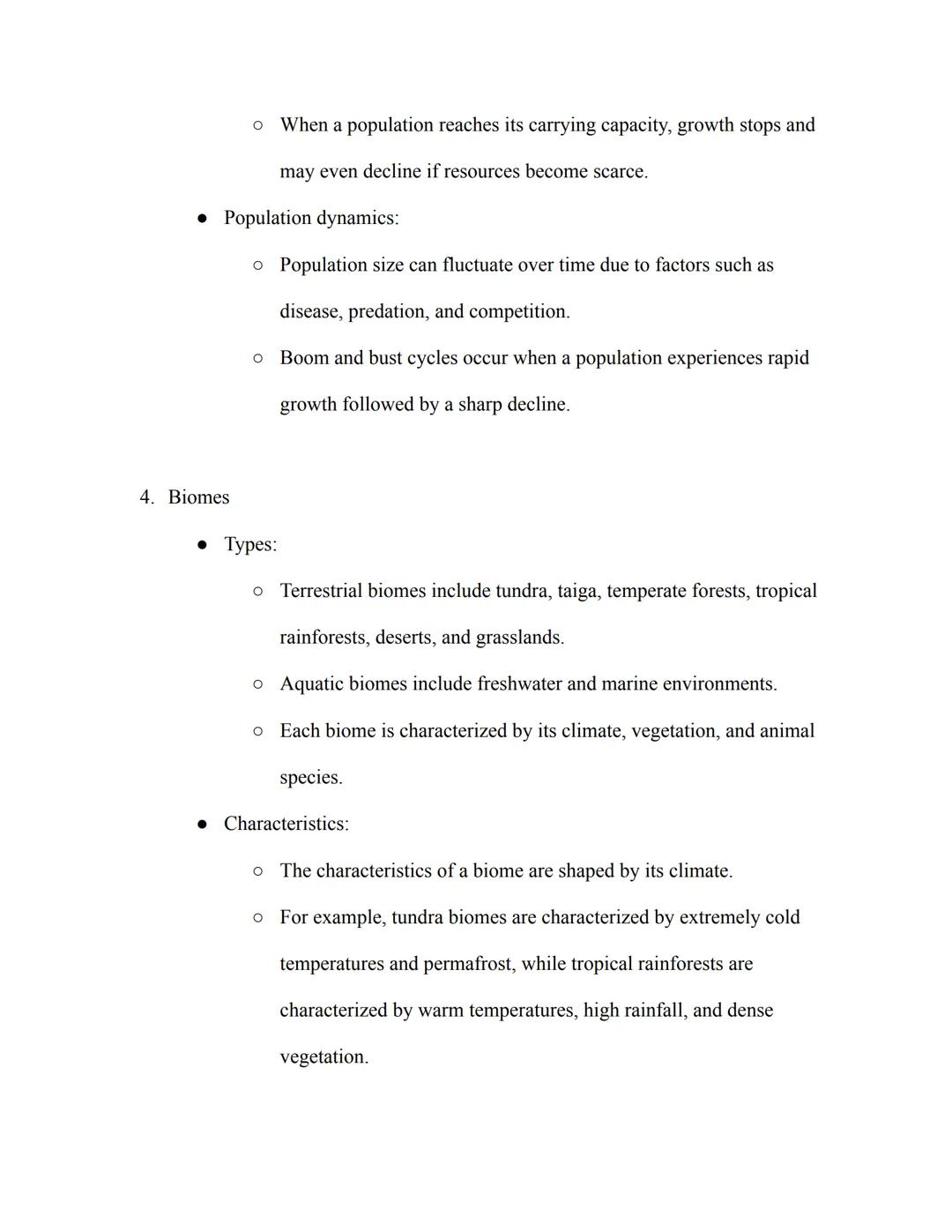
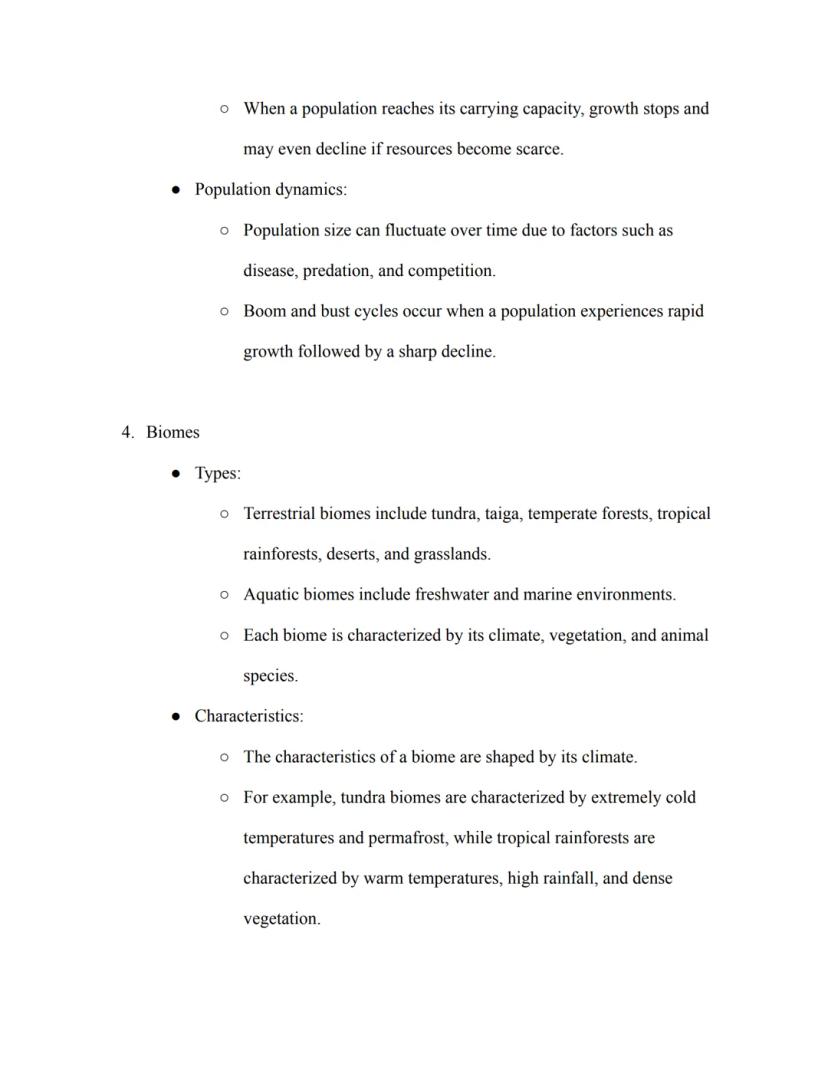
Biomes: Earth's Major Ecosystems
Earth contains several major terrestrial biomes including tundra, taiga, temperate forests, tropical rainforests, deserts, and grasslands. Aquatic biomes include freshwater environments (like lakes and rivers) and marine environments (like oceans and coral reefs). Each has distinctive plant and animal communities.
Climate shapes the characteristics of each biome. Tundra regions have extremely cold temperatures and permafrost, while tropical rainforests feature warm temperatures, high rainfall, and dense vegetation. The plant and animal species in each biome have special adaptations that help them survive in these specific conditions.
The distribution of biomes across Earth follows patterns related to latitude, altitude, and geography. As you move from the equator toward the poles, you'll encounter different biomes in a predictable sequence. Similarly, as you climb a mountain, you'll pass through biome zones that mimic this latitudinal pattern.
Cool Connection: Your local park or neighborhood contains mini-ecosystems that function similarly to the world's major biomes—just look for the interactions between plants, animals, and their environment!
5
of 5
Ecological Adaptations
The plant and animal species found in each biome have evolved specific adaptations to survive in their environment. Desert plants might have waxy coatings to prevent water loss, while tundra animals often have thick fur and compact bodies to conserve heat.
These adaptations show how evolution has shaped species to fit their ecological niches. The relationship between organisms and their environment demonstrates the power of natural selection in creating biological diversity across Earth's many ecosystems.
Why It Matters: Understanding ecological adaptations helps us predict how species might respond to environmental changes, including those caused by climate change and habitat destruction.
We thought you’d never ask...
What is the Knowunity AI companion?
Our AI companion is specifically built for the needs of students. Based on the millions of content pieces we have on the platform we can provide truly meaningful and relevant answers to students. But its not only about answers, the companion is even more about guiding students through their daily learning challenges, with personalised study plans, quizzes or content pieces in the chat and 100% personalisation based on the students skills and developments.
Where can I download the Knowunity app?
You can download the app in the Google Play Store and in the Apple App Store.
Is Knowunity really free of charge?
That's right! Enjoy free access to study content, connect with fellow students, and get instant help – all at your fingertips.
Similar Content
Most popular content in AP Biology
9I
AP BiologyIntroduction to Biological Elements of Life
Practice identifying the essential elements including carbon, nitrogen, phosphorus, and sulfur that compose biological macromolecules.
9th1,7390
I
AP BiologyIntroduction to Water Polarity and Bonding
Practice identifying partial charges and the chemical basis of hydrogen bond formation between polar water molecules.
9th8520
I
AP BiologyIntroduction to Biological Macromolecules
Practice identifying the four classes of biological macromolecules and the dehydration synthesis reactions that form their covalent bonds.
9th5890
I
AP BiologyIntroduction to Biological Macromolecules
Practice identifying the monomers and chemical compositions of carbohydrates, lipids, proteins, and nucleic acids in biological systems.
9th4460
I
AP BiologyIntroduction to Cell Compartmentalization
Practice identifying how membrane-bound organelles increase surface area and facilitate specialized chemical reactions in eukaryotic cells.
9th3370
C
AP BiologyComponents of the Plasma Membrane
Practice identifying the molecular structure of phospholipids, proteins, cholesterol, and carbohydrates within the fluid mosaic model.
9th2720
I
AP BiologyIntroduction to Evidence of Evolution
Practice identifying fundamental concepts of common ancestry, including homologous structures, vestigial traits, and the fossil record.
9th2010
AP BiologyBio 1000 Chapter 2 The Molecules of Cells
Cell Make up
College55211
F
AP BiologyFundamentals of Cell Size and Surface Area
Practice calculating surface area-to-volume ratios and defining how these geometric constraints limit the maximum size of a functional biological cell.
9th1550
Most popular content
9O
 AP US History
Origins and Dynamics of the Columbian Exchange
Analyze the ecological and economic motivations behind the initial transfer of goods, people, and diseases between the Old and New Worlds.
9th3,1280
I
AP US HistoryIntroduction to Early Cultural Interactions
Analyze the initial social and religious encounters between Europeans, Africans, and Indigenous peoples in the colonial Americas.
9th2,7730
O
 AP World History
Origins of Ancient River Civilizations
Analyze the environmental factors and technological innovations that led to the rise of early states in Mesopotamia, Egypt, and the Indus Valley.
9th3,1870
M
AP US HistoryMotivations for European Exploration
Analyze the economic, religious, and political factors that drove European powers to the Americas during the 15th and 16th centuries.
9th1,7780
F
 AP Psychology
Foundations of Ethical Guidelines in Research
Practice the core principles of the APA ethical code including informed consent, debriefing, and the role of Institutional Review Boards.
9th1,3360
I
AP US HistoryIntroduction to Native American Societies
Examine the diverse social, political, and economic structures of North American indigenous groups prior to European contact.
9th1,1100
I
AP BiologyIntroduction to Biological Elements of Life
Practice identifying the essential elements including carbon, nitrogen, phosphorus, and sulfur that compose biological macromolecules.
9th1,7390
I
AP US HistoryIntroduction to the Spanish Encomienda System
Explore the fundamental economic and social structures of the Spanish colonial system, focusing on the encomienda and the casta social hierarchy.
9th8890
O
AP World HistoryOrigins and Continuity of the Byzantine Empire
Analyze the political and cultural transitions from the Roman Empire to the Byzantine Empire, focusing on the reign of Justinian I and his code.
9th1,6320
Can't find what you're looking for? Explore other subjects.
Students love us — and so will you.
4.6/5App Store
4.7/5Google Play
The app is very easy to use and well designed. I have found everything I was looking for so far and have been able to learn a lot from the presentations! I will definitely use the app for a class assignment! And of course it also helps a lot as an inspiration.
Stefan SiOS user
This app is really great. There are so many study notes and help [...]. My problem subject is French, for example, and the app has so many options for help. Thanks to this app, I have improved my French. I would recommend it to anyone.
Samantha KlichAndroid user
Wow, I am really amazed. I just tried the app because I've seen it advertised many times and was absolutely stunned. This app is THE HELP you want for school and above all, it offers so many things, such as workouts and fact sheets, which have been VERY helpful to me personally.
AnnaiOS user
AP Biology251 views·Updated Jun 5, 2026·5 pagesComprehensive Study Guide for AP Biology: Unit 8 - Ecology
A
Aaron Jackson@aaronjackson_kbwj
Ecology is the study of how living organisms interact with each other and their environment. This branch of biology explores everything from tiny interactions between species to the functioning of entire ecosystems and global biomes. Understanding ecological concepts helps us...
1
of 5
Sign up to see the content. It's free!
- Access to all documents
- Improve your grades
- Join milions of students
Ecosystems: The Building Blocks of Nature
Ecosystems consist of both biotic factors (living components like plants, animals, fungi, and bacteria) and abiotic factors . These components work together to create functioning natural systems.
Energy flows through ecosystems in a one-way direction. It starts with producers (mostly plants) that convert sunlight into chemical energy through photosynthesis. This energy then passes to consumers (animals that eat plants or other animals) and finally to decomposers (fungi and bacteria) that break down dead organisms.
Nutrients like carbon, nitrogen, and phosphorus continuously cycle through ecosystems. Unlike energy, nutrients don't flow one way but instead get recycled. Plants absorb these elements, animals consume them, and decomposers release them back into the environment for reuse.
Quick Fact: While energy can only flow in one direction through an ecosystem (and is eventually lost as heat), nutrients are constantly recycled—making decomposers like fungi and bacteria essential for ecosystem health!
2
of 5Sign up to see the content. It's free!
- Access to all documents
- Improve your grades
- Join milions of students
Community Ecology: Species Living Together
Species interact with each other in various important ways. Competition happens when species fight over the same resources like food or habitat. Predation occurs when one species hunts another. Symbiosis represents long-term interactions between species—with mutualism being the type where both species benefit from the relationship.
Ecosystems change over time through a process called succession. Primary succession starts in brand new habitats (like after a volcanic eruption) when pioneer species like lichens and mosses first colonize the area and create soil. Secondary succession happens after disturbances like fires where soil already exists, allowing for faster recovery.
Biodiversity, the variety of species in an ecosystem, is crucial for healthy ecosystems. Each species plays a unique role, and together they provide essential services like clean water, pollination, and soil fertility. The more diverse an ecosystem, the more resilient it tends to be against disturbances.
Remember This: When you see an empty lot gradually filling with plants over time, you're witnessing succession in action—nature's way of rebuilding communities!
3
of 5Sign up to see the content. It's free!
- Access to all documents
- Improve your grades
- Join milions of students
Population Ecology: Understanding Groups
Population size changes based on four key factors: birth rate, death rate, immigration, and emigration. If more individuals are born than die, or if more move in than leave, the population grows. The opposite causes population decline. These simple principles explain how animal and plant populations change over time.
Every ecosystem has a carrying capacity—the maximum number of individuals it can support. Resources like food, water, and habitat determine this limit. When a population reaches carrying capacity, growth stops and may even reverse if resources become scarce.
Population sizes rarely stay stable in nature. They fluctuate due to factors like disease, predation, and competition. Boom and bust cycles occur when rapid population growth is followed by sharp decline, often because the population exceeded carrying capacity and depleted resources.
Think About It: The next time you see a sudden increase in a local animal population (like squirrels or rabbits), consider what factors might be causing this growth and what might eventually limit it!
4
of 5Sign up to see the content. It's free!
- Access to all documents
- Improve your grades
- Join milions of students
Biomes: Earth's Major Ecosystems
Earth contains several major terrestrial biomes including tundra, taiga, temperate forests, tropical rainforests, deserts, and grasslands. Aquatic biomes include freshwater environments (like lakes and rivers) and marine environments (like oceans and coral reefs). Each has distinctive plant and animal communities.
Climate shapes the characteristics of each biome. Tundra regions have extremely cold temperatures and permafrost, while tropical rainforests feature warm temperatures, high rainfall, and dense vegetation. The plant and animal species in each biome have special adaptations that help them survive in these specific conditions.
The distribution of biomes across Earth follows patterns related to latitude, altitude, and geography. As you move from the equator toward the poles, you'll encounter different biomes in a predictable sequence. Similarly, as you climb a mountain, you'll pass through biome zones that mimic this latitudinal pattern.
Cool Connection: Your local park or neighborhood contains mini-ecosystems that function similarly to the world's major biomes—just look for the interactions between plants, animals, and their environment!
5
of 5Sign up to see the content. It's free!
- Access to all documents
- Improve your grades
- Join milions of students
Ecological Adaptations
The plant and animal species found in each biome have evolved specific adaptations to survive in their environment. Desert plants might have waxy coatings to prevent water loss, while tundra animals often have thick fur and compact bodies to conserve heat.
These adaptations show how evolution has shaped species to fit their ecological niches. The relationship between organisms and their environment demonstrates the power of natural selection in creating biological diversity across Earth's many ecosystems.
Why It Matters: Understanding ecological adaptations helps us predict how species might respond to environmental changes, including those caused by climate change and habitat destruction.
We thought you’d never ask...
What is the Knowunity AI companion?
Our AI companion is specifically built for the needs of students. Based on the millions of content pieces we have on the platform we can provide truly meaningful and relevant answers to students. But its not only about answers, the companion is even more about guiding students through their daily learning challenges, with personalised study plans, quizzes or content pieces in the chat and 100% personalisation based on the students skills and developments.
Where can I download the Knowunity app?
You can download the app in the Google Play Store and in the Apple App Store.
Is Knowunity really free of charge?
That's right! Enjoy free access to study content, connect with fellow students, and get instant help – all at your fingertips.
Similar Content
Most popular content in AP Biology
9I
AP BiologyIntroduction to Biological Elements of Life
Practice identifying the essential elements including carbon, nitrogen, phosphorus, and sulfur that compose biological macromolecules.
9th1,7390
I
AP BiologyIntroduction to Water Polarity and Bonding
Practice identifying partial charges and the chemical basis of hydrogen bond formation between polar water molecules.
9th8520
I
AP BiologyIntroduction to Biological Macromolecules
Practice identifying the four classes of biological macromolecules and the dehydration synthesis reactions that form their covalent bonds.
9th5890
I
AP BiologyIntroduction to Biological Macromolecules
Practice identifying the monomers and chemical compositions of carbohydrates, lipids, proteins, and nucleic acids in biological systems.
9th4460
I
AP BiologyIntroduction to Cell Compartmentalization
Practice identifying how membrane-bound organelles increase surface area and facilitate specialized chemical reactions in eukaryotic cells.
9th3370
C
AP BiologyComponents of the Plasma Membrane
Practice identifying the molecular structure of phospholipids, proteins, cholesterol, and carbohydrates within the fluid mosaic model.
9th2720
I
AP BiologyIntroduction to Evidence of Evolution
Practice identifying fundamental concepts of common ancestry, including homologous structures, vestigial traits, and the fossil record.
9th2010
AP BiologyBio 1000 Chapter 2 The Molecules of Cells
Cell Make up
College55211
F
AP BiologyFundamentals of Cell Size and Surface Area
Practice calculating surface area-to-volume ratios and defining how these geometric constraints limit the maximum size of a functional biological cell.
9th1550
Most popular content
9O
AP US HistoryOrigins and Dynamics of the Columbian Exchange
Analyze the ecological and economic motivations behind the initial transfer of goods, people, and diseases between the Old and New Worlds.
9th3,1280
I
AP US HistoryIntroduction to Early Cultural Interactions
Analyze the initial social and religious encounters between Europeans, Africans, and Indigenous peoples in the colonial Americas.
9th2,7730
O
AP World HistoryOrigins of Ancient River Civilizations
Analyze the environmental factors and technological innovations that led to the rise of early states in Mesopotamia, Egypt, and the Indus Valley.
9th3,1870
M
AP US HistoryMotivations for European Exploration
Analyze the economic, religious, and political factors that drove European powers to the Americas during the 15th and 16th centuries.
9th1,7780
F
AP PsychologyFoundations of Ethical Guidelines in Research
Practice the core principles of the APA ethical code including informed consent, debriefing, and the role of Institutional Review Boards.
9th1,3360
I
AP US HistoryIntroduction to Native American Societies
Examine the diverse social, political, and economic structures of North American indigenous groups prior to European contact.
9th1,1100
I
AP BiologyIntroduction to Biological Elements of Life
Practice identifying the essential elements including carbon, nitrogen, phosphorus, and sulfur that compose biological macromolecules.
9th1,7390
I
AP US HistoryIntroduction to the Spanish Encomienda System
Explore the fundamental economic and social structures of the Spanish colonial system, focusing on the encomienda and the casta social hierarchy.
9th8890
O
AP World HistoryOrigins and Continuity of the Byzantine Empire
Analyze the political and cultural transitions from the Roman Empire to the Byzantine Empire, focusing on the reign of Justinian I and his code.
9th1,6320
Can't find what you're looking for? Explore other subjects.
Students love us — and so will you.
4.6/5App Store
4.7/5Google Play
The app is very easy to use and well designed. I have found everything I was looking for so far and have been able to learn a lot from the presentations! I will definitely use the app for a class assignment! And of course it also helps a lot as an inspiration.
Stefan SiOS user
This app is really great. There are so many study notes and help [...]. My problem subject is French, for example, and the app has so many options for help. Thanks to this app, I have improved my French. I would recommend it to anyone.
Samantha KlichAndroid user
Wow, I am really amazed. I just tried the app because I've seen it advertised many times and was absolutely stunned. This app is THE HELP you want for school and above all, it offers so many things, such as workouts and fact sheets, which have been VERY helpful to me personally.
AnnaiOS user