
Dive into the fascinating world of cell communication and cell...
 AP Biology150 views·Updated Jun 14, 2026·5 pages
Mastering the AP Biology Exam: Cell Communication and the Cell Cycle
A
Aaron Jackson@aaronjackson_kbwj

1 / 5
1
of 5
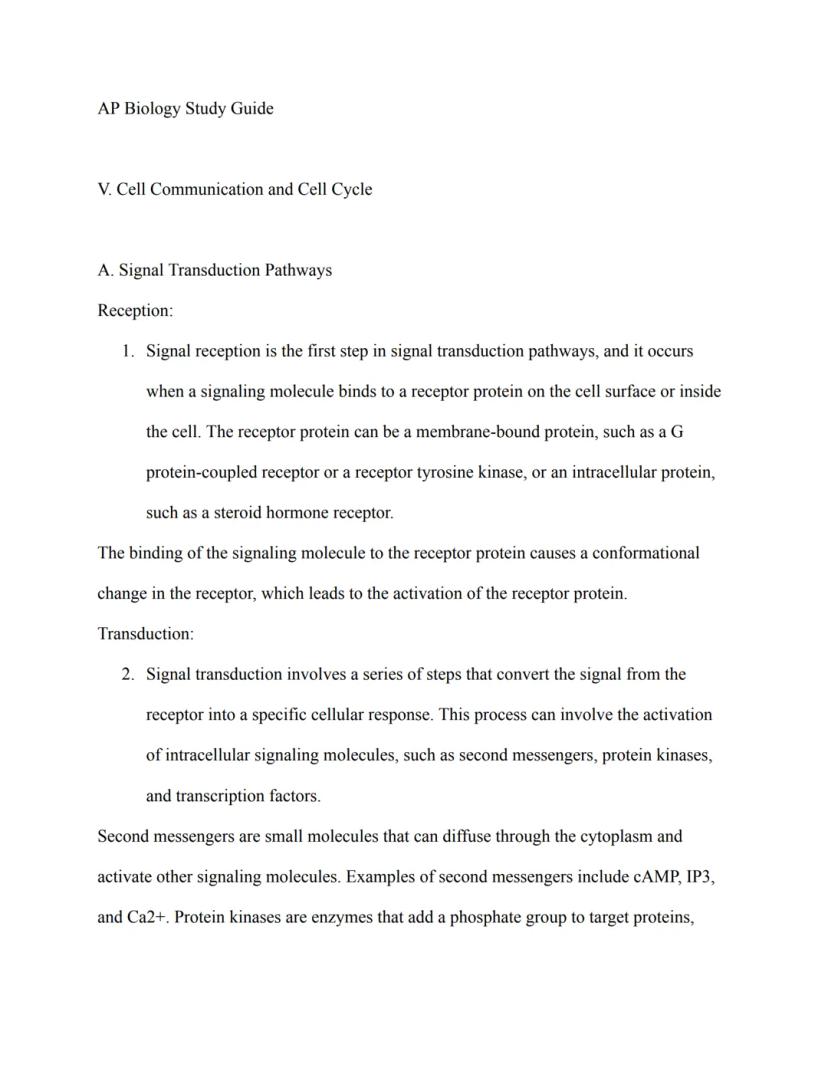
Signal Transduction Pathways: Reception and Transduction
Ever wondered how cells "talk" to each other? It starts with signal reception, where signaling molecules attach to receptor proteins on the cell surface or inside the cell. Think of this like a key fitting into a lock - when they connect, the receptor changes shape and becomes activated.
Once activated, the cell begins signal transduction - a series of steps that convert the external signal into a specific cellular response. This works like a relay race, with the signal being passed from molecule to molecule inside the cell. Key players in this process include second messengers (like cAMP and calcium ions), which are small molecules that can quickly spread the message throughout the cell.
Protein kinases are another important component - these enzymes add phosphate groups to target proteins, which can change how those proteins function or where they're located in the cell. It's like flipping switches that control different cell activities.
Fun Fact: Your body uses these signaling pathways constantly! When you feel scared, epinephrine (adrenaline) binds to receptors on liver cells, triggering a cascade that releases glucose into your bloodstream - giving you that burst of energy for "fight or flight"!
2
of 5
Signal Response and Cell Cycle Introduction
The final step in cell signaling is the response, which varies depending on the signal and cell type. Responses can include changes in gene expression, altered enzyme activity, or changes in cell behavior such as division, differentiation, or even cell death (apoptosis).
For example, when epinephrine binds to receptors on liver cells, it triggers a chain reaction: adenylate cyclase activates, producing cAMP, which activates protein kinase A, which phosphorylates enzymes that break down glycogen into glucose. This is how your body quickly releases energy when needed!
Now let's talk about the cell cycle - the process cells go through as they grow and divide. The first phase is G1 (Gap 1), where cells grow larger and increase their metabolic activity. During this time, cells prepare for DNA replication by making necessary enzymes and proteins.
The length of G1 varies by cell type - some cells, like those in your liver, can stay in G1 for months, while cells in your intestine cycle through G1 much faster. This flexibility allows different tissues to grow and repair at rates that match their needs.
3
of 5
The S and G2 Phases of the Cell Cycle
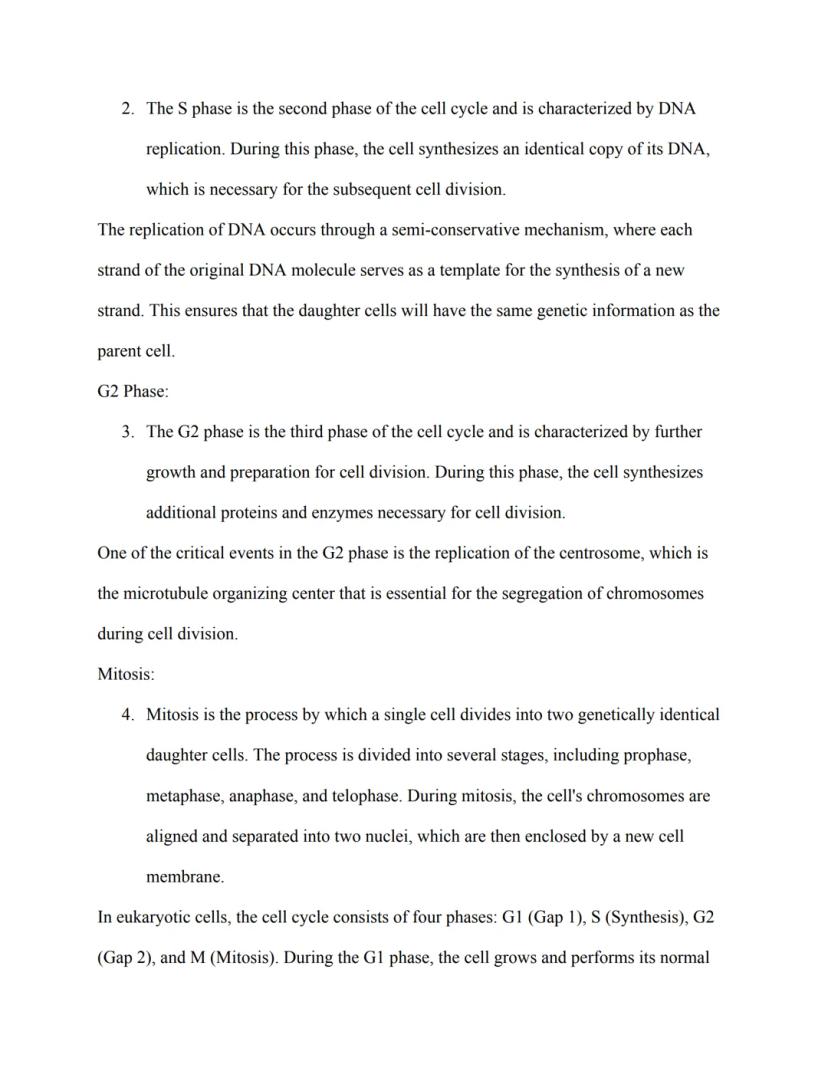
After G1 comes the S (Synthesis) phase, where something amazing happens - your cell makes a complete copy of its DNA! This is crucial because when the cell eventually divides, each new cell needs its own complete set of genetic instructions.
DNA replication follows a semi-conservative mechanism, which means each original DNA strand serves as a template for creating a new matching strand. Think of it like making two identical books, each with one original page and one newly printed page. This ensures both daughter cells will have identical genetic information.
Once DNA replication is complete, the cell enters the G2 (Gap 2) phase. During G2, the cell continues to grow and prepares for division by synthesizing more proteins and enzymes. One critical event during this phase is the replication of the centrosome - the cell's microtubule organizing center that will help separate the chromosomes during division.
Remember This: The cell cycle has built-in quality control! Checkpoints throughout the cycle ensure everything is proceeding correctly before moving to the next phase. If something's wrong, the cell can pause the cycle to fix the problem or even trigger cell death if the damage is too severe.
4
of 5
Mitosis and Cell Cycle Regulation
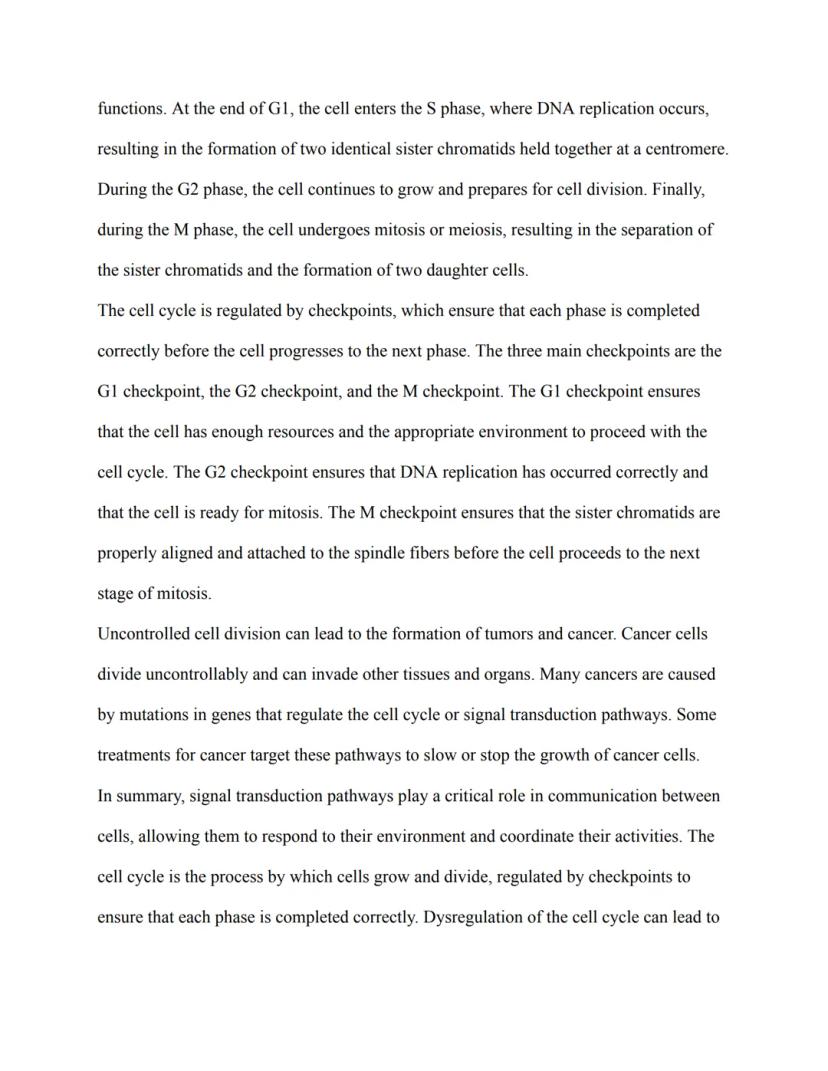
Mitosis is the spectacular finale of the cell cycle - the process where a single cell divides into two genetically identical daughter cells. It happens in stages: prophase (chromosomes condense), metaphase (chromosomes align at the center), anaphase (chromosomes separate), and telophase (new nuclei form).
The entire cell cycle is strictly regulated by checkpoints that ensure each phase completes correctly before the next begins. These checkpoints are like quality control inspectors: the G1 checkpoint checks if the cell has enough resources to proceed, the G2 checkpoint verifies DNA was copied correctly, and the M checkpoint ensures chromosomes are properly aligned before separation.
When cell cycle regulation fails, uncontrolled cell division can occur, potentially leading to tumors and cancer. Cancer cells divide relentlessly and can invade other tissues. Many cancers result from mutations in genes that regulate the cell cycle or signal transduction pathways, which is why some cancer treatments target these specific pathways.
Cell communication and division are incredibly complex yet precisely orchestrated processes. Every second, billions of your cells are communicating through signaling pathways and making decisions about whether to divide, differentiate, or die - all to keep your body functioning properly!
5
of 5
Cell Communication and Cancer Connection
Signal transduction pathways and cell cycle regulation work together to maintain your body's health. These pathways allow cells to respond to their environment and coordinate their activities with other cells. When functioning properly, these systems ensure cells grow and divide only when needed.
However, when mutations occur in genes involved in these processes, the results can be serious. For example, a mutation that keeps a growth-promoting pathway permanently active can lead to unregulated cell division - a hallmark of cancer. Similarly, mutations in cell cycle checkpoint genes can allow cells with damaged DNA to continue dividing when they should stop.
Understanding these cellular processes has practical applications in medicine. Researchers develop cancer treatments by targeting specific components of signal transduction pathways or the cell cycle. Some drugs block growth factor receptors, while others interfere with the enzymes that drive cell division.
Real-World Connection: Many common cancer treatments work by disrupting the cell cycle. Chemotherapy often targets rapidly dividing cells by damaging their DNA or preventing mitosis, while newer targeted therapies block specific signaling molecules that are overactive in certain cancers.
We thought you’d never ask...
What is the Knowunity AI companion?
Our AI companion is specifically built for the needs of students. Based on the millions of content pieces we have on the platform we can provide truly meaningful and relevant answers to students. But its not only about answers, the companion is even more about guiding students through their daily learning challenges, with personalised study plans, quizzes or content pieces in the chat and 100% personalisation based on the students skills and developments.
Where can I download the Knowunity app?
You can download the app in the Google Play Store and in the Apple App Store.
Is Knowunity really free of charge?
That's right! Enjoy free access to study content, connect with fellow students, and get instant help – all at your fingertips.
Similar Content
Most popular content in AP Biology
9I
AP BiologyIntroduction to Biological Elements of Life
Practice identifying the essential elements including carbon, nitrogen, phosphorus, and sulfur that compose biological macromolecules.
9th1,7390
I
AP BiologyIntroduction to Water Polarity and Bonding
Practice identifying partial charges and the chemical basis of hydrogen bond formation between polar water molecules.
9th8520
I
AP BiologyIntroduction to Biological Macromolecules
Practice identifying the four classes of biological macromolecules and the dehydration synthesis reactions that form their covalent bonds.
9th5890
I
AP BiologyIntroduction to Biological Macromolecules
Practice identifying the monomers and chemical compositions of carbohydrates, lipids, proteins, and nucleic acids in biological systems.
9th4460
I
AP BiologyIntroduction to Cell Compartmentalization
Practice identifying how membrane-bound organelles increase surface area and facilitate specialized chemical reactions in eukaryotic cells.
9th3370
C
AP BiologyComponents of the Plasma Membrane
Practice identifying the molecular structure of phospholipids, proteins, cholesterol, and carbohydrates within the fluid mosaic model.
9th2720
I
AP BiologyIntroduction to Evidence of Evolution
Practice identifying fundamental concepts of common ancestry, including homologous structures, vestigial traits, and the fossil record.
9th2010
AP BiologyBio 1000 Chapter 2 The Molecules of Cells
Cell Make up
College55211
F
AP BiologyFundamentals of Cell Size and Surface Area
Practice calculating surface area-to-volume ratios and defining how these geometric constraints limit the maximum size of a functional biological cell.
9th1550
Most popular content
9O
 AP US History
Origins and Dynamics of the Columbian Exchange
Analyze the ecological and economic motivations behind the initial transfer of goods, people, and diseases between the Old and New Worlds.
9th3,1280
I
AP US HistoryIntroduction to Early Cultural Interactions
Analyze the initial social and religious encounters between Europeans, Africans, and Indigenous peoples in the colonial Americas.
9th2,7730
O
 AP World History
Origins of Ancient River Civilizations
Analyze the environmental factors and technological innovations that led to the rise of early states in Mesopotamia, Egypt, and the Indus Valley.
9th3,1870
M
AP US HistoryMotivations for European Exploration
Analyze the economic, religious, and political factors that drove European powers to the Americas during the 15th and 16th centuries.
9th1,7780
F
 AP Psychology
Foundations of Ethical Guidelines in Research
Practice the core principles of the APA ethical code including informed consent, debriefing, and the role of Institutional Review Boards.
9th1,3360
I
AP US HistoryIntroduction to Native American Societies
Examine the diverse social, political, and economic structures of North American indigenous groups prior to European contact.
9th1,1100
I
AP BiologyIntroduction to Biological Elements of Life
Practice identifying the essential elements including carbon, nitrogen, phosphorus, and sulfur that compose biological macromolecules.
9th1,7390
I
AP US HistoryIntroduction to the Spanish Encomienda System
Explore the fundamental economic and social structures of the Spanish colonial system, focusing on the encomienda and the casta social hierarchy.
9th8890
O
AP World HistoryOrigins and Continuity of the Byzantine Empire
Analyze the political and cultural transitions from the Roman Empire to the Byzantine Empire, focusing on the reign of Justinian I and his code.
9th1,6320
Can't find what you're looking for? Explore other subjects.
Students love us — and so will you.
4.6/5App Store
4.7/5Google Play
The app is very easy to use and well designed. I have found everything I was looking for so far and have been able to learn a lot from the presentations! I will definitely use the app for a class assignment! And of course it also helps a lot as an inspiration.
Stefan SiOS user
This app is really great. There are so many study notes and help [...]. My problem subject is French, for example, and the app has so many options for help. Thanks to this app, I have improved my French. I would recommend it to anyone.
Samantha KlichAndroid user
Wow, I am really amazed. I just tried the app because I've seen it advertised many times and was absolutely stunned. This app is THE HELP you want for school and above all, it offers so many things, such as workouts and fact sheets, which have been VERY helpful to me personally.
AnnaiOS user
AP Biology150 views·Updated Jun 14, 2026·5 pagesMastering the AP Biology Exam: Cell Communication and the Cell Cycle
A
Aaron Jackson@aaronjackson_kbwj
Dive into the fascinating world of cell communication and cell cycle, where you'll discover how cells send messages to each other and regulate their growth and division. These processes are fundamental to life and understanding them will help you grasp...
1
of 5
Sign up to see the content. It's free!
- Access to all documents
- Improve your grades
- Join milions of students
Signal Transduction Pathways: Reception and Transduction
Ever wondered how cells "talk" to each other? It starts with signal reception, where signaling molecules attach to receptor proteins on the cell surface or inside the cell. Think of this like a key fitting into a lock - when they connect, the receptor changes shape and becomes activated.
Once activated, the cell begins signal transduction - a series of steps that convert the external signal into a specific cellular response. This works like a relay race, with the signal being passed from molecule to molecule inside the cell. Key players in this process include second messengers (like cAMP and calcium ions), which are small molecules that can quickly spread the message throughout the cell.
Protein kinases are another important component - these enzymes add phosphate groups to target proteins, which can change how those proteins function or where they're located in the cell. It's like flipping switches that control different cell activities.
Fun Fact: Your body uses these signaling pathways constantly! When you feel scared, epinephrine (adrenaline) binds to receptors on liver cells, triggering a cascade that releases glucose into your bloodstream - giving you that burst of energy for "fight or flight"!
2
of 5Sign up to see the content. It's free!
- Access to all documents
- Improve your grades
- Join milions of students
Signal Response and Cell Cycle Introduction
The final step in cell signaling is the response, which varies depending on the signal and cell type. Responses can include changes in gene expression, altered enzyme activity, or changes in cell behavior such as division, differentiation, or even cell death (apoptosis).
For example, when epinephrine binds to receptors on liver cells, it triggers a chain reaction: adenylate cyclase activates, producing cAMP, which activates protein kinase A, which phosphorylates enzymes that break down glycogen into glucose. This is how your body quickly releases energy when needed!
Now let's talk about the cell cycle - the process cells go through as they grow and divide. The first phase is G1 (Gap 1), where cells grow larger and increase their metabolic activity. During this time, cells prepare for DNA replication by making necessary enzymes and proteins.
The length of G1 varies by cell type - some cells, like those in your liver, can stay in G1 for months, while cells in your intestine cycle through G1 much faster. This flexibility allows different tissues to grow and repair at rates that match their needs.
3
of 5Sign up to see the content. It's free!
- Access to all documents
- Improve your grades
- Join milions of students
The S and G2 Phases of the Cell Cycle
After G1 comes the S (Synthesis) phase, where something amazing happens - your cell makes a complete copy of its DNA! This is crucial because when the cell eventually divides, each new cell needs its own complete set of genetic instructions.
DNA replication follows a semi-conservative mechanism, which means each original DNA strand serves as a template for creating a new matching strand. Think of it like making two identical books, each with one original page and one newly printed page. This ensures both daughter cells will have identical genetic information.
Once DNA replication is complete, the cell enters the G2 (Gap 2) phase. During G2, the cell continues to grow and prepares for division by synthesizing more proteins and enzymes. One critical event during this phase is the replication of the centrosome - the cell's microtubule organizing center that will help separate the chromosomes during division.
Remember This: The cell cycle has built-in quality control! Checkpoints throughout the cycle ensure everything is proceeding correctly before moving to the next phase. If something's wrong, the cell can pause the cycle to fix the problem or even trigger cell death if the damage is too severe.
4
of 5Sign up to see the content. It's free!
- Access to all documents
- Improve your grades
- Join milions of students
Mitosis and Cell Cycle Regulation
Mitosis is the spectacular finale of the cell cycle - the process where a single cell divides into two genetically identical daughter cells. It happens in stages: prophase (chromosomes condense), metaphase (chromosomes align at the center), anaphase (chromosomes separate), and telophase (new nuclei form).
The entire cell cycle is strictly regulated by checkpoints that ensure each phase completes correctly before the next begins. These checkpoints are like quality control inspectors: the G1 checkpoint checks if the cell has enough resources to proceed, the G2 checkpoint verifies DNA was copied correctly, and the M checkpoint ensures chromosomes are properly aligned before separation.
When cell cycle regulation fails, uncontrolled cell division can occur, potentially leading to tumors and cancer. Cancer cells divide relentlessly and can invade other tissues. Many cancers result from mutations in genes that regulate the cell cycle or signal transduction pathways, which is why some cancer treatments target these specific pathways.
Cell communication and division are incredibly complex yet precisely orchestrated processes. Every second, billions of your cells are communicating through signaling pathways and making decisions about whether to divide, differentiate, or die - all to keep your body functioning properly!
5
of 5Sign up to see the content. It's free!
- Access to all documents
- Improve your grades
- Join milions of students
Cell Communication and Cancer Connection
Signal transduction pathways and cell cycle regulation work together to maintain your body's health. These pathways allow cells to respond to their environment and coordinate their activities with other cells. When functioning properly, these systems ensure cells grow and divide only when needed.
However, when mutations occur in genes involved in these processes, the results can be serious. For example, a mutation that keeps a growth-promoting pathway permanently active can lead to unregulated cell division - a hallmark of cancer. Similarly, mutations in cell cycle checkpoint genes can allow cells with damaged DNA to continue dividing when they should stop.
Understanding these cellular processes has practical applications in medicine. Researchers develop cancer treatments by targeting specific components of signal transduction pathways or the cell cycle. Some drugs block growth factor receptors, while others interfere with the enzymes that drive cell division.
Real-World Connection: Many common cancer treatments work by disrupting the cell cycle. Chemotherapy often targets rapidly dividing cells by damaging their DNA or preventing mitosis, while newer targeted therapies block specific signaling molecules that are overactive in certain cancers.
We thought you’d never ask...
What is the Knowunity AI companion?
Our AI companion is specifically built for the needs of students. Based on the millions of content pieces we have on the platform we can provide truly meaningful and relevant answers to students. But its not only about answers, the companion is even more about guiding students through their daily learning challenges, with personalised study plans, quizzes or content pieces in the chat and 100% personalisation based on the students skills and developments.
Where can I download the Knowunity app?
You can download the app in the Google Play Store and in the Apple App Store.
Is Knowunity really free of charge?
That's right! Enjoy free access to study content, connect with fellow students, and get instant help – all at your fingertips.
Similar Content
Most popular content in AP Biology
9I
AP BiologyIntroduction to Biological Elements of Life
Practice identifying the essential elements including carbon, nitrogen, phosphorus, and sulfur that compose biological macromolecules.
9th1,7390
I
AP BiologyIntroduction to Water Polarity and Bonding
Practice identifying partial charges and the chemical basis of hydrogen bond formation between polar water molecules.
9th8520
I
AP BiologyIntroduction to Biological Macromolecules
Practice identifying the four classes of biological macromolecules and the dehydration synthesis reactions that form their covalent bonds.
9th5890
I
AP BiologyIntroduction to Biological Macromolecules
Practice identifying the monomers and chemical compositions of carbohydrates, lipids, proteins, and nucleic acids in biological systems.
9th4460
I
AP BiologyIntroduction to Cell Compartmentalization
Practice identifying how membrane-bound organelles increase surface area and facilitate specialized chemical reactions in eukaryotic cells.
9th3370
C
AP BiologyComponents of the Plasma Membrane
Practice identifying the molecular structure of phospholipids, proteins, cholesterol, and carbohydrates within the fluid mosaic model.
9th2720
I
AP BiologyIntroduction to Evidence of Evolution
Practice identifying fundamental concepts of common ancestry, including homologous structures, vestigial traits, and the fossil record.
9th2010
AP BiologyBio 1000 Chapter 2 The Molecules of Cells
Cell Make up
College55211
F
AP BiologyFundamentals of Cell Size and Surface Area
Practice calculating surface area-to-volume ratios and defining how these geometric constraints limit the maximum size of a functional biological cell.
9th1550
Most popular content
9O
AP US HistoryOrigins and Dynamics of the Columbian Exchange
Analyze the ecological and economic motivations behind the initial transfer of goods, people, and diseases between the Old and New Worlds.
9th3,1280
I
AP US HistoryIntroduction to Early Cultural Interactions
Analyze the initial social and religious encounters between Europeans, Africans, and Indigenous peoples in the colonial Americas.
9th2,7730
O
AP World HistoryOrigins of Ancient River Civilizations
Analyze the environmental factors and technological innovations that led to the rise of early states in Mesopotamia, Egypt, and the Indus Valley.
9th3,1870
M
AP US HistoryMotivations for European Exploration
Analyze the economic, religious, and political factors that drove European powers to the Americas during the 15th and 16th centuries.
9th1,7780
F
AP PsychologyFoundations of Ethical Guidelines in Research
Practice the core principles of the APA ethical code including informed consent, debriefing, and the role of Institutional Review Boards.
9th1,3360
I
AP US HistoryIntroduction to Native American Societies
Examine the diverse social, political, and economic structures of North American indigenous groups prior to European contact.
9th1,1100
I
AP BiologyIntroduction to Biological Elements of Life
Practice identifying the essential elements including carbon, nitrogen, phosphorus, and sulfur that compose biological macromolecules.
9th1,7390
I
AP US HistoryIntroduction to the Spanish Encomienda System
Explore the fundamental economic and social structures of the Spanish colonial system, focusing on the encomienda and the casta social hierarchy.
9th8890
O
AP World HistoryOrigins and Continuity of the Byzantine Empire
Analyze the political and cultural transitions from the Roman Empire to the Byzantine Empire, focusing on the reign of Justinian I and his code.
9th1,6320
Can't find what you're looking for? Explore other subjects.
Students love us — and so will you.
4.6/5App Store
4.7/5Google Play
The app is very easy to use and well designed. I have found everything I was looking for so far and have been able to learn a lot from the presentations! I will definitely use the app for a class assignment! And of course it also helps a lot as an inspiration.
Stefan SiOS user
This app is really great. There are so many study notes and help [...]. My problem subject is French, for example, and the app has so many options for help. Thanks to this app, I have improved my French. I would recommend it to anyone.
Samantha KlichAndroid user
Wow, I am really amazed. I just tried the app because I've seen it advertised many times and was absolutely stunned. This app is THE HELP you want for school and above all, it offers so many things, such as workouts and fact sheets, which have been VERY helpful to me personally.
AnnaiOS user