
Dominar els temps verbals en anglès pot semblar complicat, però...
 Anglès280 views·Updated Jun 27, 2026·4 pages
Apunts de gramàtica anglesa
L
Lia@lia_88

1 / 4
1
of 4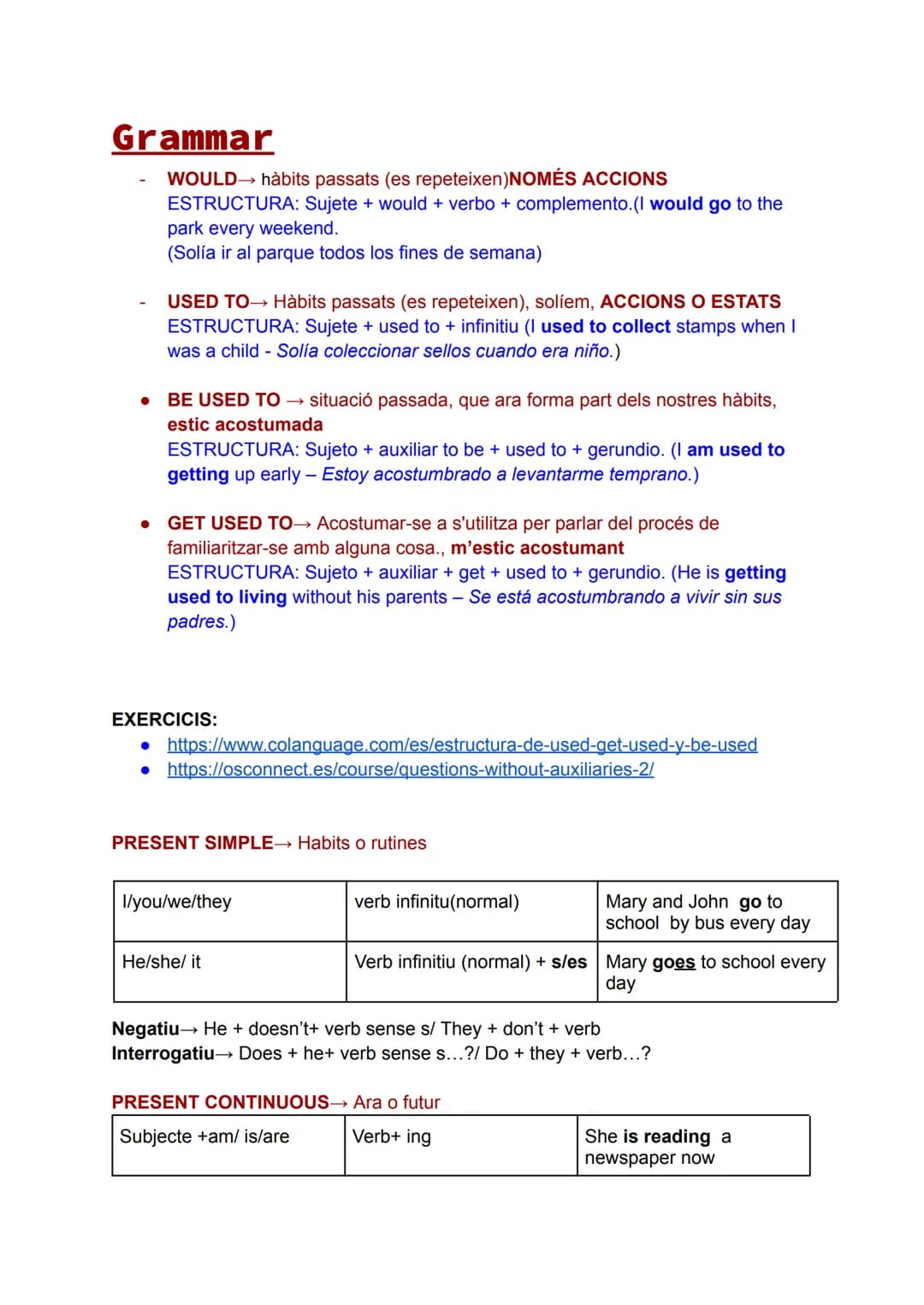
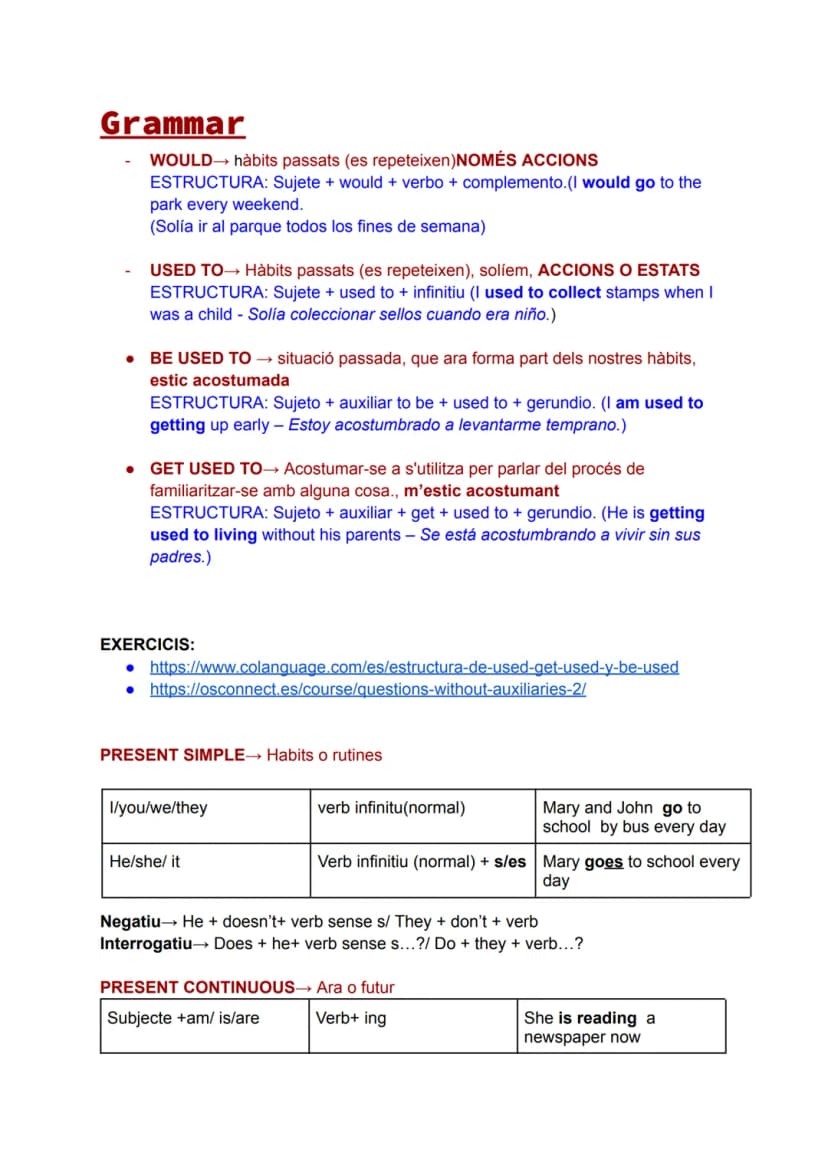
Expressions per a hàbits passats
Would, used to, be used to i get used to són quatre expressions que sovint es confonen, però cada una té el seu ús específic.
Would només serveix per a accions repetides en el passat, mai per a estats. La fórmula és senzilla: subjecte + would + verb. Per exemple: "I would go to the park every weekend" (Anava al parc cada cap de setmana).
Used to és més versàtil perquè funciona tant per a accions com per a estats passats. S'estructura com: subjecte + used to + infinitiu. "I used to collect stamps" significa que abans col·leccionava segells però ja no ho faig.
Truc: Si pots substituir "used to" per "solía" en castellà, probablement l'estàs usant correctament.
Be used to expressa que ja estàs acostumat a alguna cosa (present), mentre que get used to indica el procés d'acostumar-se. Tots dos van seguits de gerundi .
2
of 4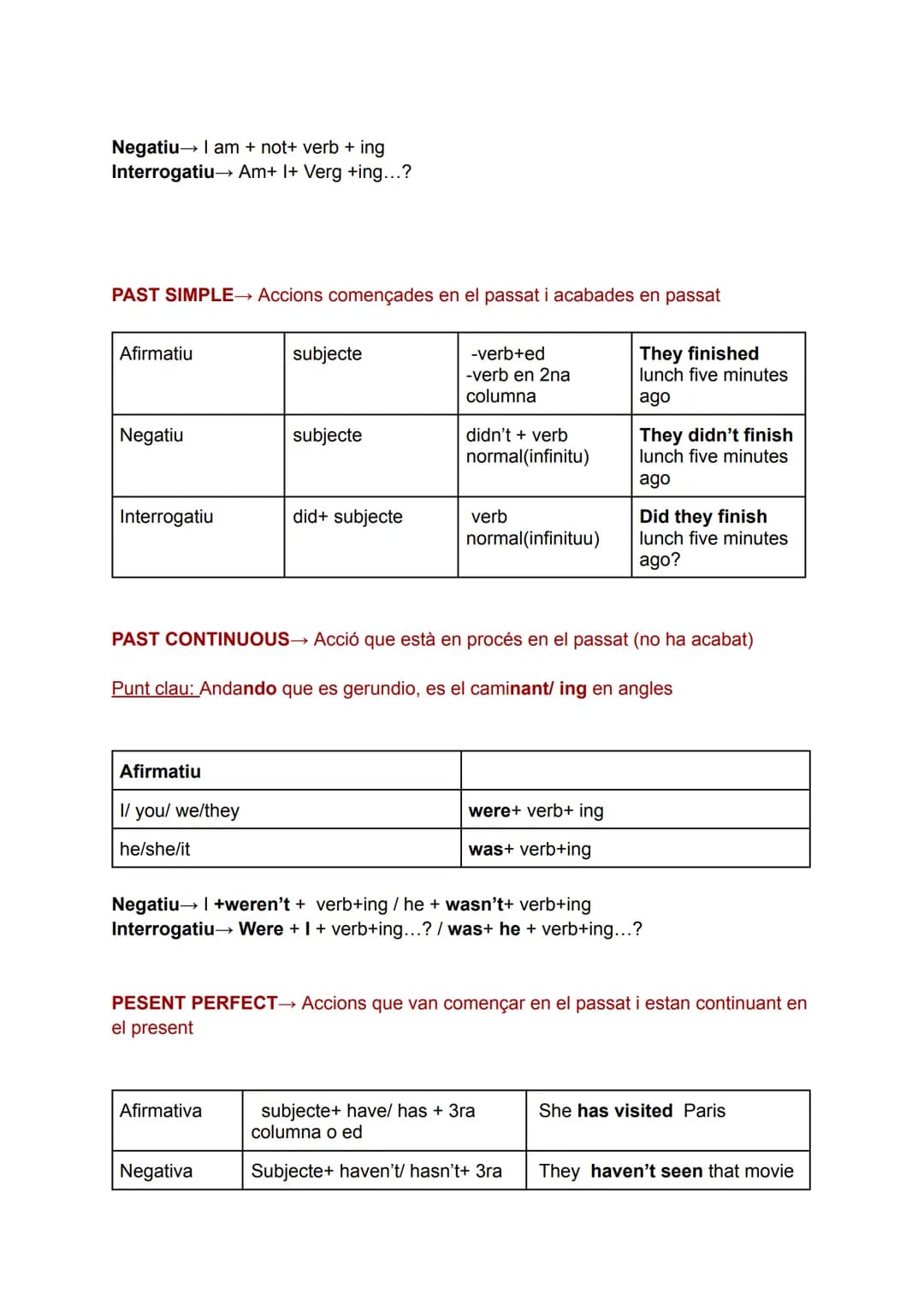
Present Simple vs Present Continuous
Aquests dos temps del present tenen funcions molt diferents i és crucial no confondre'ls.
Present Simple s'usa per a hàbits i rutines. Amb I/you/we/they uses el verb normal, però amb he/she/it has d'afegir -s/-es. "Mary goes to school every day" és un exemple perfecte d'hàbit.
Present Continuous expressa accions que passen ara mateix o plans de futur propers. La fórmula és: subjecte + am/is/are + verb-ing. "She is reading a newspaper now" indica una acció en curs.
Per formar negatives i interrogatives, recorda: does/doesn't per a tercera persona del singular en Present Simple, i do/don't per a la resta. En Present Continuous, només canvia la posició del verb to be.
Pista: Si pots afegir "now" o "at the moment" a la frase, probablement necessites Present Continuous.
3
of 4
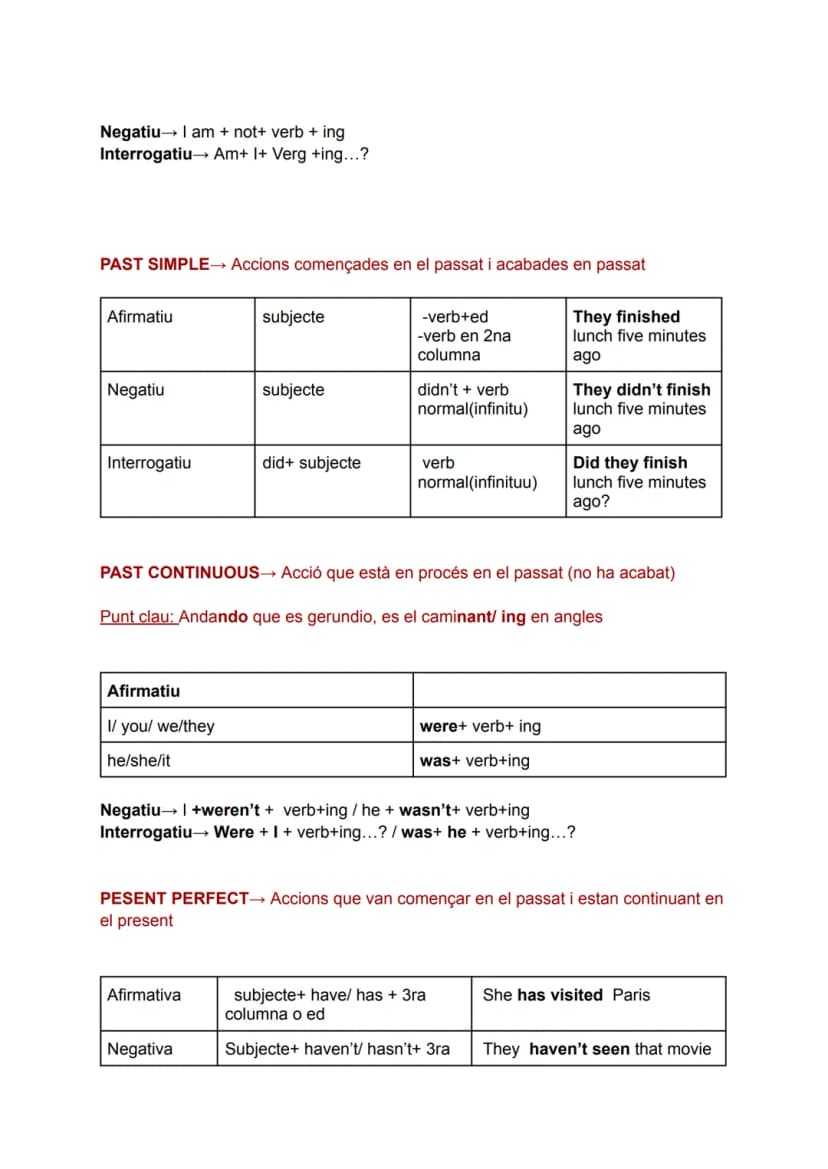
Past Simple vs Past Continuous
La diferència entre aquests temps marca si una acció va acabar completament o estava en procés.
Past Simple descriu accions que van començar i acabar en el passat. Usa verbs regulars o irregulars (segona columna). "They finished lunch five minutes ago" és un exemple clar d'acció completa.
Past Continuous mostra accions que estaven en procés en un moment del passat. S'estructura amb was/were + verb-ing. És especialment útil per descriure el context d'una altra acció.
Les negatives i interrogatives segueixen el mateix patró que el present: didn't + verb infinitiu per Past Simple, i wasn't/weren't + verb-ing per Past Continuous.
Visualitza: Past Simple és com una foto (acció completa), Past Continuous és com un vídeo (acció en procés).
4
of 4
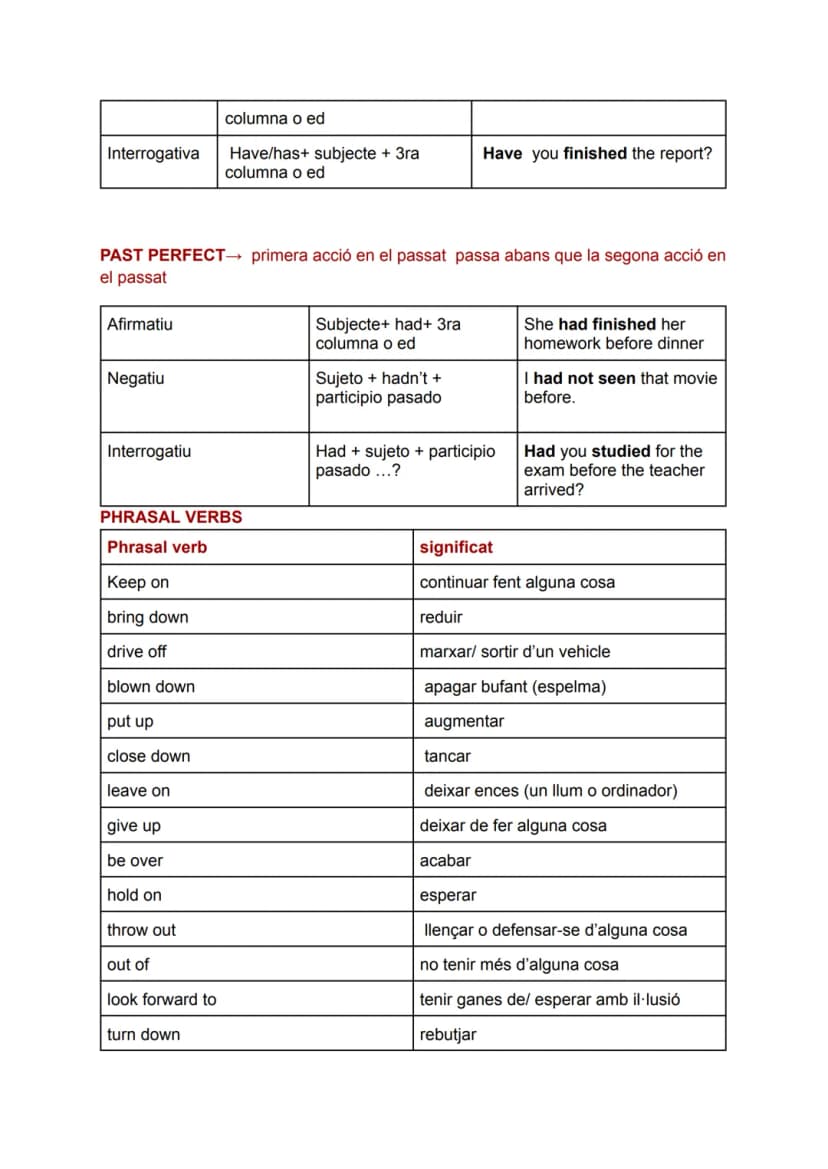
Present Perfect, Past Perfect i elements clau
Present Perfect connecta passat amb present. Usa have/has + participi passat per a accions que van començar abans però continuen sent rellevants. "She has visited Paris" implica experiència acumulada.
Past Perfect ordena accions en el passat: la primera acció usa had + participi passat. "She had finished her homework before dinner" mostra que els deures van acabar primer que el sopar.
Els phrasal verbs són combinacions de verb + preposició amb significats específics. "Keep on" (continuar), "give up" i "look forward to" (tenir ganes de) són alguns dels més útils per recordar.
Els adverbis de temps com just, already, yet, still, ever i never són essencials amb Present Perfect. "For" indica durada, "since" marca el punt d'inici.
Consell final: Practica aquests temps amb situacions de la teva vida quotidiana per memoritzar-los millor.
We thought you’d never ask...
What is the Knowunity AI companion?
Our AI companion is specifically built for the needs of students. Based on the millions of content pieces we have on the platform we can provide truly meaningful and relevant answers to students. But its not only about answers, the companion is even more about guiding students through their daily learning challenges, with personalised study plans, quizzes or content pieces in the chat and 100% personalisation based on the students skills and developments.
Where can I download the Knowunity app?
You can download the app in the Google Play Store and in the Apple App Store.
Is Knowunity really free of charge?
That's right! Enjoy free access to study content, connect with fellow students, and get instant help – all at your fingertips.
Similar Content
 Anglais
Most popular content: Past Participle
6InglésTiempos Verbales Inglés
Resumen de tiempos verbales de inglés
4° ESO4,299143
InglésPresent perfect
PRESENT PERFECT
1° ESO1,24929
InglésInglés Segundo Bachillerato
Faltan cosas pero espero que os ayude
2° Bach78923
InglésPast Perfect Simple
Past Perfect Simple
1° Bach4,285106
InglésModals verbs
Past simple, past continuous, past perfect simple, past perfect continuous, used to, would
4° ESO1,78611
InglésVerbos irregulares - Past Participle
Una lista de verbos irregulares comunes en inglés y sus formas pasadas y participios.
1° ESO3453
Most popular content in Anglès
1Most popular content
9I
Inglésirregular verbs quiz
Domina el idioma inglés de manera sencilla y divertida con estos flashcards diseñados especialmente para estudiantes de sexto grado.
6º primaria2,8981
R
 Geografía e Historia
roma
a estudiar Roma!!
1° ESO2,3122
G
Geografía e HistoriaGrecia: Inicio de la democracia
Más o menos las preguntas que me pusieron a mí en el examen
1° ESO2,3622
D
InglésDominando la gramática inglesa: Flashcards desafiantes
Mejora tus habilidades gramaticales en inglés con estos flashcards desafiantes diseñados para estudiantes de grado 11. ¡Prepárate para dominar la gramática inglesa de manera divertida y efectiva!
3° ESO2,2450
M
Geografía e HistoriaMesopotamia y Egipto
Contenidos sobre la civilización mesopotámica y egipcia
1° ESO3,9381
O
 Lengua Castellana y Literatura
OBRAS Y AUTORES II
Quiz donde tendrás que relacionar las siguientes obras con sus respectivos autores: edición Romanticismo.
4° ESO3,3610
I
InglésIngles para repasar
quiz de ingles para entrar a clase preparados
2° ESO2,6290
F
 Filosofía
filosofía
repaso filosofía "el arje , la metafísica y la crítica de Nietszche a platon"
1° Bach2,8421
I
InglésIrregular verbs
Aprende nuevas palabras y expande tu vocabulario en inglés con esta colección de tarjetas de estudio interactivas.
3° ESO1,7442
Can't find what you're looking for? Explore other subjects.
Students love us — and so will you.
4.6/5App Store
4.7/5Google Play
The app is very easy to use and well designed. I have found everything I was looking for so far and have been able to learn a lot from the presentations! I will definitely use the app for a class assignment! And of course it also helps a lot as an inspiration.
Stefan SiOS user
This app is really great. There are so many study notes and help [...]. My problem subject is French, for example, and the app has so many options for help. Thanks to this app, I have improved my French. I would recommend it to anyone.
Samantha KlichAndroid user
Wow, I am really amazed. I just tried the app because I've seen it advertised many times and was absolutely stunned. This app is THE HELP you want for school and above all, it offers so many things, such as workouts and fact sheets, which have been VERY helpful to me personally.
AnnaiOS user
Anglès280 views·Updated Jun 27, 2026·4 pagesApunts de gramàtica anglesa
L
Lia@lia_88
Dominar els temps verbals en anglès pot semblar complicat, però amb una mica de pràctica ho tindràs controlat! Aquest resum t'explica els temps més importants i les seves diferències de manera clara i senzilla.
1
of 4
Sign up to see the content. It's free!
- Access to all documents
- Improve your grades
- Join milions of students
Expressions per a hàbits passats
Would, used to, be used to i get used to són quatre expressions que sovint es confonen, però cada una té el seu ús específic.
Would només serveix per a accions repetides en el passat, mai per a estats. La fórmula és senzilla: subjecte + would + verb. Per exemple: "I would go to the park every weekend" (Anava al parc cada cap de setmana).
Used to és més versàtil perquè funciona tant per a accions com per a estats passats. S'estructura com: subjecte + used to + infinitiu. "I used to collect stamps" significa que abans col·leccionava segells però ja no ho faig.
Truc: Si pots substituir "used to" per "solía" en castellà, probablement l'estàs usant correctament.
Be used to expressa que ja estàs acostumat a alguna cosa (present), mentre que get used to indica el procés d'acostumar-se. Tots dos van seguits de gerundi .
2
of 4Sign up to see the content. It's free!
- Access to all documents
- Improve your grades
- Join milions of students
Present Simple vs Present Continuous
Aquests dos temps del present tenen funcions molt diferents i és crucial no confondre'ls.
Present Simple s'usa per a hàbits i rutines. Amb I/you/we/they uses el verb normal, però amb he/she/it has d'afegir -s/-es. "Mary goes to school every day" és un exemple perfecte d'hàbit.
Present Continuous expressa accions que passen ara mateix o plans de futur propers. La fórmula és: subjecte + am/is/are + verb-ing. "She is reading a newspaper now" indica una acció en curs.
Per formar negatives i interrogatives, recorda: does/doesn't per a tercera persona del singular en Present Simple, i do/don't per a la resta. En Present Continuous, només canvia la posició del verb to be.
Pista: Si pots afegir "now" o "at the moment" a la frase, probablement necessites Present Continuous.
3
of 4Sign up to see the content. It's free!
- Access to all documents
- Improve your grades
- Join milions of students
Past Simple vs Past Continuous
La diferència entre aquests temps marca si una acció va acabar completament o estava en procés.
Past Simple descriu accions que van començar i acabar en el passat. Usa verbs regulars o irregulars (segona columna). "They finished lunch five minutes ago" és un exemple clar d'acció completa.
Past Continuous mostra accions que estaven en procés en un moment del passat. S'estructura amb was/were + verb-ing. És especialment útil per descriure el context d'una altra acció.
Les negatives i interrogatives segueixen el mateix patró que el present: didn't + verb infinitiu per Past Simple, i wasn't/weren't + verb-ing per Past Continuous.
Visualitza: Past Simple és com una foto (acció completa), Past Continuous és com un vídeo (acció en procés).
4
of 4Sign up to see the content. It's free!
- Access to all documents
- Improve your grades
- Join milions of students
Present Perfect, Past Perfect i elements clau
Present Perfect connecta passat amb present. Usa have/has + participi passat per a accions que van començar abans però continuen sent rellevants. "She has visited Paris" implica experiència acumulada.
Past Perfect ordena accions en el passat: la primera acció usa had + participi passat. "She had finished her homework before dinner" mostra que els deures van acabar primer que el sopar.
Els phrasal verbs són combinacions de verb + preposició amb significats específics. "Keep on" (continuar), "give up" i "look forward to" (tenir ganes de) són alguns dels més útils per recordar.
Els adverbis de temps com just, already, yet, still, ever i never són essencials amb Present Perfect. "For" indica durada, "since" marca el punt d'inici.
Consell final: Practica aquests temps amb situacions de la teva vida quotidiana per memoritzar-los millor.
We thought you’d never ask...
What is the Knowunity AI companion?
Our AI companion is specifically built for the needs of students. Based on the millions of content pieces we have on the platform we can provide truly meaningful and relevant answers to students. But its not only about answers, the companion is even more about guiding students through their daily learning challenges, with personalised study plans, quizzes or content pieces in the chat and 100% personalisation based on the students skills and developments.
Where can I download the Knowunity app?
You can download the app in the Google Play Store and in the Apple App Store.
Is Knowunity really free of charge?
That's right! Enjoy free access to study content, connect with fellow students, and get instant help – all at your fingertips.
Similar Content
Most popular content: Past Participle
6InglésTiempos Verbales Inglés
Resumen de tiempos verbales de inglés
4° ESO4,299143
InglésPresent perfect
PRESENT PERFECT
1° ESO1,24929
InglésInglés Segundo Bachillerato
Faltan cosas pero espero que os ayude
2° Bach78923
InglésPast Perfect Simple
Past Perfect Simple
1° Bach4,285106
InglésModals verbs
Past simple, past continuous, past perfect simple, past perfect continuous, used to, would
4° ESO1,78611
InglésVerbos irregulares - Past Participle
Una lista de verbos irregulares comunes en inglés y sus formas pasadas y participios.
1° ESO3453
Most popular content in Anglès
1Most popular content
9I
Inglésirregular verbs quiz
Domina el idioma inglés de manera sencilla y divertida con estos flashcards diseñados especialmente para estudiantes de sexto grado.
6º primaria2,8981
R
Geografía e Historiaroma
a estudiar Roma!!
1° ESO2,3122
G
Geografía e HistoriaGrecia: Inicio de la democracia
Más o menos las preguntas que me pusieron a mí en el examen
1° ESO2,3622
D
InglésDominando la gramática inglesa: Flashcards desafiantes
Mejora tus habilidades gramaticales en inglés con estos flashcards desafiantes diseñados para estudiantes de grado 11. ¡Prepárate para dominar la gramática inglesa de manera divertida y efectiva!
3° ESO2,2450
M
Geografía e HistoriaMesopotamia y Egipto
Contenidos sobre la civilización mesopotámica y egipcia
1° ESO3,9381
O
Lengua Castellana y LiteraturaOBRAS Y AUTORES II
Quiz donde tendrás que relacionar las siguientes obras con sus respectivos autores: edición Romanticismo.
4° ESO3,3610
I
InglésIngles para repasar
quiz de ingles para entrar a clase preparados
2° ESO2,6290
F
Filosofíafilosofía
repaso filosofía "el arje , la metafísica y la crítica de Nietszche a platon"
1° Bach2,8421
I
InglésIrregular verbs
Aprende nuevas palabras y expande tu vocabulario en inglés con esta colección de tarjetas de estudio interactivas.
3° ESO1,7442
Can't find what you're looking for? Explore other subjects.
Students love us — and so will you.
4.6/5App Store
4.7/5Google Play
The app is very easy to use and well designed. I have found everything I was looking for so far and have been able to learn a lot from the presentations! I will definitely use the app for a class assignment! And of course it also helps a lot as an inspiration.
Stefan SiOS user
This app is really great. There are so many study notes and help [...]. My problem subject is French, for example, and the app has so many options for help. Thanks to this app, I have improved my French. I would recommend it to anyone.
Samantha KlichAndroid user
Wow, I am really amazed. I just tried the app because I've seen it advertised many times and was absolutely stunned. This app is THE HELP you want for school and above all, it offers so many things, such as workouts and fact sheets, which have been VERY helpful to me personally.
AnnaiOS user