
英語の基本となるbe動詞と一般動詞の使い方から、進行形、未来表現、助動詞まで、中学英語の核となる文法をマスターしよう。これらの知識があれば、英語の文章の8割は理解できるようになるよ。
 英語231 views·Updated Jun 28, 2026·9 pages
英語学習まとめ完全ガイド
あき@aki._.study53
1 / 9
1
of 9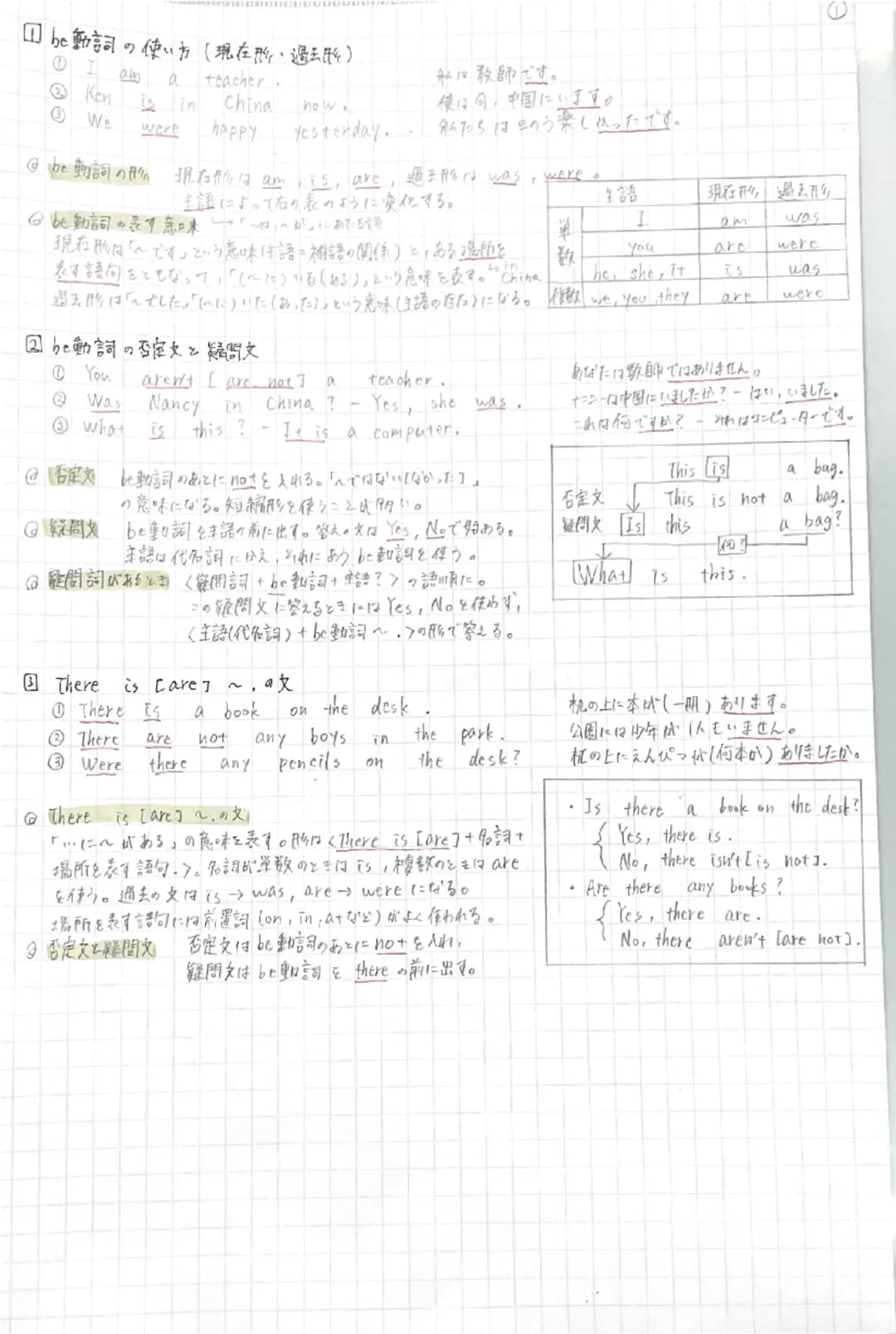
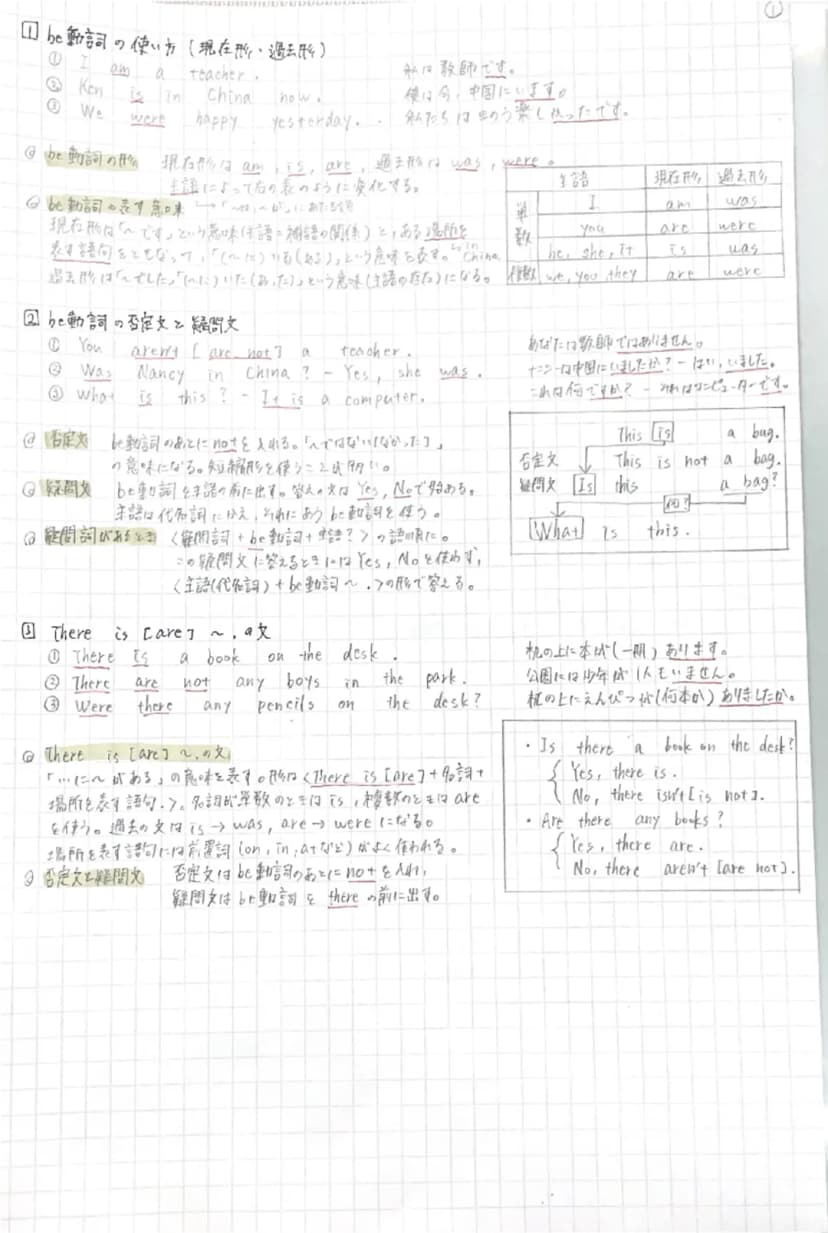
be動詞とThere is/areの基本
be動詞って実は超シンプル!主語によって am/are/is(現在)、was/were(過去)に変化するだけなんだ。「私は先生です」なら "I am a teacher"、「昨日楽しかった」なら "We were happy yesterday" って感じ。
否定文は be動詞の後に not を付けるだけ。疑問文は be動詞を前に出すだけで完成!答える時は "Yes, I am" や "No, she wasn't" みたいに代名詞を使おう。
There is/are構文は「〜がある・いる」を表す便利な表現。単数なら "There is"、複数なら "There are" を使う。場所を表す時は on(〜の上)、in(〜の中)などの前置詞とセットで覚えよう。
ポイント: be動詞は「イコール関係」を作る接着剤みたいなもの!主語=補語の関係を頭に入れておこう。
2
of 9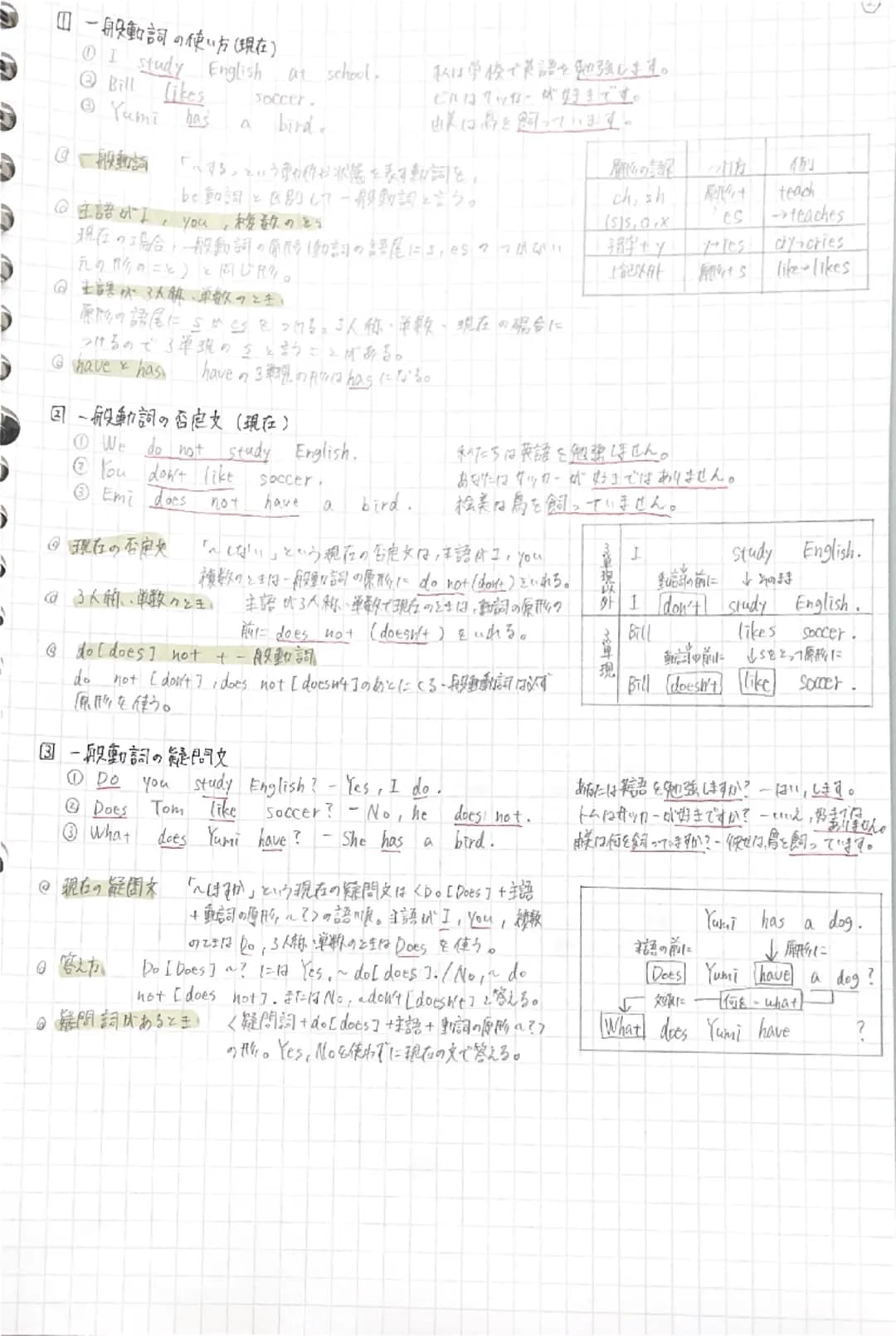
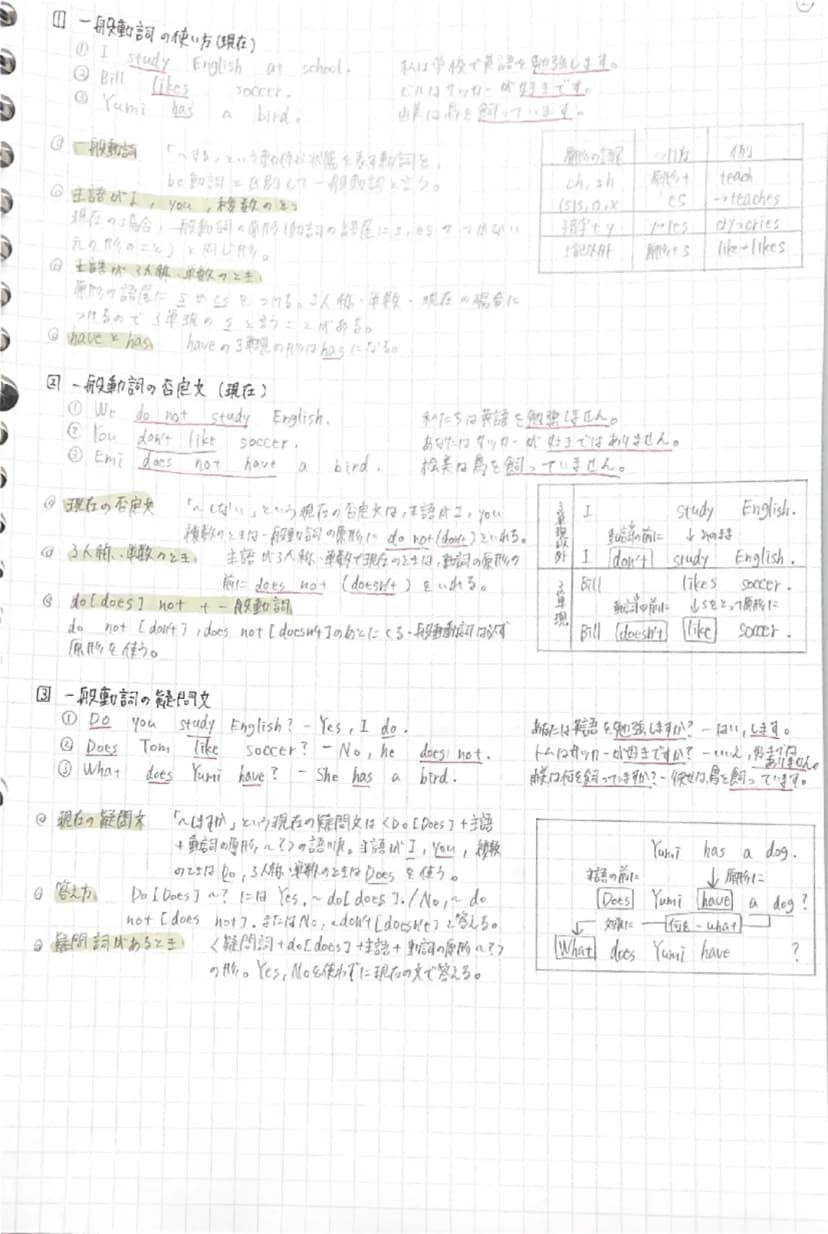
一般動詞の現在形
一般動詞は「動作」を表す動詞で、be動詞以外のほぼ全ての動詞のこと。現在形では、主語が 三人称単数(he/she/it)の時だけ動詞に s/es を付けるルールがある。
動詞の語尾変化にはコツがあるよ。普通は s を付けるだけだけど、語尾が s, sh, ch, x, o なら es を付ける。study → studies みたいに y を i に変える場合もあるから注意!
否定文と疑問文では do/does が登場。三人称単数には does、それ以外には do を使う。大事なのは、do/does の後の動詞は必ず原形になること!
覚えておこう: 三人称単数現在の s(三単現のs)は英語の基本ルール。慣れれば自然に付けられるようになるよ。
3
of 9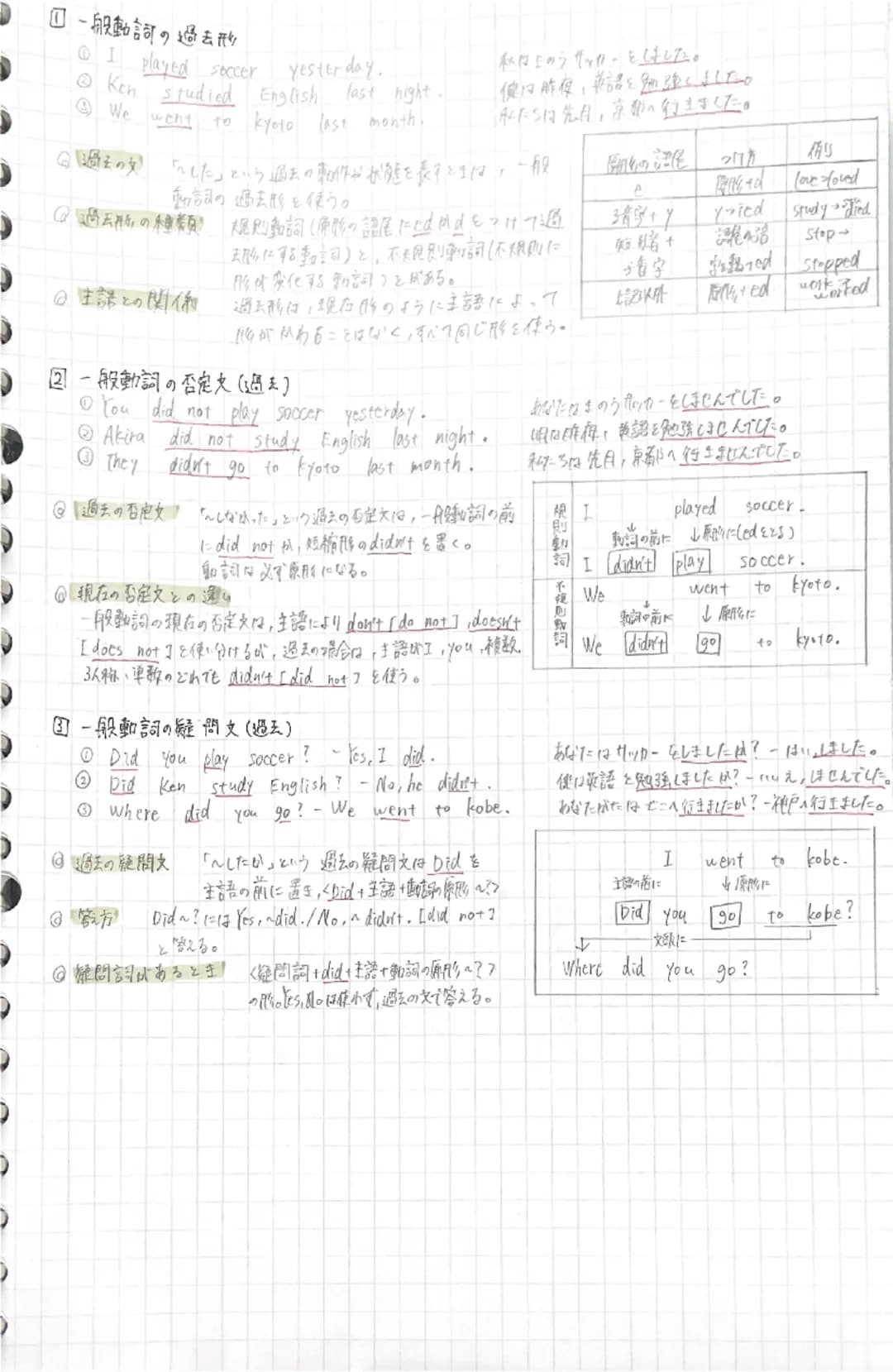
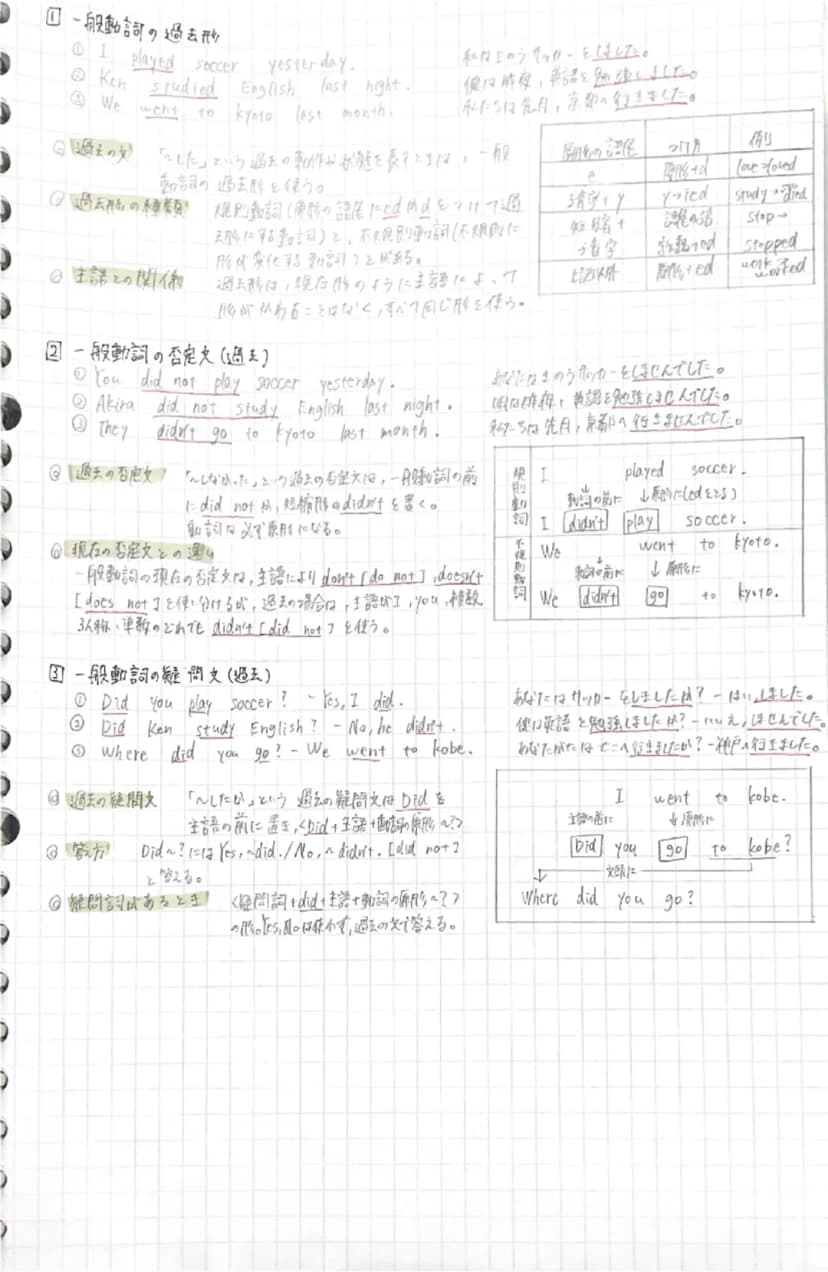
一般動詞の過去形
過去の動作を表すには過去形を使う。規則動詞は語尾に ed を付けるだけ。でも不規則動詞は go → went、have → had みたいに形がガラッと変わるから個別に覚える必要がある。
ed の付け方にもルールがあるよ。普通はそのまま ed だけど、e で終わる語は d だけ付ける。stop → stopped みたいに子音を重ねる場合もある。
過去形の否定文・疑問文では didn't/did を使う。現在形と違って、主語が何でも did で統一されるから楽!そして動詞は必ず原形に戻すことを忘れずに。
コツ: 過去形は主語に関係なく形が同じ。I played も He played も同じ形だから、実は現在形より簡単なんだ!
4
of 9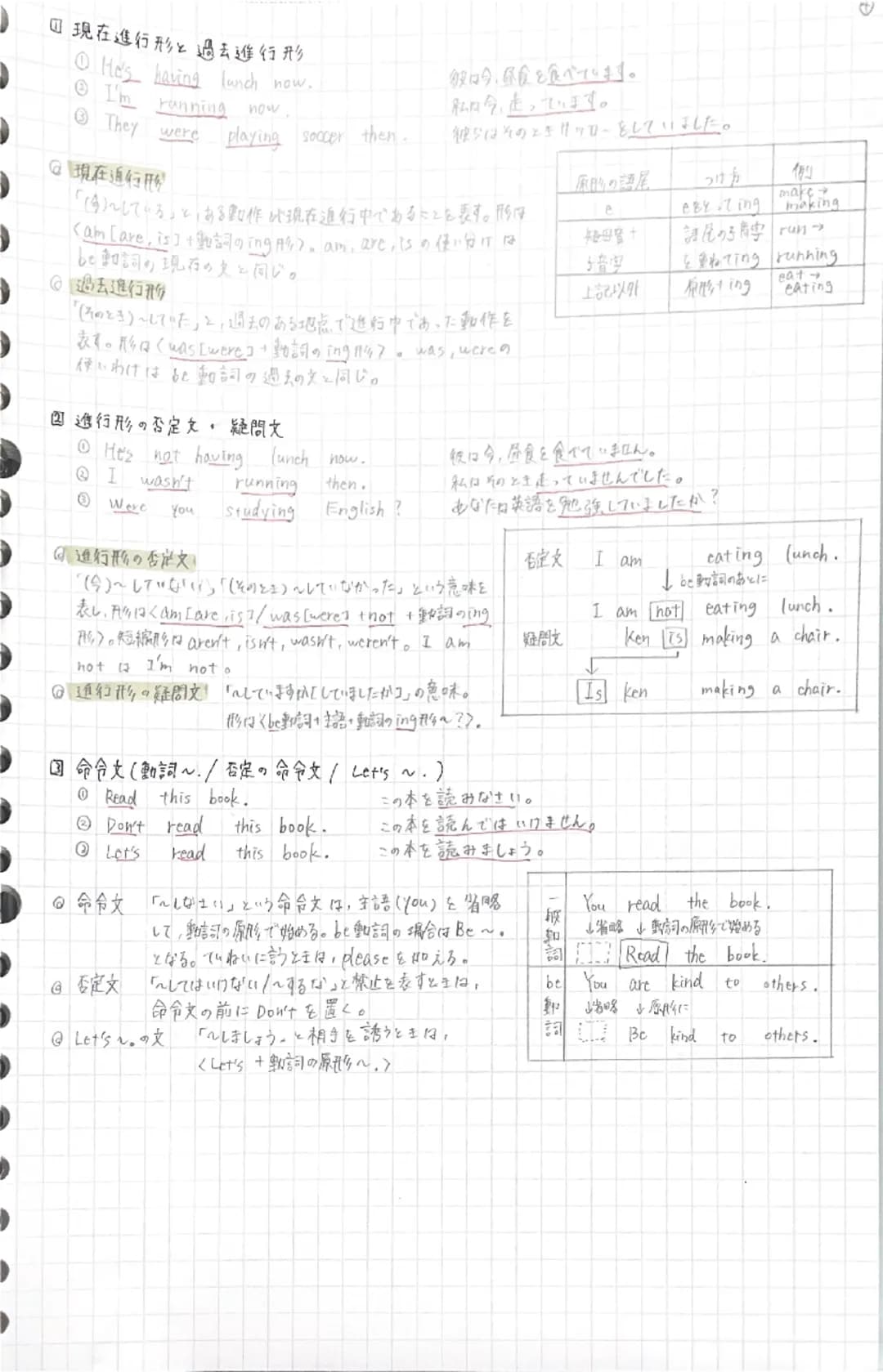
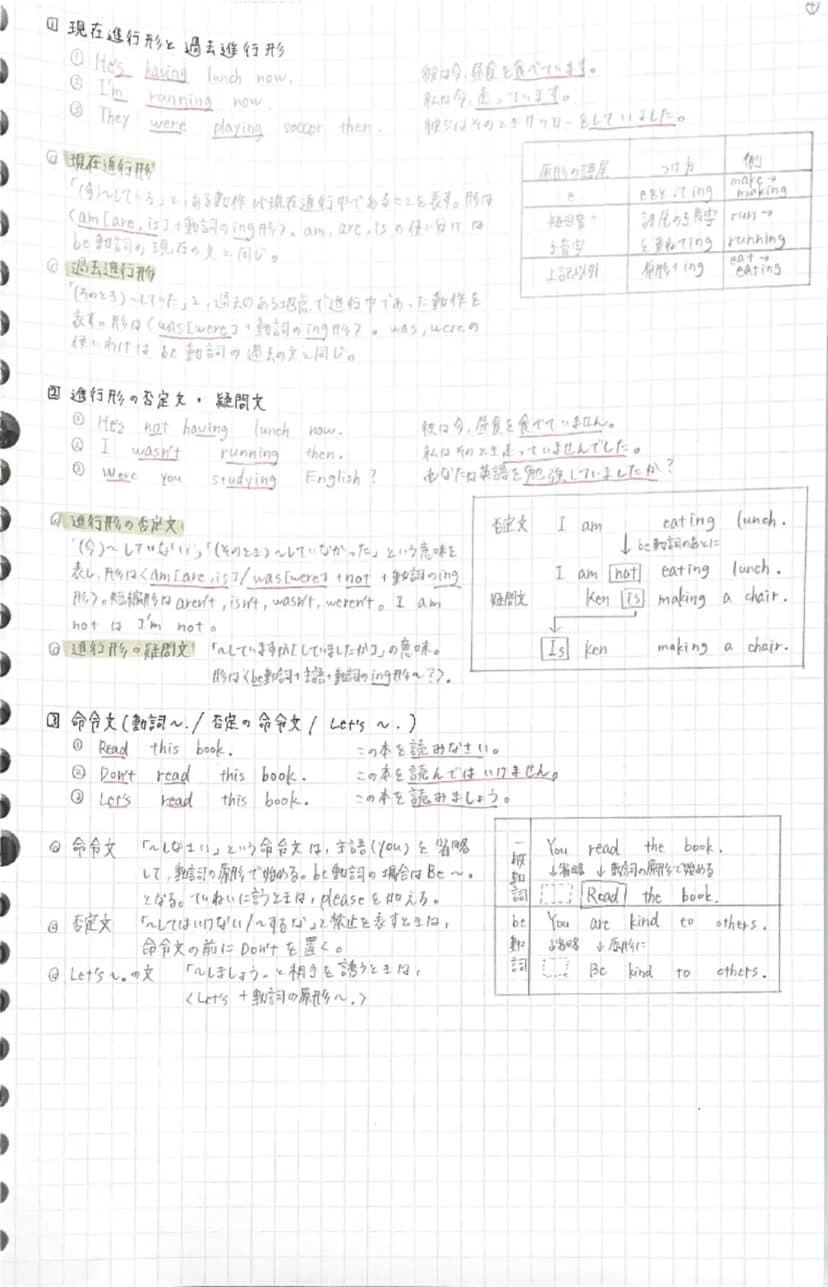
進行形と命令文
進行形は「〜している」という進行中の動作を表す。現在進行形は am/are/is + 動詞のing形、過去進行形は was/were + 動詞のing形で作る。
動詞のing形を作る時は、普通はそのまま ing を付けるけど、e で終わる語は e を取って ing、run みたいな短い語は最後の子音を重ねて ing を付ける。
命令文は相手に何かを指示する時の表現。主語の You を省略して動詞の原形で始める。禁止は Don't を前に付けて、誘う時は Let's を使おう。
使い分けポイント: 進行形は「今まさに〜している」状況。命令文は相手との距離感を考えて、please を付けると丁寧になるよ。
5
of 9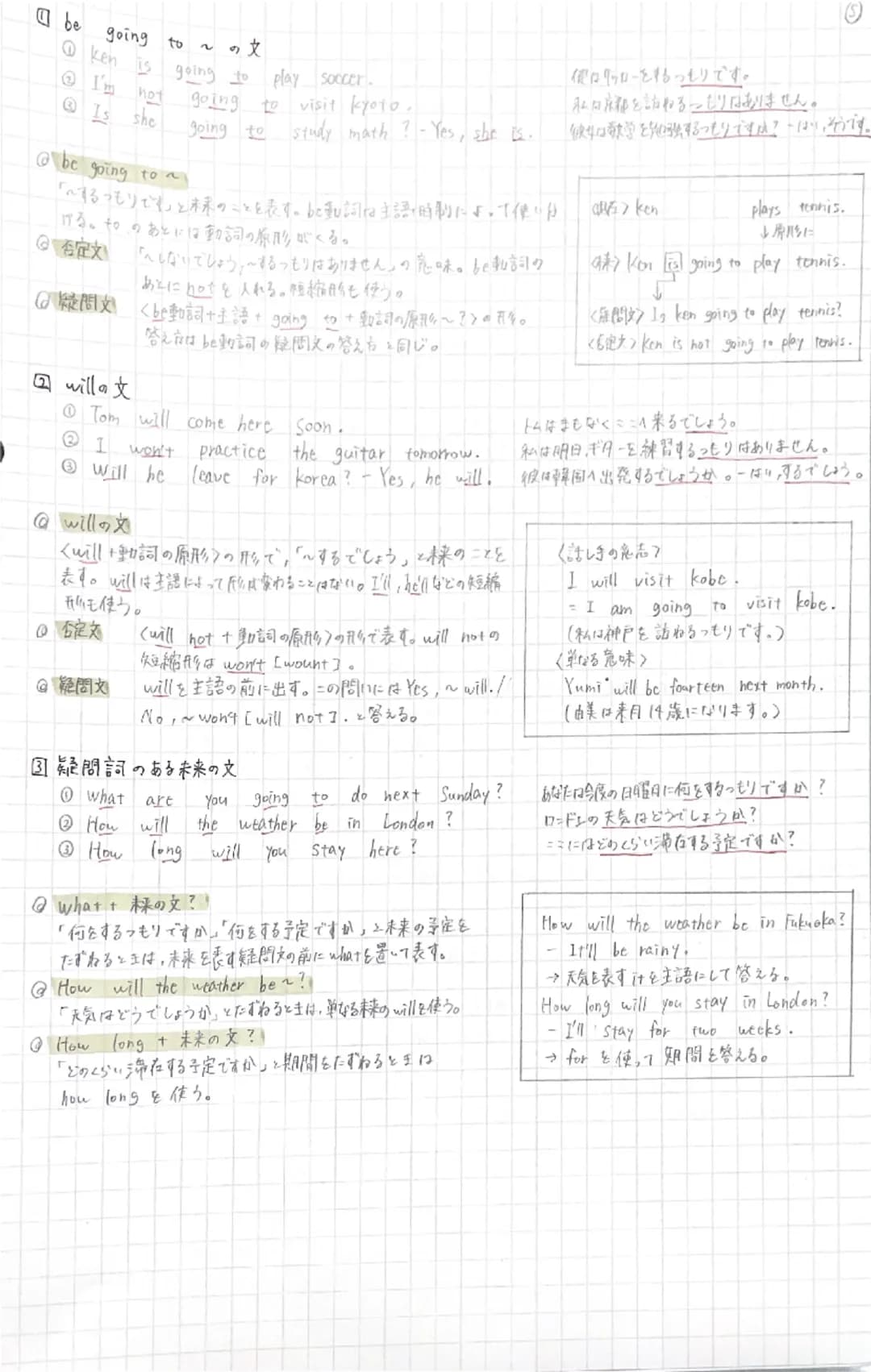
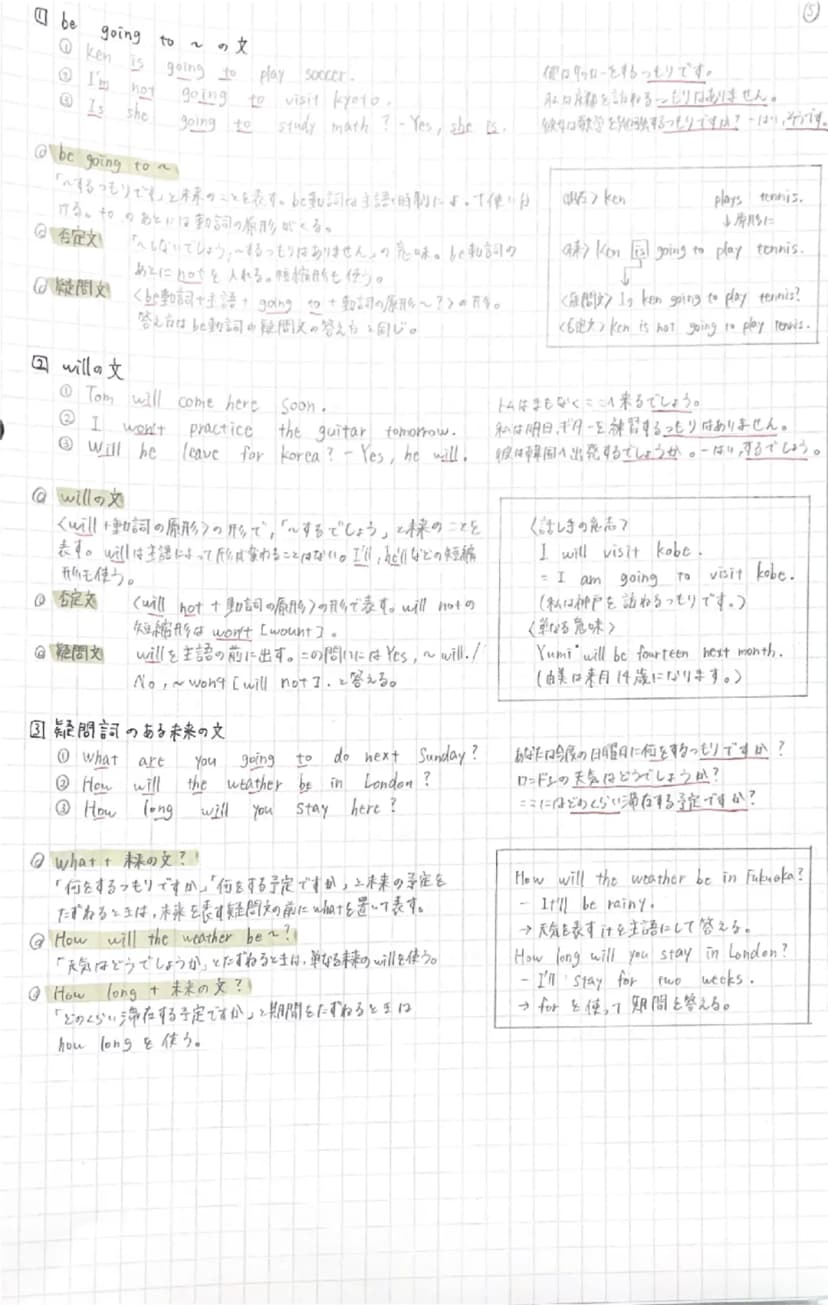
未来を表す表現
未来のことを表すには be going to と will の2つの方法がある。どちらも「〜するつもり・〜するでしょう」という意味だけど、使い分けがあるんだ。
be going to は計画的な未来や意図を表す時に使う。"I'm going to visit Kyoto"(京都を訪れるつもり)みたいに、すでに決めていることに使う。
will は単純な未来予測や、その場で決めたことに使う。天気予報や年齢の変化など、自然な変化には will がぴったり。will not の短縮形 won't もよく使うから覚えておこう。
使い分けのコツ: 計画済みなら be going to、予測や突然の決定なら will。迷った時はどちらでも通じるから気楽に使ってみよう!
6
of 9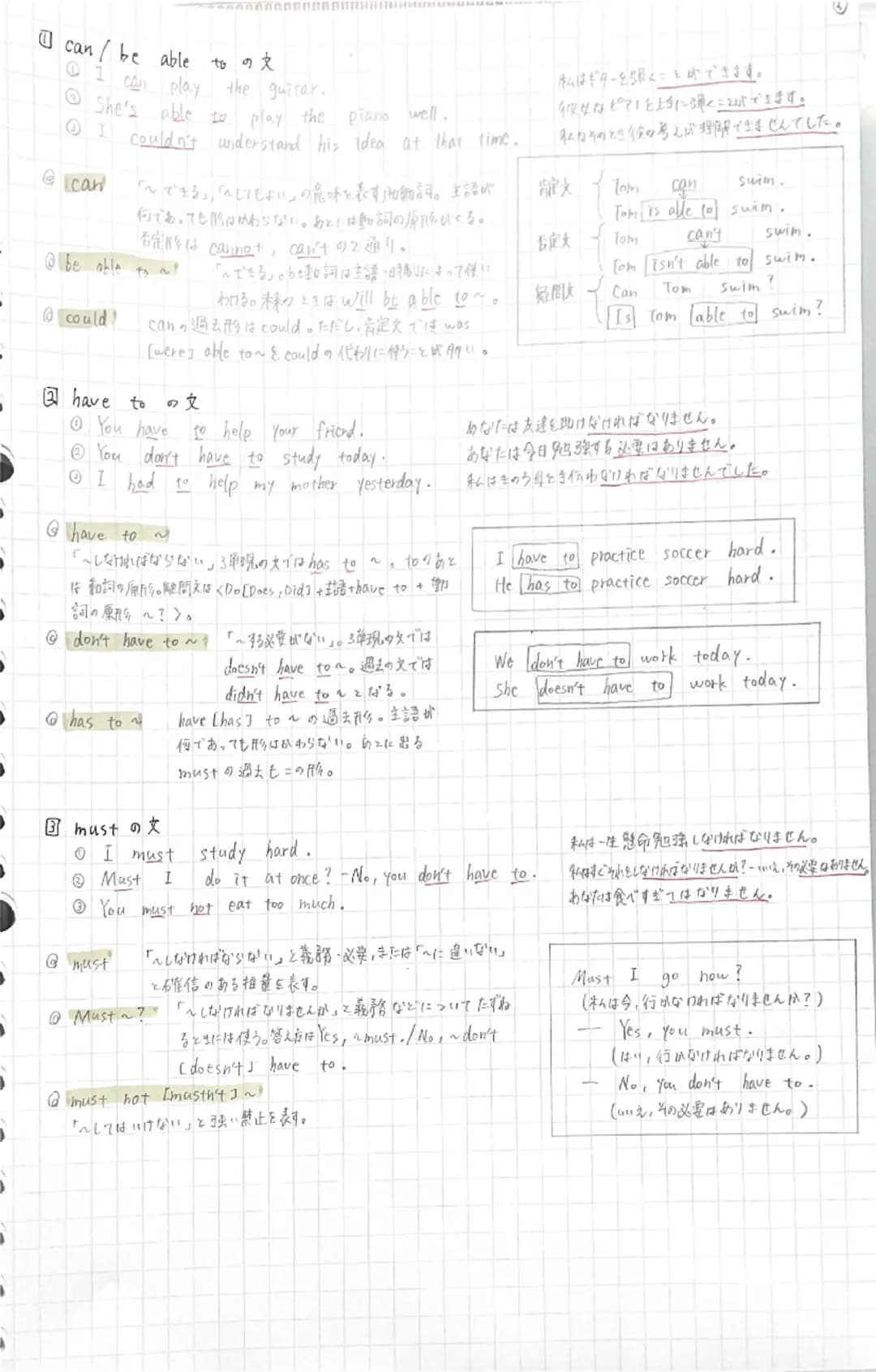
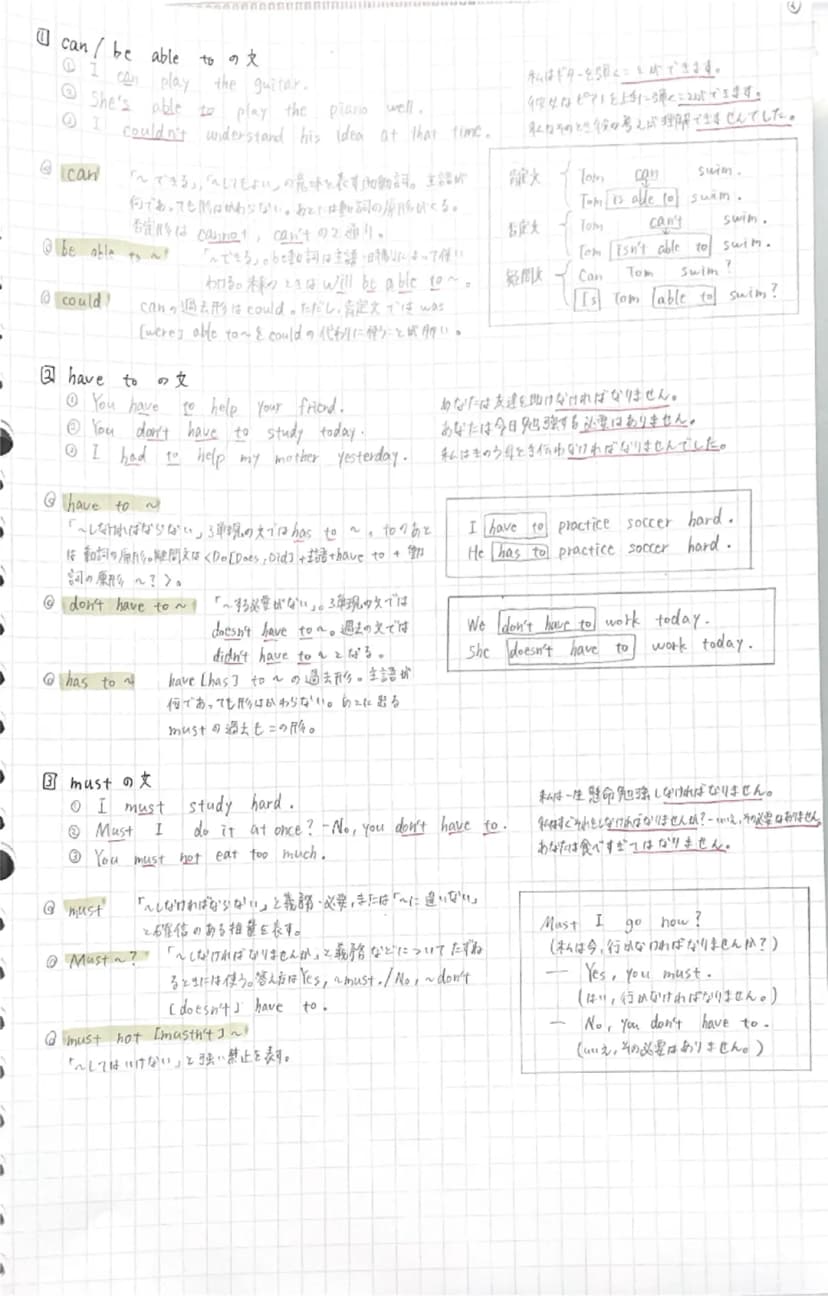
助動詞(can, have to, must)
助動詞は動詞に特別な意味を加える便利な語。can は「〜できる・〜してもよい」、have to は「〜しなければならない」、must は「〜に違いない・〜してはいけない」を表す。
can の過去形は could だけど、肯定文では was/were able to をよく使う。have to の三人称単数は has to になることに注意!
must と have to はどちらも義務を表すけど、疑問文への答え方が違う。"Must I...?" に対する答えは "No, you don't have to"(する必要はない)が正解。
重要な違い: don't have to は「する必要がない」、must not は「してはいけない」。意味が全然違うから気をつけよう!
7
of 9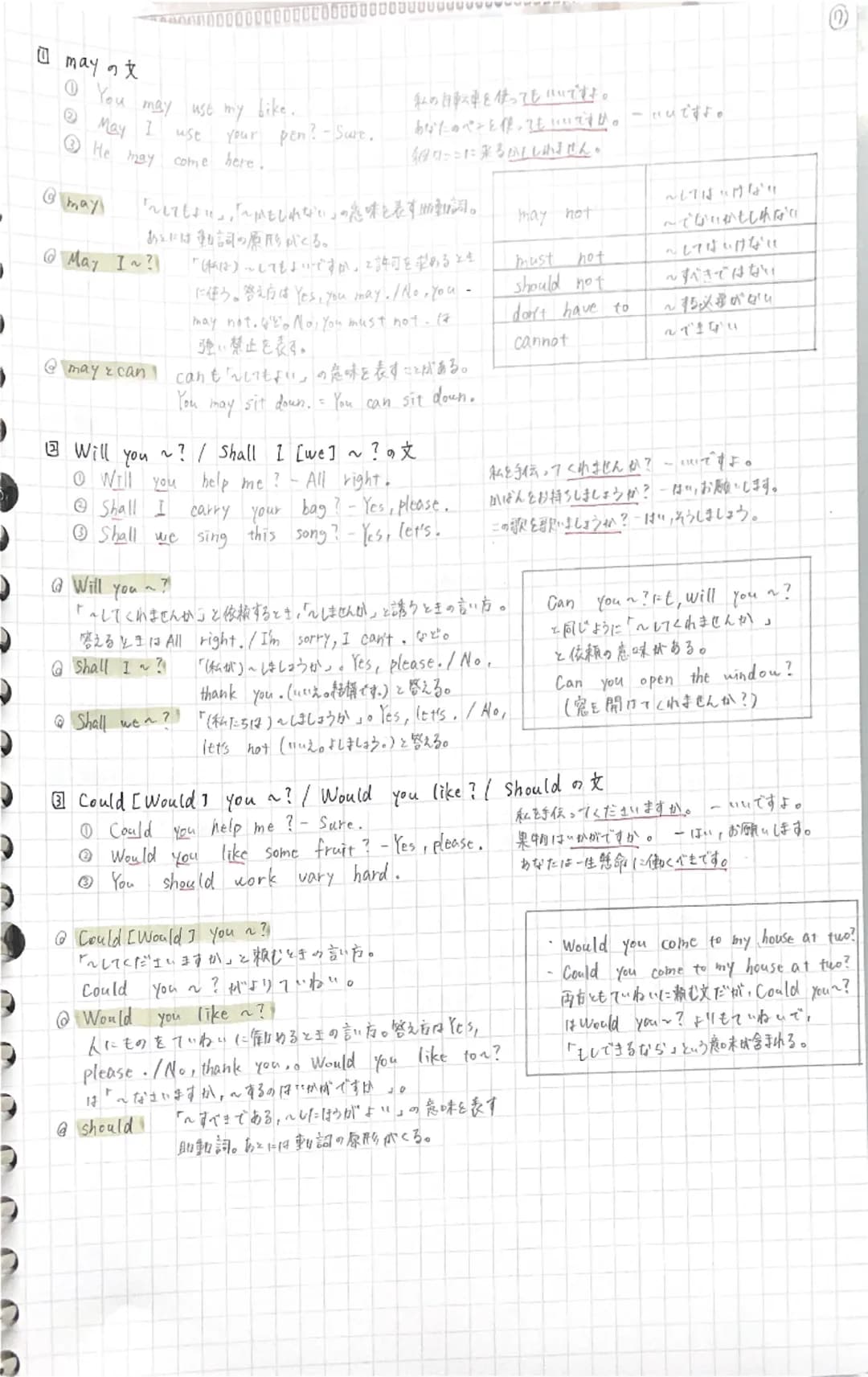
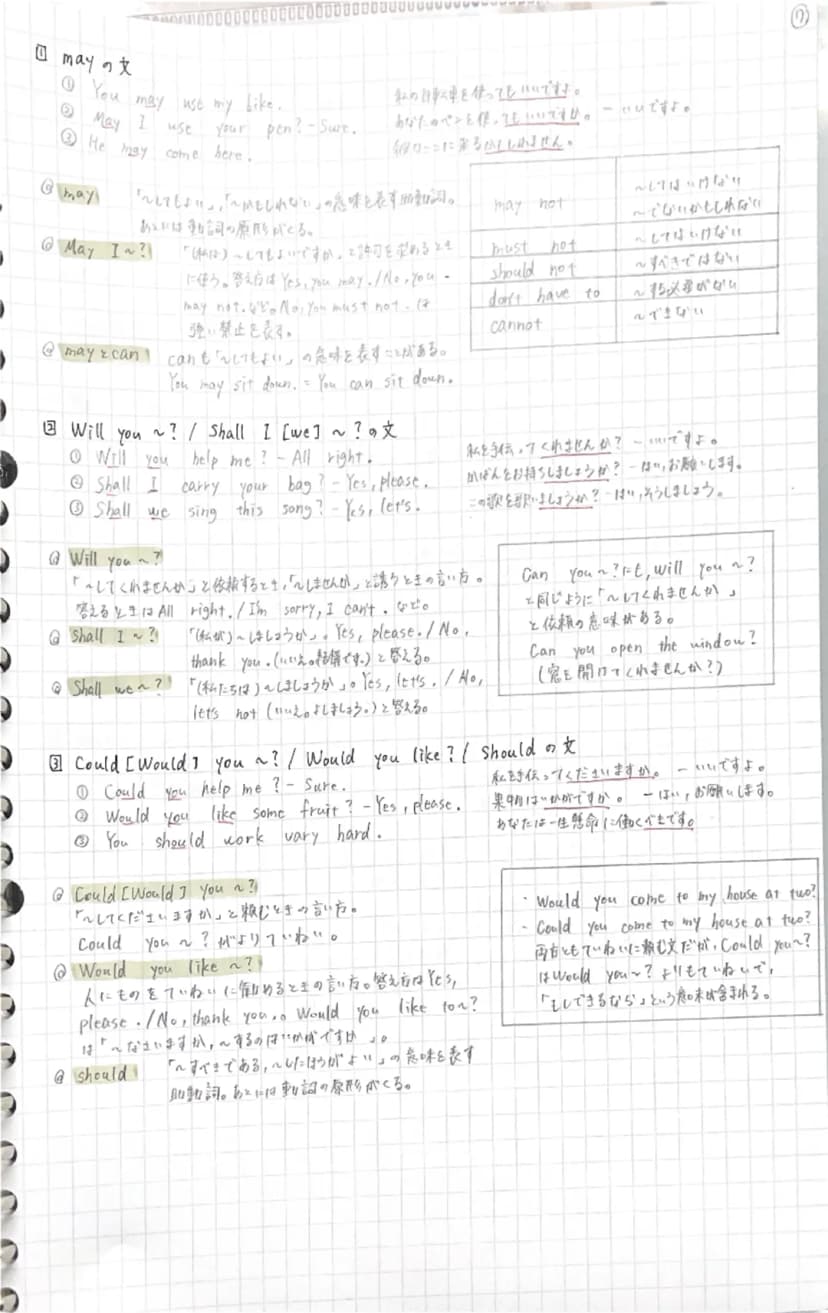
助動詞(may, will, would, should)
may は「〜かもしれない・〜してもよい」の2つの意味がある。推量と許可の両方に使える便利な助動詞だ。
Will you...? は「〜してくれませんか?」と依頼する時の表現。Shall I/we...? は「私が〜しましょうか?・私たちは〜しましょうか?」と提案する時に使う。
Could/Would you...? はより丁寧な依頼表現。Would you like...? は相手に何かを勧める時の決まり文句。should は「〜すべきだ・〜した方がいい」というアドバイスを表す。
丁寧度の順番: Can you < Will you < Could you < Would you の順で丁寧になる。場面に応じて使い分けよう!
8
of 9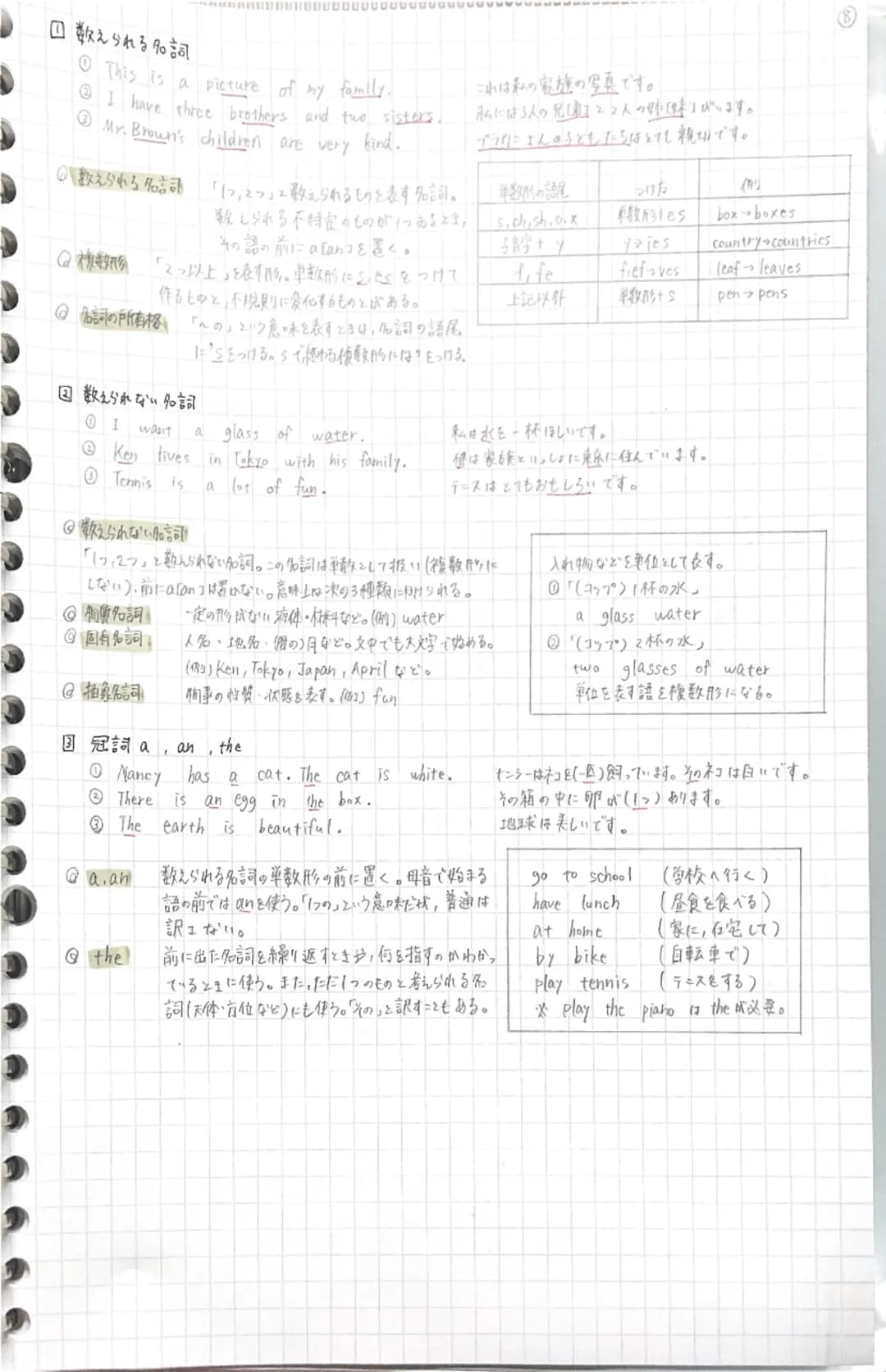
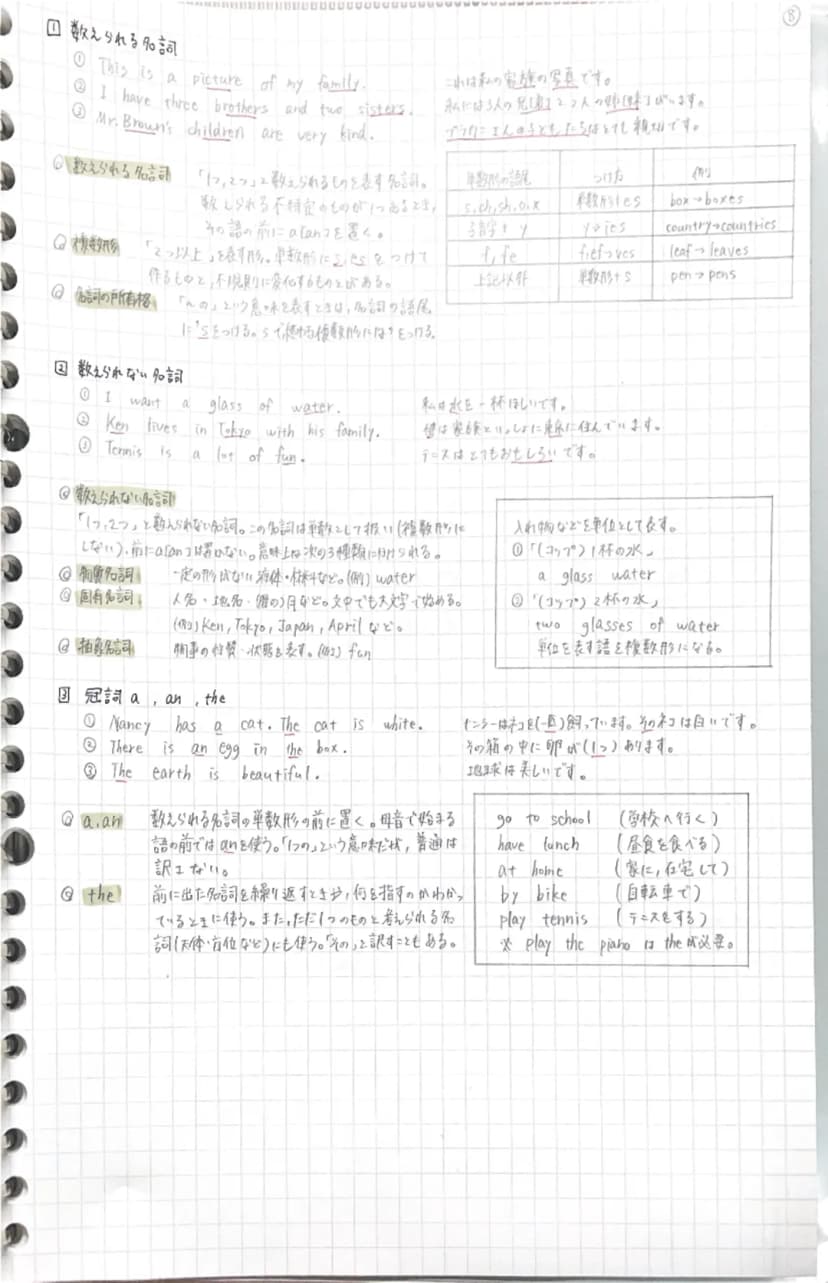
名詞と冠詞
名詞には数えられる名詞と数えられない名詞がある。数えられる名詞は1個、2個と数えられるもので、単数の時は a/an を付ける。
複数形の作り方は基本的に s を付けるだけだけど、語尾によって変化がある。box → boxes、country → countries みたいに例外も多いから個別に覚えよう。
冠詞の使い分けも大切。a/an は「1つの」、the は「その・例の」という特定のものを指す。母音で始まる語には an を使うことを忘れずに!
覚えておこう: 数えられない名詞(water, music など)には a/an を付けない。「コップ1杯の水」なら "a glass of water" と表現しよう。
9
of 9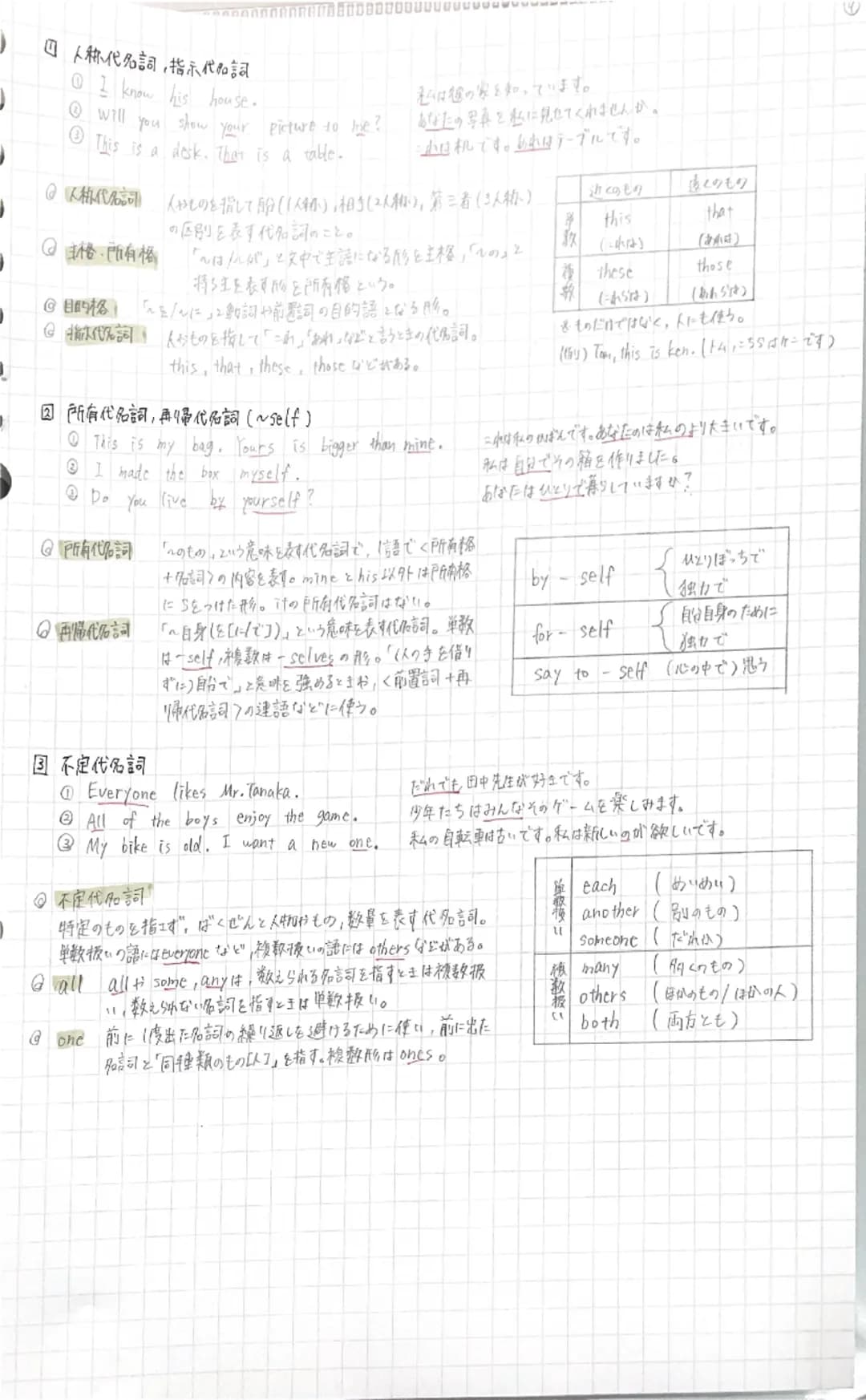
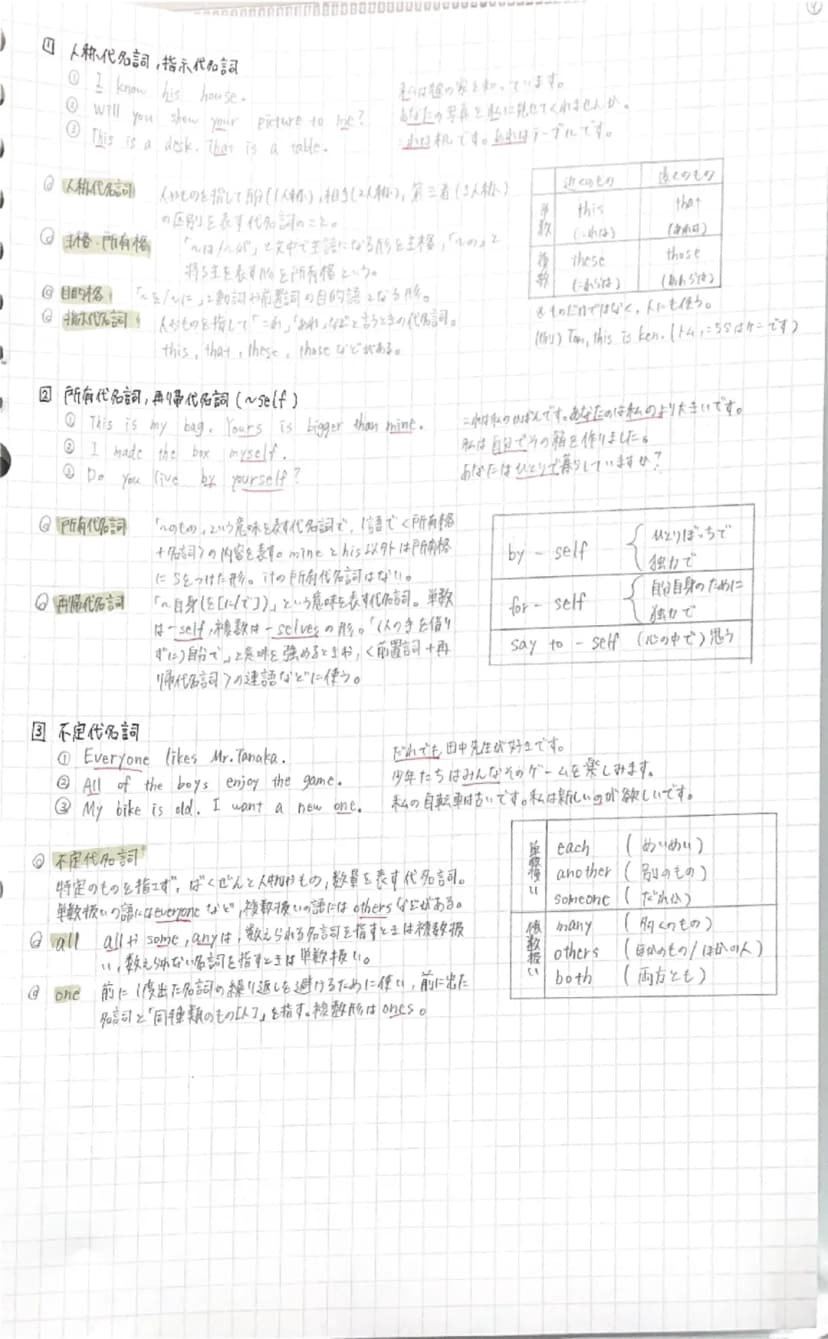
代名詞の種類と使い方
人称代名詞は主格(I, you, he など)、所有格(my, your, his など)、目的格(me, you, him など)の3つの形がある。文中の役割によって使い分けよう。
指示代名詞(this, that, these, those)は「これ・それ・あれ」を表す。近くのものには this/these、遠くのものには that/those を使う。
所有代名詞(mine, yours, his など)は「〜のもの」という意味。再帰代名詞(myself, yourself など)は「〜自身」を表す。不定代名詞(everyone, something など)は特定しない人やものを指すよ。
整理のコツ: 代名詞は種類が多いけど、それぞれの役割を理解すれば使い分けは簡単。文の中でどんな働きをしているかを考えよう!
We thought you’d never ask...
What is the Knowunity AI companion?
Our AI companion is specifically built for the needs of students. Based on the millions of content pieces we have on the platform we can provide truly meaningful and relevant answers to students. But its not only about answers, the companion is even more about guiding students through their daily learning challenges, with personalised study plans, quizzes or content pieces in the chat and 100% personalisation based on the students skills and developments.
Where can I download the Knowunity app?
You can download the app in the Google Play Store and in the Apple App Store.
Is Knowunity really free of charge?
That's right! Enjoy free access to study content, connect with fellow students, and get instant help – all at your fingertips.
Most popular content in 英語
9英語英語 単語
勉強むり。
中15326
英語英検勉強に向けた文法学習
英検に向けて文法を学びました
中12264
英語前置詞の基礎
場所や時間を表す「in」「on」「at」などの基本的な前置詞の使い方を学びます。
中1321
英語英語のまとめ♡
テストが近いので単語の振り返り、基本的な文法をまとめました
中1660
英語英語の問題集
中学3年生の英語の問題集
中3260
英語英語 重要表現
こちらのものは中学の英語、重要表現となっています。ぜひ赤シートなどでひたすら覚えてみてください。役に立ちますよ。
中3461
英語英語 重要表現
こちらのものは中学の英語、重要表現となっています。ぜひ赤シートなどでひたすら覚えてみてください。役に立ちますよ。
中3301
英語接続詞と文の連結 (Conjunctions and Sentence Linking)
"because", "although", "if"などの接続詞を使って、文と文をつなぎ、より複雑な意味を表現する方法を学びます。
中2171
英語英語のまとめ
間接疑問文についてのまとめ
中3640
Most popular content
9 数学
数学正負の数、計算
このノートは正負の数の説明や絶対値、加法、減法、乗法、除法、分配法則などの言葉の意味を赤シートで隠せるようにしました!
中13988
英語英語 単語
勉強むり。
中15326
 その他
その他血球の解剖生理➕基礎看護
血球の解剖生理とボディメカニクスなど、基礎看護的な、事を勉強した時の📓です
高32056
 国語
国語国語 文法 単語
国語の文法、単語です。
中12998
 生物
生物組織について。
組織についてまとめています。解剖生理の基礎的な部分です。
高31501
数学10/21
展開・因数分解
高15570
数学式の展開と因数分解
多項式の乗法公式や因数分解の公式を使って、複雑な式を効率的に計算する方法を習得します。後の学習で頻繁に利用します。
高11331
 共通試験
共通試験数と式
実数の概念を理解し、多項式の計算、因数分解、平方根の計算など、式の展開と変形を習得します。
中31184
生物身体の構造について。
分かりやすくイラスト使って説明しています。
高34104
Can't find what you're looking for? Explore other subjects.
Students love us — and so will you.
4.6/5App Store
4.7/5Google Play
The app is very easy to use and well designed. I have found everything I was looking for so far and have been able to learn a lot from the presentations! I will definitely use the app for a class assignment! And of course it also helps a lot as an inspiration.
Stefan SiOS user
This app is really great. There are so many study notes and help [...]. My problem subject is French, for example, and the app has so many options for help. Thanks to this app, I have improved my French. I would recommend it to anyone.
Samantha KlichAndroid user
Wow, I am really amazed. I just tried the app because I've seen it advertised many times and was absolutely stunned. This app is THE HELP you want for school and above all, it offers so many things, such as workouts and fact sheets, which have been VERY helpful to me personally.
AnnaiOS user
英語231 views·Updated Jun 28, 2026·9 pages英語学習まとめ完全ガイド
あき@aki._.study53
英語の基本となるbe動詞と一般動詞の使い方から、進行形、未来表現、助動詞まで、中学英語の核となる文法をマスターしよう。これらの知識があれば、英語の文章の8割は理解できるようになるよ。
1
of 9
Sign up to see the content. It's free!
- Access to all documents
- Improve your grades
- Join milions of students
be動詞とThere is/areの基本
be動詞って実は超シンプル!主語によって am/are/is(現在)、was/were(過去)に変化するだけなんだ。「私は先生です」なら "I am a teacher"、「昨日楽しかった」なら "We were happy yesterday" って感じ。
否定文は be動詞の後に not を付けるだけ。疑問文は be動詞を前に出すだけで完成!答える時は "Yes, I am" や "No, she wasn't" みたいに代名詞を使おう。
There is/are構文は「〜がある・いる」を表す便利な表現。単数なら "There is"、複数なら "There are" を使う。場所を表す時は on(〜の上)、in(〜の中)などの前置詞とセットで覚えよう。
ポイント: be動詞は「イコール関係」を作る接着剤みたいなもの!主語=補語の関係を頭に入れておこう。
2
of 9Sign up to see the content. It's free!
- Access to all documents
- Improve your grades
- Join milions of students
一般動詞の現在形
一般動詞は「動作」を表す動詞で、be動詞以外のほぼ全ての動詞のこと。現在形では、主語が 三人称単数(he/she/it)の時だけ動詞に s/es を付けるルールがある。
動詞の語尾変化にはコツがあるよ。普通は s を付けるだけだけど、語尾が s, sh, ch, x, o なら es を付ける。study → studies みたいに y を i に変える場合もあるから注意!
否定文と疑問文では do/does が登場。三人称単数には does、それ以外には do を使う。大事なのは、do/does の後の動詞は必ず原形になること!
覚えておこう: 三人称単数現在の s(三単現のs)は英語の基本ルール。慣れれば自然に付けられるようになるよ。
3
of 9Sign up to see the content. It's free!
- Access to all documents
- Improve your grades
- Join milions of students
一般動詞の過去形
過去の動作を表すには過去形を使う。規則動詞は語尾に ed を付けるだけ。でも不規則動詞は go → went、have → had みたいに形がガラッと変わるから個別に覚える必要がある。
ed の付け方にもルールがあるよ。普通はそのまま ed だけど、e で終わる語は d だけ付ける。stop → stopped みたいに子音を重ねる場合もある。
過去形の否定文・疑問文では didn't/did を使う。現在形と違って、主語が何でも did で統一されるから楽!そして動詞は必ず原形に戻すことを忘れずに。
コツ: 過去形は主語に関係なく形が同じ。I played も He played も同じ形だから、実は現在形より簡単なんだ!
4
of 9Sign up to see the content. It's free!
- Access to all documents
- Improve your grades
- Join milions of students
進行形と命令文
進行形は「〜している」という進行中の動作を表す。現在進行形は am/are/is + 動詞のing形、過去進行形は was/were + 動詞のing形で作る。
動詞のing形を作る時は、普通はそのまま ing を付けるけど、e で終わる語は e を取って ing、run みたいな短い語は最後の子音を重ねて ing を付ける。
命令文は相手に何かを指示する時の表現。主語の You を省略して動詞の原形で始める。禁止は Don't を前に付けて、誘う時は Let's を使おう。
使い分けポイント: 進行形は「今まさに〜している」状況。命令文は相手との距離感を考えて、please を付けると丁寧になるよ。
5
of 9Sign up to see the content. It's free!
- Access to all documents
- Improve your grades
- Join milions of students
未来を表す表現
未来のことを表すには be going to と will の2つの方法がある。どちらも「〜するつもり・〜するでしょう」という意味だけど、使い分けがあるんだ。
be going to は計画的な未来や意図を表す時に使う。"I'm going to visit Kyoto"(京都を訪れるつもり)みたいに、すでに決めていることに使う。
will は単純な未来予測や、その場で決めたことに使う。天気予報や年齢の変化など、自然な変化には will がぴったり。will not の短縮形 won't もよく使うから覚えておこう。
使い分けのコツ: 計画済みなら be going to、予測や突然の決定なら will。迷った時はどちらでも通じるから気楽に使ってみよう!
6
of 9Sign up to see the content. It's free!
- Access to all documents
- Improve your grades
- Join milions of students
助動詞(can, have to, must)
助動詞は動詞に特別な意味を加える便利な語。can は「〜できる・〜してもよい」、have to は「〜しなければならない」、must は「〜に違いない・〜してはいけない」を表す。
can の過去形は could だけど、肯定文では was/were able to をよく使う。have to の三人称単数は has to になることに注意!
must と have to はどちらも義務を表すけど、疑問文への答え方が違う。"Must I...?" に対する答えは "No, you don't have to"(する必要はない)が正解。
重要な違い: don't have to は「する必要がない」、must not は「してはいけない」。意味が全然違うから気をつけよう!
7
of 9Sign up to see the content. It's free!
- Access to all documents
- Improve your grades
- Join milions of students
助動詞(may, will, would, should)
may は「〜かもしれない・〜してもよい」の2つの意味がある。推量と許可の両方に使える便利な助動詞だ。
Will you...? は「〜してくれませんか?」と依頼する時の表現。Shall I/we...? は「私が〜しましょうか?・私たちは〜しましょうか?」と提案する時に使う。
Could/Would you...? はより丁寧な依頼表現。Would you like...? は相手に何かを勧める時の決まり文句。should は「〜すべきだ・〜した方がいい」というアドバイスを表す。
丁寧度の順番: Can you < Will you < Could you < Would you の順で丁寧になる。場面に応じて使い分けよう!
8
of 9Sign up to see the content. It's free!
- Access to all documents
- Improve your grades
- Join milions of students
名詞と冠詞
名詞には数えられる名詞と数えられない名詞がある。数えられる名詞は1個、2個と数えられるもので、単数の時は a/an を付ける。
複数形の作り方は基本的に s を付けるだけだけど、語尾によって変化がある。box → boxes、country → countries みたいに例外も多いから個別に覚えよう。
冠詞の使い分けも大切。a/an は「1つの」、the は「その・例の」という特定のものを指す。母音で始まる語には an を使うことを忘れずに!
覚えておこう: 数えられない名詞(water, music など)には a/an を付けない。「コップ1杯の水」なら "a glass of water" と表現しよう。
9
of 9Sign up to see the content. It's free!
- Access to all documents
- Improve your grades
- Join milions of students
代名詞の種類と使い方
人称代名詞は主格(I, you, he など)、所有格(my, your, his など)、目的格(me, you, him など)の3つの形がある。文中の役割によって使い分けよう。
指示代名詞(this, that, these, those)は「これ・それ・あれ」を表す。近くのものには this/these、遠くのものには that/those を使う。
所有代名詞(mine, yours, his など)は「〜のもの」という意味。再帰代名詞(myself, yourself など)は「〜自身」を表す。不定代名詞(everyone, something など)は特定しない人やものを指すよ。
整理のコツ: 代名詞は種類が多いけど、それぞれの役割を理解すれば使い分けは簡単。文の中でどんな働きをしているかを考えよう!
We thought you’d never ask...
What is the Knowunity AI companion?
Our AI companion is specifically built for the needs of students. Based on the millions of content pieces we have on the platform we can provide truly meaningful and relevant answers to students. But its not only about answers, the companion is even more about guiding students through their daily learning challenges, with personalised study plans, quizzes or content pieces in the chat and 100% personalisation based on the students skills and developments.
Where can I download the Knowunity app?
You can download the app in the Google Play Store and in the Apple App Store.
Is Knowunity really free of charge?
That's right! Enjoy free access to study content, connect with fellow students, and get instant help – all at your fingertips.
Most popular content in 英語
9英語英語 単語
勉強むり。
中15326
英語英検勉強に向けた文法学習
英検に向けて文法を学びました
中12264
英語前置詞の基礎
場所や時間を表す「in」「on」「at」などの基本的な前置詞の使い方を学びます。
中1321
英語英語のまとめ♡
テストが近いので単語の振り返り、基本的な文法をまとめました
中1660
英語英語の問題集
中学3年生の英語の問題集
中3260
英語英語 重要表現
こちらのものは中学の英語、重要表現となっています。ぜひ赤シートなどでひたすら覚えてみてください。役に立ちますよ。
中3461
英語英語 重要表現
こちらのものは中学の英語、重要表現となっています。ぜひ赤シートなどでひたすら覚えてみてください。役に立ちますよ。
中3301
英語接続詞と文の連結 (Conjunctions and Sentence Linking)
"because", "although", "if"などの接続詞を使って、文と文をつなぎ、より複雑な意味を表現する方法を学びます。
中2171
英語英語のまとめ
間接疑問文についてのまとめ
中3640
Most popular content
9数学正負の数、計算
このノートは正負の数の説明や絶対値、加法、減法、乗法、除法、分配法則などの言葉の意味を赤シートで隠せるようにしました!
中13988
英語英語 単語
勉強むり。
中15326
その他血球の解剖生理➕基礎看護
血球の解剖生理とボディメカニクスなど、基礎看護的な、事を勉強した時の📓です
高32056
国語国語 文法 単語
国語の文法、単語です。
中12998
生物組織について。
組織についてまとめています。解剖生理の基礎的な部分です。
高31501
数学10/21
展開・因数分解
高15570
数学式の展開と因数分解
多項式の乗法公式や因数分解の公式を使って、複雑な式を効率的に計算する方法を習得します。後の学習で頻繁に利用します。
高11331
共通試験数と式
実数の概念を理解し、多項式の計算、因数分解、平方根の計算など、式の展開と変形を習得します。
中31184
生物身体の構造について。
分かりやすくイラスト使って説明しています。
高34104
Can't find what you're looking for? Explore other subjects.
Students love us — and so will you.
4.6/5App Store
4.7/5Google Play
The app is very easy to use and well designed. I have found everything I was looking for so far and have been able to learn a lot from the presentations! I will definitely use the app for a class assignment! And of course it also helps a lot as an inspiration.
Stefan SiOS user
This app is really great. There are so many study notes and help [...]. My problem subject is French, for example, and the app has so many options for help. Thanks to this app, I have improved my French. I would recommend it to anyone.
Samantha KlichAndroid user
Wow, I am really amazed. I just tried the app because I've seen it advertised many times and was absolutely stunned. This app is THE HELP you want for school and above all, it offers so many things, such as workouts and fact sheets, which have been VERY helpful to me personally.
AnnaiOS user